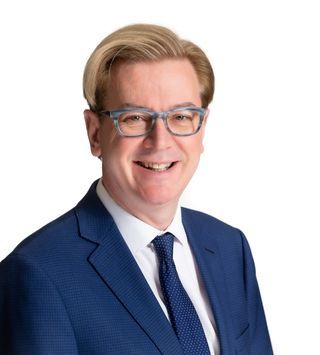
Professor Simon Deakin is a Fellow and Director of Studies in Law at Peterhouse, University of Cambridge, specializing in private law (tort and contract law) and labour law. He teaches on the undergraduate Law Tripos and the LLM programme, with research focusing on law and economics, artificial intelligence, and historical legal analysis. Current research on Is Law Computable? and AI ethics Co-editor of computational law essay collection Developed Cambridge Leximetric Database for quantitative legal analysis His research spans tort law, corporate governance, digital economy regulation, and sustainability. Recent work explores the Anthropocene's legal implications and labour law's computational approaches. Scientific awards include the Cambridge Students' Union teaching prize (2023) He supervises doctoral students annually and contributes to legal education through widely used textbooks. As a Centre for Business Research (CBR) affiliate, he advances data-driven analysis of global labour regulation.
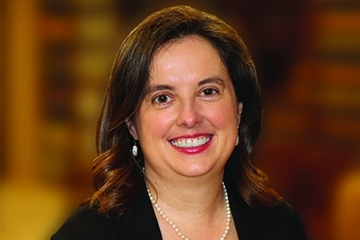
Professor Pinar Akman is a Professor of Law at the University of Leeds, specializing in competition law, particularly in digital markets. She holds positions as a judge at the UK's Competition Appeal Tribunal and a member of the Financial Conduct Authority's Innovation Advisory Group. Her roles include former directorships of the Jean Monnet Centre of Excellence on Digital Governance (2019-2023) and the Centre for Business Law and Practice (2017-2020). She was promoted to full Professor within five years of her PhD. Education: Holds LLB and LLM from the University of Ankara Law School (ranked first overall undergraduate), and a PhD from UEA Law School/ESRC Centre for Competition Policy, funded by ORSAS and UEA Scholarships. Her doctoral work focused on abuse of dominance under EU competition law. Research interests include competition law's application to digital markets, market power, online platforms, and the interplay of competition law with consumer and contract law. She emphasizes legal and economic foundations of competition policy, including historical origins and modern challenges in regulating tech giants. Awards: Philip Leverhulme Prize (£100k), Women@Competition 5-Star Award, and recognition as a top global competition scholar by Global Competition Review. Her research on digital markets and antitrust policy has been funded by UKRI, ESRC, and international bodies. Advising & Grants: Led a £4M ESRC grant for the Centre for Competition Policy (2009), and a UKRI-funded empirical study on digital platforms. Provides policy advice to the IMF, World Economic Forum, and international organizations like UNCTAD and OECD. Engages in global policymaking through roles with the Canadian Chamber of Commerce, ASEAN, and Bhutan. Labs & Teams: Senior Fellow at George Washington University's Competition & Innovation Lab, Affiliated Scholar at Berkeley's Dynamic Competition Initiative, and member of Stanford Law School's Computational Antitrust Advisory Board. Editorial roles include World Competition: Law and Economics Review and Oxford Competition Law.
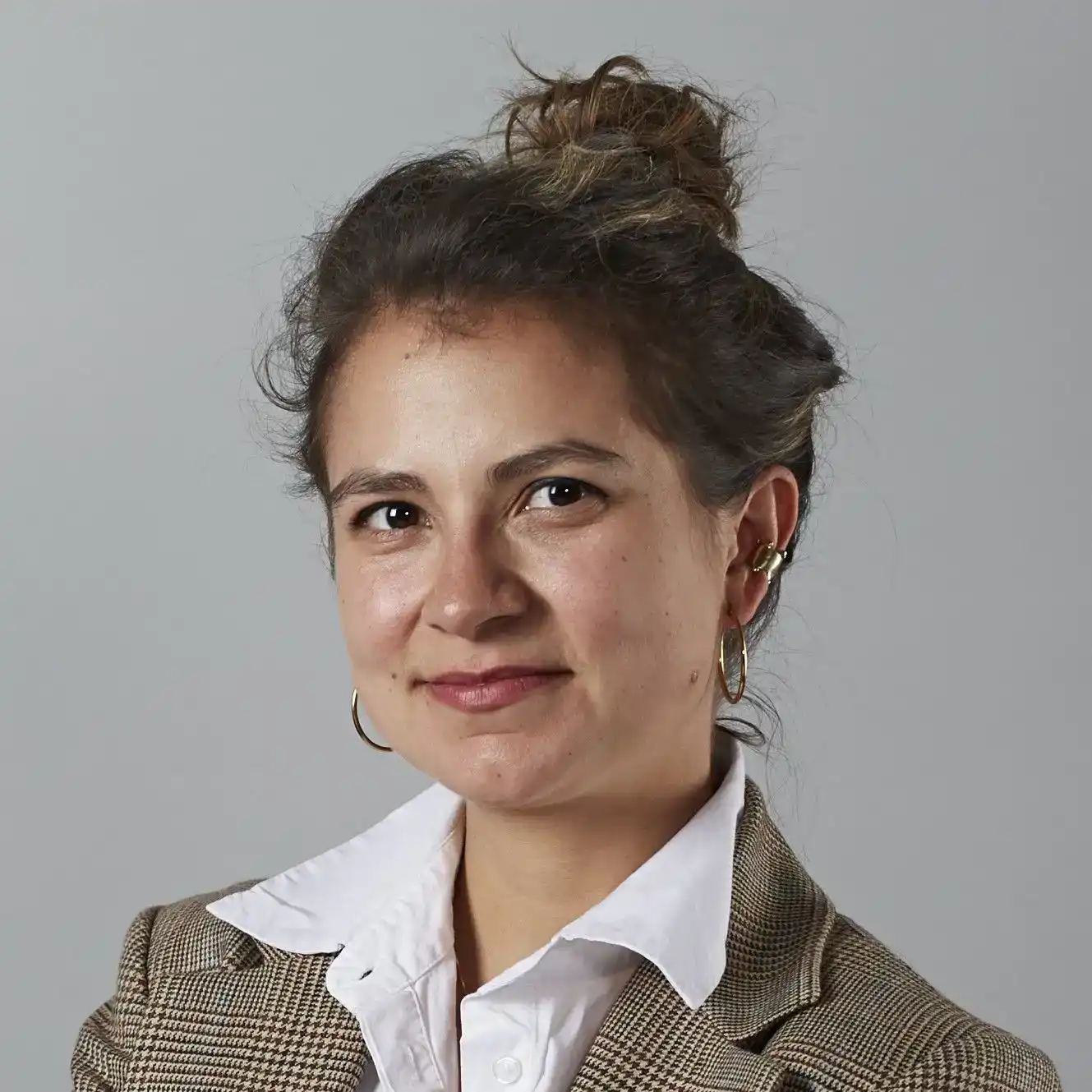
Robert Gorwa is a Research Fellow at the WZB Berlin Social Science Center, specializing in technology policy, transnational regulation, and international political economy. His work focuses on platform governance, digital policy, and AI governance, with a particular interest in how governments and institutions shape online content moderation and platform ecosystems. He holds a DPhil in Politics and International Relations from the University of Oxford, an MSc in Media and Communication from the Oxford Internet Institute, and a BA from the University of British Columbia. Education: Doctorate (DPhil) in Politics and International Relations, University of Oxford MSc in Media and Communication (Internet Studies), Oxford Internet Institute Bachelor's degree from the University of British Columbia Research Interests: Interdisciplinary studies on platform governance, AI intermediaries, automated content moderation, transnational digital policy, and the intersection of law, technology, and political economy. His 2024 book, The Politics of Platform Regulation , explores how governments influence online content moderation globally. Key Contributions: Founded and coordinates the Platform Governance Research Network (PlatGovNet) Organizes the WZB's Platform Politics and Policy Seminar series Authored influential works on AI governance, platform lobbying, and live-streaming content moderation Awards: Top departmental honors for his doctoral dissertation at the University of Oxford. Grants & Collaborations: Holds fellowships at the Centre for International Governance Innovation (CIGI), Weizenbaum Institute, and has collaborated with institutions like the Center for Democracy and Technology (CDT) and Stanford's Center for Philanthropy and Civil Society. Labs & Teams: Active in the Platform Governance Research Network and affiliated with the WZB's research group on Globalization, Work, and Production.
Tatsuhiro Ueno serves as Professor at Waseda University's Faculty of Law and School of Law, specializing in Intellectual Property Law, Copyright Law, and Information Law. He currently holds leadership positions as Director of the Institute of Comparative Law (since 2024) and President of SARLIB (Society for Administration of Remuneration for Public Transmission by Libraries or Similar Facilities). With extensive international experience including visiting scholar positions at Ludwig Maximilian University of Munich and the Max Planck Institute for Intellectual Property and Competition Law, Professor Ueno has established himself as a leading authority in copyright law reform and international intellectual property matters. Professor Ueno earned his Master of Law from Kyoto University following undergraduate and graduate studies there. His academic career includes teaching positions at Rikkyo University College of Law and Politics and Seijo University Faculty of Law before joining Waseda University in 2013, where he now contributes to shaping Japan's legal education landscape. His research focuses on the critical intersection of intellectual property law with emerging technologies, particularly artificial intelligence systems and digital platforms. Professor Ueno has pioneered work on text and data mining exceptions, copyright limitations in digital environments, and creator-oriented copyright frameworks. His scholarship bridges theoretical analysis with practical policy development, influencing both domestic legislation and international copyright discourse. His recent publications demonstrate a concentrated focus on AI and copyright law, with numerous articles examining the legal challenges posed by generative AI systems, text and data mining exceptions, and the evolving landscape of copyright protection in the digital era. Professor Ueno's work consistently addresses the balance between protecting creators' rights and ensuring public access to knowledge. KDDI Foundation Book Publishing Grant (January 2025) for "Creator-Oriented Copyright System" Professor Ueno actively participates in numerous government committees shaping Japan's copyright law, including serving as Chairman of the Law and Computers Society and as a longstanding member of the Copyright Subcommittee of the Council for Cultural Affairs. His research is supported by multiple grants from the Japan Society for the Promotion of Science, including ongoing projects examining human portraits and voices in the AI age (2025-2029) and AI and intellectual property rights systems (2024-2029). He regularly presents at international forums including WIPO Summer Schools, ATRIP conferences, and copyright forums worldwide, establishing his reputation as a key thought leader in global copyright policy development.
Associate Professor Anton Didenko is a leading academic at UNSW Sydney's School of Private & Commercial Law, specializing in FinTech regulation, banking law, and central bank digital currencies (CBDC). He holds law degrees from Russia and the UK, including an MJur and DPhil from the University of Oxford. His research focuses on CBDC design, regulatory sandboxes, open banking frameworks, and cybersecurity in finance. University Affiliation: UNSW Sydney Key Academic Roles: Author of Banking Law in Australia (11th ed, 2024) and lead author of Customer Data Sharing Frameworks (2024) Global Engagement: Adviser to G20, Asian Development Bank, and UN agencies Research Interests: - CBDC policy and design implications - Regulatory frameworks for FinTech innovation - Cybersecurity in financial systems - Transnational commercial law and secured transactions - Open data and customer consent mechanisms Recent Articles: Focus on CBDC adoption in Pacific economies, weaponization of digital currencies in geopolitical conflicts, and comparative analysis of blockchain liabilities. His work bridges legal, technological, and policy dimensions of financial innovation. Awards : Australian Academic of the Year in Digital Finance (2023) Advising & Grants: - No listed advisees - Collaborations include Asian Development Bank-funded Pacific CBDC studies - Co-authored policy reports for UN Capital Development Fund and CPA Australia Labs/Teams: - Editor-in-Chief of the Cape Town Convention Journal - Co-leader of UNSW's FinTech regulation research initiatives
Alexandre De Streel is a Professor at the Faculty of Law, University of Namur, with affiliations to research entities including the Namur Digital Institute (NADI), Centre for Research in Regional Economics and Economic Policy (CERPE), and the Centre de Recherche Information, Droit et Société (CRIDS). He holds a Doctorate in EU Law from the European University Institute and a Master's in Economics from the Catholic University of Louvain. His research focuses on the regulation of digital industries , European competition policy , Big Data and Artificial Intelligence Law , and the governance of the European Union . He explores the intersection of law, economics, and digital innovation, with particular interest in the Sharing Economy and Network Industries . Recent publications analyze EU Digital Markets Act (DMA) , Antitrust , and Platform Regulation , reflecting his expertise in Competition Law and EU Institutional Law . He has served as Visiting Professor at SciencesPo Paris, European University Institute, and Barcelona GSE. De Streel is actively involved in teaching European Union Law , Competition Law , and Foundations of Law courses (DRHDB307, DROIB210, ECGEB130). He contributes to policy discussions as Academic Co-Director of CERRE and member of the Belgian Competition Authority's Scientific Committee.
Professor Nicholas Carah is a leading academic at the School of Communication and Arts , The University of Queensland , and serves as Director of the Centre for Digital Cultures & Societies . He is also an Associate Investigator in the ARC Centre of Excellence for Automated Decision-Making and Society . His research focuses on the algorithmic and participatory advertising model of digital media platforms , with a sustained investigation into digital alcohol marketing . His research spans digital media, algorithmic culture, and affective capitalism , examining how platforms like Instagram, Snapchat, and Facebook shape promotional practices and user behavior. He has led major ARC-funded projects and co-edited works such as Digital Intimate Publics and Social Media (2018) and Conflict in My Outlook (2022). As Deputy Chair of the Foundation for Alcohol Research and Education , he contributes to policy development on unhealthy product marketing. His recent publications highlight trends in social media advertising, algorithmic transparency, and health-risk marketing . Supervision roles include Principal Advisor for PhD projects on topics like digital labor, FemTech, and augmented reality , and Associate Advisor for cross-cultural studies in media and communication. He advocates for citizen science approaches to monitor digital marketing and its societal impacts.
Graeme B. Dinwoodie is a University Distinguished Professor and Global Professor of Intellectual Property Law at Chicago-Kent College of Law, Illinois Institute of Technology, where he also serves as Co-Director of the Program in Intellectual Property Law. He has held prestigious academic positions at the University of Oxford (2009-2018), where he was Director of the Oxford Intellectual Property Research Centre and a Professorial Fellow of St. Peter's College, and Queen Mary College, University of London (2005-2009). Prior to his Oxford appointment, he led Chicago-Kent's intellectual property program for several years. Dinwoodie earned his J.S.D. from Columbia Law School, LL.M. from Harvard Law School, and LL.B. in Private Law (first class honors) from the University of Glasgow. He was the Burton Fellow at Columbia Law School (1988-89) and a John F. Kennedy Scholar at Harvard Law School (1987-88). Before entering academia, he practiced intellectual property law at Sullivan and Cromwell in New York. A leading international authority in trademark law, design law, and international intellectual property law, Dinwoodie's research focuses on the intersection of national and international IP systems, trademark theory and doctrine, and the evolving landscape of digital copyright. His work explores how trademark law serves consumer interests, the challenges of harmonizing IP systems across jurisdictions, and the role of international organizations like WIPO in shaping global IP norms. He has made significant contributions to understanding territoriality in trademark law and the impact of digital technologies on IP enforcement. Dinwoodie's extensive publication record reveals a consistent focus on the tension between national sovereignty and international harmonization in intellectual property law. His recent work examines the implications of Brexit for IP systems, the evolving role of internet intermediaries in IP enforcement, and the normative foundations of trademark law. He has increasingly focused on the practical application of IP law in digital contexts while maintaining his foundational work on international IP architecture. Scientific Awards and Recognition: Inducted into the IP Hall of Fame (2020) Recipient of the Ladas Memorial Award from the International Trademark Association (2008) Awarded the Pattishall Medal for Teaching Excellence in trademarks and trade identity law (2008) Three-time recipient of the Goldman Prize for Excellence in Teaching (University of Cincinnati) Elected to membership in the American Law Institute (2003) Named Norman and Edna Freehling Scholar (2001) Dinwoodie has served in significant advisory roles, including as a consultant to the World Intellectual Property Organization on private international law matters, an adviser to the American Law Institute Project on Principles on Jurisdiction and Recognition of Judgments in Intellectual Property Matters, and a consultant to the United Nations Conference on Trade and Development on the Protection of Traditional Knowledge. He currently serves as an adviser on the ALI's project on the Restatement of Copyright Law. He has held leadership positions as past chair of the Intellectual Property Section of the Association of American Law Schools and president of the International Association for the Advancement of Teaching and Research in Intellectual Property (ATRIP) from 2011 to 2013. As Co-Director of the Intellectual Property Program at Chicago-Kent, Dinwoodie helps shape one of the nation's leading IP law programs. His work with the Center for Design, Law & Technology reflects his commitment to addressing contemporary challenges at the intersection of law and innovation. Through his extensive scholarship, teaching, and professional service, Dinwoodie continues to influence both the theoretical foundations and practical applications of intellectual property law worldwide.
Miriam Cohen is an Associate Professor at the Université de Montréal's Faculty of Law, holding the Canada Research Chair in Human Rights and International Reparative Justice. She specializes in public international law, human rights, and international criminal justice. She earned a Ph.D. from Leiden University and holds advanced degrees from Harvard, Cambridge, and Université de Montréal. Her research focuses on reparative justice mechanisms, climate change accountability, and international bodies' roles in rights enforcement. She leads interdisciplinary projects, including the Human Rights and International Justice Lab, which developed a human rights data analysis platform funded by CFI and Quebec grants totaling $400,000. Education: Ph.D. in International Law, Leiden University (2017) LL.M. Harvard Law School (2009) LL.M. University of Cambridge (2008) LL.B. and LL.M., Université de Montréal (2006, 2007) Research Interests: Reparative justice for international crimes, climate change litigation, international criminal accountability, and the intersection of human rights with environmental and national security policies. Her recent articles and books explore reparations for climate harms, transgenerational trauma in ICC jurisprudence, and the role of public interest litigation in international courts. She has secured grants from SSHRC, CFI, and Quebec, and her work has been recognized with awards from the Canadian Council on International Law and Quebec Bar Foundation. She advises international organizations, serves on multiple editorial and governance boards, and collaborates globally on legal research initiatives.
Christine Lazaro is a Clinical Professor of Legal Education and Co-Director of the Securities Arbitration Clinic at St. John's University School of Law. She has been with the university since 2007, focusing on securities arbitration, regulatory compliance, and investor protection. She holds a B.A. from New York University and a J.D. from Fordham Law School. Her professional roles include advising the Moot Court Honor Society and Corporate and Securities Law Society, alongside her consultancy work at Brent A. Burns, LLC. Her research and practice emphasize securities law, fiduciary duties, and arbitration proceedings. Key areas include regulatory challenges in online brokerage platforms, broker-dealer compliance, and financial exploitation prevention. She actively contributes to legal education through her clinic and serves on prominent committees like the SEC’s Investor Advisory Committee and FINRA’s Investor Issues Advisory Committee. Her publications span over 20 years, addressing topics like the Regulation Best Interest framework, digital investment advice regulation, and arbitration eligibility. She frequently collaborates with peers on PIABA (Public Investors Advocate Bar Association) initiatives, having previously served as its President and Board member. Professionally, she is admitted to multiple federal courts and state bars, and her advisory work extends to industry standards through roles in the New York State Bar Association’s Dispute Resolution Section and the CFP Board’s Standards Resource Commission.
Prof. Dr. Michael Beurskens is a faculty member at the Faculty of Law of the University of Passau , holding the Chair of Private Law, especially Business Law and Digitalisation . His work integrates Private Law , Competition Law , and Intellectual Property Law with Digitalization challenges, focusing on AI regulation, data access, and GDPR compliance. Academic Background: LL.M. in Intellectual Property Rights (University of Chicago) LL.M. in Gewerblicher Rechtsschutz Attorney-at-Law (New York) Habilitation: University of Düsseldorf, 2007 His research interests span the legal frameworks governing online platforms (Digital Markets Act, Digital Services Act), data trading (Data Act, Data Governance Act), AI regulation (AI Act), and copyright (InfoSoc Directive, DSM Directive). He emphasizes practice-oriented research and team-based academic collaboration , including social activities like weekly lunches and access to central ice cream supplies. Key teaching activities include courses on Corporate Law , Commercial Law , Law of Obligations , and Intellectual Property , with a focus on e-learning projects such as Schuldrecht AT Online and Gesellschaftsrecht Online. He advocates for student-led research and early publication opportunities . The chair actively promotes women in science through preferential employment and intensive supervision. It also develops legal tech tools like Visilex (jurisprudence flashcards) and CASIM (case simulation software).
Thorsten Busch is a Senior Lecturer at the ZHAW School of Management and Law, affiliated with the Zurich Center for Sustainability Leadership. His academic career includes roles as Visiting Assistant Professor at the University of Konstanz (DE), Postdoctoral Fellow at Concordia University (CA), and Senior Research Fellow at the University of St. Gallen (CH). He holds an M.A. in political science, economics, and management from the University of Oldenburg (DE), and a Ph.D. in organizational studies and cultural theory from the University of St. Gallen (CH). His research focuses on digital business ethics, AI ethics, and sustainability in digital industries. Notable projects include leading the ethical business model development for the Play Science citizen science platform. His work has been published in outlets like Journal of Business Ethics and presented at MIT, Oxford, and McGill University. Education: M.A.: University of Oldenburg (Political Science, Economics, Management) Ph.D.: University of St. Gallen (Organizational Studies & Cultural Theory) Advanced training: Oxford Internet Institute, Harvard Berkman Klein Center Research interests bridge digital ethics and sustainability, addressing topics like algorithmic HR challenges, CSR in sports organizations, and environmental impacts of the games industry. He actively engages in global academic discussions through conferences like EGOS and ACM Ethical Games. Current projects emphasize actionable solutions for ethical business models in digital sectors.
Beatriz Botero Arcila is an Assistant Professor of Law at Sciences Po Law School and a Faculty Associate at the Berkman Klein Center for Internet and Society at Harvard University. She specializes in the governance of data, artificial intelligence, and digital surveillance. LLM and Doctorate from Harvard Law School Research Focus : Law of the Digital Economy Privacy Law / Global Data Law Surveillance Law Legal Theory Scientific Awards : Future of Privacy Forum's 14th Annual Privacy Papers Award (2024) Labs & Teams : Co-founder of The Edgelands Institute, a pop-up institute incubated at the Berkman Klein Center focused on digital surveillance and cities.
Camilla Crea is an Associate Professor at the University of Sannio in Italy, affiliated with the Department of Law, Economics, Management and Quantitative Methods (DEMM) . Her work focuses on Private Law , European Economic Law , and Trademarks , with interdisciplinary intersections in Human Rights and Environmental Law . Research interests span European Private Law , Comparative Jurisprudence , and Legal Semiotics . Recent publications analyze Digital Vulnerability in EU frameworks, Trademark Semantics in multicultural contexts, and Environmental Disasters like the Ilva case. She contributed to Antigone and Portia , examining mythological legal references, and co-edited The New Shapes of Digital Vulnerability (2024).
Dr. Céline Castets-Renard is a Full Professor in the Civil Law Section of the Faculty of Law at the University of Ottawa and holds the Canada Research Chair in International and Comparative Law of Artificial Intelligence. She also serves as the University Research Chair on Accountable AI in a Global Context (2020-2024) and is an affiliated researcher at ANITI (Toulouse) and Yale Law School's Internet Society Project. She previously held senior academic roles at Université Toulouse Capitole and was a visiting scholar at institutions including Fordham Law School and Osaka University. Her research focuses on digital technology and AI governance from an international and comparative law perspective, emphasizing EU, Canadian, and US frameworks. Key areas include AI law, data protection, digital copyright, platform regulation, and the intersection of technology with human rights, equity, and gender issues. She has authored over 100 articles, 2 monographs, and edited 4 books. Dr. Castets-Renard advises on EU initiatives such as the AI Office’s General-Purpose AI Code of Practice and the Digital Markets Act. Her work bridges legal scholarship with practical challenges in AI accountability, privacy, and transnational governance. Awards include the Honorary Junior Membership of the Institut Universitaire de France (2015-2019).