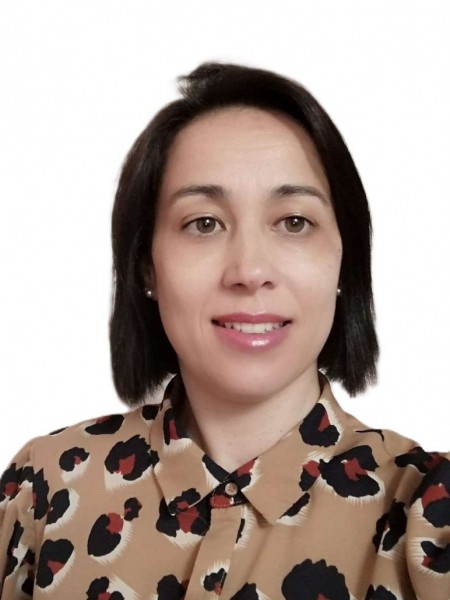
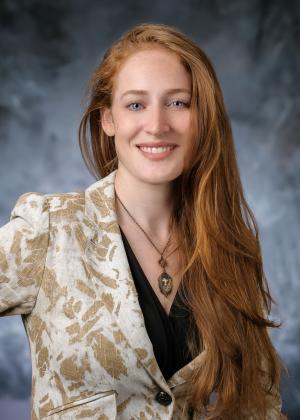
Irene Taurino is an Assistant Professor (tenure track) in the Faculty of Engineering Science at KU Leuven, affiliated with the Department of Physics and Astronomy and the Department of Electrical Engineering (ESAT). She leads the Laboratory of Electrochemical Materials and Bio Interfaces (eMATI), focusing on nano- and microtechnologies for biomedical applications. Her work emphasizes developing advanced electrochemical systems for therapeutic and sensing purposes, including biodegradable platforms and stretchable substrates. Research Interests: Electrochemistry, Nanotechnology, (Bio)sensing, Drug delivery, Bimetals/Metal Oxides, and Smart materials. Projects include HumiPlast (plant transpiration sensors), QuantPAH (firefighter health monitoring), and TALENT (thin-film deposition technologies). She holds leadership roles in Leuven One Health, LIMNI, and the Plant Institute. Advising & Grants: Promotes/Co-promotes 10+ projects on biosensors, CO2 electroreduction, and smart farming. Key roles in funding initiatives like EU Horizon and industry partnerships. Labs/Teams: Heads eMATI, fostering interdisciplinary research in bioelectronics and soft materials. Emphasizes creativity and translational research from fundamental science to practical applications.
Vikramaditya G. Yadav is an Associate Professor at the University of British Columbia (UBC) in the Department of Chemical and Biological Engineering, Faculty of Applied Science. He directs the Master of Engineering Leadership (MEL) Program in Sustainable Process Engineering and leads the BioFoundry research group. Education: B.A.Sc., University of Waterloo (2007) Ph.D., Massachusetts Institute of Technology (2013) Postdoctoral Associate, Harvard University (2014) His research spans sustainable chemical manufacturing, metabolic engineering, and biotechnology. Key areas include: Designing biosynthetic enzymes for biomass valorization Developing bioremediation strategies for industrial water quality Creating innovative drug delivery systems and tissue engineering solutions Advancing synthetic biology for pharmaceutical and bioenergy applications His recent work focuses on ocular drug delivery, cannabinoid biosynthesis in E. coli, lignin-based nanoparticles for cancer therapy, and computational analysis of plant secondary metabolites. Collaborations with start-ups, industry, and medical labs drive innovation in Canada's bioeconomy. Professional Leadership: Chair, Biotechnology Division of the Chemical Institute of Canada Associate Editor, The Canadian Journal of Chemical Engineering He is affiliated with UBC's BioProducts Institute and contributes to project-based learning pedagogy.
Joseph Bentsman is a Professor in the Department of Mechanical Science and Engineering at the University of Illinois at Urbana-Champaign's Grainger College of Engineering. He also holds affiliate appointments in the Department of Aerospace Engineering (since 2015) and the Department of Electrical and Computer Engineering (since 2018). His academic journey began with an M.S. from Byelorussian Polytechnic Institute in Minsk, USSR (1979), followed by a Ph.D. in Electrical Engineering from Illinois Institute of Technology (1984). Professor Bentsman's research focuses on control of nonlinear and distributed parameter systems, nonlinear oscillations, network control, stability theory, and stochastic multiscale methods. He pioneered a new class of dynamical systems with active singularities that admit control actions during singular phases of motion, which represent a novel category of hybrid systems characterized by impulsively controlled discrete transitions. His recent work has expanded into biomedical applications, particularly thermophysical modeling of tissue during electrosurgery and control of phase change processes. His recent publications (2021-2024) reveal a strong trend toward biomedical applications of control theory, particularly in modeling heat conduction in biological tissues, electrosurgical processes, and phase change phenomena. Approximately 60% of his recent work focuses on biomedical applications, while the remainder continues his foundational work on nonlinear control systems, distributed parameter systems, and systems with active singularities. Key subfields include Stefan problems, enthalpy-based control, telegraph equation modeling, and PDE-based control of complex physical processes. NSF Presidential Young Investigator Award (1989) Life Fellow of American Society of Mechanical Engineers Life Senior Member of IEEE IEEE Control Systems Society Technical Committee Chair on Power Generation (2015-2019) International Society of Automation POWID Achievement Award (2014) 2018 AIST Computer Applications Best Paper Award Featured in 'People in Control', IEEE Control Systems Magazine (2018) Professor Bentsman has been instrumental in developing educational approaches that integrate signal processing, instrumentation, control, and machine learning, as evidenced by his two textbooks. His work on the steel continuous casting process, particularly the mold oscillation system, has led to practical industrial applications. He has also made significant contributions to power plant control systems and boiler/turbine control. His research group appears to focus on both theoretical control systems development and practical implementation in industrial and biomedical settings, with strong connections to steel manufacturing, power generation, and medical device industries.
Christophe Meunier is a researcher specializing in hybrid materials, particularly focusing on biohybrid systems that integrate biological components with inorganic matrices. His work emphasizes environmental applications and biomedical innovations through advanced material design. Key Collaborations: Su, B. L., Michiels, C., Wang, L. Research Themes: Photosynthesis mimicry, cell therapy microcapsules, hybrid alginate-TiO₂ systems Research Focus: Meunier has pioneered the biomimicry of photosynthesis via biosystem immobilization in silica matrices, aiming to create 'living materials' with functional biological-inorganic interfaces. His recent projects explore alginate@TiO₂ hybrid microcapsules for controlled insulin delivery and cell therapy applications, demonstrating high biocompatibility and stability. Academic Contributions: With 34 research outputs spanning material science, biomedical engineering, and environmental applications, Meunier's work aligns with UN Sustainable Development Goals through innovative hybrid material design. His collaboration network includes experts in chemistry, physics, and medical fields.
Sachdev Sidhu is a Research Professor and Entrepreneur in Residence at the University of Waterloo. His research focuses on synthetic antibodies, protein engineering, and biotechnological applications. He leads efforts in developing novel therapeutic antibodies, engineered protein systems, and molecular tools for biomedical research. His work spans cancer therapy, viral infection countermeasures, and regenerative medicine. Sidhu is also involved in translational research, bridging academic discoveries with commercial applications through entrepreneurial ventures. Key research interests include synthetic antibody libraries, CAR T-cell engineering, ubiquitin-based therapeutics, and phage display technologies. He has contributed to advancements in targeted therapies for glioblastoma, leukemia, and ocular diseases. His team develops innovative methods for protein design, such as engineered ubiquitin variants and modular antibody architectures. Publications highlight breakthroughs in antibody-based treatments, including synNotch CAR T cells for glioblastoma and neutralizing antibodies against SARS-CoV-2. His work integrates structural biology, molecular biology, and computational approaches to address complex biomedical challenges. Sidhu collaborates with industry partners to advance technologies into clinical and commercial settings.
Hsueh-Chia Chang is the Bayer Professor of Chemical Engineering in the Department of Chemical and Biomolecular Engineering at the University of Notre Dame's College of Engineering. He also holds a concurrent faculty position in the Department of Aerospace and Mechanical Engineering. As Principal Investigator of the Chang Lab, he leads cutting-edge research in microfluidic and nanofluidic technologies for biomedical applications. Prof. Chang received his B.S. in Chemical Engineering from Caltech in 1976, followed by M.S. and Ph.D. degrees in Chemical Engineering from Princeton University in 1977 and 1980, respectively. His academic journey has established him as a leader in the field of microfluidics and biosensing technologies. Chang's research focuses on developing low-cost liquid biopsy nanotechnologies for cancer screening and therapy management. His lab specializes in microfluidic and nanofluidic research coupled with electrokinetics, optics, plasmonics and acoustics for biosensing applications. Key research areas include Electrokinetics & Biosensing, Optics & Plasmonics, Nanoelectrokinetics, and Droplet Microfluidics. The Chang Lab has developed innovative platforms that can isolate and sort tumor cells, exosomes, microvesicles, lipoproteins, and stress granules from blood samples, then lyse these structures to release RNA/protein biomarkers for detection and quantification. His recent publications reveal a strong focus on extracellular vesicle diagnostics, cancer biomarker detection, and point-of-care diagnostic technologies. The research spans multiple disciplines including oncology, cardiology, and neurology, with applications for pancreatic, liver, breast, ovarian, and lung cancers as well as myocardial infarction diagnosis. Fellow of American Institute of Medical and Biological Engineering (2025) Provost Research Achievement Award, Notre Dame (2024) Fellow of the National Academy of Inventors (2020) Lifetime Achievement Award, American Electrophoresis Society (2019) Fellow of the American Physical Society (1997) Presidential Young Investigator Award, NSF (1985) Prof. Chang has advised over 50 PhD students and postdocs who have gone on to prominent positions in academia and industry. His lab has secured significant funding and has commercialized several technologies through startups like Aopia Biosciences, which launched NanoEx at ISEV 2024. The Chang Lab maintains active collaborations with medical researchers for validating their diagnostic platforms against various cancers and cardiac conditions.
Dr. Carla Vilela is an Assistant Professor in the Department of Chemistry at the University of Aveiro and Principal Researcher at CICECO. She coordinates the Sustainable Materials research line and leads projects on cellulose-based materials and circular economy. Her research focuses on sustainable materials from cellulose and renewable resources for applications in water remediation, food packaging, and textiles. Education includes a PhD in Chemistry from the University of Aveiro and postdoctoral work at CICECO and ISIS Neutron and Muon Source (UK). Research interests include: Development of cellulose-based functional materials Nanocomposites for biomedical applications Sustainable packaging solutions Biopolymer modification and characterization Publications demonstrate strong focus on cellulose nanocomposites, bioprinting bioinks, and active packaging. Recent articles frequently involve nanocellulose modifications, drug delivery systems, and sustainable material design. Awards include being named among World's Top 2% Scientists annually since 2020. Funding includes national projects (Cell4Janus) and EU collaborations (PRIMA Im-Pack). Leads the BioPol4Fun research group and supervises 6 PhD students. Current projects explore cellulose-based microrobots, resin valorization, and marine biopolymers.
Orlando Rojas is a Professor at the University of British Columbia (UBC), holding joint appointments in the Departments of Chemical and Biological Engineering, Chemistry, and Wood Science. He leads the Biobased Colloids and Materials (BiCMat) research group and directs the Bioproducts Institute . His research focuses on sustainable development through renewable materials, including nanopolysaccharides, bacterial nanocellulose, lignins, and multiphase systems. Rojas has advised over 50 PhD students and 40+ MS students, with a h-index of 90 (Google Scholar). Key Roles/Positions : Canada Excellence Research Chair in Renewable Materials Adjunct Professor at NC State University (USA) and Dalian Polytechnic University (China) Director of FinnCERES Flagship (Finland) Research Interests : Development of bio-based materials for energy, healthcare, and environmental applications. Key areas include nanocellulose functionalization, lignin valorization, and bioinspired materials. His work integrates colloidal science, multiphase systems, and sustainable manufacturing. Grants & Awards : ERC Advanced Grant and Horizon H2020 funding 2013 ACS Fellow, 2015 Tappi Nanotechnology Award First Latin-American recipient of the Anselme Payen Award (ACS) Labs & Collaborations : Active partnerships with Aalto University (Finland) and institutions globally. Leads the BiCMat group spanning UBC and FinnCERES, focusing on bio-based materials and sustainable technologies.
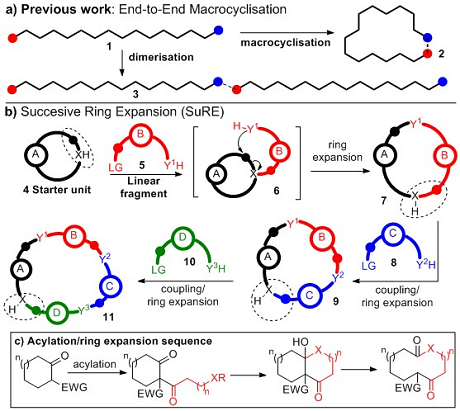
Dr. William Unsworth is a Senior Lecturer in the Department of Chemistry at the University of York. He holds a Leverhulme Trust Early Career Fellowship and the inaugural Eleanor Dodson Fellowship. His research focuses on developing new methods for synthesizing functionalized macrocycles, spirocycles, heterocycles, and natural products, with key interests in ring expansion strategies (e.g., SuRE methodology), photochemistry, catalysis, and spirocyclization reactions. Education: Bachelor's and PhD in Chemistry from the University of Oxford (PhD under Prof. Jeremy Robertson, 2010) Postdoctoral Research Associate with Prof. Richard J.K. Taylor at the University of York (2010–2013) Research Interests: Macrocycle synthesis, medium-sized rings, cascade reactions, photochemical radical processes, and catalyst-driven scaffold diversity. His group’s work emphasizes practical applications in medicinal chemistry and drug discovery. Awards: Thieme Chemistry Journals Award (2020) RSC Hickinbottom Award (2018) European Lead Factory Chemical Library Creativity Award (2017) RSC/BMOS Young Investigator Award (2015) Grants and Projects: Leads initiatives like the ‘Macrocycles for Drug Discovery (MC4DD)’ project funded by the European Commission, and collaborates on projects involving biocatalysis and natural product synthesis. Labs/Teams: The Unsworth Research Group at the University of York includes collaborators like Prof. Richard Taylor and Prof. Gideon Grogan, focusing on interdisciplinary synthetic chemistry and sustainable methods.
Shahid Siddique is an Associate Professor in the Department of Entomology and Nematology at the University of California, Davis. His research focuses on understanding molecular and applied aspects of plant-parasitic nematode interactions with host plants. He aims to develop sustainable strategies to mitigate nematode-induced crop losses through genetic, biochemical, and biotechnological approaches. His lab is particularly interested in host resistance mechanisms, nematode effector proteins, and biocontrol solutions. Education: MSc, Bahauddin Zakariya University, Multan, Pakistan PhD, University of Natural Resources and Life Sciences, Vienna, Austria Habilitation, University of Bonn, Germany Research Interests: Siddique’s work bridges basic and applied research, including cell surface signaling in plant-parasitic nematode interactions, functional characterization of secretory proteins, molecular diagnostics for nematodes, and biocontrol strategies. Current projects explore recombination hotspots in nematode genomes, CRISPR-based resistance engineering, and redox signaling mechanisms. Teaching: General Plant Nematology (NEM100) in Spring 2020 Labs/Teams: The Siddique Lab focuses on translating molecular discoveries into practical pest management solutions. Collaborations involve genomic analysis, proteomics, and field trials to address global agricultural challenges.
Prof. Jürgen Rühe is a Full Professor of Chemistry and Physics of Interfaces at the Institute of Microsystems Technology, Albert Ludwigs University of Freiburg, within the Faculty of Engineering. He serves as Deputy Coordinator of Research Area C and Principal Investigator for Research Areas A, B, C, and D. His expertise spans polymers at interfaces, metamaterials, biomedical surfaces, and self-healing materials. He leads the Cluster of Excellence liv MatS, focusing on adaptive and energy-autonomous materials systems. Education: Not explicitly stated in text. His research emphasizes programmable materials, 4D printing, and bioinspired design, with projects funded by the German Research Foundation (DFG). Notable contributions include anti-fog coatings, magnetic microactuators for cell stimulation, and hygromorphic materials for adaptive architecture. He supervises doctoral and postdoctoral researchers, advancing fields like tribology and surface functionalization. Key scientific achievements include developing C,H-insertion cross-linking (CHic) for durable polymer networks and exploring smart materials for biomedical and environmental applications. His work bridges fundamental polymer chemistry with practical applications in energy, healthcare, and sustainable architecture. He advises over ten doctoral students and collaborates with industry partners. His lab, part of the Institute of Microsystems Technology, focuses on micro- and nanostructuring, with projects funded by the Cluster of Excellence.
Mahipal Singh is a Professor of Animal Biotechnology and Coordinator of the Animal Science Undergraduate Program at Fort Valley State University (FVSU), where he is affiliated with the College of Agriculture, Family Sciences and Technology and the Department of Agricultural Sciences. He has been at FVSU since 2000 in various capacities, progressing from Adjunct Biology/MPH Graduate Faculty to his current position as full Professor since 2019. Dr. Singh earned his educational credentials in India: a B.S. (Hons) in Zoology from Meerut College (1978), an M.S. in Zoology from the Institute of Advanced Studies, Meerut University (1983), and a Ph.D. in Zoology-Microbiology from Banaras Hindu University, Varanasi (1989). His academic journey included prestigious appointments such as International Visiting Fellow at the National Institute of Child Health and Human Development, NIH (1991-1993) and Postdoctoral Fellow at the Medical University of South Carolina (1989-1991). His research focuses on cutting-edge areas of animal biotechnology, particularly in postmortem cell recovery, genome editing in livestock, and myostatin gene targeting. Dr. Singh has pioneered work demonstrating that individual cells remain viable in mammalian tissues for much longer periods after death than previously believed, with applications for cellular therapies and germplasm preservation. His work with CRISPR/Cas technology aims to reduce milk allergens and mastitis in goats, while his myostatin research seeks to enhance muscular mass in meat goats for agricultural applications. Analysis of his recent publications reveals a consistent focus on cellular viability after death across multiple livestock species (cattle, goats, sheep), with particular attention to temperature effects and storage conditions. His work bridges basic cellular biology with practical agricultural applications, demonstrating how fundamental discoveries about postmortem cellular life can translate into biotechnological advances for livestock preservation and improvement. USDA-ARS 1890 Faculty Research Fellowship Award (2017) STEM Research Excellence Award, Fort Valley State University (2014-15) Multiple student research presentation awards at FVSU Annual Research Day symposiums Best Poster Award at National Symposium on Biotechnology, CIMAP, Lucknow, India (1999) Fogarty International Visiting Fellowship at NIH (1991-93) Dr. Singh has supervised an impressive 38 students across multiple educational levels, including 4 PhD, 13 MS, 7 BS, 8 HS, and 6 middle school students. His research has been supported by USDA-ARS, USDA-NIFA programs, and various other grants. He serves on multiple editorial boards, grant review panels, and university committees, and is an active member of professional societies including the American Society of Animal Science and Society for In Vitro Biology. Based in the Stallworth Biotechnology Building at FVSU, Dr. Singh leads research projects that bridge molecular biology with practical agricultural applications, working collaboratively with researchers from USDA-ARS, University of Illinois, University of Maryland, and other institutions to advance animal biotechnology and improve livestock production systems.
Daria Camilla Boffito is a Full Professor in the Department of Chemical Engineering at Polytechnique Montréal , holding the Tier-2 Canada Research Chair in Intensified Mechano-chemical Processes for Sustainable Biomass Conversion. Her research spans process intensification , catalysis , sonochemistry , photocatalysis , and metal extraction , with a focus on sustainability. Education: B.Sc. and Ph.D. in Industrial Chemistry from the University of Milan, M.Sc. in Industrial Chemistry and Management Current Research: Developing ultrasound-assisted extraction , CO2 conversion , and floating photocatalysts for wastewater treatment Collaborations: Works with Canadian and international companies on sustainable chemical processes Scientific Awards include the Canada Research Chair Tier-2 (2016-2021), NSERC Banting Postdoctoral Fellowship (2013-2016), and FRQNT PBEEE Postdoctoral Fellowship (2013-2016). Advising has seen 5 Ph.D. and 9 Master's students graduate. She leads the Engineering Process Intensification and Catalysis (EPIC) Laboratory and is a member of the Institut de génie biomédical .
Dr Farhad Masoomi-Aladizgeh is a Research Fellow in the School of Life and Environmental Sciences at the University of Sydney. His work focuses on understanding how environmental stresses like heat and drought impact crop fertility, particularly in cereal crops. He holds a BSc, MSc, and PhD in Plant Biology. His research emphasizes male reproductive systems in plants and seeks to identify molecular mechanisms underlying abiotic stress susceptibility to enhance climate resilience in crops. Education includes advanced training in plant sciences, with a focus on molecular biology and stress physiology. Current research projects explore transcriptome responses to stress, stress tolerance gene identification in crop relatives, and ABA-mediated stress protection in rice. His publications span plant proteomics, stress physiology, and molecular protocols, with a strong emphasis on drought and heat tolerance mechanisms. Notable work includes developing universal nucleic acid isolation protocols and analyzing stress responses in rice and cotton. No scientific awards are listed, but his contributions to crop resilience research are significant. He advises no current students but collaborates on interdisciplinary projects involving genomic and proteomic approaches to agricultural challenges. Research is centered at the University of Sydney with potential collaborations in plant science labs focused on environmental stress mitigation strategies.
Dr. Andrea S. Carlini is an Assistant Professor of Materials in the Department of Chemistry & Biochemistry at the University of California, Santa Barbara (UCSB). Her research focuses on structurally dynamic biomaterials and devices, aiming to bridge biochemical signals with soft materials for smart biomedical applications. She holds a PhD from UC San Diego and completed a postdoc at Northwestern University’s Querrey Simpson Institute for Bioelectronics. B.S. in Chemistry & Biological Sciences (Virginia Tech, 2012) M.S. in Chemistry & Biochemistry (UC San Diego, 2014) Ph.D. in Chemistry & Biochemistry (UC San Diego, 2018) Her research is organized into three core areas: (1) stimuli-responsive materials for disease monitoring, (2) 4D shape-changing peptides/polymers, and (3) soft wearable devices for quantitative health feedback. Recent work includes thermal sensors for vascular access and enzyme-responsive biomaterials for tissue engineering. Published articles span bio-electrochemical systems, wearable sensors, and smart hydrogels. Her NSF GRFP Fellowship supported early work on myocardial tissue engineering. The Carlini Group collaborates broadly across UCSB’s interdisciplinary environment. Labs/Teams: Carlini Group (UCSB) Focus: Bioelectronics, biomedical devices, and dynamic materials