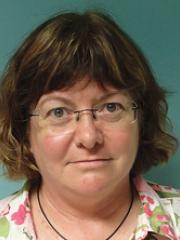
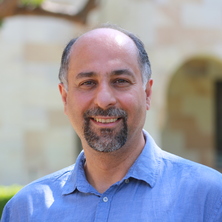
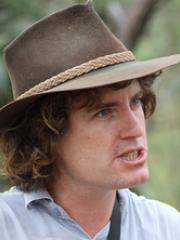
Dr. Lyn Cook is an Associate Professor specializing in evolutionary biology and systematics at the University of Queensland. Her research examines plant-insect interactions, biogeographic patterns, and taxonomic relationships using molecular phylogenetics. Research focuses on: Australian flora and insect coevolution Historical biogeography of Southern Hemisphere taxa Taxonomic revisions using genomic data Cryptic species discovery Conservation prioritization Recent work addresses taxonomic controversies in Eucalyptus classification and resolves biogeographic origins of Australian arachnids using phylogenetic methods. Fieldwork spans Australian biomes from rainforests to arid zones.
Professor Gerry Cassis is a leading systematic entomologist at the University of New South Wales (UNSW) , where he holds the position of Professor within the School of Biological, Earth & Environmental Sciences . With over 30 years of post-PhD research experience, his work has significantly advanced the fields of systematics, phylogeny, biogeography, and evolutionary biology, particularly in the study of true bugs (Heteroptera). Education and Career Path: PhD in Entomology from Oregon State University , where he worked with the world authority on jewel bugs. Post-PhD, he spent four years at CSIRO , contributing to a book on Australian dung beetles. From 1989 to 2007, he was at the Australian Museum , serving as the Head of the Centre for Biodiversity and Conservation Research. Since 2007, he has been a Professor at UNSW, focusing on systematic entomology and biodiversity conservation. Research Focus: Professor Cassis's research is eclectic, spanning the phylogenetic history, biology, and coevolution of true bugs. His work integrates molecular and morphological data to unravel complex taxonomic relationships and biogeographic patterns. Currently, he leads a capacity-building project in Papua New Guinea, funded by the Commonwealth of Australia Department of Foreign Affairs and Trade, aimed at enhancing biodiversity conservation efforts. Publications and Impact: He has authored three books, 123 scientific journal articles, 23 book chapters, and 11 conference papers. His recent publications (2020-2024) focus on ant mimicry in plant bugs, the impact of wildfires on insect communities, and the discovery of new species across Australia and the Indo-Pacific region. Awards and Recognition: Winston Churchill Fellowship Eureka Prize finalist Two Whitley awards for his books on Australian insects Supervision and Mentorship: At UNSW, Professor Cassis has supervised 12 PhD students, 2 Masters students, and 10 Honours students, in addition to mentoring two postdoctoral fellows. His lab currently comprises one postdoctoral fellow, five PhD students, three research assistants, and one Honours student, fostering a collaborative environment for cutting-edge research.
Tobin D. Northfield is a Researcher at James Cook University (JCU), focusing on ecological and agricultural sustainability research. His work bridges multiple disciplines including entomology, biodiversity conservation, and climate change impacts. He has contributed to over 50 peer-reviewed publications, exploring topics such as pollinator community stability, biological control mechanisms, and agroecosystem dynamics. Research Interests: Dr. Northfield’s primary areas of research include: Ecological interactions in agroecosystems and natural environments Biological control strategies for pest management Climate change effects on species distributions and community stability Biodiversity conservation in human-modified landscapes Key Themes in Publications: Recent work emphasizes the role of organic farming practices in sustaining pollinator diversity (Functional Ecology 2023), environmental drivers of jellyfish distributions (PLoS ONE 2022), and the ecological consequences of agricultural intensification (Journal of Applied Ecology 2020). His research frequently integrates field studies with theoretical modeling to address applied ecological challenges. Collaborations: Active collaborations include projects with institutions like the USDA, University of Washington, and University of Queensland, focusing on interdisciplinary solutions for sustainable agriculture and biodiversity preservation.
Professor Susan Fuller is a faculty member at Queensland University of Technology (QUT) within the Faculty of Science, School of Biology & Environmental Science. Her primary role is as a Professor in Ecology, specializing in conservation biology, biodiversity, and ecoacoustic innovations. She has been recognized for her research with Vice-Chancellor’s Performance Awards (2008, 2015) and for her teaching excellence with VC Awards for Excellence (2015–2016). Her work focuses on using interdisciplinary approaches, particularly ecoacoustics, to monitor ecosystem health and biodiversity. Her research interests include acoustic monitoring of endangered species (e.g., Pink Cockatoos), impacts of sensory pollution, and biodiversity assessments in agricultural landscapes. She collaborates with organizations like the Australian Wildlife Conservancy (AWC) and the Cotton Research Development Corporation. Teaching areas span conservation biology, ecology, and environmental science, emphasizing practical applications and student engagement. Professional memberships: International Society of Ecoacoustics (Councillor) Research grants: Includes projects on cotton industry sustainability and biodiversity monitoring Supervision: Overseen research on ecoacoustic assessments, frog evolution, and threatened plant genetics Publications highlight contributions to ecoacoustic methodologies, genetic analysis of threatened species, and landscape genetics of invasive species. Her work bridges ecology, technology, and conservation policy to address environmental challenges.
Dr. Sam Robinson is a Senior Research Fellow at the University of Queensland's Institute for Molecular Bioscience (IMB) and an Affiliate of the Centre for Innovation in Pain and Health Research (CIPHeR) within the Faculty of Health, Medicine and Behavioural Sciences. His research focuses on the discovery and characterization of novel toxins from venomous animals and plants, with applications in understanding pain mechanisms and developing new therapeutics. Doctor of Philosophy, Monash University Dr. Robinson's research expertise spans multiple disciplines including pharmacology, neuroscience, physiology, organismal biology, medicinal chemistry, biochemistry, molecular biology, proteomics, and structural biology. His work centers on plant and animal toxins, particularly those causing pain, with applications in understanding chemical defense mechanisms and developing treatments for chronic pain and diabetes. He investigates the structure, function, and pathophysiology of stings from various organisms including ants, wasps, scorpions, spiders, cone snails, and stinging plants. His recent publications demonstrate a strong focus on venom evolution, pain mechanisms, and toxin characterization, with particular emphasis on sodium channel modulation, venom composition across species, and the biomedical applications of natural toxins. His work frequently appears in high-impact journals including Nature Communications, Science, and PNAS. Dr. Robinson has received significant research funding including an NHMRC Investigator Grant (2023-2027) for 'New Toxin Tools for Dissecting Pain', ARC Discovery Projects, and National Geographic Society grants. He actively supervises multiple PhD students working on venom evolution, pain-causing toxins, and sodium channel research. As a media expert, he is frequently consulted on topics related to ants, bees, cone snails, stings, toxins, venom, and wasps.
Professor Matthew Phillips is a faculty member at Queensland University of Technology (QUT), holding a position in the School of Biology & Environmental Science within the Faculty of Science. His research focuses on phylogenetic methods, evolutionary patterns of biodiversity in Australian mammals, and the impacts of extinction events such as the Cretaceous-Palaeogene boundary. He holds a PhD from Massey University and has held postdoctoral roles at institutions including the Australian National University, Massey University, and the University of Oxford. His research interests include integrating molecular and morphological data to understand macroevolutionary processes, particularly in mammals and birds. Notable areas include the origins of Australian marsupial biodiversity, the evolutionary relationships of extinct and extant species, and the application of phylogenetic methods to resolve taxonomic ambiguities. Recent publications highlight contributions to conservation genetics, evolutionary morphology, and paleontology. His work often bridges ecological and genetic datasets to address questions about species survival and diversification. Phillips has collaborated internationally on projects involving ancient DNA, fossil analysis, and biodiversity conservation. While no specific scientific awards are listed in the provided text, his extensive publication record reflects recognition in evolutionary biology and systematics. His research also emphasizes interdisciplinary approaches, combining computational methods with field studies to advance evolutionary science.
Dr Lynda Perkins is a researcher at the School of the Environment , University of Queensland. Her work primarily focuses on insect ecology and plant-insect interactions, particularly with agricultural pests. Her research explores: Insect host specificity and cryptic species identification Chemical ecology of herbivore-plant interactions Pest behavior on genetically modified crops Morphological and ecological adaptations of urticating caterpillars Recent publications highlight her expertise in: Entomology and Lepidoptera behavior Proteomic analysis of insect defense structures Pest management strategies for Bt-resistant populations Temperature effects on aphid population dynamics
Professor Geoffrey Gurr is a Distinguished Professor in Agricultural, Environmental and Veterinary Sciences at Charles Sturt University, affiliated with the Gulbali Research Institute. His research focuses on applied insect ecology, biological pest control, and sustainable agriculture, with a focus on integrating ecological strategies to enhance farming resilience. He holds visiting professorships at institutions like Zhejiang University and holds a 'Thousand Talents' fellowship in China. Education includes doctoral training at Imperial College London and the National Institute of Agricultural Botany. His work spans three decades, producing over 200 papers and two books, with a field-weighted citation impact 62% above global averages. Notable contributions include companion crop strategies in China for pest control and microbial ecology studies in insects. Awards include the 2020 Engagement Australia Award and fellowships in Royal Societies. Research interests include insect-plant interactions, phytoplasma pathogens, and agroecological practices in developing nations. He has supervised 42 PhD/MPhil students and led projects funded by ARC, ACIAR, and international donors totaling $20M. Key projects include combating coconut phytoplasma diseases and enhancing biodiversity in farmlands.
Theo Evans is an Associate Professor at the University of Western Australia's School of Biological Sciences. With over 30 years of experience, he has held positions at CSIRO, National University of Singapore, and Alexander von Humboldt Foundation. His work bridges discovery and applied science, focusing on termites and dung beetles as key ecosystem engineers with global fieldwork across six continents. University of Western Australia (2015–Present): Associate Professor of Applied Entomology National University of Singapore (2011–2015): Associate Professor of Environmental Biology CSIRO Entomology (1995–2002, 2005–2011): Principal Research Scientist & Team Leader Education Doctor of Philosophy in Zoology, University of Melbourne (1996) Bachelor of Science (Honours) in Zoology, University of Western Australia (1990) Bachelor of Science in Zoology & Marine Biology, James Cook University (1989) Accelerated Leadership Program, University of New South Wales (2007) Research Themes Theo's work spans termites' vibro-acoustic communication, evolutionary ecology, and pest management systems. His dung beetle research emphasizes ecosystem services and invasive species dynamics. Current projects include: Vibration-based Termite Control Dung Beetle Activity Mapping Integrated Pest Management Tropical Microclimate Resilience Termite Mitochondrial Phylogenomics Key Contributions He discovered termite vibration-based wood assessment, demonstrated dung beetles' role in soil fertility and crop yield, and developed novel termite control systems. His 129+ publications (h-index 38) and $11M in funding reflect his impact. Teaching & Leadership Coordinates core zoology units (ANIM2207, ANIM2297) and Agriculture's AGRI5507. Leads the National Dung Beetle Ecosystem Engineer Project and serves as School Academic Integrity Officer. Scientific Appointments Includes advisory roles for Fiji Biosecurity Authority, Kyoto University's Field Cooperative Program, and United States EPA's Termite Baiting Panel. His research contributes to UN Sustainable Development Goals in environmental protection and sustainable agriculture.
Andrew H. Thornhill is a Researcher at James Cook University specializing in plant phylogenetics and biogeography. His work employs molecular and spatial analyses to study eucalypt evolution, biodiversity patterns, and conservation prioritization. Key research includes reconstructing phylogenetic histories of Myrtaceae, developing biogeographic regionalization methods, and assessing climate change impacts on plant lineages. Collaborations span global biodiversity informatics, macroecology, and paleobotany. Publications introduce novel phylogenetic diversity metrics for conservation, investigate plant-insect coevolution, and analyze thermal niche evolution. Thornhill's continental-scale studies of Australian flora influence ecological theory and conservation policy.
Dr Lynne Milne is an Adjunct Research Fellow at Curtin University's School of Earth and Planetary Sciences, within the Faculty of Science and Engineering. Her research focuses on plant ecology, palynology, and biodiversity studies, particularly in Australian ecosystems. She is affiliated with the Curtin Perth campus and based in Geology Building Room 208B. Her work spans diverse topics including floral mimicry mechanisms in orchids, pollination ecology in Southwest Australian biodiversity hotspots, and forensic palynology applications. She has contributed to studies on bee venom chemistry, soil cadmium dynamics in cacao farming, and Eocene fossil pollen records. Publications since 2005 reflect her multidisciplinary approach, combining fieldwork with lab-based analyses. While no specific awards are listed, her research consistently addresses critical questions in plant-animal interactions and environmental science. No active grant details or lab affiliations are documented in the provided text.
Dr. Kayvan Etebari is a Senior Lecturer in Horticulture and Crop Entomology at the University of Queensland 's School of Agriculture and Food Sustainability . His research focuses on host-pathogen interactions , insect-specific viruses , and biological control of agricultural pests , particularly in species like the Aedes aegypti mosquito and Oryctes rhinoceros beetle. Key research areas include: Host-Pathogen Interaction Entomopathogenic Viruses MicroRNA Regulation Biosecurity Strategies Sugarcane Pest Management Vector Competence His work has led to significant discoveries in viral ecology , including the characterization of novel viruses in Inopus flavus and Oryctes beetles. Recent projects explore Wolbachia-mediated antiviral defense and m6A RNA methylation in mosquitoes. He collaborates with industry partners like Sugar Research Australia and Agrifutures Australia . Scientific grants include: 2024-2026 : Global Insights into Pest/Disease Management in Ginger 2023-2027 : Viruses for Sugarcane Pest Control 2020-2021 : Novel Insect-Specific Viruses in Pacific Coconut Beetles 2014-2017 : MicroRNA Manipulation for Insecticide Resistance Dr. Etebari supervises PhD and honors students on topics like entomopathogenic virus discovery , vector-enabled metagenomics , and mosquito fecundity regulation . He actively promotes sustainable pest management through innovative biocontrol strategies and drone-based surveillance.
Ryan Phillips is a Senior Lecturer at La Trobe University’s Ecological Plant and Animal Sciences department. His research focuses on specialized ecological interactions, particularly pollination biology in orchids and Proteaceae, using tools like population genetics, phylogenetics, and chemical ecology. Current projects include optimizing plant translocations for conservation, studying sexual deception in orchids, and assessing vertebrate pollinators in Banksia woodlands. Funded by Australian Research Council, Royal Botanic Gardens Victoria, Asian and Pacific Science Foundation, and National Landcare Program Collaborates with Prof. Rod Peakall, Dr. Noushka Reiter, Dr. Gavin Flematti, and Prof. Siegy Krauss Research Highlights : Evolution of sexual deception in orchids Conservation translocations for rare plants Bushfire recovery strategies for orchids Vertebrate pollination systems in old landscapes Adaptations to honey possum pollination in Banksia Phylogenetic congruence between orchids and fungi Teaching Activities : Lectures in Conservation Biology (WCB2IC) with fieldwork at Wilsons Promontory National Park Teaches Molecules, Genes and Cells (BIO1MGC) Coordinates field research in Victorian Mallee (ENV3MFC) Professional Roles : Journal Editor for Journal of Ecology (2013–present) Journal Editor for Botanical Journal of the Linnean Society (2011–present)
Dr. John Hall is a Lecturer in the School of the Environment at The University of Queensland, specializing in ecology with a focus on botany and plant-animal interactions. His teaching emphasizes field-based learning, narrative engagement in lectures, and student skill development in literature research and writing. He is a key contributor to international programs in Australian Terrestrial Ecology, including a course taught for the University of California. John’s research centers on cycad ecology, exploring pollination mechanisms, seed dispersal strategies, and plant defense systems. His PhD (2011, School of Biological Sciences, UQ) focused on cycads’ ancient ecological roles and their interactions with animals. His publications (2004–2018) highlight cycads’ evolutionary significance, examining topics like wind vs. insect pollination, megafaunal seed dispersal syndromes, and plant-pollinator mutualisms. These studies bridge paleoecology and modern plant biology, offering insights into pre-flowering plant-animal dynamics. While no formal grants or awards are listed, his work underscores contributions to both teaching innovation and foundational ecological research. He collaborates on international educational initiatives, extending UQ’s global academic reach.
Professor Simon Ho leads the Molecular Ecology, Evolution, and Phylogenetics Lab at the University of Sydney's School of Life and Environmental Sciences. With expertise in molecular clocks and phylogenomics, he investigates evolutionary timescales across diverse taxa including birds, marsupials, and insects. His research integrates genomic data with fossil records to reconstruct evolutionary histories and quantify diversification patterns. Key research areas include molecular clock theory, conservation genomics, and phylogeography. Ho's work often addresses how climate change and geological events drive speciation and population dynamics. His lab develops computational methods for analyzing evolutionary rate variation and divergence dating. Recent publications consistently demonstrate applications of Bayesian tip dating, genomic rate decomposition, and conservation prioritization frameworks. Articles frequently combine contemporary genomic data with paleontological evidence to resolve longstanding questions in evolutionary biology.