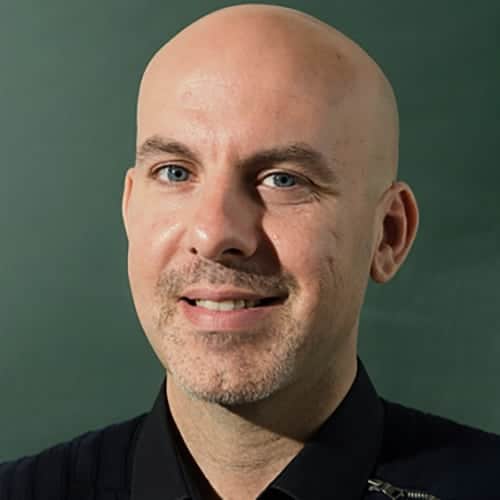
Roberta Sinatra is a Professor in Social Data Science at the University of Copenhagen, with part-time affiliations at ITU Copenhagen, ISI Foundation (Italy), and CSH (Austria). She co-founded the NERDS Research Group at ITU and co-leads the Pioneer Centre for AI in Copenhagen. Research Interests: Her work spans computational social science, network science, and data science, focusing on fairness in AI, scientific careers, and human mobility. Recent projects include analyzing child protection algorithms and modeling urban bicycle networks. Scientific Awards: ERC Consolidator Grant Villum Young Investigator Grant Complex Systems Society Junior Prize DPG Young Scientist Award for Socio- and Econophysics Sapere Aude: Starting Grant Publications: Her research, often in top-tier venues like Nature and Science , explores interdisciplinary themes, including AI ethics, gender disparities in science, and social network dynamics. Labs & Teams: She leads research initiatives at the Center for Social Data Science (KU) and co-founded the NERDS Research Group at ITU, fostering international collaboration in network science and AI ethics.
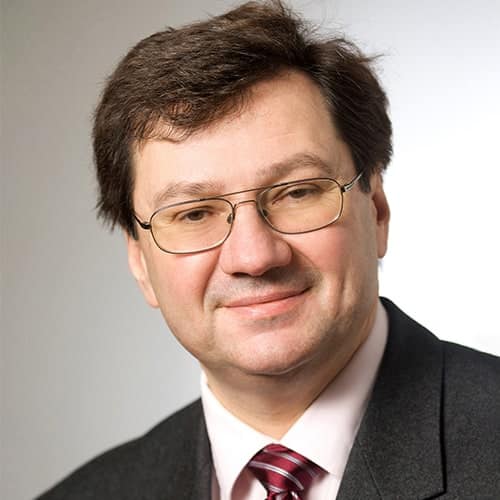
Frede Blaabjerg is a Professor at Aalborg University (AAU Energy) , affiliated with the Faculty of Engineering and Science . Since 1998, he has pioneered power electronics research in applications such as wind turbines , photovoltaic (PV) systems , reliability engineering , and Power-2-X technologies. Education : PhD in Electrical Engineering (1995, Aalborg University) Honorary Degrees : Honoris Causa at University Politehnica Timisoara (2017) and Tallinn Technical University (2018) His research focuses on power electronics control , system optimization , and reliability for renewable energy and electric mobility . Recent work includes grid-forming converters , virtual synchronous generators , and smart EV charging systems. Key publication trends span 15+ years , with over 3,733 peer-reviewed articles and 900+ journal papers in power electronics , renewables , and energy storage . Notable book series: Control of Power Electronic Converters and Systems (4 volumes, Elsevier). Scientific Awards : 46 IEEE Prize Paper Awards 2020 IEEE Edison Medal 2019 Global Energy Prize 2014 IEEE William E. Newell Power Electronics Award Leadership Roles : Editor-in-Chief, IEEE Transactions on Power Electronics (2006–2012) Chairman, Danish Council for Research and Innovation Policy (2020–) President, IEEE Power Electronics Society (2019–2020)
Roberto Mora Cortez serves as an Associate Professor in the Department of Business and Sustainability at the University of Southern Denmark (SDU), Kolding campus, with a primary focus on Business-to-Business (B2B) marketing research and instruction. His academic contributions span teaching, publication, and industry engagement within the global B2B domain. His research expertise centers on B2B Marketing , Market Segmentation , and Quantitative Methods , with significant extensions into Sales , Trade Shows , Customer Journey mapping, and DEI in B2B contexts. His methodological approach combines systematic reviews, survey research, and empirical analysis, emphasizing practical applications for businesses across diverse economic environments including Chile and Peru. Key investigations address segmentation efficacy, digital transformation of trade shows, and the integration of diversity principles into B2B selling frameworks. Analysis of his 15 most recent publications (2022-2025) reveals dominant trends toward digitalization, sustainability, and inclusivity in B2B practices. His work consistently bridges theoretical frameworks with actionable implementation strategies, particularly in global and emerging markets. Notable thematic clusters include AI-driven business processes, relationship marketing resilience during economic fluctuations, and social media's role in B2B engagement. No scientific awards, prizes, or fellowships are documented in the available records. Mora Cortez has supervised at least one bachelor thesis student (Catherine Scheck) and teaches courses including Business-to-Business Marketing, Advanced Quantitative Analyses, and Scientific Research Processes. His academic service includes peer reviewing for the Journal of Business & Industrial Marketing and participation in conferences such as the AMA Winter Academic Conference. International collaborations with Georgia State University and the University of Chile indicate active research networking. His departmental work within SDU's sustainability-focused business unit involves media engagement on mining industry marketing in Latin America, including contributions to Peruvian business media on value propositions and trade show ROI. Current research trajectories emphasize digital transformation, sustainable innovation, and DEI integration within evolving B2B landscapes.
Jens O. Brunner is a Professor of Decision Science in Healthcare at the Technical University of Denmark (DTU), affiliated with the Department of Technology, Management and Economics. Previously, he held a professorship at the University of Augsburg until March 2023 and served as co-director of the University Center for Health Care (UNIKA-T) from 2013 to 2020. He earned his PhD from the TUM School of Management (2009) and a diploma in Business Administration from the University of Mannheim (2006). Roles: Professor, Department Editor for Health Care Management Science , and Associate Editor for multiple journals. Education: PhD in Management, TUM School of Management (2009) Diploma in Business Administration, University of Mannheim (2006) His research focuses on healthcare operations management and the application of quantitative methods to optimize service systems. Key areas include triage policies, staff scheduling, and AI-driven healthcare solutions. His work has contributed to improving resource allocation in hospitals and pandemic response strategies. Notable awards include the Harold W. Kuhn Award (2015) and the IISE/SSE Outstanding Innovation Award (2022). His research has been published in journals like IIE Transactions and European Journal of Operational Research . He supervises PhD students in projects such as AI-integrated pooling strategies and resource optimization in healthcare. His involvement in interdisciplinary collaborations and editorial roles highlights his leadership in advancing healthcare operations research.
Stine Krøijer is an Associate Professor in the Department of Anthropology at the University of Copenhagen, Faculty of Social Sciences. Her research focuses on political anthropology, nature-culture relations, cosmology, time, multispecies ethnography, anarchism, autonomy, and indigenous peoples, with regional expertise in the Amazon and Scandinavia. She is actively involved in major research projects such as 'Lokale Landvindinger' (2021–2025) and 'Fire and Political Alterity in Amazonia' (2023–), funded by the Velux Foundation and the Danish Research Council, respectively. Her educational background includes a PhD in Anthropology from the University of Copenhagen, awarded in 2011. Prior to her academic career, she worked with Oxfam_IBIS on forest, climate, and indigenous rights issues in the Amazon basin from 2002 to 2007 and again from 2010 to 2014. Stine Krøijer’s research explores the political agency of non-human entities like trees, the performative aspects of climate activism, and the temporalities of radical politics. Her work bridges anthropology with environmental studies, political theory, and indigenous epistemologies. She investigates how radical environmental change—such as deforestation, peatland restoration, and forest fires—reshapes political subjectivities and social futures. Her recent publications reflect a strong trend in climate politics, environmental activism, and the ontological status of nature. Themes include the agency of trees, dystopian imaginaries in environmental movements, and the co-creation of landscapes in Denmark. Her research combines ethnographic depth with theoretical innovation, particularly in understanding how ecological crises generate new forms of political alterity. Member, Expert Council on Nature National Parks, Ministry of Environment, Denmark Coordinator, Green Solution Centre, University of Copenhagen Editor, Tidsskriftet Antropologi She teaches courses on climate, nature, environment, global flows, project design, and fieldwork methods. Her advisory and grant activities are centered on externally funded research projects focusing on climate change, indigenous rights, and environmental transformation. She is also involved in public engagement through lectures and exhibitions such as 'Amazon Trails' and 'Climate/Kettle: Aesthetics of Resistance'. Stine Krøijer leads and participates in research groups focused on nature, environment, and climate. She collaborates with interdisciplinary teams across Denmark and Latin America, particularly in the Amazon region. Her work is embedded in both academic and policy-oriented networks, contributing to the Green Solution Centre and national environmental councils.
Alex Arenas is a Full Professor in the Department of Computer Engineering and Mathematics at Universitat Rovira i Virgili (URV), Tarragona, Spain. He is also an External Faculty member at the Complexity Science Hub in Vienna and Chief of Complex Systems Science at the Pacific Northwest National Laboratory, USA. His research spans complex systems, network science, computational epidemiology, and multilayer dynamics, with applications in public health, neuroscience, and social systems. Research Interests: His work focuses on the physics of multilayer networked systems, particularly the interplay between structure and function in complex networks. Key areas include synchronization, epidemic modeling, network medicine, the physics of the microbiome, and higher-order interactions in spreading processes. He investigates dynamic transitions using functional multilayer frameworks and develops models for real-world systems like urban mobility and misinformation diffusion. The recent articles highlight a strong trend in computational epidemiology, especially post-COVID modeling of vaccination strategies, rebound dynamics, and wastewater surveillance. There is also significant work on synchronization in oscillator networks, chimera states, and higher-order network effects, reflecting a deep engagement with nonlinear dynamics and theoretical network science. Applications span medicine, urban planning, and social systems. Scientific Awards: Fellow, American Physical Society (2018) Fellow, Network Science Society (2020) ICREA Academia (2011, 2017, 2022) Narcís Monturiol Medal (2022) Web Science Trust Test of Time Award (2024) Complex Systems Society Senior Award (2024) Advising and Grants: Arenas has supervised numerous PhD students and postdoctoral researchers, though specific names are not listed. He has been Principal Investigator on 47 research projects, including EU FP7 projects, a James S. McDonnell Foundation grant, and Horizon Europe's CREXDATA project. He has served as an editor for Physical Review E , Journal of Complex Networks , and Network Neuroscience , and has reviewed for major funding agencies including ERC, MINECO, and international bodies. Labs and Teams: He leads the Alephsys Lab at URV, which develops tools like Radatools for network analysis and community detection. His team focuses on interdisciplinary modeling of real-world complex systems using data-driven and theoretical approaches.
Andrea Burattin is an Associate Professor at the Department of Applied Mathematics and Computer Science, Technical University of Denmark. His work bridges formal methods and practical process analysis, focusing on process mining, business process management, and hybrid modeling techniques. He actively contributes to research in healthcare process optimization, streaming data analysis, and system verification through Petri nets and CCS transformations. UN Sustainable Development Goals: Poverty eradication, environmental protection, and prosperity for all (via process optimization) Active projects: Immersive Process Mining (2024-2027), Usability and Understandability of Hybrid Process Models (2018-2021) His research explores large language model integration with process mining, proposing frameworks like Tiramisù for multi-faceted process visualization and PN2CCS for formal model translation. Recent work emphasizes real-time monitoring, conformance checking, and IoT-driven process analytics. Key trends in his publications include: 1) Streaming process mining pipelines (2022-2025); 2) LLM-plan generation frameworks (2024); 3) Formal verification techniques (Petri nets, CCS); 4) Healthcare process modeling (2019-2023); 5) Behavioral pattern analysis in process compliance. Scientific Awards Best Demo Award (2022, 2016) Best Process Mining Dissertation Award (2014) Best Workshop Paper (EDBA and PODS4H, 2023) As advisor, he supervises PhD projects on process mining and hybrid modeling. His editorial roles include Information Systems reviewer (2024-2025) and past editor for Engineering Applications of AI (2022-2023). Collaborations span Denmark, Italy, and the Netherlands.
Professor Riikka Rinnan (University of Copenhagen) is a leading expert in ecosystem-atmosphere interactions, focusing on volatile organic compounds (VOCs) in Arctic environments. Her groundbreaking discovery of VOCs in permafrost has advanced climate prediction models, revealing complex interactions between climate warming, insect herbivory, microbial activity, and vegetation shifts. Current position: Professor, Department of Biology, University of Copenhagen Major research themes: Permafrost VOCs, Arctic climate feedbacks, plant-insect-microbial interactions International collaborations: China, Germany, Russia Her work combines field expeditions in extreme Arctic conditions with laboratory experiments and advanced VOC analysis. Climate warming experiments show VOC emissions could increase 40-fold with combined warming and insect attacks, while Arctic soils may act as unexpected VOC sinks. Key publications appear in Nature Communications , Nature Geoscience , and Global Change Biology . Riikka Rinnan has received prestigious awards including the EliteForsk Award, European Research Council Consolidator Grant, and Sapere Aude Research Leader. She leads international research teams, advises five PhD candidates, and supervises four postdocs (including two Marie Curie fellows). Her Siberian expedition plans demonstrate commitment to real-world scientific challenges.
Tor Hernes is a Professor at the Department of Organization, Copenhagen Business School, and directs the Centre for Organization and Time (COT). His research focuses on organizational continuity, temporal dynamics in organizing processes, and narrative theory. He holds adjunct professorships at the University of South-Eastern Norway and has been a visiting professor at Université Paris-Dauphine. His research explores how organizations navigate time through event-based perspectives, distant future goal setting, and temporal trajectories in resilience. Key themes include the interplay between organizational processes and natural environments, particularly in sustainability contexts. Hernes has authored influential works such as Organization and Time (2022) and A Process Theory of Organization (2014). His recent articles analyze temporary organizing structures, environmental framing, and resilience frameworks. He actively supervises master’s theses and PhD students in organizational studies. Hernes also contributes through academic leadership roles, including editing research agendas on organizational continuity. His work bridges theoretical insights with practical challenges like climate change adaptation and strategic innovation.
Morten Birkved is a Professor at the Department of Green Technology, University of Southern Denmark, and Head of SDU Life Cycle Engineering. He leads the SDU Climate Cluster and actively contributes to research on Life Cycle Assessment (LCA) , Circular Economy , and Environmental Sustainability . His work spans cross-disciplinary collaborations in Denmark and internationally. Education: M.Sc. in Environmental Chemistry, PhD in Sustainable Development His research interests focus on integrating LCA with circular economy principles, analyzing environmental impacts of construction materials, and developing sustainable solutions for agriculture and energy systems. Recent projects include microbial protein production, green fuels in shipping, and biorefineries for organic waste valorization. Recent publications highlight 2025 advancements in: Eco-design strategies for buildings Hybrid wastewater treatment systems Carbon-storing asphalt pavements Comparative LCA of housing typologies These studies emphasize Denmark as a case study region and leverage both parametric and probabilistic modeling approaches. Scientific Awards Recipient of SCC Fast Track Prize (2025) Teaching & Supervision Supervised PhD research on circular agriculture and plastic circularity Lectured on chemical processes and environmental impacts since 2019 Labs & Projects Coordinates EU-funded initiatives like FLAVOURFERM (plant-based fermentation) and AgriLoop (circular agriculture) Develops microbial platforms for waste-to-protein conversion Advances biostimulants for sustainable agriculture
Ciprian Cimpan is an Associate Professor at the Department of Green Technology (IGT), University of Southern Denmark, and a key member of the SDU Climate Cluster and SDU Life Cycle Engineering. His research focuses on Circular Economy , Industrial Ecology , Waste and Resources Management , and Life Cycle Assessment , with a strong emphasis on sustainable growth and resource efficiency. Postdoctoral Fellow, Norwegian University of Science and Technology (2019–2021) His recent publications highlight applications of LCA in evaluating additive manufacturing , plastic packaging , and critical material recycling within green transition contexts. He also investigates systemic challenges in textile waste , ICT product obsolescence , and rebound effects in reuse practices . Scientific awards include the DANROAD Prize (2025) for innovative drug recycling. He supervises PhD student Bubinek R. and teaches courses on Eco-efficient Engineering , Waste Management , and Solid Waste Processing .
Navid Bayati is an Associate Professor at the University of Southern Denmark, affiliated with the Institute of Mechanical and Electrical Engineering and the Centre for Industrial Electronics. He leads the Control and Protection of Smart Grids (CAP-SG) group and focuses on renewable/hybrid power systems, microgrid protection, and grid code compliance. Education: Ph.D. in Power Systems & Microgrid Protection (2020, Aalborg University); M.Sc. in Power Systems (2017, Amirkabir University of Technology) His research spans renewable energy integration , transient analysis , grid interconnection , and digital twin applications . Recent work includes machine learning for carbon emission prediction, fault localization in DC microgrids, and supercapacitor resilience in hybrid systems. Collaborations include projects like IEA Wind Task 50 and RePoSys , addressing grid renovation, life cycle assessment, and digital twin resilience. His teaching portfolio covers power electronics , energy management , and microgrid control .
Yang Cheng is an Associate Professor at the Department of Materials and Production, Aalborg University, Denmark. He holds a PhD in Mechanical Engineering from the same institution (2011), focusing on manufacturing strategy and network dynamics. His research spans supply chain management, sustainability, and global operations, with a focus on integrating technology and environmental policies into manufacturing systems. He leads or participates in high-impact projects like MAASive (2024–2026) and the Sino-Danish Center Research Project (2011–present), addressing resilience in value networks and global operations innovation. Research Interests: Supply Chain Management & Integration Sustainability & Green Technologies Manufacturing Strategy & Networks Technology Policy & Digitalization Global Operations & Cross-Border Collaboration Recent Work Trends: Prof. Cheng's 2025 articles emphasize blockchain in sustainable supply chains, green technology investments under carbon policies, and digitalization's ethical implications. His 2024 research explores smart factories, EU battery regulations, and robotization in manufacturing. These studies blend quantitative models with case-based analysis to address real-world challenges. Awards: 2024 Emerald Literati Awards – Outstanding Reviewer Advising & Grants: As PI for multiple Global Operations Management PhD programs (2019–2025), he guides research on digital transformation and university-industry collaboration. His projects receive funding from Danish and international grants, focusing on innovation and resilience in manufacturing networks. Labs/Teams: Collaborates with the Center for Industrial Production at Aalborg University and engages in international partnerships through the Sino-Danish Center. Active editorial roles include Production Planning & Control and Journal of Manufacturing Technology Management .
Alfred Taudes is a Full Professor at the Department of Information Systems and Operations, Institute for Production Management, Vienna University of Economics and Business (WU Vienna). He holds a doctoral degree and a Habilitation from WU Vienna in Business Administration and Management Information Systems, and a Magister degree from Vienna University. He has held assistant professorships at WU and visiting professorships at Augsburg, Münster, Essen, and Tsukuba University, Japan. He joined WU permanently in 1993 and served as head of the Department of Information Systems and Operations from 2010 to 2016. His research spans Operations and Supply Chain Management , Marketing Engineering , Knowledge Management , and the impact of Big Data and Blockchain on production systems. Using Complexity Science and Cryptoeconomics , he investigates digital production, integrated value chains, and market designs. He teaches undergraduate and graduate courses including Operations Strategy, Data Science, and IT seminars in WU’s International Supply Chain Master program, and has also taught at Japanese universities. His recent publications focus on blockchain privacy (e.g., CoinJoin analysis), CBDCs, MiCAR regulation, decentralized federated learning, and digital custody, reflecting a strong trend toward cryptoeconomics and blockchain-based systems in operations and finance. These works appear in top journals and conferences in information systems, security, and operations research. Cooperation Officer of the Year 2013/14 Distinguished Paper Award WI 2009 VHB Best Paper Award Nomination VHB Best Paper Award Dr. Wolfgang Houska - Recognition Award Alfred Taudes has coordinated major research projects such as the WWTF-project “Integrated Demand and Supply Chain Management” and the Special Research Area Adaptive Models in Economics and Management Science. He currently leads the research group on Cryptoeconomics at WU and chairs the scientific board of the Austrian Internet Offensive . His leadership extends to project management in initiatives like the Austrian Blockchain Center and research on decentralized finance and digital assets. He is actively involved in academic service, including organizing conferences like DEXA 2022, serving on editorial boards, and advising on research policy. His lab and research group focus on blockchain applications, digital transformation in operations, and the societal implications of big data.
Kristian Sevdari is a Postdoctoral Researcher at the Department of Wind and Energy Systems, Technical University of Denmark (DTU). He was born in Kucove, Albania, in 1995, and holds a B.Sc in electrical engineering from the Polytechnic University of Tirana (2016), an M.Sc from UiT Norges arktiske universitet, Norway (2020), and a Ph.D. from DTU (February 2024). Since 2020, he has been working at DTU on multiple projects including Solar-Move, AHEAD, FLOW, EV4EU, ACDC, and FUSE. His research focuses on renewable energy integration and electric vehicle grid integration, with specific expertise in vehicle-to-grid systems, power system dynamics and stability, prosumers and flexible demand, wind power integration, and smart grid technologies. His work contributes to UN Sustainable Development Goals related to sustainable energy and climate action. Dr. Sevdari's recent publications demonstrate a strong trend toward solving practical challenges in EV-grid integration, with emphasis on bidirectional charging technologies, harmonics analysis, battery second-life applications, and smart charging strategies for residential and urban environments. His research bridges theoretical control approaches with experimental validation across multiple European contexts. Best paper award at 2024 IEEE Transportation Electrification Conference & Expo Best paper award of the IEEE PES ISGT-Europe 2021 conference As a supervisor, he has guided multiple Master's theses on topics including telematics integration for EV cost reduction, open charge point protocol implementation, vehicle-to-grid testing, and compatibility testing for EV ecosystems. He is actively involved in the IEEE PES Task Force on electric vehicle grid integration and IEA Task 53, and is the founder of IEEE REST conferences, Qendra SUSALB, and EkoVolt.