Prof. Andrzej Muszyński is a Professor at Adam Mickiewicz University in Poznań, specializing in meteoritics, planetary geology, and geochemistry. He leads research on the Morasko Meteorite and volcanic processes, with affiliations to the Geohazards Research Unit. His work integrates field geology, laboratory analysis, and instrument design for planetary exploration. Research interests span meteorite mineralogy (including discovery of new minerals), impact crater dynamics, terrestrial and Martian volcanism, and geological evolution of regions like the Sudetes. His studies employ advanced geochemical, mineralogical, and remote-sensing techniques. Recent publications (2019–2024) focus on sulfide segregation in crust-mantle systems, Martian volcanic features, meteorite impact structures, and novel planetary spectrometers. Trends indicate strong emphasis on extraterrestrial geology, geochemical processes at depth, and interdisciplinary instrumentation. He collaborates extensively within international teams (e.g., IODP expeditions) and contributes to developing analytical tools like the MIRORES spectrometer for Martian missions.
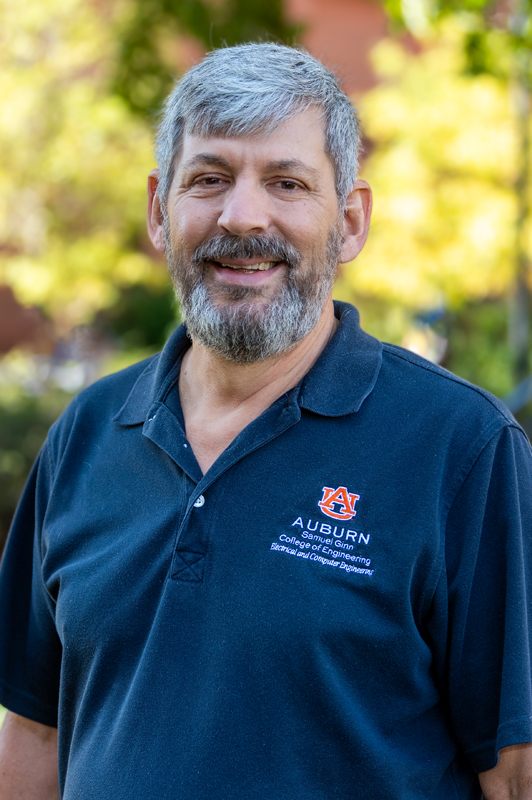
Thaddeus Roppel is an Associate Professor in the Department of Electrical and Computer Engineering at Auburn University’s College of Engineering. He conducts research in robotics, sensor fusion, artificial intelligence, and MEMS sensors, and actively mentors graduate students in the Sensor Fusion Laboratory. He teaches courses in electronics, IC fabrication, wireless design, and advanced mobile robotics, and contributes to outreach programs including K-12 robotics and Engineers Without Borders. Ph.D., M.S., B.S. in Electrical Engineering — Michigan State University Dr. Roppel’s research focuses on integrating data from heterogeneous sensors to enhance robotic perception and decision-making. His work spans cooperative robotics, neural network-based odor classification, and real-time sensor fusion inspired by biological systems. He emphasizes hands-on learning and innovation in both research and teaching. His recent scholarly output centers on intelligent systems, including neural processing of sensor data, robotics for space and agriculture, and educational technologies. These works reflect a strong interdisciplinary focus on AI, embedded systems, and practical engineering solutions for real-world challenges. Recurrent neural networks for odor recognition Cooperative and mobile robotics Technology Readiness Level (TRL) frameworks in academic projects MEMS and sensor integration Capstone design and international collaborations Educational tools for electronics and simulation Dr. Roppel has advised multiple graduate students, including Ph.D. and Master’s candidates, and leads the Sensor Fusion Laboratory at Auburn. He has secured academic and project-based funding for student research in robotics and sensor systems. His outreach includes organizing robotics competitions and promoting engineering education through digital and physical initiatives. The Sensor Fusion Laboratory, under his direction, explores advanced integration of sensor data for applications in environmental monitoring, defense, and autonomous systems. The lab supports graduate research, senior design projects, and collaborative initiatives with national and international institutions.
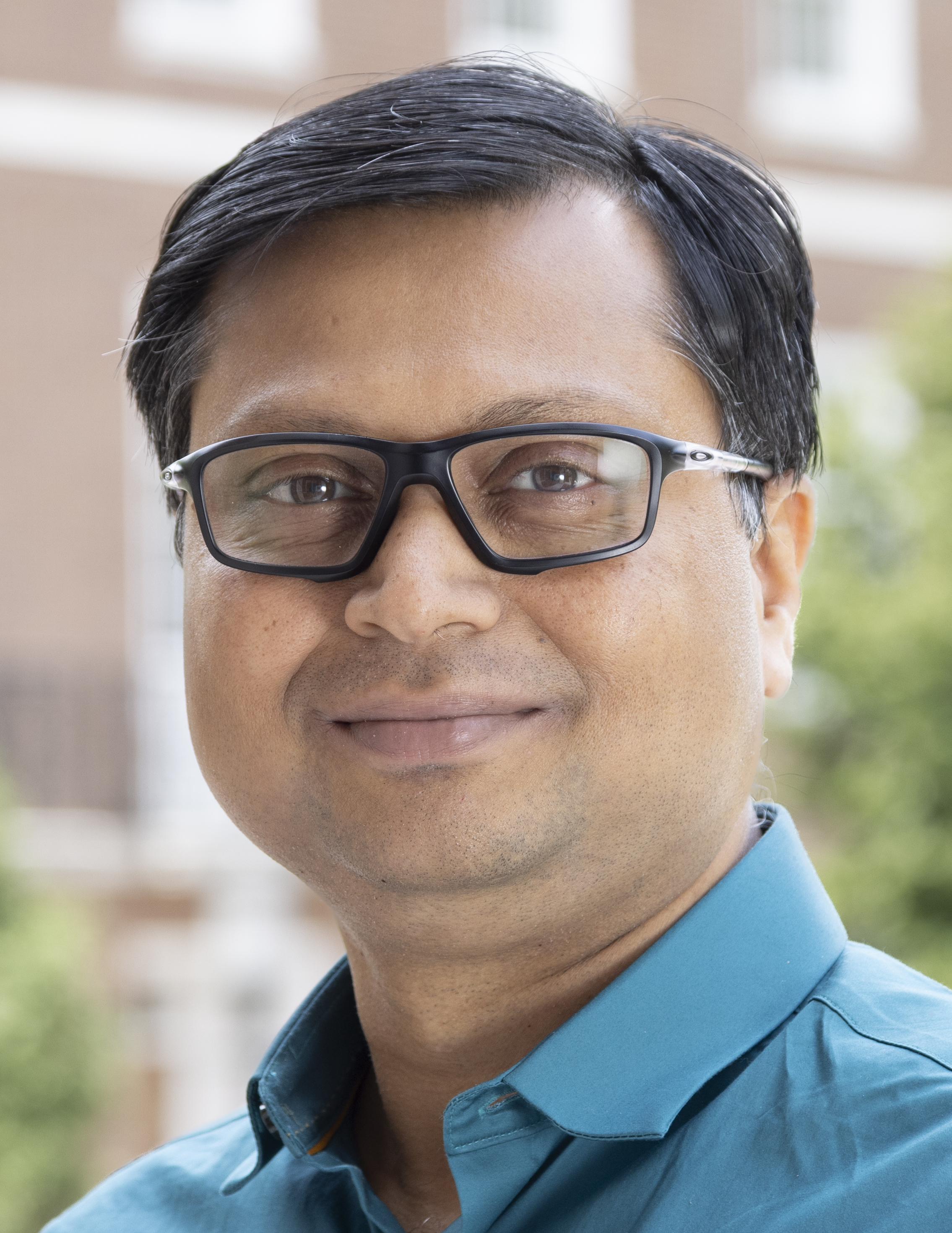
Nilanjan Mitra is an Associate Research Professor at Johns Hopkins University, affiliated with the Hopkins Extreme Materials Institute (HEMI) and holding joint appointments in the Department of Mechanical Engineering and the Department of Materials Science and Engineering. His research spans physics, chemistry, and mechanics of materials under extreme conditions such as shock, impact, and radiation. Education: Ph.D. in Civil Engineering, University of Washington, Seattle, USA (2007) M.Tech. in Ocean Engineering, IIT Kharagpur & TU Darmstadt (2001) B.E. in Civil Engineering, Bengal Engineering & Science University, Shibpur (1998) Research Interests: Dr. Mitra's work focuses on understanding the behavior of materials at extremes, using atomistic and multiscale simulations. His research integrates computational modeling with experimental validation in areas including shock physics, molecular dynamics of energetic materials, cementitious composites, and polymer-ceramic interfaces. He investigates phenomena such as phase transformations, cavitation, delamination, and mechanical degradation under extreme loading. Publication Trends: Recent publications emphasize quantum and molecular dynamics studies of epoxy resins, silicate reactions, ice phase transitions, and shock responses in metals and ceramics. There is a strong focus on hydrogen bonding, non-covalent interactions, and catalytic effects in material behavior, with applications in space, defense, and sustainable infrastructure. Scientific Awards: DAAD Fellowship (Research Stay, Germany) Raman Fellowship (Carnegie Mellon University, USA) DAAD Fellowship (Masters Level, Germany) Advising and Grants: Dr. Mitra has advised over a dozen PhD and postdoctoral students, many now in academic or industrial R&D roles. He has secured competitive funding from agencies including the Office of Naval Research (USA and Global), Army Research Office, Indian Space Research Organization, and Ministry of Human Resources. Current projects include delamination in metal-FRP patches and high strain rate response of laminated composites. Labs and Teams: He leads a research group at HEMI focused on multiscale modeling of materials under extreme environments. He collaborates with experimentalists and is part of the MEDE program, contributing to integrative models for ceramic impact. His team develops simulation tools and contributes to open-source platforms like OpenSees.
Dr. Fred Beekman is an Assistant Professor in the Tectonics group at the Department of Earth Sciences, Utrecht University. He holds a MSc in Geophysics from Utrecht University and a PhD from VU University Amsterdam. His research focuses on tectonics, geothermal energy exploration, and thermo-mechanical modeling of sedimentary basins. He has been active in establishing research facilities in tectonic deformation modeling laboratories at VU Amsterdam and Utrecht University. Education: MSc Geophysics, Utrecht University PhD in Geophysics, VU University Amsterdam Research Interests: Beekman's expertise spans the characterization of sedimentary basins, geothermal energy resource quantification, and integration of numerical and analogue modeling techniques. His current work emphasizes the exploration and quantification of geo-energy potential in sedimentary basins, with applications in geothermal energy and hydrocarbon systems. He is also involved in international projects addressing climate and energy-related challenges through tectonic processes. Publications: His recent work includes studies on geothermal reservoir mechanics, seismic monitoring of granular analogues, and lithospheric dynamics in Europe and Asia. Key topics include faulted aquifer systems, mantle plume interactions, and Arctic lithosphere structure. These studies reflect his interdisciplinary approach to energy resources and tectonic evolution. Grants & Advising: Supervised 14 PhD students and ~100 MSc/BSc projects Principal Investigator (PI) and researcher in multiple international projects He is an Associate Editor of the Netherlands Journal of Geosciences and a member of professional organizations like AGU and EAGE. Labs/Teams: He leads research in the Earth Simulation Lab at Utrecht University, focused on numerical and analogue tectonic modeling.
Hamed RAHIMI NOHOOJI is a Postdoctoral researcher at the University of Luxembourg's Interdisciplinary Centre for Security, Reliability and Trust (SnT), specifically within the Automation department under Prof. Holger Voos's research group. He holds a Ph.D. from Curtin University (Australia, 2018) and has held research positions at the National University of Singapore, UC Louvain, University of Pisa, and the University of Birmingham. His research focuses on soft robotics , adaptive control systems , and human-robot interaction , with notable contributions to projects like the EU H2020 CYBERLEGs Plus Plus initiative and Singapore's A*STAR-funded soft gripper development. His work spans neuroadaptive control , reinforcement learning , and fault-tolerant systems , with applications in space robotics, wind turbine control, and collaborative robotics. With over 900 citations and an H-index of 18 (Google Scholar, 2023), his publications appear in top journals like Mechanical Systems and Signal Processing (IF 8.934) and Neurocomputing (IF 5.779). He has authored four Springer book chapters and served as a guest editor for journals including Frontiers in Robotics and AI and IEEE Transactions on Industrial Electronics . Research interests include: Soft Robotics : Design of compliant actuators, jamming grippers, and topology-optimized soft mechanisms Control Systems : Barrier Lyapunov functions, Nussbaum gain techniques, and neuroadaptive methods Human-Machine Collaboration : Adaptive trajectory optimization for safe human-robot interaction Space Applications : Soft robotics for extraterrestrial missions and compliant systems for space environments His recent articles emphasize constrained control systems , reinforcement learning for robotics , and lightweight gripper design for aerial platforms . His work often bridges theoretical control principles with practical robotic implementations in dynamic environments. Scientific achievements include a Student Travel Award at the 2016 Australasian Conf on Robotics and Automation. He has edited topical collections on Human-Robot Interaction and Soft Robotics , reflecting his leadership in shaping the field's research directions. Labs/Teams: Member of the Automation & Robotics Research Group at SnT, collaborating with Prof. Holger Voos and international partners on EU-funded projects.
Jonathan Paul is a Senior Lecturer in Geosciences at the Department of Earth Sciences, Royal Holloway, University of London (RHUL). His research focuses on hydrogeology, geohazards (e.g., landslides, flooding), and community-led resilience-building through citizen science. He holds a PhD from the University of Cambridge and has worked at Imperial College London and UCL. Currently, he leads the MSc Engineering Geology & Hydrogeology program and teaches courses on water quality, plate kinematics, and Arduino programming. Education: PhD (2010-2014): University of Cambridge MSci Geophysics (2006-2010): Imperial College London His research integrates disciplines like epidemiology, sub-surface engineering, and archaeology. Notable collaborations include projects on groundwater flooding in London, green rust geohazards with Imperial College, and sustainable cooling of the London Underground. He consults for UN agencies (UNICEF, UNCTAD) and frequently appears in media like BBC Radio 4 and The Guardian. His articles explore topics such as landslide mechanics, climate stress impacts on livestock, and mobile technologies for disaster risk reduction. He leads the Climate Change and Disease Risk Mapping Group (CCDRMG) to map climate change and infectious diseases. Scientific Impact: Presenter at the American Geophysical Union’s Fall Meeting Awarded grants for projects like “Citizen Science for Hydrological Risk Reduction” He coordinates the “Writing From Radius” arts residency exploring geological myths in southern England. His lab focuses on groundwater, urban geohazards, and citizen science applications in Nepal, Tanzania, and the Philippines.
Dr. Sukalpa Chatterjee is an SNSF Postdoctoral Fellow at the University of Cambridge's Department of Earth Sciences, where he focuses on understanding the early Earth's evolution and mantle heterogeneities. His research employs non-traditional stable and radiogenic isotopes to investigate processes like crust-mantle interactions, komatiite formation, and the role of surface material recycling in mantle dynamics. Previously, he completed his PhD at the Institut für Geologie, Universität Bern, Switzerland. His work spans studies on ocean island basalts (OIBs), the Singhbhum Craton in India, and the Himalayan region. Key interests include the origins of continental crust, Archean mantle metasomatism, and the geochemical evolution of ultramafic rocks. Research highlights include analyses of komatiites as water sources for TTG formation in the Archean, the role of serpentinite dehydration in subduction zones, and Mo isotopic constraints on crustal recycling. His findings contribute to debates on early Earth processes, such as Hadean mantle extraction and surface material recycling onset. Dr. Chatterjee collaborates with global institutions and uses advanced analytical techniques including ICP-MS and zircon geochronology. He is affiliated with the Bullard Laboratories at the University of Cambridge and maintains a research website detailing ongoing projects and publications.
Johanna M. Blake is a Research Hydrologist (Geochemist) at the U.S. Geological Survey (USGS) New Mexico Water Science Center since 2015, with an adjunct faculty appointment in Earth and Planetary Sciences at the University of New Mexico since 2016. Her work focuses on geochemical processes influencing surface and groundwater quality, particularly in mining-impacted and post-wildfire environments. She specializes in elements like uranium, arsenic, and rare earth metals, addressing risks to water resources in regions such as the Navajo Nation and transboundary areas. Education: Ph.D. (2014), M.S. (2010), and B.S. (2007) in Earth and Environmental Sciences from Lehigh University and University of New Mexico. Her career includes postdoctoral research (2014–2015) and teaching (2009–2014) at Lehigh and UNM. Research interests span water-rock interactions, sediment coring, and geochemical modeling, with emphasis on mitigating contamination from mining, wildfires, and coal operations. She leads projects like tracking metal sources in the San Juan River and assessing post-Gold King Mine spill impacts. Affiliations include the Geochemical Society and Geological Society of America. Key contributions include environmental risk assessments for critical minerals and strategic post-wildfire water monitoring. She collaborates across disciplines to address multi-stressor environments and tribal engagement in environmental science.
Josef Dufek is the Gwen and Charles Lillis Chair and Professor in the Department of Earth Sciences at the University of Oregon, where he also serves as Department Head. He is a faculty associate of the Knight Campus for Accelerating Scientific Impact and leads the Dufek Multiphase Flow Group, which includes the Sensors for Extreme Environments (SEE) Lab and Computational Volcanology (CompVolc). Previously, he was a Professor and Associate Chair at the School of Earth and Atmospheric Sciences, Georgia Tech (2008–2018). His educational background includes: B.S. in Geophysical Sciences, University of Chicago (2000) M.S. in Geological Sciences, University of Washington (2004) Ph.D. in Earth and Space Sciences, University of Washington (2006) Miller Postdoctoral Fellow, University of California, Berkeley Josef Dufek's research focuses on the application of fluid dynamics to geological and planetary processes. His primary interests include: Volcanology and magma dynamics Multiphase and turbulent flows in volcanic and environmental systems Pyroclastic density currents, debris flows, and turbidity currents Planetary surface and interior processes Development of sensors for extreme environments Computational modeling of geophysical flows His work integrates computational simulations, laboratory experiments, and field measurements to understand mass and energy transfer in natural systems. He has received recognition as a Miller Postdoctoral Fellow and continues to lead an active research program with significant interdisciplinary impact. Josef Dufek mentors a diverse group of graduate and undergraduate researchers, including Becca Bussard, Annika Dechert, MaKayla Etheredge, Chris Harper, Rudi Lien, Allison Kubo, Paul Regensburger, PJ Zrelak, and Zack Martin. He has secured grant funding supporting experimental and computational research in volcanology and environmental flows. His teaching emphasizes experiential learning, with courses in volcanology, sensor development, computational methods, and field techniques. He leads the Dufek Multiphase Flow Group, which operates the Sensors for Extreme Environments (SEE) Lab and Computational Volcanology (CompVolc). These labs focus on developing instrumentation for harsh environments and advancing computational models of multiphase geophysical systems. The group conducts research on pyroclastic flows, planetary impacts, and atmospheric density probing, supporting both fundamental science and hazard mitigation.
Jason W Barnes is a Professor in the Department of Physics at the College of Science, University of Idaho. His research spans planetary science, astronomy, and geophysics, with a focus on Titan and exoplanets. He has contributed extensively to studies on planetary atmospheres, surface dynamics, and radiative transfer modeling. PhD in Planetary Science (2004), University of Arizona BS in Astronomy (1998), California Institute of Technology His research interests include Titan's geology and climate, extrasolar planet detection, and radiative transfer modeling. Recent work explores tidal currents in Titan's seas, exoplanet obliquity dynamics, and dust devil activity on Titan. He has published numerous articles on planetary exploration missions, including Dragonfly, and his work involves advanced modeling techniques like SRTC++ for planetary atmospheres. His projects integrate data from Cassini, Kepler, and ground telescopes to study planetary systems. His affiliations include the University of Idaho's College of Science, and he has collaborated on proposals for missions like E2T and AVIATR.
Dr Jennie Gilbert is a Senior Lecturer at the Lancaster Environment Centre , Lancaster University. With 25 years of fieldwork experience, she specializes in volcanic ash properties, ash transport dynamics, and volcano-ice interactions from eruptions in Japan, Chile, and Iceland. BSc Geology, Royal School of Mines, Imperial College London PhD Geochemistry & Volcanology, University of Cambridge Research Interests: Focus on volcanic ash aggregation mechanisms, subglacial eruption physics, and using volcanic facies to reconstruct paleoclimate conditions. Her work bridges terrestrial and Martian volcanology through experimental and field studies. Key Article Trends: Includes experimental chambers for volcanic plume analysis (2022), ice melt dynamics during eruptions (2016-2022), and comparative studies on Earth and Mars (2014). Awards: Senior Fellow of the Higher Education Academy, Fellow of the Geological Society, and Associate of the Royal School of Mines. Teaching & Leadership: Director of NERC Envision Doctoral Training Partnership, module convenor for environmental geoscience courses, and active in curriculum development. Supervises postgraduate students and mentors undergraduates in field methods.
Dennis Bodewits is an Associate Professor in the Department of Physics at Auburn University . His research spans comets, asteroids, and small bodies in the solar system, with a focus on their observable gas emissions and interactions with solar wind. He utilizes space telescopes like the James Webb Space Telescope, Hubble Space Telescope, and Neil Gehrels-Swift Observatory, alongside laboratory astrophysics experiments and planetary mission data (Rosetta, EPOXI, Stardust-NExT). Education : Ph.D. in Laboratory Astrophysics, University of Groningen (2007); M.Sc. in Astrophysics and Experimental Physics, University of Groningen (2003) Notable Awards : Minor planet (10033) named 'Bodewits' by IAU (2017); multiple NASA Group Achievement Awards (2015, 2011); Dean’s Faculty Research Award (2023) Research Highlights : Discovery of electron impact reactions as dominant cometary coma processes; development of experimental setups for charge exchange reaction characterization; leadership in Hubble and NICER observations of cometary X-ray emissions. Collaborations : International partnerships with Comenius University (Slovakia), European Southern Observatory (Chile), NASA missions. His recent publications emphasize exocomet detection , interstellar comet composition , and electron-molecule collision diagnostics . Scientific Awards include: Dean’s Award for Outstanding Faculty Undergraduate Mentor (2024) Auburn University Endowed Alumni Professor (2023-2028) NASA Group Achievement Awards (2015, 2011) Van Swinderen Thesis Prize (2007) Advising includes graduate and undergraduate researchers like Thomas Deskins, Shawn Oset, and Ben Lightfoot. His lab group, the Auburn Comet Research Group , combines observational, experimental, and computational approaches to understand cometary evolution and plasma interactions.
Dr. Judith A. Perlinger is a Professor in the Department of Civil, Environmental, and Geospatial Engineering at Michigan Technological University. She holds an ScD in Environmental Science from the Swiss Federal Institute of Technology (ETH) and MS/BS in Civil Engineering from the University of Minnesota. Her research and teaching focus on air and water quality, atmosphere-biosphere exchange of chemicals, micrometeorology, environmental analytical chemistry, sustainability, and chemical governance. ScD Environmental Science, ETH Zurich (1995) MS Civil Engineering, University of Minnesota (1990) BS Civil Engineering, University of Minnesota (1985) Her recent publications address mercury cycling, atmospheric pollutant transport, and sustainability policy, with work published in Geoscientific Model Development , Environmental Science: Processes & Impacts , and Atmospheric Chemistry and Physics . Current projects include NSF-funded studies on tribal landscape contamination, PCB monitoring in Torch Lake, and PFAS assessment in Lake Superior fisheries. Dr. Perlinger serves on professional societies including the American Geophysical Union and Air & Waste Management Association. Awards include the 2022 Sustainable & Resilient Communities Faculty Research Fellow, 2010-2011 Fulbright Scholarship to Norway, and the 2006 Excellence in Review Award from Environmental Science & Technology . She has advised over 30 graduate and undergraduate students, including those in her ASEP System research group.
Dr Anders Barlow is a researcher at Newcastle University specializing in advanced surface analysis and materials characterization. His work from 2013-2018 centers on gas cluster ion beam (GCIB) techniques, X-ray photoelectron spectroscopy (XPS), and time-of-flight secondary ion mass spectrometry (ToF-SIMS), with extensive collaboration with Professor Peter Cumpson and Dr Naoko Sano on projects ranging from semiconductor nanostructures to Mars analog geological samples. His research interests focus on the critical intersection of materials science and surface engineering, characterized by: Nanostructured semiconductor systems including indium phosphide and zinc oxide GCIB optimization for depth profiling with minimal damage to organic/inorganic interfaces Chemical state identification through Multivariate Auger Feature Imaging (MAFI) GPU-accelerated multivariate analysis of large spectroscopy datasets Applications in biomaterials, implant interfaces, and planetary science analogs Analysis of Dr Barlow's publication trends (2014-2018) reveals a consistent drive toward methodological innovation in surface characterization. His work demonstrates significant advancements in GCIB parameter optimization for delicate materials, development of rapid PCA techniques for massive ToF-SIMS datasets, and novel approaches to chemical mapping at interfaces. These contributions enable more precise analysis of complex systems from semiconductor devices to extraterrestrial samples. No scientific awards or honors were documented in the provided publication records. While no doctoral students or specific grants are explicitly listed, Dr Barlow's extensive co-authorship on collaborative projects indicates active participation in major research initiatives, particularly within Newcastle University's surface science group where he contributed to instrument development and methodology refinement for combinatorial materials synthesis.
Rachel Mackelprang is an Assistant Professor in the Department of Biology at California State University, Northridge. Her work bridges microbial ecology, climate change, and planetary science, focusing on permafrost ecosystems and their implications for Earth and extraterrestrial environments. Ph.D. , 2006, University of Washington B.S. , 2001, University of Utah Dr. Mackelprang teaches courses like General Biology (BIOL 101) and Seminar in Cellular and Molecular Biology (BIOL 655A) . Her research explores microbial processes in extreme environments, particularly permafrost thaw dynamics and their carbon cycling impacts. Recent publications highlight her contributions to understanding permafrost microbiomes under climate change, alkane-degradation pathways in marine bacteria, and Mars exploration via permafrost analogs.