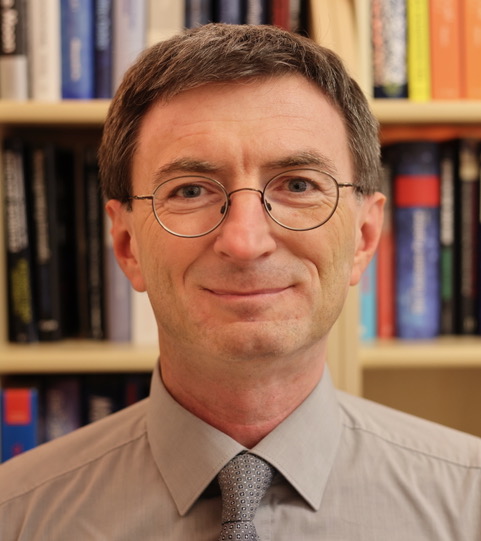
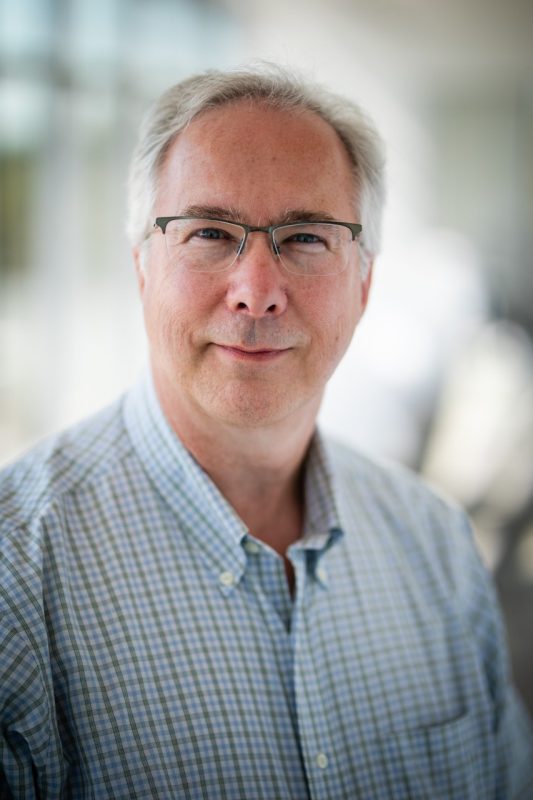
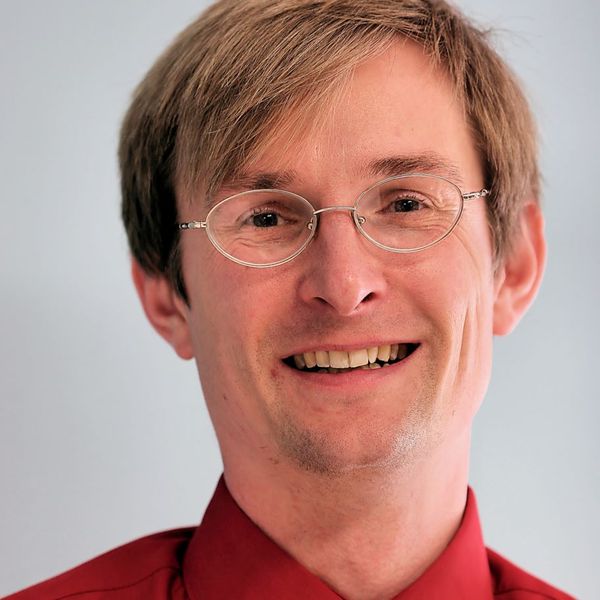
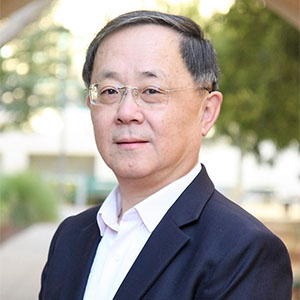
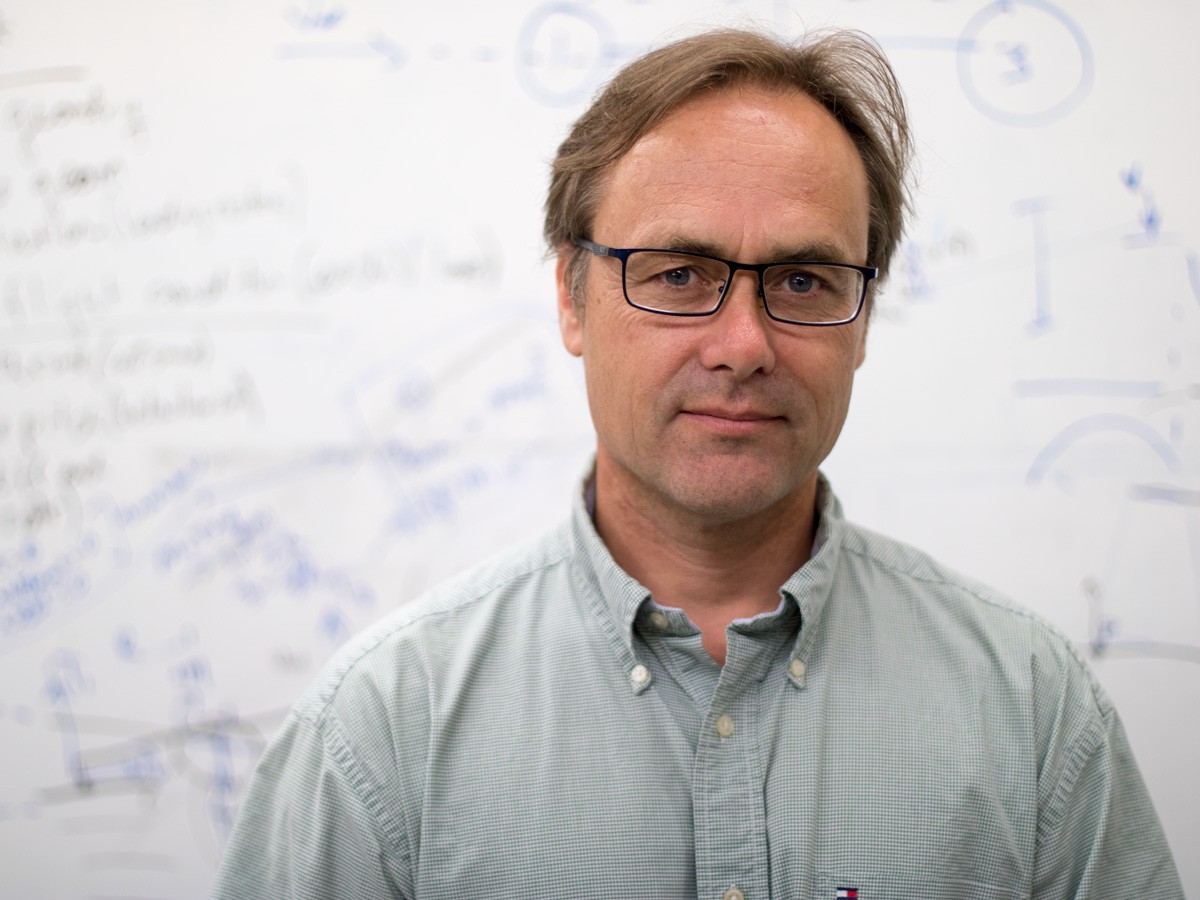
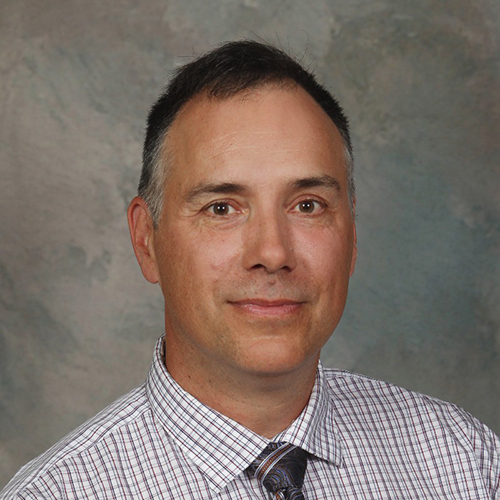
Prof. Dr.-Ing. Hakan Kayal serves as University Professor for Aerospace Engineering at the University of Würzburg, holding the Chair of Computer Science VIII (Space Technology) and chairing the Interdisciplinary Research Center for Extraterrestrial Studies (IFEX). His leadership bridges computer science and space systems engineering within the university's Institute of Computer Science. Research focuses on three synergistic domains: nanosatellite development for extraterrestrial missions (including the SONATE-2 6U platform demonstrating AI-driven onboard processing), scientific investigation of Unidentified Anomalous Phenomena (UAP) through the university's collaboration with the Federal Aviation Office, and spacecraft autonomy systems enabling higher mission independence. Current projects include the NEAlight mission (extended to develop the Apophis Interceptor concept for the 2029 asteroid flyby), VaMEx3-MarsSymphony for Mars exploration, and JMU Space Observatory initiatives. Publication trends reveal strong emphasis on asteroid defense strategies (particularly for Apophis), CubeSat-based UAP detection methodologies, and real-time AI processing in constrained space environments. His team actively engages students through ADS-B tracking, Meteosat App development, and Moon Base 2030 projects, while recent recognition includes co-authoring a landmark UAP review in Progress in Aerospace Sciences with 33 international scientists.
Salvador Navarro-Martinez is a Visiting Professor in the Department of Mechanical Engineering at Imperial College London, affiliated with the Energy Futures Lab and Thermofluids research groups. He holds a Mechanical Engineering degree from the University of Zaragoza (Spain) and a PhD in Aeronautics and Astronautics from the University of Southampton, where his doctoral work focused on numerical simulations of hypersonic flows and heat transfer for planetary re-entry systems. BEng (Ingeniero Industrial): University of Zaragoza, Spain PhD: University of Southampton, UK His research interests span combustion modeling, spray atomization, and computational fluid dynamics. Notable achievements include the Sugden Award (Combustion Institute, 2005 & 2007) and a Royal Society University Fellowship (2009) for studying droplet size distributions. His work bridges aerospace engineering, applied mathematics, and interdisciplinary engineering applications. He has contributed to Large Eddy Simulation (LES) frameworks for combustion systems and has expertise in experimental measurements of complex fluid dynamics. His current role at Imperial College emphasizes collaborative research in energy-efficient technologies and advanced thermal management systems.
Kevin A. Shinpaugh is Collegiate Professor in the Department of Aerospace and Ocean Engineering at Virginia Tech’s College of Engineering. Since 2019 he has led instruction and research in spacecraft design and propulsion, leveraging decades of experience in high-performance computing and space-systems engineering. Education Ph.D., Aerospace Engineering, Virginia Tech (1994) M.S., Aerospace Engineering, Virginia Tech (1989) B.S., Aerospace Engineering, Virginia Tech (1986) Research Focus Dr. Shinpaugh’s scholarship centers on the intersection of high-performance computing (HPC) and space systems engineering . He develops and applies advanced computational techniques to spacecraft design, propulsion analysis, and mission planning. His work spans numerical simulation of complex aerospace systems, optimization of propulsion architectures, and creation of scalable HPC frameworks that enable rapid design iteration for spacecraft and launch vehicles. Publication Trends Across more than thirty refereed papers and design-competition reports, a clear trajectory emerges: early contributions in experimental fluid-mechanics instrumentation (laser-Doppler velocimetry, fiber-optic sensors) evolved into large-scale computational studies of space systems, and most recently into student-led mission-concept designs for CubeSats, lunar exploration, and interplanetary missions. Keywords consistently include spacecraft design, propulsion, deployable structures, and mission architecture. Service & Committees Chair, Virginia Tech HPC User Committee (2004–2011) Member, VT HPC Advisory Board (2007–present) NSF TeraGrid/XSEDE Campus Champion for Virginia Tech (2006–2013) IBM HPC/AI Customer Advisory Council DC (2019–present) Member, VT AOE Seminar Committee (2019–present) Laboratory & Computing Resources Dr. Shinpaugh has long stewarded Virginia Tech’s high-performance computing ecosystem. He directs students and collaborators in leveraging the university’s Advanced Research Computing (ARC) clusters, as well as national facilities through XSEDE and DoD HPCMP, to execute spacecraft-design simulations and propulsion analyses at scale.
Paul Withers is a Professor and Chair of the Department of Astronomy at Boston University. He leads research on planetary atmospheres and ionospheres, with a focus on Mars and Venus, and serves as Principal Investigator on multiple NASA-funded research projects. Education: B.A. in Physics, 1998, Queens' College, Cambridge University M.S. in Physics, 1998, Queens' College, Cambridge University M.A., 2001, Queens' College, Cambridge University Ph.D. in Planetary Science, 2003, University of Arizona Professor Withers' research focuses on the upper atmospheres and ionospheres of terrestrial planets, particularly Mars and Venus. His work involves analyzing spacecraft data and developing theoretical models to understand how solar flux, neutral atmospheres, magnetic fields, and ionospheres interact under unique planetary conditions. He has made significant contributions to understanding the response of the Martian ionosphere to solar flares, the structure of the Venus ionosphere, and meteoric plasma layers in planetary ionospheres. His research often involves multi-instrument campaigns and coordinated observations across different spacecraft missions including Mars Express, MAVEN, and Venus Express. Analysis of Professor Withers' recent publications reveals a strong emphasis on Martian ionospheric dynamics, particularly its response to solar activity and its variability under different conditions. His work frequently combines data from multiple missions to create comprehensive models of planetary upper atmospheres. He has developed important methods for analyzing radio occultation data and reconstructing atmospheric properties from entry, descent, and landing measurements. Major Funded Projects: "Characterizing the topside bulge in the ionosphere of Mars" (NASA Mars Data Analysis Program, 2014, $144K) "Integration of MAVEN neutral and plasma observations" (NASA MAVEN Participating Scientist Program, 2013, $284K) "Radio occultation studies at Mars" (NASA Early Career Fellowship Program, 2013, $99K) "EDL reconstruction for MSL" (NASA, JPL contract, 2012, $199K) "Meteoric plasma layers on Venus and Mars" (NASA Planetary Atmospheres Program, 2012, $232K) Professor Withers has been actively involved in mentoring students and collaborating with international researchers. He serves as a key member of the Mars Upper Atmosphere Network (MUAN) and has contributed to community white papers for planetary science decadal surveys. His work supports future Mars landers through atmospheric modeling and surface pressure prediction, with direct applications to mission planning and execution. He has presented his research at numerous international conferences including the American Geophysical Union meetings, Division for Planetary Sciences meetings, and European Planetary Science Congress. His work has important implications for understanding planetary climate evolution, space weather effects on technological systems, and the search for habitable environments beyond Earth.
Camilla Audia is an Assistant Professor at the Department of Geography, University of Warwick. Previously, she spent seven years as a researcher at King's College London's Geography department. Her work focuses on climate change adaptation, health equity, and sustainable development through co-production of knowledge with non-academic stakeholders. She holds a PhD from SOAS (2018), which examined land tenure and resource management in Burkina Faso during climatic extremes. Her research integrates arts-based methods like photography and theater to address complex societal challenges. Current projects include the PATH initiative (2024-2027), analyzing climate adaptation perceptions among irregular migrants in London. She has collaborated with international NGOs, policy actors, and institutions including the Wellcome Trust and DFID. Teaching includes modules on Health and Sustainable Development (GD204/GD209/GD212) and Addressing Disasters for Sustainable Development (GD325). She is currently accepting two PhD students for 2025/26 entry, focusing on interdisciplinary planetary health and urban resilience themes.
Prof. Ping Lu is the Albert W. Johnson Distinguished Professor and Department Chair in the Department of Aerospace Engineering at San Diego State University (SDSU), College of Engineering. He holds a PhD from the University of Michigan. His research focuses on advanced guidance systems, autonomous trajectory planning, flight control, and flight mechanics, with applications to space transportation systems like the X-33, Orion Crew Exploration Vehicle, and Mars missions. Prof. Lu has contributed to major programs such as the Evolvable Mars Campaign and has pioneered algorithms for propellant-optimal guidance and trajectory optimization. His awards include the NASA Director’s Innovation Group Achievement Award (2016) and AIAA Mechanics and Control of Flight Award (2008). Research highlights include model predictive guidance algorithms, six-degree-of-freedom rocket landing optimization, and fuel-optimal strategies for Mars and lunar missions. His work bridges theoretical control systems with practical aerospace applications, emphasizing real-world feasibility through convex optimization and numerical methods. Key contributions include over 150 peer-reviewed articles, with recent trends focusing on end-to-end trajectory optimization from entry to powered descent, asteroid landing trajectory design, and robust abort protocols. He leads SDSU’s aerospace systems research, collaborating on cutting-edge projects like the Pterodactyl entry vehicle and fractional-polynomial guidance frameworks.
Dr. Goetz Bramesfeld serves as a Professor in the Department of Aerospace Engineering at Toronto Metropolitan University, where he leads research in applied aerodynamics and unconventional flight systems. His expertise spans flight vehicle design, small UAV development, and motorless flight dynamics, with particular emphasis on energy harvesting from atmospheric phenomena. Bramesfeld's educational background includes a PhD (2006) and MS (1999) from The Pennsylvania State University, and a BEng (1998) from Technische Universität Braunschweig. His research interests focus on applied aerodynamics , flight dynamics , and energy-efficient aircraft design , with notable contributions to sailplane optimization, gust energy extraction, and microwave-powered UAV concepts. His work bridges theoretical aerodynamics with practical applications in both terrestrial and planetary exploration contexts. Analysis of his publication record reveals consistent innovation in energy harvesting flight systems, particularly through gust energy extraction and unconventional propulsion methods. His research evolves from traditional sailplane optimization toward cutting-edge concepts like microwave-powered aircraft and planetary exploration gliders, maintaining strong connections between fundamental aerodynamics and real-world flight applications. Bramesfeld actively supervises graduate students through the Applied Aerodynamics Laboratory of Flight (AALF) and maintains significant professional engagement as a Senior Member of the American Institute of Aeronautics and Astronautics (AIAA), member of the Canadian Aeronautics and Space Institute (CASI), Associated Editor for the Technical Soaring Journal, and board member of the Organisation Scientifique et Technique du Vol à Voile (OSTIV).
Paul Wiegert is a Full Professor in the Department of Physics and Astronomy at the University of Western Ontario , where he has been since 1996 after positions at York University and Queen's University. He is a member of the Institute for Earth and Space Exploration (IESX) and the Centre for Planetary Science and Exploration (CPSX) . His research spans asteroid dynamics , exoplanet systems , and celestial mechanics , with notable work on Earth co-orbital asteroids like (3753) Cruithne and Earth's first Trojan asteroid 2010 TK7. Education : PhD in Astronomy (University of Toronto, 1996) Research Domains : Planetary Science, Astronomy, Big Data Analytics His recent publications focus on interstellar transport mechanisms , asteroid impact risks , and exomoon detection . Key findings include quantifying risks from asteroid 2024 YR4's potential lunar impact and demonstrating the feasibility of detecting alpha Centauri-origin material in our solar system. He actively supervises graduate students like Cole Gregg and participates in NSERC-funded summer research programs for undergraduates. For planetary defense, he has analyzed collision probabilities for Apophis and developed meteoroid hazard models for spacecraft. His work appears in Planetary Science Journal , Nature Astronomy , and Astrophysical Journal Letters , with media coverage in 60+ outlets and 126 X (Twitter) mentions .
Kyle DeMars is an Associate Professor and Associate Department Head for Theoretical and Computational Research in the Department of Aerospace Engineering at Texas A&M University. He holds a Ph.D. from The University of Texas at Austin (2010) and has expertise in space situational awareness, navigation systems, Bayesian filtering, and information theory. His work focuses on advanced estimation techniques for spacecraft autonomy and space surveillance. Dr. DeMars' research emphasizes robust nonlinear filtering, multitarget tracking, and information-theoretic approaches to orbital dynamics. He has developed innovative methods for spacecraft navigation, including terrain-relative systems and anonymous feature processing. His contributions address challenges in uncertainty quantification, sensor fusion, and cislunar space domain awareness. Education: Ph.D./M.S.E./B.S. in Aerospace Engineering (UT Austin, 2004–2010) Awards: AIAA Young Professional Award (2017), NASA Innovation Award (2014), and multiple teaching/research recognitions Labs/Teams: Active in space situational awareness, guidance & control, and probabilistic navigation systems Key trends in his publications include: Advances in particle flow and Gaussian mixture methods for nonlinear estimation Cislunar trajectory analysis and resonance-based surveillance strategies Development of fault-resistant and anonymous navigation frameworks Integration of information theory into sensor tasking and uncertainty management His work bridges theoretical developments with practical applications in planetary landing navigation, space traffic management, and autonomous spacecraft systems.
Joanna Austin is a Professor of Aerospace and serves as the Graduate Option Representative for Aeronautics and Space Engineering, as well as the Undergraduate Option Representative for Aerospace at the California Institute of Technology (Caltech). She leads the Caltech Hypersonics Group, which operates facilities like the T5 Reflected Shock Tunnel and the Hypervelocity Expansion Tube (HET). Her research focuses on reactive, compressible flows in applications such as hypervelocity flight, planetary entry, supersonic combustion, bubble dynamics, and explosive geological events. Key projects include studying shock-boundary layer interactions, Martian atmospheric entry aerothermodynamics, and high-speed fluid-structure interactions. She advises four Ph.D. students and collaborates with a team including staff members like Liza Bradulina and research assistants such as Noel Esparza-Duran. Her work bridges experimental fluid dynamics with geophysical phenomena, leveraging advanced diagnostics like Focused Laser Differential Interferometry (FLDI) and laser spectroscopy. The group’s facilities enable studies of high-enthalpy flows and hypersonic aerodynamics critical for aerospace and planetary exploration. Research highlights include investigations into CO₂ Martian entry conditions, boundary layer transition mechanisms, and fluid-structure coupling in high-speed flows. The Hypersonics Group’s experimental setups replicate extreme environments to advance predictive models for aerospace systems. Her contributions span both fundamental fluid mechanics and applied engineering challenges, with a focus on real-gas effects and shock dynamics. Collaborations with institutions like NASA and academic partners further her interdisciplinary impact.
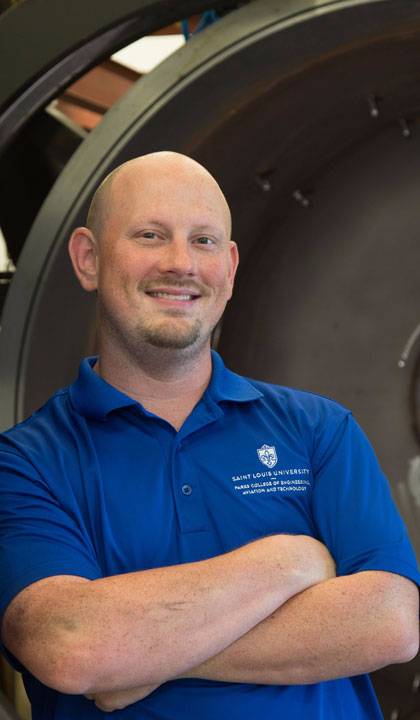
Mark McQuilling is an Associate Professor of Aerospace and Mechanical Engineering at Saint Louis University's School of Science and Engineering. He holds a Ph.D. in Engineering from Wright State University, alongside M.S. and B.S. degrees in Mechanical Engineering from the University of Kentucky. His research focuses on experimental fluid mechanics, low Reynolds number flows, laminar-to-turbulent transition, airfoil design, unsteady aerodynamics (turbomachinery and airdrop systems), bio-fluid flows, and flow control. His work integrates advanced fluid dynamics techniques with practical applications in aerospace and biomedical engineering. Dr. McQuilling oversees the Fluid Systems Laboratory, which includes subsonic and supersonic wind tunnels, a water tunnel, and thermal system facilities. These labs support undergraduate and graduate research, with capabilities such as Laser Doppler Velocimetry, DPIV systems, and strain gauge balances. His thermal research spans micro-scale fluid phenomena to planetary atmospheric modeling, including studies on Uranus/Neptune vortex dynamics and airdrop parachute aerodynamics. Highlighted research areas include low-pressure turbine blade aerodynamics, parachute drag prediction, and bio-fluid studies like pharyngeal airflow analysis in sleep apnea patients. His peer-reviewed publications (over 20 entries) address topics ranging from micro-air vehicle wing design to thermal management in turbine blades. McQuilling is active in professional organizations like AIAA, ASME, and ASEE, and previously worked at the Air Force Research Laboratory. His email is mark.mcquilling@slu.edu.
Associate Professor Fangbao Tian is a distinguished researcher and academic at UNSW Canberra's School of Engineering and Technology, where he also serves as Deputy Head of School for Research since July 2023. Previously, he held positions as Senior Lecturer (2017-2021) and Lecturer (2014-2017) at the same institution after completing postdoctoral research at Vanderbilt University. His academic journey began with a BSc (2006) and PhD (2011) in Theoretical and Applied Mechanics and Engineering Mechanics from the University of Science and Technology of China. Dr. Tian's research focuses on Computational Fluid Dynamics (CFD) tools for complex flows and fluid-structure interaction, with particular emphasis on bio-inspired applications. His work spans modeling laryngeal aerodynamics and vocal-fold vibration, fluid-structure interaction of plates in viscous fluid, fish swimming and insect flight, blood flow dynamics, and non-Newtonian flow phenomena. Recent work has expanded into Martian atmosphere aerodynamics, showing his research's growing interdisciplinary nature. His extensive publication record demonstrates consistent contributions across fluid dynamics, with recent trends showing increasing focus on compressible flows, bio-inspired flight systems, heat transfer applications, and computational methods like Lattice Boltzmann approaches. The research shows strong connections between fundamental fluid mechanics and practical applications in aerospace, biomedical engineering, and environmental systems. UNSW Canberra Goldstar Award 2022 IEEE Outstanding SMCS Chapter Award 2021 Outstanding Volunteer Award 2021 UNSW Canberra Silverstar Award 2018 UNSW Canberra Silverstar Award 2017 Journal of Fluids and Structures Highly Cited Research 2017 ARC DECRA 2016 Dr. Tian actively supervises PhD students across diverse topics including bushfire-enhanced wind loads, bio-inspired flight on Mars, flow control optimization, and fluid-structure interactions in compressible flows. He has secured over $5 million in external funding as Chief Investigator, including significant Australian Research Council projects examining Martian atmosphere aerodynamics, bio-inspired flapping wings, and cardiovascular flow modeling. His editorial roles include Associate Editor for Journal of Fluids and Structures and Scientific Reports, reflecting his standing in the fluid dynamics research community.
Colin Britcher is a Professor in the Department of Mechanical & Aerospace Engineering at Old Dominion University (ODU), affiliated with NASA Langley and the National Institute of Aerospace. He has held roles including Deputy Director for Education at AIAA Region I and led the Center for Experimental Aeronautics. His research focuses on wind tunnel test techniques, magnetic suspension systems, and experimental aerodynamics, with applications to planetary entry capsules and drone stability. Education: Ph.D. in Aeronautics and Astronautics, Southampton University (1983) B.S. in Aeronautical Engineering, University of Southampton (1978) Research Interests: Wind tunnel design and dynamic stability testing Magnetic suspension systems for aerodynamic measurements Unmanned aerial vehicles (UAVs) and propeller aerodynamics Boundary layer effects and flowfield analysis His recent work includes developing wind tunnel techniques for multi-rotor drones and planetary entry vehicles, as well as textbook authorship on wind tunnel design. Grants & Awards: $1.04M Virginia Institute for Performance Engineering grant (2023) Leadership in $355K NIA Director of Graduate Programs role (2014–2017) 2004 NASA Honorary Superior Accomplishment Award 1995 NASA Turning Goals into Reality (TIGR) Award Labs & Collaborations: Collaborates with NASA Langley on magnetic suspension systems Developed the NASA/ODU 6-inch Magnetic Suspension and Balance System (MSBS)
Lynn Kistler is a Professor in the Department of Physics & Astronomy at the University of New Hampshire (UNH), part of the College of Engineering and Physical Sciences. Her research focuses on plasma physics, space weather, and magnetospheric dynamics, particularly investigating the interactions between the solar wind and Earth's magnetosphere-ionosphere system. She holds a Ph.D. in Physics from the University of Maryland, along with a B.S. from Harvey Mudd College. Dr. Kistler's work emphasizes understanding plasma processes such as ion outflow from the ionosphere, magnetic reconnection, and storm-time magnetospheric evolution. She has led studies using data from missions like the Van Allen Probes, Solar Orbiter, and Cluster, contributing to advancements in instrumentation (e.g., the SWA suite) and computational modeling. Her research bridges observational analysis, theoretical frameworks, and machine learning to address challenges in space weather prediction and plasma dynamics. Key areas of her research include the role of ionospheric ions (O⁺, H⁺) in plasma sheet dynamics, the effects of geomagnetic storms on ring current formation, and the behavior of heavy ions in near-Earth space. She has authored or co-authored over 260 publications, spanning journals like Nature Communications , Geophysical Research Letters , and Journal of Geophysical Research . Dr. Kistler has secured grants and collaborations through initiatives like the NASA Interstellar Mapping and Acceleration Probe (IMAP) and has served as a co-investigator on multiple missions. Her work emphasizes interdisciplinary approaches, combining spacecraft observations with ground-based data and numerical simulations to unravel the complexities of Earth's space environment.
Amy Bonsor is an Official Fellow and Director of Studies in Natural Sciences (Physical) at Queens' College, University of Cambridge. Her academic work focuses on the intersection of astronomy and planetary science, particularly examining the composition and evolution of planetary systems through the lens of white dwarf pollution. Dr. Bonsor's research primarily centers on understanding the composition of exoplanetary material by studying polluted white dwarfs. Her work combines observational astronomy with theoretical modeling to investigate planetary debris disks, tidal interactions, and the geochemical signatures of accreted planetary material. She has made significant contributions to understanding how white dwarfs can serve as cosmic laboratories for studying the bulk composition of exoplanetesimals, including their differentiation processes and volatile content. Her recent publications reveal a strong emphasis on the chemical analysis of planetary material through white dwarf spectroscopy, with particular attention to mineralogy, elemental abundances, and the implications for planetary formation and evolution. She has pioneered approaches combining machine learning with traditional astronomical techniques to categorize and interpret white dwarf spectral data at scale. As Director of Studies in Natural Sciences at Queens' College, Dr. Bonsor plays a key role in undergraduate education within the Physical Sciences track of Cambridge's renowned Natural Sciences Tripos. Her leadership position indicates her standing within the Cambridge academic community and her commitment to nurturing the next generation of scientists.