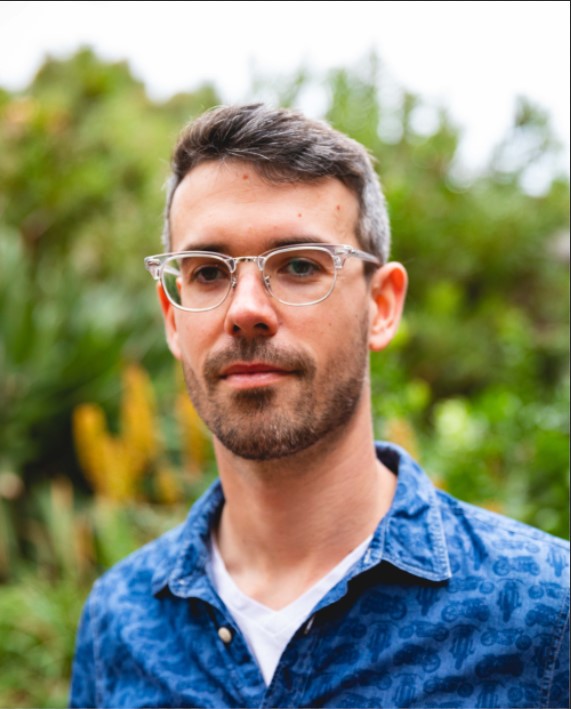
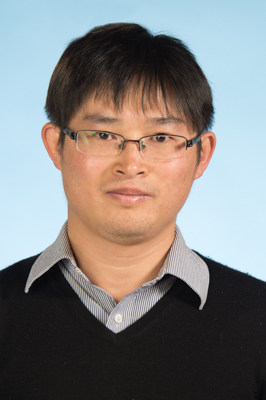
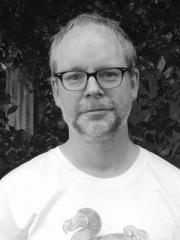
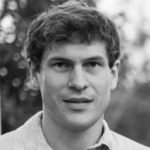
Darryl Jones is Professor at Griffith University's Centre for Planetary Health and Food Security, specializing in behavioral ecology and human-wildlife interactions. His research examines urban ecosystems, wildlife conflict resolution, and conservation strategies, with particular emphasis on bird ecology and road infrastructure impacts. Professor Jones has authored influential books including 'Feeding the Birds at Your Table' and 'A Clouded Leopard in the Middle of the Road' that bridge scientific research and public engagement. His work explores: Wildlife responses to urbanization Bird feeding practices and consequences Road ecology and mitigation design Human dimensions of conservation Koala-vehicle collision patterns Recent publications document COVID-19's impact on global bird feeding behaviors, analyze 20-year trends in koala road mortality, and evaluate LED streetlight effects on urban wildlife. He leads research on dingo population viability in Fraser Island and develops innovative wildlife monitoring technologies like the open-source WildWID RFID system. Professor Jones collaborates extensively with government agencies on conservation policy and has secured funding for projects examining wildlife crossing infrastructure effectiveness. His research informs evidence-based approaches to human-wildlife coexistence in rapidly changing landscapes.
Denis Fougerouse is a Senior Lecturer at Curtin University’s School of Earth and Planetary Sciences (EPS), specializing in structural and economic geology with a focus on nanogeoscience and advanced characterization techniques. He leads research using atom probe tomography (APT) to study mineral interfaces, fluid dynamics, and critical metal distribution. His work spans asteroid mineralogy (e.g., Ryugu samples), ore genesis, and nuclear geology (e.g., Chernobyl zircon re-equilibration). Fougerouse is a key member of Curtin’s Geoscience Atom Probe Facility, advancing applications of APT in geosciences. Research interests include gold remobilization mechanisms, sulfide chemistry, and shock metamorphism. He has contributed to landmark studies on pyrite microtextures, xenotime geochronology, and nanoparticle transport in gold deposits. Fougerouse’s awards include the 2024 Mineralogical Society of America Award for pioneering nanoscale mineral analysis. His interdisciplinary collaborations span planetary science, environmental geochemistry, and materials science, reflecting his role at the forefront of geoscience innovation.
Nick Abel is an Honorary Associate Professor at the Fenner School of Environment & Society, Australian National University. With a distinguished international career spanning Africa and Australia, he has worked in Zimbabwe, Kenya, Ethiopia, Botswana, Somalia, Swaziland, Zambia, and Australia. His academic credentials include a Ph.D., M.Sc., and B.Sc.(Hons.), reflecting a strong foundation in environmental sciences and complex systems thinking. Abel's research program centers on the critical challenge of human adaptation to climate change, with particular focus on why adaptation efforts are insufficient to prevent environmental and social tipping points. He critically examines Australia's role as the world's third largest exporter of fossil fuels while facing escalating climate impacts, investigating how fossil fuel companies have maintained influence over public policy. His work integrates social-ecological systems theory, resilience thinking, and practical governance frameworks to address climate adaptation challenges. His publication record demonstrates a clear evolution from foundational work in rangeland management and complex adaptive systems toward urgent climate policy interventions. Early research established theoretical frameworks for understanding resilience in dryland ecosystems, while recent work focuses on transformation pathways, Indigenous engagement, and community-based adaptation strategies. A consistent thread throughout his career is the integration of diverse knowledge systems and the development of practical approaches for environmental governance in rapidly changing conditions. Abel has registered to supervise research students at ANU and participates in significant collaborative projects, including the current 'Partnering with local communities in regional Australia to increase resilience to flood events' (2022-2025). His high-impact publications, including the highly cited 'Resilience management in social-ecological systems' (1,120 Scopus citations) and 'From Metaphor to Measurement: Resilience of What to What?' (2,596 Scopus citations), demonstrate his foundational contributions to the field. Through his work with various research groups and projects, Abel has helped establish frameworks for understanding social-ecological systems and climate adaptation. His contributions to the Fenner School include advancing methodologies for integrating scientific and Indigenous knowledge systems, developing practical approaches to environmental governance, and critically examining the political economy of climate policy in Australia.
Professor Thomas Astell-Burt is a Professor of Cities and Planetary Health at the University of Sydney's School of Architecture, Design and Planning. His work focuses on the intersection of urban environments, green spaces, and public health. He is a member of the Sydney Environment Institute and the Charles Perkins Centre. His research examines how urban planning and green infrastructure can mitigate health inequities, combat climate change, and improve mental/cardiometabolic health. Key areas include nature prescriptions, heat-related mortality, and the role of green spaces in reducing loneliness. Recent grants include projects on aged care workforce sustainability, nature-based strategies for loneliness reduction, and the PANDA Trial for cardiometabolic disease prevention. Over 180+ publications span peer-reviewed journals like Scientific Reports , Climate , and PloS One , with a focus on global health trends and urban environmental policies. His work bridges epidemiology, urban design, and interdisciplinary collaboration to inform evidence-based health policies. Key affiliations include leadership roles in global health initiatives and collaborations with institutions like the University of Glasgow. His research has been cited in policy frameworks addressing urban sustainability and planetary health.
Professor Hilary Bambrick is a distinguished environmental epidemiologist and anthropologist at the Australian National University (ANU), leading the National Centre for Epidemiology and Population Health. She specializes in climate change and health, focusing on adaptation strategies, vector-borne diseases, and urban resilience. Her work bridges research, policy, and practice, with significant contributions to global health initiatives like the WHO and UNDP. Bambrick has over 180 publications and $11M in research funding, addressing climate impacts on vulnerable populations, including First Nations communities and Pacific Island nations. She serves on the Climate Council of Australia and the Australia Institute, advocating for evidence-based climate policies. Her research integrates epidemiology, anthropology, and environmental science to enhance health resilience in changing climates. Education: PhD (ANU, 2003), BA (Hons), BSc, Grad Cert Higher Ed. Key Research Focus: Climate change health impacts, adaptation strategies, vector-borne diseases, urban design, and health equity. She leads interdisciplinary projects on climate litigation, heatwaves, and infectious disease forecasting. Grants & Funding: Over $11 million in research grants, including projects on bushfire preparedness, dengue transmission modeling, and climate-sensitive disease surveillance. Labs/Teams: National Centre for Epidemiology and Population Health (ANU), collaborating with global networks like the Lancet Countdown and MJA-Lancet Countdown.
Professor Balz Kamber is a renowned academic in the Faculty of Science at Queensland University of Technology (QUT), leading research in elemental and isotopic geochemistry paired with petrology. He holds the position of Professor in Petrology within the School of Earth & Atmospheric Sciences . His work focuses on Earth's differentiation into chemical spheres, with applications in climate science, planetary evolution, and resource exploration. Kamber has held prestigious roles, including Chair in Geology and Mineralogy at Trinity College Dublin and a Tier 1 Canada Research Chair at Laurentian University. Education: PhD (University of Bern, Switzerland), MSc (University of Bern) Professional Memberships: Royal Irish Academy (since 2018), European Association of Geochemistry Research interests include thermodynamic modeling of igneous processes, automated mineralogy, and the interplay between climate and geological history. His current projects address mantle dynamics, crustal evolution, and planetary weathering. Teaching focuses on Earth Materials, Petrology, and Climate Science at QUT. Notable achievements include editorship of Chemical Geology (since 2018) and contributions to understanding the Great Oxidation Event and Deccan Traps volcanism. His work bridges fundamental geochemistry with real-world challenges, such as climate change mitigation through enhanced rock weathering. Grants/Funding: Led the 23M Euro Irish Centre for Research in Applied Geosciences (2011–2018) Labs/Teams: Heads a dynamic research group advancing LA-ICP-MS methodologies and geochemical imaging
Chris Speed is a Professor of Design for Regenerative Futures at RMIT University, Australia, and Director of Regenerative Futures. Previously, he held academic roles at the University of Edinburgh, including leading the Institute for Design Informatics and co-designing the Edinburgh Futures Institute. His research focuses on design-driven solutions for social, environmental, and economic challenges, leveraging data and emerging technologies. Key areas include blockchain applications, sustainable design, and regenerative systems. Affiliations: RMIT University (Current), University of Edinburgh (2012–2024) Grants: £7.4m Creative Informatics (UK), £5m DECaDE (Digital Economy) Publications: Over 50 peer-reviewed articles on design informatics, regenerative futures, and blockchain ethics. Research interests span Design Informatics, Human-Computer Interaction, and Sustainable Design. He has supervised 23 PhD/MPhil students and pioneered projects like OxChain (blockchain for charitable giving) and Creative Informatics (data-driven creative industries). Awards: Fellow of the Royal Society of Edinburgh (2020), Chancellor’s Award for Research (University of Edinburgh, 2020). Collaborations include BBC, Oxfam, and the Digital Catapult. His work emphasizes co-creation with communities to address systemic challenges, such as climate action and cultural value measurement.
Ben Mather is a Research Fellow in the School of Geosciences at The University of Sydney, specializing in geodynamic modeling and Earth system processes. He leads the EarthByte Group's efforts to integrate numerical models with geophysical data, focusing on volcanic systems, groundwater dynamics, and critical mineral exploration. His work bridges geoscience and climate change mitigation strategies, influencing national and international policy discussions. Education: PhD in Earth Science, The University of Melbourne (2016) Bachelor of Science (Hons), Monash University (2011) Diploma of Film and Television, Monash University (2010) Research Interests: Enigmatic volcanic activity patterns and their tectonic drivers Groundwater flow pathways under climate extremes Carbon sequestration via tectonic processes Development of open-source geodynamic tools like Stripy and PyCurious Notable Projects: Project Volcanoes Downunder: Investigating volcanic chains in the Tasman Sea Groundwater modeling for southeastern Australia's aquifers Thermal structure studies in Ireland and Australia using Bayesian inversion His computational frameworks, built on PETSc and Python, enable large-scale simulations of Earth's thermal and hydrological systems. Mather actively engages in public science communication through media interviews and educational workshops.
Professor Martin Van Kranendonk is the Head of School at the School of Earth and Planetary Sciences (EPS), part of Curtin University's Faculty of Science and Engineering. He holds a portfolio role in the Office of the Provost. His research focuses on early Earth history, astrobiology, and the geological processes that shaped microbial life. He leads investigations into ancient stromatolites, hydrothermal systems, and the environmental conditions conducive to life’s origins. Van Kranendonk’s work spans over four decades, with a strong emphasis on the Pilbara Craton and other Archaean-Proterozoic terrains. His studies integrate geochemistry, sedimentology, and geobiology to unravel the co-evolution of life and Earth’s systems. He collaborates globally, contributing to Mars sample return mission planning and astrobiological studies of extraterrestrial environments. Key research themes include: 1) Early Earth geochemical and tectonic evolution; 2) Microbial biosignatures in ancient rocks; 3) Hydrothermal systems as life’s incubators; and 4) Planetary habitability. His publications emphasize interdisciplinary approaches, linking field geology with cutting-edge analytical techniques. Recent articles highlight advancements in understanding prebiotic chemistry, mantle evolution, and microbial adaptation in extreme environments. While no awards are explicitly listed, his contributions have significantly impacted astrobiology and Archaean geology. He oversees research teams and advises projects at Curtin’s EPS, fostering collaborations across disciplines. Van Kranendonk’s work has implications for both Earth science and planetary exploration, bridging the gap between ancient terrestrial records and future space missions.
Gideon Rosenbaum is Professor in Structural Geology and Tectonics at the University of Queensland's School of the Environment. His research focuses on geodynamic processes at convergent plate margins. BSc Hebrew University (1997) PhD Monash University (2004) Research examines tectonic evolution of orogenic belts using field geology, geochronology, and geophysical data. Current projects investigate arc curvature development, subduction zone segmentation, and continental assembly mechanisms. Recent publications demonstrate advanced applications in geochronology and structural analysis, particularly in Australian and Mediterranean terrains. Work increasingly incorporates geochemical proxies for tectonic reconstruction.
Professor Patrice Rey is a faculty member at the School of Geosciences, The University of Sydney. He holds the rank of Professor and specializes in geodynamics, tectonics, and landscape evolution. With an international career spanning 12 institutions across three continents, his research focuses on continental rifting, mantle dynamics, metamorphic processes, and the interplay between climate and tectonics. Notable projects include studies on Australia’s geological history, the formation of precious opal, and the dynamics of early Earth geodynamics. His work bridges field geology, numerical modeling, and geophysical analysis. Key research themes include gravitational collapse in cratons, the role of isostasy in fold belt evolution, and the impact of dynamic topography on sedimentary systems. He has contributed to interdisciplinary projects such as the Perseverance Mars mission, highlighting connections between Earth’s geology and Martian surface processes. Recent publications emphasize continental crust evolution, landscape dynamics, and the integration of virtual reality tools in geological education. He leads research teams funded by grants like the Australian Research Council (DP22 and LP20 projects), focusing on mineral systems and Proterozoic rift basins. His media presence includes BBC documentaries and NOVA series, showcasing his expertise in continental evolution and planetary geology.
Rachel Huxley is Deakin Distinguished Professor and Executive Dean of the Faculty of Health at Deakin University, a role she has held since October 2019. She leads the Faculty of Health and is based at the Melbourne Burwood Campus. She previously served as Associate Pro-Vice Chancellor (Research) at La Trobe University, Chair in Epidemiology at the University of Queensland, and Head of the School of Public Health at Curtin University. She holds honorary appointments at the George Institute for Global Health (UNSW) and the Nuffield Department of Population Health, University of Oxford. Education: Undergraduate studies at St John's College, Oxford Doctorate in Epidemiology and Public Health, Department of Public Health and Primary Care, Oxford University Post-doctoral training at Oxford University Professor Huxley's research centers on epidemiology and public health, with a focus on chronic disease risk factors, sex and ethnic disparities, and the health impacts of climate change and air pollution. Her work spans cardiovascular disease, obesity, diabetes, women's health, and environmental determinants of health. She has published over 200 research articles and maintains an h-index of 58 (Web of Science). The 15 most recent publications reflect a strong interdisciplinary focus on environmental health, mental health, cardiometabolic disease, and health policy. Key themes include air pollution and child obesity, climate change and asthma, green space and psychiatric disorders, and sex disparities in coronary heart disease care. Her research increasingly integrates planetary health, policy reform, and equity considerations. Scientific Awards and Fellowships: Inaugural Career Development Fellowship from the Heart Foundation and NSW Office for Science and Medical Research Career Development Award ($400K) from NSW and National Heart Foundation of Australia (2009–2010) Professor Huxley has secured over $2.5 million as Chief Investigator A and contributed to more than $5 million in co-investigator grants. Current and recent projects include NHMRC-funded studies on obesity, prediabetes, electronic cigarettes, women's health data, CT scanning risks, and coronary heart disease management. She supervises several doctoral students and is actively involved in national and international advisory boards, including the Telethon Kids Institute and the Australian Clinical Trials Alliance. She leads or contributes to major research initiatives such as the Centre of Research Excellence on Women and Non-communicable Disease (CRE WaND) and the Breathe Melbourne citizen science project. Her leadership extends to policy engagement, with research influencing public health strategies on air quality, climate change, and sex and gender equity in research.
Associate Professor Fangbao Tian is a distinguished researcher and academic at UNSW Canberra's School of Engineering and Technology, where he also serves as Deputy Head of School for Research since July 2023. Previously, he held positions as Senior Lecturer (2017-2021) and Lecturer (2014-2017) at the same institution after completing postdoctoral research at Vanderbilt University. His academic journey began with a BSc (2006) and PhD (2011) in Theoretical and Applied Mechanics and Engineering Mechanics from the University of Science and Technology of China. Dr. Tian's research focuses on Computational Fluid Dynamics (CFD) tools for complex flows and fluid-structure interaction, with particular emphasis on bio-inspired applications. His work spans modeling laryngeal aerodynamics and vocal-fold vibration, fluid-structure interaction of plates in viscous fluid, fish swimming and insect flight, blood flow dynamics, and non-Newtonian flow phenomena. Recent work has expanded into Martian atmosphere aerodynamics, showing his research's growing interdisciplinary nature. His extensive publication record demonstrates consistent contributions across fluid dynamics, with recent trends showing increasing focus on compressible flows, bio-inspired flight systems, heat transfer applications, and computational methods like Lattice Boltzmann approaches. The research shows strong connections between fundamental fluid mechanics and practical applications in aerospace, biomedical engineering, and environmental systems. UNSW Canberra Goldstar Award 2022 IEEE Outstanding SMCS Chapter Award 2021 Outstanding Volunteer Award 2021 UNSW Canberra Silverstar Award 2018 UNSW Canberra Silverstar Award 2017 Journal of Fluids and Structures Highly Cited Research 2017 ARC DECRA 2016 Dr. Tian actively supervises PhD students across diverse topics including bushfire-enhanced wind loads, bio-inspired flight on Mars, flow control optimization, and fluid-structure interactions in compressible flows. He has secured over $5 million in external funding as Chief Investigator, including significant Australian Research Council projects examining Martian atmosphere aerodynamics, bio-inspired flapping wings, and cardiovascular flow modeling. His editorial roles include Associate Editor for Journal of Fluids and Structures and Scientific Reports, reflecting his standing in the fluid dynamics research community.
Dr. Ian Hesketh is an Associate Professor of History at the University of Queensland within the School of Historical and Philosophical Inquiry . With over 50 publications including books and journal articles, his work focuses on intersections between history, science, and religion in 19th-century Britain. Education: Bachelor of Arts, Okanagan University College Masters (Coursework), York University Doctor of Philosophy, York University His research explores Darwinian Revolution narratives, Victorian physics through figures like John Tyndall, and Big History epistemology. Recent work examines how scientific concepts permeate cultural consciousness through media like The Conversation and academic monographs. Key publications include the 2023 book A History of Big History and 2022 edited collection Imagining the Darwinian Revolution . His 2025 article in British Journal for the History of Science analyzes character assessment in Victorian botany through John Scott's experiments. Scientific Awards: Australian Research Council Future Fellowship As HDR Coordinator , he supervises projects like John Tyndall: Science and the State and has served as advisor for works on evolutionary ethics and medical history. Current research receives funding from international collaborations including the University of Birmingham's science-religion project.
Tim McLellan is a Research Fellow in the Faculty of Sociology and Anthropology at Thammasat University, with an upcoming position as Lecturer in Anthropology at The Australian National University (ANU) starting July 2024. His research focuses on environmental anthropology, science and technology studies (STS), and the intersection of bureaucracy with scientific practices. McLellan’s work examines how environmental experts navigate audit cultures and bureaucratic challenges to foster equitable and sustainable futures. He conducted ethnographic fieldwork in southwest China with agroforestry scientists and in Thailand with landscape architects designing climate-smart cities. His 2024 book Science Interrupted critiques audit-driven research paradigms and advocates for more vulnerable, collaborative approaches to science. His research spans topics like deskilling in agro-environmental research, global development methodologies, and the role of guanxi in Chinese institutional practices. McLellan’s interdisciplinary work bridges the environmental humanities and sciences, emphasizing participatory and reflexive research practices. His articles analyze themes such as bureaucracy’s dual role as a constraint and catalyst for scientific innovation, the ethical dimensions of global research partnerships, and the temporal dynamics of agroforestry science. Collaborations include transnational projects on biodiversity conservation and urban sustainability. While no explicit awards are listed, his scholarly contributions reflect a commitment to rethinking academic practices to address planetary challenges.