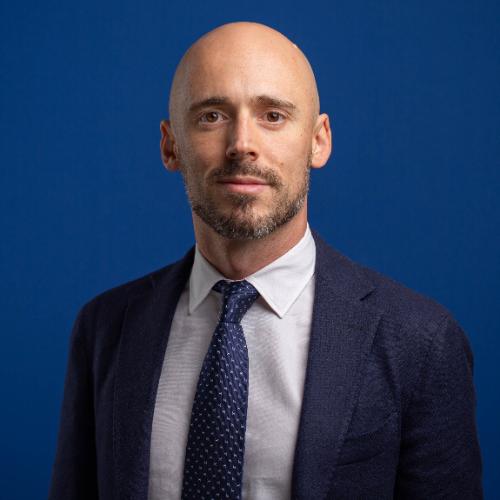
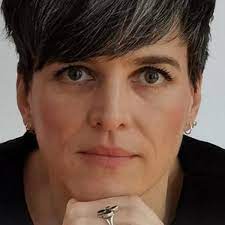
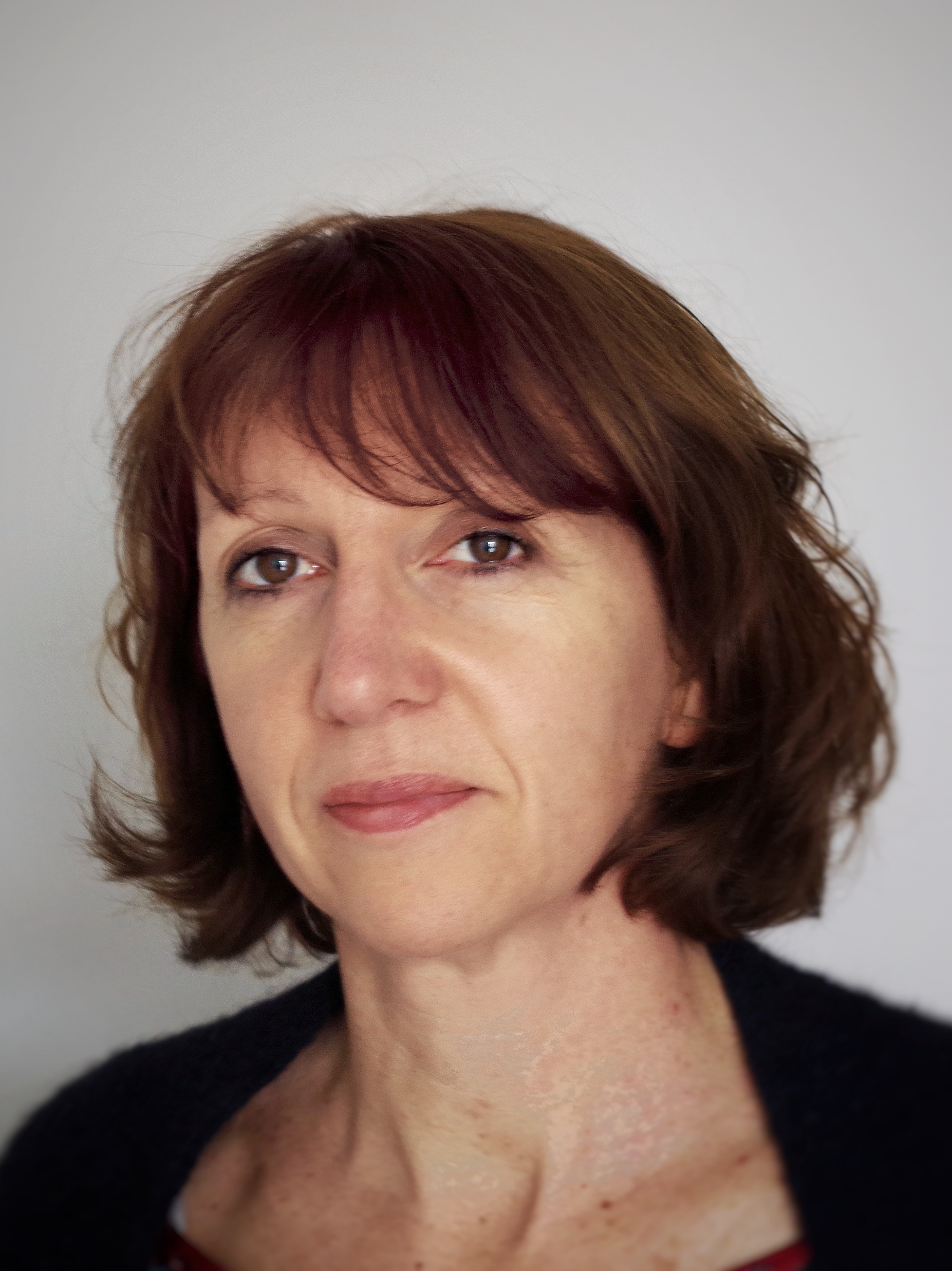
Vahid Niasar serves as Professor and Chair of Subsurface Engineering and Porous Media Physics in the Department of Chemical Engineering at the University of Manchester, while additionally holding the position of Deputy Head of Research at the School of Engineering. He joined the university in 2014 following several years of upstream research experience at Shell Global Solutions in the Netherlands. His research centers on the physics of porous media and subsurface systems with direct applications in energy extraction and environmental management. Key research domains include: Subsurface Engineering Porous Media Physics Earth Sciences Georeservoirs Prof. Niasar maintains significant editorial engagement as Chief Editor for the Georeservoirs specialty section in Frontiers in Earth Science and serves as Topic Editor for the active research initiative "From Legacy to Innovation: Bridging Generations in Earth Sciences for Planetary Protection". No scientific awards are documented in the available profile information. The profile contains no details regarding student advisement, grant funding, or laboratory affiliations.
Belinda Nicholson is a Lecturer in Astrophysics at the University of Southern Queensland since 2019. Her research focuses on magnetic behavior in young stars and exoplanet discovery. Education: Doctor of Philosophy (2019), University of Southern Queensland Master of Science (Physics, 2013), University of Melbourne Bachelor of Science (2010), University of Melbourne Her work bridges stellar dynamics, solar physics, and planetary science, with contributions to understanding stellar color-temperature relationships, atmospheric optics, and space exploration trends. She is involved in public science communication, particularly through Curious Kids initiatives. Recent publications highlight her expertise in stellar classification , observational astronomy , and planetary habitability . Collaborative projects include discussions on Mars colonization and lunar mining futures. Scientific Awards: Australian Government Research Training Program (RTP) Scholarship Belinda actively engages in research supervision and media outreach, though no formal advisees are listed. She contributes to workshops like the 4th Australian Exoplanet Workshop , demonstrating her role in academic community-building.
Arthur G Richards serves as Professor of Robotics and Control within the Dynamics and Control department at the University of Bristol's School of Engineering Mathematics and Technology. His research specializes in trajectory optimization for aerospace applications, focusing on UAV autonomy, spacecraft rendezvous, and air traffic management through advanced optimization techniques. His educational foundation includes an M.Eng. from the University of Cambridge and S.M./Ph.D. degrees from MIT. Research interests center on solving complex aerospace challenges through: Non-convex optimization for obstacle avoidance in cluttered environments Robust model predictive control for real-time disturbance compensation Distributed optimization enabling large-scale vehicle cooperation Scalable algorithms for high-traffic scenarios with minimal fuel consumption Analysis of his 132 research outputs reveals evolving emphasis on reliability-aware UAV path planning, interpretable reinforcement learning for aircraft control, and swarm robotics with real-world validation. Recent work increasingly integrates machine learning with traditional control theory while addressing practical constraints like sensor noise and system failures. Professor Richards has supervised 22 research students and secured funding for 11 projects, including the active Aerial Robotics for Search and Rescue (2022-2026) and PORTAL (2022-2024) initiatives. His industry collaborations with Thales and focus on technology transfer demonstrate strong academic-industrial integration. He actively contributes to the Smart Networks for Sustainable Futures and Robotics research groups, developing frameworks for multi-robot systems that balance theoretical rigor with practical deployment requirements in conservation, inspection, and exploration scenarios.
Thomas Rattei is a Professor at the University of Vienna , affiliated with the Faculty of Chemistry and specifically the Department of Microbiology and Ecosystem Research . His work bridges computational biology with microbial ecology, focusing on metagenomics, virology, and environmental systems science. Research Interests: Metagenomics, Virus-Host Interactions, Secondary Metabolism, Ancient DNA Analysis, Computational Modeling of Microbial Communities Recent research includes PROSPECTOMICS for hydrocarbon prospecting, PyCoMo for metabolic modeling, and studies on Antarctic bacterial biodiversity. Collaborations span multidisciplinary teams, including computational biologists, microbiologists, and environmental scientists. His 2024-2025 publications highlight advancements in metagenomic databases (GlobDB), virus-host interaction frameworks (VOGDB), and ecological insights into microbial communities across diverse environments. Current Projects: PROSPECTOMICS: Omics for Hydrocarbon Prospecting (2024-2027) MC VIROINF: Virus-Host Interactions (2021-2024) ELIXIR STEERS: Collaborative Research (2024) Activities: Lectures on microbial community modeling (2024), Poster presentations at scientific conferences
Ion Paraschivoiu is a Full Professor in the Department of Mechanical Engineering at Polytechnique Montréal, with a distinguished career spanning several decades in aerospace engineering and renewable energy research. His academic journey began at the Polytechnic University of Bucharest where he earned his B.Sc.A., M.Eng., and Ph.D., and has flourished at Polytechnique Montréal where he has established himself as a leading researcher in his fields. Professor Paraschivoiu's research interests focus on aircraft aerodynamics, particularly aircraft icing phenomena, dynamic stall characteristics, and wind energy systems with emphasis on vertical axis wind turbines (Darrieus type). His work bridges theoretical analysis, computational fluid dynamics, and practical applications in both aviation safety and sustainable energy production. His research has significant implications for improving aircraft safety in icing conditions and optimizing wind turbine performance for renewable energy generation. His publication record demonstrates consistent scholarly productivity with 124 documented publications including journal articles, conference papers, and book chapters. His recent work (including a 2025 publication) continues to advance knowledge in wind turbine ice dynamics and aerodynamic modeling. Professor Paraschivoiu has supervised 24 graduate students (3 doctoral and 21 master's), mentoring the next generation of engineers in aerospace and mechanical disciplines. 2005 - Doctorat honoris causa - Université Constantin Brâncuși 2002 - Doctor honoris causa - Université d'Oradea 1999 - Prix de la ministre de l'Éducation, du Loisir et du Sport - Gouvernement du Québec 1997 - Doctorat honoris causa - Université Polytechnique de Bucarest Professor Paraschivoiu's research has been consistently supported through grants that have enabled his work on aircraft icing simulation, wind turbine aerodynamics, and heat transfer applications. His collaborations with researchers like Frédérick Gosselin (as noted in a 2023 press review in La Presse) demonstrate ongoing engagement with contemporary challenges in wind energy technology. His educational materials have been recognized by the Quebec government for their quality and contribution to French-language engineering education.
Professor Carsten Niemitz is affiliated with the Department of Biology, Chemistry, and Pharmacy at Free University of Berlin, working within the Institute of Biology's Human Biology and Anthropology division. His research bridges evolutionary biology with practical applications in medicine and conservation. His primary research domains include: Field studies of primate behavior and ecology Evolutionary foundations of human communication and language Biomechanical analysis of functional anatomy Hominid evolutionary pathways Climate science within planetary boundaries framework Species protection strategies Prof. Niemitz maintains a strong interdisciplinary approach connecting biological anthropology with medical applications, particularly through evolutionary perspectives on human physiology. Media inquiries are coordinated through the university's Press and Communication office (030 / 838-73191), indicating his recognition as a subject matter expert for public engagement.
Lucy Berthoud is Professor of Space Systems Engineering in the Aerospace Engineering department at the University of Bristol's Faculty of Engineering, with 25 years of experience spanning spacecraft research and industry roles at ESA, NASA Johnson Space Centre, and BAe Space Systems (now Airbus Defence and Space). Her academic foundation includes: Master’s in Mechanical Engineering (with Distinction) from the University of Bristol PhD in Space Physics at Sup’Aero/ONERA (French National Research Organisation) Her research spans microsatellites, interplanetary spacecraft design, Mars sample return missions, planetary protection, active debris removal, and Model-Based Systems Engineering. She pioneered the UK-wide 'Space Universities Network' to advance space engineering pedagogy and delivered high-impact public lectures including a TEDx Bristol talk and 'Is there Life on Mars?'. Her distinguished honors include: National Teaching Fellowship (2019) UoB Faculty of Engineering Teaching Award (2014) Senior Fellowship of the Higher Education Academy Fellowship of the Royal Aeronautical Society She bridges academic rigor with industry relevance through curriculum development in Space Systems and Advanced Space Systems courses, while driving sustainable innovation through cross-disciplinary projects examining Martian dust removal systems and Earth-Mars design synergies.
Francesco Gallarati serves as a Researcher in the Department of Political and International Sciences (DiSPI) at the University of Genoa's School of Social Sciences, where he also participates in the Joint Teacher-Student Commission. His current teaching portfolio spans seven graduate courses including Administrative Law, Comparative Constitutional Law, and specialized modules on climate litigation and digital governance. His research centers on the intersection of constitutional frameworks with environmental crises, particularly examining climate change through lenses of European Union law, administrative systems, and digital transformation. Gallarati investigates how constitutional obligations translate into actionable environmental protections amid political discretion, with strong emphasis on comparative analysis across European jurisdictions. 2025 publications reveal a concentrated scholarly focus on climate litigation effectiveness, positioning Gallarati at the forefront of constitutional responses to the Anthropocene. His work consistently bridges theoretical constitutional discourse with urgent practical challenges in health care systems, EU recovery planning, and digital due process – establishing a distinctive research trajectory centered on law's capacity to address systemic planetary crises.
Emma Dowling is an Associate Professor in the Department of Sociology at the University of Vienna's Faculty of Social Sciences, where she serves as Vice-Director of Studies for the Social Sciences Directorate of Doctoral Studies. Based in Room 205 at Rooseveltplatz 2, 1090 Vienna, she teaches courses including Sociological Research Practice, Welfare Regimes, and Social Reproduction in Crisis across 2024W-2025W semesters. Her research centers on the care crisis as a dual crisis of waged care work and social reproduction, examining intersections with capitalism, ecological sustainability, and gendered labor. Key interests include the political economy of care, financialization of welfare systems, volunteering dynamics in austerity contexts, and climate justice linkages, with empirical focus on Germany, Austria, and the UK. Dowling's 2022-2024 publications reveal consistent thematic trajectories: analyzing care as a site of capitalist crisis management, critiquing privatization through feminist political economy, and proposing solidarity-based alternatives. Her work spans academic journals, policy reports, and public media engagement, emphasizing the structural roots of care shortages beyond individualized solutions. She received the Kurt Rothschild Prize for research that situates economic questions in broader social contexts and actively engages public debate on care systems. As Vice-Director of Doctoral Studies, Dowling supervises PhD candidates in sociology while maintaining active grant-supported research on care infrastructure and sustainability. Her public scholarship includes frequent media appearances discussing austerity impacts on care workers, particularly in Irish and German contexts.
Dr. Michiel Min is a researcher at the Netherlands Institute for Space Research and affiliated with the University of Groningen (RUG). His work focuses on astrophysical phenomena related to protoplanetary disks, exoplanet atmospheres, and machine learning applications in astronomy. Research Themes: Protoplanetary Disk Physics, Extrasolar Planet Analysis, Dust Mineralogy, and Atmospheric Retrieval Instrumentation: Expertise in James Webb Space Telescope (JWST) data analysis and mid-infrared spectrography Michiel’s recent publications emphasize dust-gas separation in disks, exoplanet atmospheric modeling using machine learning, and hydrocarbon chemistry in planet-forming regions. Collaborations span institutions like CDS, ESO, and NASA, with datasets shared on platforms like Mendeley. His research contributes to UN Sustainable Development Goals, particularly those related to planetary protection and scientific innovation.
Mickey Gjerris serves as Associate Professor at the University of Copenhagen's Department of Food and Resource Economics since 2007, conducting interdisciplinary research on ethical relationships between humans, animals, and nature. His work bridges academic theory with public policy engagement across environmental and bioethical domains. Education: M.Th. in Theological Bioethics PhD in Theological Bioethics Research focuses on climate change ethics, animal ethics, environmental ethics, bioethics, and medical ethics. Current projects examine gene-editing in plant breeding, insect protein production ethics, zoo animal welfare standards, and virtue ethics applications for research integrity training. He contributes extensively to public discourse through media engagement and academic publications. Recent publications reveal sustained engagement with biotech ethics (de-extinction, gene editing), critiques of greenwashing in climate policy, and innovative frameworks for animal welfare governance. His work consistently applies virtue ethics and deep ecology perspectives to contemporary sustainability challenges, emphasizing practical implementation in policy and industry. Scientific Awards: Mikkel Hindhede Award by the Danish Vegetarian Society (2018) for advancing public debate on animal ethics Advising and funding involve participation in over 10 national/international research projects. He receives honoraria from diverse entities including churches, municipalities, NGOs (e.g., Danish Society for Animal Protection), and corporations (e.g., Novo Nordisk) for lectures and workshops, plus royalties from published works. Public engagement exceeds 40 talks annually. Collaborative work includes membership in Sustainia's think tank since 2020 and prior service on the Danish Council of Ethics (2011-2016). Current partnerships span the Ministry of Environment and Food, academic institutions, and environmental NGOs, focusing on translating ethical frameworks into actionable policies for food systems and conservation.
Tonci Balic Zunic is an Associate Professor in Mineralogy and Crystallography at the Department of Geosciences and Natural Resource Management, Faculty of Science, University of Copenhagen. He leads the X-ray diffraction laboratory and has made significant contributions to the field of mineralogy, particularly in the study of crystal structures and diffraction methods. His work spans theoretical development, experimental techniques, and practical applications in geological and planetary studies, materials development, environmental protection, and medical applications. His educational background includes a Dr.Sci in Geology from the University of Zagreb (1984), a PhD in Mineralogy & Petrology (1978), and a Master of Science in Geology (1975), all from the University of Zagreb. His academic career began in Croatia before moving to Denmark in the early 1990s. Dr. Balic Zunic's research focuses on understanding the nature of the solid state through mathematical tools and experimental methods. His primary areas of interest include Mineralogy of Icelandic fumaroles, Limits and improvement of the Rietveld method in Mineralogy, High-pressure crystallography of sulphosalts, and Mineralogy of Stone Age artefacts. He has developed original theoretical tools for the quantification of atomic coordination deformations in solids and authored the computer program IVTON for crystal structure analysis. His recent publications demonstrate a continued focus on mineral discovery, particularly fumarolic minerals from volcanic environments, high-pressure mineral physics, and advanced crystallographic analysis techniques. His research shows strong international collaboration across Europe and beyond, with numerous discoveries of new minerals and structural studies under extreme conditions. Honorary Member of the Italian Society of Mineralogy and Petrology Dr. Balic Zunic has supervised 12 Master's and 6 PhD students. He has led numerous research projects including the Nordic Mineralogical Network (2006-2010), Modular crystal structures and ordering of atoms in minerals (2006-2008), and several projects focused on high-pressure crystallography and mineral analysis. His work spans diverse fields including cement and ceramics, crystal chemistry of sulphosalts, silicates and fluorides, environmental protection, planetology, metamorphic petrology, ore mineralogy, paleoclimate, biomineralogy with medical applications, heterogeneous catalysis and archaeology. He leads the X-ray diffraction laboratory at the University of Copenhagen and has organized international research groups including the Nordic Mineralogical Network and research groups on fumaroles and high-pressure crystal structures. His work involves extensive collaboration with research institutions across Europe and worldwide, including universities and research centers in Athens, Bari, Basel, Bayreuth, Belgrade, Bilbao, Bochum, Cairo, Firenze, Genova, Göttingen, Heidelberg, Iceland, Innsbruck, Moscow, Nantes, Oslo, Padova, Perugia, Petropavlovsk-Kamchatsky, Prague, Roma, Salzburg, Stockholm, Taipei, Tokyo, Torino, Wien and Zagreb.
Nathalie Pettorelli is a Professor at the Institute of Zoology, Zoological Society of London, and holds an Honorary Professor position at University College London. She leads the Environmental Monitoring and Conservation Modelling (EMCM) team at the Institute of Zoology, focusing on developing tools and methodologies for sustainable natural resource management. Her educational background includes a PhD in Ecology & Modelling from University Lyon (1999-2002), a DEA in Ecology & Modelling from University Lyon (1998-1999), and a Master in Ecology from University Paris 5 (1997-1998). Pettorelli's research centers on assessing and predicting the impacts of global environmental change on biodiversity and ecosystem services, with particular emphasis on climate change. She employs a multi-disciplinary approach integrating statistics, remote sensing, and programming to conduct internationally recognized research. Her extensive experience with remote sensing data drives her interest in promoting better integration of satellite-based data in global monitoring programs, particularly for biodiversity conservation applications. Her work spans conservation, ecology, biodiversity monitoring, and applied ecological research, with recent publications demonstrating strong focus on climate change impacts, nature-based solutions, and technological innovations in conservation. Her extensive publication record shows consistent contributions to high-impact journals including Nature Ecology & Evolution, Journal of Applied Ecology, and Trends in Ecology and Evolution, with recent work exploring the intersection of AI, remote sensing, and conservation science. Pettorelli frequently collaborates on horizon scanning exercises to identify emerging conservation issues and has contributed to several book chapters on seabird conservation. Pettorelli has progressed through the academic ranks at the Zoological Society of London, from Post Doctoral Research Fellow (2006-2009), to Research Fellow (2009-2017), Senior Research Fellow (2017-2022), and now Professor (2022-present). Her work demonstrates strong interdisciplinary collaboration across ecology, conservation science, remote sensing, and policy development. She leads the Environmental Monitoring and Conservation Modelling team, which develops innovative approaches to environmental monitoring and conservation planning. Her research group works at the intersection of technology and ecology, developing new methods for biodiversity assessment and conservation decision-making under global environmental change.
Anne Wadouachi is a Professor at the University of Picardy Jules Verne, where she conducts research at the Glycochemistry and Agroresources Laboratory (LG2A). Her work focuses on Chemistry for Sustainable Development, with particular emphasis on green methodologies for carbohydrate modification. Professor Wadouachi's research interests span carbohydrate chemistry, green chemistry, and sustainable materials science. She specializes in developing environmentally friendly methods for chemical modifications of carbohydrates, with significant contributions to mechanochemistry (solventless ball milling techniques), gold nanocatalysis for selective oxidation of sugars, and the design of biodegradable sugar-based surfactants. Her work consistently emphasizes direct transformations of unprotected carbohydrates, avoiding traditional multi-step protection/deprotection sequences that generate chemical waste. Analysis of her 15 most recent publications reveals a strong focus on sustainable methodologies for biomass valorization. Her research demonstrates exceptional versatility across multiple green chemistry approaches, with particular strength in mechanochemical synthesis, catalytic transformations using gold nanoparticles, and the development of bio-based surfactants with reduced environmental impact. The publications show consistent high-impact contributions to ACS Sustainable Chemistry & Engineering, Green Chemistry, and Carbohydrate Chemistry journals, reflecting the interdisciplinary nature of her work spanning organic chemistry, materials science, and environmental applications. Professor Wadouachi maintains an active research program with numerous collaborations across French institutions. Her work has practical applications in developing sustainable alternatives to petroleum-based products, including biodegradable surfactants for cosmetics and detergents, biosourced polymers as alternatives to conventional plastics, and catalytic methods for biomass conversion. The research group provides training in advanced synthetic techniques while emphasizing the principles of green chemistry and sustainable development. The Glycochemistry and Agroresources Laboratory (LG2A) serves as the primary research environment for Professor Wadouachi's work. This facility supports her research on carbohydrate modifications, mechanochemical synthesis, and characterization of bio-based materials. The laboratory environment fosters interdisciplinary collaboration between chemists, materials scientists, and environmental researchers working toward sustainable solutions for industrial applications.
Dr. Aditya Karnik is a Lecturer in Mechanical Engineering at Robert Gordon University, Aberdeen, UK, within the School of Computing, Engineering & Technology. He is affiliated with the Sustainable Energy Research Group, contributing to research in the Environment, Energy & Sustainability theme. Dr. Karnik's educational background includes a B.E., M.Tech., and Ph.D., and he holds Fellowship of the Higher Education Academy (FHEA). Prior to his current position, he worked as a Research Associate in the Department of Chemical Engineering at Imperial College London and as a Senior Development Engineer in the Multiphase Modeling Group at CD-adapco (now Siemens). Dr. Karnik's research focuses on Computational Fluid Dynamics , Multiphase Flows , and Turbulence Modeling . His recent work has particularly concentrated on gas-water multiphase flow behavior, hydrate formation in subsea pipelines, pipeline leak detection, and thermal characteristics of domestic heating systems. His research employs various computational approaches including Eulerian-Lagrangian (particle tracking) and Eulerian-Eulerian (two-fluid model) methods, with experience across the turbulence modeling spectrum from DNS to LES and RANS. Dr. Karnik has published extensively in his field, with recent publications focusing on hydrate deposition modeling, pipeline safety, and renewable energy applications. His work demonstrates a strong emphasis on practical applications of fluid dynamics in energy and environmental contexts, addressing critical challenges in subsea pipeline operations and energy efficiency. Reviewed for Applied Thermal Engineering (Elsevier) Reviewed for Industrial & Engineering Chemistry Research (ACS) Reviewed for Scientific Reports (Springer Nature) Dr. Karnik has supervised several PhD students to completion, with research topics spanning hydrate plugging risk in subsea gas pipelines, pipeline leak detection using adaptive surrogate modeling, and improvements to hydrocyclones for produced water treatment in the oil and gas industry. His teaching responsibilities include Module Co-ordination for Advanced Thermofluids and Industrial Plant courses.