Dr. Kimberly Fornace is an Affiliate Researcher at the University of Glasgow's School of Biodiversity, One Health & Veterinary Medicine. Her research focuses on vector-borne and zoonotic diseases, particularly malaria epidemiology in changing environments. She leverages geospatial technologies including drone surveillance, satellite imagery, and GPS tracking to study disease transmission dynamics. Her research program examines landscape drivers of zoonotic diseases, developing novel surveillance tools for malaria and other infectious diseases. Key areas include the impact of deforestation on primate malaria reservoirs, spatial modeling of disease risk, and environmental determinants of vector habitats. Recent work has documented cholera patterns in Malaysian Borneo and developed image segmentation methods for earth observation data in disease monitoring. Dr. Fornace leads projects across Southeast Asia and Africa, collaborating with international teams on planetary health approaches to vector control. She has co-edited a book on planetary health approaches to vector-borne diseases and published extensively on zoonotic malaria transmission dynamics, geostatistical analysis, and innovative surveillance methodologies.
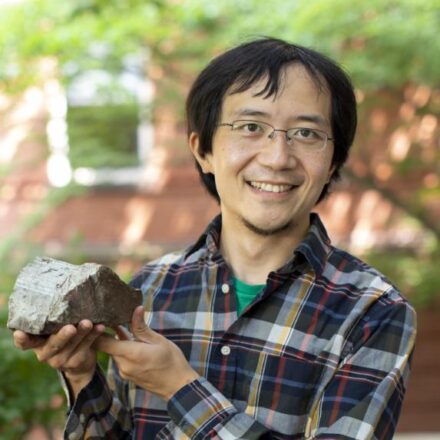
Roger Fu is a Professor of Earth and Planetary Sciences at Harvard University, leading the Paleomagnetics Lab since 2017. He holds a PhD in planetary sciences from MIT and specializes in paleomagnetism, studying planetary magnetism, tectonic reconstructions, and early Earth history. His research integrates geodynamical modeling with advanced tools like the quantum diamond microscope (QDM), enabling high-resolution magnetic imaging of geological samples. Education: BS from Harvard University (2009, Earth and Planetary Sciences & Astrophysics), PhD from MIT (planetary sciences). Post-PhD research included living with the Mapuche people of Chile to study traditional astronomy. His work focuses on Earth's geodynamo, Martian crustal magnetism, and the solar nebula's magnetic fields. Research interests span planetary formation, early Earth dynamics, and the application of QDM technology to study magnetic minerals. Notable contributions include detecting early plate motions and a reversing geodynamo by 3.5 Ga, and analyzing Martian meteorite magnetism to infer crustal cooling processes. His articles emphasize interdisciplinary approaches, linking paleomagnetic data with geodynamic models to address questions about planetary interiors and climate history. The QDM has been pivotal in visualizing magnetic mineral distributions, enhancing confidence in paleomagnetic interpretations. Labs/Teams: Director of Harvard's Paleomagnetics Lab. Collaborates with applied physics groups to advance QDM technology. Research group includes the Fu Group and the QDM development team.
Ivar Midtkandal is a Professor at the University of Oslo's Department of Geosciences, specializing in the Section for Study of Sedimentary Basins. His work focuses on sedimentology, tectonostratigraphy, and planetary geology with a particular emphasis on CO2 storage and basin evolution. He is affiliated with research groups such as Basin Studies and CO2 Storage. Research interests include rift basin dynamics, fault seal analysis, and sedimentary architecture. His projects involve Arctic petroleum exploration (ARCEx), CO2 containment (COTEC), and Triassic reservoir prediction (FORCE Triassic). Recent studies explore topics like fault complexities in CO2 storage sites and seismic geomorphology of submarine canyons. Midtkandal's work integrates field data, seismic interpretation, and experimental methods. He leads initiatives like the VISTA Centre for CO2 Storage in Volcanic-Sedimentary Systems (VICCO) and collaborates internationally on projects such as NOR-R-AM2 (volcanism and tectonics). Publications span 20+ years, addressing topics like Paleogene basin development, sedimentation records of glacial cycles, and volcanic influences on basin evolution. His research bridges geology, geophysics, and environmental science, with applications to energy and climate challenges.
Prof. Lidunka Vočadlo is a Professor of Mineral Physics at the Department of Earth Sciences, University College London. Her work focuses on computational mineral physics, particularly the thermoelastic and rheological properties of materials under extreme conditions relevant to planetary cores. She leads research into Earth’s core dynamics, planetary ices, and volatile distribution in deep-Earth environments. Her group, Crystallography and Mineral Physics, applies ab initio simulations and experiments to study iron alloys, planetary materials, and their roles in planetary evolution models. Education and affiliations are not explicitly detailed here, but her research emphasizes high-pressure, high-temperature phenomena. Key research themes include the Earth’s core-water reservoir, light elements in planetary cores, and isotope fractionation during core-mantle differentiation. She teaches the course GEOL0012: Global Geophysics. Her publications span computational modeling of iron alloys, planetary ices, and geochemical tracers, with a focus on advancing understanding of core-mantle interactions and planetary formation. Labs/Teams: Active member of the Crystallography and Mineral Physics Group at UCL Earth Sciences.
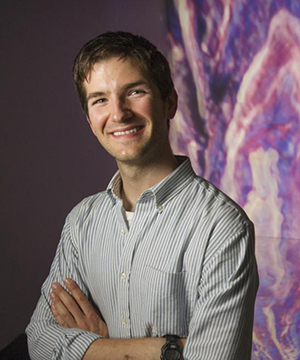
Tyler James Mackey is an Assistant Professor at the University of New Mexico (UNM), specializing in sedimentology, geobiology, and Antarctic lake ecosystems. His research focuses on microbial communities in extreme environments, particularly in perennially ice-covered lakes of Antarctica. He holds a Ph.D. from the University of California, Davis (2016) and is a 2018 Agouron Institute Geobiology Fellow. His work integrates field studies and laboratory analyses to explore microbial habitats and their preservation in the rock record, with applications to understanding Earth's early evolution and astrobiology. Key Affiliations: Department of Earth and Planetary Sciences, UNM Education: Ph.D., University of California–Davis (2016) Research Interests: Sedimentology, geobiology, carbonate geochemistry, and diagenesis. He investigates microbial mat morphologies and their response to environmental changes, using ice-covered Antarctic lakes as analogs for early Earth and extraterrestrial habitats. His studies bridge modern ecosystems with ancient records, particularly in Neoproterozoic sediments. Recent Article Trends: Focus on Antarctic lake geochemistry, microbial carbonate formation, and isotopic signatures. His work employs cutting-edge techniques like metagenomics and clumped isotope analysis to trace environmental shifts over geological timescales. Awards: 2018 Agouron Institute Geobiology Fellowship Advising & Grants: Mackey advises students on Antarctic fieldwork and geochemical analyses. His grants support projects in microbial ecology and early Earth analog studies. Collaborations include work with international teams in Svalbard and Oman. Labs/Teams: Active in the EPS Research Group at UNM, focusing on sedimentology, geochemistry, and geobiology. Leads field expeditions to Antarctic lakes and lab-based geochemical experiments.
Rajdeep Dasgupta is a Professor at the Department of Earth, Environmental and Planetary Sciences at Rice University and serves as the principal investigator for the ExPeRT (Experimental Petrology Rice Team) lab. His research focuses on the formation and evolution of Earth and other rocky planetary bodies, particularly how interior processes influence surface chemistry and habitability. Dasgupta’s research spans multiple subfields including experimental petrology , geochemistry , and planetary science . The ExPeRT lab recreates extreme conditions found up to 400 km deep and 2000°C to study silicate melting, mineral stability, and volatile partitioning. Recent work examines sulfur storage in Earth’s mantle, lunar mantle sulfide saturation, and crustal differentiation on Mars. His recent publications highlight collaborations with researchers like Aindrila Pal (recipient of a NASA FINESST grant) and colleagues across institutions. Dasgupta’s team utilizes high-pressure experiments, geochemical analyses, and thermodynamic modeling to advance understanding of planetary interiors. The ExPeRT lab’s experimental facilities and analytical tools enable microscopic observation of melts and minerals, linking lab results to natural processes such as volcanic degassing and mantle plume activity. Dasgupta also contributes to educational outreach, leading initiatives like the Rice-HISD Planetary and Space Exploration Education Project to inspire future scientists.
Christopher S. Edwards is an Associate Professor of Planetary Science in the Department of Physics and Astronomy at Northern Arizona University. He serves as a science team member and instrument scientist for the Emirates Mars Infrared Spectrometer on the Emirates Mars Mission "Hope", a participating scientist on the Mars Science Laboratory Curiosity Rover, a participating scientist on the OSIRIS-Rex mission to Bennu, and a Co-Investigator on the Lunar Trailblazer mission. His research spans multiple planetary missions including the 2001 Mars Odyssey Thermal Emission Imaging System, Mars Global Surveyor Thermal Emission Spectrometer, and the Mars Reconnaissance Orbiter Compact Reconnaissance Imaging Spectrometer for Mars. Dr. Edwards' research program focuses on the composition, physical properties and processes, and morphology of planetary surfaces, with an emphasis on rocky bodies including Earth. His work spans: Infrared remote sensing instrument design and development Planetary surface composition analysis using spectroscopy Geologic field observations at terrestrial analog sites Numerical modeling of surface processes His research interests include: Planetary Geology and surface processes Spectroscopy of planetary surfaces Remote sensing instrument development Volcanic processes on terrestrial planets Dr. Edwards' recent publications reveal a strong focus on Mars atmospheric studies using data from the Emirates Mars Mission, particularly examining water ice clouds, surface dust properties, and thermal characteristics. His work also extends to lunar exploration with the Lunar Trailblazer mission and asteroid studies through the OSIRIS-Rex mission, demonstrating a comprehensive approach to understanding planetary surfaces across the solar system. His scientific contributions include: Studies of Martian paleo-hydrology and surface evolution Analysis of volcanic processes on Mars and Earth Development of novel methods for thermal inertia measurements Investigations of planetary surface composition using infrared spectroscopy Dr. Edwards has conducted field research at multiple terrestrial analog sites including the western U.S., Yellowstone, Hawaii, Spain, and the Himalayan mountains of Bhutan, connecting Earth-based observations to planetary science questions through the Planetary Instrumentation eXperimentation and Exploration Laboratory (PIXEL) at NAU.
Ulrich Riller is an Adjunct Professor at the Department of Earth and Planetary Sciences , McMaster University . With over 25 years of scholarly activity, his research spans impact crater formation, structural geology, and tectonic processes across terrestrial and planetary contexts. Specializes in impact crater dynamics (Chicxulub, Vredefort, Sudbury) Expertise in Andean tectonics and crustal deformation Key contributions to hydrothermal systems in impact craters Developed analogue experiments for crater evolution Created ValleyMorph tool for geomorphic analysis His recent publications (2015-2025) focus on impact melt dynamics, post-impact biological recovery, and tectonic controls on mineralization. Notable works include studies on shock-deformed minerals and central uplift kinematics . Collaborations with institutions like IODP-ICDP Expedition 364 highlight his fieldwork and analytical capabilities. Active in peer-reviewed publishing (Science, Nature, Geology) Contributes to planetary science and ore geology Engaged in multi-scalar structural analysis from microfractures to orogenic belts
Chris Packham is a Professor in the Department of Physics and Astronomy at the University of Texas at San Antonio (UTSA), within the College of Sciences. He also holds a visiting professorship at the National Astronomical Observatory of Japan, reflecting his international research collaborations. His primary research interests include active galactic nuclei (AGN), infrared instrumentation, and stellar discs. He co-leads a global group of astronomers (GATOS) utilizing data from cutting-edge facilities such as the James Webb Space Telescope (JWST), ALMA, and 8-meter-class telescopes. His work focuses on the structure and dynamics of the dusty torus surrounding supermassive black holes, with recent findings pointing to dusty disk winds and polar emission revealed by mid-infrared observations. He is deeply involved in the development of next-generation instruments like MICHI for the Thirty Meter Telescope and contributed to the Habitable Worlds Observatory through the Science, Technology, Architecture Review Team (START). The most recent articles reflect a strong emphasis on JWST-enabled discoveries, particularly in AGN physics and black hole environments. There is also a recurring theme of public engagement, especially around astronomical events such as solar and lunar eclipses, and exoplanet research. His work integrates observational astrophysics, instrument development, and science communication. James Webb Space Telescope reveals mystery about the energy surrounding a black hole (2024) James Webb Space Telescope finds a shock near supermassive black hole (2024) UTSA researcher awarded rare time with JWST to study black holes, galaxies (2024) Chris Packham actively mentors students, currently advising Mr. John Schneider and collaborating with former student Dr. Lindsay Fuller. He has led or co-advised several graduate students and is involved in interdisciplinary projects, including climate change outreach with environmental student Alex Roush. He has served on committees for NASA, NSF, and the Gemini Board, and is Chair of the JSPS Alumni Association of the USA and Canada, fostering international scientific ties. He leads community engagement initiatives, including educational events at the Witte Museum and Scobee Planetarium, eclipse outreach with local officials and organizations, and fundraising for La Palma volcano relief. He is a member of Leadership San Antonio and the Canary Islands Descendants Association, reflecting his commitment to public science and cross-cultural collaboration.
Matti Kummu is a Professor at Aalto University in the College of Built Environment, Department of Water and Environmental Engineering. He leads the Water and Development Research Group and teaches the course Water and People in the Developing World . His research focuses on human-environment interactions, particularly global water scarcity , food security , and sustainable food systems . Key areas include quantifying the impacts of water scarcity on food production, analyzing water-energy-food nexus dynamics in Southeast Asia, and modeling planetary boundary constraints for sustainable development. Recent publications highlight expertise in climate-water-food linkages (e.g., Nature Food, Nature Water), geospatial data development (Scientific Data), and trade-environment interactions (PNAS). Projects like SOS.aquaterra (H2020 ERC CoG-funded) aim to reconcile food demand with planetary boundaries. Contact: matti.kummu@aalto.fi
Dr. H.K. Vedantham is a Research Fellow at the Kapteyn Astronomical Institute , part of the Faculty of Science and Engineering at the University of Groningen . His work focuses on radio astronomy and astrophysics, particularly the study of exoplanets, brown dwarfs, and stellar systems through low-frequency radio observations and interferometric techniques. Research Interests: Radio astronomy of exoplanets and sub-stellar objects Stellar mass-loss and magnetic interactions Space weather phenomena Astrometric and radial velocity measurements Publications highlight his contributions to understanding radio emission mechanisms in exoplanetary systems, stellar magnetospheres, and dwarf galaxies. His work frequently involves collaborations using advanced instruments like LOFAR and VLBI networks. Contact: Email: h.k.vedantham@rug.nl Phone: +31 50 36 34073
Robert Lysak is a Professor in the School of Physics and Astronomy at the University of Minnesota, specializing in theoretical plasma physics with focus on magnetospheric and auroral phenomena. His research spans Earth's magnetosphere, planetary systems including Jupiter, solar wind dynamics, and astrophysical plasmas. His primary research interests include: Plasma dynamics in Earth's auroral regions and magnetosphere Kinetic Alfvén wave theory and particle acceleration mechanisms Ultra-low-frequency (ULF) wave eigenmodes and propagation Magnetic reconnection processes in thin current sheets Comparative studies of Earth and Jupiter's magnetospheric physics Solar corona phenomena including heating and eruptions Recent publications (2023-2024) demonstrate continued focus on comparative Alfvén wave analysis between Earth and Jupiter, Io-generated wave interactions in Jovian magnetosphere, low-latitude Pi2 pulsation mechanisms, and double-layer electric discharge models for auroral substorms. His work consistently integrates kinetic theory with numerical modeling to explain fundamental plasma processes. As Principal Investigator, Dr. Lysak manages 17 research projects including: Numerical Modeling of ULF Waves and Geomagnetically Induced Currents (NSF, 2022-2025) Magnetosphere-Ionosphere Coupling and Auroral Acceleration at Earth/Jupiter (NASA, 2020-2025) Global Propagation of Pi2 Waves (NSF/Johns Hopkins, 2019-2024) Kinetic Field Line Resonances Modeling (NASA, 2019-2022) He maintains active collaboration with Senior Researcher Dr. Yan Song on particle acceleration theory and magnetic reconnection dynamics, with joint projects including NSF-funded ULF wave modeling. His research group utilizes advanced numerical techniques and contributes to understanding space weather phenomena relevant to planetary science and solar-terrestrial interactions.
Dr. Christopher James is a UQ Amplify Senior Lecturer at the School of Mechanical and Mining Engineering , University of Queensland (UQ). He is an affiliate of the Centre for Hypersonics , where he combines experimental hypersonics with planetary entry research . PhD in Mechanical Engineering (UQ, 2012-2016) with cotutelle at École Centrale Paris (2014-2015) ARC DECRA Fellow (2021-2023) for Mars return studies Research Focus: Specializes in experimental hypersonics , particularly expansion tube/shock tunnel development and planetary entry aerothermodynamics . His work addresses non-equilibrium radiation , ablation testing , and optical/radio-based measurement techniques for extreme atmospheric entry scenarios. Scientific Contributions: Authored 37+ journal articles and 69+ conference papers. Key areas from recent publications include Hayabusa2 re-entry spectroscopy , superorbital heat flux control , and multi-mode shock tunnel design . Awards: UQ EAIT Faculty Early Career Researcher Award (2020) AIAA Ground Test Best Paper Award (2021) Supervision: Mentors students in planetary entry flows , Titan mission thermal systems , and non-equilibrium radiation-ablation coupling through UQ's hypersonic facilities. Led NASA OSIRIS-REx re-entry observation missions. Outreach: Regular contributor to The Conversation (200,000+ reads), interviewed for YouTube/radio, and invited speaker at University of Oxford and Engineers Australia seminars.
Chin Ming Stephen Lim is a Lecturer in Theology at Hong Kong Ming Hua Theological College, School of Theology, with a PhD, MA, and MBBS background. He specializes in decolonial biblical interpretation, focusing on reading the Bible through Asian and Singaporean contexts. Research Interests: His work bridges biblical studies with postcolonial theory, interreligious engagement, and critiques of global productivity cultures. He explores how biblical texts interact with migrant communities, political prisoners, and ecological themes in Southeast Asia. Scientific Contributions: Lim’s publications include interdisciplinary studies like Global Subarachnoid Hemorrhage Burden (2025) and context-driven theological works such as Contextual Biblical Hermeneutics (2019). His scholarship spans articles, book chapters, and conference presentations. Teaching: Lim instructs courses in Biblical Greek, Hebrew, and exegesis, including THL101–THL535. He advocates for contextual biblical literacy and decolonized pedagogical approaches.
Dr. Daniel I. Pineda is an Assistant Professor in the Department of Mechanical Engineering at the University of Texas at San Antonio (UTSA), affiliated with the Margie and Bill Klesse College of Engineering and Integrated Design. His research focuses on spectroscopy and optically-based sensor development for aerospace and energy systems. Education: B.S. from The University of Texas at Austin, Ph.D. in Mechanical Engineering (Combustion) from the University of California, Berkeley, and postdoctoral work at the University of California, Los Angeles. Prof. Pineda’s research explores laser absorption spectroscopy, chemical kinetics of ignition, fuel reformation, and fire toxicant formation using advanced propulsion and energy conversion systems. His lab emphasizes uncertainty quantification in experimental and modeling approaches. His recent work includes mid-wave infrared sensors for nitrogen oxides, additive manufacturing for detonation engines, and calibration-free spectroscopy for Martian methane monitoring. Trends in his publications reflect expertise in rotating detonation combustion, high-temperature spectroscopy, and environmental sensing. Awards: National Science Foundation CAREER Award. Dr. Pineda mentors graduate students in aerospace and energy research, integrating thermodynamics, fluid mechanics, and applied optics. His lab develops diagnostics for hypersonic testing and propulsion systems.