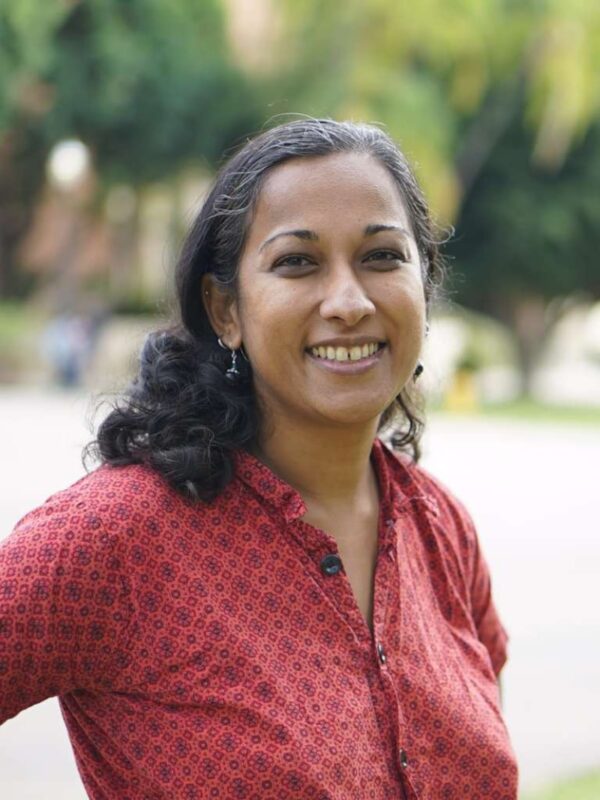
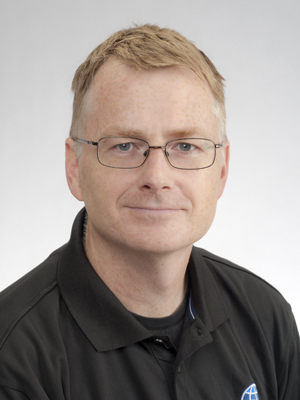
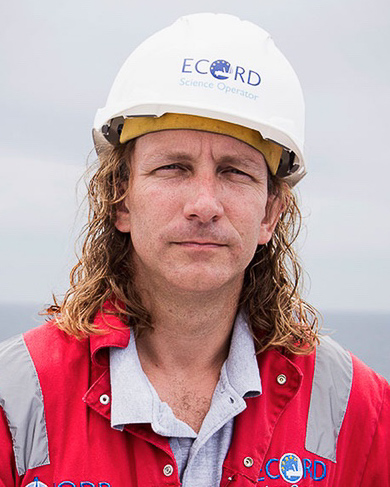
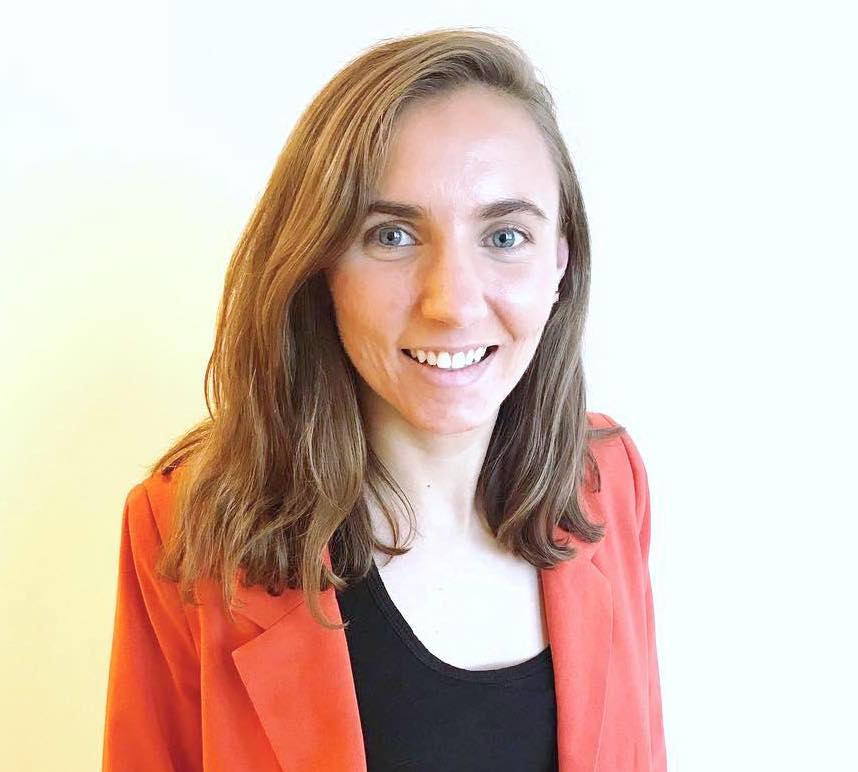
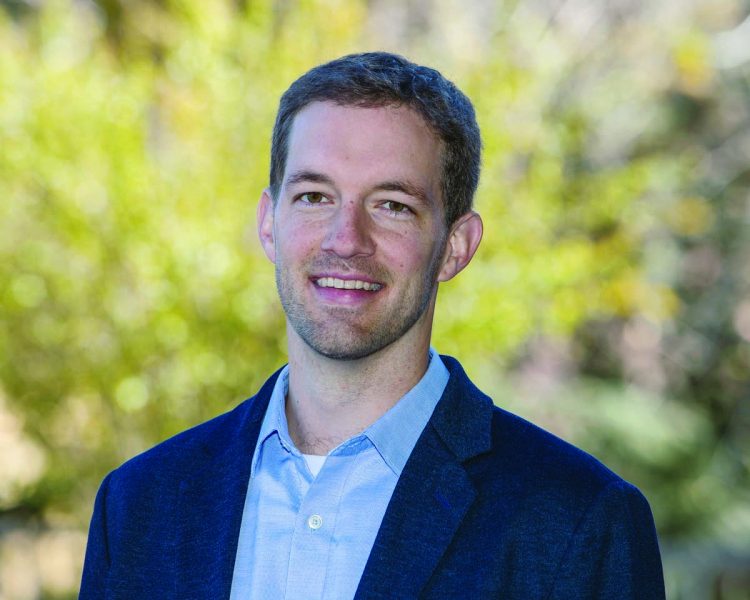
Dr. Bart Schilperoort serves as a Researcher at the Copernicus Institute of Sustainable Development within Utrecht University's Faculty of Geosciences. His work focuses on interdisciplinary environmental research addressing global sustainability challenges through the Environmental Sciences department. His core research domains include: Environmental Science Sustainable Development Climate Change Hydrology Environmental Policy These areas align with the institute's mission to integrate natural and social sciences for actionable sustainability solutions. The Copernicus Institute provides a collaborative framework where Dr. Schilperoort contributes to high-impact research on planetary boundaries and resource management. As part of Utrecht University's geoscience ecosystem, his work supports policy-relevant studies on ecological transitions within dynamic academic and stakeholder networks.
Dr. Arie Staal is an Assistant Professor of Ecosystem Resilience at Utrecht University's Copernicus Institute of Sustainable Development, within the Faculty of Geosciences and Department of Environmental Sciences. His research focuses on ecosystem-climate feedbacks, particularly in tropical forests like the Amazon, where he investigates tipping points related to deforestation and climate change using atmospheric moisture tracking. His work explores how ecosystems respond to global changes, emphasizing moisture recycling, forest resilience, and climate interactions. Research themes include: Forest-atmosphere feedbacks amplifying/dampening climate effects Deforestation impacts on regional precipitation Moisture recycling dynamics under climate scenarios Early warning systems for ecosystem tipping points Publication trends (2018-2025) show consistent focus on moisture recycling, climate resilience, and Amazon forest dynamics, with increasing emphasis on global hydrological tipping points and anthropogenic impacts. Recent work quantifies moisture flows under climate scenarios and explores forestation for rainfall enhancement. Awards: NWO VENI Grant (2020) for 'Recovering tropical forest resilience in the Anthropocene' Teaching & Supervision: Coordinates MSc courses: Environmental Systems Analysis Quantifying Ecosystem Resilience to Global Environmental Change Part of ERC-Synergy project RESILIENCE. Advises students in Sustainable Development programs.
Shoichi Shige is an Associate Professor at Kyoto University's Graduate School of Science, Division of Earth and Planetary Science, since 2009. He has held visiting positions at Colorado State University (2013-2014) and has been affiliated with institutions like Osaka Prefecture University and JAXA's Earth Observation Research Center. Education: PhD in Earth and Planetary Sciences from Kyoto University (2001). Professional Memberships: American Meteorological Society, American Geophysical Union, IEEE Geoscience and Remote Sensing Society (2008-2019), and Japanese meteorological societies. Research Interests Latent heat retrieval algorithms using TRMM/GPM satellite data. Global precipitation mapping via microwave radiometers (GSMaP project). Orographic rainfall dynamics in monsoon regions. Rain/no-rain classification methods for remote sensing. Scientific Contributions Developed the Spectral Latent Heating (SLH) algorithm. Collaborated on TRMM latent heating intercomparisons. Published 15+ peer-reviewed articles since 1999, focusing on tropical convection, precipitation profiles, and satellite data validation. Awards 2018 Meteorological Society of Japan Award for contributions to precipitation research.
Benjamin Burger is an Associate Professor in the Geosciences Department at the S.J. & Jessie E. Quinney College of Agriculture & Natural Resources, Utah State University (Uintah Basin campus). His research spans paleoecology, mammalian evolution, and climatological impacts on fossil records, with significant contributions to understanding extinction events and educational innovation through Open Educational Resources (OER). Research Focus : Paleoecology of Eocene mammals, climate change effects on Paleocene-Eocene faunal shifts, Permian-Triassic mass extinction, and fossil taxonomy. Education & Outreach : Advocates for OER development, classroom engagement strategies, and interactive digital textbooks. Fieldwork : Active in Utah, Wyoming, and Colorado, studying stratigraphy and taphonomy of fossil-rich formations. Recent publications analyze niche competition between multituberculates and rodents, S/G ratios in mammalian communities, and the integration of OER into geoscience education. Though no specific awards or advisees are mentioned in the provided data, his work bridges paleontological research and pedagogical advancement.
apl. Prof. Dr. habil. Bernhard Schulz is an Associate Professor for Petrology at the Chair of Mineral Deposits and Petrology, Institute of Mineralogy, Faculty of Geosciences, Geotechnology and Mining at Freiberg University of Mining and Technology (TU Bergakademie Freiberg) in Germany. He has held this position since 2005, following previous academic roles at the Universities of Würzburg, Erlangen-Nuremberg, and earlier appointments as a lecturer and research fellow. His scholarly work spans metamorphic petrology, geochronology, and mineral deposit studies with particular expertise in electron microprobe monazite dating and SEM-based automated mineralogy techniques. Professor Schulz's research focuses on metamorphic rocks and petrochronology, employing methods including geothermobarometry, EPMA-Th-U-Pb-monazite dating, microstructure analysis, and geochemistry to reconstruct geodynamic processes and mineral deposit formation. His work covers regions including the Eastern Alps, Saxony, Armorican Massif, and South America. He also investigates ores and processed ores using SEM-based automated mineralogy methods (MLA) for characterizing metal ores, technical mineral processing, and recycling processes. His analytical expertise includes SEM automated mineralogy with MLA and EPMA electron probe microanalysis for silicates and Th-U-Pb-CHIME dating of monazite. Analysis of his recent publications reveals strong trends in metamorphic petrology, geochronology (particularly monazite dating), ore deposit geology, and SEM-based mineralogy applications. His work spans diverse geological settings from the Variscan orogeny in Europe to Precambrian terranes in Africa and South America. The research demonstrates consistent methodological innovation, particularly in electron microprobe techniques for dating and characterizing metamorphic events and ore formation processes across different geological timescales. Hermann-Credner-Preis 1990 der Deutschen Geologischen Gesellschaft (1990) Korrespondent der Geologischen Bundesanstalt in Wien (2001) Ernennung zum Professor apl. an der Universität Erlangen-Nürnberg (2003) Professor Schulz has served on multiple review committees including the Scientific Priority Program (SPP) 1144 'From Mantle to Ocean: Energy, Material and Life Cycles at Spreading Axes' and SPP 1158 'Antarctica Research' (both Deutsche Forschungsgemeinschaft). He has received research fellowships from the German Research Foundation (DFG) and maintains active international collaborations, particularly with institutions in France, Switzerland, Austria, and the United States. His current research involves extensive fieldwork in metamorphic terranes across Europe, Africa, and South America, with a strong emphasis on methodological development in geochronology and mineral characterization. Professor Schulz works within the Institute of Mineralogy at Freiberg University, where he leads research on metamorphic petrology and mineral deposits. His team utilizes state-of-the-art analytical facilities including a Quanta 600 FEG SEM for automated mineralogy and a JEOL electron microprobe for EPMA analysis. He collaborates closely with Dr. Joachim Krause at the Helmholtz Institute Freiberg for Resource Technology, sharing access to advanced JEOL-JXA-8530-FEG instrumentation. His research group maintains strong connections with international laboratories including Géosciences Rennes and Université Paris Jussieu in France.
Thomas Reichler is a Professor in Atmospheric Sciences at the University of Utah, with a career spanning since 2004. His research focuses on atmospheric circulation dynamics , climate change , and stratospheric-tropospheric interactions . He holds an ORCID identifier 0000-0002-5004-0110. Ph.D. in oceanography from the University of California (2003) Postdoctoral work at Princeton University Academic career at University of Utah: Research Assistant Professor (2004), Assistant Professor (2004-2010), Associate Professor (2010-2023), and Professor (2023-present) His research interests integrate climate modeling , ozone-circulation interactions , and extreme stratospheric events such as Sudden Stratospheric Warmings (SSWs). Recent publications analyze tropical expansion, wave activity flux, and interhemispheric climate connections. Reichler's grants include funding from NSF , NASA , and the World Bank , supporting studies on regional climate information for Bolivia and stratospheric dynamics. His teaching spans undergraduate and graduate courses on Climate Change , Dynamic Meteorology , and Experiential Learning . Professional activities include community outreach through symposium judging and lectures on climate science. He collaborates extensively on global climate simulations and hydroclimate studies , maintaining a research network via https://www.inscc.utah.edu/~reichler/ .
Aradhna Tripati is a Professor at the University of California, Los Angeles with joint appointments in the Institute of the Environment and Sustainability, the Department of Atmospheric and Oceanic Sciences, the Department of Earth, Planetary, and Space Sciences, the Institute for Geophysics and Planetary Physics, and the California Nanosystems Institute. She serves as the faculty director and founder of the Center for Developing Leadership in Science (CDLS) at UCLA. Dr. Tripati received her B.S. in Geological Sciences from California State University, Los Angeles in 1996, where she received the Aaron Waters Award for Outstanding Senior. She earned her Ph.D. in Earth Sciences at UC Santa Cruz in 2002, where she was a Gates Millennium Scholar, an Ocean Drilling Program Fellow, and a UC Regents' Fellow. Following her Ph.D., she was a research fellow at the University of Cambridge, holding the Thomas Nevile Fellowship in Natural Sciences, a Comer Abrupt Climate Change Fellowship, a National Environmental Research Council Fellowship, and a Marshall Sherfield Fellowship. She also served as a visiting scientist at the California Institute of Technology for several years before joining UCLA as an assistant professor in 2009, receiving tenure in 2014. Dr. Tripati's research focuses on climate change, the history and dynamics of changing Earth systems including climate, ice sheets, oceans, the water cycle, and carbon dioxide levels. She specializes in tool development and clumped isotope geochemistry, using the chemistry of natural compounds as well as models to understand how the Earth works. Her work addresses pressing questions pertaining to climate change, earth systems history, geochemistry, geobiology, and sedimentary geology. She also integrates geochemical data with field-based observations, sedimentologic and micropaleontologic data, and models. Her interdisciplinary approach spans multiple fields, connecting geological records with modern climate science to understand past and present environmental changes. Dr. Tripati's extensive publication record, with 66 publications including 12 in Nature journals, Science, or PNAS, demonstrates her significant contributions to paleoclimatology and geochemistry. Her recent work shows a continued focus on clumped isotope thermometry, with applications to understanding past climate conditions, hydrological cycles, and Earth system processes. Her research spans various time periods from the Miocene to the Holocene, examining climate dynamics across different spatial scales from local lake systems to global ocean circulation patterns. A notable trend in her recent publications is the increasing integration of community engagement and environmental justice perspectives with traditional geochemical research. Presidential Early Career Award in Science and Engineering from President Obama NSF CAREER award (NSF's most prestigious award for early career faculty) Bromery Award for Minorities from the Geological Society of America Hellman Fellow National Academy of Sciences Kavli Fellow E.O. Wilson Award for Outstanding Science on climate change Chair International D'Excellence in Stable Isotopes by IUEM Vasa Cube Awardee for UCLA's Fiat Lux Freshman Seminar program UCLA Career Development Award Dr. Tripati has mentored over 130 postdoctoral fellows, researchers, PhD students, Master's students, undergraduates, high school teachers, and high school students. Her commitment to education extends beyond traditional academic mentoring, as she has developed numerous outreach programs to promote diversity in STEM fields. She has secured substantial research funding, including the NSF CAREER award which supported her work from 2014-2018, and has established world-renowned laboratories for clumped isotope geochemistry. Her research program is highly collaborative, involving partnerships with institutions worldwide and interdisciplinary teams addressing complex environmental questions. Dr. Tripati directs the UCLA Geochemistry Facility, which houses specialized equipment for clumped isotope measurements including Thermo Finnigan MAT 253 and Nu Perspective IS mass spectrometers. Her 'Tripati Lab' (also known as the Climate & Biogeochemistry Group or Climate & Carbon Cycle Group) focuses on using the chemistry of natural compounds to understand Earth systems. The lab has established a strong reputation in clumped isotope geochemistry and maintains active collaborations with researchers globally. The lab follows a 'Star Wars naming convention' for its instruments, reflecting the team's enthusiasm for both science and pop culture. Dr. Tripati has also founded the Center for Developing Leadership in Science (CDLS), which aims to develop leadership skills in science students while promoting diversity and inclusion in environmental science and geoscience.
James Cullen serves as a Professor within the Department of Geological Sciences at Salem State University. His extensive teaching portfolio spans foundational and advanced geoscience courses: GLS 100: Dynamic Earth GLS 102: Evolving Earth GLS 103: The Blue Planet GLS 155: Age of Dinosaurs GLS 171H: Honors Evolving Earth GLS 212: Geological Oceanography GLS 295: Climate Change in the Geologic Record GLS 334: Sedimentary Environments & the Stratigraphic Record GLS 357: Environmental Geology GLS 500/501: Senior Research in Geology His research integrates Earth's historical and contemporary processes, with emphasis on: Geology: Core planetary structure and dynamics Paleontology: Fossil records and evolutionary timelines Oceanography: Marine geological systems Climate Change: Long-term paleoclimatic evidence Sedimentology: Stratigraphic analysis and depositional environments Environmental Geology: Human-geosphere interactions No scientific awards are documented in the source material. Professor Cullen actively mentors undergraduate researchers through senior thesis projects (GLS 500/501), though specific grant funding or laboratory facilities remain unmentioned. His work bridges theoretical geoscience with practical environmental applications across teaching and research contexts.
Dr Frances Butcher is a UK Space Agency Exploration Science Research Fellow at the School of Geography and Planning , University of Sheffield. A planetary scientist and glacial geomorphologist, she specializes in Martian and terrestrial glaciology, using satellite data to analyze glacial landforms on Mars while applying Earth analogs for comparative studies. Her work directly informs future Mars exploration missions, including ice-access objectives. Research Interests: Active in glacial geomorphology, Dr Butcher investigates both Martian and terrestrial glacial systems, focusing on landforms produced by glaciation and meltwater activity. Her work explores Mars' ice deposits for environmental change history and potential utilization in human missions, while reconstructing Earth's former ice sheets through landform analysis. Comparative studies between Earth and Mars glaciers are central to her research. Scientific Leadership: She founded the CryoMars network and serves on the UK Space Agency's Space Exploration Advisory Committee. Recent involvement includes membership on the International Mars Ice Mapper (I-MIM) Measurement Definition Team and the European Space Agency LightShip-SpotLight orbiter team. Current research is funded by the UK Space Agency and Leverhulme Trust. Grants: 2025: UK Space Agency Exploration Science Fellowship 2022: Leverhulme Early Career Research Fellowship 2020: British Society of Geomorphology Conference Support 2019: INQUA Conference Grant 2019: Lunar and Planetary Institute Career Development Award Teaching: Currently instructs modules on Polar and Alpine Change , The Planets , and Geospatial Dissertation at Sheffield. Past teaching includes Cambridge's 3rd Year Glaciology and Manchester's Digital Terrain Analysis lectures.
Professor Brian Horton is a faculty member at the Jackson School of Geosciences , University of Texas at Austin, affiliated with the Department of Earth and Planetary Sciences . His research focuses on tectonic processes, sedimentary basin development, and Earth surface dynamics. Ph.D., University of Arizona M.S., Montana State University B.S., University of New Mexico Brian Horton studies mountain building processes and sedimentary basin development along convergent plate margins. His work integrates sedimentology, stratigraphy, geochronology, geochemistry, and structural geology to investigate modern and ancient orogenesis, plateau construction, sediment provenance, and river network evolution. Current projects emphasize the uplift of the Andes and the growth of major South American river systems. Contact: Office at ROC 2.116G, Phone: 512-471-6156, Email: horton@ig.utexas.edu .
Marianna Linz is an Assistant Professor at Harvard University, jointly appointed in the Department of Environmental Science and Engineering (School of Engineering and Applied Sciences) and the Department of Earth and Planetary Sciences (Faculty of Arts and Sciences). Her research focuses on climate dynamics, particularly the interactions between geophysical flows and tracer transport in the atmosphere and ocean. Education: Harvard University (AB, first joint concentrator in Chemistry & Physics and Earth & Planetary Sciences, 2011) PhD: Massachusetts Institute of Technology-Woods Hole Oceanographic Institution Joint Program (Physical Oceanography) Postdoctoral Research: University of California, Los Angeles The Linz Group investigates global atmospheric and oceanic circulation patterns, analyzing how winds and currents transport heat, carbon, moisture, and pollutants. Key projects include studying stratospheric age of air, tropospheric jet dynamics, ocean water age budgets, and the interplay between tracer distributions and climate change. Recent research trends emphasize stratospheric mixing diagnostics, jet stream dynamics, observational constraints on climate signals, and overturning circulation modeling. The group employs theoretical frameworks, simple models, chemistry-climate models, and observational data to decode flow-tracer relationships in a warming world. Their work includes outreach initiatives like Diversi-Tea for inclusivity in geosciences and team-based community programs to enhance scientific identity and geoscience literacy.
Sean P. S. Gulick is a Research Professor at The University of Texas at Austin's Jackson School of Geosciences and co-director of the Center for Planetary Systems Habitability. His work focuses on tectonic-climate interactions, catastrophism in the geologic record, and marine planetary geophysical imaging across global field sites. He holds a Ph.D. from Lehigh University and a B.S. from the University of North Carolina. Gulick's research spans: Tectonic-climate interactions including glacial dynamics in Alaska and mountain evolution Geohazards in subduction zones (Alaska, Sumatra, New Zealand, Japan) and transform fault systems Cretaceous-Paleogene Chicxulub impact crater studies covering environmental effects, biotic crises, and impact-generated ecosystems Planetary habitability frameworks and nested-resolution geophysical imaging techniques His scientific recognition includes election as a Fellow of the Geological Society of America. Gulick leads the Center for Planetary Systems Habitability, fostering cross-disciplinary research on life-supporting planetary systems. He actively contributes to the University of Texas Institute for Geophysics (UTIG) and the Marine Geology and Geophysics Field Course from his office at the J.J. Pickle Research Campus.
Elizabeth Spiers is a Researcher at the University of Texas Institute for Geophysics within the Jackson School of Geosciences. Her work focuses on understanding the dynamic habitability of ocean worlds like Europa and Enceladus through systems modeling and planetary mission development. Ph.D. in Earth & Atmospheric Sciences – Planetary Science, Georgia Institute of Technology B.S. in Applied Physics, Purdue University B.S. in Planetary Science, Purdue University Her research involves quantifying global-scale energy and chemical changes in extraterrestrial oceans, contributing to NASA’s Europa Clipper mission and other concepts like the Tiger mission for Enceladus and the VERNE drilling project. She specializes in life detection strategies for ocean worlds. At the University of Texas, she operates from the J.J. Pickle Research Campus, engaging in planetary mission projects and collaborating with institutions such as the Department of Earth and Planetary Sciences and the Center for Planetary Systems Habitability. Her expertise includes subsurface access mechanisms and ice-penetrating radar technologies.
Zhen Li is a Postdoctoral Fellow at the Institute for Geophysics , affiliated with the Jackson School of Geosciences at the University of Texas at Austin. Their research focuses on geophysical phenomena, contributing to broader understanding of Earth and planetary systems. Email: carlcat@outlook.com Office: ROC, Jackson School of Geosciences
Matthew Malkowski is an Assistant Professor at the Jackson School of Geosciences, The University of Texas at Austin. His research focuses on sedimentology, stratigraphy, and tectonic geomorphology, using the Earth's sedimentary record to address modern environmental challenges. PhD in Geological Sciences (Stanford University) MS and BS in Geology (Michigan State University) Community college education (rural Michigan) Malkowski studies mountain belts and ocean basins to decipher their formation through climate, tectonic movement, and sea level change. His work bridges historical geological records to contemporary issues like sand mining sustainability in San Francisco Bay and redrawing maritime-economic borders in the Bering Sea. Recent publications emphasize detrital zircon provenance, basin evolution in Patagonia and Tibet, and sediment transport modeling. His research spans global fieldwork from Patagonia to Alaska and Tibet.