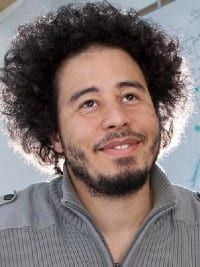
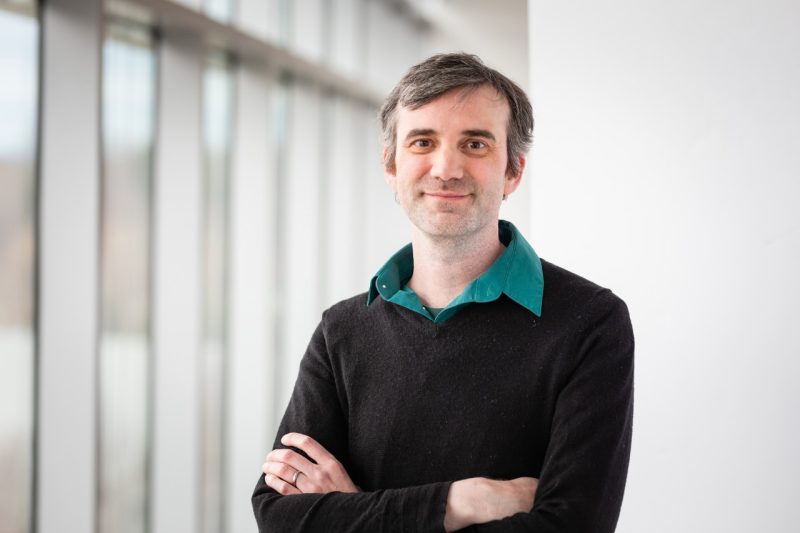
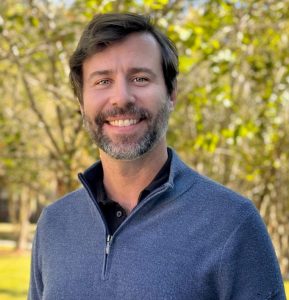
Jerry Zee is Assistant Professor of Anthropology and the High Meadows Environmental Institute at Princeton University. His research examines environmental emergence through political, meteorological, and geopolitical lenses, with focus on China's ecological transformations and transpacific entanglements. Publications analyze dust governance, aerosol politics, and racialized ecologies, employing interdisciplinary approaches from feminist STS and environmental humanities. Current work investigates planetary-scale infrastructural projects and necrotic politics.
Maurice Smith serves as the Gordon McKay Professor of Bioengineering at Harvard University's School of Engineering and Applied Sciences (SEAS), where he leads the Neuromotor Control Lab. His primary appointment resides within the Department of Bioengineering, focusing on the computational and neural mechanisms underlying human movement control. Smith's research centers on sensorimotor learning , motor adaptation , and neuromotor control systems . He investigates how the brain forms and retains motor memories, particularly examining cerebellar contributions to long-term sensorimotor memory and the dissociation between implicit and explicit learning pathways. His work frequently employs computational modeling to dissect neural tuning properties and motor variability regulation. Analysis of his recent publications reveals a strong emphasis on temporal dynamics in motor learning , cerebellar function in memory consolidation , and Bayesian frameworks for understanding sensorimotor adaptation . His research demonstrates consistent focus on how error processing, uncertainty, and neural plasticity shape motor memory formation across multiple timescales. Smith maintains active collaborations with researchers including Wilsaan M. Joiner, Yohsuke R. Miyamoto, and Nathan Sandholtz, as evidenced by frequent co-authorship patterns. His laboratory investigates fundamental questions in motor control with implications for neurorehabilitation and adaptive robotics.
Nathan Yee is a Professor at Rutgers University, where he has held academic appointments since 2004. He earned his B.Sc. from McGill University (1997) and Ph.D. from the University of Notre Dame (2001), followed by postdoctoral research at the University of Leeds (2001-2003). His career progression includes positions as Assistant Professor (2004-2010), Associate Professor (2010-2016), and full Professor since 2016. Research Focus Yee's research integrates geochemistry and geomicrobiology to study: mineral transformation processes, interactions between metal ions and mineral surfaces, microbial influences on inorganic element cycling, and contaminant behavior in environmental systems. His work combines experimental approaches with modeling to investigate biogeochemical processes relevant to early Earth evolution, microbial metabolism, and environmental remediation. Key themes include biologically catalyzed redox reactions, metal isotope fractionation, and geomicrobial controls on contaminant transport. Publication Trends Yee's recent publications (2021-2025) demonstrate strong emphasis on microbial-metal interactions, isotope geochemistry, and planetary science. Dominant themes include: isotopic tracing of metal cycling (Ni, Cu, Hg), microbial redox transformations of contaminants (Se, Te, U), photochemical processes in early Earth systems, and astrobiological investigations of planetary bodies like Mars and Enceladus. Methodologies frequently combine laboratory experiments with geochemical modeling.
Scott England is a Professor in the Department of Aerospace and Ocean Engineering at the College of Engineering, Virginia Polytechnic Institute and State University. He serves as the Project Scientist for NASA’s Ionospheric Connection Explorer (ICON), Co-Investigator for Global-scale Observations of the Limb and Disk (GOLD), and Participating Scientist for Mars Atmosphere and Volatile Evolution (MAVEN). Education PhD, University of Leicester (UK), 2005 MPhys First Class Honors, University of Leicester (UK), 2001 England’s research focuses on planetary atmosphere-space environment interactions, particularly gravity waves, atmospheric tides, and ionosphere-thermosphere coupling on Earth and Mars. His work integrates NASA mission data (ICON, GOLD, MAVEN) with numerical modeling to study thermal dynamics, wind systems, and solar flare impacts. Recent publications highlight his expertise in thermospheric gravity wave science, planetary wave-induced ionospheric variability, and Mars atmosphere studies using EMUS and IUVS instruments. Articles span topics like Seasonal variability of DE3/DE2 tides , Transient Martian hot oxygen corona , and Shock-induced plasma dynamics . Scientific Honors 2020 Dean's Award for Teaching Excellence 2016 RHG Exceptional Achievement for Mars Science As a professional leader, England served as Thermospheric Lead for the 2019 Planetary Mission Concept Studies Program and on the National Academy of Sciences Decadal Survey panel. He manages Virginia Tech’s participation in the Virginia Space Grant Consortium and has contributed to high-performance computing committees.
Steven F. Son is the Alfred J. McAllister Professor of Mechanical Engineering at Purdue University, affiliated with the College of Engineering. He holds joint appointments in Aeronautics and Astronautics, Materials Engineering, and Mechanical Engineering. His research focuses on energetic materials, combustion science, and propulsion systems, with emphasis on detonation physics, additive manufacturing of explosives, and novel propellant designs. Key projects include developing throttleable solid propellants, studying material-filled void effects on detonation waves, and optimizing nanomaterials for enhanced reactivity. Dr. Son’s work integrates experimental and computational methods, such as laser absorption spectroscopy and machine learning, to advance understanding of high-energy materials. His contributions span from fundamental material characterization to applied systems like Martian perchlorate-based propellants. He leads research at the Maurice J. Zucrow Laboratories, Purdue’s premier facility for propulsion and energetic materials research. His recent studies explore flexoelectricity in fluoropolymer/aluminum composites, laser ignition systems for solid propellants, and thermal decomposition mechanisms of novel energetic formulations. While no awards are explicitly listed, his prolific publication record and interdisciplinary approach highlight his influence in the field.
Joseph Meier is an Adjunct Associate Professor in the School of Humanities and Sciences at ArtCenter College of Design, where he teaches courses such as Light & Color and Pattern Formation in Nature . With a multidisciplinary background in chemistry, mathematics, and molecular genetics, he bridges science and art through his teaching and research. His educational journey includes undergraduate degrees in Chemistry and Mathematics from Kalamazoo College, initial graduate work in cosmochemistry at UC San Diego, and a PhD in Molecular Genetics from Caltech, based on groundbreaking research on Borrelia hermsii and prokaryotic gene regulation conducted at the Rocky Mountain National Laboratory. PhD in Molecular Genetics, Caltech, 1993 Graduate Studies in Cosmochemistry, UC San Diego Bachelor's Degrees in Chemistry and Mathematics, Kalamazoo College Dr. Meier’s research interests center on molecular biology, gene regulation mechanisms, biotechnology innovation, and the scientific underpinnings of natural patterns and visual perception. His interdisciplinary curiosity extends to the Arts and Crafts movement and California plein air painting, reflecting a deep integration of scientific and artistic inquiry. His work has led to a U.S. patent for a DNA sequencing system, and he is currently involved in designing new biotechnology equipment. Though no publications are listed in the provided text, his research trajectory spans microbiology, genetics, and applied biotech, with implications across medical and technological domains. Notable recognition includes the Elder Scholarship, which supported his early marine biology research on gorgonians in the Cayman Islands. Dr. Meier has held research positions at Oak Ridge National Laboratory, the Lunar and Planetary Institute, and NASA’s Johnson Space Center, demonstrating a unique career path that integrates space science, microbiology, and technology development. He previously served as CTO at a visual effects company and returned to ArtCenter in 2018 to contribute to science education in an art and design context. He has no listed advisees in the provided text, and there is no mention of external grants. His current work emphasizes biotech design and interdisciplinary science education.
Vincent Dufour-Décieux is a researcher at the Professorship for Energy and Process Systems Engineering at ETH Zürich , focusing on developing computational methods for material screening in separation processes and global net-zero transitions. He earned his Master's in Materials Chemistry from Ecole Polytechnique (France) and a PhD in Materials Science from Stanford University , where he pioneered statistical methods combining Kinetic Monte Carlo and random graph theory to study planetary diamond formation. Research Highlights: Application of Classical Density Functional Theory (cDFT) for 100x faster adsorption property predictions in porous materials Development of science-based definitions for "hard-to-abate" emissions to guide climate action prioritization Integration of Coulombic interactions in cDFT for CO2 adsorption accuracy Article Trends : His work spans computational materials science (cDFT, random graph theory) and climate policy analysis, with recent publications in Joule , AIChE Journal , and Physical Review E . These studies emphasize scalable solutions for carbon capture, material screening efficiency, and accurate thermodynamic modeling. Collaborations : Active in international conferences (FOA15, MolMod, Gordon Research Conference) and cross-institutional projects with teams at Stanford, ETH Zürich, and industry partners.
Imre Bartos is an Associate Professor of Physics at the University of Florida, specializing in multi-messenger astrophysics that combines gravitational waves, neutrinos, and electromagnetic signals. His research investigates extreme cosmic explosions involving black holes and neutron stars, with emphasis on merger environments in active galactic nuclei. Groundbreaking work includes demonstrating how nearby neutron star mergers influenced Solar System composition, identifying AGN disks as factories for eccentric black hole mergers, and developing techniques to probe black hole origins through gravitational wave localization. His group participates in major collaborations including LIGO, LISA, and IceCube observatories. Professor Bartos received the Sloan Fellowship and shares Breakthrough Prize honors for contributions to gravitational wave astronomy. He leads observational programs using Chandra, VLA, and Fermi telescopes while mentoring students in computational astrophysics techniques.
Prof. Dr. Christian Mayer is a Professor in Physical Chemistry at the Faculty of Chemistry, University of Duisburg-Essen. He serves as Head of the working group focusing on origin of life research, nanocapsules, and NMR spectroscopy techniques. His research group is located at Universitätsstraße 5, D-45141 Essen, Germany, with contact information including phone number +49 201 183-2570. Prof. Mayer's research interests primarily focus on the origin of life in deep tectonic fault zones of the first continental fragments, where he collaborates with Prof. Dr. Ulrich Schreiber from the Faculty of Biology and Prof. Dr. Oliver Schmitz from Applied Analytical Chemistry. His work investigates how vesicle formation occurs in tectonic fault systems through cyclic phase transitions of carbon dioxide, creating ideal conditions for molecular evolution. He specializes in pulsed field gradient NMR (PFG-NMR), high-resolution NMR, and solid-state NMR techniques to characterize nanoscale systems including nanocapsules, vesicles, and microemulsions. His recent publication trends reveal a strong interdisciplinary focus spanning physical chemistry, prebiotic chemistry, and astrobiology. The articles demonstrate increasing integration of computational methods with experimental approaches, particularly in analyzing molecular structures and dynamics. His research has evolved from fundamental studies of nanocapsule systems to broader investigations of protocell formation mechanisms under early Earth conditions, with recent work extending to astrobiological contexts including potential life formation on Titan. Prof. Mayer has established significant collaborations across multiple disciplines, particularly with geologists and biologists, to investigate the physical chemical processes that could have led to the emergence of life. His work bridges fundamental physical chemistry with practical applications in nanomedicine, particularly in developing artificial oxygen carriers based on nanocapsule technology. His laboratory utilizes high-pressure facilities to simulate early Earth crust conditions, with a particular focus on supercritical CO 2 environments. The working group combines experimental approaches with theoretical modeling to understand vesicle formation processes and their implications for the origin of cellular life.
Prof. Dr. Thomas Koop is a Professor of Physical Chemistry at Bielefeld University, where he leads the Atmospheric and Physical Chemistry research group within the Faculty of Chemistry. He has served as Dean of the Faculty of Chemistry from 2022-2024 and currently serves as Vice Dean (2024-2025). His research focuses on phase transition phenomena, particularly ice nucleation and growth, supercooled liquids, and the formation of amorphous glassy materials. His work has significant implications for understanding atmospheric aerosols, cloud formation mechanisms, and cryobiological processes. The group employs experimental techniques such as differential scanning calorimetry and optical cryo-microscopy, developing specialized equipment for studying phase transitions at micro and nanoscales. Prof. Koop's publication record shows a consistent focus on atmospheric chemistry with increasing exploration of biological ice nucleators, planetary atmospheres (including Venus), and the physical properties of atmospheric aerosols. His most cited work includes 'Water activity as the determinant for homogeneous ice nucleation in aqueous solutions' (Nature, 2000), which established fundamental principles in the field. 2024-2025: Vice Dean of Faculty of Chemistry 2022-2024: Dean of Faculty of Chemistry 2001-2022: Co-founder and Executive Editor of Atmospheric Chemistry and Physics Since 2004: Coordinator of Graduate School of Chemistry and Biochemistry Prof. Koop has mentored numerous students and postdoctoral researchers, contributing significantly to the development of the next generation of atmospheric scientists. His research has been supported by various funding agencies and has led to collaborations with institutions worldwide, from MIT and UC Berkeley to research centers in Switzerland and Israel.
Kathleen C. Howell is the Hsu Lo Distinguished Professor of Aeronautics and Astronautics at Purdue University's School of Aeronautics and Astronautics. Her expertise spans orbit mechanics, spacecraft trajectory optimization, and mission design in multi-body systems. She holds degrees from Iowa State University (B.S., 1973), Stanford University (M.S., 1977; Ph.D., 1983). B.S. in Aerospace Engineering, Iowa State University, 1973 M.S. in Aeronautical & Astronautical Engineering, Stanford University, 1977 Ph.D. in Aeronautical & Astronautical Sciences, Stanford University, 1983 Her research focuses on libration point orbits, solar sail trajectories, and trajectory optimization in Earth-Moon and interplanetary systems. She has pioneered methods for analyzing Lissajous trajectories, invariant manifolds, and low-thrust mission design. Recent work includes solar sail applications for lunar coverage and ARTEMIS mission trajectory analysis. Publications highlight innovations in multi-body dynamics, with contributions to journals like Acta Astronautica , Journal of Guidance, Control, and Dynamics , and AIAA/AAS Conference Proceedings . Her work emphasizes practical mission design tools and visualization techniques. Awards: Fellow, AIAA (2013) W.A. Gustafson Teaching Award (2012) Dirk Brouwer Award (2004) Presidential Young Investigator Award (1984) Multiple Elmer F. Bruhn Teaching Awards Her advising and grants include leadership in space mission design, formation flight, and solar sail technology. She has collaborated on projects like the TRIANA mission and contributed to the Cassini end-of-mission analysis. Active in professional societies, she has edited conference proceedings and delivered invited lectures globally.
Taylor Perron is the Cecil and Ida Green Professor of Earth, Atmospheric and Planetary Sciences at Massachusetts Institute of Technology (MIT), where he also serves as the EAPS Undergraduate Officer. His research program at MIT spans multiple interdisciplinary areas within Earth and planetary sciences, with strong connections to the MIT-WHOI Joint Program in Oceanography/Applied Ocean Science and Engineering. Dr. Perron's academic background includes an AB in Earth and Planetary Sciences and Archaeology from Harvard University (1999) and a PhD from the University of California, Berkeley (2006), followed by postdoctoral work at Harvard. His leadership roles at MIT have included serving as chair of the Program in Geology, Geochemistry, and Geobiology, and as Associate Department Head for Education. His research focuses on three interconnected areas: Landscape Evolution, Planetary Surfaces, and the Human Landscape. Within Landscape Evolution, he investigates dynamic river networks, climate-landscape interactions, grain-scale sediment transport mechanics, and the connections between landscape evolution and biological diversification. His Planetary Surfaces research examines river systems on Mars and Titan, using spacecraft data to understand extraterrestrial hydrological processes. The Human Landscape component explores archaeological applications of geomorphology, particularly in the Amazon basin. Analysis of his recent publications reveals a strong emphasis on comparative planetary hydrology, with significant work on Earth, Mars, and Titan. His research increasingly integrates field observations, mathematical modeling, and remote sensing to address questions about landscape evolution across different planetary environments and timescales, with growing attention to anthropogenic impacts on Earth's surface processes. Scientific Awards & Honors: MacArthur Fellowship (2021) James B. Macelwane Medal, American Geophysical Union (2014) Fellow, American Geophysical Union (2014) Editorial Committee Member, Annual Review of Earth & Planetary Sciences (2017-present) Dr. Perron has established a productive research group that collaborates across disciplines and institutions, including significant partnerships with WHOI, NASA missions, and archaeological teams. His work bridges fundamental questions about planetary evolution with practical implications for understanding climate change impacts on Earth's surface systems.
Susanna V. Haziot is an Assistant Professor in the Department of Mathematics at Princeton University. Her research focuses on fluid dynamics, partial differential equations, and geophysical fluid dynamics with applications to oceanographic phenomena. She investigates wave propagation, vortex dynamics, and nonlinear systems, particularly in contexts like Arctic and Antarctic ocean currents, Muskat problems, and water wave theory. Her work combines analytical techniques, such as bifurcation theory and stability analysis, with geophysical modeling to address challenges in climate science and coastal engineering. Notable contributions include studies on solitary waves with constant vorticity, critical layers in stratified fluids, and the application of stereographic projections to model ocean currents. Dr. Haziot’s publications span topics from mathematical analysis of free boundary problems to historical perspectives on traveling water waves, reflecting her interdisciplinary approach. While no awards or grants are explicitly listed in the provided materials, her extensive publication record highlights her active role in advancing theoretical and applied fluid dynamics research. Her affiliations include the mathematics department at Princeton, where she contributes to both teaching and research initiatives. No doctoral advisees are listed in the provided text, though her work likely involves collaboration with graduate students and research groups focused on environmental fluid dynamics.
David W. Hogg is Professor of Physics and Data Science in the Center for Cosmology and Particle Physics in the Department of Physics at New York University. He serves as Senior Research Scientist in the Astronomical Data Group in the Center for Computational Astrophysics of the Flatiron Institute and maintains an affiliation with the Max-Planck-Institut für Astronomie in Heidelberg. His primary research focuses on observational cosmology, particularly approaches that use galaxies to infer physical properties of the Universe. He also conducts significant research on stellar kinematics in the Milky Way and the measurement and discovery of exoplanets. Across all domains, Hogg develops engineering systems and statistical methodologies that enable large-scale astrophysical projects for both his research group and the broader community. Recent work demonstrates expertise in robust statistical methods, particularly dimensionality reduction techniques like Robust-HMF. His research bridges theoretical statistics with practical applications in major astronomical surveys including Gaia, SDSS-V, and SPHEREx. He frequently explores connections between Bayesian and frequentist approaches to astronomical data analysis, with recent work on nuisance parameter integration, anomaly detection, and robust matrix factorization. Research supported by NYU, NASA, NSF, Moore Foundation, Sloan Foundation Additional support from Max Planck Society, Humboldt Foundation, ERC, Simons Foundation Hogg is actively involved in major astronomical projects including Astrometry.net, Gaia, and SDSS, with long-term comprehensive goals of analyzing all galaxies, stars, and astronomical images. His work emphasizes open science principles, reproducible research practices, and the development of publicly accessible tools for the astronomical community.
Dr. Michael Philben is an Associate Professor of Chemistry and Geological and Environmental Science at Hope College, where he joined in 2019 after postdoctoral positions at Memorial University (Canada) and Oak Ridge National Laboratory. His research focuses on climate-carbon cycle feedbacks in vulnerable ecosystems, particularly peatlands and Arctic tundra. His educational background includes a Ph.D. in Marine Science from the University of South Carolina (2014) and a B.A. in Earth and Planetary Science from Northwestern University (2010). At Hope College, he teaches Environmental Science courses and contributes to the Day1: Watershed program. Philben's research centers on carbon and nitrogen cycling in ecosystems containing vast organic carbon stocks. He leads an NSF CAREER-funded project investigating Michigan peat bogs as natural laboratories for climate change impacts, using a north-south transect from Portage to Newberry as a 'space-for-time' experiment. His work examines methane emissions, nitrogen availability, and net carbon balance under warming conditions, with particular attention to Sphagnum-dominated peatlands at the southern edge of their climate range. His 15 most recent publications (2020-2024) reveal a strong focus on peatland biogeochemistry, with increasing emphasis on methane dynamics, nitrogen cycling, and the role of specific biochemical compounds like sphagnan. The research combines field measurements across climate gradients with laboratory experiments, often involving Hope College students in all project phases. NSF CAREER Award for peatland climate research Philben actively mentors undergraduate researchers through the Philben Research Group, which investigates how warming impacts carbon cycling in peatlands. His projects involve interdisciplinary work spanning analytical chemistry, geology, and ecology. The group maintains a network of seven Michigan peat bog field sites and collaborates on international research, including Arctic studies in Alaska and Canada. His laboratory focuses on using analytical chemistry tools to predict climate-carbon cycle feedbacks, with particular attention to southern Michigan peatlands as sentinels for larger northern peatland complexes. The research group employs techniques including greenhouse gas flux measurements, radiometric dating of peat cores, and analysis of organic matter composition.