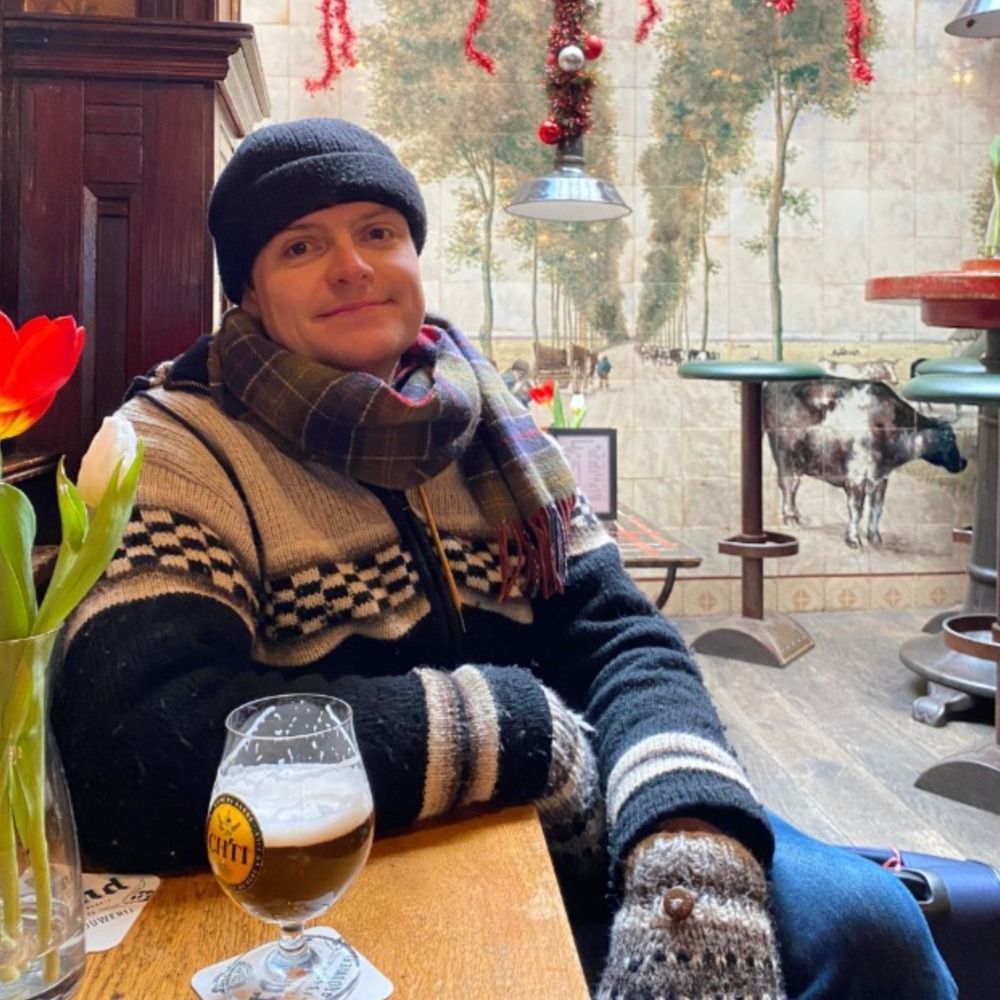
Frans van Lunteren is a Professor of History of Natural Sciences at Leiden University, specializing in the Dutch natural sciences between 1815 and 1940, particularly physics. His research examines science-society interactions, institutional roles of universities and research institutes, and the cultural dimensions of scientific progress. He holds a PhD awarded at Teylers Museum at age 68, demonstrating late-career academic achievement. His work bridges historical analysis with modern scientific communication, emphasizing the role of instruments and internationalization in scientific development. Education: PhD in History of Science (Teylers Museum, 2017) Affiliations: Leiden Observatory, Navegar Foundation (Portugal), European planetary science networks Research focuses on determinism debates in early 20th-century science, KNMI and KNAW institutional roles, and the material culture of scientific instruments. He has advised five PhD students and pioneered fulldome planetarium shows like Camping with the Stars , blending education and entertainment. His publications span peer-reviewed journals, popular science articles, and international astronomy outreach programs like IYA2009. Key contributions include the International Year of Astronomy 2009 Final Report and Venus Express mission analysis. His work highlights interdisciplinary approaches to science history, combining archival research with public engagement initiatives.
Sandy Claes is an Assistant Professor in the Department of Communication Science at KU Leuven, affiliated with the Faculty of Social Sciences. She serves as a researcher in the Media Culture & Policy Lab and is a member of the DigiSoc – KU Leuven Digital Society Institute. Her roles include Co-Promotor and Promotor in various research projects, and she is an invited member of the Council of the Faculty of Social Sciences. Claes’ work focuses on public displays, Human-Computer Interaction, interactive storytelling, participatory design, and media design. Her research projects span topics like environmental data visualization, participatory design for science engagement, and the role of mixed reality in fostering community. Notable projects include 'Designing Interactive Data Stories to Uncover Uncertainty' and 'Aerial and Airing: Mapping Environmental Data'. Claes’ publications highlight themes such as uncertainty communication in science, immersive dome experiences, and co-creating public spectacles. She actively contributes to conferences like the EGU General Assembly and Design Research Society events. Her advising and grants involve leading multiple projects with roles as Promotor or Co-Promotor, emphasizing interdisciplinary collaboration. She is part of the Media Culture & Policy Lab and the Digital Society Institute, exploring intersections between technology, culture, and policy.
Francisco Javier Oliver Bernal is a Lecturer at the University of Deusto in Bilbao, Spain, within the Faculty of Education and Sport and the Department of Physical Activity and Sports Sciences. He teaches across Computer Engineering, Physical Activity and Sports Sciences, and Primary Education bachelor's programs, as well as the Master's in Secondary Education. He earned his Doctor of Medicine and Surgery from the University of the Basque Country. His research spans Human-Computer Interaction, Educational Technology, and Science Education, with a strong emphasis on accessibility for visually impaired users. He has developed tools for e-learning, digital resource centers, and innovative teaching methodologies in computer science and natural sciences, aiming to enhance educational experiences through technology. His scholarly output, spanning from the 1990s to 2023, demonstrates a consistent focus on technology-enhanced learning, evolving from early work in 3D interfaces and computer graphics to recent applications in health, music, and interdisciplinary educational contexts. Key trends include the integration of accessibility features, the development of domain-specific educational tools (e.g., for biology and astronomy), and responses to contemporary challenges like the COVID-19 pandemic. He has supervised multiple theses on digital accessibility and cooperative systems, though student names were not listed. Details on research grants were not provided in the available text. As a member of the eVida research group (officially recognized by the Basque Government), he contributes to projects advancing accessible educational technologies, including the ACCE project for audiovisual accessibility and READIS digital resource centers for visually impaired users.
Kevin Sweet is an Assistant Professor of Design and Interactive Arts: Immersive Experience at the University of Texas at Dallas, affiliated with the Harry W. Bass Jr. School of Arts, Humanities, and Technology. His work bridges art, science, and technology to explore possibilities for social transformation through creative play. Sweet's practice spans digital media, performance, virtual reality, and community-based projects that address social justice issues and interdisciplinary collaboration. Education PhD in Emergent Technologies and Media Art Practices, University of Colorado Boulder (2022) MFA in Film/Video, Massachusetts College of Art and Design (2012) BA in Film Studies, Keene State College (2009) Research Focus Sweet's research centers on narrative refiguration through embodied creative play at intersections of art, science, and technology. His work explores how digital media can address systemic inequities, preserve cultural heritage, and create new communal storytelling forms. Recent projects focus on community media labs, ancestral land rights, and speculative methodologies challenging anthropocentric narratives. He investigates how virtual and augmented reality can be leveraged for social justice and community empowerment, as evidenced by his ongoing work with high school students in San Luis, Colorado. His practice demonstrates a commitment to using art and technology as tools for community engagement and historical preservation. Publication Trends Sweet's creative output shows a clear trajectory from traditional film and video toward increasingly complex interdisciplinary projects. His early work focused on material properties of analog media (like 'Intervals'), while recent projects integrate virtual reality, AI, and community-based practices. His publications reveal a pattern of ambitious cross-disciplinary collaborations, from partnerships with astrophysicists in 'Sound Planetarium' to community-based projects like 'La Sierra' addressing systemic inequities. There's a consistent evolution toward more socially engaged work addressing land rights, historical memory, and non-human agency. Professional Activities Faculty board member, UTD Student Media Operating Board President of the Board of Directors, Denver Digerati 501(c)(3) (2022-2024) Co-Principal Investigator, Sound Planetarium (astrophysics and art collaboration) Head of Creative Development, JoyceStick (VR adaptation of James Joyce's Ulysses) Former Director of Media, Guestbook Project (international peacebuilding organization) First Artist in Residence, Institute of Liberal Arts at Boston College Labs and Community Engagement Sweet has developed community media labs, partnering with History Colorado to build a local media lab in San Luis, Colorado. This initiative creates critical digital arts curriculum for high school students, empowering them to become authors of their community's history. His collaborative work involves interdisciplinary teams spanning artists, scientists, community organizers, and educators working on issues of land rights, historical memory, and cultural preservation.
Dr. Ran Peleg is a Lecturer in Science Education at the Southampton Education School, University of Southampton, and a member of the MSHE research group. His work focuses on innovative teaching methods such as game-based learning, theatre, storytelling, and escape rooms to enhance science education. He holds a BA in Natural Sciences and MEng in Chemical Engineering from the University of Cambridge, and a PhD in science education from the Technion, focusing on museum theatre and informal learning environments. He has extensive experience in educational project management, including the EU-funded TEMI project and interdisciplinary STEAM initiatives. Education Background: BA in Natural Sciences, University of Cambridge MEng in Chemical Engineering, University of Cambridge PhD in Science Education, Technion Research Interests: Game-based and drama-based pedagogy Museum and informal learning environments STEAM education integration Accessibility in science education for visually impaired students Notable Achievements: Fellow of the Mandel Scholars in Education Programme Postdoctoral Fellowship, University of Haifa Senior Fellow of the Higher Education Academy (HEA) Supervision & Grants: Currently supervising 3 PhD students in Education Expertise in securing educational innovation grants through projects like TEMI and escape room initiatives Labs & Collaborations: Member of the MSHE research group Collaborations with museum practitioners and educational institutions globally
Karen Knierman is an Associate Teaching Professor at Arizona State University's School of Earth and Space Exploration. She specializes in astronomy and astrophysics, focusing on star formation in colliding galaxies using telescopes like the Hubble Space Telescope. Her work also emphasizes astronomy and physics education, particularly for minority students and their families. Knierman holds a Ph.D. from ASU, an M.S. from the University of Arizona, and a B.S. from Penn State. She previously served as faculty at Mesa and Chandler-Gilbert Community Colleges. Her research interests span observational astronomy, galaxy dynamics, and educational outreach. Notably, she leads the development of ASU's online BS in Astronomical and Planetary Sciences, which emphasizes accessible STEM education. Her recent studies explore student outcomes in online astronomy programs and strategies for inclusive astronomy education. Education: Ph.D., Arizona State University; M.S., University of Arizona; B.S., Penn State University Awards: National Science Foundation Astronomy & Astrophysics Postdoctoral Fellowship Outreach: Multicultural Milky Way project, disability justice advocacy, and K-12 astronomy outreach Knierman’s articles address both astrophysical phenomena (e.g., star formation in tidal tails) and pedagogical innovations (e.g., online labs and course-based research experiences). Her work bridges cutting-edge astronomy research with efforts to diversify and democratize access to STEM education.
Chris Packham is a Professor in the Department of Physics and Astronomy at the University of Texas at San Antonio (UTSA), within the College of Sciences. He also holds a visiting professorship at the National Astronomical Observatory of Japan, reflecting his international research collaborations. His primary research interests include active galactic nuclei (AGN), infrared instrumentation, and stellar discs. He co-leads a global group of astronomers (GATOS) utilizing data from cutting-edge facilities such as the James Webb Space Telescope (JWST), ALMA, and 8-meter-class telescopes. His work focuses on the structure and dynamics of the dusty torus surrounding supermassive black holes, with recent findings pointing to dusty disk winds and polar emission revealed by mid-infrared observations. He is deeply involved in the development of next-generation instruments like MICHI for the Thirty Meter Telescope and contributed to the Habitable Worlds Observatory through the Science, Technology, Architecture Review Team (START). The most recent articles reflect a strong emphasis on JWST-enabled discoveries, particularly in AGN physics and black hole environments. There is also a recurring theme of public engagement, especially around astronomical events such as solar and lunar eclipses, and exoplanet research. His work integrates observational astrophysics, instrument development, and science communication. James Webb Space Telescope reveals mystery about the energy surrounding a black hole (2024) James Webb Space Telescope finds a shock near supermassive black hole (2024) UTSA researcher awarded rare time with JWST to study black holes, galaxies (2024) Chris Packham actively mentors students, currently advising Mr. John Schneider and collaborating with former student Dr. Lindsay Fuller. He has led or co-advised several graduate students and is involved in interdisciplinary projects, including climate change outreach with environmental student Alex Roush. He has served on committees for NASA, NSF, and the Gemini Board, and is Chair of the JSPS Alumni Association of the USA and Canada, fostering international scientific ties. He leads community engagement initiatives, including educational events at the Witte Museum and Scobee Planetarium, eclipse outreach with local officials and organizations, and fundraising for La Palma volcano relief. He is a member of Leadership San Antonio and the Canary Islands Descendants Association, reflecting his commitment to public science and cross-cultural collaboration.
Joanna Holt is a Senior Lecturer in Science and Mathematics Education, specializing in innovative astronomy and STEM education methodologies. She currently serves as Redactieraad Natuurkunde.nl (2021–present), IAU National Astronomy Education Coordinator for the Netherlands (2020–present), and Education Manager at NOVA (Netherlands Research School for Astronomy, 2020–present). Her work emphasizes interactive learning through planetariums and digital tools, with a focus on curriculum integration and public outreach. Research interests include conceptual modeling in astrophysics education, hands-on/minds-on pedagogy, and the development of immersive educational technologies. Notably, she received the Annie Maunder Medal for Outreach 2024 for contributions to astronomy education via the AMT Mobile Planetarium Project. Recent activities include organizing the 7th Shaw-IAU Workshop (2025), presenting at GIREP-EPEC 2025, and participating in international astronomy education networks. Her collaborative projects often involve teams from NOVA and academic partners in developing interactive astronomy curricula and evaluation frameworks.
Trace E. Reddell is a Professor and Director of Emergent Digital Practices at the University of Denver’s College of Arts, Humanities and Social Sciences. He is affiliated with the Department of Media, Film & Journalism Studies and the School of Art and Art History, reflecting his interdisciplinary work at the intersection of digital media, sound, and theory. Education: Ph.D., English Literature, University of Colorado at Boulder, 1997 M.A., Creative Writing, University of Colorado at Boulder, 1989 B.A., English Literature, Texas Tech University, 1986 (Magna Cum Laude) Trace Reddell’s research and creative work center on the interactions of sound, cosmology, and the imagination. His expertise spans Sound Studies, Digital Media, Science Fiction, New Materialism, and Philosophy of Technology . He explores how sonic cultures—particularly in science fiction, psychedelic music, and audiovisual performance—shape new modes of being and understanding. His work integrates critical theory, media philosophy, and hands-on artistic practice, including live cinema and net.art. He teaches courses in sonic arts, expanded cinema, speculative cultures, and critical digital media. His publications reveal a strong trajectory in sound and media studies, with recent work focusing on sonic innovation in science fiction cinema, Afrofuturism, and cybernetic performance . His 2018 book, The Sound of Things to Come , is a landmark study in film sound, and he is preparing a sequel and additional books on psychedelic rock and space music. His upcoming MIT Press book, The Magic Circle: Sonic Substance in Psychedelic Music , further establishes his authority in sound culture. Scientific Awards: Dean’s Award for Excellence, AHSS Dean, University of Denver (2018) “Excellent Artists” Honorary Award, Art on the Net Competition, Tokyo (2001) George F. Reynolds Fellowship, University of Colorado (1994–1995) Wiegers' Appointment, University of Colorado (1994) Trace Reddell actively mentors graduate students, serving as a Ph.D. advisor and MFA thesis committee lead. He has directed numerous graduate research projects and served on dissertation and exhibition committees. He has secured multiple research grants from the University of Denver, including Faculty Research Funds and Creative Arts Material Funds, supporting projects like Sonic Science Fiction 2 and international academic exchanges. His creative work—ranging from live audiovisual performances to commissioned soundtracks—has been exhibited globally in venues from Amsterdam to Seoul. He also contributes to academic service through manuscript review for presses like Routledge and the University of Minnesota Press, and has held leadership roles including Graduate Director and Director of Digital Media Studies. Labs and Teams: He has been closely associated with the Boulder Laptop Orchestra (BLOrk), contributing live visual performances. His collaborative projects, such as microMacroCosm with Timothy Weaver, reflect his engagement with interdisciplinary artistic teams. He has also led visiting artist series and founded digital media outreach initiatives at the university.
Tom Kwasnitschka is a permanent scientist in the DeepSea Monitoring group at GEOMAR Helmholtz Centre for Ocean Research Kiel since 2025, with prior roles at GEOMAR's Technology and Logistics Center (2016-2024) and the ROBEX Helmholtz Alliance (2013-2016). He leads projects like LIGHTHOUSE , MOMO , and MUSE , focusing on deep-sea robotics , 3D photogrammetry , and immersive data visualization . He also serves as a lecturer at Kiel University of Applied Sciences since 2010. Education: PhD in Marine Geology (2012, GEOMAR) on submarine volcanism in Cape Verde; Diploma in Geology/Paleontology (2009, Christian-Albrechts University Kiel). His research spans physical volcanology of submarine systems, tephrostratigraphy , and deep-sea technology . His work integrates 3D modeling , optical and acoustic mapping , and virtual environments for marine exploration. Key projects include digital seafloor reconstruction and deep-sea camera systems . Recent publications focus on hydrothermal vent mapping , volcanic hazard analysis , and immersive fieldwork simulations , reflecting trends in multi-disciplinary marine research and underwater robotics . Awards: AGU Outstanding Student Paper Award (2011) Grants include MUSE (0.15M€) , SPP2100 ASDDSA (0.29M€) , and Helmholtz Validation Fund LIGHTHOUSE (2.37M€) . He has led 13 oceanographic cruises using vessels like RV Alkor and RV Poseidon . As co-founder of allsky.de (2003-2023), he advanced immersive media for science communication . His patents include deep-sea camera stabilization and submersible LED systems .
Marco Kragten is a Senior Lecturer at the Faculty of Education , Amsterdam University of Applied Sciences . His work bridges science education and systems thinking , focusing on digital tools and artificial intelligence to enhance secondary education pedagogy. Active in qualitative modeling and conceptual diagram development for dynamic systems Develops AI-driven biology education materials targeting circadian rhythms and melatonin regulation Collaborates on astronomy outreach through the NOVA Mobile Planetarium Recent research trends highlight his work on transient astronomical phenomena , clock gene regulation , and integrated qualitative-quantitative modeling frameworks. He has contributed to maker culture datasets and continues to innovate in digital science education . Marco guides future teachers in pedagogical-didactic skills and collaborates with researchers like Bredeweg and Holt on interdisciplinary projects spanning systems thinking and immersive learning technologies.
Dr. James Trayford is a Research Fellow at the Institute of Cosmology and Gravitation (ICG), University of Portsmouth. He holds a PhD in Astrophysics from Durham University and specializes in galaxy formation, cosmology, and innovative data sonification. His work bridges observational and theoretical astrophysics, particularly through simulations like EAGLE and the upcoming COLIBRE project. He leads projects such as the Ear to the Sky initiative, developing the STRAUSS sonification tool to enhance scientific discovery and accessibility. Trayford is also committed to outreach, creating exhibits like the Audio Universe planetarium show for visually impaired audiences and collaborating on culturally adapted sonification projects with Caribbean communities. His research has been recognized with awards including the UKRI Early Stage Research and Development Award (£600k) and the 2024 University of Newcastle Open Research Award. Trayford has supervised numerous students, including recipients of prestigious awards like the Jan Kijne Prize. Trayford’s contributions span teaching, mentoring, and interdisciplinary collaboration, with over 55 refereed publications and a h-index of 36. His work intersects astronomy, data science, and arts to advance both research and public engagement.
Helen Ahner is an Assistant Professor of Materialities and Material Cultures at the Institute for European Ethnology within the Faculty of History and Cultural Studies at the University of Vienna, a position she has held since October 2024. Her research integrates historical and contemporary perspectives on feelings, bodies, things, and experiences, with current focus on the cultural and gender history of ambition in sports. Her academic journey includes a doctorate (2021), MA (2017), and BA (2014) in Empirical Cultural Studies from the University of Tübingen. Her award-winning doctoral thesis, Planetariums. Wonders of Technology – Techniques of Wonder , received the Manfred Lautenschläger Prize and an Honorable Mention for the Turriano ICOHTEC Prize. Dr. Ahner's research spans cultural history of everyday life, material culture and museum studies, emotion and sensory anthropology, technology culture, and sports history. Her work examines how technologies like planetariums shape urban nature experiences, emotional labor in sports, and the gendered dimensions of ambition, revealing intersections between embodiment, materiality, and historical context. Her scholarly output demonstrates a cohesive trajectory exploring the cultural politics of technology, emotion, and embodiment. Recurring themes include the sensory production of knowledge in historical instruments, the gendered emotional labor in athletic contexts, and the material culture of leisure spaces like planetariums and museums. Her scientific recognition includes: Manfred Lautenschläger Prize of the Heidelberg Academy of Sciences and Humanities Honorable Mention, Turriano ICOHTEC Prize Dr. Ahner actively contributes to academic communities as a member of the Junge Akademie (Young Academy) supported by the German National Academy of Sciences Leopoldina since 2024, and as spokesperson for the INSIST network (Interdisciplinary Network for Studies Investigating Science and Technology) since 2019. Her prior research roles include three years at the Max Planck Institute for Human Development's History of Emotions group and work at the Ludwig Uhland Institute for Cultural Studies in Tübingen, where she co-curated exhibitions and initiated the LUI podcast.
John V Avarese is a renowned Program Director at Drexel University's Film and Television program within the Antoinette Westphal College of Media Arts and Design , where he teaches film sound, including Production Sound Recording and Audio Post-Production. A lifelong musician and multi-modal composer, he has composed over 4000 commissioned scores and contributed to 83 theatrical films, 9 planetarium features, and hundreds of sound projects. Academic Role: Professor Key Expertise: Film Sound, Music Composition, Audio Postproduction, and Sound Design. John’s research and practice focus on audio postproduction , where he bridges mood, history, and consciousness through soundscapes. His work integrates decades of experience as a sound recordist, mixer, and multi-instrumentalist, emphasizing the role of sound in enhancing visual storytelling. His publications include the 2017 book Post Sound Design , a foundational text for audio postproduction. His awards highlight his technical excellence and creative impact: 2019-2020 National Daytime Emmy Award for Sound Mixing on Articulate with Jim Cotter 2006 Pennsylvania Council of the Arts Fellowship for Non-classical Composition 2023-2024 Drexel Summer Research Award John’s career spans 30 years, blending academia with industry expertise, including sound design for feature films and planetariums.
Natalie Fischer is a lecturer at the Heidelberg University of Education and a researcher at the House of Astronomy (HdA) in Heidelberg. Her work bridges astronomy and education, focusing on developing innovative materials for children and training educators. Education: Physics studies at Universities of Bonn, Aachen, and Heidelberg (1988–1994) Leadership: Vice Chair of the Astronomy School e.V. since 2008, Chair since 2023 Research Interests: Fischer specializes in early science education, particularly astronomy outreach. Her work includes hybrid learning models, hands-on experiments, and materials for primary schools and kindergartens. She emphasizes connecting cosmic phenomena to everyday experiences. Publication Trends: Articles focus on astronomy education, with themes like observational techniques, creative workshops, and digital learning tools. Her work often targets children and educators, blending historical insights with modern pedagogical methods. Projects: Fischer coordinates the UNAWE program in Germany and contributes to Space Scoops. She has led science workshops for the BASF Education Initiative and developed content for planetarium events and educational journals.