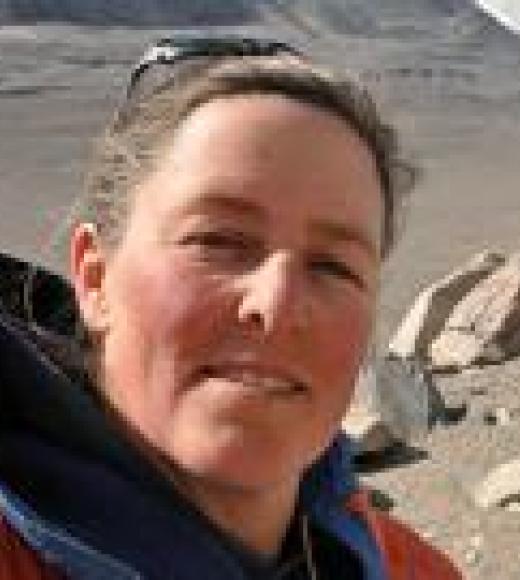
Dawn Y. Sumner is a Professor in the Department of Earth and Planetary Sciences at the University of California, Davis. Her research focuses on geobiology, paleobiology, and planetary science, particularly reconstructing ancient environments on Earth and Mars. She is a key member of NASA’s Mars Science Laboratory team, contributing to the Curiosity rover’s exploration of Gale Crater on Mars. Sumner’s work integrates field studies, lab analyses, and interdisciplinary approaches to understand microbial life’s role in shaping Earth’s history and potential habitability on other planets. Education: Ph.D., Massachusetts Institute of Technology (1995). Research interests include microbialite formation, Antarctic lake ecosystems, and the evolution of oxygenic photosynthesis. She investigates modern microbial communities in ice-covered lakes (e.g., Lake Vanda) to understand ancient environments and their biosignatures. Her scientific awards include the California Academy of Sciences Academy Fellow (2020) and Geological Society of America Fellow (2014). Sumner emphasizes inclusive education and supports student success in STEM through feminist research practices. Labs/Teams: W.M. Keck Center for Active Visualization in the Earth Sciences (KeckCAVES), Antarctic Lake Research Group.
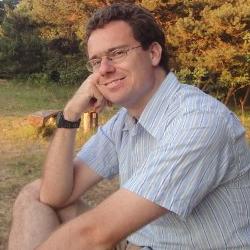
Paul D. Asimow is the Eleanor and John R. McMillan Professor of Geology and Geochemistry at the California Institute of Technology (Caltech), part of the Division of Geological and Planetary Sciences. He holds a B.A. from Harvard University (1991), an M.S. (1993), and a Ph.D. (1997) from Caltech. His career progression includes roles as Assistant Professor (1999–2005), Associate Professor (2005–2010), and Professor (2010–present), with the McMillan Professorship since 2016. Education: A.B. in Geology, Harvard University, 1991 M.S. in Geology, Caltech, 1993 Ph.D. in Geology, Caltech, 1997 Research Interests: Focuses on computational, experimental, and observational approaches to igneous petrology and mineral physics. Key areas include adiabatic mantle melting, water's role in mantle dynamics, high-pressure mineral physics, and processes at mid-ocean ridges. His research utilizes advanced facilities like the Lindhurst Laboratory of Experimental Geophysics and the alphaMELTS software package for thermodynamic modeling. Articles Overview: Recent work spans planetary crust formation, Martian petrogenesis, and high-pressure mineral behavior. Themes include experimental techniques, computational modeling, and cosmochemical studies of meteorites. Awards and Honors: James B. Macelwane Medal (AGU) Frank Wigglesworth Clarke Medal (Geochemical Society) Richard P. Feynman Prize for Teaching Excellence (Caltech) Fellow of the American Geophysical Union Fellow of the Mineralogical Society of America Grants and Labs: Received NSF funding for developing an interactive phase equilibria curriculum. Leads the Lindhurst Laboratory, focusing on shock-wave experiments and high-pressure mineral physics. Collaborates on software tools like alphaMELTS and MAGMASOURCE. Labs and Teams: Active in the Caltech Shock Wave Laboratory, advancing experimental methods for planetary material studies. Engages in interdisciplinary projects on Mars geology and terrestrial planet formation.
Professor Thomas Meier is a Visiting Professor at the Department of Life Sciences, Imperial College London (since 2015), and Director of the Centre for Structural Biology (2017–2021). He leads research on ATP synthase structure, drug targets for tuberculosis, and molecular mechanisms of disease. Previously, he was a Group Leader at the Max-Planck-Institute of Biophysics (2006–2015) and ETH Zurich's Institute of Microbiology. His work combines structural biology (X-ray crystallography, electron microscopy) with biochemical studies. Education: Dr. sc. nat. (2002) and Dipl. sc. nat. (1998) from ETH Zurich. Awards include the Wellcome Trust Investigator (2015–present). Research focuses on ATP synthase's role in energy conversion, drug development, and structural biology. His lab includes postdocs and students like Lisa Uhrig and Anthony Cheuk. Key affiliations: Centre for Structural Biology, Membrane Biology Group, and Bacterial Pathogenesis studies. Languages: German, English, French (fluent), Latin (read/write). Publications span structural biology, planetary science, and drug discovery. His work on ATP synthase inhibitors for TB has clinical implications, while astrophysical studies explore planetary formation via giant impacts.
Matthew W. Kunz is an Associate Professor of Astrophysical Sciences at Princeton University, serving as Associate Chair of the Department of Astrophysical Sciences and Director of Graduate Studies for the Program in Plasma Physics. He holds a B.S. in Astronomy-Physics and B.A. in Music from the University of Virginia (2003), and a Ph.D. in Physics from the University of Illinois at Urbana-Champaign (2009). His research focuses on astrophysical plasma dynamics, including instability, turbulence, and transport in weakly collisional and poorly ionized plasmas, with applications to galaxy clusters, accretion disks, and the solar wind. Dr. Kunz's work employs analytical and numerical methods to study multi-scale plasma dynamics, aiming to understand angular momentum transport in accretion disks, kinetic turbulence cascades, and magnetic field evolution. His research has been recognized with several awards, including an NSF CAREER Award (2020-25), Alfred P. Sloan Research Fellowship (2017-20), and NASA Einstein Postdoctoral Fellowship (2011-14). He teaches courses on plasma astrophysics (AST 521), irreversible processes in plasmas (AST 554), and astrophysical research methods (AST 303). His publications demonstrate a consistent focus on plasma turbulence, magnetic reconnection, and cosmic ray propagation, with recent work emphasizing collisionless plasma dynamics and high-energy astrophysical phenomena.
John F. Rudge is a Professor of Geodynamics at the Bullard Laboratories, Department of Earth Sciences, University of Cambridge , and a Fellow and Dean of Trinity College. His research focuses on the dynamics of Earth's interior, including mantle convection, magma transport, and the geochemical evolution of the planet. He employs continuum mechanics, numerical analysis, and statistical methods to address questions about melt dynamics, mantle heterogeneity, and the surface expressions of geophysical processes. Education includes a mathematics undergraduate degree and a PhD in Earth Sciences and Applied Mathematics from Cambridge. He held postdoctoral positions at institutions like ETH Zürich, Yale, and Columbia University before joining Cambridge as a University Lecturer in 2010 and being promoted to Professor in 2022. Key research areas include: Transport of melts and volatiles in the mantle Evolution of Earth's interior from accretion to present Dynamic topography and inner core dynamics Publications span over two decades, with recent works addressing melt rheology, mantle mineralogy, and interdisciplinary applications in oncology. He has supervised numerous PhD students and postdocs, including David Rees Jones, Isarapong Eksinchol, and Laura Alisic. Awards include the Philip Leverhulme Prize and Geological Society President’s Award. Teaching responsibilities include courses on geophysics, magma dynamics, and supervisions in Natural Sciences at Trinity College. Research tools include finite element modeling and collaborations with computational scientists.
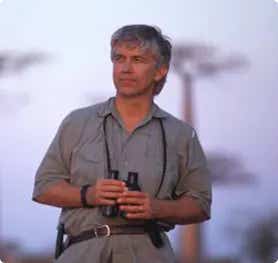
Russell Mittermeier is an Adjunct Professor at the State University of New York at Stony Brook and Chief Conservation Officer at Re:wild. He holds a Ph.D. and M.A. in Biological Anthropology from Harvard University and a B.A. from Dartmouth College (Summa Cum Laude, Phi Beta Kappa). His career spans over 45 years in biodiversity conservation, with fieldwork in 30+ countries, focusing on Amazonia, Atlantic Forest, and Madagascar. Education : Ph.D. and M.A. in Biological Anthropology (Harvard), B.A. (Dartmouth) Mittermeier's research centers on primate and herpetofauna conservation, species discovery (18 new species described), and linking biodiversity to climate change mitigation. He has authored 35 books and over 650 publications, advocating for conservation corridors and partnerships with indigenous communities. His 2015–2019 publications demonstrate interdisciplinary work across primatology, herpetology, and conservation policy, with a focus on tropical ecosystems. Recent studies include taxonomic revisions of titi monkeys, cactus extinction risks, and Amazon turtle hotspots. Scientific Awards : TIME Magazine Hero for the Planet Honorary Doctorate from SUNY Stony Brook Lifetime Honorary IUCN Member Mittermeier collaborates with global institutions like IUCN, Conservation International, and the Margot Marsh Biodiversity Foundation, emphasizing fieldwork, scientific rigor, and community engagement to protect Earth's most vulnerable ecosystems.
Moira Jardine is Professor of Astronomy at the University of St Andrews School of Physics and Astronomy, where she became the first female physics professor in 2010. Education: Ph.D. Applied Mathematics, University of St Andrews B.Sc. Astronomy and Astrophysics, University of St Andrews Research investigates stellar magnetic activity to understand planetary habitability and solar system evolution. Uses magnetic field measurements to model stellar winds, coronal X-ray emissions, and their impact on planetary atmospheres. Work supports exoplanet detection initiatives including JWST, GAIA, and WFIRST. Publications focus on stellar coronae, magnetic confinement processes, star-planet interactions, and coronal rain dynamics. Current projects model magnetic interactions in systems like AB Dor and HD 189733. Collaborates with international consortia including MagIcS and Bcool for stellar magnetic field surveys. Awards: Fellow of the Royal Society of Edinburgh and Suffrage Science Award (2019).
David Al-Attar is a Professor at the University of Cambridge's Department of Earth Sciences, actively involved in theoretical and computational geophysics research. He serves as a supervisor within the Cambridge NERC Doctoral Landscape Awards (Training Partnerships) program, particularly in the CREATES initiative focusing on climate and environmental science. Education: While specific educational details aren't provided in the text, his extensive publication record and professorial position at Cambridge indicate advanced training in geophysics and applied mathematics. Research Interests: Professor Al-Attar's work spans several interconnected areas within geophysics. His primary focus includes theoretical and computational problems in geophysics, with particular emphasis on continuum mechanics as applied to Earth systems. He develops new physical and mathematical theories for understanding Earth processes, including rigorous function space methods for inverse problems and uncertainty quantification. His sea level change research aims to constrain ice sheet evolution during the last glacial period to better understand modern contributions to sea level rise. Additionally, he investigates solid Earth dynamics including seismic free oscillations, body tides, and Earth rotation, contributing to our understanding of deep Earth structure and mantle dynamics. Research Themes: His publications demonstrate expertise in adjoint methods, glacial isostatic adjustment, mantle viscosity, planetary seismology, and computational methods for geophysical problems. Recent work emphasizes 3-D Earth modeling, sensitivity analysis, and the integration of satellite observations with theoretical models. Current Projects: Potential projects for students include inverse problems related to deglacial sea level change with focus on uncertainty quantification, modern sea level monitoring using satellite data, and solid Earth dynamics particularly regarding outer core viscosity in tidal and rotational dynamics. Contact: He can be reached at da380@cam.ac.uk for research inquiries and collaboration opportunities.
Iain Stewart is Professor of Geoscience Communication at the University of Plymouth, holding the UNESCO Chair in Geoscience and Society. He directs research at the Sustainable Earth Institute and serves as Communications Lead for the UKRI Tomorrow's Cities initiative targeting disaster risk reduction in urban environments. His research bridges Earth science and societal concerns through three key areas: 1) Geoscience communication strategies for complex issues like climate change and energy, 2) Cultural responses to geohazards using film and gaming technologies, and 3) Public perceptions of geological resources and subsurface environments. His work applies cognitive and social science frameworks to geoscience communication challenges. Stewart maintains an extensive public engagement profile through BBC television documentaries including 'Earth: The Power of the Planet' and as science consultant for 'Seven Worlds, One Planet'. He serves as President of the Royal Scottish Geographical Society and Devon Wildlife Trust while advocating for geoscience education globally. His research has been recognized with numerous international awards including an MBE and honors from the Geological Society of America and American Geophysical Union.
Oliver Shorttle is a Professor of Natural Philosophy at the University of Cambridge, holding a joint position between the Department of Earth Sciences and the Institute of Astronomy. His research focuses on planetary evolution, extrasolar planets, and geochemical cycling, integrating geological and astronomical perspectives. He explores topics such as exoplanet habitability, volcanic processes on distant worlds, and the role of volatiles in planetary systems. Education and Career: Shorttle earned his undergraduate degree in Natural Sciences from Cambridge, followed by a PhD in Earth Sciences. He held postdoctoral positions at Caltech and as a JSPS fellow in Japan before returning to Cambridge as faculty. Research Themes: His work spans planetary chemistry, magma dynamics, and the interplay between planetary interiors and atmospheres. Key projects include analyzing protoplanetary disks, simulating volcanic activity on exoplanets, and investigating phosphorus’s role in prebiotic chemistry. Collaborations: Leads the Planetary Chemistry group, collaborating across disciplines at Cambridge and internationally. Current projects involve modeling exoplanet atmospheres, studying mantle melting processes, and developing geochemical methods to probe planetary formation. Labs/Teams: Directs the Planetary Chemistry research group, fostering interdisciplinary research between geology and astronomy. Active in fieldwork, lab analysis, and computational modeling.
Olga Kokshagina serves as an Associate Professor in Innovation & Entrepreneurship at The University of Sydney, with adjunct research appointments at Monash University's Emerging Technology Lab and the UNU Hub - Learning Planet Institute. She is also an active member of the French Digital Council. Her research program investigates technology-mediated collaboration in complex innovation systems, focusing on healthcare transformation, deep tech commercialization, and co-design methodologies. Kokshagina has led high-impact projects with global institutions including the World Health Organization, OECD, STMicroelectronics, Vall d’Hebron Hospital, and Roche, demonstrating strong translational research capabilities. Her scholarly work centers on value-based healthcare innovation, digital platform governance, and AI-enhanced collaborative systems. She examines how organizational capabilities evolve during technological transitions, particularly in healthcare ecosystems, and investigates regulatory frameworks for algorithmic control in digital markets. Kokshagina's research bridges theoretical innovation management with practical applications, evidenced by her co-founding of Ninti—an initiative advancing women's health in workplace environments—and her Open Covid-19 crowdsourcing campaign that mobilized global expertise during the pandemic. Analysis of her 2021-2025 publications reveals a cohesive trajectory examining innovation in socio-technical systems. Key themes include value digitalization in healthcare, mission-oriented interdisciplinary collaboration, and the impact of big data on technology management. Her work consistently addresses grand challenges through mixed-methods approaches, spanning conceptual frameworks in journals like Research Policy to applied studies in Technovation and R&D Management, with increasing focus on quantum readiness and AI-augmented learning systems. No scientific awards are documented in the provided materials. Kokshagina currently holds a 2025 research grant for "Co-designing societal readiness and scenario building for quantum" through the University of Sydney Nano Institute/Catalyst program. While no student supervision activities are mentioned, her collaborative projects involve multi-institutional teams across industry, government, and academic sectors. Kokshagina maintains active roles within the University of Sydney Nano Institute and contributes to international policy discourse through the French Digital Council. Her Ninti initiative exemplifies her commitment to human-centered innovation, while ongoing collaborations with healthcare providers like Roche and Vall d’Hebron Hospital demonstrate sustained engagement with real-world implementation challenges in value-based care systems.
Paul Withers is a Professor and Chair of the Department of Astronomy at Boston University. He leads research on planetary atmospheres and ionospheres, with a focus on Mars and Venus, and serves as Principal Investigator on multiple NASA-funded research projects. Education: B.A. in Physics, 1998, Queens' College, Cambridge University M.S. in Physics, 1998, Queens' College, Cambridge University M.A., 2001, Queens' College, Cambridge University Ph.D. in Planetary Science, 2003, University of Arizona Professor Withers' research focuses on the upper atmospheres and ionospheres of terrestrial planets, particularly Mars and Venus. His work involves analyzing spacecraft data and developing theoretical models to understand how solar flux, neutral atmospheres, magnetic fields, and ionospheres interact under unique planetary conditions. He has made significant contributions to understanding the response of the Martian ionosphere to solar flares, the structure of the Venus ionosphere, and meteoric plasma layers in planetary ionospheres. His research often involves multi-instrument campaigns and coordinated observations across different spacecraft missions including Mars Express, MAVEN, and Venus Express. Analysis of Professor Withers' recent publications reveals a strong emphasis on Martian ionospheric dynamics, particularly its response to solar activity and its variability under different conditions. His work frequently combines data from multiple missions to create comprehensive models of planetary upper atmospheres. He has developed important methods for analyzing radio occultation data and reconstructing atmospheric properties from entry, descent, and landing measurements. Major Funded Projects: "Characterizing the topside bulge in the ionosphere of Mars" (NASA Mars Data Analysis Program, 2014, $144K) "Integration of MAVEN neutral and plasma observations" (NASA MAVEN Participating Scientist Program, 2013, $284K) "Radio occultation studies at Mars" (NASA Early Career Fellowship Program, 2013, $99K) "EDL reconstruction for MSL" (NASA, JPL contract, 2012, $199K) "Meteoric plasma layers on Venus and Mars" (NASA Planetary Atmospheres Program, 2012, $232K) Professor Withers has been actively involved in mentoring students and collaborating with international researchers. He serves as a key member of the Mars Upper Atmosphere Network (MUAN) and has contributed to community white papers for planetary science decadal surveys. His work supports future Mars landers through atmospheric modeling and surface pressure prediction, with direct applications to mission planning and execution. He has presented his research at numerous international conferences including the American Geophysical Union meetings, Division for Planetary Sciences meetings, and European Planetary Science Congress. His work has important implications for understanding planetary climate evolution, space weather effects on technological systems, and the search for habitable environments beyond Earth.
Matt Nowinski is a Collegiate Associate Professor in the Department of Mechanical Engineering at Virginia Tech's College of Engineering. His professional roles include advisory board memberships and leadership positions within the department. He holds multiple degrees including a Ph.D. in Mechanical Engineering from ETH Zurich (1999), an M.S. in Computer Science from Syracuse University (2022), and prior mechanical/aerospace engineering degrees from Virginia Tech. His research focuses on asteroid dynamics (particularly D-type and V-type asteroids), gas turbine engines, aeroelasticity, and education technology. Notable areas include lightcurve analysis, surface mineralogy modeling, and machine learning applications in astronomy. His work bridges aerospace engineering with astrophysics, leveraging both experimental and computational methods. Dr. Nowinski has over 24 years of industry experience as a Boeing subject matter expert in military communications systems, complemented by academic roles at George Mason University and University of Chicago. He is a recipient of the John Jones Faculty Fellowship and Society of Distinguished Alumni honor. His research contributions span asteroid characterization, turbine blade flutter mechanisms, and telescope instrumentation. Current work emphasizes observational astronomy through the Stone Edge Observatory and Slack-based collaborative platforms. He actively contributes to advancing STEM education through innovative curricula and research integration.
Distinguished Professor David Jewitt is a prominent planetary scientist at UCLA's Department of Earth and Space Sciences within the College of Letters and Science. He has held this position since 2009 and also serves as a Professor in the Department of Physics and Astronomy since 2010, and as Director of the Institute for Planets and Exoplanets since 2011. Dr. Jewitt earned his B.Sc. in Astronomy from the University of London (1979), followed by M.S. (1980) and Ph.D. (1983) in Planetary Science from Caltech. Prior to UCLA, he served on the faculty at MIT (1983-1988) and the University of Hawaii (1988-2009), where he became a full Professor in 1993. His research focuses on primitive bodies of the Solar System, particularly comets which he considers remnants from planetary accretion processes. His work aims to understand solar system formation and evolution through studying these objects. Recent publications explore non-gravitational forces in planetary systems, interstellar interlopers, and the asteroid-comet continuum, reflecting his continued leadership in solar system small body research. Shaw Prize (2012) Kavli Prize (2012) Member of the National Academy of Sciences (2005) Exceptional Scientific Achievement Medal, NASA (1996) Professor Jewitt has mentored numerous students including Jane Luu (co-discoverer of the Kuiper Belt) and Chadwick Trujillo. As Director of the Institute for Planets and Exoplanets, he fosters interdisciplinary research connecting planetary science with exoplanet studies. His work continues to shape our understanding of the solar system's formation through analysis of its smallest constituents.
Paul Wiegert is a Full Professor in the Department of Physics and Astronomy at the University of Western Ontario , where he has been since 1996 after positions at York University and Queen's University. He is a member of the Institute for Earth and Space Exploration (IESX) and the Centre for Planetary Science and Exploration (CPSX) . His research spans asteroid dynamics , exoplanet systems , and celestial mechanics , with notable work on Earth co-orbital asteroids like (3753) Cruithne and Earth's first Trojan asteroid 2010 TK7. Education : PhD in Astronomy (University of Toronto, 1996) Research Domains : Planetary Science, Astronomy, Big Data Analytics His recent publications focus on interstellar transport mechanisms , asteroid impact risks , and exomoon detection . Key findings include quantifying risks from asteroid 2024 YR4's potential lunar impact and demonstrating the feasibility of detecting alpha Centauri-origin material in our solar system. He actively supervises graduate students like Cole Gregg and participates in NSERC-funded summer research programs for undergraduates. For planetary defense, he has analyzed collision probabilities for Apophis and developed meteoroid hazard models for spacecraft. His work appears in Planetary Science Journal , Nature Astronomy , and Astrophysical Journal Letters , with media coverage in 60+ outlets and 126 X (Twitter) mentions .