Thomas Lam is a professor of mathematics at the University of Michigan , specializing in algebraic combinatorics, total positivity, and connections to mathematical physics. His work bridges cluster algebras, positive geometry, and integrable systems, with applications to scattering amplitudes in quantum field theory. Lam has collaborated extensively with physicists such as Nima Arkani-Hamed and mathematicians like Pavlo Pylyavskyy and Mark Shimozono. Key research areas: Cluster algebras, total positivity, electrical networks, positroid varieties, and quantum cohomology. Notable contributions: Defining polypositroids, proving regularity theorems for totally nonnegative flag varieties, and establishing cluster structures in braid varieties. Recent work focuses on positive geometries , including the amplituhedron and moduli spaces of points on projective lines, with implications for particle physics. His articles often explore dual graded graphs, K-theoretic Schubert calculus, and the interplay between combinatorics and algebraic structures. Lam's research has been supported by NSF grants, including DMS-0748636 and DMS-1249708 .
David Eppstein is a Distinguished Professor of Computer Science at the University of California, Irvine (UCI), affiliated with the Donald Bren School of Information & Computer Sciences. He holds academic leadership roles as director of the Center for Algorithms and Theory of Computation and associate director of the Center for Algorithms, Combinatorics, and Optimization. His research focuses on graph algorithms, computational geometry, discrete mathematics, and geometric graph theory. Eppstein earned a B.S. in Mathematics from Stanford University (1984) and a Ph.D. in Computer Science from Columbia University (1989). Research Interests: Graph drawing, information visualization, dynamic graph algorithms, mesh generation, optimal triangulation, K-shortest paths, subgraph isomorphism, data depth, exponential-time algorithms for NP-hard problems. Awards: ACM Fellow (2012), AAAS Fellow (2017), Distinguished Professor (2020), Best Paper Awards (2023, 2022), and SIAM recognition. Grants: Co-PI on a $1.2M NSF grant (2022) for geometric graph research, and previous NSF grants for algorithm studies (2016). His work bridges theoretical computer science and practical applications, including contributions to graph visualization, geometric algorithms, and combinatorial optimization. Notable recent achievements include resolving open questions in graph biplanarity and authoring the book Forbidden Configurations in Discrete Geometry (2018).
Jack Snoeyink is a Professor at the University of North Carolina at Chapel Hill, holding joint appointments in the Department of Computer Science (College of Arts & Sciences) and the School of Data Science and Society. His research focuses on computational geometry, with applications in molecular biology, geographic information systems (GIS), and geometric modeling. His work in computational geometry explores algorithmic design and analysis for problems in solid modeling, computer graphics, and robotics. Key application areas include terrain modeling in GIS, molecular structure validation in biochemistry, and computational topology. He has contributed to output-sensitive algorithms for convex hulls and Voronoi diagrams, and geometric search problems. Articles highlight his expertise in computational geometry, with trends spanning 1999-2000. Topics include contour tree algorithms (SODA'00), watershed extraction (ASPRS'99), and skeleton generation (Crust.pdf). His work bridges theoretical advancements with practical implementations in GIS and structural biology. Jack Snoeyink has collaborated with researchers like Marc van Kreveld, Christopher Gold, and Bettina Speckmann on projects related to Delaunay triangulation, regression depth computation, and geometric assembly problems. He previously served as a program director at the National Science Foundation's CISE division (2015-2018) and co-founded the TRIPODS program for data science foundations.
Paul Horn is a Professor and Associate Chair of Graduate Studies in the Department of Mathematics at the University of Denver, within the College of Natural Sciences and Mathematics. He earned his Ph.D. in Mathematics from the University of California, San Diego (2009), under the supervision of Fan Chung. Prior to joining DU in 2013, he held postdoctoral positions at Emory University and Harvard University. His research focuses on combinatorics, graph theory, and probability, with a particular emphasis on applying probabilistic, algebraic, and geometric methods to analyze networks and graphs. Dr. Horn co-organizes the Rocky Mountains-Great Plains Graduate Research Workshop in Combinatorics (GRWC) and contributes to the graph theory section of the Masamu Advanced Studies Institute in southern Africa. He also serves as the graduate coordinator in the Mathematics Department, overseeing graduate student advising and program administration. His work spans theoretical contributions to graph structure, stochastic processes on networks, and applications in multi-agent systems and sensor networks. Publications highlight his expertise in graph curvature, network robustness, and combinatorial optimization, reflecting his interdisciplinary approach to discrete mathematics and its real-world applications. His research bridges pure and applied mathematics, addressing challenges in algorithm design, network dynamics, and geometric graph theory. Horn’s advising and mentorship activities include guiding graduate and undergraduate students in mathematics, emphasizing hands-on research experiences through workshops and collaborative projects. His contributions to academic leadership and research dissemination are evident through editorial roles and conference organization in combinatorics and graph theory.
Lilya Budaghyan is a Professor at the Department of Informatics, University of Bergen, Norway, leading the Boolean functions research team at the Selmer Center. She holds a PhD from the University of Magdeburg (2005) and a habilitation from Paris 8 University (2013). Her research focuses on Boolean functions, particularly APN (Almost Perfect Nonlinear) functions and their cryptographic applications, with contributions to hardware implementations, equivalence relations, and cryptographic protocol design. She has authored the book *Construction and Analysis of Cryptographic Functions* and received awards including the TMS Starting Grant (2016) and Emil Artin Junior Prize (2011). Her work includes projects like the EU-funded BoolTI (2021–2025) and collaborations across institutions in Armenia, Germany, Italy, and France. Key research themes include constructing APN functions, analyzing their properties, and optimizing their hardware implementations for secure systems. Her recent publications emphasize hardware architectures for APN permutations, equivalence between cryptographic functions, and theoretical advancements in algebraic coding and finite fields. She serves as an editor for journals in cryptography and has organized international workshops such as WCC 2013.
Simon Masnou is a Full Professor at Université Claude Bernard Lyon 1, affiliated with the Institut Camille Jordan (CNRS UMR 5208). He holds leadership roles as Head of the 'Applied Mathematics, Statistics' Master's degree and Head of the 'M2 Maths in Action' program. Previously, he served as Director of the Camille Jordan Institute (2018-2022). His research focuses on applied mathematics, image processing, shape optimization, and geometric measure theory, with contributions to variational models, geometric flows, and applications in computer vision and materials science. Education: PhD in Mathematics (1998, Paris Dauphine) and HDR (2008, Paris 6). Research projects include ANR STOIQUES (2024-2028), PEPR PDE-AI (2023-2028), and collaborations with industry on topics like defect prediction in aluminum production and high-dimensional data analysis. Teaching includes courses on linear algebra, optimization, and machine learning at undergraduate and graduate levels. Key contributions span phase field models, varifold-based surface approximation, and image inpainting. He supervises PhD students in geometric variational problems and computational methods. His work bridges theoretical mathematics with industrial challenges, addressing issues in materials science, medical imaging, and cultural heritage preservation.
Dr. Scott L. Nykl is a Professor in the Department of Computer Science at the Air Force Institute of Technology (AFIT), part of the Graduate School of Engineering & Management. He is a leading researcher in computer vision, real-time 3D graphics, and autonomous aerial systems, with a focus on automated aerial refueling and navigation in GPS-denied environments. Education: Ph.D. in Computer Science, Ohio University (2008–2013), Summa Cum Laude, GPA: 4.0/4.0 M.S. in Computer Science, Ohio University (2011–2012), Summa Cum Laude, GPA: 4.0/4.0 B.S. in Software Engineering, University of Wisconsin–Platteville (2002–2006), Summa Cum Laude, GPA: 3.94/4.0 Dr. Nykl's research interests include computer vision, sensor fusion, interactive virtual worlds, and real-time 3D graphics, with applications in aerospace and defense. His work bridges simulation and real-world deployment, particularly in autonomous aerial refueling using stereo and monocular vision. He has pioneered techniques in pose estimation, occlusion mitigation, and sim-to-real transfer learning. His recent publications and projects show a strong trend toward robust, vision-based navigation systems for unmanned and manned aircraft, with emphasis on reliability, accuracy, and real-time performance. His work frequently appears in IEEE, AIAA, and ION venues, reflecting its high technical and operational relevance. Scientific Awards and Recognitions: 2024 Harold Brown Award – Highest U.S. Air Force scientific honor 2024 General Bernard A. Schreiver Award 2025 AETC Airmen of the Year Multiple Air Force Outstanding Scientist/Engineer Awards (2017–2023) Best Paper Award, ACM SIGGRAPH i3D 2013 Forbes' The Greatest Young Inventors in America (2012) NSF GK-12 Fellow (2006) Dr. Nykl has advised numerous graduate students and collaborated extensively on projects involving automated aerial refueling, 3D reconstruction, and cyber education. He has secured significant research funding, including a $100,000 Ohio Third Frontier grant. His work has led to multiple patents and technology transfers. He leads research integrating virtual worlds, digital twins, and augmented reality for both research and pedagogy. Laboratories and Research Teams: His work is conducted within AFIT’s research ecosystem, involving collaborations with the Air Force Research Laboratory (AFRL), Boeing, and academic partners. He leads projects under the Aerial Refueling Systems Advisory Group (ARSAG) and presents regularly at ION, AIAA, and IEEE conferences.
David Mount is a Professor in the Department of Computer Science at the University of Maryland, with an additional appointment at the University of Maryland Institute for Advanced Computer Studies (UMIACS). His primary research focus is Computational Geometry, particularly in designing, analyzing, and implementing data structures and algorithms for geometric problems. Applications of his work span image processing , pattern recognition , information retrieval , and computer graphics . He is a Fellow of the ACM and has received the ACM Recognition of Service Award twice. A member of the Algorithms and Theory Group, Mount has authored over 200 publications, many of which are available on Google Scholar, DBLP, and ArXiV. Research Focus Computational Geometry Algorithm Design and Analysis Geometric Data Structures Nearest Neighbor and Range Searching Clustering Algorithms Recent Publications Mount's recent publications (2023-2025) emphasize non-Euclidean geometry (e.g., Hilbert metric), dynamic geometric structures , and approximation algorithms for polytopes, Voronoi diagrams, and Delaunay triangulations. Collaborative works with students and researchers address challenges in kinetic data compression , label tracking , and geometric software development (e.g., Ipelets for polygonal geometry). Professional Activities Editorial Board Member, TheoretiCS (2021-present) Senior Associate Editor, ACM Trans. on Spatial Algorithms and Systems (2013-2020) Program Committee Member, FOCS , ESA , SODA , and other major conferences Awards ACM Fellow ACM Recognition of Service Award (twice)
Raimund Seidel is a Professor in the Department of Computer Science at Universität des Saarlandes, leading the Chair of Theoretical Computer Science. He is actively involved in research and teaching, focusing on foundational aspects of algorithms and data structures, particularly in computational geometry. His primary research interests include theoretical computer science , design and analysis of efficient algorithms , geometric data structures , randomized algorithms , and combinatorial geometry . His work addresses fundamental problems such as planar point location, convex hull computation, and efficient encoding of triangulations. He also investigates geometric algorithms under the transdichotomous model, leveraging word-level parallelism. The selected publications reflect a long-standing contribution to computational geometry and data structure theory , with a focus on randomized methods and exact complexity analysis. His research combines theoretical rigor with practical implications for algorithm design. Award or honor not found in the provided text. Prof. Seidel has advised several students, including Alexander Malkis , Ralf Osbild , Udo Adamy , Christian Sohler , and others, many of whom have gone on to academic and research careers. No explicit information about grants or funding is available in the text. He leads a research group within the Department of Computer Science at Universität des Saarlandes, mentoring current staff such as László Kozma , Giorgi Nadiradze , and Lavinia Dinu . The group maintains active research in theoretical computer science and computational geometry.
Dr. Debajyoti Mondal is an Associate Professor in the Department of Computer Science at the University of Saskatchewan. His research focuses on algorithms, network visualization, computational geometry, and visual analytics. He holds a PhD from the University of Manitoba and has held postdoctoral positions at the University of Waterloo and Microsoft Research. Mondal's work spans interdisciplinary applications, including collaborations with Saskatoon Transit and academic medicine. He has authored over 100 peer-reviewed publications and secured grants such as NSERC Discovery, CFI, and Canada First Research Excellence grants. His awards include the 2023 New Scholar RSAW Award. Education: Ph.D. in Computer Science, University of Manitoba, 2016 MSc in Computer Science, University of Manitoba, 2012 BSc. Engg. in Computer Science, Bangladesh University of Engineering and Technology, 2009 Research Interests : Algorithms, graph drawing, computational geometry, visual analytics, and interdisciplinary applications in software engineering, transportation, and bioinformatics. His lab (VGA Lab) develops visualization systems for big data analysis. Key Contributions : Advanced theoretical foundations in computational geometry and graph drawing, developed practical visualization tools, and contributed to climate-related projects like Global Water Futures. Grants & Awards : NSERC Discovery Grant (2018-2024) CFI Grant (2021-2025) Microsoft Research Internship (2015-2016) New Scholar RSAW Award (2023) Labs/Teams : Leads the VGA Lab, collaborating with interdisciplinary teams on projects like Clone-World (software clone visualization) and SET-STAT-MAP (mixed data visualization).
Hung Le is an Associate Professor in the College of Information & Computer Sciences at the University of Massachusetts Amherst. He leads research in theoretical computer science with a focus on graph algorithms, spanners, and metric embeddings. He is a member of the UMass Theory Group and serves as Chair of PhD Admissions. PhD in Computer Science, Oregon State University, 2018 BS in Computer Science, Hanoi University of Science and Technology Hung Le's research centers on algorithm design for graph problems, especially understanding structural properties of graphs in theoretical settings. His work spans approximation algorithms, spanners, fault tolerance, metric embeddings, and computational geometry. He has made significant contributions to light spanners, tree covers, and distance oracles, particularly in planar and doubling metrics. His recent publications show a strong trend in designing efficient, sparse, and light structures for geometric and minor-free graphs, with a focus on optimal tradeoffs and lower bounds. Key themes include locality-sensitive orderings, shortcut partitions, and tree covers with constant stretch and size. NSF CAREER Award Google Research Scholar Program (2024) PIMS Postdoctoral Fellowship Hung Le has advised numerous students and postdocs, including An La and Cuong Than, whose work has led to STOC and FOCS publications. His research is funded by multiple NSF grants (CCF-2121952, CCF-2237288, CCF-2517033) and a Google Research Scholar Award. He has served on program committees (e.g., WADS 2025) and co-chaired SOSA 2021. He is actively involved in the theoretical computer science community, maintains a technical blog 'Rambling on Graphs', and contributes to open problems in graph theory and algorithm design.
Andrew Suk is a Professor in the Department of Mathematics at the University of California, San Diego (UCSD). He holds an NSF CAREER Award and an Alfred P. Sloan Research Fellowship. His research focuses on Combinatorics, Discrete Geometry, Ramsey Theory, and Extremal Combinatorics, supported by grants such as NSF FRG Collaborative Research (DMS-1952786) and NSF (DMS-2246847). He completed his Ph.D. at New York University's Courant Institute in 2011, followed by an NSF Postdoctoral Fellowship at MIT under Jacob Fox. Education: Ph.D., Mathematics, New York University, 2011 Research Interests: Suk's work spans Geometric Combinatorics, Ramsey Theory, and extremal problems in discrete structures. Notable contributions include resolving the Erdős-Szekeres convex polygon problem asymptotically and advancing Ramsey-type results for semi-algebraic relations. His research bridges combinatorial geometry with graph theory and hypergraphs. Recent Contributions: His articles explore topics like cliques in point-line arrangements, semi-algebraic Ramsey numbers, and geometric Ramsey problems. Key themes include extremal configurations, topological graphs, and applications of VC-dimension. Awards: NSF CAREER Award Alfred P. Sloan Research Fellowship Service & Mentorship: Suk advises Ph.D. students and serves as an editor for SIAM Journal on Discrete Mathematics and Studia Scientiarum Mathematicarum Hungarica . He organizes workshops and chairs program committees for conferences like SoCG and GD. Teaching: Recent courses include Calculus for Science and Engineering at UCSD.
Salvatore Stuvard is an Associate Professor at the Department of Mathematics 'Federigo Enriques' of the University of Milan. He holds a Ph.D. from the University of Zurich (2017) and served as a Bing Instructor at the University of Texas at Austin (2017–2021). His research focuses on regularity theory for solutions in geometric analysis, particularly minimal surfaces, mean curvature flows, and geometric measure theory. He has organized seminars such as the Analysis Seminar at the University of Milan and co-organizes events like the 'Geometric Methods in Calculus of Variations.' His work bridges PDEs, geometric flows, and variational methods, addressing singularities and structural properties of geometric objects. Research interests include: Geometric Analysis and Geometric Flows Partial Differential Equations (PDEs) and Calculus of Variations Mean Curvature Flow (Brakke flows and multi-phase dynamics) Modulo p minimization and singular set structure Soap film/capillarity models and free-boundary problems Recent work emphasizes dynamical instability of minimal surfaces, end-time regularity of Brakke flows, and singular limits in capillarity problems. He co-organized the 2025 'Geometric Methods in Calculus of Variations' conference in Pisa.
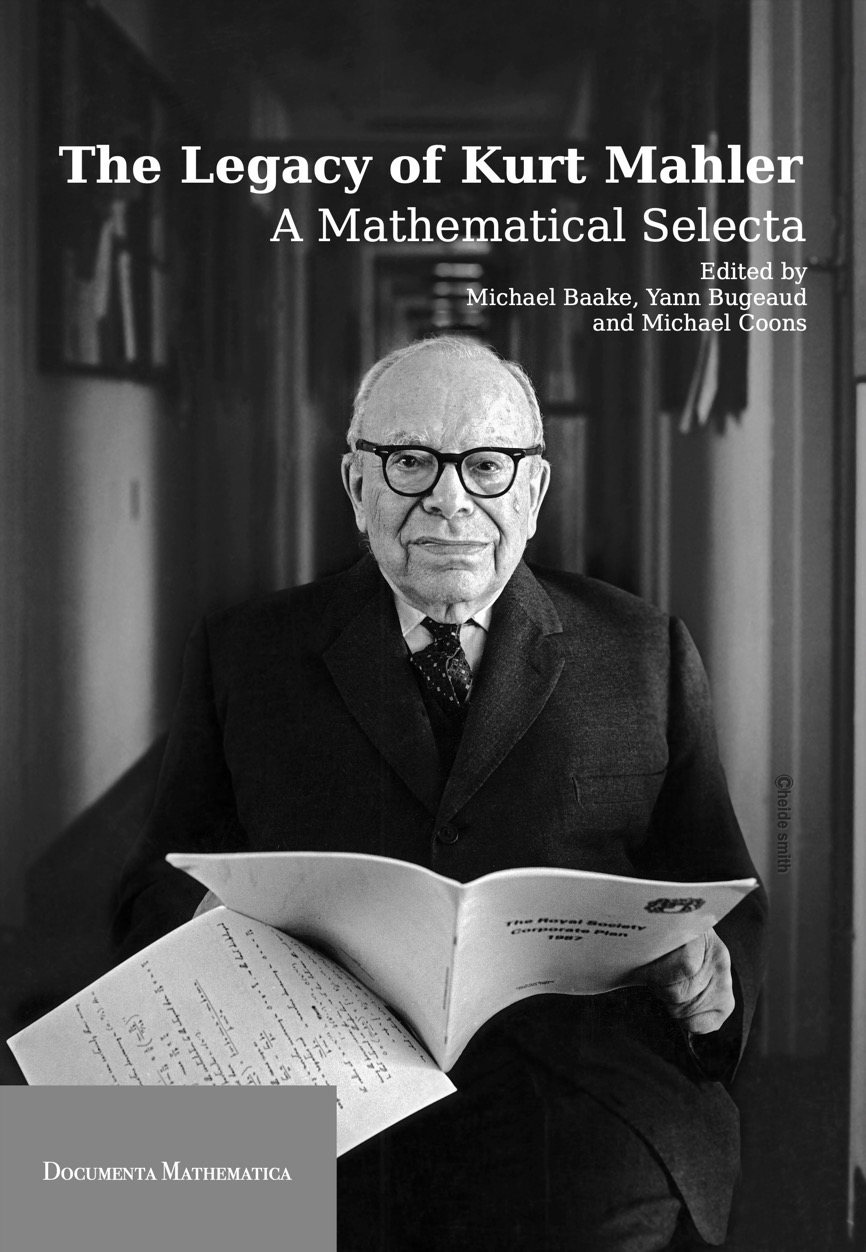
Michael Baake is a Professor of Mathematics at Bielefeld University, affiliated with the Faculty of Mathematics. His research focuses on Aperiodic Order, Dynamical Systems, Combinatorics, and Mathematical Physics. He leads multiple research projects, including the SFB/TR 358 'Integral Structures in Geometry and Representation Theory' and SFB 1283 'Taming Uncertainty'. His work bridges pure mathematics with applications in crystallography and stochastic systems. Affiliations: Representative for the Faculty Library, Co-Director of the Research Focus on Mathematical Modeling. Cooperations: Collaborates with international experts like Uwe Grimm, Daniel Lenz, and Nicolae Strungaru on topics such as aperiodic tilings and spectral theory. Research Groups: Leads a vibrant research group with members including Anna Klick, Daniel Luz, and Timo Spindeler, focusing on quasicrystals, combinatorial structures, and number theory applications. His contributions include co-editing the book 'Aperiodic Order: Crystallography and Almost Periodicity' and organizing workshops on spectral theory and dynamical systems. He actively engages in academic service, including editorial roles and conference organization.
Luis Barba is a Research Fellow in the Machine Learning and Optimization group at École Polytechnique Fédérale de Lausanne (EPFL), Switzerland, working under Professor Martin Jaggi. He completed his PhD through a cotutelle program between Carleton University, Ottawa and Université Libre de Bruxelles, Brussels, supervised by Professors Stefan Langerman, Jit Bose, Pat Morin and Vida Dujmović. Prior to that, he earned his master's degree at Universidad Nacional Autónoma de México (UNAM) under Professor Jorge Urrutia. Dr. Barba's research spans computational geometry, algorithms, graph theory, and more recently, machine learning and optimization. His work addresses fundamental problems in geometric data structures, Voronoi diagrams, graph coloring, and distributed learning. He has made significant contributions to understanding time-space trade-offs in geometric algorithms and developing efficient methods for problems like geodesic Voronoi diagrams and dynamic graph coloring. Dr. Barba's publication record demonstrates a clear evolution from theoretical computational geometry to practical applications in machine learning. Early in his career, he focused on fundamental geometric problems including linear-time algorithms for geodesic Voronoi diagrams and efficient convex hull computation in polygonal domains with obstacles. More recently, his work has shifted toward machine learning, where he has developed novel optimization techniques for distributed and federated learning settings, including implicit gradient alignment methods and multilayer lookahead approaches. Dr. Barba has published extensively in top-tier conferences and journals including Symposium on Computational Geometry (SoCG), Canadian Conference on Computational Geometry (CCCG), Algorithmica, and Discrete and Computational Geometry. His collaborative work demonstrates strong connections across the computational geometry and algorithms communities, with frequent co-authorship with leading researchers in these fields. Throughout his career, Dr. Barba has maintained a consistent focus on algorithmic efficiency and computational complexity, whether addressing theoretical geometric problems or practical machine learning challenges. His work exemplifies how deep theoretical insights can inform practical computational approaches across different domains of computer science.