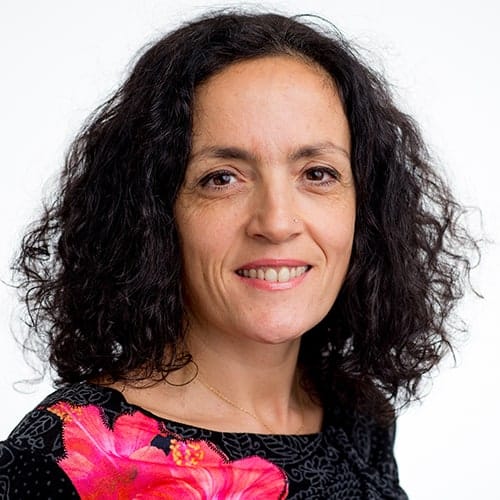
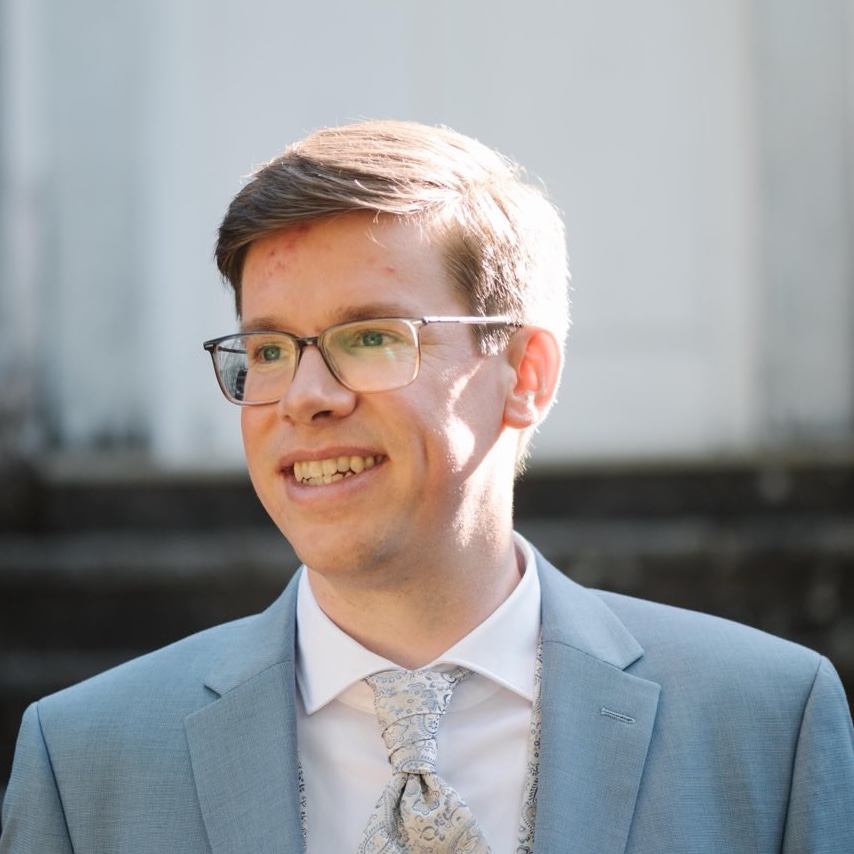
Christian Pascal Hirsch is an Associate Professor for Data Science and Statistics at the Department of Mathematics, Aarhus University. His research focuses on random networks inspired by biology and health sciences, utilizing techniques from topological data analysis and stochastic geometry. He is affiliated with the Stochastics group, AU DIGIT Centre, and AU Quantum Campus. Research Interests: Topological data analysis, large deviations theory, spatial random networks, and stochastic geometry. His work includes studies on percolation theory, Gibbs measures, and applications to neural networks and geometric functionals. Publications span journals such as the Journal of Applied and Computational Topology, Journal of Statistical Physics, and Stochastic Processes and Their Applications, covering topics from network topology to Poisson approximation.
Jacob Holm is a Tenure Track Assistant Professor in the Department of Computer Science at the University of Copenhagen, specializing in the Algorithms and Complexity research section. His work focuses on theoretical computer science with emphasis on graph algorithms and data structures. Dr. Holm's research interests span multiple areas of theoretical computer science: Dynamic graph algorithms, particularly for planar graphs Biconnectivity and triconnectivity in dynamic settings Efficient data structures for graph problems Parallel and distributed algorithms for graph processing Computational geometry and pursuit-evasion problems His publication record shows 25 research outputs including 17 article in proceedings, 6 journal articles, 1 book chapter, and 1 Ph.D. thesis. His work demonstrates consistent contributions to theoretical computer science, with numerous publications in top venues like the ACM-SIAM Symposium on Discrete Algorithms (SODA). Analysis of his recent publications reveals a strong focus on worst-case performance guarantees for dynamic graph problems, particularly in planar graph settings where maintaining efficiency during updates presents significant theoretical challenges. Dr. Holm maintains an active research profile with an ORCID identifier (0000-0001-6997-9251) and collaborates extensively with researchers in the theoretical computer science community, particularly with Eva Rotenberg as evidenced by multiple co-authored publications. His work bridges theoretical computer science with practical applications, developing algorithms that maintain efficiency even as graphs dynamically change.
Eva Rotenberg is an Associate Professor in the Department of Applied Mathematics and Computer Science at the Technical University of Denmark (DTU), affiliated with the Algorithms, Logic and Graphs section. Her research is centered on theoretical computer science, particularly algorithms, data structures, and graph theory. Research Interests: Her work focuses on graph algorithms , especially in planar and dynamic graphs, data structures for efficient computation, and combinatorial optimization . Key topics include approximation algorithms , worst-case analysis , edge connectivity , and local density estimation in distributed settings. She investigates algorithmic solutions with strong theoretical guarantees. The recent publications (2024–2025) reveal a consistent focus on graph-theoretic problems in discrete algorithms, with applications in dynamic and distributed systems. Trends include adaptive data structures, sorting via partial orders, and connectivity augmentation in geometric graphs. Scientific Awards: No specific awards listed in the provided text. Advising and Grants: She is the main supervisor for multiple active PhD projects at DTU, including Dynamic Graph Algorithms , Combinatorial Algorithms on Graphs and Geometry , and Hierarchical Compression of Highly-Repetitive Data . These projects indicate successful grant acquisition and leadership of a vibrant research group. Her supervision spans theoretical algorithms and their applications in data compression and network analysis. Labs and Teams: She is a core member of the Algorithms, Logic and Graphs group at DTU, which conducts fundamental research in discrete mathematics and theoretical computer science. This team actively publishes in top venues and collaborates on national and international projects.
Tiziana Di Matteo is a Professor of Econophysics in the Department of Mathematics at King's College London, part of the Faculty of Natural, Mathematical & Engineering Sciences. She is also External Faculty at the Complexity Science Hub and affiliated with the UCL Centre for Blockchain Technologies, the Complex System Laboratory, the Complex Systems Society, and the Museo Storico della Fisica e Centro Studi e Ricerche “E. Fermi”. Her research focuses on econophysics, complex systems, complex networks, and data science , with applications in financial modeling, systemic risk, and multiscaling analysis. She integrates methods from statistical physics and network science to analyze financial markets and economic interactions. The most recent publications reveal a strong trend in financial network modeling, multiscaling volatility, tensor-based learning for multidimensional data, and early warning systems using scaling properties . Her work bridges econophysics and traditional financial economics, emphasizing empirical validation and interdisciplinary approaches. Scientific Leadership and Editorial Roles: Editor-in-Chief, Journal of Advances in Mathematical Physics Main Editor, Physica A Editor, European Physical Journal B Editor, Artificial Intelligence in Finance Former Editor-in-Chief, Journal of Network Theory in Finance Guest Editor for multiple special issues Tiziana is the co-founder of the Econophysics Network and has served as a consultant for the Financial Services Authority, hedge funds, and financial companies. She has authored over 100 papers and delivered keynote talks globally. She supervises PhD students and leads collaborative research in complex financial systems. She is actively involved in interdisciplinary research collaborations with institutions like the Francis Crick Institute and industrial partners including EDF Research and Unilever.
Lars Jaffke is an Assistant Professor in Informatics at NHH Norwegian School of Economics, Bergen, Norway. Previously, he held postdoctoral positions at IT University of Copenhagen (2024), University of Warsaw (2021-2022), and University of Bergen (2020-2021). He earned his PhD in Computer Science from the University of Bergen in 2020. Research Interests: His work focuses on algorithmic and structural aspects of graphs, particularly width measures (treewidth, pathwidth, mim-width) and their applications to graph classes. He investigates parameterized complexity, optimization problems, and algorithm design for graphs with bounded width parameters. Key Publications Trends: Recent works include algorithmic meta-theorems for mim-width, structural analysis of planar graphs, and complexity studies in graph coloring and domination problems. He develops dynamic programming techniques on specialized decompositions and explores logical characterizations of graph algorithms. Scientific Awards: IPEC Best Paper Award (2022) Travel Grant from L. Meltzer Fund (2021) Scholarship in Applied Computer Science, State of NRW (2012) Teaching & Service: He has served as course co-instructor for Algorithms and Programming with Python (2024) and taught Complexity Theory and graph algorithms at University of Bergen. He has been on program committees for IPEC 2024 and ESA 2023, and regularly reviews for top-tier conferences and journals like FOCS, STOC, SIAM Journal on Computing, and Theoretical Computer Science.
Carsten Thomassen is a Professor in the Department of Applied Mathematics and Computer Science at the Technical University of Denmark (DTU), where he is affiliated with the Algorithms, Logic and Graphs section. His work bridges theoretical mathematics and computer science, with a strong emphasis on structural and algorithmic graph theory. His research interests lie primarily in Graph Theory , Combinatorics , and Discrete Mathematics . He investigates fundamental properties of graphs, including connectivity, coloring, planarity, and structural decomposition. His work often addresses long-standing conjectures and provides constructive proofs with algorithmic implications. The recent publications highlight a consistent focus on graph connectivity, coloring, and dynamic algorithms. Key trends include the study of edge-connectivity augmentation, group coloring, 3-colorings in planar graphs, and dynamic arboricity decomposition. These works fall under broader disciplines such as Discrete Mathematics, Theoretical Computer Science, and Combinatorics, with specific subfields like structural graph theory, network reliability, and algorithm design. Carsten Thomassen actively supervises multiple PhD students across various projects involving graph algorithms, quantum strategies in nonlocal games, and combinatorial geometry. He contributes to research grants and collaborative projects, often serving as a supervisor in interdisciplinary efforts combining mathematics and computer science. He is involved in several active research labs and teams at DTU, particularly within the Algorithms, Logic and Graphs group. This team focuses on combinatorial algorithms, graph-based models, and theoretical foundations of computing, fostering collaboration between mathematicians and computer scientists.
Bjarne Toft is a Professor at the Department of Mathematics and Computer Science (IMADA) within the Faculty of Science at the University of Southern Denmark. His research focuses on Graph Theory , Combinatorics , and Theoretical Computer Science , particularly in graph coloring, critical graphs, and edge-coloring problems. Research Trends : Toft's work explores fundamental problems in graph coloring, including bounds for chromatic numbers, criticality in graphs, edge-colorings, and Hadwiger's conjecture. His publications span theoretical proofs, algorithmic approaches, and historical perspectives on graph theory. Scientific Affiliation : As a faculty member at SDU, Toft contributes to academic research and education in mathematics and computer science, with a focus on mathematical structures and their algorithmic applications.
Thore Husfeldt is a Professor of Theoretical Computer Science at the IT University of Copenhagen, leading the Algorithms Research Group. He holds a PhD from the University of Aarhus (1997), a Docent title from Lund University (2007), and has been a Professor at the University of Lund since 2012. His research focuses on algorithms, with a concentration on exponential time algorithms, combinatorial optimization, and graph theory. Education Bachelor (B.Sc.) in Computer Science and Mathematics, University of Aarhus (1993) Cand. scient. (M.Sc.) in Computer Science, University of Aarhus (1994) Ph.D. in Science (Computer Science), University of Aarhus (1997) Docent, Lund University (2007) Professor of Computer Science, Lund University (2012) Research Interests Husfeldt’s work explores foundational aspects of algorithms, including exponential time algorithms for hard problems, graph algorithms, and combinatorial optimization. His recent contributions address topics like cycle detection, path enumeration, and efficient algorithm design for NP-hard problems. His research bridges theoretical computer science with practical algorithmic challenges. Awards Best Paper Award at ICALP 2014 (Track A: Algorithms, Complexity, and Games) Excellence in Teaching Award (2018) Grants & Projects Husfeldt leads major initiatives such as the BARC2: Basic Algorithms Research Copenhagen (Villum Foundation), focusing on theoretical algorithm research, and DIREC , developing algorithms education through animated videos. He also collaborates on projects like Unifying Theories for Graph Modification Problems (Independent Research Fund Denmark). Labs & Teams He oversees the Algorithms Research Group at ITU and contributes to the BARC (Basic Algorithms Research Copenhagen) initiative, fostering collaborations in algorithmic theory and applications.
Riko Jacob is an Associate Professor and Head of Section in Theoretical Computer Science at the IT University of Copenhagen. His research focuses on algorithms, complexity, sorting, differential privacy, and combinatorial optimization. He leads projects such as DIREC (Digital Research Centre Denmark) and DISTRUST (Distributed business process execution under partial trust), emphasizing interdisciplinary collaboration. Research Interests: Jacob's work spans algorithm design, competitive analysis, randomized algorithms, and matrix operations. His recent studies address bichromatic sorting, saddlepoint detection, and parallel sorting with comparison errors, contributing to foundational advancements in theoretical computer science. Projects: Jacob is the Principal Investigator (PI) in key initiatives including DIREC (2020–2025), focusing on digital research innovation, and DISTRUST (2020–2025), addressing secure distributed systems. He also contributed to SSS (Scalable Similarity Search) under EU funding. Awards: No scientific awards explicitly listed, though his extensive publication record reflects scholarly impact. Advising & Grants: Supervised 1 student (name unspecified). Secured funding through Innovation Fund Denmark and EU grants, totaling millions in research support. Labs/Teams: Affiliated with the Center for Information Security and Trust and collaborates on global networks in algorithmic research.
Christian Wulff-Nilsen is an Associate Professor in the Department of Computer Science at the University of Copenhagen, specializing in algorithms and complexity. His work focuses on theoretical computer science with particular emphasis on graph algorithms and data structures. His primary research areas include: Developing efficient algorithms for general graphs and specialized graphs like planar graphs Graphs excluding fixed minors Dynamic graph problems with focus on dynamic connectivity Classical algorithmic problems including shortest paths and max flow/min cut Light and sparse spanners for general graphs Wulff-Nilsen's research is purely theoretical, with recent publications addressing problems like VC Set Systems in Minor-free Graphs, Exact Distance Oracles for Planar Graphs, and Dynamic Connectivity. His work frequently appears in top theoretical computer science venues including SODA, FOCS, and the Journal of the ACM. His research has accumulated 68 publications with significant citations, demonstrating impact in the theoretical computer science community. He collaborates extensively with international researchers across multiple institutions, contributing to advancements in graph algorithms and computational complexity.
Carsten Witt is a Professor in the Department of Applied Mathematics and Computer Science at the Technical University of Denmark (DTU), working within the Algorithms, Logic and Graphs section. His research is centered on theoretical aspects of evolutionary computation, with a strong emphasis on runtime analysis, genetic algorithms, and randomized search heuristics. He is actively involved in guiding PhD research and has a substantial publication record in top-tier conferences and journals. PhD in Computer Science, Technical University of Dortmund, Germany Postdoctoral research at Max Planck Institute for Informatics Professor at DTU since appointment His primary research interests lie in evolutionary algorithms , runtime analysis , and probability theory in algorithmics . He investigates how bio-inspired optimization techniques such as genetic and compact genetic algorithms perform on benchmark problems like OneMax and LeadingOnes. His work often involves rigorous mathematical analysis to derive bounds on expected runtime and convergence behavior. The recent articles show a consistent trend in the theoretical foundations of evolutionary computation , particularly focusing on multi-valued representations, dynamic mutation strategies, neuroevolution models, and self-adjusting mechanisms. These works span subfields such as stochastic optimization, adaptive parameter control, and algorithmic analysis under probabilistic models. The dominant keywords include Computer Science, Theoretical Computer Science, Optimization, and Artificial Intelligence. Carsten Witt has not been explicitly listed with any scientific awards in the provided text. He has supervised several PhD students, including Adak, Rajabi, and Gießen, in projects related to nature-inspired algorithms and theoretical analysis. While specific grant names are not listed, his involvement in multiple funded PhD projects indicates active participation in research funding and academic leadership. Supervision roles include both main supervisor and examiner positions across various DTU research initiatives. Carsten Witt is affiliated with the Algorithms, Logic and Graphs group at DTU, which functions as a research lab focusing on foundational aspects of computing. This team conducts high-level theoretical research in algorithm design, discrete mathematics, and computational complexity, particularly in the context of heuristic and evolutionary methods.
Rolf Fagerberg is a Professor in the Department of Mathematics and Computer Science at the University of Southern Denmark (SDU). His research centers on algorithms, data structures, and their applications in computational biology and cheminformatics. His research interests include: Algorithms and data structures, particularly dynamic and geometric data structures Graph theory with emphasis on subgraphs, Yao graphs, and hypergraphs Algorithmic cheminformatics and modeling of chemical reaction networks Computational biology, including metabolic pathway analysis Theoretical computer science and discrete mathematics Recent publications highlight a strong trend toward interdisciplinary research combining computer science with chemistry and biology, particularly in modeling chemical reaction networks using hypergraphs and mixed-integer linear programming. His work also includes algorithmic solutions for palindromic subsequence problems and efficient extraction of reaction rules from large databases, reflecting a blend of theoretical and applied algorithm design. Rolf Fagerberg has served as senior coordinator on multiple research projects, including 'Algorithmic Cheminformatics' and 'Fundamental Data Structures', funded by the Danish Ministry of Higher Education and Research. He has also contributed to peer review and editorial work for major conferences such as the ACM Symposium on Parallelism in Algorithms and Architectures and the International Symposium on Experimental Algorithms. He has supervised PhD students and is actively involved in academic service, including membership in assessment committees at Aarhus University and IT University of Copenhagen. His research has received media attention, including coverage of a 'mathematical breakthrough' and applications in understanding intestinal systems in obesity.
Nutan Limaye is a Professor at the Department of Theoretical Computer Science , IT University of Copenhagen , specializing in Algorithms , Computational Complexity , and Algebraic Circuits . She actively contributes to research on polynomial complexity, quantum computation, and lower bound techniques. Key Research Areas : Algebraic Circuit Complexity, Polynomial Computation, Graph Isomorphism, Boolean Satisfiability Current Projects : FLows : Formula complexity and lower bounds (2024-2026) DIREC: OnlineAlgo : Digital research initiatives (2022-2025) BARC2 : Basic Algorithms Research Copenhagen (2024-2029) Scientific Recognition includes the FOCS Best Paper Award (2022) . Her work frequently appears in top conferences like CCC , FSTTCS , and SIGACT News , with recent collaborations in Denmark and international institutions. She contributes to public understanding through media appearances on topics like basic computer science research and BARC's initiatives .