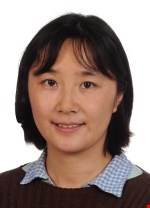
Yan Zhu is a faculty member at the University of Macau , affiliated with the Analog and Mixed Signal VLSI Laboratory within the Faculty of Science and Technology. She has a strong research focus on high-performance analog and mixed-signal integrated circuits, particularly in data conversion and low-power design. Her research interests include: Analog and Mixed-Signal VLSI Design High-Speed Data Converters (ADCs) Noise-Shaping and Time-Domain Circuits PVT-Robust and Low-Power Circuit Techniques Compute-in-Memory and AI Hardware Acceleration The recent publications of Yan Zhu demonstrate a clear trend toward advanced ADC architectures such as time-interleaved, pipelined-SAR, and time-domain converters, with a strong emphasis on calibration, linearity, and energy efficiency. Her work frequently appears in top-tier journals like IEEE JSSC and conferences like ISSCC and CICC, indicating leadership in the field of analog circuit design. There is also a growing focus on machine learning hardware, particularly analog compute-in-memory systems for edge AI applications. No scientific awards or honors are mentioned in the provided text. Yan Zhu has made significant contributions through collaborative research, particularly with Chi-Hang Chan and Rui Paulo Martins , and has been involved in numerous projects related to ADC calibration, metastability, and high-speed sampling. While specific grant details are not listed, the volume and quality of publications suggest active funding support. She has not listed any advisees in the provided data. She is a core contributor to the Analog and Mixed Signal VLSI Laboratory at the University of Macau, where her team focuses on cutting-edge IC design for communication, sensing, and artificial intelligence applications.
Zhichun Lei serves as Professor at the Institute of Measurement and Sensor Technology, Ruhr West University of Applied Sciences since August 2011, specializing in signal and image processing. He concurrently holds a second professorship at Tianjin University's School of Microelectronics in China and mentors for the Friedrich-Ebert-Stiftung. PhD in Electrical Engineering, University of Dortmund (1994-1998) Prior scientific roles at Tianjin University, China (1989-1993) German language certification at Goethe-Institut Mannheim (1993) His research focuses on advanced signal processing for video systems, display technologies, and sensor applications. Key contributions include high-dynamic-range video processing, wide color gamut implementations, and image enhancement algorithms. His work bridges theoretical signal processing with industrial applications in display engineering and sensor technology, emphasizing practical solutions for real-world systems. Recent publications (2016-2020) demonstrate consistent innovation in display technologies, particularly HDR optimization, local dimming algorithms, and sensor interference mitigation. His work integrates electrical engineering principles with computer science methodologies, showing strong industry relevance through patents and industrial collaborations. Professor Lei holds multiple patents in image processing including edge-based sharpness enhancement and adaptive histogram equalization, though no formal scientific awards are documented in the source material. He actively supervises students in signal/image processing domains and maintains strong industry ties through prior roles at Sony and Philips. His research is supported by industrial partnerships and academic collaborations, particularly in display technology development. As core faculty at the Institute of Measurement and Sensor Technology, he leads research in advanced sensor systems and measurement methodologies, with emphasis on industrial applications of signal processing techniques.
Steven Morad is a Lecturer and PhD student in the Department of Computer Science and Technology at the University of Cambridge. His research focuses on reinforcement learning, long-term memory models, and robotics applications, with an emphasis on partially observable environments and multi-agent systems. He has taught Deep Reinforcement Learning (Lent 2024) and served as a Teaching Assistant for Mobile Robot Systems (2021–2022). His work includes developing frameworks for embodied navigation, memory-augmented algorithms, and cooperative multi-robot systems. Notable contributions include the POPGym benchmark for POMDPs and the NASA-recognized Improving Visual Feature Extraction in Glacial Environments (2019). Research themes span robotics in extreme environments (e.g., lunar caves, low-gravity terrains) and graph-based methods for partial observability. His publications address challenges in decentralized control, topological priors, and language-conditioned navigation. Education : MSc Thesis on The Spinning Projectile Extreme Environment Robot (2019). Awards : NASA New Technology (NTR NPO 51401) for glacial robotics work. Collaborations : NASA/JPL, IEEE, and aerospace industry partnerships.
Bang LIU is an Associate Professor at the University of Montreal's Faculty of Arts and Science, specifically within the Department of Computer Science and Operations Research. His research focuses on Natural Language Processing (NLP), Deep Learning, and Data Science with applications in healthcare, materials science, and embodied AI systems. He leads multiple research projects funded by organizations like NSERC and MITACS, exploring causal inference, multimodal reasoning, and AI-driven material discovery. Education: PhD in Computer Science (University of Montreal). Research Highlights : Developing causal discovery frameworks (e.g., CausalNET, OCDB) Pioneering materials science applications via AI agents (MatExpert, Honeycomb) Advancing embodied instruction following systems (OPEx) Grants & Projects : NSERC Discovery Grants (2021-2027) MITACS Accelerate Projects (2022-2025) focusing on healthcare LLM trust, CAD generation, and procedural knowledge extraction He supervises Master's students in low-resource NLP tasks and serves as a lead researcher in over 15 active projects. Affiliated with the CRM and RALI labs, his work bridges theoretical AI advancements with practical industrial applications.
Jeffrey P. Bigham is a researcher at Carnegie Mellon University 's Human-Computer Interaction Institute . He specializes in Artificial Intelligence , Accessibility , and Human-Computer Interaction , with a focus on Inclusive AI systems Accessible web and mobile development Large language model applications User interface engineering His recent publications explore synthetic data generation for UI/Slide understanding, LLM-based code generation , and real-time notetaking systems . Key themes include Improving accessibility through AI Interactive ML model optimization Collaborative human-AI workflows Visual and speech interface analysis Bigham's work spans Computer Science , Machine Learning , and Natural Language Processing , often addressing disability inclusion and user-centered AI . He collaborates extensively with researchers like Jason Wu Yi-Hao Peng Amy Pavel Stephanie Valencia Henny Admoni across 300+ publications since 2006. Notable contributions include automated accessibility tools (like Screen Recognition ), stuttering accommodation in speech recognition , and generative AI literacy initiatives . His research bridges technical AI innovation with social impact , particularly for marginalized user groups.
Jeffrey P. Bigham is the Philip Guo Endowed Professor of HCI at the Human-Computer Interaction Institute, Carnegie Mellon University, with a joint appointment in the Language Technologies Institute. His research focuses on accessibility, human-AI interaction, dialog systems, and crowdsourcing. School: School of Computer Science Institute: Human-Computer Interaction Institute His research spans creating accessible technologies for blind users, improving speech recognition for people with disabilities, and developing human-AI collaboration frameworks. Key projects include VizWiz accessibility tools, Scribe captioning systems, and Chorus conversational AI. Recent work emphasizes UI understanding (WebUI dataset, UICoder), generative AI applications (Apple Intelligence), and accessibility infrastructure (System-class Accessibility). Articles highlight intersections between computer vision, NLP, and inclusive design. NSF CAREER Award Best Paper Awards: ASSETS 2021, CHI 2021, W4A 2021 Nominations: CHI 2024, ECCV 2024, DIS 2024 He advises numerous students and postdocs across accessibility, AI, and HCI domains, with trainees now at Google, Apple, University of Michigan, and beyond. Funding comes from Apple, Google, Microsoft, NSF, and other major institutions.
Christoph Csallner is a Professor in the Computer Science and Engineering Department at the University of Texas at Arlington (UTA), where he leads research in software engineering, program analysis, and mobile software development. Prior to joining UTA, he worked at Google and Microsoft Research. He directs the SERC lab (Software Engineering Research Center) and has established himself as a leading researcher in automated bug finding, reverse engineering, and Simulink analysis. University of Texas at Arlington, Professor, Computer Science and Engineering Department SERC Lab Director Former researcher at Google and Microsoft Research Dr. Csallner earned his Diplom-Informatiker degree from Universität Stuttgart, Germany, and both his M.S. and Ph.D. in Computer Science from Georgia Tech. His educational background in both European and American institutions has informed his interdisciplinary research approach that bridges theoretical foundations with practical software engineering challenges. Dr. Csallner's research spans multiple areas of software engineering with particular expertise in program analysis, automated bug finding, and mobile software engineering. His work on reverse engineering mobile application user interfaces with REMAUI has been particularly influential in the field. His recent research focuses on Simulink analysis with projects like SLNET, ScoutSL, and EvoSL, which have created foundational datasets and tools for the model-based development community. His work on PSDoodle and D2S2 has advanced mobile app screen search through innovative sketch-based interfaces. His research consistently bridges theoretical program analysis with practical applications for real-world software development challenges. Dr. Csallner's publications demonstrate a consistent pattern of innovation in software testing, analysis, and reverse engineering. His recent work shows a strong focus on mobile application analysis, Simulink model processing, and the application of machine learning techniques to traditional software engineering problems. He has successfully built bridges between formal methods and practical software development tools. Best Paper Award - IEEE ISSRE 2010 ACM SIGSOFT Distinguished Paper Awards - ISSTA 2006, 2012 Best Paper Award - PPREW 2014 Best Paper Award - ASE 2007 ACM SIGSOFT Distinguished Paper Award - ASE 2015 Distinguished Referee Award - ASE 2019 Distinguished Reviewer Award - TOSEM 2011-2012 Dr. Csallner has successfully advised numerous Ph.D. and Master's students who have gone on to prominent positions at companies including Meta, Google DeepMind, BNSF Railway, Bloomberg, and Salesforce. His research has been supported by significant funding from the National Science Foundation, MathWorks, the Alzheimer's Association, and the Texas National Security Network. His work on fake news detection received media coverage from major outlets including the Dallas Morning News, NBC DFW, and WBAP/KLIF. Dr. Csallner directs the Software Engineering Research Center (SERC) lab at UTA, where his team develops innovative tools for software analysis and testing. Notable projects include JCrasher, Check 'n' Crash, DSD-Crasher, Pex/DySy, Dsc, and REMAUI/Pixel to App. His recent work focuses on PSDoodle, TreeVada, ScoutSL, and EvoSL, demonstrating his lab's continued innovation in software engineering research. The SERC lab maintains strong industry connections, particularly with MathWorks, and has produced numerous open-source tools that have influenced both research and practice in software engineering.
Weizi Li is an Assistant Professor of Computer Science in the Min H. Kao Department of Electrical Engineering and Computer Science at the University of Tennessee, Knoxville. He is also a member of the Institute for Future Mobility and directs the Fluidic City Lab. His research focuses on leveraging multi-agent simulation and reinforcement learning to design cyber-physical infrastructure for urban environments, particularly in autonomous systems and urban mobility. Li holds a PhD in Computer Science from the University of North Carolina at Chapel Hill and completed a postdoctoral fellowship at MIT. Education: PhD in Computer Science from UNC Chapel Hill (advisor: Ming C. Lin), with prior affiliations at Disney Research, Lenovo Research, and others. Research Interests: Li explores topics such as mixed traffic control, autonomous vehicle coordination, energy-efficient path planning for eVTOLs, and privacy-preserving traffic management. His work combines machine learning, robotics, and transportation engineering to address urban challenges. Recent projects are supported by the NSF, U.S. Department of Transportation, and NVIDIA. Lab and Teams: The Fluidic City Lab develops solutions for fluidic urban systems, with a focus on adaptive traffic control and smart infrastructure. Collaborations span academia and industry.
Qian Yang is an Assistant Professor in the Computer Science and Engineering Department at the University of Connecticut, Storrs. Her research focuses on machine learning applications in materials science, physics, and chemistry, bridging computational methods with physical sciences. She holds a Ph.D. from Stanford University's Institute for Computational and Mathematical Engineering and a B.A. in Applied Mathematics/Computer Science from Harvard College. Prior to UConn, she was a postdoctoral scholar at Stanford's Materials Computation and Theory group. Her research projects include developing machine learning models for chemical reaction networks, model reduction of nonlinear dynamical systems, and addressing challenges in scientific data (small datasets, imbalance, mixed fidelity). She co-hosts the Materials and Megabytes podcast, exploring interdisciplinary machine learning in materials science, featuring experts like Prof. Gábor Csányi (Cambridge) and Dr. Patrick Riley (Google). Awards: Best Student/Postdoc Presentation Award (2017), Best Instructor Award (Stanford) Teaching: Teaches courses like CSE 5095 (Machine Learning for Physical Sciences) and CSE 3666 (Computer Architecture). Known for integrating theory with practical applications. Grants/Advising: No explicit grants listed, but her research involves DOE and computational initiatives. Advising details not provided in text. Labs/Teams: Leads interdisciplinary teams focusing on machine learning in materials and physical sciences, as evidenced by podcast collaborations and course projects. Publications emphasize data-driven methods, uncertainty quantification, and algorithm development for scientific challenges, with recent work in defect analysis, battery materials discovery, and TEM data automation.
Professor Thomas Lukasiewicz is a Professor of Computer Science at the University of Oxford. His research focuses on Artificial Intelligence, Machine Learning, and Medical Image Segmentation. He leads projects like ExODA and PrOQAW, exploring semantic query answering and predictive coding networks. His work bridges deep learning with symbolic reasoning through neuro-symbolic frameworks like PiShield. Notable contributions include hybrid medical report generation, adversarial domain certification, and benchmarking predictive coding architectures. Supervising over 25 students, his research group actively publishes in top venues such as ICLR, NeurIPS, and CVPR. He has completed projects on probabilistic semantic query answering and knowledge base completion, with applications in healthcare informatics and autonomous systems.
Rob Fergus is a Professor of Computer Science at New York University, affiliated with the Courant Institute of Mathematical Sciences and the CILVR lab. He holds a D.Phil. from the University of Oxford, M.Sc. from Caltech, and B.A./M.Eng. from the University of Cambridge. His research focuses on machine learning, deep learning, and computer vision, with applications in generative models, computational photography, and biological structure prediction. Fergus has contributed to seminal works in deblurring, image segmentation, and protein sequence analysis. He previously served as Research Director at Facebook AI Research and is a leader in multimodal and embodied AI research. Education: D. Phil., Electrical Engineering, University of Oxford (2005); M.Sc., California Institute of Technology (2002); B.A./M.Eng., University of Cambridge (2000). Research Interests: Deep Learning, Generative Models, Computer Vision, Reinforcement Learning, Protein Structure Prediction, and Multimodal Systems. His work bridges theoretical advancements with practical applications like computational photography and agent-based reasoning.
Rahim Tafazolli is the Regius Professor of Electronic Engineering and Director of the 5G/6G Innovation Centre (5GIC/6GIC) and the Institute for Communication Systems (ICS) at the University of Surrey. He has over 30 years of experience in digital communications research and has authored/co-authored over 1,000 publications. His work focuses on 5G/6G technologies, satellite communications, reconfigurable intelligent surfaces (RIS), and semantic communication systems. He leads major initiatives such as the 5GIC and 6GIC, collaborating with industry partners like InterDigital and A*STAR. His research has been recognized with prestigious awards including the KIA Laureate Award (2015) and Fellowships from the Royal Academy of Engineering (FREng) and the Wireless World Research Forum (WWRF). Key research areas include next-generation wireless networks, quantum-based communications, and AI-driven semantic systems. Recent advancements include frameworks like ResiTok for robust image transmission and SA-MIMO for quantum-native receivers. His work on distributed hybrid beamforming in satellite networks and resilient tokenization for low-rate communication highlights his contributions to practical wireless solutions. Collaborations with institutions such as NPL and international partners ensure his research bridges academia and industry. Scientific achievements include pioneering 5G testbeds and co-developing the first UK-made end-to-end 5G system. Awards reflect his global impact in advancing communication technologies. His leadership in initiatives like the £8M academic-industry center for secure AI-era networks underscores his role in shaping future network security and efficiency.
Dr. Fang Wang is a Senior Lecturer in the Department of Computer Science at Brunel University London, affiliated with the College of Engineering, Design and Physical Sciences. Holding a PhD in Artificial Intelligence from the University of Edinburgh, she transitioned from a senior researcher role at the BT Group's research center to academia in 2010. Education: PhD in Artificial Intelligence (University of Edinburgh) Professional Background: Senior Researcher at BT Group Her research spans Artificial Intelligence and its interdisciplinary applications, focusing on nature-inspired computing (swarm intelligence, evolutionary computing), multi-agent systems , neural networks , and computer vision with applications in network optimization, healthcare, and education. Recent work explores fault detection , deepfake exposure , and medical informatics . The 15 most recent publications reveal trends in machine learning for industrial diagnostics, multi-agent reinforcement learning with formal logic constraints, and vision-language systems for medical applications. Subfields include neural networks , temporal/spectral analysis , and human-computer interaction . Scientific Recognition : Gordon Radley Technical Premium Highly Commended award (BT) ACM Best Student Paper Award (International Conference on Autonomous Agents) As an educator, she teaches programming, algorithms, digital innovation, and project-based courses to undergraduates and MSc students, with class sizes ranging from 8 to 350. She supervises PhD students in topics like self-organizing agents, intelligent intrusion detection, and human action recognition.
Dr. Darko Pavic is a researcher at the Department of Computer Science , RWTH Aachen University . His work focuses on computer graphics, image processing, and procedural modeling techniques.
Omar El Khatib is an Assistant Professor in the Department of Mathematics and Computer Science at Loyola University New Orleans, where he joined in Fall 2017. Previously, he served as an Assistant Professor at Taif University for seven years and as a Software Developer at Epic Systems Corporation in Madison, WI for two years. His educational background includes: Ph.D. in Computer Science from New Mexico State University (2007) Dr. El Khatib's research focuses on Artificial Intelligence with specialized expertise in Answer Set Programming, Machine Learning, and Deep Learning. His work applies declarative programming techniques to solve complex combinatorial optimization challenges across industrial domains. His publication history reveals a sustained emphasis on Answer Set Programming applications, addressing problems like assembly line balancing, pixel puzzle resolution, and job shop scheduling. These works demonstrate the versatility of logic-based approaches for modeling constrained real-world systems in manufacturing and computational problem-solving. Scientific awards: No scientific awards mentioned in the provided text Student advising and grant details are not specified in the source material. The text also contains no references to research laboratories, collaborative teams, or ongoing funded projects.