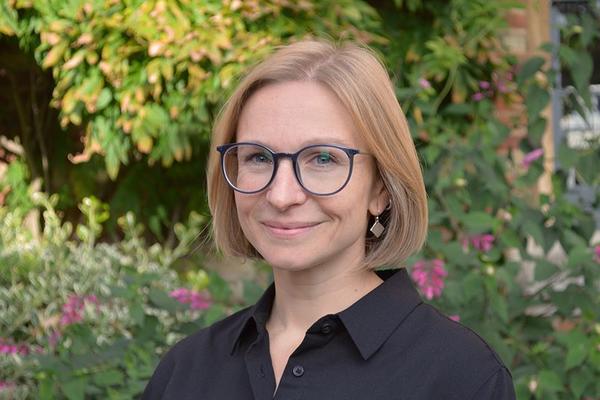
Aino Ahtinen is a University Lecturer in Computing Sciences at Tampere University's Faculty of Information Technology and Communication Sciences. Her work focuses on human-robot interaction, particularly in educational and healthcare contexts. She has extensive experience designing socially assistive robots, wellness technologies, and participatory design frameworks for diverse populations including older adults, children, and professionals. Her research emphasizes co-learning models involving social robots, accessibility in senior-robot interactions, and the integration of robotics into primary education and workplace well-being. Notable projects include the ROBOTOUR co-learning initiative for seniors and ROBOCAMP programs for youth. She has pioneered studies on robot literacy metrics and ethical design considerations in social robotics. Dr. Ahtinen has contributed to over 60 peer-reviewed publications since 2003, with recent work focusing on robot-assisted physical activity, privacy-aware robotic systems, and cross-generational technology education. Her research bridges human-computer interaction, gerontechnology, and educational technology, consistently prioritizing user-centered design principles.
Albert J. Sinusas, M.D., is a Professor of Medicine (Cardiovascular Medicine and Radiology & Biomedical Imaging) at Yale University School of Medicine and holds adjunct roles in Biomedical Engineering. He leads the Yale Translational Research Imaging Center (Y-TRIC) and directs Advanced Cardiovascular Imaging at Yale New Haven Hospital. His roles include Chairman of multiple committees (Yale Radioactive Drug Research Committee, Radiation Safety Committee) and Board Member of the Intersocietal Accreditation Commission (IAC) for Nuclear/PET imaging. Dr. Sinusas earned his MD from the University of Vermont and completed training in Internal Medicine at the University of Oklahoma and Cardiology/Nuclear Cardiology at the University of Virginia. His research focuses on cardiovascular imaging innovations, including molecular imaging of myocardial injury, angiogenesis, and peripheral artery disease. His translational work employs multidisciplinary modalities such as PET/CT, SPECT/CT, MRI, and echocardiography. He leads NIH-funded grants and trains researchers through a T32 grant. With over 250 peer-reviewed publications, he co-edited textbooks on cardiovascular molecular imaging and hybrid imaging in cardiovascular medicine. Key research interests include developing novel imaging tracers, AI-enhanced diagnostic tools, and non-invasive assessment of cardiovascular pathophysiology. Notable contributions include advancements in PET-derived myocardial blood flow quantification and SPECT imaging optimization using deep learning. Dr. Sinusas has received prestigious awards like the SNMMI Hermann Blumgart Award (2008) and is frequently recognized in 'Best Doctors in America.' He serves on editorial boards for Journal of Nuclear Medicine , Journal of Nuclear Cardiology , and JACC: Cardiovascular Imaging . His clinical expertise includes ECG, stress testing, and interpretation of SPECT/PET imaging studies. He oversees Y-TRIC’s mission to bridge preclinical and clinical imaging research, fostering collaboration across engineering, radiology, and cardiology.
Rui Ponte Costa is an Associate Professor at the University of Oxford's Department of Physiology, Anatomy & Genetics (DPAG). He leads the Neural & Machine Learning group, focusing on computational models of learning in the brain by integrating AI principles. His research emphasizes cortical circuits, neuromodulation, and subcortical regions to understand credit assignment mechanisms. He holds a PhD in Computational Neuroscience and Machine Learning from the University of Edinburgh and has held postdoctoral positions at the University of Oxford, University of Bern, and McGill University. His group's work bridges theoretical and experimental neuroscience, collaborating with institutions like MILA and Google DeepMind. Education: Bachelor's in Computer Science, University of Coimbra (Portugal) PhD in Computational Neuroscience, University of Edinburgh (UK) Research Interests: Neural mechanisms of learning and plasticity Machine learning inspired by biological systems Cerebro-cerebellar interactions Neuromodulatory systems' role in reinforcement learning Collaborators include Christopher Summerfield, Timothy Behrens, and Yarin Gal. His lab's work has been published in Nature Communications , Cell Reports , and top machine learning venues. He co-organizes the Oxford NeuroTheory Forum and has pioneered models explaining cortical dynamics in task acquisition and consolidation. Advising and Grants: No specific grants listed, but active in collaborative research networks. Advising focuses on PhD students in computational neuroscience and AI. Labs/Teams: Neural & Machine Learning Group at DPAG, part of Oxford's broader neuroscience and AI ecosystem.
Dr. Rachel Parkinson is a Research Fellow at Wolfson College, University of Oxford, and holds a Lecturer position in Biology at Keble College. She is also an Eric & Wendy Schmidt AI in Science Postdoctoral Fellow. Her research focuses on insect sensory processing, particularly how pollinators like bees perceive environmental stressors such as pesticides. She develops AI-driven tools to diagnose sublethal toxicity and leads projects using large language models for systematic reviews of pesticide risks. Her work aims to assess environmental threats to pollinators and devise mitigation strategies. Her research interests include neuroethology, pesticide impacts on insect behavior, and AI applications in ecological research. She collaborates with the Bee Lab to advance understanding of pollinator health and ecological resilience. Her interdisciplinary approach bridges biology, neuroscience, and computational methods to address global environmental challenges. Awards: Eric & Wendy Schmidt AI in Science Postdoctoral Fellow Labs/Teams: Bee Lab, University of Oxford
Xiaoqiang Wang is a Professor in the Department of Scientific Computing at Florida State University (FSU). His research focuses on numerical analysis, applied partial differential equations, mathematical biology, image processing, and scientific computing. He holds a Ph.D. from Pennsylvania State University (2005). His work emphasizes phase-field modeling for elastic bending energy, biological microstructures, and computational methods for complex systems. Notable contributions include advancements in centroidal Voronoi tessellation algorithms for image segmentation and high-performance computing techniques for scientific visualization. Recent publications highlight innovations in topology-preserving phase-field models, neural network-based energy minimization, and stochastic resource competition models. His research bridges theoretical mathematics with practical applications in biophysics, materials science, and biomedical engineering. Wang collaborates actively with interdisciplinary teams, contributing to FSU's computational science initiatives. His lab focuses on developing novel numerical methods and simulations for biological and physical systems, reflecting a commitment to both foundational and applied research.
Rui Chang is an Associate Professor at Yale University School of Medicine , jointly appointed in the Department of Neuroscience and Department of Cellular and Molecular Physiology . His research focuses on organ-to-brain circuits and neurocardiology with specific interest in Parkinson's disease . He completed his B.S. in Biological Sciences at Tsinghua University (2005) Ph.D. in Neuroscience at University of Southern California (2011) Postdoctoral training in the lab of Stephen Liberles at Harvard Medical School (2017) Research Highlights: The Chang lab employs single-cell gene expression profiling , virus-based anatomical mapping , and optogenetics to investigate vagal interoceptive systems and their roles in cardiovascular regulation and gut-brain axis dysfunction in neurodegenerative diseases. Their work has revealed a multidimensional coding architecture for visceral sensory signals. Notable Scientific Awards: McKnight Neurobiology of Brain Disorders Award (2021) NIH Director’s New Innovator Award (2019) Kavli Faculty Innovative Research Award (2019) NIH K01 Mentored Research Scientist Award (2017) Keystone Symposia Future of Science Scholarship (2016) Collaborative Network: Chang collaborates with experts in neurodegeneration (David A. Hafler, MD), biostatistics (Hongyu Zhao, PhD), and neural imaging (Le Zhang, PhD). His work intersects with the Stephen & Denise Adams Center for Parkinson’s Disease Research and Kavli Institute for Neuroscience .
Dr. Adrian Owen is a Professor of Cognitive Neuroscience & Imaging at Western University's Brain and Mind Institute, holding the Canada Excellence Research Chair. His work focuses on consciousness disorders, neurodegenerative diseases, and functional neuroimaging applications. He pioneered techniques like detecting residual cognition in vegetative patients using fMRI and fNIRS. Research Focus: Owen's research bridges cognitive neuroscience and clinical practice, emphasizing disorders of consciousness, Alzheimer's/Parkinson's mechanisms, and neurorehabilitation. He develops brain-computer interfaces for communication in non-responsive patients and investigates anesthesia effects on neural connectivity. Key Contributions: Pioneered covert cognition detection in vegetative patients, advanced fNIRS applications in ICU settings, and established international clinical cohorts for consciousness assessment. His work has appeared in Nature , Science , and The Lancet . Labs/Teams: Leads the Owen Lab at Western University, collaborating with clinicians, engineers, and neuroscientists to translate neuroimaging innovations into clinical tools. Grants/Industry Links: Receives funding for interdisciplinary projects linking brain imaging, neurology, and biomedical engineering, fostering industry partnerships for neurotech development.
Camilla Fiorini is an Associate Professor at the National Conservatory of Arts and Crafts (CNAM) in Paris, where she conducts research at the Mathematical and Numerical Modeling Laboratory (M2N). She serves as Principal Investigator for the ANR-funded SPARCL project (2025-2029) focusing on structure-preserving reduced order models for conservation laws. Her academic background includes a PhD in Applied Mathematics from the University of Versailles and both MSc/BSc degrees in Mathematical Engineering from Politecnico di Milano. Her research centers on computational fluid dynamics, numerical analysis of PDEs, and sensitivity methods, with specific applications in uncertainty quantification and reduced order modeling. Current projects develop novel approaches for conservation laws that maintain structural properties while improving computational efficiency and reliability. Fiorini's publication record demonstrates consistent focus on sensitivity analysis techniques for complex fluid systems, shock-capturing methods, and uncertainty propagation in hyperbolic PDEs. She received the SMAI-GAMNI PhD Award 2019 (French ECCOMAS Award) for her doctoral dissertation on sensitivity analysis for nonlinear hyperbolic systems. As Principal Investigator of the SPARCL project, she leads a team developing new reduced basis construction techniques for conservation laws. Fiorini actively advises graduate researchers including PhD students Nathalie Nouaime (2021-2024) and Nicolas Lepage (2022-present), plus multiple Master's candidates. Her research group collaborates with institutions including Inria, Sorbonne University, ONERA, and CEA. Current projects include ANR JCJC-funded SPARCL and ANR AHEAD initiatives. She leads the SPARCL research group at M2N laboratory, collaborating with researchers including Alessia Del Grosso, Iraj Mortazavi, and Taraneh Sayadi on reduced order modeling techniques. The team focuses on developing computationally efficient ROMs that preserve physical structures in conservation laws.
Mary Rusckowski, PhD, is an Associate Professor in the Department of Radiology at UMass Chan Medical School and holds an additional appointment at the T.H. Chan School of Medicine. Her research focuses on developing novel radiopharmaceuticals and molecular imaging agents for cancer, infection, and other diseases. Education: BA in Biology, Albertus Magnus College PhD in Biochemistry, Rutgers University Research Interests: Rusckowski's work integrates chemistry, biology, and imaging to create targeted diagnostic and therapeutic agents. Her major areas include: Design of radiolabeled antisense oligonucleotides for infection and cancer imaging Pretargeting strategies using morpholino oligomers and complementary chemistry Nanoparticle-based delivery systems for theranostics Development of novel chelators and radiolabeling techniques for technetium, indium, and lutetium isotopes Publication Trends: Her extensive publication record (1997–2024) reveals a consistent focus on advancing nuclear medicine and molecular imaging. Recent works emphasize infection-specific imaging agents, VEGF-targeted radiotherapy, and precision delivery systems for dermatological and neurological applications. Labs and Collaborations: While specific lab names are not provided, her co-authorship network includes prominent researchers such as Dale Greiner, John Harris, and Robert Brown, indicating active collaboration within UMass Chan and beyond.
Professor Tiina Roose is a leading academic in biological and environmental modeling at the University of Southampton. She holds a faculty position as Professor in the Bioengineering Group and is affiliated with interdisciplinary research groups including the Nature-Based Ocean Solutions and Southampton Marine and Maritime Institute. Her work integrates engineering principles with environmental and agricultural sciences to address challenges in soil science, plant-microbe interactions, and sustainable agriculture. Research focuses on rhizosphere dynamics, soil mechanics, and biofilm modeling. Active in collaborative projects with industry and international partners, funded by BBSRC, EPSRC, and EU Horizon programs. Develops advanced imaging techniques like synchrotron X-ray CT and microdialysis for in situ soil analysis. Her research interests emphasize agricultural sustainability, environmental adaptation, and precision agriculture technologies. Recent work includes studies on Xylella fastidiosa plant pathogens, nutrient dynamics in soil, and digital twins for fertilizer management. She has led projects such as 'Rhizosphere by Design' and 'fertilAIser', contributing to innovative solutions for food security and soil health. Key collaborations span biomaterials engineering, environmental microbiology, and computational modeling, with outputs published in journals like Plant and Soil , Soil Biology and Biochemistry , and New Phytologist .
Finbar Argus is a Research Fellow at the University of Auckland, currently on a visiting academic position at the University of Oxford's Department of Physiology, Anatomy and Genetics (DPAG). He is affiliated with the Paterson Group and the Simões Group at Oxford, and the Auckland Bioengineering Institute. His work focuses on computational modeling of physiological systems and advancing patient-specific digital twin technology. His educational background includes an undergraduate degree in Mechanical Engineering from the University of Canterbury (2016) and a PhD in Bioengineering from the University of Auckland (2022). Dr. Argus's research centers on Computational Physiology , particularly Cardiovascular Modeling and the Autonomic Nervous System control of the heart. He develops patient-specific Digital Twins to optimize treatment for arrhythmia by calibrating physiological models of coupled organ systems to patient data. His work bridges biomedical engineering and clinical cardiology, aiming to advance personalized medicine through computational approaches that integrate autonomic nervous system dynamics with cardiovascular function. At Oxford, he collaborates within the Paterson Group and Simões Group in DPAG. At the University of Auckland, he is associated with the Animus Lab and the 12 Labours EP1 and P1 groups at the Auckland Bioengineering Institute, where he will resume work in mid-2024. As a postdoctoral researcher, Finbar Argus is engaged in active research projects focused on physiological modeling and is not currently listed as having formal advisees. His work is supported by collaborative frameworks within the Paterson Group, Simões Group, Animus Lab, and 12 Labours research teams.
Dr. Faith Kwa is a Senior Lecturer and Course Director for the seven Bachelor of Health Science degrees at Swinburne University of Technology's School of Health Sciences. Her teaching interests include Research Methods, Pathology, and Molecular Biology. She leads the Drug Discovery for Chronic Diseases Laboratory and has been recognized as one of Australia's leading educators, receiving the 2024 citation for Outstanding Contributions to Student Learning by the Australian Awards for University Teaching. Her educational background includes: Doctor of Philosophy from The University of Melbourne, Australia Graduate Certificate in Tertiary Teaching and Learning from RMIT University, Australia Bachelor of Biomedical Science from The University of Melbourne, Australia Bachelor of Science (Honours - First Class) from The University of Melbourne, Australia Fellow of the Higher Education Academy, United Kingdom (2020-present) Dr. Kwa is a molecular biologist whose research focuses on drug discovery for chronic diseases, particularly in the areas of epigenetic medicine, molecular mechanisms of action, and chronic disease prevention and management. Her laboratory has made significant contributions to understanding treatment strategies for leukemia, posterior eye diseases, and Friedreich's ataxia using natural compounds with epigenetic properties. She has made novel observations regarding low doses of epigenetic modifiers in combination therapies that potentiate cytotoxicity in leukemia cells resistant to conventional chemotherapeutic drugs. Her work with sulforaphane (a broccoli-derived compound) has shown therapeutic benefits across multiple disease models, particularly for neurodegenerative and ocular conditions. Analysis of her recent publications reveals a strong focus on neurodegenerative disorders (particularly Friedreich's ataxia), ophthalmic diseases, and molecular approaches to disease treatment. Her work consistently bridges basic science with clinical applications, often examining epigenetic mechanisms and oxidative stress pathways. A recurring theme across her research is the therapeutic potential of natural compounds like sulforaphane, which appears in multiple disease contexts from mitochondrial myopathies to posterior eye diseases. Her scientific recognition includes: 2024 citation for Outstanding Contributions to Student Learning by the Australian Awards for University Teaching 2023 Vice-chancellor's Award for Teaching Excellence (Higher Education - Individual) 2023 School of Health Science Teaching Excellence Award Fellow of the Higher Education Academy in the UK 18 other teaching accolades throughout her academic career Dr. Kwa supervises PhD and Master's students in areas related to molecular mechanisms of disease and therapeutic interventions. She has coordinated and taught eleven different subjects with student numbers ranging from 20 to over 300. As a Chief Investigator, she has secured various learning and teaching grants from Australian universities. Currently, she holds funding for 'Pre-clinical investigations on sulforaphane to advance the cure for Friedreich's ataxia' from the University of Melbourne (2022-2025). She is passionate about developing pedagogical methods to enhance teaching and learning environments and has received positive student feedback throughout her career. Dr. Kwa leads the Drug Discovery for Chronic Diseases Laboratory, where her team investigates potential treatments for various chronic disorders. She also serves as the Swinburne Women Academic Network Leader in the Career Development Team, where she develops programs supporting women academics in progressing their careers. Her laboratory work utilizes pre-clinical disease models to evaluate therapeutic approaches, with a particular emphasis on targeted therapies with superior efficacy for treating human diseases.
Dr. Marios Georgakis is a Clinician-Scientist and Junior Group Leader at the Institute for Stroke and Dementia Research (ISD) at Ludwig-Maximilians-Universität München (LMU Munich). He also serves as a Visiting Scientist at the Broad Institute of MIT and Harvard and is completing his clinical residency in Neurology at LMU University Hospital. As Principal Investigator of the Georgakis Lab, he leads a research team focused on developing precision medicine approaches for cerebrovascular diseases. Education: Medical studies (M.D.): Medical School, National and Kapodistrian University of Athens, Greece (2009-2015) Master studies (M.Sc.): Molecular Physiology (Neurosciences), National and Kapodistrian University of Athens, Greece (2015-2017) Doctoral studies (D.Sc.) in Epidemiology, National and Kapodistrian University of Athens, Greece (2015-2019) Doctoral studies (Ph.D.) in Graduate School of Systemic Neurosciences (GSN), LMU Munich, Germany (2017-2020) Dr. Georgakis' research focuses on leveraging big data from epidemiological studies and human biobanks to develop precise and personalized preventive and therapeutic strategies for cerebrovascular diseases. His work spans biomedical neuroscience with particular emphasis on cerebrovascular disease, stroke, atherosclerosis, cerebral small vessel disease, multi-omics, data science, epidemiology, and population genetics. He employs innovative bioinformatic tools including genome-wide association studies, Mendelian randomization, multi-omics integration, single-cell transcriptomics, spatial transcriptomics, and machine learning to discover causal mechanisms, identify therapeutic targets, develop risk stratification tools, and create accurate biomarkers for cerebrovascular diseases. His laboratory has established the AtherOMICS biobank for human atherosclerotic plaque samples and developed computational pipelines for big data analyses. Recent publication trends show a strong focus on genetic architecture of stroke, inflammatory pathways in cerebrovascular disease, and development of polygenic risk scores for clinical application. Scientific Awards: Emmy Noether Independent Group Leader Award, German Research Foundation (DFG), 2023 Early Career Achievement Award, CHARGE Consortium, 2023 Fellow of the Hertie Network of Excellence in Clinical Neuroscience, 2023 Clinician-Scientist Fellow of the Excellence Munich Cluster for Systems Neurology (SyNergy), 2023 Walter-Benjamin Fellowship for postdoctoral research by German Research Foundation (DFG), 2021-2022 Dr. Georgakis actively mentors a diverse team of 12 current students and postdocs including PhD students, MD students, and clinician scientists, with several alumni who have completed their training in his lab. His research is supported by multiple grants including the Emmy Noether program from the German Research Foundation, focusing on multi-omics characterization of immune mechanisms driving human atheroprogression, dissecting cerebrovascular atherosclerosis with population genetics, and developing personalized biomarkers using deep learning. The Georgakis Lab operates two main research platforms: the AtherOMICS Biobank for human atherosclerotic plaque samples and the Big Data Lab for computational analyses. These platforms enable his team to conduct deep phenotyping of human atherosclerosis, develop in vivo diagnostics, discover therapeutic targets, and create personalized diagnostic and risk prediction tools for cardiovascular diseases.
Prof. Dr. Melanie Krüger is a faculty member at Leibniz University Hannover , where she serves as Head of the Research Unit Sports and Cognition within the Institute of Sports Science. Her academic career spans institutions including the Technical University of Munich, University of Tasmania, and Ludwig Maximilian University. She leads research initiatives in embodiment, cognitive aging, motor decision-making, and the impact of physical activity on neurocognitive and motor functioning. Current Position: Professor, Institute of Sports Science, Leibniz University Hannover Prior Appointments: Post-doctoral roles at Technical University of Munich, University of Tasmania, and Pennsylvania State University Education: PhD in Systemic Neurosciences, Ludwig Maximilian University; Diploma in Sports Science, University of Leipzig Krüger's research focuses on: Embodiment Research: Systemic interactions between cognitive and motor development Cognitive Aging: Age-related changes in motor decision-making and coordination Human Locomotion: Collision avoidance, mixed reality interactions, and real-world movement studies Open Science: Advocacy for research data management in sports science Her recent publications explore mixed reality applications ( 2024 ), stress effects on motor function ( 2023 ), and methodological innovations in locomotion studies ( 2021-2025 ). Current projects include Moving Forward (2021-2022) and two Innovation Plus initiatives (2022-2024) developing experimental frameworks for human movement analysis. Krüger actively participates in academic governance: Spokesperson, German Society of Sport Science's Ad Hoc Committee on Research Data Management (since 2022) Board member, DVS Section 'Sports Motor Skills' (since 2022) Doctoral Committee, Faculty of Humanities Examination Board, MSc Sustainable Health Promotion in Sports Science
Daniel Ventus is a Project Leader at Åbo Akademi University's Faculty of Education and Welfare Studies, specializing in interdisciplinary research across Psychology, Sexual Health, and Educational Technology. He leads the Experience Lab Health-related solutions and contributes to EU-funded projects like INTAKT and APOLLO2028 , focusing on academic procrastination interventions and healthcare worker resilience. Key research areas: Premature Ejaculation, High-Intensity Interval Training, Resilience Processes, Educational Robotics, and Mental Health interventions Recipient of the 2024 Best Poster Presentation Award at SWESrii for internet interventions His recent publications (2024-2025) examine: HIIT's impact on ejaculation control Real-time resilience assessment tools LLM-powered language learning systems for vulnerable children Physiological and psychological factors in sexual dysfunction As a peer reviewer for journals including Andrology and Scientific Reports , he contributes to multiple disciplines. Media visibility includes coverage in Finland-Swedish educational initiatives and sexual health research outreach (2018-2025).