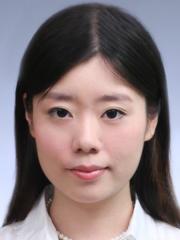
Noela Müller is an Assistant Professor in the Mathematics and Computer Science school at Eindhoven University of Technology . Her research focuses on Probability Theory , Random Matrices , and Random Graphs , with significant contributions to understanding the rank of sparse matrices and clique factors in probabilistic settings. Research Outputs : Published 22 works including journal articles and preprints. Collaborations : Active in international networks, particularly in sparse matrix analysis and probabilistic combinatorics. Her recent work explores sparse pooled data algorithms , random 2-SAT models , and sharp thresholds in random graphs , showcasing interdisciplinary applications in computer science, mathematics, and theoretical physics.
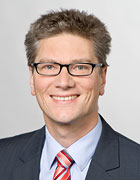
Dr. Yanjun Zhang is an Honorary Research Fellow at the School of Electrical Engineering and Computer Science, The University of Queensland. His research focuses on privacy-preserving technologies, federated learning, cybersecurity in IoT systems, and machine learning security. He holds a PhD in Privacy-Preserving Sharing for Genome-Wide Analysis from The University of Queensland (2021). Education: PhD in Information Technology, School of Information Technology and Electrical Engineering, The University of Queensland (2021) Research Interests: Designing secure collaborative machine learning frameworks Defending against adversarial attacks in cyber-physical systems Privacy preservation in distributed genomic and medical data analysis Compliance and ethics in virtual personal assistant applications Key Contributions: Developed privacy-preserving federated learning frameworks (AgrAmplifier, PrivColl) Conducted foundational studies on evasion attacks in IoT systems Created datasets for analyzing malicious browser extensions and Alexa skills Labs/Teams: Active contributor to UQ Cyber initiatives, including the 2021-2022 Seed Funding project on federated deep learning for medical imaging.
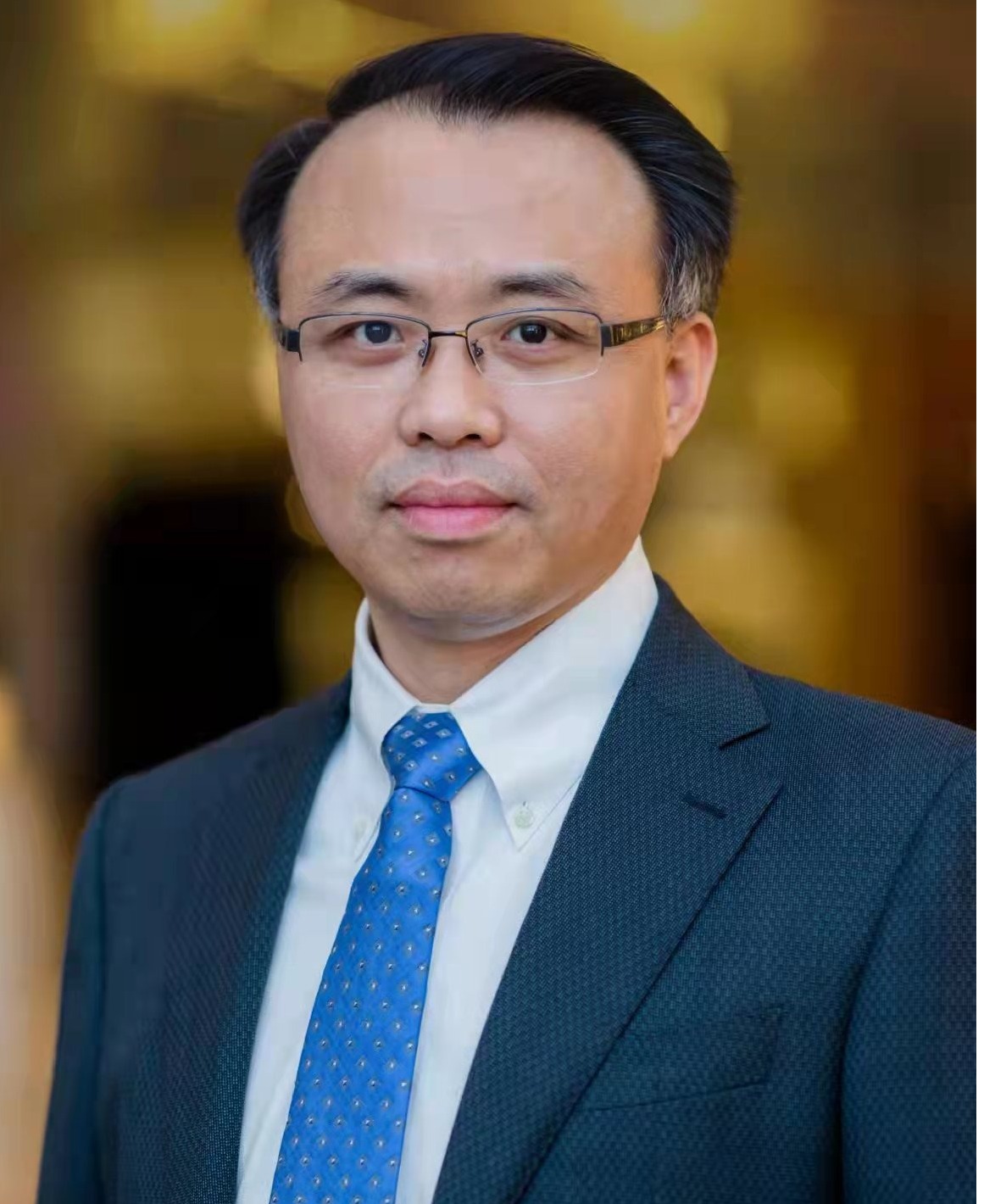
Loretta J. Mickley is a Senior Research Fellow at Harvard University's John A. Paulson School of Engineering and Applied Sciences. Her research focuses on chemistry-climate interactions in the troposphere , with key topics including wildfire smoke impacts, climate change effects on air quality, and aerosol-radiation interactions. Wildfire smoke and health impacts Climate-air quality feedbacks Aerosol trends and climate forcing Paleo atmospheric chemical cycles Recent research trends span wildfire risk modeling, biomass burning exposure, and air quality sensor optimization. Publications emphasize atmospheric transport , chemical feedbacks , and health disparities in regions like California, Australia, and the Amazon. Her work informs climate policy and public health interventions , particularly in environmental justice communities and rapidly urbanizing tropical regions. She co-leads Harvard's Atmospheric Chemistry Modeling Group .
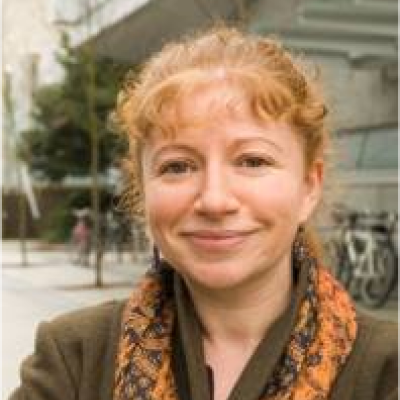
Dr. Fendy Santoso is a leading researcher and Cyber-Physical Lead at the Artificial Intelligence and Cyber Futures Institute, Charles Sturt University, Australia. He also holds a Visiting Fellow position at the School of Engineering and Technology, UNSW Canberra, and has held visiting roles at the University of Cambridge and Cranfield University. His work bridges cybersecurity, AI, and autonomous systems, with significant impact in UAV security and cyber-physical resilience. Education: PhD in Electrical Engineering, University of New South Wales (Awarded: 21 Jun 2012) Master of Electrical and Computer Systems Engineering, Monash University (Awarded: 07 Jun 2007) Dr. Santoso’s research focuses on adversarial machine learning, UAV security, intrusion detection in robotic systems, and cyber-secure digital twins. His work integrates AI, control theory, and cybersecurity to enhance the resilience of autonomous systems. He has pioneered research in securing ROS-based platforms and defending against GPS spoofing and DoS attacks in unmanned vehicles. His recent publications (2020–2025) highlight a strong trend in applying deep learning, fuzzy logic, and physics-informed models to detect and mitigate cyberattacks in UAVs and UGVs. Key themes include intrusion detection systems, secure digital twins for agriculture, and intelligent transportation systems enabled by drones. His work is frequently published in IEEE Transactions and top-tier conferences. Scientific Awards and Grants: Vice-Chancellor’s Distinguished Early Career Travel Fellowship, University of Wollongong (2019) ARC Linkage Project Grant (LP230100083) on adversarial machine learning for UAVs (2024) CSIRO-funded AgriTwins project on cyber-secure digital twins for agriculture (2024) Dr. Santoso has secured over AUD 3 million in competitive research funding and actively supervises postgraduate students. He serves as a reviewer for the Australian Research Council and technical program committees of major AI and engineering conferences. His collaborative work spans defence organisations like DSTG and the U.S. Army Ground Vehicle Systems Centre, as well as international academic institutions. He is a Senior Member of IEEE and leads research in labs focused on cyber-physical systems, autonomous robotics, and AI-driven security frameworks. His team develops real-time detection tools for cyberattacks on military and agricultural robots, contributing to critical infrastructure resilience.
Jim Chen is a Professor at the Department of Marine and Environmental Sciences and holds an affiliation with the College of Engineering's Civil and Environmental Engineering at Northeastern University. His research focuses on coastal engineering and science, emphasizing numerical modeling to address coastal resiliency and sustainability, particularly in the context of hurricanes and sea-level rise. Education details are not explicitly provided in the text, but his expertise includes advanced modeling techniques applied to coastal systems. His work integrates field observations with computational methods, such as deep learning and physics-informed neural networks, to analyze wave dynamics, sediment transport, and vegetation effects on coastal processes. Key research areas include hurricane impact analysis on wetlands and engineered infrastructure, living shoreline restoration effectiveness, and the morphological evolution of coastal systems. His studies often involve rapid deployment of sensors during storms (e.g., Hurricane Laura) to monitor wave, current, and sediment dynamics, contributing to disaster preparedness and mitigation strategies. Notable collaborations include projects with the Shinnecock Indian Nation, Gandys Beach (New Jersey), and Chesapeake Bay, focusing on sustainable coastal management. His work bridges engineering and environmental science to enhance coastal resilience in vulnerable regions.
Shuva Paul is a Researcher at NREL's Energy Security and Resilience Center , specializing in power systems cybersecurity . His work focuses on collaborative autonomy, computational intelligence, reinforcement learning, game theory, smart grid security , and critical infrastructure protection . Research Interests: Machine learning and deep learning for critical infrastructure systems Event and anomaly detection in power grids Supply chain cybersecurity Cyber-physical energy systems security and resilience Professional Experience: Postdoctoral Fellow, Georgia Institute of Technology (Feb 2021–May 2022) Postdoctoral Research Associate, Washington State University (Jun 2020–Jan 2021) Graduate Intern, NREL (May 2019–May 2020) Graduate Research Assistant, South Dakota State University (2016–2019) Education: PhD, Electrical Engineering, South Dakota State University Master of Electrical and Electronics Engineering, American International University - Bangladesh Bachelor of Electrical and Electronics Engineering, American International University - Bangladesh Advisory and Editorial Contributions: Paul has served as a session chair at IEEE EnergyTech (2013) and IEEE Electro Information Technology (2019) conferences, and as a reviewer for journals like IEEE Transactions on Smart Grid and Neurocomputing . He also acted as a guest editor for the Journal of Sensor and Actuator Networks .
Andrew Ho is an active academic researcher with publications spanning computer science, electrical engineering, and interdisciplinary applications. His recent work focuses on hybridizable discontinuous Galerkin methods for plasma simulations (2024) and AI/LLM applications in scholarly knowledge organization. 2025: Project Alexandria (LLM for copyright-free knowledge) 2024: Hybridizable DG plasma methods, GPU-accelerated kinetic simulations 2023: Low-resource translation techniques 2022: Multimodal VR interfaces 2003-2006: High-speed serial link transceivers and radiography artifact detection His research interests include: Computer science applications in plasma physics and medical imaging LLM-based scholarly knowledge graphs and literature reviews High-speed communication systems Educational technology implementations Co-authors include Vladimir Stojanovic (Stanford, 2003-2005), Carl W. Werner (2003-2005), and Genia Vogman (GPU plasma simulations, 2024).
Professor Weimin Huang is a full Professor in the Faculty of Engineering and Applied Science at Memorial University of Newfoundland, where he has served since 2010 and became a full professor in 2019. He held the position of Department Deputy Head from 2020 to 2023. Education: BSc in Radio Physics (Radio Wave Propagation and Antennas), Wuhan University, 1995 MSc in Radio Physics (Radio Wave Propagation and Antennas), Wuhan University, 1997 PhD in Space Physics, Wuhan University, 2001 MEng in Electrical and Computer Engineering, Memorial University of Newfoundland, 2004 Postdoctoral Fellowship in Electrical and Computer Engineering, Memorial University of Newfoundland, 2007 Research Focus: Huang specializes in radar-based ocean remote sensing , with core expertise in high-frequency ground wave radar (HF radar) , GNSS Reflectometry , and synthetic aperture radar (SAR) . His work targets ocean surface parameter mapping including wind speed, oil spills, ship detection, and sea ice monitoring through advanced digital image processing and applied electromagnetics . Recent innovations integrate deep learning (CNNs, physics-informed models) with radar data for enhanced environmental monitoring. Publication Trends: His 2025 publications reveal a strong shift toward AI-driven solutions in remote sensing, with 5 high-impact papers in IEEE TGRS and Remote Sensing focusing on wind speed estimation (using GNSS-R and wavelet-CNN hybrids), oil spill mapping via SAR, ship detection with HF radar, and climate change analysis. These works demonstrate cross-disciplinary integration of machine learning with geophysical remote sensing. Scientific Awards: No awards were documented in the source material. Advising & Collaboration: With 358 co-authors including Bahram Salehi and Biyang Wen, Huang maintains a robust global research network. While specific student supervision isn't listed, his leadership role and publication volume indicate active graduate mentoring. The text mentions no grant details. Research Infrastructure: His work operates within Memorial University's engineering faculty, leveraging radar facilities for ocean sensing. Collaborations span institutions including Wuhan University and SUNY, suggesting participation in international radar remote sensing consortia focused on maritime applications.
Eirik Valseth is an Associate Professor of Scientific Computing at the Norwegian University of Life Sciences (NMBU), Department of Data Science. He holds concurrent roles as a research associate at the Oden Institute, University of Texas at Austin, and an affiliated researcher at Simula Research Laboratory (Department of Numerical Analysis and Scientific Computing). His expertise lies in advanced finite element methods for PDEs with applications in flood modeling and hydropower systems. Current Affiliation: NMBU (Norwegian University of Life Sciences) Secondary Affiliations: Oden Institute (UT Austin), Simula Research Laboratory Research interests span numerical methods for challenging PDE systems, including: Stabilized finite element formulations Hurricane storm surge and riverine flood modeling Hydropower infrastructure analysis Computational mechanics and applied mathematics His recent publications (2024–2025) emphasize flood risk assessment (compound flooding, dam breaks, dredging impacts), advanced numerical methods (isogeometric analysis, stochastic finite elements, graph-grammar algorithms), and environmental applications (pollution transport, pathogen distribution, mosquito population dynamics after hurricanes). Key trends include cross-disciplinary integration of physics-aware machine learning and robust hydrodynamic simulation tools. Valseth's work extends to software development (e.g., WAVEx for spectral wave models, SWEMniCS for coastal circulation) and large-scale modeling frameworks like the ADCIRC unstructured mesh model for US coasts. Collaborative projects involve institutions such as University of Texas at Austin, Simula, and NOAA.
Dr. Rico Friedrich is a computational materials scientist leading the "Autonomous Materials Thermodynamics - AutoMaT" research group, jointly operated by the Chair of Theoretical Chemistry at Technische Universität Dresden and the Helmholtz-Zentrum Dresden-Rossendorf (HZDR). His work focuses on data-driven computational design of advanced materials for information technology and energy applications through the DRESDEN-concept research alliance. His research spans several cutting-edge areas: Discovery and design of 2D non-van der Waals materials with novel electronic and magnetic properties Data-driven modeling of high-entropy ceramics based on entropy maximization principles Development of computational methods for accurate thermodynamic stability prediction, particularly the coordination corrected enthalpies (CCE) method Applications of artificial intelligence in materials design Dr. Friedrich's publication record shows a strong trend toward computational materials discovery, with significant contributions to understanding non-van der Waals 2D materials and high-entropy ceramics. His work bridges theoretical developments with practical applications, resulting in publications in high-impact journals including Nature, Nano Letters, and Advanced Electronic Materials. His key scientific contributions include: Development of the coordination corrected enthalpies (CCE) method for accurate formation enthalpy calculations Creation of the AFLOW-CCE module implemented in the AFLOW software ecosystem Discovery of novel 2D non-van der Waals materials with ultra-low exfoliation energies Formulation of the disordered enthalpy-entropy descriptor (DEED) for high-entropy ceramics Dr. Friedrich actively mentors the next generation of materials scientists, currently supervising PhD students and postdoctoral researchers in his AutoMaT lab. His research group collaborates extensively within the DRESDEN-concept research alliance, leveraging computational resources and expertise across multiple institutions to advance materials science and engineering.
Prof. Dr. Franz Pfeiffer is a full professor at the Chair of Biomedical Physics within the Department of Physics at the Technical University of Munich (TUM) . He has served as director of the Munich School of BioEngineering since 2016. His research focuses on translating advanced X-ray physics concepts to biomedical imaging and clinical applications, particularly for early cancer and osteoporosis diagnostics. Research Interests: X-ray phase-contrast and dark-field imaging, synchrotron instrumentation, CT reconstruction algorithms, and medical imaging technology. Awards: Alfred Breit Prize (2017) ERC Advanced Grant (2016) Leibniz Prize (2011) National Latsis Prize (2010) ERC Starting Grant (2009) His work bridges fundamental X-ray physics with clinical translation, involving collaborations with radiologists, engineers, and medical researchers. Recent publications emphasize AI integration in CT, dark-field chest radiography, and spectral imaging applications.
Zhu Yan serves as Professor at Tsinghua University's School of Economics and Management, Department of Management Science and Engineering. He concurrently holds leadership positions as Dean of Tsinghua's Internet Industry Research Institute, Director of the Advanced Information Technology Business Application Laboratory, and Executive Deputy Director of the Medical Management Research Center. Education: Postdoctoral Fellow (1998-2000) and Ph.D. in Nuclear Energy Technology (1994-1998) at Tsinghua University, Bachelor's in Engineering Physics (1989-1994) Professional Experience: Professor (2010-present), Associate Professor (2002-2010), Lecturer (2000-2002); Visiting Scholar at MIT Sloan, CUHK, and Lancelot Institute Professor Zhu's research spans digital transformation , industrial blockchain , and digital production relations , with emphasis on practical applications in healthcare, construction, and finance. His work bridges theoretical frameworks with industry implementation, particularly in China's digital economy evolution. Current projects focus on industrial internet integration and digital finance systems. His 15 most recent publications demonstrate strong interdisciplinary focus, connecting information systems with healthcare analytics (40%), industrial digitalization (35%), and economic policy (25%). The research shows increasing emphasis on AI-driven diagnostic systems and pandemic-responsive economic strategies since 2020. Beijing Philosophy and Social Sciences Excellent Achievement Award (2020) China Petroleum and Chemical Automation Association Science and Technology Progress Award (2010) Multiple Beijing Science and Technology Progress Awards (2001, 2005) Tsinghua University Outstanding Teaching Award (1999) As academic advisor to national initiatives, Professor Zhu leads the China Technology Economics Society's Blockchain Division and serves as Chief Academic Officer for Chengdu University of Information Technology's Blockchain Industry College. His industry partnerships include SAP Global HR Advisory role since 2000 and CCTV Financial Commentary position since 2015. Current research funding focuses on digital infrastructure development through the Industrial Digital Finance Technology Application Laboratory. He directs the Advanced Information Technology Business Application Laboratory, which develops enterprise digital transformation frameworks, and co-leads the Medical Management Research Center's AI diagnostic initiatives. Current projects include national blockchain infrastructure development and pandemic-resilient supply chain systems.
Markus Lange-Hegermann serves as Professor of Mathematics and Data Science at Ostwestfalen-Lippe University of Applied Sciences (TH OWL) since 2018 and holds a board position at the Institute for Industrial Information Technology (inIT). His career bridges academic research and industrial applications, with expertise in translating machine learning theory into practical engineering solutions for automation and manufacturing sectors. His educational foundation includes a Diplom (Master equivalent) in Computer Mathematics from RWTH Aachen University (2004-2008) followed by a Dr. rer. nat. (PhD equivalent) in algorithmic differential algebra (2008-2014). Prior to academia, he gained industry experience at FEV GmbH as an R&D engineer (2014-2017) and P3 automotive GmbH as a Data Science Consultant (2017-2018). Lange-Hegermann's research centers on probabilistic machine learning with distinctive emphasis on physics-informed approaches. He develops Gaussian process methodologies that incorporate differential equations to model time dependencies, uncertainties, and physical constraints in industrial systems. His work enables robust data-based modeling and optimization for cyber-physical systems, with applications spanning predictive maintenance, process control, and quality assurance in manufacturing. Analysis of his 15 most recent publications (2024-2025) reveals consistent innovation in physics-integrated machine learning, particularly using Gaussian processes to solve partial differential equations and optimal control problems. The research demonstrates strong industrial applicability across domains including medical imaging, material science, automotive engineering, and brewing processes, with recurring themes of anomaly detection in time-series data and uncertainty-aware decision making. His scientific contributions have earned significant recognition: Forschungspreis TH OWL (2024) Top reviewer award at NeurIPS (2023) Outstanding reviewer award at NeurIPS (2021) Best poster award at Bosch AI CON (2019) Borchers Plakette for outstanding dissertation (2014) Springorum Denkmünze for outstanding diploma (2009) As chairman of the Data Science study program and vice chairman of undergraduate examination boards, Lange-Hegermann actively shapes academic curricula while supervising graduate theses. His governance roles include serving on professorship search committees at multiple institutions and contributing to examination regulations. He maintains active research funding through collaborations with industrial partners and reviews proposals for initiatives like It's OWL and 3IA Côte d’Azur. Lange-Hegermann leads the Mathematics and Data Sciences research group within inIT, fostering collaboration between theoretical machine learning and industrial automation. He co-founded AICOmmunityOWL and the Informatics Europe working group on Data Analysis and Reporting, while organizing machine learning reading groups and data science hackathons to bridge academic research with industrial problem-solving.
Alla Sheffer is a Professor and Associate Head of Faculty Affairs in the Department of Computer Science at the University of British Columbia, Faculty of Science. She is affiliated with multiple research centers including CAIDA (Centre for Artificial Intelligence Decision-making and Action), the Institute of Applied Mathematics, and ICICS (Institute for Computing, Information and Cognitive Systems). B.Sc., Hebrew University, Jerusalem (1991) M.Sc., Hebrew University, Jerusalem (1995) Ph.D., Hebrew University, Jerusalem (1999) Postdoctoral Research Associate, University of Illinois, Urbana-Champaign (1999-2001) Assistant Professor, Technion, Israel (2001-2003) Assistant Professor, University of British Columbia (2003-2008) Associate Professor, University of British Columbia (2008-present) Professor Sheffer's research focuses on geometry processing, addressing algorithmic challenges in digital shape modeling and manipulation. Her work primarily deals with discrete geometry representations, specifically meshes (polygonal model representations), with applications in computer graphics and computer-aided engineering. She utilizes tools from computational and differential geometry, discrete mathematics, and graph theory to generate, manipulate, and edit discrete geometric models. Her research spans virtual and augmented reality, visual computing, and 3D modeling, with significant contributions to sketch-based modeling, mesh processing, and cloth simulation. The 15 most recent publications reveal a consistent research trajectory in geometry processing, with recent work focusing on vector sketch processing, VR drawing tools, and advanced mesh manipulation techniques. Her work demonstrates a strong connection between human perception and computational methods, particularly in the interpretation of freehand sketches and the generation of perceptually-accurate geometric representations. The recurring themes across her publications include flowlines, curve networks, mesh parameterization, and the application of perceptual studies to improve algorithmic outputs. Eurographics Fellow ACM Fellow IEEE Fellow Royal Society of Canada Fellow SIGGRAPH Academy Member UBC Killam Research Prize NSERC Discovery Accelerator Supplement IBM Faculty Award Professor Sheffer has supervised numerous doctoral and master's students, with recent theses focusing on geometric mesh processing, vector sketch interpretation, VR drawing tools, and garment modeling. Her research group maintains strong connections with industry through various partnerships and has received substantial grant funding to support their innovative work in geometry processing and computer graphics. She teaches courses in computer graphics, geometric modeling, and video game programming, contributing significantly to both undergraduate and graduate education in computer science.
Massimo Franceschetti is a Professor in the Department of Electrical and Computer Engineering at the University of California, San Diego (UCSD), with faculty affiliation at Calit2. His research spans mathematical engineering, focusing on control, communication, computation, and sensing, particularly in complex networks and systems. He integrates tools from statistical physics, wave propagation, and information theory to analyze and design networked systems. Born in Naples, Italy, he studied at the University of Naples Federico II and the University of Edinburgh (European exchange program), graduating in 1997. He earned his M.Sc. (1999) and PhD (2003) from Caltech, where he received the Walker von Brimer Award and the C.H. Wiltz Prize for outstanding research and thesis. After postdoctoral work at UC Berkeley (2003-2004), he joined UCSD as faculty and held visiting positions at Vrije Universiteit Amsterdam, EPFL (Switzerland), and the University of Trento (Italy). He became an IEEE Fellow in 2018 and was nominated a Guggenheim Fellow in 2019. His research includes networked control systems , stochastic geometry , electromagnetic information theory , and social dynamical systems . Recent work explores non-invasive emotional contagion in social networks, quantum limits on information entropy, and the physics of wave propagation. His publications bridge information theory , machine learning , and network science , often applying percolation theory and random walks to explain scaling laws and wireless signal behavior. Scientific accolades include the S.A. Schelkunoff Transactions Prize , IEEE Communications Society Best Tutorial Paper Award , and the IEEE Ruberti Young Researcher Prize . He co-authored two books: Random Networks for Communication (2007) and Wave Theory of Information (2018). His students have pursued careers in academia (e.g., IIT-Bombay, Notre Dame) and industry (e.g., Google, IBM, Tesla). He teaches courses on network science , information theory , and control systems , emphasizing data-driven analysis and the physical foundations of communication. His group’s work impacts cyber-physical systems , quantum network coding , and epidemic modeling on networks .