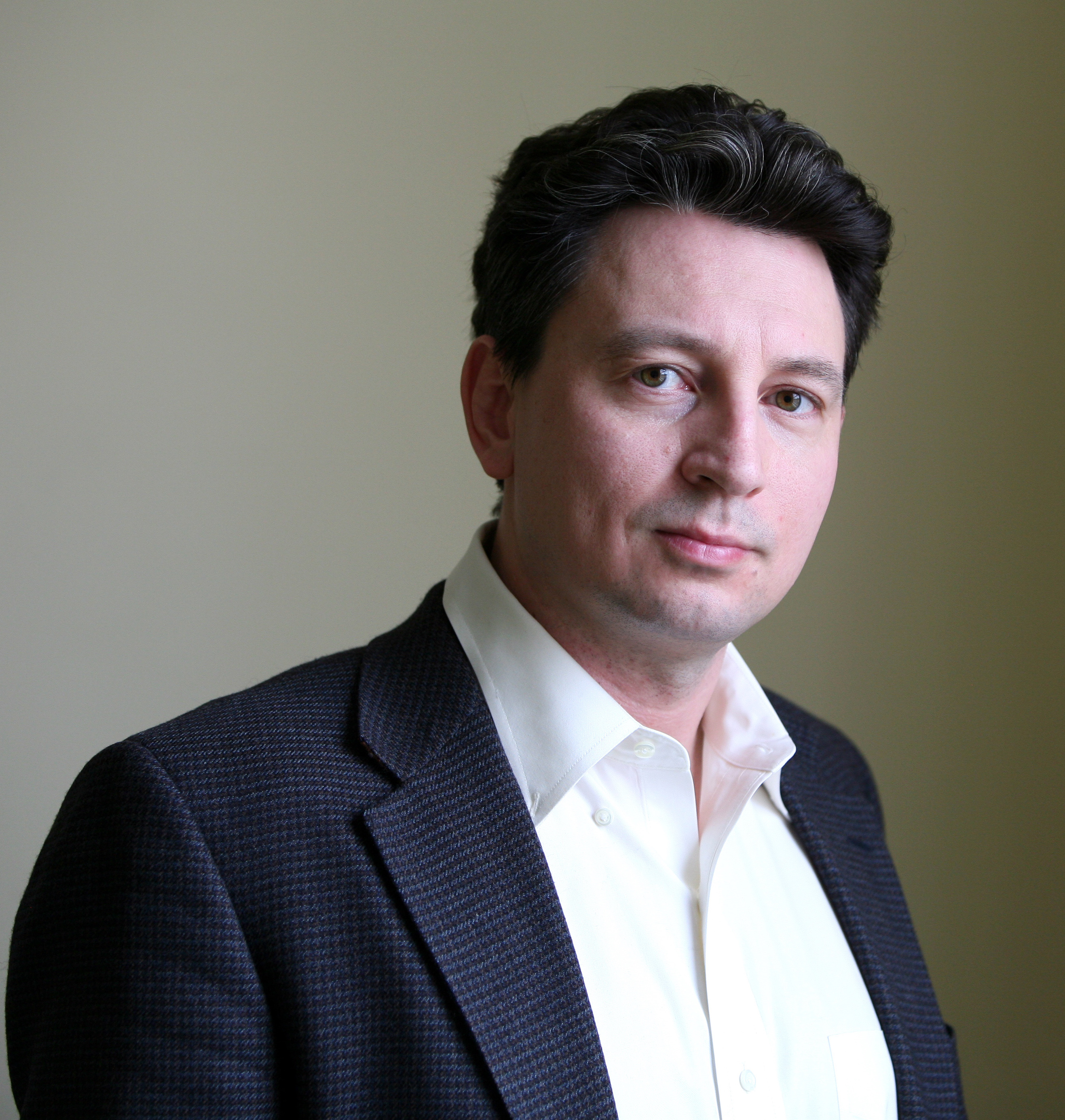
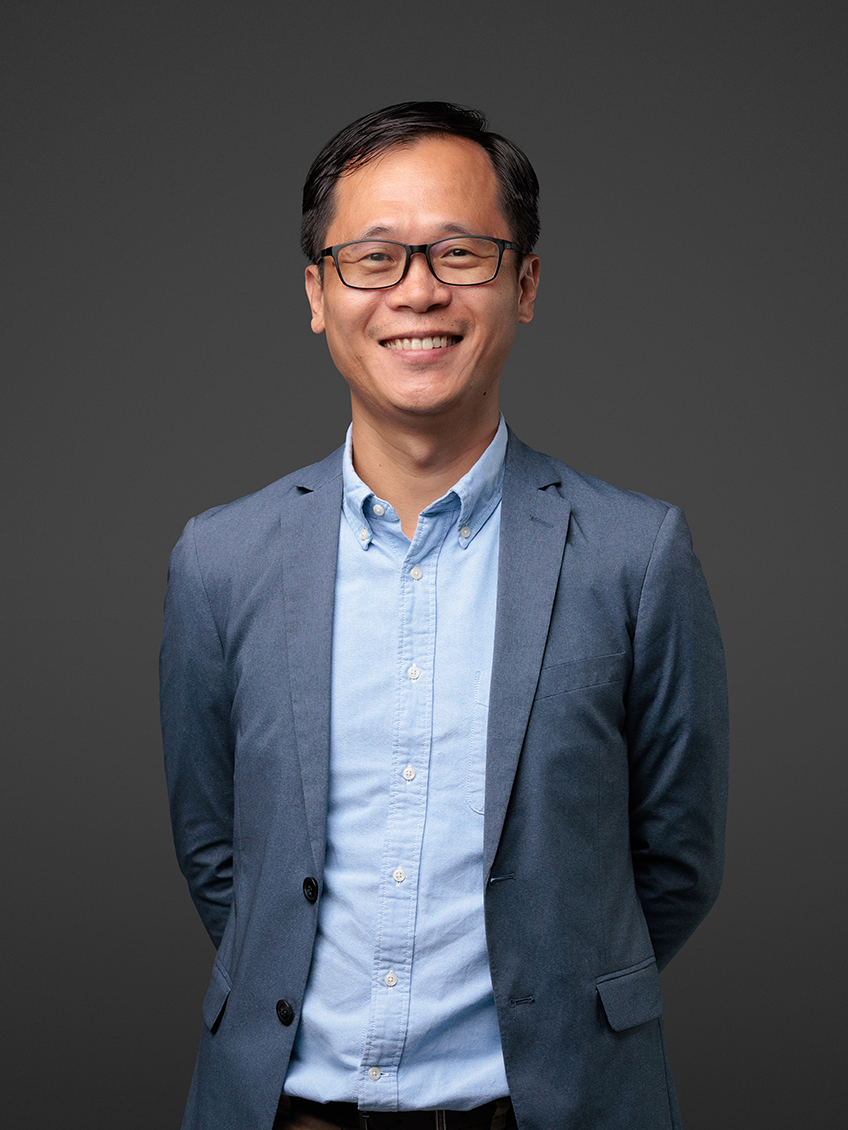
Karim ZKIK is an Associate Professor of Cyber Security and Information Systems at ESAIP Graduate School of Engineering, Angers, France. Previously, he served as an Assistant Professor at the International University of Rabat (UIR), Morocco. His roles include Educational Manager of the Cyber Security track, Head of the Cybersecurity Innovation Hub, and committee member for ABET certification and curriculum design. He actively contributes to academic service, organizing conferences such as the International Conference on Cryptology, Coding Theory, and Cyber Security (I4CS 2022), and serves as a Guest Editor for Computers and Industrial Engineering . His research focuses on cybersecurity for connected systems, blockchain technologies, AI-driven security solutions, and cyber resilience in industrial control systems. Recent work explores integrating blockchain and machine learning for threat detection, secure IoT networks, and supply chain resilience. Key contributions include frameworks for cyber resilience in retail and airlines, blockchain-based crowdfunding security, and SDN-based attack mitigation. ZKIK holds a Habilitation (2024) and PhD in Cyber Security from Université d’Angers and Mohamed V University, Rabat. He holds over 20 certifications from EC-Council, IBM, and Cisco. His work bridges theoretical research and industry applications, addressing challenges in smart environments, industrial systems, and sustainable supply chains.
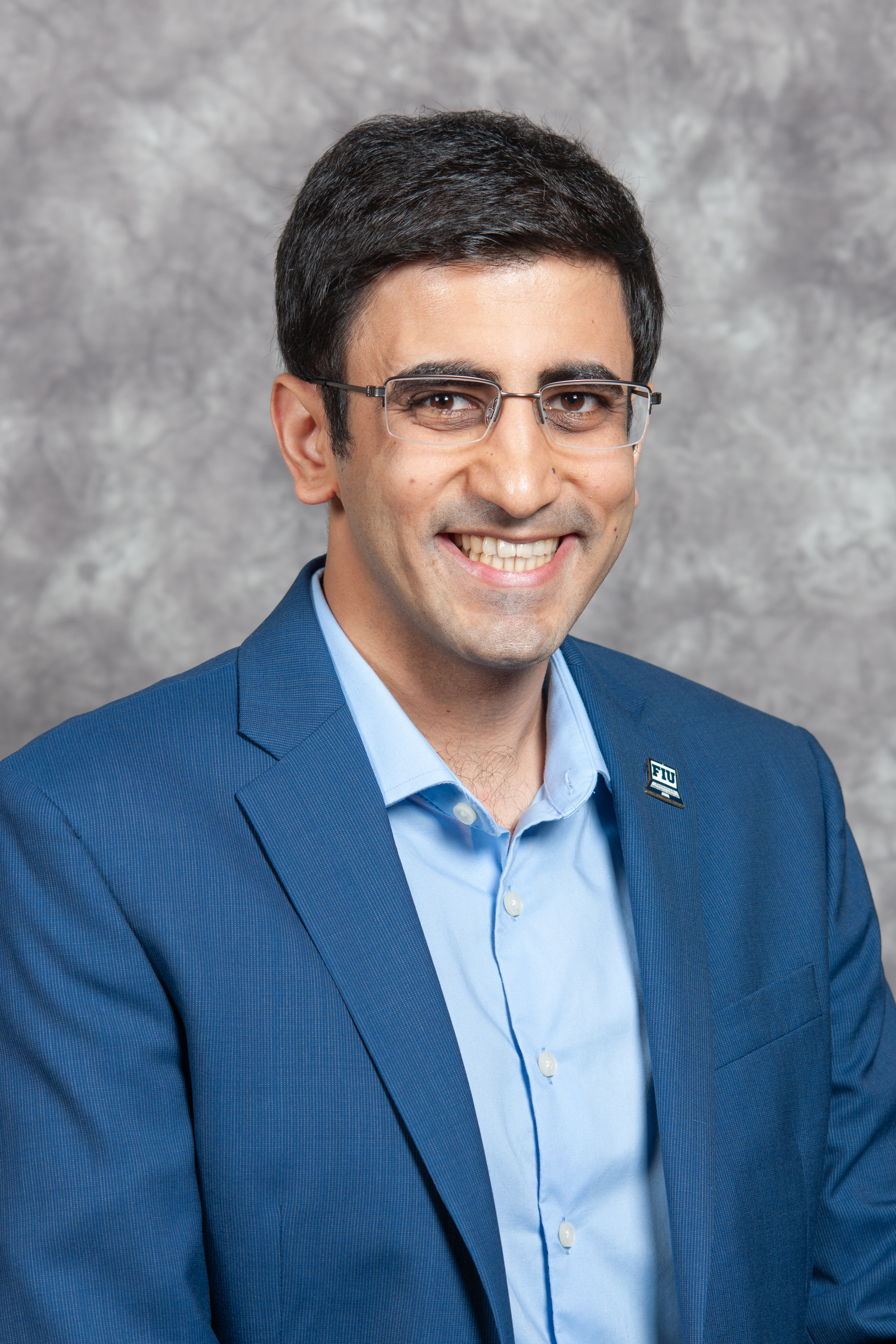
M. Hadi Amini is an Assistant Professor at Florida International University's Knight Foundation School of Computing and Information Sciences. He founded and directs the Sustainability, Optimization, and Learning for InterDependent networks (SOLID) laboratory, focusing on cyber-physical-social systems and distributed AI applications. Ph.D., Electrical and Computer Engineering (2019), Carnegie Mellon University M.Sc., Electrical and Computer Engineering (2015), Carnegie Mellon University M.Sc. (2013), Tarbiat Modares University B.Sc. (2011), Sharif University of Technology His research spans federated learning, interdependent network optimization, and AI applications in smart cities , energy systems , and healthcare . Recent work emphasizes privacy-preserving techniques, quantum encryption, and blockchain integration for secure distributed learning. The 15 most recent publications highlight trends in large language models , edge computing , medical imaging security , and infrastructure resilience , with interdisciplinary emphasis across computer science, systems engineering, and urban planning. Best Paper Award, IEEE Conference on Computational Science & Computational Intelligence (2019) Best Journal Paper Award, Springer Nature Operations Research Forum (2021) Excellence in Teaching Award, FIU (2020) Multiple Best Reviewer Awards, IEEE Transactions NSF Travel Awards (2019) As Associate Editor for Frontiers in Communications and Networks and book series editor for Sustainable Interdependent Networks , he actively shapes research discourse. His lab has secured $3.6M in federal/state funding for AI-driven infrastructure projects.
Andrew D. Selbst is a Professor of Law at UCLA School of Law and currently serves as the William J. Friedman and Alicia Townsend Friedman Visiting Professor of Law at Harvard Law School. He has been on the UCLA faculty since 2020 and previously held positions as a Postdoctoral Scholar at the Data & Society Research Institute and a Visiting Fellow at Yale Law School's Information Society Project. He has also taught as an Adjunct Professor at Fordham Law School. Professor Selbst received his educational training from prestigious institutions: S.B. in Physics and Electrical Science and Engineering from MIT (2004) M.Eng. in Electrical Engineering and Computer Science from MIT (2005) J.D. from the University of Michigan Law School (2011) Before entering academia, Professor Selbst worked as a design engineer at Cirrus Logic and Analog Devices. Following law school, he served as a Privacy Research Fellow at NYU School of Law's Information Law Institute, an Alan Morrison Supreme Court Assistance Fellow at Public Citizen Litigation Group, a Senior Associate in Hogan Lovells US LLP's Communications group, and clerked for federal judges including the Honorable Dolly M. Gee and the Honorable Jane R. Roth. Professor Selbst's research examines the complex relationship between law, technology, and society. Drawing on resources from computer science, sociology, and science and technology studies, he seeks to understand how technologies interfere with existing legal regimes and how legal actors can respond to the social effects of new technology. His recent work has focused specifically on the effects of machine learning and artificial intelligence on various legal domains, including discrimination law, policing practices, credit regulation, data protection frameworks, and tort law. His interdisciplinary approach combines technical understanding of AI systems with deep legal analysis to address emerging challenges in the digital age. Professor Selbst teaches courses in torts, information privacy and data protection, a seminar on law, technology and society, and beginning in 2025, a dedicated course on Artificial Intelligence Law. His publications have appeared in leading law journals including Boston University Law Review, California Law Review, Harvard Journal of Law and Technology, and University of Pennsylvania Law Review, as well as in the ACM Conference on Fairness, Accountability and Transparency. He is also the coauthor of a forthcoming casebook on Artificial Intelligence Law. His scholarly contributions demonstrate a consistent focus on the intersection of emerging technologies and legal frameworks, with particular attention to how AI systems create novel challenges for established legal doctrines. Professor Selbst's work has been influential in shaping academic and policy discussions around AI regulation, algorithmic accountability, and the adaptation of legal systems to technological change.
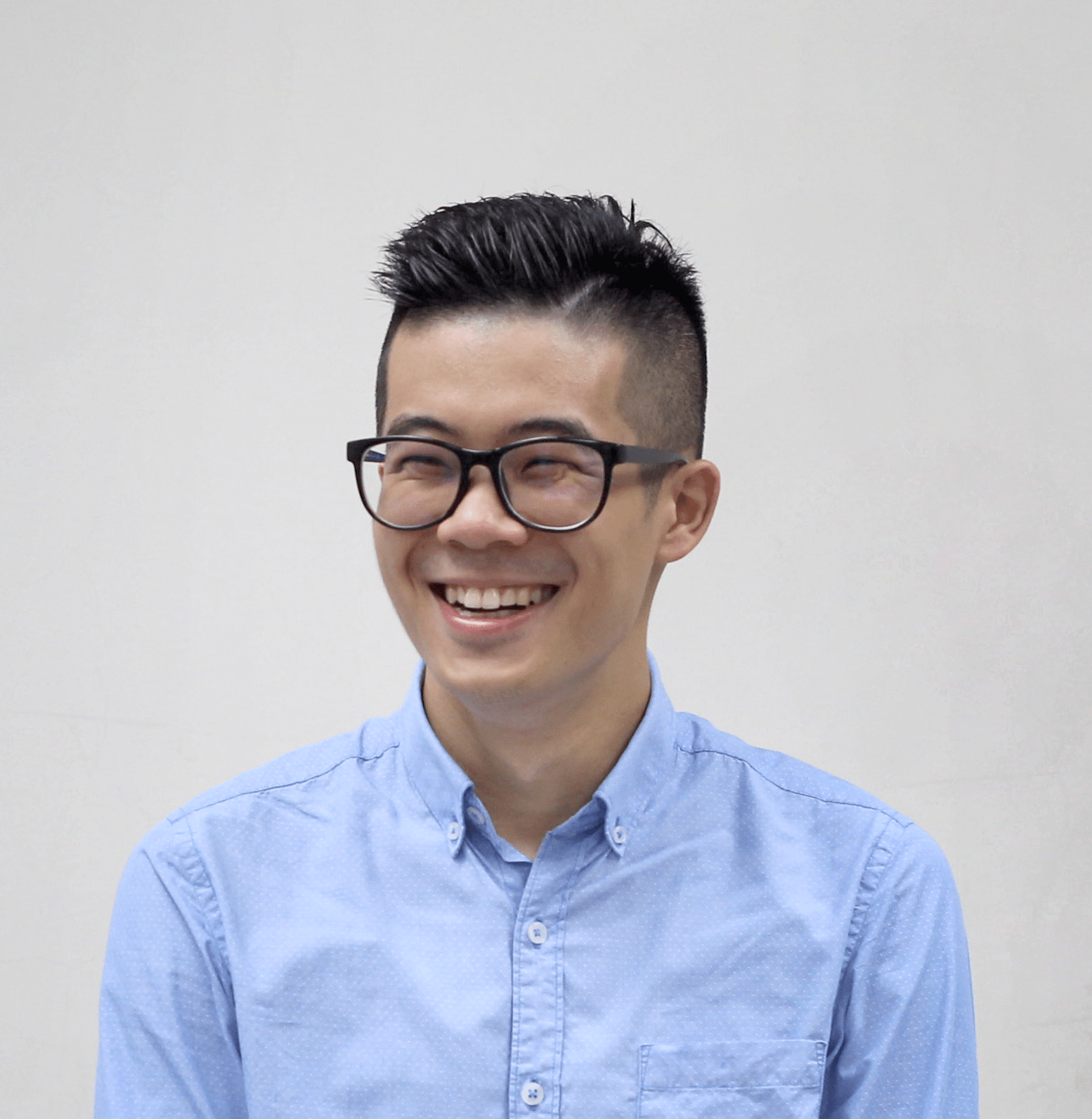
Yi-Chi Liao is a postdoc researcher at ETH Zürich under the SIP Lab, funded by the ETH Zürich Postdoc Fellowship Programme. He holds a PhD from Aalto University (supervised by Prof. Antti Oulasvirta) and Master's/Bachelor's degrees from National Taiwan University. His research focuses on computational interaction, human-in-the-loop optimization, and biomechanical simulation. He has contributed to over 14 top-tier publications in venues like CHI, UIST, and TiiS. Education: PhD in Computer Science, Aalto University (Finland) Master's in Computer Science, National Taiwan University Bachelor's in Computer Science, National Taiwan University Research Interests: Advances in HILO frameworks for adaptive systems, human-AI co-design, and biomechanical motion simulation. His work integrates reinforcement learning, Bayesian optimization, and computational modeling to enhance interactive systems. Publications: Over 14 papers in top HCI venues, emphasizing optimization techniques, tactile interfaces, and 3D interaction. Recent work includes meta-Bayesian optimization for wrist-based interactions and real-time target inference via biomechanical simulation. Awards: CHI 2022 Honorable Mention, multiple outstanding review recognitions, and the ETH Postdoc Fellowship. He serves on program committees for CHI, UIST, and TEI. Teaching: Delivered lectures on Bayesian statistics, deep learning, and computational design at Aalto and NTU. Served as a teaching assistant for HCI and computer architecture courses. Labs: Active in the Human-Computer Interaction Lab (Saarland University), SIP Lab (ETH Zürich), and collaborations with Meta Reality Labs.
Alexander D Maloney serves as the Kathy and Stan Walters Endowed Professor of Quantum Science and Director of the Institute for Quantum and Information Science at Syracuse University's College of Arts and Sciences, Department of Physics. His leadership bridges theoretical physics and quantum information science through institutional and research initiatives. His academic foundation includes a Ph.D. in Physics from Harvard University (2003) with dissertation "Time-Dependent Backgrounds of String Theory," complemented by dual B.Sc. and M.Sc. degrees in Physics and Mathematics from Stanford University (1998). Maloney's research centers on quantum gravity and information theory, exploring black hole physics through string theory frameworks. His work connects quantum field theory, cosmology, and information paradox resolution, with particular focus on wormhole geometries, resurgence phenomena, and holographic dualities. This interdisciplinary approach examines how quantum information principles shape spacetime structure. Recent publications reveal evolving emphasis on Narain ensemble statistics, modular invariance applications, and quantum cosmology in reduced dimensions. His 2020-2025 output demonstrates methodological progression from semiclassical gravity to non-perturbative quantum gravity techniques, increasingly integrating machine learning concepts with theoretical frameworks. His scientific recognition includes: James McGill Professor at McGill University (2023) Sir William Macdonald Chair in Physics at McGill University (2020) Maloney secures major research funding including NSERC Discovery Grants (2015-2020, 2020-2025) and Simons Foundation's "It from Qubit" collaboration (2015-2022). He actively shapes academic discourse through search committee leadership, journal reviewing (Journal of High Energy Physics since 2007), and international conference organization at Aspen Center for Physics and Institute for Advanced Study. As Director of Syracuse's Institute for Quantum and Information Science, he cultivates collaborative research environments exploring quantum gravity applications to quantum computing and cosmological modeling.
Yannis Kevrekidis is a Professor at Princeton University with a distinguished career in computational mathematics and chemical engineering. He is currently a Hans Fischer Senior Fellow at the Technical University of Munich (TUM-IAS) and has held visiting positions at institutions like the Zuse Institute Berlin and Caltech. Education : National Technical University of Athens (Chemical Engineering) University of Minnesota (PhD in dynamical systems) Research Interests : Equation-Free and Variable-Free Modeling Complex Systems Dynamics Multiscale Computation Integration of Machine Learning with Scientific Computing Pattern Formation & Instability Analysis Key Article Trends : Advanced data-driven modeling of dynamical systems Manifold learning for reaction coordinates Projective integration methods Coarse-grained modeling across disciplines Applications in epidemiology, neuroscience, and fluid dynamics Scientific Awards : Guggenheim Fellowship Humboldt Research Award Computing in Chemical Engineering Award (AIChE) Bodossaki Academic Award Allan P. Colburn Award Collaborations : Extensive international collaborations with institutions in Germany, Austria, and the UK Key role in the Complex Systems Modeling and Computation focus group at TUM-IAS
Adam Bouland is an Assistant Professor of Computer Science at Stanford University, affiliated with the CS Theory Group. He holds a Ph.D. from MIT (advised by Scott Aaronson), followed by postdoctoral research at UC Berkeley and the Simons Institute for the Theory of Computing (advised by Umesh Vazirani). His research focuses on quantum computing theory, computational complexity, and their connections to physics. He teaches courses such as Quantum Complexity Theory (CS 359D) and Quantum Computing (CS 259Q), and has advised numerous doctoral, master’s, and postdoctoral researchers. His research group includes Tamara Kohler (postdoc), Shaun Datta, Jack Zhou, Jordan Docter, and Chenyi Zhang (doctoral students), among others. Bouland’s work bridges quantum algorithms, entanglement theory, and complexity theory, with contributions to quantum supremacy, pseudorandomness, and holographic principles. Recent highlights include studies on BosonSampling hardness, AdS/CFT duality constraints, and efficient quantum compilation. He has served on program committees for FOCS 2019, QIP 2020, STOC 2023, and ITCS 2025. His research is supported by grants including the NSF CAREER Award for exploring quantum pseudorandomness and complexity frontiers.
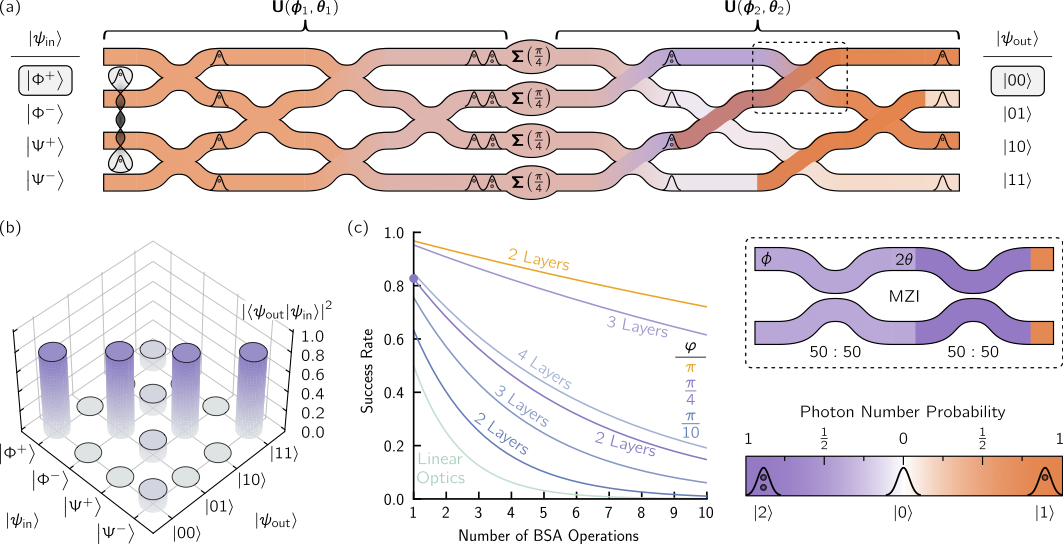
Bhavin J. Shastri is an Assistant Professor in the Department of Physics, Engineering Physics and Astronomy at Queen's University in Canada. His research explores the physics of light for computing , pushing frontiers in information and signal processing through photonic computing and quantum/neuromorphic photonics . He is affiliated with the Centre for Nanophotonics and NUCLEUS , a pan-Canadian photonic computing program funded by NSERC CREATE, bridging artificial intelligence and quantum information . Canada Research Chair & Principal Investigator Faculty Affiliate at Vector Institute (2020-) Editorial Board Member of JPhys Photonics (2019-) Member of IEEE Photonics Society Technical Affairs Council (2019-) Visiting Researcher Scholar at Princeton University (2018-) Shastri Lab members have access to world-class shared facilities, including the Centre for Nanophotonics (CFI-Innovation Fund), Nanofabrication Kingston , the Centre for Advanced Computing , and the Digital Research Alliance of Canada . The lab takes an interdisciplinary approach combining nanophotonics with complex systems on emerging substrates. His research focuses on silicon photonics , nanophonic processors , and photonic integrated circuits with applications to deep learning , nonlinear programming , and quantum information science . His articles show consistent exploration of quantum photonic neural networks , photonic memory systems , and optical signal processing for machine learning and quantum technologies . 2020 IUPAP Young Scientist Prize in Optics 2014 Banting Postdoctoral Fellowship 2012 D. W. Ambridge Prize 2011 IEEE Photonics Society Graduate Student Fellowship 2011 NSERC Postdoctoral Fellowship Multiple Best Student Paper Awards Shastri's lab supervises Ph.D. candidates and postdoctoral fellows working on quantum photonics , neuromorphic computing , and photonic AI systems . His recent work includes photonic tensor cores for scientific computing , quantum photonic neural networks , and all-optical memory systems. Shastri Lab designs programmable nanophotonic processors with potential to outperform microelectronic processors in energy efficiency and computational speeds by seven and four orders of magnitude respectively. Their work spans from device design to system-level implementations in optical computing for machine learning and quantum information processing .
Juan Felipe Carrasquilla Álvarez is an Assistant Professor in the Department of Physics at the University of Toronto. His research focuses on the intersection of condensed matter physics, quantum computing, and machine learning, emphasizing quantum many-body systems, quantum device validation, and phase identification. He holds affiliations with the Acceleration Consortium and the Centre for Quantum Information and Quantum Control at the University of Toronto, and is a Perimeter Institute Visiting Fellow. Education: PhD in Physics from SISSA (Italy), followed by postdoctoral fellowships at Georgetown University (2011-2013), the Perimeter Institute (2013-2016), and a stint as a Research Scientist at D-Wave Systems Inc. Earlier, he completed the Abdus Salam ICTP Diploma Programme (2005-2006). Research interests span quantum Monte Carlo simulations, machine learning-driven analysis of quantum systems, and applications to quantum computing validation. His work bridges theoretical physics with computational methods, addressing challenges in both classical and quantum computing paradigms. Notable contributions include developing neural network architectures for quantum state reconstruction, error mitigation in quantum simulations, and optimal control strategies for quantum thermal machines. His publications explore topics like topological order detection, shadow tomography, and hybrid quantum-classical algorithms. Awards/Fellowships: Perimeter Institute Postdoctoral Fellowship (2013-2016), Georgetown University Postdoctoral Fellowship (2011-2013), SISSA PhD Fellowship (2006-2010), and Abdus Salam ICTP Diploma Programme Fellowship (2005-2006). Advising/Grants: No formal advisee list provided. Active in interdisciplinary collaborations through affiliations with major quantum research consortia and institutions. Lab/Teams: Part of the Acceleration Consortium and the Centre for Quantum Information and Quantum Control, contributing to cutting-edge quantum computing and machine learning research.
Di Zhou is a Researcher specializing in aerospace engineering and fluid dynamics, focusing on turbulence modeling, aeroacoustics, and computational fluid dynamics (CFD). His work integrates advanced numerical methods such as large-eddy simulation (LES) with machine learning techniques like reinforcement learning to address challenges in wall modeling and flow prediction. Current affiliations are not explicitly stated, but his research involves collaborations in turbulence, rotor noise, and high-Reynolds-number flows. Research interests span turbulent boundary layers, adverse pressure gradients, and rotor aeroacoustic response. He has pioneered the application of multi-agent reinforcement learning for wall modeling in LES, advancing accuracy in simulating complex flows over periodic hills and Gaussian bumps. His studies also explore optimal sensor placement for lift prediction under gust loads and noise generation mechanisms in rotor systems. Recent trends in his publications highlight machine learning-driven turbulence modeling, sensitivity analysis of LES closure models, and computational analysis of rotor ingestion noise. Despite no listed awards, his work contributes significantly to both fundamental fluid dynamics and applied aerospace problems. No specific advising roles or labs are mentioned, but his research likely involves collaboration with experimental and numerical groups in aerodynamics and acoustics.
Ping Zhong is an Associate Professor in the Department of Mathematics at the University of Houston. He previously served as an Assistant Professor at the University of Wyoming (2018-2024). He earned his Ph.D. in Mathematics from Indiana University Bloomington under the supervision of Hari Bercovici. His research focuses on free probability theory, random matrix theory, operator algebras, and their applications to high-dimensional statistics and machine learning. He actively mentors graduate and undergraduate students interested in these areas. Dr. Zhong's work bridges pure mathematics and applied domains, with contributions to spectral analysis, quantum information, and stochastic processes. His recent research explores outlier eigenvalues, Brown measure analysis, and superconvergence phenomena in free probability. He organizes the Analysis Seminar at UH and has been involved in conferences like the RMMC Summer School 2022 on free probability and applications. While no specific awards are mentioned, his extensive publication record indicates sustained academic contribution. He seeks motivated students for collaborative research projects in his areas of expertise.
David E. Breen is a Professor in the Department of Computer Science within the College of Computing & Informatics (CCI) at Drexel University. He leads the Geometric Biomedical Computing Group and is affiliated with the Metadata Research Center and the Center for Biological Discovery from Big Data. His research spans interdisciplinary domains including biomedical image informatics, geometric modeling, textile modeling, and bio-inspired self-organization algorithms. Education: PhD, Computer and Systems Engineering, Rensselaer Polytechnic Institute MS, Computer and Systems Engineering, Rensselaer Polytechnic Institute BA, Physics, Colgate University His research interests focus on computational methods for biomedical applications, including shape and image analysis for cancer diagnosis, 3D reconstruction of biological tissues, and video analysis of animal behavior. He also investigates geometric modeling techniques for textiles and self-organizing systems. His work integrates computer science with biology, medicine, and engineering to solve complex problems in biomedical computing. The recent publications highlight a strong trend in computational modeling of textiles, biomedical image informatics, and AI-driven data analysis. Key themes include geometric modeling of knitted fabrics, deep learning for medical image classification, agent-based modeling of cancer metastasis, and metadata generation for biological image collections. His work bridges fundamental geometric algorithms with practical applications in healthcare and digital archives. Scientific Awards: No specific awards mentioned in the provided text. Breen has advised numerous students and collaborators across multiple domains, particularly in biomedical computing and textile modeling. His research has been supported through affiliations with major centers and collaborations with institutions such as Johns Hopkins University and the Max Planck Institute. He has been involved in projects related to NSF Center for Visual & Decision Informatics and has contributed to over 100 technical publications. He leads the Geometric Biomedical Computing Group , which conducts research at the intersection of biology, medicine, engineering, and computer science. The group develops algorithms and software for geometry-related computing problems in biomedical applications. Collaborations include the Drexel Integrated Laboratory for Cellular Tissue Engineering, Dr. Dan Marenda's Lab, and Dr. Aleister Saunder's Lab in Drexel's Biology Department.
Victor Galitski is a Professor of Physics at the University of Maryland and a Fellow of the Joint Quantum Institute (JQI). He holds two PhDs in applied mathematics and condensed matter physics, joined UMD in 2002 as a postdoc, and became a faculty member in 2005. His research focuses on theoretical physics and quantum information science, with notable contributions to quantum chaos, superconductivity, and topological materials. He co-founded Aspen Quantum Consulting and ScienceCast.org, and serves as an Honorary Professor at Monash University and an editor for Annals of Physics . Galitski’s educational efforts include authoring ' Exploring Quantum Mechanics ' (Oxford Press) and teaching a Coursera MOOC on quantum physics (enrolled by 200,000+ students). His research interests span quantum spin glasses, hydrodynamic turbulence, Floquet topological insulators, and cavity quantum electrodynamics. Over 20 former students and postdocs now hold academic or industry leadership roles. Key scientific contributions include studies on Many-Body Quantum Chaos, quantum spin ice in Rydberg atom arrays, and the interplay of symmetry breaking in vertex models. His work frequently explores connections between quantum systems and machine learning, such as neural networks’ analogies to spin glass behavior. Galitski’s affiliations include leadership roles in the Ultra-Quantum Matter Simons Collaboration, the Institute for Robust Quantum Simulation, and the Aspen Center for Physics. He has published extensively on topics like cavity-enhanced superconductivity and quantum ergodicity, with recent work addressing universal speed limits in quantum systems and interacting anomaly effects in thermal transport.
Chen Binbin is an Associate Professor and Associate Head of Pillar (Innovation and Enterprise) in the Information Systems Technology and Design (ISTD) pillar at Singapore University of Technology and Design (SUTD). He serves as Deputy Director for the Future Communications Research and Development Programme (FCP), Singapore. Previously, he was a Principal Research Scientist at the Advanced Digital Sciences Center (now Illinois ARCS), affiliated with the University of Illinois. Education: PhD in Computer Science from National University of Singapore, and Bachelor's from Peking University. Research focuses on wireless networking, distributed systems, and cyber security for critical infrastructures like smart grids and industrial control systems. His work addresses secure communications, intrusion detection, and resilience against cyber-physical threats. Notable contributions include error-estimating coding, provenance verification in ICS, and AI-driven network security solutions. Key awards include the 2010 ACM SIGCOMM Best Paper Award for error-estimating coding research. His grants span agencies like Singapore's National Research Foundation (NRF), Cyber Security Agency (CSA), and Energy Market Authority (EMA). He leads projects on secure smart grid communication, industrial control system defense, and AI-enhanced cybersecurity tools. Technical leadership involves developing frameworks like CyberSAGE for security assessment and CMD for IoT malware detection. Active in collaborations with industry and government, his work bridges theory and practice in securing critical infrastructure systems.
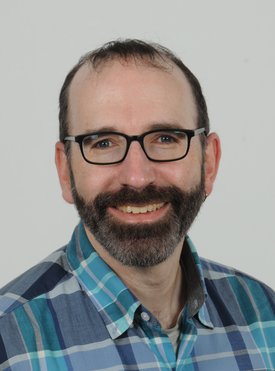
Alexander Refsum Jensenius is a Professor of Music Technology and Director of the RITMO Centre for Interdisciplinary Studies in Rhythm, Time and Motion at the University of Oslo. He also leads the fourMs Lab and co-founded the MishMash Centre for AI and Creativity. His work bridges musicology, psychology, and technology, focusing on embodied music cognition, human motion analysis, and creative applications of AI. Notably, he pioneered research on air guitar motion and human micromotion through projects like the Oslo Standstill Database . Educated at the University of Oslo (BA in Music and Mathematics, MA in Musicology) and Chalmers University of Technology (MSc in Applied IT), Jensenius holds a PhD in Music Technology from UiO. He has held visiting researcher roles at UC Berkeley, McGill University, and KTH. Leadership roles include Department of Musicology Head (2013–2016) and Steering Committee Chair for the International Conference on New Interfaces for Musical Expression (NIME, 2011–2022). Research interests span music-related body motion, AI in creative contexts, and open research practices. Key contributions include the Music Moves and Motion Capture MOOCs, the Musical Gestures Toolbox software, and monographs like Sound Actions and Sonic Design . His work emphasizes interdisciplinary collaboration, with projects addressing ventilation systems' acoustic properties and cell culture vibrational effects. Awards include the European Open Data Champion recognition. He advocates for open science and maintains extensive digital archives of research materials, emphasizing institutional web pages as critical research infrastructure.