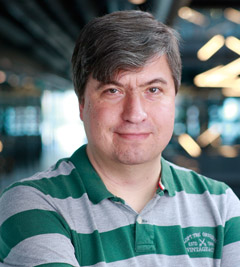
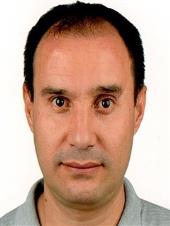
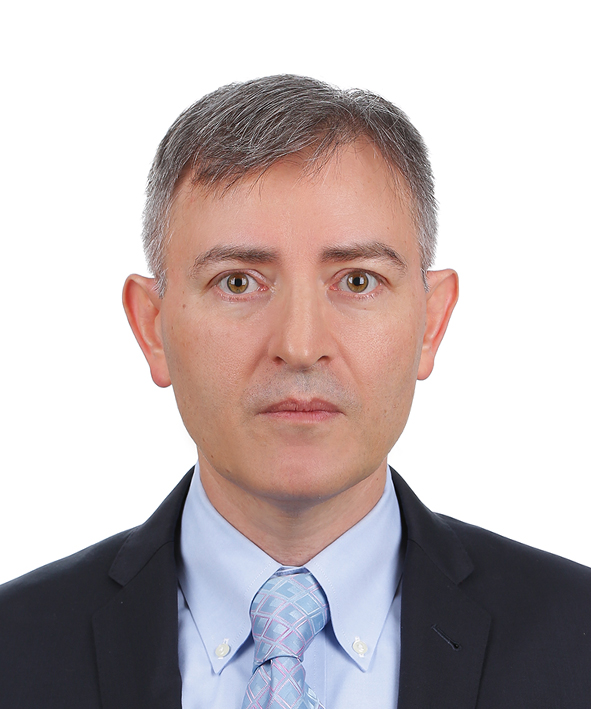
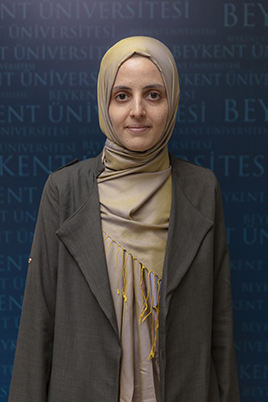
Celal Cem Sarioglu is an active academic faculty member at the Department of Mathematics, Faculty of Science, Dokuz Eylul University. He serves as the Graduate Program Coordinator and is frequently involved in departmental academic and career events as a moderator, speaker, and mentor. His academic engagement reflects a strong focus on modern computational methods in mathematics, particularly at the intersection of machine learning and scientific computing. He promotes student research and graduate education, often organizing and participating in seminars related to TÜBİTAK projects, artificial intelligence, and career development. His research interests include Scientific Machine Learning, Physics-Informed Neural Networks, and Applied Mathematics. He has contributed to academic outreach by moderating and hosting events on topics such as AI transformation, cryptography, actuarial science, and graduate education pathways. Celal Cem Sarioglu plays a key role in mentoring undergraduate and graduate students, particularly in research proposal development and career planning. He collaborates with faculty members and alumni to bridge academic training with professional opportunities. He is affiliated with the Mathematics Department’s academic team and supports initiatives in education innovation, student research, and interdisciplinary applications of mathematics.
Emine Ulku Saritas is an Associate Professor at Bilkent University, affiliated with the Department of Electrical and Electronics Engineering and the National Magnetic Resonance Research Center (UMRAM) . Her work bridges biomedical engineering, medical imaging, and advanced instrumentation. Research Interests: Dr. Saritas specializes in Magnetic Resonance Imaging (MRI) and Magnetic Particle Imaging (MPI) , focusing on novel contrast mechanisms , high-resolution imaging , and artificial intelligence applications for diagnostic imaging. Her research spans hardware design, algorithm development, and biomedical translation. Publication Trends: Recent work emphasizes deep learning for artifact correction , microfluidic nanoparticle analysis , hybrid imaging systems , and physics-informed models for medical imaging. Collaborative efforts include multimodal imaging and nano-platform development for photothermia and diagnostics. Laboratory & Collaborations: She contributes to the National Magnetic Resonance Research Center (UMRAM) and the Aysel Sabuncu Brain Research Center, advancing brain imaging technologies and magnetic fluid hyperthermia .
Prof. Dr. Ceylan Onay Şahin is a Professor at Boğaziçi University. Her academic background includes: Undergraduate : Business Administration, Marmara University MBA : Koç University Ph.D. : Business Administration (Finance), Boğaziçi University Her research explores the intersection of finance and technology, with key interests in: Corporate finance strategies and financial innovation Technology-driven banking solutions (mobile/internet banking) Credit scoring systems in big data environments Financial integration within European and emerging markets Impacts of foreign direct investments on productivity Recent publications (2011–2018) focus on digital banking adoption, cryptocurrency, credit risk modeling, and European financial markets, often using Turkey as a case study. Her work appears in journals like the International Review of Financial Analysis and conferences such as IBIMA and ECIS. No scientific awards, grants, supervised students, or lab affiliations are mentioned in available sources.
Assoc. Prof. Dr. Sergey Borisenok is an Associate Professor at the Department of Electrical and Electronics Engineering, Faculty of Engineering and Natural Sciences, Abdullah Gul University, Turkey (since 2014). He holds additional roles as Head of the Department of Mathematical Modeling at Modern Information Technologies, LCC (since 2013) and has served as Visiting Professor at institutions including Universiti Putra Malaysia (2013) and Government College University, Lahore (2004–2012). His academic career spans associate professorships at leading Russian institutions like Herzen State University (2002–2010) and St. Petersburg Polytechnical University (2003–2004 part-time). Education includes a Ph.D. in Theoretical Physics from St. Petersburg State University (1996), focusing on quantum field theory applications to turbulent energy spectra. Earlier, he earned his MSc in Statistical Physics (1993). His postdoctoral research included stints at Weizmann Institute of Science (Israel) and Herzen State University. Research interests revolve around quantum systems control, neuromorphic computing, and biomedical applications. Key areas include quantum batteries, superconducting qubit dynamics, epilepsy modeling via Hodgkin-Huxley networks, and quantum sensing algorithms. His work integrates control theory, statistical physics, and machine learning to address challenges in quantum technologies and neural systems. Publications emphasize innovative control algorithms for quantum systems and neuro-inspired models, with recent focus on reservoir computing networks and feedback mechanisms in quantum batteries. His contributions bridge theoretical physics with applied engineering, particularly in precision sensing and neuromorphic hardware.
Birgül Arslanoğlu is a Researcher at the Department of Sociology, Istanbul Technical University. Her research focuses on urban planning, sports facility management, data analysis, and maritime safety, with applications in complexity theory and public policy. Key research areas include optimizing sports facilities in urban areas using metric entropy, predicting seafarer safety through machine learning, and evaluating physical fitness parameters for firefighters and youth athletes. She has published in interdisciplinary journals, integrating spatial information systems and public demand analysis into urban development strategies. No academic awards or grants are explicitly mentioned in the provided texts. She has not listed advisees or lab affiliations in the data provided.
Murat Okatan is an Associate Professor at Istanbul Technical University's Informatics Institute, Department of Computational Science and Engineering. He previously held academic positions at Cumhuriyet University in Electrical and Energy, Biomedical Engineering, and Mechatronics Engineering departments, and served in administrative roles including Department Chair, Head of Discipline, and Vice Dean. He received his PhD from Boston University and completed postdoctoral research at Ankara University and Boston University. PhD, Boston University MS, Syracuse University BS, Boğaziçi University (Dual Degree: Physics and Electrical-Electronics Engineering) His research lies at the intersection of computational neuroscience, neural signal processing, and biomedical engineering. He specializes in extracellular neural recordings, spike detection, brain-machine interfaces, and statistical modeling of neural data. His work includes developing automated thresholding techniques such as truncation thresholds for spike detection, analyzing subthreshold motor cortical activity, and modeling hippocampal place cells using Zernike polynomials. His recent publications focus on statistical significance testing in receptive field estimation and improving signal-to-noise ratio in neural recordings. His recent publications reveal a strong focus on statistical methods in neural data analysis, particularly in spike detection and receptive field modeling. He has developed and refined truncation threshold methods for more accurate action potential identification. His work bridges theoretical statistics with practical applications in brain-computer interfaces and neural decoding. He has also contributed to open-source tools, including Python code for parameter estimation in truncated distributions. YÖK Akademik Teşvik Ödeneği (2016, 2017) 2232 Postdoctoral Return Fellowship, TÜBİTAK (2011) Best Oral Presentation Award, 6th National Neuroscience Congress (2007) Best Oral Presentation Second Prize, 8th National Neuroscience Congress (2009) Presidential University Graduate Fellowship, Boston University (1997) High Honor Degree, Boğaziçi University (1995) Murat Okatan has supervised research projects funded by TÜBİTAK, the Turkish Higher Education Council, and international agencies including NIH, NSF, and ONR. He has served as a project executive and researcher in multiple scientific initiatives, including the Neuroscience and Neurotechnology Excellence Center (NÖROM). He has also acted as a guest editor for the Turkish Journal of Electrical Engineering and Computer Sciences . His lab focuses on developing computational tools for neural data analysis, with applications in brain-machine interfaces and neuroprosthetics. He is a member of several professional societies, including IEEE, IEEE Signal Processing Society, Society for Neuroscience (SFN), Brain Research Society (BAD), and Turkish Biophysics Society. His research group develops algorithms for real-time neural signal processing and contributes to national and international collaborative efforts in computational neuroscience.
Mehmet Merkepçi serves as an Assistant Professor in the Department of Computer Engineering at Gaziantep University's Faculty of Engineering, Turkey. Holding a Doctorate in Electrical and Electronic Engineering (2017), he has maintained continuous academic affiliation with the university since 2007 through progressive roles from Research Assistant to his current position. Academic Background: Doctorate (2017): Gaziantep University, Institute of Science, Electrical and Electronic Engineering Master's (2009): Gaziantep University, Institute of Science, Electrical and Electronics Engineering Bachelor's (2000): Karadeniz Technical University, Faculty of Engineering, Electrical-Electronic Engineering Merkepçi's research demonstrates exceptional interdisciplinary breadth with core emphasis on Cryptography and Artificial Neural Networks . His recent work pioneers neutrosophic number theory applications in public key cryptography, significantly advancing RSA and El Gamal algorithms. Parallel research trajectories include biomedical signal processing using photoplethysmography for non-invasive monitoring systems, and textile engineering innovations in fabric porosity and air permeability analysis. This multifaceted approach bridges theoretical mathematics with practical engineering solutions across diverse domains. Publication analysis reveals 10 journal articles concentrated in 2022-2025, with cryptographic research constituting 60% of recent output. The remaining publications demonstrate sustained engagement in biomedical engineering (20%) and textile science (20%), indicating strategic diversification while maintaining cryptographic expertise as the research cornerstone. This distribution reflects deliberate specialization in security-critical applications alongside targeted explorations of neural network implementations in physical systems. Merkepçi teaches advanced courses including Security Engineering and Occupational Safety at graduate level, and foundational undergraduate instruction in Computer Programming, Database Management, and Engineering Mechanics. His administrative service includes Department Vice Chairman (2020-present) and former Department Head (2020-2024), demonstrating institutional leadership alongside research and teaching responsibilities.
Celal Cem Sarıoğlu is an Assistant Professor in the Department of Mathematics at Dokuz Eylul University, Faculty of Science. He is actively involved in academic and career development events, serving as a moderator, speaker, and coordinator, particularly in initiatives related to graduate education and student research projects. His academic engagement spans diverse areas including applied mathematics, scientific machine learning, and the use of artificial neural networks in solving differential equations. He also contributes to discussions on cryptography, actuarial science, and AI applications, reflecting a broad interdisciplinary interest within mathematical sciences. Dr. Sarıoğlu plays a key role in guiding students through TÜBİTAK 2209 research projects and serves as the Graduate Program Coordinator for the Mathematics Department, facilitating the transition from undergraduate to graduate studies. He has participated in and led multiple career events covering topics such as AI transformation, generative AI, cryptography, and actuarial careers, demonstrating strong mentorship and outreach activities.
Dr. Elmas Burcu Mamak Ekinci is a Lecturer in the Computer Engineering Department at Başkent University. Holding a PhD in Statistics (2011) from Ankara University, she has 15+ years of academic experience. PhD (2011), Ankara University Master's (2005), Ankara University Bachelor's (2001), Ankara University Her research focuses on statistical analysis applied to ergonomics , emergency medicine , digital transformation , and consumer behavior . Recent work includes multi-criteria decision-making approaches for evaluating physical workload and digital performance metrics. Publications span journals like Pain Medicine , Ergonomics , and Journal of Supercomputing , with a current H-index of 2. Her methodological expertise includes fuzzy logic , nonparametric statistics , and data-driven decision frameworks . She has served as a referee for IJOCTA (2024) and contributed to textbook chapters on fuzzy EDAS methods and biostatistical principles .
Burcu ÖREN ÖZER is a Lecturer at Trakya University, currently in the International Relations Office since 2024. She has held multiple academic and administrative roles at the university, including positions in research centers for environmental problems, technology transfer, and social responsibility. She holds a Bachelor's in Linguistics (Hacettepe University, 2007), a Master's in English Language and Literature (Namık Kemal University, 2019), and is pursuing a PhD in Business Administration at İstanbul Gelisim University. Her research spans sustainable tourism, green consumerism, and digital transformation. She investigates cross-border cooperation in tourism, service quality in education, and AI applications in green marketing. Her work emphasizes practical solutions for vocational education and community development. Recent publications show a focus on sustainability and digital innovation, with book chapters on green consumerism and AI in marketing, and conference papers on tourism, education, and environmental ethics. Her studies often address Balkan regional contexts. ÖREN ÖZER has managed grants including a UNESCO project on digital transformation and quality education (2021-2024) and has spoken on grant programs at national medical congresses. She serves on several university advisory boards.
N. Ziya Perdahçı is an Associate Professor at Bogazici University, specializing in Management Information Systems . His research focuses on network science applied to social, educational, and business contexts, including stochastic block models, customer segmentation, and digital platform analysis. He teaches courses in programming, databases, and business application development. Education: Undergraduate: Bogazici University, Physics M.A.: Bogazici University, Physics Ph.D.: Bogazici University, Physics Research Interests: Stochastic Block Models Statistical Social Network Analysis Customer/Product Segmentation Technology Adoption Users’ Interconnectedness Analytics Social Network Correlations Patents: Electricity generation device (TR 2007 07104B, 2007) Ceramic sliced helical heater (24466, 1990) His recent work explores digitalization in art (NFTs, Metaverse), technology acceptance models for website analysis, and co-purchase behavior in e-commerce. He has published extensively on network-based theories in education, healthcare, and cloud computing environments. He collaborates frequently with Mehmet Nafiz Aydin and Kenan Kafkas on interdisciplinary projects combining physics principles with information systems research. His book chapters cover metadata action networks and big data analytics frameworks.
Gülay ÇİÇEK is an Assistant Professor in the Department of Biomedical Engineering at Beykent University's Faculty of Engineering and Architecture. She also serves as a Doctor Lecturer in the Electronics and Automation Department at Beykent University's Vocational School (2025) and in the Electrical and Electronic Engineering Department at Altınbaş University's Faculty of Engineering and Natural Sciences (2023). Her academic career includes roles as a Research Assistant (2019-2021) and Doctor Lecturer at Beykent University since 2021. Assistant Professor | Department of Biomedical Engineering, Beykent University (2021-present) Doctor Lecturer | Electronics and Automation Department, Beykent Vocational School (2025) Doctor Lecturer | Electrical and Electronic Engineering Department, Altınbaş University (2023) Research Assistant | Software Engineering Department, Beykent University (2019-2021) Her research focuses on applying machine learning to biomedical challenges, including medical image processing and neurological disorder analysis . She has explored data mining applications for clinical guidelines in diabetes management, demonstrating interdisciplinary expertise combining AI techniques with healthcare systems . Her publications highlight trends in computational healthcare solutions, with recent work on fake news detection algorithms (2024) and longitudinal studies on diabetes medication optimization (2017). These works intersect AI, healthcare informatics, and clinical decision-making. Scientific Recognition 2014 High Honor Certificate from Fatih University Gülay has contributed to multiple scientific books and book chapters, including works on Convolutional Neural Networks for Medical Image Processing (CRC Press, 2022) and Neurological Disorders and Imaging Physics (IOP Publishing, 2020). She has industry experience as a Software Development Specialist (2015) and Freelance Engineer (2018-2019) at Digital Trade Software.
Assoc. Prof. Murat GEZER (Istanbul University, Faculty of Science, Computer Science Department) is a prominent academic with expertise in artificial intelligence, machine learning, computer vision, and medical informatics. His career spans multiple universities including Istanbul University (2024-), University of Health Sciences (2023-2024), and Kadir Has University (2020-2021). He holds a Ph.D. in Electrical-Electronics Engineering (2014) and a Master's in Informatics (2007). Education: Ph.D. in Electrical-Electronics Engineering (Istanbul University, 2014), Master's in Informatics (2007), B.Sc. in Astronomy & Space Sciences (Ege University, 1997) Research interests focus on AI applications in healthcare (e.g., carotid disease prediction, diabetes management), deep learning for image processing (embryo segmentation, skin lesion analysis), and interdisciplinary work connecting technology with ecological concerns. He has contributed to explainable AI frameworks for climate analysis and advanced recommender systems. His publications span climate modeling, medical imaging, game analytics, and educational technology. He has served as journal editor (2021-), book editor , and conference reviewer . His patents include smart diabetes and wood diagnosis systems. Current roles involve Deputy Head of Computer Science Department and Erasmus Coordinator at Istanbul University.
Cihan Bayraktar is a Lecturer at Karabük University's Eskipazar Vocational School, specializing in Information Security Technology . He holds a PhD in Management Information Systems (2017-2022) and a Master’s in Business Administration (2014-2016), with a BA in Computer Education and Instructional Technologies (2002-2006). Research Interests include data management, cybersecurity, AI technologies, and smart manufacturing systems. His work focuses on applying machine learning to industrial processes, energy optimization, and secure machine-to-machine communication . Recent publications examine blockchain for factory security and automated ML in agricultural classification. Scientific Contributions feature 15+ publications, including 2025 studies on dry-wet wear analysis using ML models employee resignation prediction algorithms AI in graphic design agencies . He received the 97.Yıl En Başarılı Doktora Tez Ödülü in 2023. Bayraktar collaborates on projects like ANOMALYNET (TÜBA/TÜBİTAK funded, 2015-2018) and serves on editorial boards for journals like Gazi University Journal of Science . His current roles include Head of Department and Vice Director at Eskipazar Vocational School.
Şener Özönder is a Full-time Associate Professor at Bogazici University, leading the Özönder Lab. His research focuses on AI agents, large language models, computer vision, and AI applications in drug discovery, materials science, and industrial cost prediction. He oversees a computing infrastructure with two 4U GPU servers (6 NVIDIA RTX 4090 GPUs) and a NAS storage system. His research interests include AI-accelerated drug discovery, nanomaterials design via AI/quantum mechanics, and on-device AI agents for real-time API interactions. Key projects include an AI-based drug discovery platform (TÜBİTAK-funded), EU-funded EUPilot for AI accelerator chips, and cloud-based battery monitoring systems (BatteLLIGENCE). Özönder advises four MS students on topics such as LLM agents and cost prediction from engineering drawings. His work bridges physics-inspired AI models with computational quantum mechanics, reflecting his background in both theoretical physics and modern AI applications. Recent projects span nano-material discovery (TÜBİTAK 3501), automotive cost estimation (TÜBİTAK 1711), and vulnerability analysis in post-quantum cryptography (TÜBİTAK BİLGEM). His articles explore AI-driven materials discovery, quantum dot design, and high-energy physics phenomena like gluon saturation and azimuthal correlations in collider experiments. The lab’s infrastructure supports large-scale simulations and machine learning workloads, with a focus on interdisciplinary innovation.