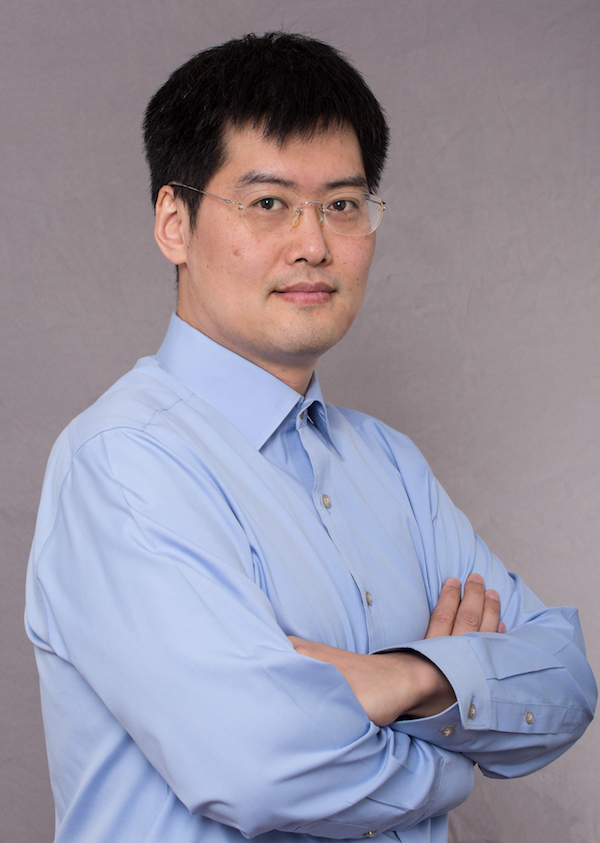
El Mahdi Chayti is a doctoral researcher at the École Polytechnique Fédérale de Lausanne (EPFL), affiliated with the School of Computer and Communication Sciences and the Department of Computer Science. He works under the Machine Learning and Optimization (MLO) lab, focusing on advanced optimization techniques and machine learning theory. Contact: el-mahdi.chayti@epfl.ch . Current Roles: Doctoral Assistant and PhD Student in Computer and Communication Sciences Research Interests: Machine Learning, Optimization Algorithms, Meta-learning, Second-order Optimization, Energy Forecasting His publications highlight expertise in stochastic and cubic Newton methods, hybrid deep learning models, and personalized collaborative learning. Recent works include Improving Stochastic Cubic Newton with Momentum (2025) and Hybridization of Deep Learning with Physical Knowledge for Energy Forecasting (2019) . Key trends in his research span optimization efficiency , meta-learning frameworks , and integration of domain knowledge into AI models. He emphasizes theoretical guarantees and practical scalability in algorithm design.
Reinhard Heckel is a Tenured Associate Professor (equivalent to Professor) of Machine Learning at the Department of Computer Engineering, Technical University of Munich (TUM), and Adjunct Faculty in Electrical and Computer Engineering at Rice University. He was previously an Assistant Professor at Rice (2017–2019), a postdoc in the Berkeley Artificial Intelligence Research (BAIR) Lab at UC Berkeley, and a researcher at IBM Research Zurich. Education: PhD, 2014 – ETH Zurich Visiting PhD student – Department of Statistics, Stanford University Research Interests: His work centers on machine learning and information processing with three major thrusts: (1) developing algorithms and theoretical foundations for deep learning, especially for accelerated magnetic resonance imaging ; (2) establishing rigorous mathematical and empirical underpinnings for modern machine-learning systems; and (3) leveraging DNA as a digital information-storage medium , including error-correction coding and system design for DNA-based storage. Across more than 100 peer-reviewed papers since 2017, Heckel’s research exhibits a strong interdisciplinary blend of computational imaging , machine-learning theory , and molecular data storage . Recent 2024–2025 publications show intensive focus on robust MRI reconstruction using diffusion priors, evaluation of bias in large web-text corpora, and state-of-the-art error-correcting codes for DNA storage channels. A forthcoming book, Deep Learning for Computational Imaging (Oxford University Press), consolidates his contributions to the field. Outreach & Media: Keynote and panel talks at DLD, TUM, and major ML conferences Op-eds in Frankfurter Allgemeine on ChatGPT and DNA storage Science features on Netflix, BBC, and German television (Galileo, “Gut zu Wissen”) Research Environment: At TUM he leads a group investigating theoretical and applied aspects of deep learning, compressed sensing, and coding for DNA storage. Open-source repositories on GitHub (e.g., dna_data_storage , supplement_deep_decoder ) provide code and data supplements accompanying his publications.
Natalia Díaz Rodríguez is an Assistant Professor of Artificial Intelligence at ENSTA ParisTech, where she works in the Computer Science and Systems Engineering department within the Autonomous Systems and Robotics Lab (U2IS). She is also affiliated with the INRIA Flowers team, focusing on developmental robotics. Her research spans deep learning, reinforcement learning, continual learning, and symbolic AI, with applications in explainable AI, computer vision, and robotics for social good. Her academic background includes a double PhD in Artificial Intelligence from Abo Akademi University and the University of Granada, alongside MSc degrees in Soft Computing and Computer Engineering from the University of Granada. She contributes to interdisciplinary AI, particularly in robotics, ethics, and healthcare applications, and co-organizes workshops on continual learning. Double PhD in Artificial Intelligence (2015), Abo Akademi University and University of Granada Doctoral diploma on Innovation and Entrepreneurship (2017), EIT Digital MSc in Soft Computing and Intelligent Systems (2012), University of Granada MSc in Computer Engineering (2010), University of Granada Her recent publications focus on trustworthy AI, including bias identification, counterfactual explanations, and continual learning strategies, reflecting her commitment to ethical and robust AI systems. She also explores AI applications in structural engineering, climate visualization, and financial risk assessment, emphasizing practical deployment and interpretability.
Florent Krzakala is a Full Professor at École polytechnique fédérale de Lausanne (EPFL) in Switzerland, holding positions across multiple departments including the School of Basic Sciences (SB), School of Engineering (STI), and specifically within the Department of Physics (IPHYS) and Department of Electrical Engineering (IEM). He leads the Information, Learning and Physics Laboratory (IdePHICS) and maintains an office at ELD 239, Station 11, 1015 Lausanne. His research bridges statistical physics and computational disciplines, with significant contributions to understanding the theoretical foundations of machine learning and optimization problems. Dr. Krzakala received his MSc in Physics from Orsay, France in 1999, followed by a PhD in Statistical Physics from Orsay, Paris XI, France in 2002, and completed a postdoctoral position at Roma La Sapienza in 2004. This strong foundation in physics has informed his interdisciplinary approach to computational problems. His research interests span Statistical Physics, Machine Learning, Probability and Statistics, Computer Science, Information Theory, Inference on Graphs, Random Constraint Optimization, and Computational Optics. Krzakala's work focuses on applying methods from statistical physics to problems in theoretical computer science, probability, and machine learning. He investigates how concepts from disordered systems and phase transitions can illuminate computational barriers in optimization and inference tasks. His research has particular relevance for understanding the behavior of neural networks, compressed sensing, and high-dimensional statistical models. Analysis of his recent publications reveals a strong trend toward understanding the fundamental limits of learning in high-dimensional settings, with particular emphasis on phase transitions, statistical-to-computational gaps, and the theoretical properties of deep learning architectures. His work frequently bridges rigorous mathematical analysis with practical machine learning applications, demonstrating how insights from statistical physics can inform algorithm design and theoretical understanding in AI. Krzakala actively mentors the next generation of researchers, supervising numerous PhD students whose work continues to advance these interdisciplinary fields. His laboratory serves as a hub for researchers exploring the intersection of physics and computation, fostering collaborations across traditional disciplinary boundaries. He teaches advanced courses including Fundamentals of Inference and Learning, Statistical Physics, and Statistical Physics for Optimization & Learning, which examine the connections between physical principles and computational methods. His educational materials, including lecture notes on statistical physics methods in optimization and machine learning, have become valuable resources for students and researchers worldwide. As founder and scientific advisor of the startup Lighton, Krzakala has also demonstrated a commitment to translating theoretical insights into practical applications, particularly in the realm of optical computing for machine learning tasks.
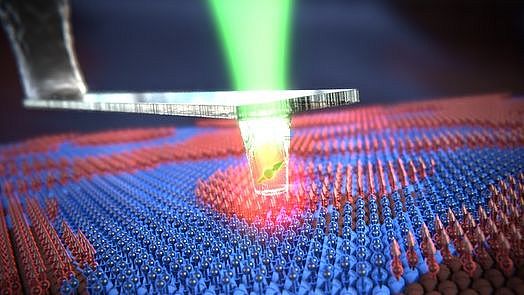
Prof. Patrick Maletinsky is a Full Professor and Head of the Department of Physics at the University of Basel. He leads the Maletinsky Research Group focused on quantum sensing and nanoscale magnetometry using nitrogen-vacancy (NV) centers in diamond. His academic journey includes a PhD from ETH Zurich (2010 Schläfli Prize recipient) and postdoctoral research at Harvard University. Current research emphasizes quantum technologies for imaging exotic materials and mesoscopic systems, with applications in condensed matter physics and quantum computing. Key projects include the QuantumLeap initiative and leadership in NCCR SPIN for silicon-based quantum computing. Education: PhD in Physics, ETH Zurich (2008) Studies at École Normale Supérieure Paris and JILA, Boulder Research interests span quantum sensing, nanoscale magnetometry, and NV center-based tools for probing magnetic materials. His group pioneered cryogenic nanoscale magnetometers and demonstrated imaging of cuprate superconductors. Awards include the Georg-H.-Endress Professorship (2012) and promotion to Associate Professor (2017) before becoming Full Professor and Department Head. Scientific achievements include coupling NV spins to mechanical oscillators, strain-based sensing, and nanophotonics in diamond nanostructures. His work bridges quantum technologies with condensed matter challenges, targeting exotic states like topological materials and strongly correlated systems.
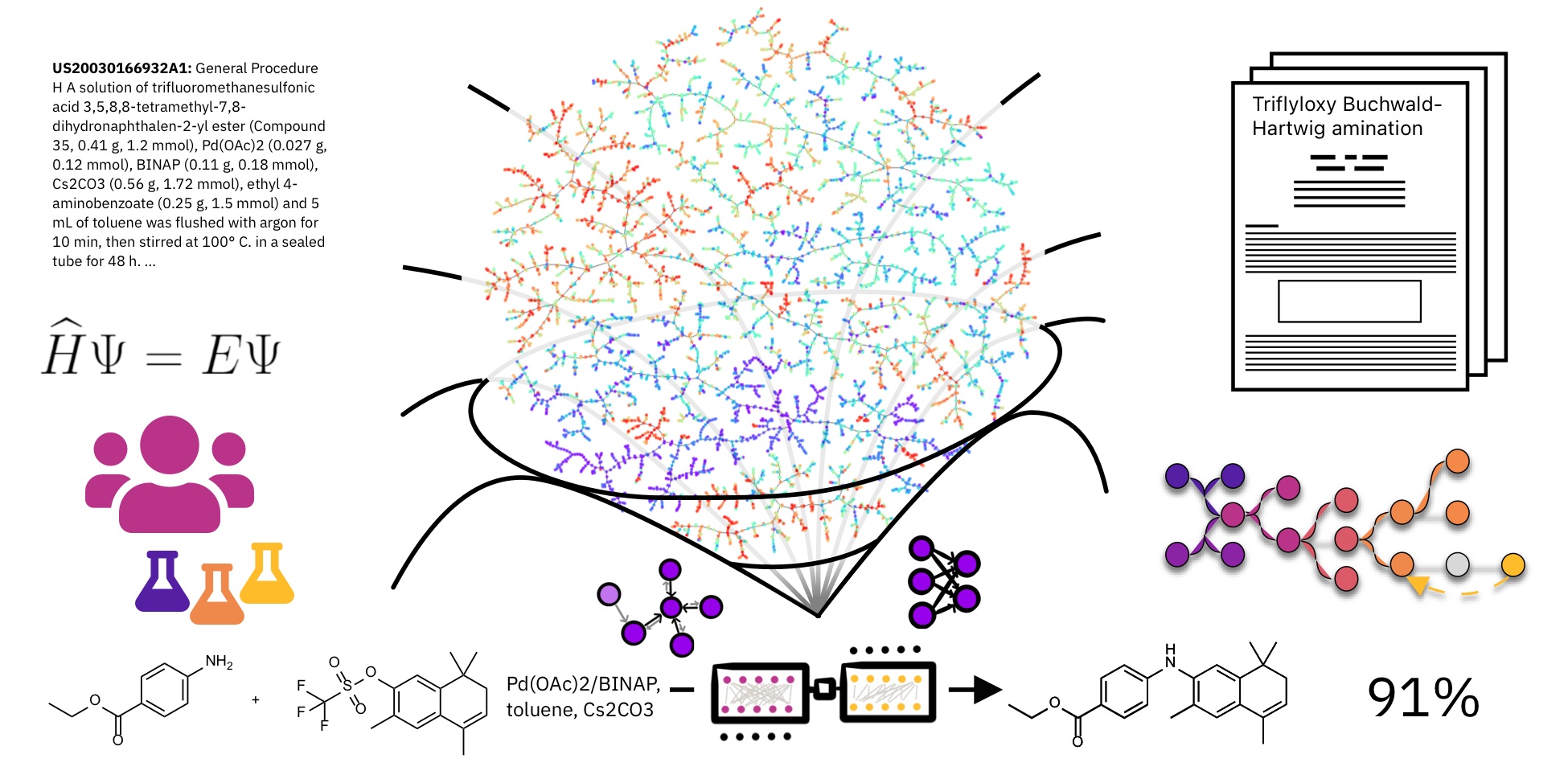
Philippe Schwaller is a Tenure Track Assistant Professor at École Polytechnique Fédérale de Lausanne (EPFL), School of Basic Sciences, within the Institute of Chemical Sciences and Engineering. He leads the Laboratory of Artificial Chemical Intelligence (LIAC), a research group focused on leveraging artificial intelligence to accelerate molecular discovery and sustainable chemistry. He is also a core Principal Investigator of the NCCR Catalysis, a national Swiss research center. His research lies at the intersection of chemistry, materials science, and computer science, with a strong emphasis on developing machine learning models for molecular design and synthesis. LIAC's work is driven by real-world sustainability challenges, aiming to reduce the time and cost of discovering new functional molecules and materials. The recent publications and projects from his lab highlight a strong trend in generative AI for chemistry, including memory-augmented models, hypergraph neural networks, and large language models tailored for scientific discovery. These efforts are complemented by educational initiatives such as the 'AI for Chemistry' course and practical programming resources for chemists. He actively supervises a diverse group of PhD students and contributes to multiple doctoral programs at EPFL, including EDCH and EDPY. His teaching portfolio includes courses on computational chemistry, AI applications in chemistry, and scientific machine learning. Philippe Schwaller is deeply involved in advancing AI-driven scientific discovery through both research and education, positioning his lab at the forefront of artificial chemical intelligence. The lab maintains active open-source contributions on GitHub, fostering collaboration and transparency in scientific AI development.
Dr. Dandolo Flumini is a Researcher at the Zurich University of Applied Sciences (ZHAW), School of Engineering, specializing in Applied Complex Systems Science. His research focuses on artificial life, morphological computation, blockchain applications, and computational modeling. He serves as team member or project lead in multiple interdisciplinary initiatives including Bio-HhOST (bio-hybrid tissues), Agroforestry Carbon Token System, and blockchain-based voting solutions. His primary research interests include: Complex Systems Science : Emergent behaviors in biological and artificial systems Morphological Computation : Physical systems performing computational tasks Artificial Chemistry : Programmable chemical systems using droplet networks Blockchain Applications : Decentralized finance and voting systems Computational Ethics : Responsible implementation of AI and modeling Flumini's recent publications (2019-2023) demonstrate strong focus on microfluidic systems, droplet agglomeration physics, programmable chemistry, and ethical AI. His work frequently appears in artificial life and computational modeling venues, with increasing emphasis on real-world applications in sustainability and decentralized systems. He maintains active collaborations through the Applied Complex Systems Science research group at ZHAW, contributing to projects involving microfluidic device design, blockchain architectures, and bio-hybrid tissue engineering.
Xuming He is an Associate Professor at the School of Information Science and Technology (SIST), ShanghaiTech University, where he leads the PLUS Lab. His research spans computer vision and machine learning with a focus on developing algorithms that operate effectively under limited supervision and evolving data conditions. His core research interests include weakly-supervised and few-shot learning for scenarios with sparse annotations, continual learning frameworks for knowledge retention during sequential task acquisition, semantic segmentation techniques for scene understanding, and multimodal vision-language representations. He emphasizes interpretable machine learning to build transparent AI systems capable of human-understandable reasoning, addressing critical challenges in model trustworthiness and deployment reliability. Recent publications reveal strong trends toward novel class discovery in long-tailed recognition scenarios, physics-informed generative modeling for scientific applications, and robust segmentation under distribution shifts. His work increasingly integrates large language models for multimodal reasoning while maintaining focus on efficiency in resource-constrained environments like robotic grasping and medical imaging analysis. He actively mentors students, having supervised Qian He to PhD completion and Chuanyang Hu to Master's degree in 2023. He welcomes prospective graduate students through ShanghaiTech's Computer Science & Technology program and offers undergraduate research projects requiring minimum six-month commitments. The PLUS Lab under his direction drives innovation in learning under supervision constraints, with recent work spanning medical tumor analysis, cross-view geolocation, photonic computing, and semiconductor design verification. The lab's research bridges theoretical advances with practical applications across healthcare, robotics, and scientific discovery domains.
Katarzyna Wac is a researcher at the University of Geneva affiliated with the Faculty of Economics and Management and the Information Science Institute . Her work bridges Digital Health , Mobile Computing , and Human-Computer Interaction , focusing on leveraging wearable devices, smartphones, and AI for health and quality of life (QoL) quantification. Research Themes: Digital biomarkers for Alzheimer's and migraines, QoL assessment via ubiquitous computing, peer- and self-reported behavioral data, and QoE of mobile applications. Labs: Leads the mQoL Lab , a platform for interactive, mobile, and wearable-based studies. Her recent publications explore Transformer models for health data analysis, social robots in homecare, and ethical frameworks for digital mental health. She has contributed to standards for proxy-reported QoL measures and personalized drug delivery systems in digital health. The multimodal integration of emotional signals and context-aware QoS/QoE provisioning for m-health services are recurring technical themes. Key collaborations include the MobiHealth project and COPD24 , translating future internet technologies into telemonitoring solutions. Her work spans from foundational studies on mobile cognition to applied ambulatory assessment of affect and health risks.
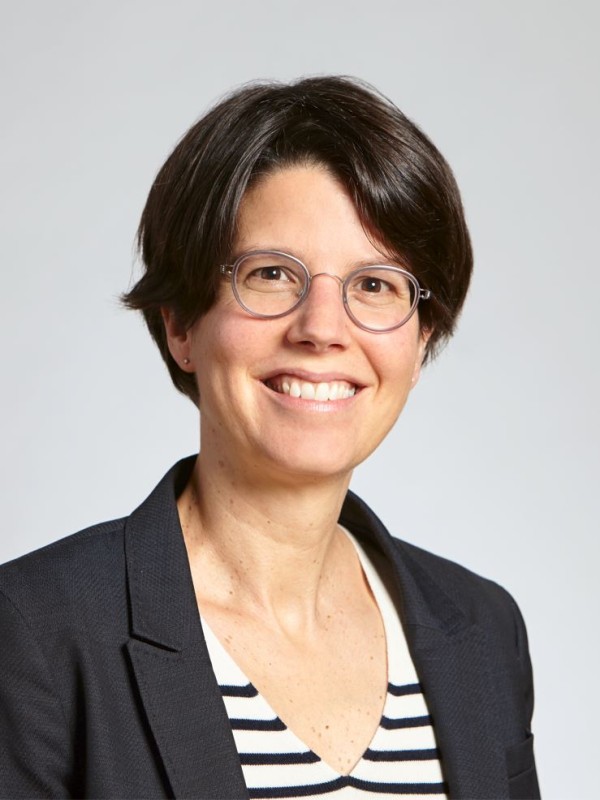
Lenka Zdeborová is an Associate Professor at EPFL, jointly affiliated with the School of Basic Sciences and School of Computer and Communication Sciences. She leads the Laboratory of Statistical Physics of Computational Systems, where her research bridges statistical physics, machine learning, and computational biology. Education: PhD in Physics, Université Paris-Cité (2012) MSc in Fundamental Physics, École Normale Supérieure (2009) BSc in Physics, École Normale Supérieure de Lyon (2007) Her work focuses on phase transitions in learning algorithms, high-dimensional statistics, and neural network theory. Current projects investigate fundamental limits of machine learning, dynamics of graph neural networks, and applications to biological systems. Recent publications explore attention mechanisms in transformers, neural network depth advantages, and Bayes-optimal learning. Methodological innovations include cavity methods for hypergraphs and analysis of high-dimensional inference problems. Supervises doctoral students researching statistical physics approaches to machine learning and optimization. Teaches graduate courses in data science and machine learning for physicists.
Rachel Grange is a Full Professor in the Department of Physics at ETH Zurich and Head of the FIRST Center for Micro- and Nanoscience. Her research focuses on nanoscale material investigations, particularly using metal-oxides like lithium niobate and barium titanate for classical and quantum photonic devices. Education: Ph.D. in Ultrafast Laser Physics from ETH Zurich (2006). Career: Postdoctoral work at EPFL (2007–2010), group leader at Friedrich Schiller University in Jena (2011–2014), and progressive roles at ETH Zurich since 2015 (Assistant Professor, Associate Professor, Full Professor from 2025). Her recent work emphasizes integrated photonic platforms for quantum computing, nonlinear optics, and miniaturized electro-optic spectrometers. She explores both top-down and bottom-up fabrication techniques for nanophotonic structures, with applications in neuromorphic computing and mid-infrared communication. Grange leads the FIRST Center, advancing micro- and nanoscience technologies. She teaches courses like Nanomaterials for Photonic Devices and contributes to the development of scalable photonic systems for next-generation computing and quantum technologies.
Ralf Hiptmair is a Full Professor at ETH Zürich, serving as Head of the Seminar for Applied Mathematics and Deputy Head of the Department of Mathematics. He also holds the position of Director of Studies for ETH BSc and MSc in Computational Sciences and Engineering (CSE). His research spans computational mathematics, numerical analysis, finite element methods, boundary element methods, computational electromagnetism, multigrid methods, discrete differential forms, shape optimization, wave propagation, and kinetic equations. Hiptmair's work on auxiliary space methods was recognized as a breakthrough in computational science in the 2008 DOE Report on recent significant advancements in computational science. His research focuses on developing and analyzing numerical methods for partial differential equations, with particular emphasis on structure-preserving discretizations, computational electromagnetism, and boundary integral equations. His work has significant applications in engineering, physics, and computational science. Hiptmair's publications demonstrate a strong focus on advancing numerical techniques for electromagnetic problems, wave propagation, and shape optimization. His recent work shows increasing interest in computational topology, geometric numerical integration, and interdisciplinary applications of numerical methods. Featured as breakthrough in computational science in the 2008 DOE Report on recent significant advancements in computational science (for Auxiliary space methods) Hiptmair has supervised numerous doctoral, master's, and bachelor's students across mathematics, computational science and engineering, and related fields. His research group has received funding for developing advanced numerical methods with applications in electromagnetism, fluid dynamics, and computational physics. He is actively involved in teaching numerical methods courses at both undergraduate and graduate levels. Hiptmair leads research efforts in the Seminar for Applied Mathematics, collaborating with industry partners like ABB Corporate Research and Siemens on practical applications of computational methods. His work bridges theoretical numerical analysis with real-world engineering challenges.
Carlo D'Eramo is Professor and Head of the Reinforcement Learning and Computational Decision-Making professorship at the Center for Artificial Intelligence and Data Science (CAIDAS) of University of Würzburg. He additionally serves as an independent group leader of hessian.AI, focusing on developing lightweight methods to obtain adaptive autonomous agents that can handle real-world complexity. His academic journey includes: B.Sc. in Computer Engineering from Politecnico di Milano (2011) M.Sc. in Computer Engineering from Politecnico di Milano (2015) Double degree in Computer Science from University of Illinois at Chicago (2015) Ph.D. in Information Technology from Politecnico di Milano (2019) Postdoctoral research at TU Darmstadt's Intelligent Autonomous Systems group (2019-2022) D'Eramo leads the LiteRL research group investigating how agents can efficiently acquire expert skills accounting for real-world complexity. His research spans multiple reinforcement learning domains including multi-task, curriculum, adversarial, options, and multi-agent RL. His work bridges theoretical advances with practical applications, particularly in robotics and decision-making systems. His recent publications (2023-2025) demonstrate significant contributions across exploration strategies, neural network architectures, multi-agent coordination, and physics-informed machine learning. His work frequently appears in top-tier venues including TMLR, RLJ, IEEE PAMI, ICML, and ICLR, with multiple papers receiving spotlight or oral presentation designations. Professional activities include: Senior area chair for RLC Area chair for AAAI, ACML, AISTATS, NeurIPS, and ICLR Reviewer for DFG and ERC proposals Creator of MushroomRL reinforcement learning framework D'Eramo actively contributes to academic community service while mentoring researchers in his group. His work on lightweight methods aims to make reinforcement learning more practical for real-world applications across various domains.
Evelyne Knapp is a Researcher at the ZHAW School of Engineering, Zurich University of Applied Sciences, within the Organic Electronics & Photovoltaics research focus area. Her work centers on advanced materials science, semiconductor physics, and machine learning applications in energy systems. She has led major projects such as 'Uncertainty quantification in ML Prediction for PV Quality Assurance' and contributed to innovations in perovskite solar cell optimization, organic semiconductor characterization, and device simulation models. Her research interests span photovoltaic technologies, charge transport phenomena, and optoelectronic device development. Key areas include: Perovskite solar cell performance analysis and degradation mechanisms Machine learning-driven parameter extraction for semiconductor materials Electro-thermal modeling of organic light-emitting devices Frequency-domain analysis of large-area solar cells Knapp's publications (over 30 peer-reviewed articles) demonstrate expertise in device simulation, material characterization, and interdisciplinary approaches merging computational methods with experimental data. Recent work highlights include: Advancing ML techniques to identify limiting parameters in perovskite solar cells Developing inverse models for solar cell parameter estimation Quantifying charge transport dynamics in organic semiconductors Her contributions have been presented at leading conferences including the IEEE Photovoltaic Specialists Conference and the Society for Information Display Symposium.
Prof. Robert Grass is a Lecturer at the Department of Chemistry and Applied Biosciences at ETH Zurich, affiliated with the Institute for Chemical and Bioengineering Sciences. His research focuses on innovative applications of nanotechnology, DNA-based storage systems, and sustainable catalytic processes for CO2 valorization. Grass has pioneered silica-encapsulated DNA technologies for traceability in healthcare, environmental monitoring, and anti-counterfeiting measures. His work bridges chemical engineering with information technology, addressing challenges in long-term data preservation and molecular-level security. Current projects include developing compostable DNA storage materials and designing catalysts for methanol synthesis from CO2, contributing to both environmental sustainability and energy systems. Grass's interdisciplinary approach integrates nanomaterials design, enzymatic processes, and machine learning to advance next-generation storage and sensing technologies. Research Interests: Development of DNA-based storage systems with error-correction mechanisms Nanoparticle engineering for medical and environmental applications Catalytic materials for CO2 conversion and green chemistry Bio-inspired security systems using molecular randomness Sustainable materials for long-term data preservation His recent work highlights advancements in silica-encapsulated DNA tracers for tracking pathogen transmission dynamics, as well as low-nuclearity catalysts enabling efficient methanol synthesis from CO2. Grass actively explores the intersection of nanotechnology and digital information, including cryptographic applications leveraging DNA's inherent complexity.