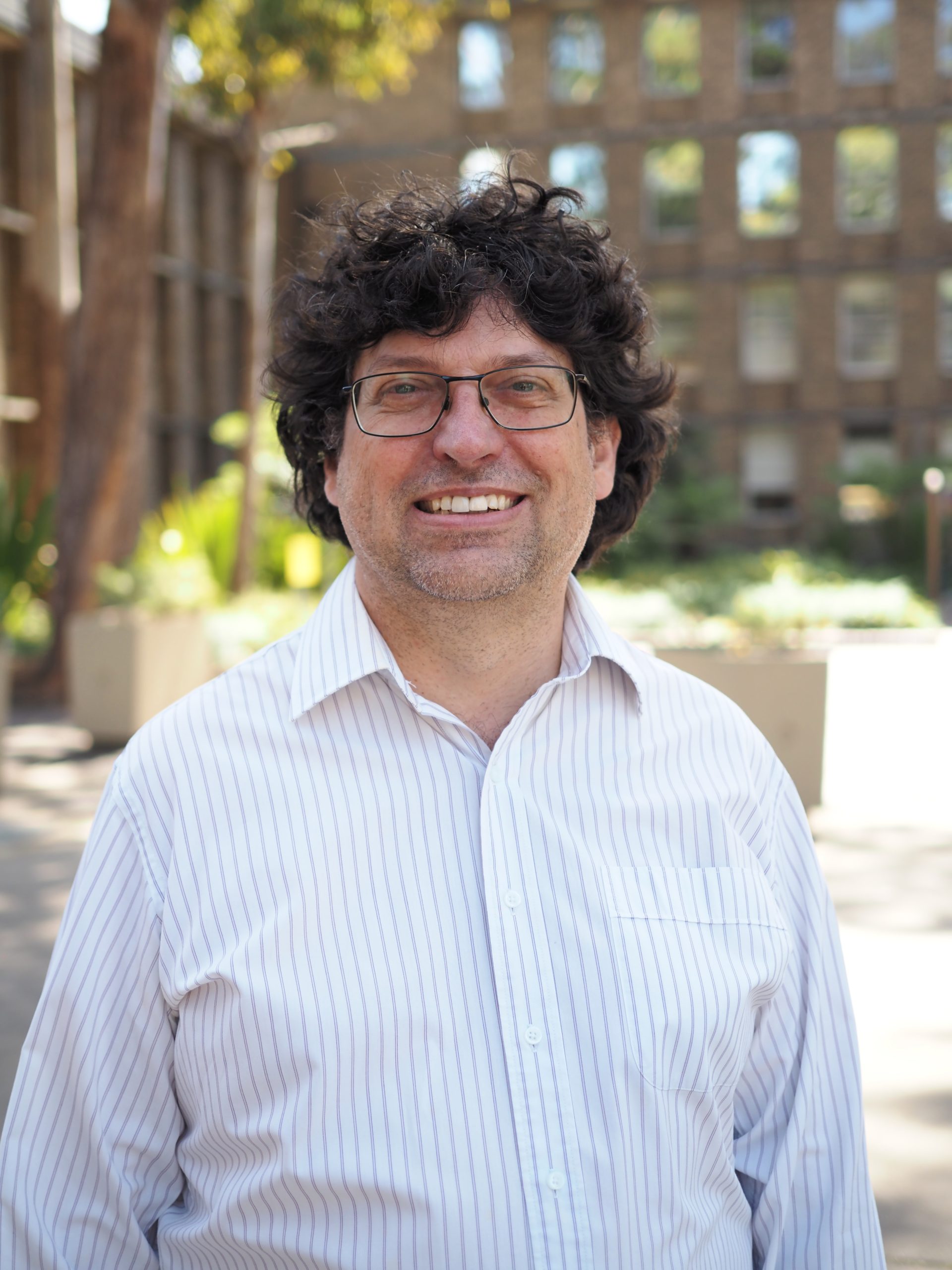
Prof. Tansu Alpcan is a Professor and Reader in the Department of Electrical and Electronic Engineering at The University of Melbourne, Australia. He holds a PhD from the University of Illinois at Urbana-Champaign (UIUC) and has held academic positions at Technical University Berlin and Deutsche Telekom Laboratories. His research focuses on AI/ML applications in engineering, game theory, cybersecurity, Industry 4.0, quantum machine learning, smart grids, and communication networks. Education: PhD in Electrical and Computer Engineering (UIUC, 2006); MSc (UIUC, 2003); BEng (Bogazici University, 1999). Research interests include adversarial machine learning, cybersecurity games, quantum computing, and renewable energy systems. Authored over 200 papers and two books, including Network Security: A Decision and Game Theoretic Approach (Cambridge, 2011). Recipient of IEEE Senior Membership (2012) and multiple best paper awards. He leads the WILAB and has secured grants such as the ARC Training Centre in Optimisation Technologies. Current projects include quantum machine learning, adversarial reinforcement learning, and smart grid modeling. Supervised 17 PhD and 3 Master’s students.
Professor Jennifer Whyte is a Professor and Director of the John Grill Institute for Project Leadership at the University of Sydney's School of Project Management (Faculty of Engineering). Her research focuses on project leadership, systems integration, digital transformation in construction, and future-making practices. She previously led the School of Project Management (2021-23) and holds a retained Professorship at Imperial College London's Department of Civil and Environmental Engineering. She is a Policy Fellow of the Institution of Civil Engineers, contributing to industry policy and advisory boards such as the UK Construction Leadership Council. Education: Holds a PhD and is a Fellow (FICE) of the Institution of Civil Engineers. Her work bridges academia and industry, emphasizing practical impact through tools like digital twins and visualization technologies. Current projects include the Alan Turing Institute's Data-Centric Engineering Programme (Grand Challenge III) and the EPSRC-funded VENTURA Project's Virtual Decision Room initiative. Research interests span infrastructure projects, innovation ecosystems, and leadership in complex environments. She actively supervises doctoral students exploring areas like risk management in construction and digital transformation in public institutions. Awards include recognition for policy contributions and leadership in project-based organizations. Grants include funding for Big Data-driven stakeholder engagement in mega-projects and collaborations on new energy technologies. Her global links include Imperial College London and ongoing partnerships with institutions in the UK and Australia.
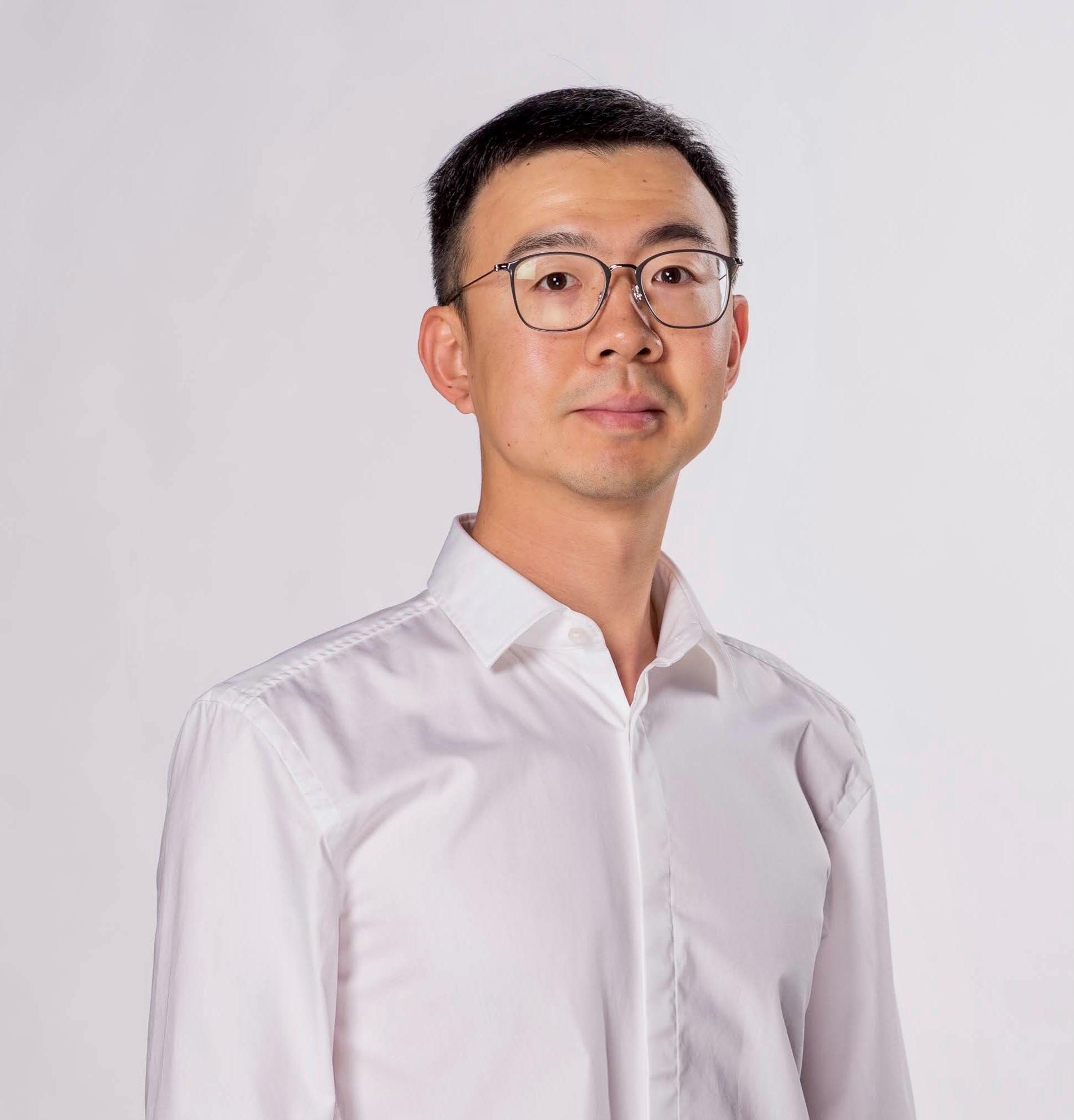
Zhaolin Chen is an Associate Professor in the Department of Data Science & AI at Monash University's Faculty of Information Technology. He holds a PhD in Biomedical Imaging from Monash University and has held roles at the University of Melbourne, Florey Neuroscience Institutes, and the medical imaging industry in Europe. He is an Australian Research Council MCR Industry Fellow and leads Australia's first Point-of-Care MRI network at the National Imaging Facility. His research focuses on AI-driven medical imaging, MRI/PET methods, and multimodal data analysis. He has secured over $8M in research funding, including leadership roles in major projects like the National Mobile MRI Network. Education: PhD in Biomedical Imaging, Monash University Research Fellowships at University of Melbourne and Florey Neuroscience Institutes Research Interests: Deep learning and machine learning in medical imaging MRI/PET acquisition/reconstruction methods Multimodal imaging (e.g., simultaneous MR-PET) Translational research with 10+ patents (5 commercialized) Awards & Grants: ARC Discovery Project (Primary Chief Investigator) 5 highly cited papers (top 10% worldwide in 2021) 2021 SciVal: 90% publications in top 10% journals Recipient of Douglas Lampard Research Prize, ISMRM Magna Cum Laude Leadership & Service: President-Elect, ANZ Chapter of ISMRM (2024) Associate Editor for IEEE ISBI (2022-2023) Program Committee Member for ISMRM (2018-2021) Labs & Teams: Monash Biomedical Imaging leadership National Mobile MRI Network project leadership Collaborations across global institutions (e.g., Hyperfine Inc., University of Queensland)
Professor Tony Jan leads the Centre for Artificial Intelligence Research and Optimisation (AIRO) at Torrens University Australia's Design and Creative Technology school. He holds a PhD in Computing Science from the University of Technology Sydney (2004) and a Bachelor of Engineering from the University of Western Australia (1999). His research focuses on federated machine learning for IoT security, ensembled machine learning for real-time applications, cognitive machines for human-centric computing, and smart sensor networks for healthcare and security. He has secured ARC grants and industry partnerships with NVIDIA, IBM, and Microsoft. Awards include the 2024 SEI Global Academic Excellence Award and the 2023 Torrens University Excellence Award. Research collaborations span global partners, with contributions to UN Sustainable Development Goals in education and industry. His work bridges academia and industry, expanding AI program enrollments by 2,000+ students and enhancing student satisfaction by 15%. He advises PhD students on topics like IIoT cybersecurity and smart cities, and has produced over 97 publications since 1999. Education: PhD (UTS, 2004), BEng (UWA, 1999) Research Themes: AI for Industry 5.0, Cybersecurity, Smart Cities, Healthcare Technology Key Partnerships: NVIDIA, CIMIC, Palo Alto Networks Recent Projects: Federated learning for health IoT, drone vision intelligence, ransomware detection His work emphasizes ethical AI adoption in design and healthcare, with publications exploring AI ethics, generative AI applications, and sustainable technology integration.
Yihao Ding is a Research Fellow at the School of Physics, Mathematics and Computing at The University of Western Australia. He holds a Ph.D. in Computer Science from the University of Sydney, awarded on November 11, 2024. Dr. Ding's educational background includes: Doctor of Philosophy in Computer Science, Visually Rich Document Understanding and Intelligence, University of Sydney (March 1, 2021 - November 11, 2024) His research focuses on multimodal large language models, deep learning-based document analysis, information retrieval, question answering, and interdisciplinary applications of deep learning. Dr. Ding has published extensively in leading conferences and journals, including ACL, CVPR, AAAI, IJCAI, SIGIR, ECML-PKDD, COLING, and CIKM. His current work spans visual document understanding, multimodal learning, natural language processing, and interdisciplinary applications including geographic information systems. Dr. Ding's recent publications demonstrate a strong focus on visually-rich document understanding, multimodal learning, and interdisciplinary applications. His work ranges from developing novel multimodal models for form document understanding to creating comprehensive datasets for visual question answering and applying machine learning to environmental challenges like lithium recovery from water sources. His research shows a consistent pattern of addressing complex multimodal problems with innovative deep learning approaches. Dr. Ding is an active member of the AI community, having organized workshops, tutorials, and competitions at top-tier venues such as AAAI, IJCAI, and CIKM. He has also served as a Chair or Reviewer for major conferences including IJCAI, ARR Rolling, ICLR, ACMMM, CVPR, ICCV, WACV and IJCNN.
Professor Carsten Rudolph serves as Deputy Dean at Monash University's Faculty of Information Technology and directs the Oceania Cyber Security Centre (OCSC). He holds a PhD in Information Security from Queensland University of Technology (2002) and a Diplom in Computer Science from Goethe University Frankfurt (1997). His interdisciplinary research focuses on cybersecurity foundations, including cryptographic protocols, AI-driven security, human factors, and national cybersecurity policy. Key areas include securing smart grids, digital health systems, and transnational energy networks. Notable contributions include establishing the OCSC, leading Pacific region cybersecurity maturity reviews with Oxford University, and advancing frameworks for firmware security in virtual power plants. He chairs major projects like RAI4IoE (Responsible AI for Energy) and Post-Quantum Cryptography initiatives. Teaching responsibilities include cybersecurity modules like FIT3173 and FIT3168. Rudolph's research outputs (137+ publications) emphasize phishing detection via AI, blockchain-based energy trading, and resilient smart grid systems. He collaborates internationally on policy development and has advised 12 major research projects funded by agencies like the U.S. Bureau of East Asia and Pacific Affairs.
Zhe Hou is a Senior Lecturer at the School of Information and Communication Technology , Griffith University, Australia. His academic journey includes a PhD in automated reasoning for separation logic from the Australian National University (2015) and prior research roles at Nanyang Technological University, Singapore (2015-2017). He joined Griffith University in 2017 and became permanent faculty in late 2019. Research Interests : Formal methods for software verification Automated reasoning with logical frameworks Blockchain technology and security Quantum computing verification Integration of LLMs with rigorous reasoning Sports analytics via model checking Recent Publications demonstrate expertise in neural-symbolic reasoning, blockchain security, quantum SAT solvers, and runtime verification frameworks. His work combines formal logic with machine learning for applications in cybersecurity and AI trustworthiness. Scientific Awards : ACM SIGSOFT Distinguished Paper Award (2025) Supervision Roles : Principal/Associate Supervisor for 6+ doctoral projects in blockchain security, AI verification, and network security. Professional Activities : Editor for Springer-Nature and Formal Aspects of Computing special issues, conference chair for ICFEM, ICECCS, and ISACE symposia.
Dr. Husam Al-Najjar is a Lecturer at the School of Computer Science within the Faculty of Engineering and Information Technology at the University of Technology Sydney (UTS). He serves as the Course Director for the Bachelor of Information Systems (BIS) program. With expertise in geospatial technology and machine learning, Dr. Al-Najjar focuses on predicting and mitigating natural hazards and environmental issues to contribute to a sustainable digital earth. Dr. Al-Najjar earned his PhD from the University of Technology Sydney. Before joining academia, he worked in project management and has received numerous prestigious awards, scholarships, and grants throughout his career. Dr. Al-Najjar's research primarily centers on the application of machine learning techniques to address complex environmental challenges. His work spans geospatial AI, natural hazard prediction (particularly landslides and bushfires), and sustainable development. He has developed innovative approaches that integrate physical models with machine learning algorithms to improve prediction accuracy in data-scarce environments. His research also extends to remote sensing applications, urban planning, and smart city technologies, with a strong emphasis on practical solutions for real-world problems. Analysis of Dr. Al-Najjar's recent publications reveals a strong focus on applying explainable AI techniques to natural hazard prediction, particularly landslides. His work consistently bridges the gap between theoretical machine learning approaches and practical geospatial applications. He has made significant contributions to integrating physical models with AI, developing methods for handling imbalanced data through generative adversarial networks, and improving feature selection for remote sensing applications in environmental monitoring. Best Paper Award at the ISPRS Geospatial Week in Enschede, the Netherlands As an educator, Dr. Al-Najjar is actively involved in mentoring and teaching. He serves as Course Director for the Bachelor of Information Systems program and teaches courses in GIS, Information Systems, IS development methodologies, Design & Innovation, and Project Management. He welcomes prospective PhD candidates interested in his research areas and emphasizes the importance of detailed research proposals that demonstrate novelty and significance. His teaching philosophy focuses on fostering an engaging and inclusive learning environment that promotes student success and well-being. Dr. Al-Najjar is affiliated with 'The Trustworthy Digital Society' concentration at UTS and serves as a referee and holds editorial roles in respected journals. His work contributes to the development of geospatial AI frameworks that support decision-making in environmental management and disaster preparedness.
Dr. Hongsheng Hu is currently a Lecturer in the School of Information and Physical Sciences at the University of Newcastle, Australia, specializing in the Data Science and Statistics focus area. Prior to this position, he served as a Postdoc Research Fellow at CSIRO's Data61 from October 2022 to August 2024. His academic journey includes a Doctor of Philosophy in Computer Systems Engineering from the University of Auckland in New Zealand, establishing his foundation in advanced computing systems. Dr. Hu's research centers on enhancing the trustworthiness of machine learning systems, with particular emphasis on identifying critical privacy vulnerabilities within machine learning models and developing robust defensive strategies. His work spans several key domains including adversarial machine learning (30% focus), statistical data science (30% focus), and data and information privacy (40% focus). He investigates membership inference attacks, machine unlearning techniques, and privacy-preserving mechanisms in federated learning environments. His research addresses fundamental challenges in AI security, exploring how machine learning models can be compromised through sophisticated privacy attacks and developing methods to mitigate these vulnerabilities while maintaining model utility. Analysis of Dr. Hu's publication record reveals a strong research trajectory focused on machine learning security and privacy. His work consistently addresses vulnerabilities in machine learning systems, particularly examining membership inference attacks, machine unlearning mechanisms, and privacy-preserving techniques in federated learning. The research spans top-tier venues including IEEE Security & Privacy, USENIX Security, NDSS, NeurIPS, IJCAI, AAAI, and WWW, demonstrating both technical depth and recognition by the research community. His publications show an evolving focus from foundational privacy attacks to developing more sophisticated unlearning techniques and robust defense mechanisms, with increasing citation counts indicating growing impact in the field. Active Program Committee member for USENIX Security, NDSS, ICLR, IJCAI, WWW, ICDM, ECML, and PKDD Invited reviewer for IEEE Transactions on Information Forensics and Security (TIFS), IEEE Transactions on Dependable and Secure Computing (TDSC), IEEE Transactions on Pattern Analysis and Machine Intelligence (IPAMI), and ACM Computing Surveys (CSUR) Dr. Hu currently serves as Course Coordinator for STAT6020 and STAT2020 Predictive Analytics at the University of Newcastle. As an academic supervisor, he co-supervises one PhD student working on 'Identifying and Mitigating Vulnerability in Recommender Systems' at Macquarie University. His research collaborations span multiple countries, with significant publication counts in Australia (18), China (12), New Zealand (10), and the United States (7), reflecting an active international research network focused on AI security challenges.
Professor Raja Jurdak is a leading academic in distributed systems and applied data sciences at Queensland University of Technology (QUT), where he directs the Trusted Networks Lab. He holds dual roles as Professor of Distributed Systems and Chair in Applied Data Sciences, alongside leadership in the Centre for Data Science. His research focuses on dynamic network modeling, blockchain-based trust frameworks, and IoT applications, with particular emphasis on cybersecurity, energy efficiency, and mobility-driven diffusion processes. Jurdak formerly led CSIRO's Distributed Sensing Systems Group and maintains a visiting scientist role there. Education: PhD in Information and Computer Science, University of California, Irvine MS in Computer Networks and Distributed Computing, University of California, Irvine BE in Computer and Communications Engineering, American University of Beirut Research Interests: Network science, blockchain technology, IoT security, sustainable energy systems, and data-driven decision-making. His work bridges theoretical advancements with practical applications in smart grids, health surveillance, and urban mobility. Awards: Finalist for the 2019 Eureka Prize, multiple CSIRO accolades, and IEEE Senior Member status. His research has received industry recognition for interdisciplinary innovation, including the DiNeMo project's real-time disease surveillance system. Advisory & Grants: Leads high-impact projects funded by government and industry partnerships. Supervises PhD candidates in areas like decentralized data processing and privacy-preserving AI. Holds editorial roles at journals such as Ad Hoc Networks and PLoS ONE . Labs & Teams: Directs the Trusted Networks Lab at QUT, fostering collaborations with institutions like Oxford University and MIT. His work emphasizes cross-disciplinary teams to address global challenges in cybersecurity and sustainable systems.
Dr. Zhenghao Chen is a Lecturer in Data Science at the University of Newcastle, affiliated with the School of Information and Physical Sciences. He earned his Ph.D. from the University of Sydney in 2022, following a B.Eng. H1 degree from the same institution in 2017. Prior to his current position, Dr. Chen served as a Postdoctoral Research Fellow at the University of Sydney (2022-2024), a Research Engineer at TikTok (2024), and as a Visiting Research Scientist at Microsoft Research and Disney Research (2022-2023). Dr. Chen's educational background includes: Doctor of Philosophy, University of Sydney (2022) Bachelor of Information Technology (B.Eng. H1), University of Sydney (2017) Dr. Chen's research spans multiple domains within artificial intelligence, with particular expertise in Computer Vision, Natural Language Processing, and Machine Learning. His work in Generative AI has garnered significant recognition, with applications in both academic and industrial settings. His research interests are reflected in his Fields of Research percentages: Deep Learning (30%), Computer Vision (30%), Natural Language Processing (20%), and Multimodal Analysis and Synthesis (20%). His publications in top-tier venues like CVPR, ICCV, ECCV, and journals like IEEE TPAMI demonstrate the breadth and impact of his work. Analysis of Dr. Chen's recent publications (2022-2025) reveals a consistent focus on neural compression techniques, 3D perception, and multimodal AI systems. His work spans medical imaging (CXR bone suppression), video compression, point cloud processing, and neural surface reconstruction. A notable trend is his exploration of efficient AI systems that work well under resource constraints, as evidenced by his involvement in the EMCLR workshop. His research often bridges theoretical advances with practical applications across multiple domains. Dr. Chen has received several prestigious awards: Microsoft Research Asia StarTrack Fellowship (2025) ACM SIGMM Award for Outstanding PhD Thesis in Multimedia Computing (2024) Australia Government Research Training Program (RTP) Fellowship (2019) Google Australia Prize for Excellence in Computer Science (2017) Dr. Chen is actively involved in the academic community, serving on the Program Committee for major AI conferences including CVPR, ICCV, ECCV, SIGGRAPH, AAAI, and others. He also organizes workshops in Multimedia and ICCV conferences, and serves as a reviewer for prestigious journals. His teaching responsibilities include courses on Intelligent Visual Signal Understanding, Video Intelligence and Compression, Database and Information Management, and Computing Fundamentals at both the University of Sydney and University of Newcastle.
Professor Jason Evans is a leading climate scientist at the University of New South Wales (UNSW), serving as Chief Investigator at the Climate Change Research Centre. He completed his undergraduate degrees in physics and mathematics at Newcastle University in 1996 and earned his PhD in Environmental Management from the Australian National University in 2001. After six years as a postdoctoral and research fellow at Yale University, he returned to Australia in 2007 to join UNSW's Climate Change Research Centre. Education: Bachelor's degrees in Physics and Mathematics, Newcastle University (1996) PhD in Environmental Management, Australian National University (2001) Research Interests: Professor Evans specializes in regional climate dynamics, focusing on land-atmosphere interactions and the water cycle in the context of climate change. His research integrates advanced modeling tools with extensive observational datasets, particularly emphasizing satellite-based remote sensing and earth observations . His work addresses critical questions about regional climate change impacts, including urban climate dynamics, extreme weather events, drought mechanisms, and renewable energy implications under changing climate conditions. His research spans multiple interconnected domains: from developing novel approaches for moisture source identification using Lagrangian methods , to investigating flash drought prediction using deep learning techniques , and evaluating the performance of high-resolution climate simulations across diverse geographical regions including Australia, Alaska, and Saudi Arabia. Scientific Recognition: Lead Author, IPCC Special Report on Climate Change, Desertification, Land Degradation, Sustainable Land Management, Food Security, and Greenhouse Gas Fluxes in Terrestrial Ecosystems Member, Science Advisory Team for CORDEX (World Climate Research Programme) Editor, Journal of Climate (2016-2022) Fellow, Modelling and Simulation Society of Australia and New Zealand (2020) Biennial Medal, Modelling and Simulation Society of Australia and New Zealand (2021) Fellow, Royal Society of New South Wales (2021) Research Impact and Contributions: Professor Evans has made significant contributions to understanding regional climate change through his extensive publication record of over 50 articles since 2021. His work has advanced knowledge in areas including urban climate dynamics , drought mechanisms and prediction , extreme weather events , and renewable energy impacts under climate change . His research has informed climate policy through his role as a Lead Author for the IPCC and his involvement with international climate research initiatives like CORDEX.
Dr. Yu Zhang is a Lecturer of Data Science at the School of Business, UNSW Canberra. His academic career focuses on text mining, knowledge and information management, social computing, and bibliometric analysis, with interdisciplinary applications in areas such as sustainable logistics, supply chain management, and net-zero energy solutions. Fields of Interest: Text Mining, Information Management, Social Computing, Bibliometric Analysis, Machine Learning for Information Systems, Heterogeneous Network Analysis, Data Mining for Asset Management, Sustainable Logistics, Supply Chain Management, Net-zero Energy in Green Buildings, and Transportation. Grants: Served as CI in projects like "Online health monitoring in Li-ion batteries via trustworthy AI" (ACT Government, $1.22M) and "Delivering net-zero energy buildings" (TRaCE Lab to Market, $1.05M). Awards: Best Paper Award (Runner-up) at ADMA 2024 and Excellent Paper Award at ICEBE 2024. Teaching: Coordinated courses in Data Analytics, Workforce Planning Research, Business Capstone, and Logistics Intelligence with Big Data Analysis. Supervision: Guided research on topics like federated learning for healthcare fraud detection, blockchain-based carbon offset management, and tier-based supply chain visibility. His publications span materials science and photovoltaic technologies, with a focus on thin-film solar cells and defect passivation methods. For collaboration or supervision inquiries, contact him at m.yuzhang@unsw.edu.au .
Prof Ben Buchler is a Professor at The Australian National University (ANU), affiliated with the Physics Education Centre and the ARC Centre of Excellence for Quantum Computation and Communication Technology. His research focuses on quantum optics, atomic sensors, and optomechanics. He leads projects on quantum memory systems, gravitational wave detection, and exotic physics searches using global magnetometer networks. Research Interests: Quantum Communication and Information Cold Atom Physics Optical Sensors and Magnetometry Optomechanical Systems Gravitational Wave Detection Technologies Recent work highlights advancements in room-temperature quantum memory, cross-phase modulation in atomic systems, and applications of optomechanics for single-phonon control. Collaborations include global initiatives like the GNOME (Global Network of Optical Magnetometers) for dark matter and gravitational wave studies. Grants and Projects: ARC Centre of Excellence for Quantum Computation and Communication Technology (2018–2025) Projects on atomic sensors for dark matter, rotation, and magnetic field detection Labs/Teams: Active in the Physics Education Centre and collaborates with international teams on quantum optics and sensor technologies.
Dr. Yanjun Zhang is an Honorary Research Fellow at the School of Electrical Engineering and Computer Science, The University of Queensland. His research focuses on privacy-preserving technologies, federated learning, cybersecurity in IoT systems, and machine learning security. He holds a PhD in Privacy-Preserving Sharing for Genome-Wide Analysis from The University of Queensland (2021). Education: PhD in Information Technology, School of Information Technology and Electrical Engineering, The University of Queensland (2021) Research Interests: Designing secure collaborative machine learning frameworks Defending against adversarial attacks in cyber-physical systems Privacy preservation in distributed genomic and medical data analysis Compliance and ethics in virtual personal assistant applications Key Contributions: Developed privacy-preserving federated learning frameworks (AgrAmplifier, PrivColl) Conducted foundational studies on evasion attacks in IoT systems Created datasets for analyzing malicious browser extensions and Alexa skills Labs/Teams: Active contributor to UQ Cyber initiatives, including the 2021-2022 Seed Funding project on federated deep learning for medical imaging.