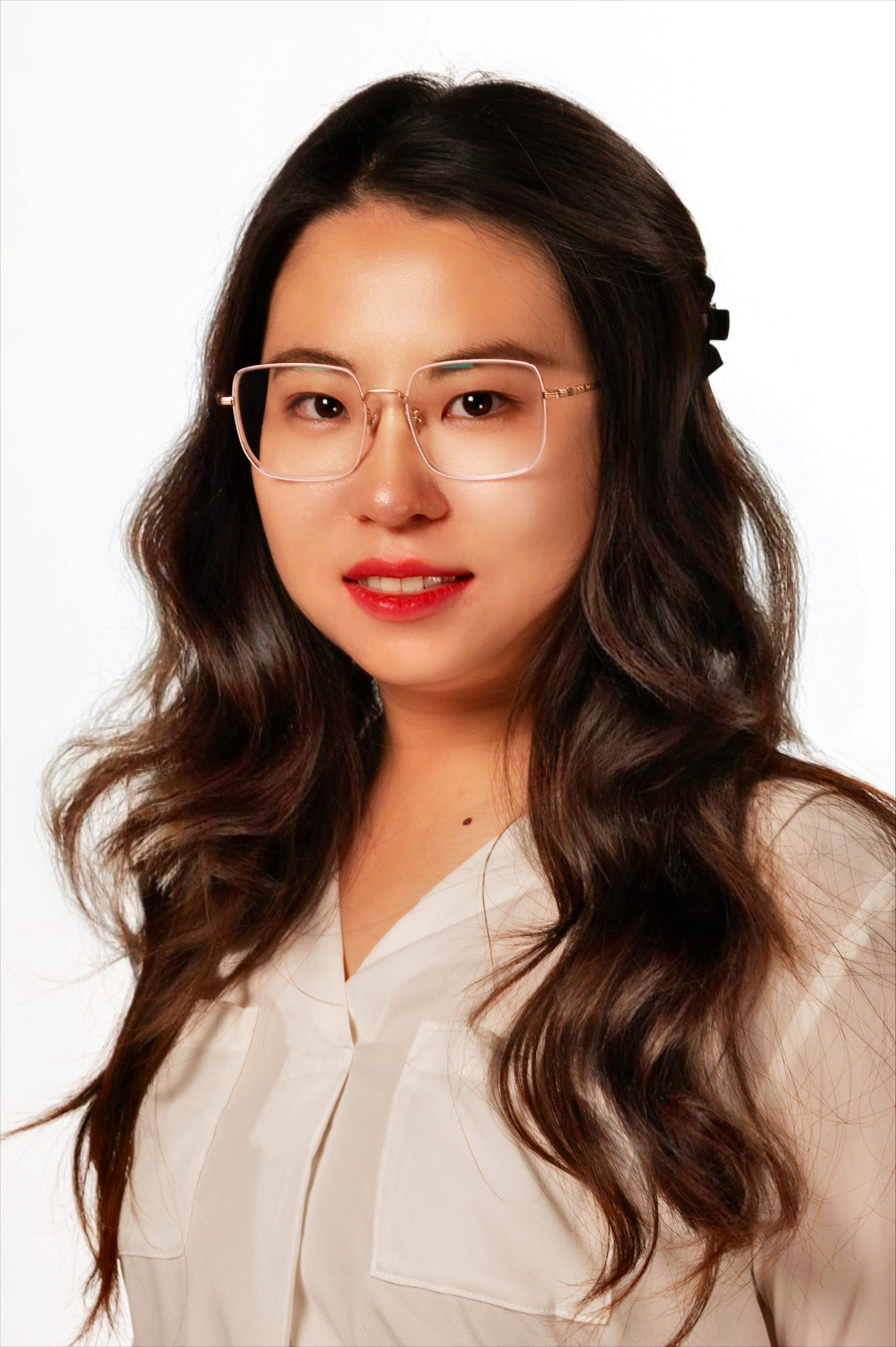
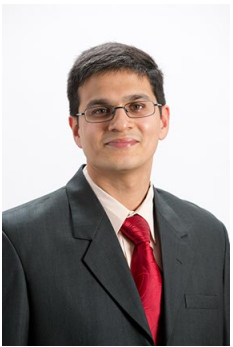
Dr. Wenyuan Ma is a researcher at the University of New South Wales (UNSW) Canberra campus, specializing in pyro-cumulonimbus (pyroCb) bushfire dynamics and wildfire management. Their work focuses on understanding the geographical patterns of pyroCb occurrences and developing predictive models to guide future fire management strategies in Australia and beyond. Research interests include: Quantifying drivers of pyroCb development Climate change impacts on wildfire risks Machine learning applications for environmental data International collaboration on atmospheric fire phenomena Their work integrates geographical information systems (GIS), atmospheric science, and machine learning to analyze fire-environment interactions. They are affiliated with UNSW's research infrastructure and collaborate with interdisciplinary teams to address climate resilience challenges.
Dr. Eric Howard is a Research Fellow at Macquarie University , affiliated with the School of Engineering , School of Mathematical and Physical Sciences , and School of Computing . His research spans interdisciplinary domains at the intersection of quantum physics, machine learning, and AI-driven systems. Key research themes include: Quantum cryptography for Industry 4.0 security Machine learning in IoT temperature sensing Adversarial AI in cybersecurity 6G wireless communication optimization Quantum information processing Deep learning for data imputation Recent publications demonstrate a focus on emerging technologies, with articles on quantum Bayesian inference , 6G signal processing , and smart city IoT systems . His collaborative work extends to blockchain-enabled supply chain visibility and generative AI applications in programming. Research collaborations span institutions in India (AIP Publishing) and Australia, with technical contributions to quantum dynamics, neural network applications, and nanosensor development.
Dr. Haoran Ren is a Research Fellow at Macquarie University and currently serves as an ARC DECRA Fellow at Monash University . His research focuses on Nanophotonics , with expertise in metasurfaces, orbital angular momentum, and holography. Education : PhD in Optics from Swinburne University of Technology (2013-2017). Dr. Ren's work explores advanced optical materials and nanotechnology for fundamental light-matter interactions and photonic applications. His research outputs include breakthroughs in orbital angular momentum holography, metasurface design, and chip-scale light manipulation. Scientific Awards include the Chinese Government Prize (2016), OSA Foundation Travel Grant (2015), Victoria Fellowship (2018), Humboldt Fellowship (2019), and major fellowships from Macquarie University and ARC . Dr. Ren has secured significant grants, including the ARC DP ($350k), ARC DECRA ($434k), and Macquarie Research Infrastructure Schemes . He is an Associate Investigator for the ARC Centre of Excellence for Transformative Meta-Optical Systems (TMOS) and actively contributes to scientific communities as an editor, reviewer, and seminar organizer.
Maja Clare Cassidy is a Senior Lecturer, ARC DECRA Fellow, and Scientia Fellow at the University of New South Wales School of Physics. Her research develops quantum computing and sensor technologies, leading the QMD lab while teaching advanced quantum physics courses. Current roles: Senior Lecturer (UNSW), Lab Director, Course Instructor Previous roles: Principal Research Manager at Microsoft Quantum (5 years), Postdoctoral Fellow at TU Delft/QuTech Education: Bachelor of Electrical Engineering (Hons. 1), UNSW (2005) Master of Science in Applied Physics, Harvard University (2010) PhD in Applied Physics, Harvard University (2012) Her research focuses on quantum computing device fabrication , topological superconductivity , microwave quantum optics , and machine learning applications in quantum system development. Key trends in her publications include Majorana qubit stability, ballistic transport in nanowires, and cryogenic CMOS integration for scalable quantum systems. Scientific Awards: RG Menzies Scholarship to Harvard (2008) She supervises 10 current and former students across physics and material science disciplines. Her grants include UNSW Scientia Fellowship (2022-2026), ARC DECRA Fellowship (DE240100590), and multiple industry collaboration grants for quantum hardware development.
Dr. Omar Khadeer Hussain serves as an Associate Professor and Deputy Head of School (Research) at the School of Business, UNSW Canberra. He has been with the School since February 2014, initially working as a Lecturer and Senior Lecturer before his current appointment. Prior to joining UNSW, he worked as a Senior Research Fellow at Curtin University. Dr. Hussain's educational background includes a Bachelor of Technology in Computer Science from JNTU (2002), a Master of Research in Computer Science from La Trobe University (2004), and a Doctor of Philosophy in Information Management from Curtin University (2008). His research focuses on Logistics and Supply Chain Management, with particular emphasis on Supply Chain Risk Management, Distributed and Grid Systems, Decision Support, and Group Support Systems. Dr. Hussain applies these areas to develop knowledge synthesis from data for business applications such as decision making, risk management, cloud service management, new product development, and milk quality management. His work incorporates predictive analytics to enable informed business decision making, with recent research increasingly integrating artificial intelligence and large language models for supply chain risk identification and management. Analysis of Dr. Hussain's recent scholarly output reveals a strong focus on applying cutting-edge AI techniques to supply chain challenges. His work spans systematic literature reviews on supply chain risk modeling, development of frameworks for SLA violation prevention in Cloud of Things environments, and innovative applications of explainable AI in various domains. There is a clear trend toward leveraging large language models for event identification in supply chain risk management and developing dual-sided decision frameworks that integrate multiple stakeholder perspectives. His research bridges theoretical advances with practical applications in logistics and business engineering. Curtin Business School New Researcher of the Year award for 2012 Prize for Early Career Researcher, Curtin Business School (2013) Chancellor's thesis commendation award, Curtin University (2008) Master Prize – Computer Science, La Trobe University (2004) Dr. Hussain has successfully secured multiple competitive research grants, including ARC Linkage Projects on 'Economically Efficient Green Logistics through Cyber Physical Systems' (2016) and 'Intelligent CRM through Conjoint Data Mining of Heterogeneous Sources' (2015), both with Professor Elizabeth Chang as lead CI. He has also supervised 9 PhD students to completion, serving as both main and joint supervisor. While specific lab or team information isn't explicitly mentioned in the available text, Dr. Hussain's research appears to be conducted within the School of Business at UNSW Canberra, likely collaborating with colleagues across business disciplines and computer science to address complex supply chain and logistics challenges through interdisciplinary approaches.
Frank den Hartog is a Research Chair in Critical Infrastructure and Information Systems at the University of Canberra . He is also an Adjunct Fellow at UNSW Canberra (Australian Defence Force Academy) and has held academic roles including Associate Professor at the University of New South Wales. His career spans industry and academia, with expertise in cybersecurity, IoT, and wireless networking. Education PhD in Physics and Mathematics from Leiden University (1998) MSc in Applied Physics from Eindhoven University of Technology (1992) Research Interests: Dr. den Hartog focuses on Zero Trust Architectures , Physical Layer Security , and Secure Industry 4.0 , with a specialization in protecting Critical Infrastructure through advanced cybersecurity frameworks. His work bridges theoretical optimization with practical implementations in Cyber-Physical Systems and Programmable Networks . Academic Contributions: He co-authored 82 peer-reviewed articles and contributed to 67 standards, including 7 as co-editor. His publications reveal trends in Smart Home Security , AI-Defined Networking , and Trust Management in IoT , reflecting his commitment to securing interconnected systems. Teaching & Leadership: Dr. den Hartog supervised 7 Masters/Honours and 2 PhD students, served on 8 PhD exam committees, and was Chair of the Home Gateway Initiative's Technical Working Group (2012-2016). He actively participates in conference organizing committees and journal reviewing.
Associate Professor Marie Mc Nerney is a faculty member at the University of Technology Sydney (UTS) in the School of Mathematical and Physical Sciences, where she serves as Associate Professor and Course Director for the Bachelor of Forensic Science program. She is affiliated with the Centre for Forensic Science (CFS) at UTS and has established herself as a leading researcher in forensic intelligence and drug market analysis. Dr. Mc Nerney completed her Bachelor and Master's degrees in Forensic Science at the University of Lausanne (Switzerland) in 2009. After working as a forensic scientist with the Wallis State Police in Switzerland, she moved to Australia to complete a project on gunshot residues at the UTS Centre for Forensic Science in collaboration with the Australian Federal Police. She earned her PhD on drug intelligence at UTS in 2015, which was a collaboration between the Australian Federal Police, the University of Lausanne, and UTS. In 2016, she was awarded a prestigious Chancellor's Postdoctoral Research Fellowship from UTS. Her research focuses on the use of illicit drug data from multiple sources for intelligence purposes, with particular expertise in analyzing drug markets through the triangulation of data from cryptomarkets, drug seizures, wastewater analysis, and governmental sources. She has extended this approach to other organized systems such as organized crime and security. Dr. Mc Nerney has made significant contributions to forensic intelligence methodology, particularly in document examination and the application of forensic science for proactive crime prevention. Her extensive publication record demonstrates a consistent focus on applying forensic science to intelligence gathering, with recent work examining drug trends among people who inject drugs, dark web market analysis for fraudulent documents, portable technology for drug identification, and the utility of trace evidence for intelligence purposes. Her research shows a clear trajectory toward developing systematic methods for transforming forensic data into actionable intelligence for law enforcement and public health agencies. 2024 UTS Medal for Excellence in Research and Teaching Integration Citations for outstanding contributions to student learning (2024) UTS Teaching and Learning Award - Team Teaching (2022) Dr. Mc Nerney has secured significant research funding, including the 'Residue and Post Overdose Substance Testing (RePOST)' grant (2024-2025), 'Understanding emerging opioid-related harms through improved surveillance, drug checking and information sharing systems' (2020-2021), and 'The use of forensic case data in an intelligence perspective' (2015-2019). She serves as Associate Editor for Forensic Science International and edited the 23rd Meeting collection for the International Association of Forensic Sciences (IAFS). As Course Director for the Bachelor of Forensic Science program, she has developed and taught courses including 'Foundations of Forensic Science,' 'Forensic Intelligence,' and 'Introduction to Forensic Science.' Her work with the Centre for Forensic Science has positioned her at the intersection of academic research and practical forensic applications, collaborating with multiple agencies including the Australian Federal Police. She has been instrumental in developing the forensic intelligence approach that shifts forensic science from a purely reactive service to a proactive contributor to crime prevention and disruption.
Professor Zhengfeng Ji is an Adjunct Professor at the Centre for Quantum Software and Information within the Faculty of Engineering and Information Technology at the University of Technology Sydney. His research focuses on quantum computation, quantum information theory, and quantum communication. Quantum complexity theory Quantum algorithms Quantum network optimization Entanglement characterization Recent publications highlight advancements in quantum network routing frameworks and quantum proof systems. He has secured multiple grants including the Sydney Quantum Academy Postdoctoral Fellowship and ARC Discovery Projects. Quantum Exponential Time Hypothesis Quantum PCP Conjecture Post-quantum Cryptographic Protocols Scientific awards include: SQA Scholarship Sydney Quantum Academy Postdoctoral Fellowship SUSTech Scholarship
Vahid Behbood is a Lecturer at the School of Computer Science within the Faculty of Engineering and Information Technology at the University of Technology Sydney (UTS). He belongs to the Decision Systems and e-Service Intelligence Research Laboratory in the Centre for Quantum Computation and Intelligent Systems. Ph.D. in Software Engineering from UTS (2014) His research spans machine learning , big data analytics , computational intelligence , and transfer learning , with a focus on addressing data shortage challenges through fuzzy systems and domain adaptation. His work includes: Advancing fuzzy regression domain adaptation for cross-domain prediction Developing granular computing techniques for financial failure prediction Exploring SQL query error patterns in computer science education Designing IoT architectural frameworks via systematic reviews Publications demonstrate expertise in neural networks , fuzzy logic , Bayesian methods , and financial data analytics . He applies these techniques to banking ecosystems, real estate valuation, and educational data mining.
Dr. Jun Li is a Senior Lecturer at the School of Computer Science, Faculty of Engineering and Information Technology, University of Technology Sydney (UTS), Australia. He received his Ph.D. in Computer Science from Queen Mary University of London in 2009 and is affiliated with the Australian Artificial Intelligence Institute (AAII) at UTS. His research spans multiple domains within artificial intelligence, with primary focus on Machine Learning applications in computer vision and 3D geometry. Dr. Li has published extensively in high-impact journals including IEEE Transactions (TPAMI, TIP, TNNSLS) and Pattern Recognition, with recent work expanding into interdisciplinary research in earth science and marine applications. His research output demonstrates consistent productivity with numerous publications each year across diverse AI application areas. Dr. Li's work shows strong thematic progression from foundational computer vision techniques to applied interdisciplinary research. Early work focused on face hallucination and video super-resolution, while more recent publications address environmental applications using Graph Neural Networks for wave prediction and damage classification for disaster response. His research consistently bridges theoretical AI advances with practical real-world applications across healthcare, autonomous systems, and environmental science. AI to assist disaster emergency response (2023-2026) Applying Generative Adversarial Network in Medical Image Analysis (2020-2021) Big Massive Open Online Course (MOOC) Data Retrieval (2017-2020) As an educator, Dr. Li teaches core courses including '31005 Machine Learning' and '32513 Advanced Data Analytics Algorithms' at UTS, and is available for Masters Research and PhD student supervision, contributing to the development of next-generation AI researchers.
Kelvin Yong Sheng Chek serves as a Lecturer at Swinburne University of Technology Sarawak Campus within the Faculty of Engineering, Computing and Science. Previously, he held lecturing positions at Curtin University and conducted postdoctoral research at Universiti Malaysia Sarawak on information security projects. His research spans two distinct phases: early work on quantum cascade laser physics (2013-2016) and current cybersecurity focus (2018-present). Key interests include: Machine learning approaches for phishing detection QR code security vulnerabilities Website favicon-based authentication systems Information security threat modeling Quantum cascade laser modulation characteristics Recent publications demonstrate strong output in cybersecurity journals including Information Sciences and Expert Systems with Applications, with research evolving from theoretical laser physics to practical security solutions. His work shows consistent collaboration with Malaysian research institutions and international conference participation. Professional affiliations include: Graduate member, Board of Engineers Malaysia (BEM) Graduate member, Malaysia Board of Technologists (MBOT) Member, Institute of Electrical and Electronics Engineers (IEEE) Member, The Institution of Engineers Australia (IEAust) Associate Fellow, Advance HE (HEA) Dr. Chek actively supervises research students with emphasis on practical security tool development. He welcomes PhD/Master's candidates in cybersecurity fields and maintains connections with industry through Swinburne Innovation Malaysia. His laboratory resources include university computing infrastructure and network security testing environments.
Associate Professor Biplob Ray serves as Head of Course for Postgraduate ICT Courses at the School of Engineering and Technology, Central Queensland University. With over 15 years of academic experience, he has progressed from ICT Lecturer (2015-2019) to Senior Lecturer (2020-2022) and currently holds the position of Associate Professor (2023-Present). His research is centered at the Centre for Intelligent Systems within the Institute for Future Farming Systems, where he leads multidisciplinary projects with significant industry and government funding. Dr. Ray holds a PhD from Deakin University (2015), Master of Information Technology from University of Ballarat (2008), and Graduate Certificate in Education Tertiary Teaching (2013). His academic journey began with a BSEng in Computer Engineering, followed by professional experience as Analyst Programmer at Telstra and Systems Programmer in the Philippines. His research focuses on the intersection of Artificial Intelligence, Internet of Things, and Cybersecurity, with practical applications spanning smart farming, environmental monitoring, and energy systems. His multidisciplinary approach has secured over $3 million in research funding from Australian federal government and industry sources since 2016, including significant projects like the $1.28 million 'Intelligent, Adaptable, and User-Friendly Weed Management system' and the $513,268 'AI-SSPCAS' project with CSIRO Data61. Dr. Ray's publication record shows consistent high-quality output with approximately 15-20 papers annually, primarily in IEEE and Elsevier journals. His work demonstrates strong translational impact, with multiple projects featured in media outlets including ABC News, Channel 7, and Australian Tree Crop magazine. His research has directly contributed to practical implementations such as smart irrigation systems for Cairns Regional Council and cybersecurity solutions for small businesses. 2025 Australian Awards for University Teaching (AAUT) 2024 Vice-Chancellor's Award of Commendation for Outstanding Researcher (Mid-Career) 2023 Vice-Chancellor's Award for Exemplary Practice in Learning and Teaching 2021 Vice-Chancellor's Award for Exemplary Practice in Learning and Teaching (Tier 1) 2019 Vice-Chancellor's Award for Exemplary Practice in Learning and Teaching 2016 'RISING STAR of 2016' award from CQUniversity Dr. Ray currently supervises fifteen research students across PhD and Master's programs, with active grants supporting multiple research positions. His leadership extends to professional service as Vice-Chair of IEEE Victorian Section (2024-2025), former Chair of IEEE Victoria IoT Community, and member of the Engineering Institute of Technology Course Advisory Committee. The Centre for Intelligent Systems fosters interdisciplinary collaboration with regular seminars, industry partnerships, and international research connections, providing students with rich opportunities for professional development.