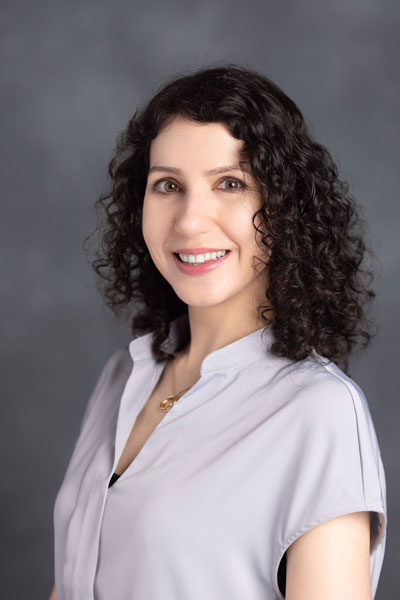
Michel Besserve is a Senior Research Scientist in the Empirical Inference department at the Max Planck Institute for Intelligent Systems in Tübingen, Germany. His research bridges machine learning theory with applications in neuroscience and complex systems analysis. He leads a research group focused on developing causal machine learning tools to uncover the internal structure and transformations of complex artificial, physical, and socioeconomic systems. Dr. Besserve's primary research interests center on causal machine learning and its applications to understanding complex systems. His work investigates how causality can provide principled ways to study and improve AI algorithms, particularly focusing on the identifiability of causal models and the principle of Independence of Causal Mechanisms (ICM). He develops theoretical frameworks and practical tools for causal inference in complex equilibrium systems, neural circuits, and socioeconomic contexts. His research has significant implications for building trustworthy and interpretable AI systems that can reliably handle real-world complexity. Analysis of Dr. Besserve's recent publications reveals a strong focus on causal representation learning, with significant contributions to independent mechanism analysis and the identifiability of nonlinear generative models. His work spans both theoretical foundations and practical applications, connecting machine learning with neuroscience to understand brain function through causal inference. The interdisciplinary nature of his research is evident in publications spanning top machine learning conferences (NeurIPS, ICML, ICLR) and leading neuroscience journals (Nature, PLOS Biology). Dr. Besserve has established productive collaborations across multiple institutions, particularly with researchers at the Max Planck Institute and ETH Zurich. His work demonstrates how integrating causal principles with machine learning can address fundamental challenges in AI robustness and interpretability, with applications ranging from brain network analysis to economic modeling. His research group focuses on developing the Causal Computational Model (CCM) framework, which aims to create digital representations of real-world systems that integrate data, domain knowledge, and interpretable causal structure. This work has potential applications in climate modeling, industrial digital twins, and economic simulation.