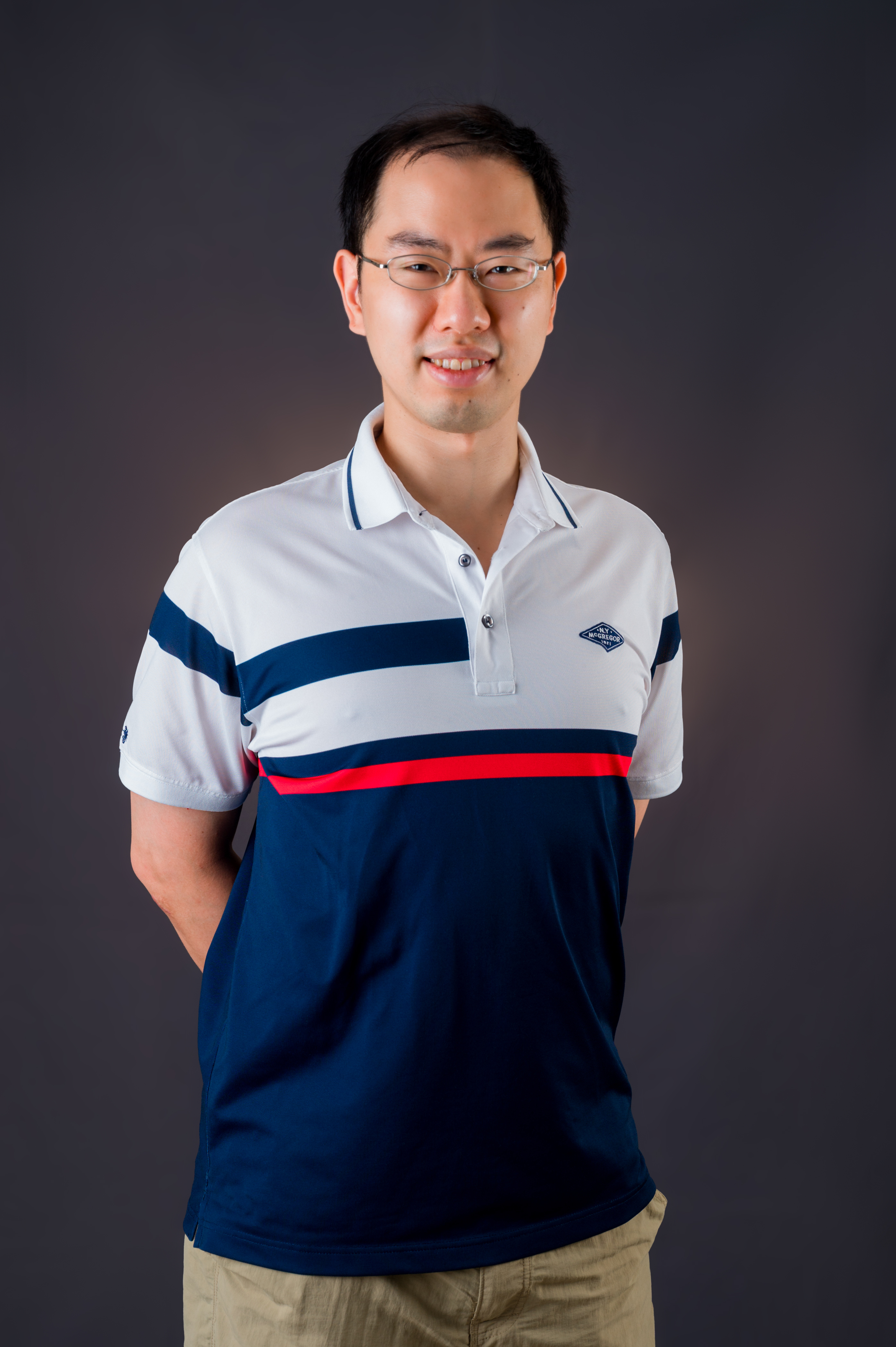
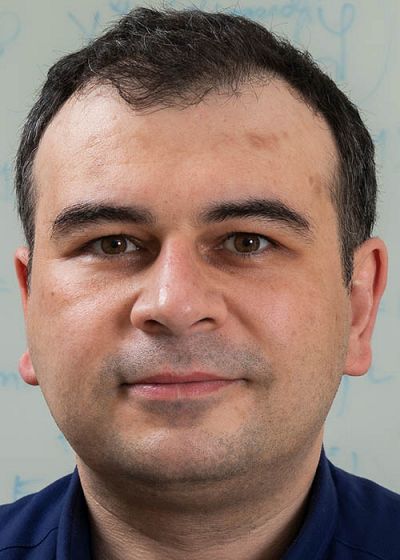
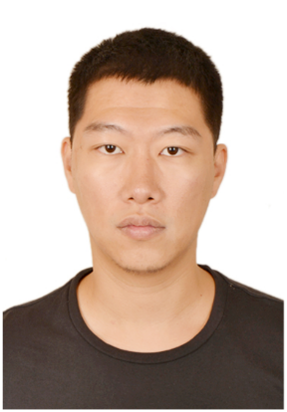
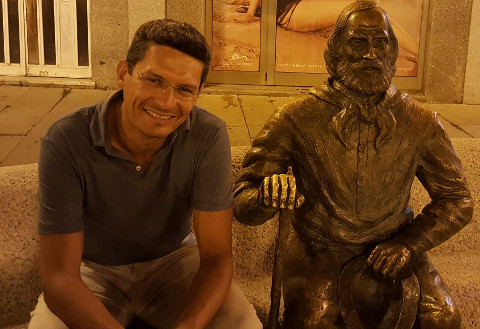
Erik Bekkers is an Associate Professor at the University of Amsterdam's Informatics Institute, leading research in the Machine Learning Lab (AMLab). His work bridges geometric mathematics and machine learning, focusing on developing robust and efficient deep learning architectures grounded in symmetry, equivariance, and physical principles. Education: PhD in Biomedical Engineering (cum laude) from Eindhoven University of Technology Previous Roles: Postdoctoral researcher in applied differential geometry at TU/e Department of Applied Mathematics His research spans: Group convolutional neural networks Symmetry-preserving representation learning Generative modeling on manifolds Physics-informed neural networks Medical imaging applications Recent publications emphasize geometric latent variable models, equivariant diffusion methods, and applications to molecular generation, medical imaging, and physics-driven AI. His team actively explores structure-preserving and self-supervised learning techniques. Scientific Awards MICCAI Young Scientist Award (2018) Philips Impact Award (MIDL 2018) NWO VENI grant: Context-Aware AI in Medical Imaging (2023) NWO VIDI grant: Neural Ideograms - Geometry-Grounded AI (2024) As co-founder of the ICML'24 GRaM workshop , he promotes geometry-grounded approaches in AI. His lab actively investigates geometric regularization, manifold-based PDE forecasting, and symmetry-aware generative methods.
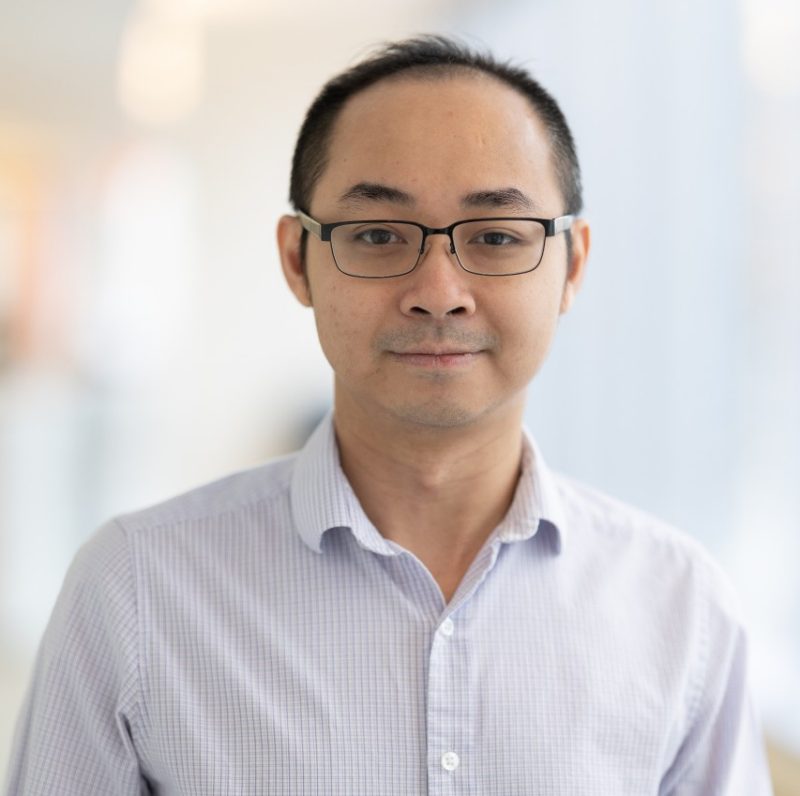
Chung-Wei Lin is an Associate Professor and Deputy Director at the Department of Computer Science and Information Engineering and the Graduate Institute of Networking and Multimedia at National Taiwan University. His research focuses on cyber-physical systems, particularly in the domains of connected and autonomous vehicles, system security, and design methodologies. He maintains active collaborations with industry partners including Toyota and has established himself as a leading researcher in intelligent transportation systems in Taiwan. Education: Ph.D. (2015) from Department of Electrical Engineering and Computer Sciences, University of California, Berkeley (Advisor: Alberto L. Sangiovanni-Vincentelli) M.S. (2007) from Graduate Institute of Electronics Engineering, National Taiwan University (Advisor: Yao-Wen Chang) B.S. (2005) from Department of Computer Science and Information Engineering, National Taiwan University Dr. Lin's research interests center on cyber-physical systems with specific focus on connected and autonomous vehicles, security mechanisms, and system design methodology. Before returning to NTU in 2018, he worked at Toyota InfoTechnology Center, USA, Inc. His recent projects cover diverse topics including systems engineering, formal verification for robustness and compatibility, runtime monitoring, and intelligent intersection management. His work bridges theoretical foundations with practical applications, addressing real-world challenges in transportation systems through innovative technical solutions. Analysis of Dr. Lin's recent publications (2023-2025) reveals a strong emphasis on intelligent transportation systems with particular focus on security challenges for connected vehicles, formal verification techniques for safety-critical systems, and novel control algorithms for vehicle coordination. His research demonstrates increasing integration of machine learning approaches, especially reinforcement learning, to address complex decision-making problems in transportation. The work spans multiple technical domains including control theory, networking, cybersecurity, and formal methods, reflecting the inherently interdisciplinary nature of cyber-physical transportation systems research. Selected Awards: 2016 Best Paper Award, ACM Transactions on Design Automation of Electronic Systems 2015 Most Accessed ESL Paper Best Paper Award, IEEE ISSREW 2016 workshop Best Paper Award, ICCD 2010 Best Paper Nominee, ASP-DAC 2015 Dr. Lin currently advises multiple Ph.D. and M.S. students, with research focusing on various aspects of cyber-physical systems for transportation. His group includes Ph.D. students Pintusorn Suttiponpisarn and I-Ching Tseng, as well as several M.S. students. His extensive publication record and numerous patents (over 20 granted) indicate significant research impact and likely substantial research funding from both government and industry sources. His research program demonstrates strong translational potential, with many concepts moving from theoretical foundations to practical implementations. Dr. Lin leads the Cyber-Physical Systems Laboratory at NTU, which focuses on research related to intelligent transportation systems. The lab conducts research in areas including vehicle control, intersection management, security mechanisms, and formal verification for cyber-physical systems. His team collaborates with researchers from various institutions globally, as evidenced by his extensive publication record with international co-authors from universities and research institutions in the United States, Japan, and Europe.
Zin Lin is an Assistant Professor in the Bradley Department of Electrical and Computer Engineering at Virginia Tech, based at the Virginia Tech Research Center in Arlington. His research focuses on inverse design principles in nanophotonics, computational modeling, and scientific machine learning, with applications in quantum photonics, electromagnetics, and optical imaging. He leads the Inverse Design and Discovery Group, emphasizing large-scale optimization for physical systems and novel device discovery through physics-based AI. Education: Postdoc in Applied Mathematics at MIT (2018–2022), Ph.D. in Applied Physics from Harvard University (2018), and a B.A. in Physics and Mathematics from Wesleyan University (2012). He is a recipient of the National Science Foundation Graduate Fellowship (2014–2018). Research interests include inverse design of nanophotonic devices, topology optimization, quantum optics, and computational imaging. His group explores cutting-edge topics like metasurface engineering, terahertz wave generation, and bio-chemical sensing through physics-driven optimization frameworks. Recent work emphasizes scalable optical systems, such as end-to-end optimized metalenses and meta-optics for imaging, as well as quantum control in graphene-based metasurfaces. Key contributions span nonlinear frequency conversion, high-energy particle detection via nanophotonic scintillators, and topology-optimized multi-layered optical systems. Notable awards include the NSF Graduate Fellowship. His team actively pursues interdisciplinary projects at the intersection of wave physics, machine learning, and high-performance computing, with open positions for PhD students and postdocs.
Dr. Zhiyuan Tan is an Associate Professor in the School of Computing at Edinburgh Napier University (ENU), specializing in cybersecurity research. He holds a PhD in Computer Systems from the University of Technology Sydney (UTS), Australia (2014), an MEng from Beijing University of Technology, China (2008), and a BEng with high distinction from North-eastern University, China (2005). Before joining ENU in 2016, Dr. Tan held research positions at the University of Twente (Netherlands), University of Technology Sydney (Australia), and La Trobe University (Australia). Dr. Tan's research focuses on cybersecurity, machine learning, data analytics, virtualisation, and cyber-physical systems. His work has resulted in over 44 scholarly publications with an H-Index of 13 and more than 830 citations according to Google Scholar. His recent publications demonstrate a continued focus on network security, intrusion detection systems, and the application of machine learning techniques to cybersecurity challenges, with publications spanning from 2022-2025 in top venues including IEEE Transactions and international conferences. Dr. Tan has received significant research funding, including AUD 27,800 from CSIRO and UTS for autonomous network intrusion detection research and £6,987 from ENU for securing future 5G health care systems. His research has been recognized with awards including the National Research Award 2017 from the Research Council of the Sultanate of Oman, a Best Paper Award, and the Kaspersky Lab's Annual Student Cyber Security Conference Finalist Award. National Research Award 2017 from the Research Council of the Sultanate of Oman Best Paper Award Kaspersky Lab's Annual Student Cyber Security Conference Finalist Award Dr. Tan has mentored 9 PhD students over the past 5 years, with 6 successfully completing their studies. His students have produced 12 journal and 10 conference publications. He has also served as an editorial board member for international journals, organized special issues, and participated as a technical program committee member for major international conferences. Dr. Tan is currently recruiting PhD students for research projects on network security, adversarial machine learning for anomaly/malware detection, virtualization security, and IoT security.
Sai Mounika Errapotu is an Assistant Professor in the Department of Electrical and Computer Engineering at the University of Texas at El Paso (UTEP). She leads the Cyber Physical Systems Privacy and Security Enhanced Computing (CyPSEC) Lab, focusing on developing practical security and privacy solutions for hardware and software systems in distributed networks, IoT, and smart grids. Her research integrates cryptography, differential privacy, and optimization to address emerging challenges in cyber-physical systems. Education: Ph.D. in Electrical and Computer Engineering (University of Houston, 2018), B.Tech. in Electronics and Communication Engineering (Jawaharlal Nehru Technological University, 2013). Postdoctoral work: AI, Networking Technologies, and Security Lab, University of Houston (2018–2019). Her research interests span cybersecurity, privacy-preserving protocols, trust modeling, and optimization in smart grids, IoT, and wireless networks. She emphasizes application-specific solutions that balance security, privacy, and scalability. Recent articles highlight advancements in intrusion detection via GANs and neural networks, smart home IoT security protocols, and privacy-preserving techniques in healthcare and transportation systems. Major Grants: $782,500 ARL grant for GAN-based intrusion detection, $1.1M DOE NNSA consortium for power systems, and $140K PNNL grant for healthcare synthetic data. Awards: Miguel Izquierdo Teaching Excellence Award (2021), Rising Stars Award, and Best Dissertation Award (2018). Advising highlights include mentoring students like Humaira (CPS Rising Star), Nicholas Lopez (M.S. grad in IoT security), and Ismael Holguin (LLNL intern). The CyPSEC Lab actively publishes in IEEE and NAPS conferences, addressing vulnerabilities in protocols like DNP3 and smart home IoT systems. Labs/Teams: CyPSEC Lab focuses on bridging theory and practice in CPS security, collaborating with industry partners and national labs.
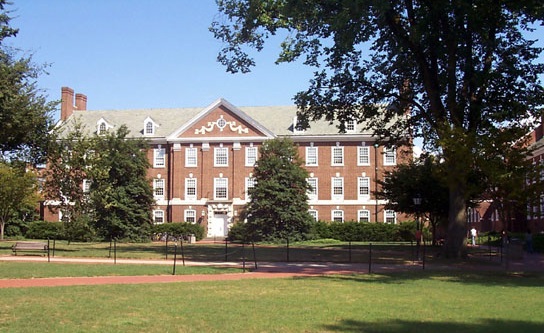
Mohsen Badiey , Professor in the Department of Electrical and Computer Engineering at the University of Delaware's College of Engineering, leads the Ocean Acoustics & Engineering Laboratory (OAELab) with facilities at Evans Hall and STAR campus. His interdisciplinary work spans applied physics, mechanical systems, ocean sensing, and computational signal analysis. Research Focus: Geoacoustic inversion, waveguide physics, machine learning for seabed classification, and underwater communication challenges. Key Projects: Shallow Water 2006 (SW06) and Shallow Water Acoustic in Random Media (SWARM95) experiments analyzing nonlinear internal wave dynamics. Scientific Contributions include developing dictionary learning techniques for sound speed profile analysis, advancing graph neural networks for underwater signal processing, and studying acoustic propagation through intense internal waves. His work emphasizes both fundamental and applied research with field data collection and computational modeling. Recent Publications demonstrate expertise in physics-based machine learning for source localization, seabed classification, and time-varying signal reconstruction. His team's 2024 studies on transiting ocean observers and Sobolev graph networks highlight cutting-edge methodologies. Laboratory: OAELab employs specialized instrumentation for broadband acoustic signal analysis, combining experimental data with computational approaches to solve real-world oceanographic problems.
Emrah Akyol is an Associate Professor in the Electrical and Computer Engineering Department at Binghamton University (SUNY). He joined in 2017 after postdoctoral research at the University of Illinois at Urbana-Champaign (UIUC) and the University of Southern California (USC). He holds a PhD from UC Santa Barbara (2011) and prior industry experience at HP and NTT Docomo. Education: PhD in Electrical and Computer Engineering, UC Santa Barbara (2011) Postdoctoral Researcher at USC (2013–2014) and UIUC (2014–2017) Research: Focuses on game theory, control systems, and secure cyber-physical systems. Key areas include strategic communication, opinion dynamics in social networks, and stealthy attacks in multi-agent systems. Recent work addresses bounded rationality in data gathering and network topology inference. Awards: NSF Career Award (communication over human networks), Binghamton's Interdisciplinary Collaboration Award (with Economics/Political Science), and CoCo Seed Grant (CPS security). Advising & Grants: Supervised PhD/Master’s students Anju Anand, Xilin Zhang, and Griffin Rule (recipient of ECE MS Research Award). Active grants include NSF Career and CoCo Seed. Labs/Teams: Leads research on secure cyber-physical systems and game theory applications. Collaborates with UIUC and organizes conferences like DSAA’20.
Dr. Beeshanga Abewardana Jayawickrama is a Senior Lecturer and Data Science Engineering Course Director at the School of Electrical and Data Engineering, University of Technology Sydney (UTS). He holds a BEng in Telecommunications Engineering (Hons I) and a PhD in Electronic Engineering (Wireless Communications) from Macquarie University, Sydney, Australia, completed in 2011 and 2015 respectively. As a Senior Member of the Institute of Electrical and Electronics Engineers (IEEE), he maintains active research and industry collaborations. His educational background includes: BEng in Telecommunications Engineering (Hons I), Macquarie University (2011) PhD in Electronic Engineering (Wireless Communications), Macquarie University (2015) Dr. Jayawickrama's research focuses on cutting-edge wireless communication technologies with particular emphasis on 5G/6G Physical Layer signal processing algorithms, Machine Learning techniques for Physical Layer signal processing, Ultra-Reliable Low-Latency Communications, Non-Terrestrial Networks, Compressed Sensing (Sub-Nyquist Sampling), and spectrum sharing. His work bridges theoretical innovation with practical implementation, evidenced by numerous patents and industry collaborations. He has published over 40 prestigious conference and journal papers while developing algorithms that have been incorporated into commercial 5G base stations. Analysis of his recent publications reveals a strong focus on satellite communications, particularly cognitive GEO-LEO satellite networks, where he explores spectrum sharing, beam design, and interference management. His research increasingly integrates machine learning techniques with traditional signal processing approaches, especially for spectrum sensing and channel estimation in next-generation wireless systems. The trend shows growing emphasis on practical implementation and experimental validation of theoretical concepts. His scientific recognition includes: Macquarie University Medal in Engineering Vice-Chancellor's Commendation for Academic Excellence Outstanding Teacher Award (2021) Multiple competitive scholarships from Macquarie University and CSIRO In terms of teaching and supervision, Dr. Jayawickrama has taught numerous undergraduate and postgraduate subjects including Advanced Telecommunication Engineering, 4G/5G Mobile Technologies, Communication Systems, and Engineering Research Thesis. His current research is supported by significant grants including the AI-SSPCAS project (CSIRO), Smart Flood and Storm Intelligence Sensing Initiative (NSW Department), and CogSat: Cognitive Satellite Radio (SmartSat CRC). Previously, he has secured research funding from Intel Corporation and Nokia Research Centre. Dr. Jayawickrama has held leadership roles including Course Director for Data Engineering since 2021 and UTS IEEE Student Branch Counsellor from 2017-2020. His industry experience includes research positions at Ericsson in Sweden (working on 5G New Radio receiver algorithms) and Intel Labs in the USA (working on Licensed Shared Access and Citizens Broadband Radio Service).
Dr. Tapabrata Chakraborty is a Principal Research Fellow at University College London (UCL) Cancer Institute and an Honorary Associate Professor in UCL's Department of Medical Physics and Biomedical Engineering. He serves as Lead Tutor for Information Engineering at the University of Oxford's Engineering Science Department and is a non-stipendiary Fellow of Linacre College, Oxford. As Theme Lead for the Alan Turing Institute's partnership with Roche, he drives advancements in transparent AI for precision healthcare. He is an invited expert on Responsible AI with the Global Partnership on AI (GPAI) and an Associate Editor for Springer Nature Computer Science . His research focuses on developing reliable AI systems for biomedicine, particularly leveraging multimodal data (imaging, clinicogenomics) in cancer research. He emphasizes explainable AI mechanisms, personalized uncertainty quantification, and ethical AI governance. His work has led to tools like 2dSpAn-Auto for spine analysis and frameworks like Pan-Ret for retinal disease detection. Education: PhD (details unspecified) Key Roles: Turing-Roche Partnership Lead, GPAI Advisor, HEA/IET Fellow His publications highlight breakthroughs in medical AI, including uncertainty quantification and multimodal data fusion. He advocates clinician-AI collaboration and policy-driven AI safety. Current projects include fair AI for skin lesion classification and drug discovery via synthetic data generation. Awards: HEA Fellowship, IET Fellowship Team Leadership: Oversees early-career researchers at Turing/UCL
Professor Ningqun Guo holds the dual roles of Professor in Mechanical Engineering and Head of School for both the Malaysia School of Engineering and School of Information Technology at Monash University Malaysia. He previously served at Nanyang Technological University, Singapore. His academic journey includes a B.Eng from Nanjing University of Aeronautics and Astronautics (China) and a PhD from Imperial College London (UK). His research focuses on stress wave propagation, ultrasound applications, smart materials, nondestructive testing, and civil infrastructure analysis. He has published over 130 papers, secured S$2 million in research grants, and supervised over 10 PhD students. Key research areas include ultrasonic technology for material characterization, smart material systems, and image processing for infrastructure monitoring. His work aligns with UN Sustainable Development Goals, emphasizing sustainable infrastructure and innovation. Notable collaborations span global institutions, with recent projects exploring AI-driven pavement crack detection, transparent object reconstruction, and 3D imaging systems. His contributions to magnetorheological fluid applications and nanofluidics further underscore his interdisciplinary impact. Grants and funding have supported projects in sensor development, structural health monitoring, and advanced imaging technologies. His advisory work has produced impactful PhD graduates in mechanical engineering and materials science. Prof. Guo leads research teams focused on smart materials, nondestructive evaluation, and computational imaging. His lab integrates experimental and theoretical approaches to solve challenges in infrastructure, photonics, and nanotechnology.
Surya Nurzaman is a Senior Lecturer at Monash University Malaysia, specializing in soft robotics, embodied intelligence, and bio-inspired systems. He holds a PhD from Osaka University (2011) and has held research fellowships at ETH Zürich and the University of Cambridge. His work bridges robotics engineering with biomedical applications, emphasizing interdisciplinary collaboration. He teaches courses such as Dynamics II, Electromechanics, and Engineering Design. Research focuses on soft robotics for industrial and biomedical applications, including soft grippers, exoskeletons, and adaptive control systems. Projects include aerial robotics for oilfield inspection and AI-driven sensor frameworks. Nurzaman has received awards like the ITEX 2021 Gold Medal and the 2024 School of Engineering Excellence Award. He is actively involved in editorial roles for journals like IEEE Robotics & Automation Magazine and Frontiers in Robotics and AI. His contributions span over 50 publications, with recent work addressing tremor prediction, soft sensor modeling, and cross-domain learning. Collaborations include international partners in Japan, Switzerland, and the UK. Nurzaman’s research aligns with UN SDGs, particularly in advancing sustainable industry solutions and health innovations.
Xin Liu is an Adjunct Professor in the Department of Civil Engineering at the Faculty of Engineering. His research focuses on cybersecurity, machine learning applications, and IoT security, with a particular emphasis on network intrusion detection, data compression, and risk-aware access control systems. He holds a Ph.D. from the University of Ottawa, Canada, and M.Sc. and B.Sc. degrees from Hebei University of Technology, China. Education: Ph.D., University of Ottawa, Canada M.Sc., Hebei University of Technology, China B.Sc., Hebei University of Technology, China Research Interests: Dr. Liu's work bridges machine learning and cybersecurity, addressing challenges in IoT security, adversarial attacks, and network traffic analysis. His contributions include developing AI-driven intrusion detection systems, optimizing data compression techniques for IoT devices, and formulating risk-aware access control frameworks. Recent efforts focus on advanced persistent threats (APTs) and privacy leakage mitigation in language models. Articles Trends: His publications emphasize practical applications of machine learning in cybersecurity, including network attack detection, privacy-preserving methods, and resilient IoT infrastructure. Recent work highlights innovations in transformer-based models for intrusion detection and realistic benchmarking for APT simulations. Awards: No scientific awards explicitly mentioned in the provided materials. Advising & Grants: No advising records or grant information available in the current data. Labs/Teams: No specific lab affiliations or collaborative teams noted in the profile.
Marco Baiesi is an Associate Professor in the Department of Physics and Astronomy at the University of Padua. His research focuses on nonequilibrium systems, polymers, biopolymers, topology, and machine learning applications in physics and biophysics. He has contributed to understanding the statistical mechanics of complex systems, including polymer dynamics, topological effects, and non-equilibrium thermodynamics. His work spans interdisciplinary areas such as biophysics, soft condensed matter, and machine learning for medical diagnostics. Notable contributions include studies on knotted polymer behavior, entropy production in non-equilibrium systems, and the application of AI to EEG-based dementia classification. Baiesi’s publications frequently explore topics like fluctuation theorems, stochastic processes, and the interplay between topology and material properties. His research has been published in high-impact journals such as Science , Physical Review Letters , and New Journal of Physics .
Professor Anil Bharath holds the role of Professor of Biologically-Inspired Computation & Inference in the Department of Bioengineering at Imperial College London. He serves as Academic Director of Imperial Global: Singapore and co-leads the IN-CYPHER research program on AI-driven healthcare security. His research focuses on machine learning, deep networks, and biomedical applications. He earned his BEng from UCL and PhD from Imperial College, followed by roles including President of the City and Guilds College Association (2022-2024). Research Interests: Machine learning, neural networks, medical imaging, and biologically-inspired computation. Notable contributions include 2D steerable filters for shape detection (1998), Bayesian marginalisation in early computer vision, and deep learning for cardiac MRI analysis. He co-founded Cortexica Vision Systems (acquired by Zebra Technologies in 2019), applying biological neuron models to visual search technology. Labs & Affiliations: Director of the BICI Lab, affiliated with the Data Science Institute, Centre for Neurotechnology, and multiple healthcare networks. His work spans interdisciplinary projects in AI for healthcare, cardiovascular engineering, and medical device innovation. Publications: Recent work emphasizes AI in cardiology (e.g., MRI analysis for mitral regurgitation, aortic stenosis detection) and synthetic data privacy. His research bridges computational models with clinical interpretability, addressing challenges in medical imaging efficiency and diagnostic accuracy.
Dr. Robert Lieck is an Assistant Professor in the Department of Computer Science at Durham University. He holds a PhD from the Machine Learning and Robotics Lab (now Learning and Intelligent Systems Lab) in Stuttgart/Berlin, Germany, and completed a postdoctoral position at the Digital and Cognitive Musicology Lab at EPFL, Switzerland. His research focuses on interdisciplinary applications of machine learning and artificial intelligence, with particular emphasis on cognitive modelling, music cognition, and ethical AI. Education: PhD in Machine Learning and Robotics, Stuttgart/Berlin, Germany (2012–2017) MSc Physics and Philosophy, Freie Universität Berlin Research Interests: Probabilistic Modelling (Bayesian inference, graphical models) Neuro-Symbolic Modelling (differentiable parsing algorithms) Structure Learning (feature discovery, hierarchical systems) Applications in music analysis, medical imaging, and autonomous systems Ethical implications of AI in policy and legislation Publications: Recent work includes advancements in deep reinforcement learning for diabetes management, recursive Bayesian networks, and computational models of musical expectancy. His research bridges theoretical AI with practical applications in musicology and healthcare. Students: Supervising four postgraduate students: Ishaq Ibrahim, Megan Finch, Ningxiang Xie, Xiaotang Zhang Labs: Active contributor to the Digital and Cognitive Musicology Lab (EPFL) and Durham's Computer Science research groups.