Swiss Federal Institute of Technology in LausanneSwitzerland
Natalia Díaz Rodríguez is an Assistant Professor of Artificial Intelligence at ENSTA ParisTech, where she works in the Computer Science and Systems Engineering department within the Autonomous Systems and Robotics Lab (U2IS). She is also affiliated with the INRIA Flowers team, focusing on developmental robotics. Her research spans deep learning, reinforcement learning, continual learning, and symbolic AI, with applications in explainable AI, computer vision, and robotics for social good. Her academic background includes a double PhD in Artificial Intelligence from Abo Akademi University and the University of Granada, alongside MSc degrees in Soft Computing and Computer Engineering from the University of Granada. She contributes to interdisciplinary AI, particularly in robotics, ethics, and healthcare applications, and co-organizes workshops on continual learning. Double PhD in Artificial Intelligence (2015), Abo Akademi University and University of Granada Doctoral diploma on Innovation and Entrepreneurship (2017), EIT Digital MSc in Soft Computing and Intelligent Systems (2012), University of Granada MSc in Computer Engineering (2010), University of Granada Her recent publications focus on trustworthy AI, including bias identification, counterfactual explanations, and continual learning strategies, reflecting her commitment to ethical and robust AI systems. She also explores AI applications in structural engineering, climate visualization, and financial risk assessment, emphasizing practical deployment and interpretability.
Swiss Federal Institute of Technology in LausanneSwitzerland
Florent Krzakala is a Full Professor at École polytechnique fédérale de Lausanne (EPFL) in Switzerland, holding positions across multiple departments including the School of Basic Sciences (SB), School of Engineering (STI), and specifically within the Department of Physics (IPHYS) and Department of Electrical Engineering (IEM). He leads the Information, Learning and Physics Laboratory (IdePHICS) and maintains an office at ELD 239, Station 11, 1015 Lausanne. His research bridges statistical physics and computational disciplines, with significant contributions to understanding the theoretical foundations of machine learning and optimization problems. Dr. Krzakala received his MSc in Physics from Orsay, France in 1999, followed by a PhD in Statistical Physics from Orsay, Paris XI, France in 2002, and completed a postdoctoral position at Roma La Sapienza in 2004. This strong foundation in physics has informed his interdisciplinary approach to computational problems. His research interests span Statistical Physics, Machine Learning, Probability and Statistics, Computer Science, Information Theory, Inference on Graphs, Random Constraint Optimization, and Computational Optics. Krzakala's work focuses on applying methods from statistical physics to problems in theoretical computer science, probability, and machine learning. He investigates how concepts from disordered systems and phase transitions can illuminate computational barriers in optimization and inference tasks. His research has particular relevance for understanding the behavior of neural networks, compressed sensing, and high-dimensional statistical models. Analysis of his recent publications reveals a strong trend toward understanding the fundamental limits of learning in high-dimensional settings, with particular emphasis on phase transitions, statistical-to-computational gaps, and the theoretical properties of deep learning architectures. His work frequently bridges rigorous mathematical analysis with practical machine learning applications, demonstrating how insights from statistical physics can inform algorithm design and theoretical understanding in AI. Krzakala actively mentors the next generation of researchers, supervising numerous PhD students whose work continues to advance these interdisciplinary fields. His laboratory serves as a hub for researchers exploring the intersection of physics and computation, fostering collaborations across traditional disciplinary boundaries. He teaches advanced courses including Fundamentals of Inference and Learning, Statistical Physics, and Statistical Physics for Optimization & Learning, which examine the connections between physical principles and computational methods. His educational materials, including lecture notes on statistical physics methods in optimization and machine learning, have become valuable resources for students and researchers worldwide. As founder and scientific advisor of the startup Lighton, Krzakala has also demonstrated a commitment to translating theoretical insights into practical applications, particularly in the realm of optical computing for machine learning tasks.
Swiss Federal Institute of Technology in LausanneSwitzerland
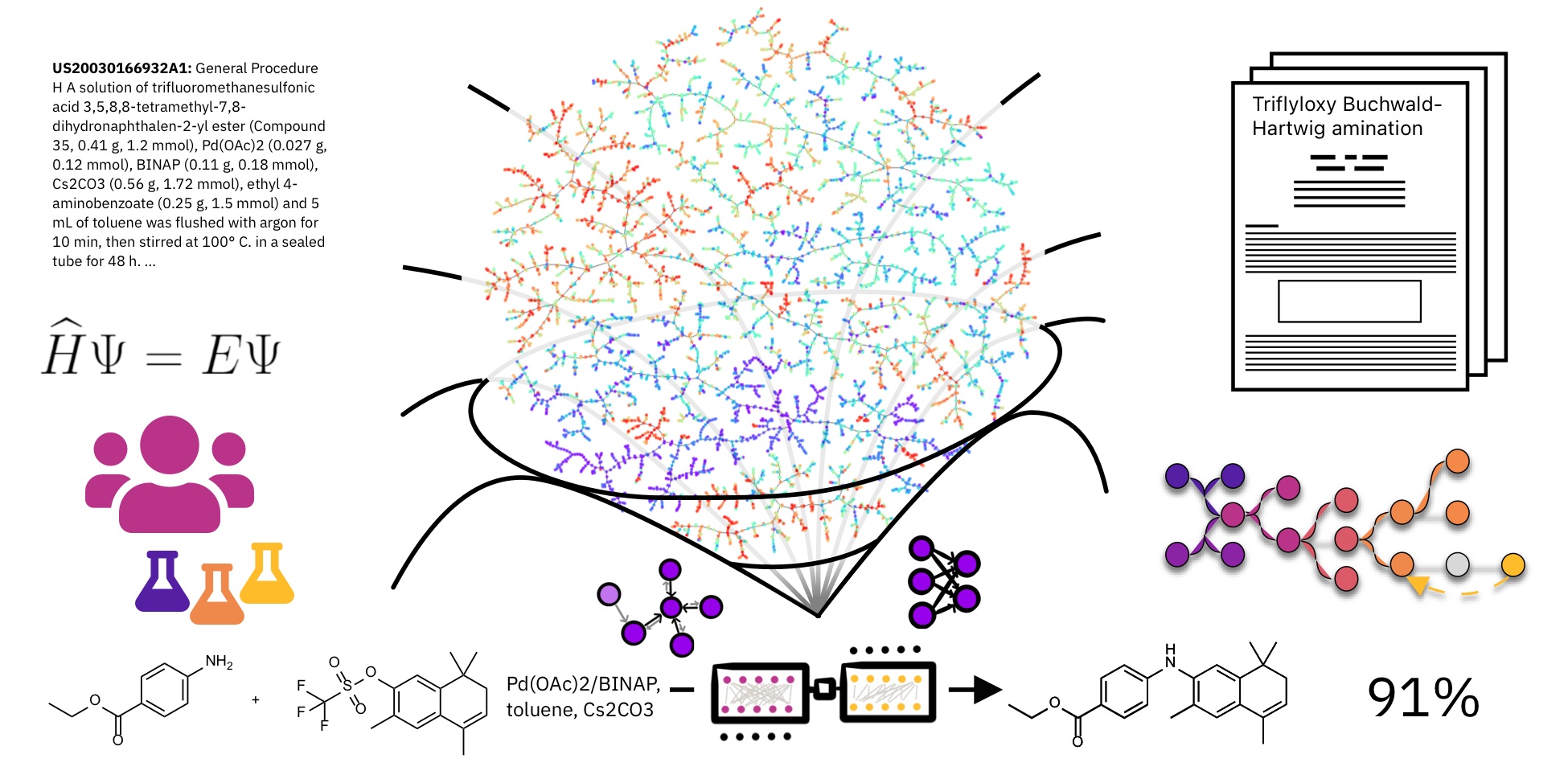
Philippe Schwaller is a Tenure Track Assistant Professor at École Polytechnique Fédérale de Lausanne (EPFL), School of Basic Sciences, within the Institute of Chemical Sciences and Engineering. He leads the Laboratory of Artificial Chemical Intelligence (LIAC), a research group focused on leveraging artificial intelligence to accelerate molecular discovery and sustainable chemistry. He is also a core Principal Investigator of the NCCR Catalysis, a national Swiss research center. His research lies at the intersection of chemistry, materials science, and computer science, with a strong emphasis on developing machine learning models for molecular design and synthesis. LIAC's work is driven by real-world sustainability challenges, aiming to reduce the time and cost of discovering new functional molecules and materials. The recent publications and projects from his lab highlight a strong trend in generative AI for chemistry, including memory-augmented models, hypergraph neural networks, and large language models tailored for scientific discovery. These efforts are complemented by educational initiatives such as the 'AI for Chemistry' course and practical programming resources for chemists. He actively supervises a diverse group of PhD students and contributes to multiple doctoral programs at EPFL, including EDCH and EDPY. His teaching portfolio includes courses on computational chemistry, AI applications in chemistry, and scientific machine learning. Philippe Schwaller is deeply involved in advancing AI-driven scientific discovery through both research and education, positioning his lab at the forefront of artificial chemical intelligence. The lab maintains active open-source contributions on GitHub, fostering collaboration and transparency in scientific AI development.
Swiss Federal Institute of Technology in LausanneSwitzerland
Xuming He is an Associate Professor at the School of Information Science and Technology (SIST), ShanghaiTech University, where he leads the PLUS Lab. His research spans computer vision and machine learning with a focus on developing algorithms that operate effectively under limited supervision and evolving data conditions. His core research interests include weakly-supervised and few-shot learning for scenarios with sparse annotations, continual learning frameworks for knowledge retention during sequential task acquisition, semantic segmentation techniques for scene understanding, and multimodal vision-language representations. He emphasizes interpretable machine learning to build transparent AI systems capable of human-understandable reasoning, addressing critical challenges in model trustworthiness and deployment reliability. Recent publications reveal strong trends toward novel class discovery in long-tailed recognition scenarios, physics-informed generative modeling for scientific applications, and robust segmentation under distribution shifts. His work increasingly integrates large language models for multimodal reasoning while maintaining focus on efficiency in resource-constrained environments like robotic grasping and medical imaging analysis. He actively mentors students, having supervised Qian He to PhD completion and Chuanyang Hu to Master's degree in 2023. He welcomes prospective graduate students through ShanghaiTech's Computer Science & Technology program and offers undergraduate research projects requiring minimum six-month commitments. The PLUS Lab under his direction drives innovation in learning under supervision constraints, with recent work spanning medical tumor analysis, cross-view geolocation, photonic computing, and semiconductor design verification. The lab's research bridges theoretical advances with practical applications across healthcare, robotics, and scientific discovery domains.
Swiss Federal Institute of Technology in LausanneSwitzerland
Lenka Zdeborová is an Associate Professor at EPFL, jointly affiliated with the School of Basic Sciences and School of Computer and Communication Sciences. She leads the Laboratory of Statistical Physics of Computational Systems, where her research bridges statistical physics, machine learning, and computational biology. Education: PhD in Physics, Université Paris-Cité (2012) MSc in Fundamental Physics, École Normale Supérieure (2009) BSc in Physics, École Normale Supérieure de Lyon (2007) Her work focuses on phase transitions in learning algorithms, high-dimensional statistics, and neural network theory. Current projects investigate fundamental limits of machine learning, dynamics of graph neural networks, and applications to biological systems. Recent publications explore attention mechanisms in transformers, neural network depth advantages, and Bayes-optimal learning. Methodological innovations include cavity methods for hypergraphs and analysis of high-dimensional inference problems. Supervises doctoral students researching statistical physics approaches to machine learning and optimization. Teaches graduate courses in data science and machine learning for physicists.
Swiss Federal Institute of Technology in LausanneSwitzerland
Carlo D'Eramo is Professor and Head of the Reinforcement Learning and Computational Decision-Making professorship at the Center for Artificial Intelligence and Data Science (CAIDAS) of University of Würzburg. He additionally serves as an independent group leader of hessian.AI, focusing on developing lightweight methods to obtain adaptive autonomous agents that can handle real-world complexity. His academic journey includes: B.Sc. in Computer Engineering from Politecnico di Milano (2011) M.Sc. in Computer Engineering from Politecnico di Milano (2015) Double degree in Computer Science from University of Illinois at Chicago (2015) Ph.D. in Information Technology from Politecnico di Milano (2019) Postdoctoral research at TU Darmstadt's Intelligent Autonomous Systems group (2019-2022) D'Eramo leads the LiteRL research group investigating how agents can efficiently acquire expert skills accounting for real-world complexity. His research spans multiple reinforcement learning domains including multi-task, curriculum, adversarial, options, and multi-agent RL. His work bridges theoretical advances with practical applications, particularly in robotics and decision-making systems. His recent publications (2023-2025) demonstrate significant contributions across exploration strategies, neural network architectures, multi-agent coordination, and physics-informed machine learning. His work frequently appears in top-tier venues including TMLR, RLJ, IEEE PAMI, ICML, and ICLR, with multiple papers receiving spotlight or oral presentation designations. Professional activities include: Senior area chair for RLC Area chair for AAAI, ACML, AISTATS, NeurIPS, and ICLR Reviewer for DFG and ERC proposals Creator of MushroomRL reinforcement learning framework D'Eramo actively contributes to academic community service while mentoring researchers in his group. His work on lightweight methods aims to make reinforcement learning more practical for real-world applications across various domains.
Prof. Robert Grass is a Lecturer at the Department of Chemistry and Applied Biosciences at ETH Zurich, affiliated with the Institute for Chemical and Bioengineering Sciences. His research focuses on innovative applications of nanotechnology, DNA-based storage systems, and sustainable catalytic processes for CO2 valorization. Grass has pioneered silica-encapsulated DNA technologies for traceability in healthcare, environmental monitoring, and anti-counterfeiting measures. His work bridges chemical engineering with information technology, addressing challenges in long-term data preservation and molecular-level security. Current projects include developing compostable DNA storage materials and designing catalysts for methanol synthesis from CO2, contributing to both environmental sustainability and energy systems. Grass's interdisciplinary approach integrates nanomaterials design, enzymatic processes, and machine learning to advance next-generation storage and sensing technologies. Research Interests: Development of DNA-based storage systems with error-correction mechanisms Nanoparticle engineering for medical and environmental applications Catalytic materials for CO2 conversion and green chemistry Bio-inspired security systems using molecular randomness Sustainable materials for long-term data preservation His recent work highlights advancements in silica-encapsulated DNA tracers for tracking pathogen transmission dynamics, as well as low-nuclearity catalysts enabling efficient methanol synthesis from CO2. Grass actively explores the intersection of nanotechnology and digital information, including cryptographic applications leveraging DNA's inherent complexity.
Arnulf Jentzen is a distinguished mathematician holding dual positions as Presidential Chair Professor at the School of Data Science and Shenzhen Research Institute of Big Data at The Chinese University of Hong Kong, Shenzhen, and as Full Professor at the Faculty of Mathematics and Computer Science at the University of Münster, Germany. His research spans multiple institutions with significant contributions across mathematical disciplines. His primary research interests include dynamical systems and gradient flows (particularly geometric properties, domains of attractions, blow-up phenomena), analysis of partial differential equations, stochastic analysis (including stochastic calculus and well-posedness analysis), machine learning (with focus on mathematics for deep learning and stochastic gradient descent methods), and numerical analysis (particularly computational stochastics and computational finance). His work demonstrates a strong interdisciplinary approach bridging pure mathematics with practical computational applications. Jentzen's publication record shows a clear trend toward machine learning applications in solving complex mathematical problems, particularly in overcoming the curse of dimensionality in high-dimensional PDEs through deep neural networks. His research group actively publishes on optimization methods like Adam, convergence analysis, and applications of deep learning to partial differential equations and optimal control problems. ICBS Frontier of Science Award in Mathematics (2024) Fellow, Lamarr Institute (2023) ERC Consolidator Grant (2022) Joseph F. Traub Prize for Achievement in Information-Based Complexity (2022) Felix Klein Prize, European Mathematical Society (EMS) (2020) Professor Jentzen advises numerous PhD students across both institutions and serves on multiple editorial boards including SIAM Journal on Numerical Analysis, Journal of Complexity, and Communications in Computational Physics. His research group at Münster and CUHK-Shenzhen focuses on developing mathematical foundations for machine learning with applications to scientific computing problems. He has received significant research funding including an ERC Consolidator Grant, supporting his interdisciplinary work at the intersection of mathematics and artificial intelligence.
Jie Song is a postdoctoral researcher at ETH Zurich affiliated with the Advanced Interactive Technologies lab. Their work bridges structured information and deep learning pipelines, with applications in hand/body-pose estimation, 3D human reconstruction, and view synthesis. Research Interests: Deep Learning, Computer Vision, 3D Reconstruction, Human Pose Estimation, Motion Capture, 6D Pose Estimation Affiliation: ETH Zurich, Advanced Interactive Technologies lab Jie's recent publications (2023-2025) focus on monocular video-based 3D human modeling, Gaussian rendering, and motion synthesis. Collaborations span institutions like ETH Zurich and MPI Tuebingen, with applications in robotics, augmented reality, and sports analytics. Scientific Awards: 3DV Best Paper Award (2017), Qualcomm Innovation Fellowship Finalist (2015), Swisscom Innovation Award (2014), Birkigt Scholarship (2013), National Scholarship (2009/2010) Jie has supervised multiple student projects, including personalized neural avatars and skeleton-based motion modeling. They serve as a Teaching Assistant for courses like Visual Computing and Machine Perception at ETH Zurich.
Swiss Federal Institute of Technology in LausanneSwitzerland
Anastasios Vassilopoulos serves as Head of the Composite Mechanics Group (GR-MeC) and Adjunct Professor at École Polytechnique Fédérale de Lausanne (EPFL), within the School of Architecture, Civil and Environmental Engineering. He directs the Doctoral Program in Civil and Environmental Engineering while maintaining active roles in the Structural Engineering Group and School Council. His research focuses on composite materials for renewable energy infrastructure , particularly wind turbine rotor blades. Key areas include fatigue analysis of adhesively bonded joints, experimental methods for FRP composites under complex loading, and design methodologies for composite structures. His work bridges fundamental mechanics with industrial applications through extensive collaboration with wind energy stakeholders. Analysis of his 15 most recent publications reveals dominant themes in thick adhesive joint mechanics (73% of articles), fatigue/fracture characterization (67%), and machine learning applications (40%). The research consistently targets wind turbine blade challenges, with 87% of articles addressing specific aspects of renewable energy infrastructure. Methodological trends show increasing integration of computational-experimental approaches and AI-driven predictive modeling. Dr. Vassilopoulos has secured 18 major research projects since 2000, primarily funded by Swiss National Science Foundation and international collaborations. Current projects include NSF-funded work on wind turbine blade adhesive joints (2020-2024) and fire-resistant composite bridge decks. His teaching portfolio includes advanced courses on composites design, structural mechanics, and floating offshore renewables. As Doctoral Program Director, he oversees PhD training while personally supervising 17 doctoral students to completion.
University of Applied Sciences and Arts LucerneSwitzerland
Umberto Michelucci is a Professor of Scientific Machine Learning at Lucerne University of Applied Sciences and Arts (HSLU), Switzerland. He holds a PhD in Machine Learning applied to Physics and has over 20 years of industry experience. He is the Subject Head of Applied Data Intelligence in Continuing and Executive Education, Head of Certificates in Machine Learning/Data Engineering, and founder of TOELT LLC and the AI Center of Excellence at Helsana Versicherung AG. His research focuses on machine learning applications in science, astrophysics, uncertainty quantification, and sensor technology. Education PhD in Machine Learning applied to Physics (Portsmouth University) Master in Theoretical Physics (University of Florence) Postgraduate Certificate in Higher Education (Open University, UK) Research Interests Michelucci’s work bridges machine learning and scientific disciplines. Key areas include: Machine learning for astrophysics (INAF collaborations) Uncertainty analysis in high-stakes ML systems Deep learning for optical sensing (e.g., olive oil quality analysis) Foundational mathematical concepts for ML in science Awards & Recognition World’s Top 2% Scientists (Stanford List) Google Developer Expert in Machine Learning AI Global Ambassador (2022) TOP AI Influencer in Switzerland (2021) Grants & Collaborations He collaborates with institutions like INAF (Italy) and NVIDIA/Google, leading projects on AI for agrifood, medical imaging, and astrophysics. His work includes $multi-million industry partnerships and EU-funded research. Labs & Teams Director of the TOELT AI Lab and oversees HSLU’s Applied Data Intelligence programs. Active in open-source initiatives and global AI standardization efforts.
Xudong Jian is a Postdoctoral Researcher at the Singapore-ETH Centre (SEC) and the Chair of Structural Mechanics and Monitoring at ETH Zurich, advised by Prof. Eleni Chatzi. His research focuses on enhancing the resilience of civil infrastructure through mobile sensing and data-driven approaches, particularly for bridges and roads. He holds degrees in civil engineering from Tongji University, China, where his work emphasized structural health monitoring (SHM), bridge weigh-in-motion (BWIM), and AI applications. Education: Bachelor’s, Master’s, and Doctoral degrees in Civil Engineering from Tongji University, Shanghai, China. Research Interests: Xudong’s work integrates structural health monitoring with advanced AI techniques such as physics-informed deep learning, graph neural networks, and computer vision. He develops mobile sensing solutions for bridge assessment and has pioneered robotic systems for high-resolution modal analysis. His research also addresses BWIM problems using regularization algorithms and sparse sensor data. Awards & Honors: China National Scholarship Shanghai Municipal Scholarship The Distinguished Graduate of Shanghai Municipality Outstanding Master's Thesis Award, Tongji University Advising & Grants: Xudong collaborates on projects funded by Singapore’s Future Resilient Systems (FRS) initiative and ETH Zurich’s Structural Mechanics group. While no formal advisees are noted, his work involves interdisciplinary teams advancing SHM and AI applications. Labs & Teams: Key affiliations include the Future Resilient Systems (FRS) programme at SEC and the Chair of Structural Mechanics and Monitoring, working on cyber-physical systems resilience and automated structural diagnostics.
Markus Gross is a Professor of Computer Science at ETH Zurich, where he founded the Computer Graphics Laboratory in 1994. He also serves as the Chief Scientist of the Walt Disney Studios and Director of DisneyResearch|Studios, a position he has held since 2008. His work bridges academia and industry, with research that has been applied in Hollywood films, sports broadcasting, and medical applications. Professor Gross received his Master of Science in electrical and computer engineering and his Ph.D. in computer graphics and image analysis from Saarland University in Germany in 1986 and 1989. His research spans multiple domains of computer graphics and visual computing. Early in his career, he pioneered point-based graphics techniques that offered alternatives to traditional triangle-based rendering pipelines. More recently, his work has focused on digital humans, AI characters, and machine learning applications for visual computing. His research has led to significant practical applications, including the Medusa capture system used in Hollywood films, the blue-c immersive telepresence system, and the Liberovision technology now used by major sports broadcasters. Analysis of his recent publications reveals a strong focus on neural rendering techniques, particularly around Gaussian splatting and diffusion models. His work increasingly integrates AI with traditional computer graphics methods, with applications in digital humans, medical visualization, and video processing. Many papers demonstrate practical applications in film production, medical treatment planning, and interactive systems. Professor Gross has received numerous prestigious awards throughout his career: 2024 Eurographics Gold Medal 2021 Steven Anson Coons Award for outstanding creative contributions to computer graphics 2019 Technical Achievement Award from the Academy of Motion Picture Arts and Sciences 2013 Karl Heinz Beckurts-Preis 2013 Konrad-Zuse-Medaille für Informatik 2013 Technical Achievement Award from the Academy of Motion Picture Arts and Sciences 2012 Academy Sci-Tech Oscar award for Wavelet Turbulence Professor Gross has mentored numerous Ph.D. students throughout his career, with 20 Ph.D. students contributing to his blue-c project alone. His research has been supported by significant funding from both academic and industry sources, enabling the creation of multiple startups including Cyfex, Novodex, LiberoVision, Dybuster, and Animatico (acquired by Nvidia in 2022). He leads the Computer Graphics Laboratory at ETH Zurich and DisneyResearch|Studios, fostering collaboration between academic research and practical industry applications. His teams have developed groundbreaking technologies that have impacted film production, sports broadcasting, medical visualization, and educational technology.
Zurich University of Applied Sciences (ZHAW)Switzerland
Dr. Lilach Goren Huber is a Senior Lecturer and R&D Projects Leader at the ZHAW School of Engineering, specializing in predictive maintenance and data-driven solutions for industrial systems. She leads multiple projects focusing on AI applications in anomaly detection (e.g., wind turbines, solar power plants), physics-informed machine learning for sensor error correction, and fault prognostics under data scarcity. Her work bridges academic research with industrial implementation, emphasizing scalable deep learning frameworks for commercial fleets and energy infrastructure. Research interests include predictive maintenance strategies, machine learning for industrial IoT, and hybrid prognostics combining domain knowledge with AI. She has published extensively in journals like International Journal of Prognostics and Health Management and Journal of Big Data , with a focus on renewable energy systems, SCADA data analysis, and cross-domain transfer learning. Current Projects: Physics-informed ML for elastomer sensors, end-to-end fault prognostics for power grids, and hybrid prognostics research. Past Contributions: Developed decision support systems for laser cutting machines, optimized hydroelectric maintenance schedules, and created risk-based frameworks for Swiss national road safety equipment. She actively contributes to the Expert Group Smart Maintenance and serves as a project leader in the ZHAW-PARC initiative. Her work addresses technical challenges like data contamination, sensor calibration errors, and real-world implementation barriers in industrial AI adoption.
Barbara Solenthaler is a Lecturer at the Department of Computer Science, ETH Zurich. Her research focuses on physics-based simulations, facial animation, and machine learning applications in computer graphics.