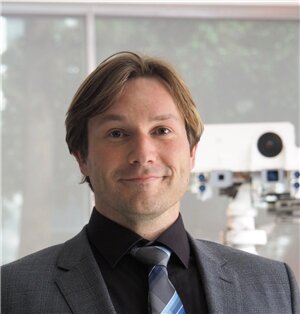
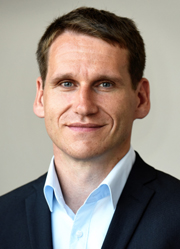
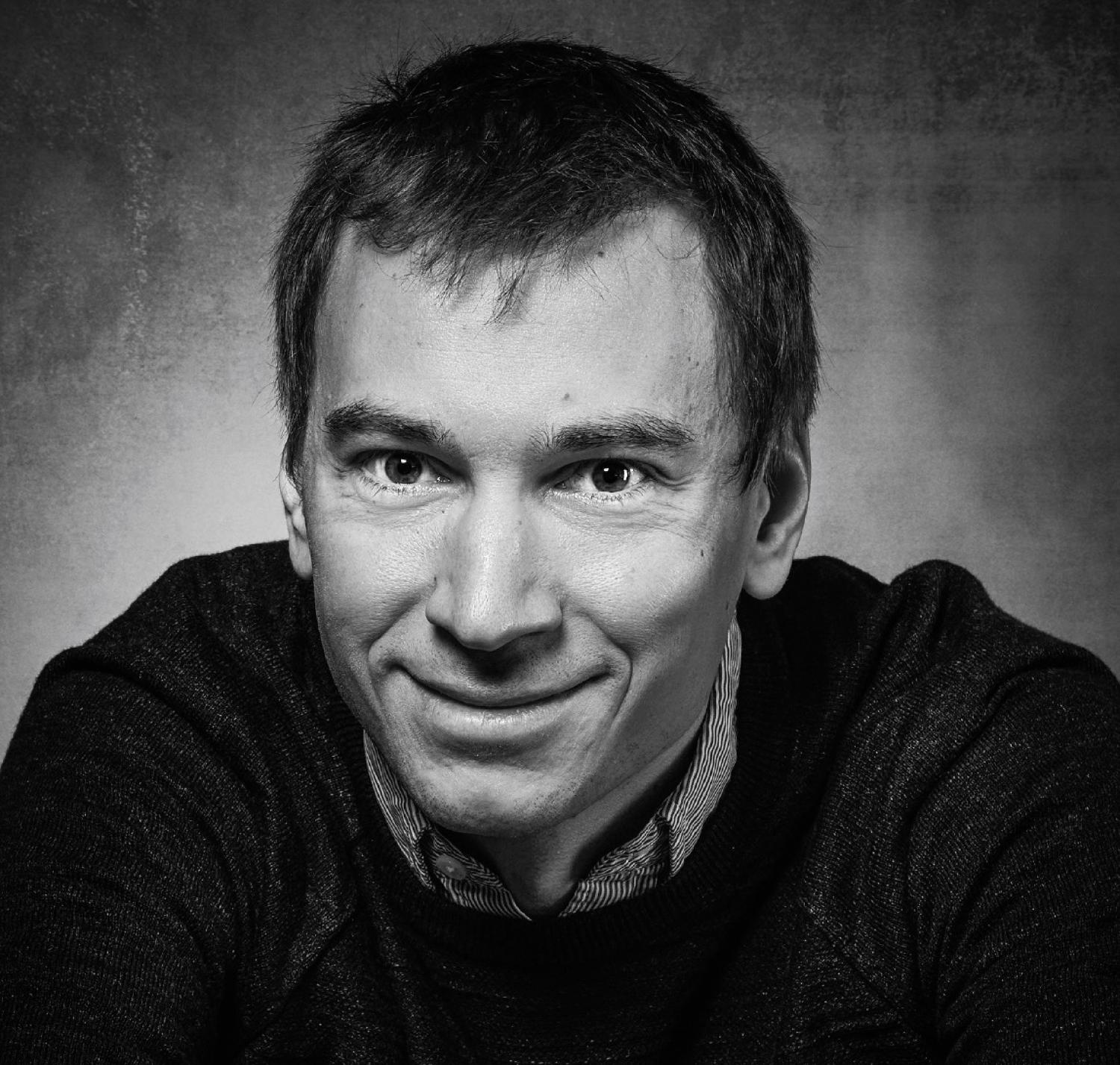
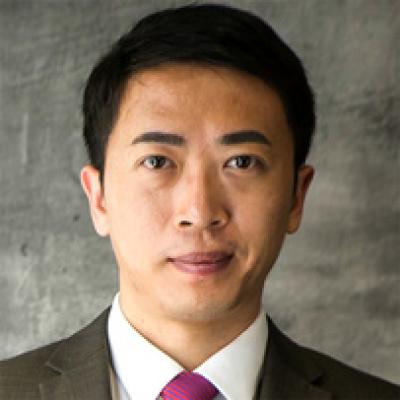
Daniel Livingstone is a researcher at The Glasgow School of Art (GSA) specializing in the application of games and 3D technologies to enhance learning and public engagement. His work spans medical visualization, heritage interpretation, and broader educational technology domains. Current PGR supervisee: Shaojie Ni (AR & Gamification in Museums) Email: D.Livingstone@gsa.ac.uk Research Themes : Serious games, virtual reality, 3D anatomical modeling, disease education, digital heritage preservation, and AI-driven simulations. Highlights include AR tools for rheumatology engagement, VR applications in diabetes management, and digital reconstructions of historical surgical instruments. Article Trends : Focus on merging immersive technologies with healthcare education, heritage storytelling, and interdisciplinary applications of game engines. Recurring keywords: Augmented Reality , 3D Visualization , Medical Education , Public Health , Virtual Environments .
Christophe Andrieu is a Professor in Statistics within the School of Mathematics at the University of Bristol. His research bridges theoretical probability, computational statistics, and applied mathematics, with significant contributions to Markov Chain Monte Carlo methodologies and Bayesian inference frameworks. He maintains active collaborations across engineering and data science domains. His educational background includes: M.A. from List.Natnl.Scis.App.Lyon Additional M.A. (institution unspecified) Ph.D. from Paris Andrieu's research focuses on Markov Chain Monte Carlo theory , where he develops convergence guarantees and efficiency bounds for complex samplers. His work extends to non-reversible MCMC algorithms , piecewise deterministic processes , and gradient-free optimization techniques. Recent publications demonstrate innovative approaches to state-space models and numerical integration, often addressing high-dimensional statistical challenges through stochastic approximation methods. His fingerprint reveals deep specialization in Markov chain convergence analysis and computational Bayesian statistics. His 15 most recent publications (2021-2025) exhibit consistent focus on theoretical foundations of Monte Carlo methods, particularly convergence analysis of Markov chains and novel sampler designs. Key trends include the application of weak Poincaré inequalities to pseudo-marginal MCMC, development of self-organizing state-space models, and exploration of hypocoercivity in piecewise deterministic processes. The work spans both theoretical advancements and practical implementations for engineering and statistical applications. Andrieu has secured significant research funding including: COmputational Statistical INference for Engineering and Security (COSINES) (2018-2023) New Approaches to Data Science (2018-2023) He has supervised 5 research students and maintains active collaborations in computational statistics and machine learning. His network shows strong connections with probability theory and engineering research groups.
Christopher D. Abraham, MD is an Associate Professor of Radiation Oncology and Associate Professor of Medicine at Washington University School of Medicine in St. Louis. He is affiliated with the Siteman Cancer Center, Brain Tumor Center, and Institute of Clinical and Translational Sciences (ICTS). Dr. Abraham practices at multiple locations including the Center for Advanced Medicine Radiation Oncology Center, Barnes-Jewish West County Hospital, and Siteman Cancer Center – North County. His clinical work focuses on radiation oncology with expertise in treating brain tumors and other cancers. Dr. Abraham completed his Medical Degree at Saint Louis University School of Medicine in 2011 and his Residency in Radiation Oncology at Barnes-Jewish Hospital and Washington University School of Medicine in 2016. He earned his BS in Radiologic Science from the Medical College of Georgia in 2004. Dr. Abraham's research focuses on advancing radiation therapy techniques, particularly in stereotactic radiosurgery for brain metastases, hippocampal-avoidance whole brain radiation therapy, and innovative approaches for glioblastoma treatment. His work demonstrates a strong emphasis on optimizing radiation delivery while minimizing neurocognitive side effects. He has pioneered simulation-free radiation therapy techniques that expedite treatment planning, particularly for palliative care patients. His research also explores the integration of AI and large language models in radiation oncology workflows and insurance appeals processes. Analysis of Dr. Abraham's recent publications reveals a clear research trajectory focused on improving precision in radiation therapy for brain tumors, with particular attention to hippocampal protection, adaptive planning techniques, and combined modality approaches. His work spans clinical trials, technical innovations in treatment planning, and translational research connecting imaging with treatment outcomes. The increasing citation counts of his work, particularly his 2023 paper on simulation-free radiation therapy which has 34 citations, demonstrates growing impact in the field. While specific awards are not listed in the provided information, Dr. Abraham's work has accumulated 536 citations according to Scopus metrics, indicating significant scholarly impact. His research has been referenced in clinical guidelines and policy sources, demonstrating translational relevance to clinical practice. Dr. Abraham actively collaborates with multidisciplinary teams including neurosurgeons, medical oncologists, and physicists. His work on the NRG Oncology/RTOG 0631 trial demonstrates involvement in large cooperative group studies. He has contributed to efforts examining insurance policy adherence to radiation oncology guidelines, showing engagement with healthcare systems issues. As a key member of the Brain Tumor Center at Siteman Cancer Center, Dr. Abraham participates in comprehensive brain tumor care teams that integrate surgical, medical, and radiation oncology approaches. His work with the Institute of Clinical and Translational Sciences highlights his commitment to translating research findings into clinical practice. Current research directions include exploring simulation-free radiation therapy techniques, optimizing hippocampal-sparing approaches, and investigating novel combinations of radiation with immunotherapies.
Siegfried Eggl is an Assistant Professor in the Department of Aerospace Engineering at the University of Illinois at Urbana-Champaign , with additional affiliations as an Affiliate Faculty in the Department of Astronomy (2022–present) and the National Center for Supercomputing Applications (NCSA) (2021–present). His research bridges astrodynamics, planetary defense, and celestial navigation, focusing on spacecraft trajectory optimization, asteroid deflection, and autonomous navigation systems. Education: B.S., Astrophysics, University of Vienna (2005) M.S., Astrophysics, University of Vienna (2008) M.S., Computational Physics, University of Vienna (2009) Ph.D., Astrophysics, University of Vienna (2013) Research Interests: Eggl investigates astrodynamics for planetary defense, including momentum transfer in asteroid impacts (e.g., NASA’s DART mission). He develops algorithms for celestial navigation using variable stars and studies space domain awareness to address satellite constellation interference. His work also explores dynamical systems in binary star environments and computation/data-driven approaches to orbital mechanics. Recent Publications highlight advancements in planetary defense simulations , celestial navigation algorithms , and asteroid impact dynamics . Topics include state transition matrix computation , ejecta momentum analysis , and binary asteroid system modeling . Scientific Awards: LSST Architect Award (2021) Space Foundation 2023 Space Achievement Award (DART Team) AIAA Award for Engineering Excellence (DART Team, 2023) Asteroid 2000 GT167 named 'Eggl' (2023) 2024 Engineering Council Outstanding Advisors Best paper award at AIAA Guidance, Navigation, and Control Conference (2024) Eggl contributes to professional societies such as the AIAA , American Astronomical Society (Division on Dynamical Astronomy) , and International Astronomical Union , where he co-leads the Centre for the Protection of the Dark and Quiet Sky. His APEX research group at UIUC focuses on planetary defense and astrodynamics.
Adeel AHMAD is an active Associate Professor (Maître de Conférences) conducting cutting-edge research at the intersection of artificial intelligence, industrial applications, and business process management. His academic work demonstrates strong interdisciplinary connections between computer science, industrial engineering, and business informatics. Dr. AHMAD's research interests span Explainable Artificial Intelligence (XAI), Industrial Machine Learning, Business Process Management, Ontology-Based Reasoning, and Logistics Optimization. His work focuses on developing practical AI solutions for industrial contexts, particularly in Industry 4.0 environments where human-AI collaboration is essential. He has made significant contributions to meta-learning approaches for automated algorithm selection and configuration, with particular emphasis on making these systems transparent and interpretable for domain experts. His publication record shows a clear trajectory toward integrating explainability into industrial AI systems, with recent work focusing on conversational recommendation systems for cyber-physical environments. The research demonstrates consistent evolution from foundational work in business process analysis toward sophisticated AI applications in industrial settings. Active research leadership in Explainable AI for industrial applications Significant contributions to meta-learning frameworks for automated machine learning Interdisciplinary approach bridging computer science, industrial engineering, and business processes Strong publication record in top-tier conferences and journals Dr. AHMAD demonstrates strong collaborative research patterns, frequently working with colleagues including Mourad Bouneffa, Moncef Garouani, and other researchers in the French academic community. His work shows particular relevance to manufacturing, logistics, and cyber-physical systems where AI must work alongside human domain experts.
Anastassia N. Alexandrova is a Professor of Chemistry and Biochemistry and Materials Science and Engineering at the University of California, Los Angeles (UCLA). She holds the Charles W. Clifford Jr. Endowed Chair and leads a research group focused on computational and theoretical design of functional materials, with applications in heterogeneous catalysis, quantum information science, and enzyme reactivity. Her work integrates quantum mechanics, machine learning, and multi-scale modeling to address environmental and energy challenges. Education: B.S./M.S. in Chemistry, Saratov State University (2000, Summa cum laude) Ph.D. in Theoretical Physical Chemistry, Utah State University (2005) Postdoctoral Associate, Yale University (2005-2009) Research interests span heterogeneous catalysis (CO2 reduction, methanol synthesis), quantum information science (qubit design, nuclear clocks), and enzyme reactivity (electric field effects, artificial metalloenzymes). Recent publications highlight her focus on dynamic catalytic interfaces, quantum functional groups, and AI-driven material discovery. Scientific Awards: Royal Society of Chemistry Fellow (2024) Max Planck-Humboldt Medal (2021) NSF CAREER Award (2014) Sloan Research Fellowship (2013) DARPA Young Investigator (2011) Her lab collaborates with experimental teams in catalysis, surface science, and quantum physics, emphasizing method development and applied projects. Students and postdocs in her group work on diverse topics from CO2 hydrogenation to topological insulators, reflecting her interdisciplinary approach.
Prof. Dr. Lubomir Banas is a full-time Professor at the Faculty of Mathematics , University of Bielefeld. His research focuses on numerical analysis of stochastic partial differential equations (SPDEs) , particularly in micromagnetism, phase field models, and stochastic games. He leads Subproject B03 in the SFB 1283 project 'Taming Uncertainty and Profiting from Randomness and Low Regularity in Analysis, Stochastics and Their Applications.' Research Interests: Numerical methods for SPDEs and singular-degenerate PDEs Adaptive finite element techniques and a posteriori estimates Phase field models (Cahn-Hilliard, obstacle potentials) Stochastic games with asymmetric information Computational micromagnetism and magnetostriction Self-organized criticality and nonlinear stochastic flows Recent work includes: 2025: Numerical approximation of biharmonic wave maps and stochastic games 2024: Sharp interface limits for stochastic Cahn-Hilliard equations 2023: Singular-degenerate SPDEs and a posteriori estimates 2022: Stochastic total variation flow and Hamilton-Jacobi-Bellman equations 2021: Nematic electrolytes and homogenization of two-phase flows He serves on examination boards for Bachelor's and Master's programs in Mathematics and Mathematical Physics, and supervises graduate students within the Bielefeld Graduate School in Theoretical Sciences . His publications (over 30) address convergence analysis, error estimation, and computational modeling in applied mathematics.
Professor Steve Abel is a Professor in the Department of Mathematical Sciences and the Department of Physics at Durham University, with additional affiliation to the Institute for Particle Physics Phenomenology. His research spans theoretical physics with a strong focus on string theory, particle physics phenomenology, and emerging applications of quantum computing. Professor Abel's research interests include: Beyond the Standard Model physics Supersymmetry and string model building Applications of quantum computing to particle physics Genetic algorithms in theoretical physics Non-supersymmetric string vacua Analysis of Professor Abel's recent publications reveals a significant shift toward interdisciplinary research combining traditional theoretical physics with cutting-edge computational techniques. His work increasingly focuses on applying quantum computing and machine learning methods to solve complex problems in string theory and particle physics. Many recent papers explore quantum simulation of field theories, quantum annealing for string model building, and genetic algorithms for solving physics problems. This represents a convergence of theoretical physics with computational science that is transforming how fundamental physics research is conducted. Professor Abel has received recognition for his work, most notably a Cern Theory 6 month Scientific Associateship. His research collaborations span international institutions across Europe and North America, reflecting the global nature of theoretical physics research. Professor Abel actively supervises graduate students, including Puya Mirkarimi. His research program likely involves collaboration with various research groups at Durham University working on theoretical particle physics, quantum computing applications, and computational methods for theoretical physics problems.
Prof. Mike Barth is a Professor for Networked Secure Automation Technology at the Karlsruhe Institute of Technology (KIT), affiliated with the Department of Electrical Engineering and Information Technology (ETIT) and the Institute for Control Systems (IRS). His academic background includes a doctorate from Helmut Schmidt University (2011) and a master's degree from Pforzheim University (2008). He previously held roles as a researcher at ABB and as a professor at Pforzheim University, focusing on blended learning and Industry 4.0 integration. Education: PhD in Automation Technology, Helmut Schmidt University (2011) M.Sc. in Product Development, Pforzheim University (2008) Diploma in Mechanical Engineering, Pforzheim University (2006) Research Interests: Automation technology, control systems, Industry 4.0, cyber-physical systems, digital twin engineering, cybersecurity, and IoT protocols. Teaching: Courses include System Modeling, Cyber Physical Production Systems, and Digital Twin Engineering. His research emphasizes secure automation architectures, decentralized systems, and model-based engineering. He chairs multiple committees including IFAC TC3.1 and the VDI/VDE Society for Measurement and Automation. Over 50+ publications span topics like simulation models, industrial security, and robotic integration. Labs/Teams: Leads the IRS Automation Technology team, focusing on innovation in control systems and digital twin applications.
Dr. Pedro Mediano is a Lecturer in Computing at Imperial College London's Department of Computing (Faculty of Engineering). His research focuses on complex systems, information theory, and their applications in neuroscience, artificial intelligence, and cognitive science. He is affiliated with the Artificial Intelligence Network and leads interdisciplinary projects exploring synergistic interactions in brain dynamics, psychedelic neurodynamics, and causal emergence. Key research areas include quantifying high-order interactions in complex systems, developing information-theoretic tools for analyzing neural data, and modeling consciousness through integrated information theory. Mediano has pioneered frameworks like the Shannon invariants for scalable information decomposition and developed software tools such as THOI for analyzing higher-order interactions. Recent work examines how psychedelics alter brain entropy, the role of metastability in cognitive processes, and the computational principles underlying causal emergence in machine learning models. His studies integrate mathematical rigor with empirical neuroscience, bridging theoretical and applied domains. Mediano has collaborated on whole-brain models of psychedelic-induced neural complexity and explored the interplay between oxygen metabolism and brain evolution. He holds affiliations with Imperial's AI Network and regularly publishes in top journals across computational neuroscience and complexity science. Current projects include developing open-source tools for information decomposition and investigating the neural correlates of consciousness under altered states.
András Gyenis is an Assistant Professor in the Department of Electrical Engineering at the University of Colorado Boulder, specializing in photonics and quantum engineering. His research focuses on developing hybrid superconducting-semiconducting quantum devices to enhance qubit coherence times. Prior to CU Boulder, he held postdoctoral and visiting positions at Princeton University and the Niels Bohr Institute, focusing on superconducting quantum circuits and topological materials. Education: PhD in Physics (2016, Princeton University), MS/BS in Experimental Condensed Matter Physics (Budapest University of Technology, Hungary). His work bridges quantum material science and quantum information science, emphasizing noise-protected qubit architectures and novel material platforms. Research Interests: Hybrid quantum devices, topological materials, superconducting circuits, coherence time extension, and cryogenic electronics. His lab creates qubits with intrinsic protection mechanisms to counteract environmental noise, advancing scalable quantum computing. Selected Articles: Recent work includes symplectic geometry in quantum circuits (2024), supercurrent reversal in nanowires (2023), and protected qubit designs (2021–2022). These studies explore material integration, dynamical sweet spots, and noise mitigation strategies. Labs/Teams: The Gyenis Lab at CU Boulder develops hybrid qubits and semiconductor-based quantum devices. They seek graduate/undergraduate students for experimental and theoretical contributions.
Professor Maria Kolokotroni is a full academic staff member at Brunel University's Department of Mechanical and Aerospace Engineering, within the College of Engineering, Design and Physical Sciences. She holds a Professorial rank and has extensive experience in urban environmental engineering and building energy systems. Her academic career began at UCL (MSc 1992, PhD 1995), followed by postdoctoral research on environmental design guidance and moisture management. She joined Brunel University in 1998 and contributed to the Building Research Establishment's indoor environment division prior to her academic appointment. Education MSc in Environmental Design and Engineering, Bartlett School, UCL (1992) PhD in Thermal Performance of Housing, UCL (1995) Postdoctoral Research: Environmental Design Guidance (UCL, 1996-1998) EPSRC-funded Postdoc: Moisture in Residential Buildings (University of Westminster, 1998) Research Interests Her work focuses on urban heat island mitigation, energy-efficient building technologies, ventilative cooling systems, and urban microclimate analysis. She actively collaborates on EU-funded projects like the IEA’s Annex 80 (Resilient Cooling) and Annex 62 (Ventilative Cooling), emphasizing practical applications of sustainable energy strategies. Key themes include: Urban albedo computation and reflective materials Thermal performance of residential and non-residential buildings Integration of renewable energy systems (photovoltaics, hydrogen) Building energy demand modeling Grants & Projects Recent projects include: PRELUDE: Real-time building energy optimization (EU, 2020-2024) PVadapt: Smart building-integrated photovoltaic systems (EU, 2018-2022) ReCO2ST: Near-zero energy retrofit platform (EU, 2018-2021) Urban albedo studies in high-latitude cities (EPSRC, 2017-2020) Advising & Collaborations Professor Kolokotroni leads interdisciplinary teams and collaborates with experts in mechanical engineering, environmental science, and urban planning. Her work bridges academic research with industry applications through projects like COOL ROOFS EU initiative and the IEA’s energy efficiency annexes. Labs/Teams Active in the International Energy Agency’s EBC Annex 80 (Resilient Cooling) and part of Brunel’s Institute for the Environment (IEF). Her research group focuses on building sustainability and climate resilience through advanced simulation tools and experimental validation.
Jakob Eg Larsen is an Associate Professor at the Technical University of Denmark (DTU), affiliated with the Department of Applied Mathematics and Computer Science (DTU Compute) within the Cognitive Systems Section. He leads the Mobile Informatics and Personal Data Laboratory (MILAB). His research focuses on Human-Computer Interaction (HCI), Personal Informatics, Quantified Self, and Information Visualization, with applications in wearable technology, mental health, and healthcare. He teaches courses in Digital Media Engineering, including user experience, mobile application prototyping, and personal informatics. Education: PhD (2005) and MSc in Computer Science (1999) from the University of Copenhagen, with additional studies in cognitive psychology. Research emphasizes wearable devices for mental health interventions (e.g., PTSD treatment), physical activity tracking in pregnancy, and personalized hearing aid systems. Over 98 publications and 12 supervised PhD projects highlight his contributions to HCI, mHealth, and data-driven healthcare solutions. Labs/Teams: MILAB focuses on mobile informatics and personal data interaction. Collaborations span interdisciplinary fields like audiology, clinical psychology, and public health.
Jie Xiong is an Associate Professor at the University of Massachusetts Amherst, affiliated with the Department of Computer Science within the College of Information and Computer Sciences. He holds a PhD from University College London (2015) and has been a faculty member since 2018. His research focuses on wireless sensing, mobile health, and IoT, with notable contributions to sensor-free systems and long-range sensing. He leads the Center for Smart and Connected Society and has been recognized with awards like the SIGMOBILE Test-of-Time Award (2024) and MobiCom Best Paper Award (2024). Education: PhD in Computer Science, University College London (2015) Research Interests: His work spans wireless sensing (e.g., acoustic, RF, LoRa), mobile health monitoring, and IoT applications. He explores sensor-free techniques, long-range through-wall sensing, and leveraging ambient signals for novel applications. Grants & Awards: NSF CAREER Award NIH R01 Grant (Smart and Connected Health) Google European Doctoral Fellowship BCS Distinguished Dissertation Award (Runner-Up) MobiCom '22 Best Paper Award (Runner-Up) Advising & Students: Supervises PhD students including Minhao Cui, Yuda Feng, Binbin Xie, and Dong Li. His students have received accolades like the Google Ph.D. Fellowship (Binbin Xie, 2022). Labs & Teams: Leads research in the Center for Smart and Connected Society, focusing on wireless systems and health applications. Collaborates with industry and academia on projects like EVLeSen (in-vehicle sensing) and SoilCares (agricultural monitoring).
Benjamin Hayes is a research scientist at Sony Computer Science Laboratories Paris and a PhD candidate in Artificial Intelligence and Music at Queen Mary University of London's Centre for Digital Music (C4DM). His research focuses on neural audio synthesis, generative models, and perceptual aspects of sound design. He has held internships at Spotify, Sony CSL, and Bytedance, and previously worked as a music producer and lecturer in Electronic & Produced Music at the Guildhall School of Music & Drama. His work bridges digital signal processing, deep learning, and creative sound exploration. Education: PhD in AI and Music (Queen Mary University of London), Master’s/Undergraduate qualifications not explicitly stated but inferred from professional roles. Research Interests: Neural audio synthesis, differentiable digital signal processing, timbre perception, generative models, and psychoacoustics. Current project explores perceptually motivated deep learning approaches for sound synthesis, emphasizing semantic associations in timbre. Professional Experience: Over 10 years in music production, internships at leading tech firms, and academic collaborations across institutions like IRCAM, CNRS, and KTH. Key Contributions: Developed frameworks for end-to-end sound synthesis, addressed challenges in unordered neural network targets, and pioneered gamified systems for crowdsourcing timbre semantics (e.g., timbre.fun). Active in conferences such as ICLR, ICASSP, and DMRN workshops.