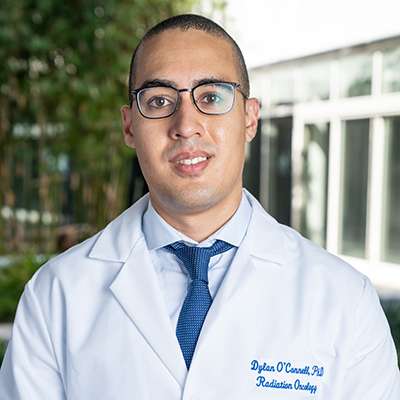
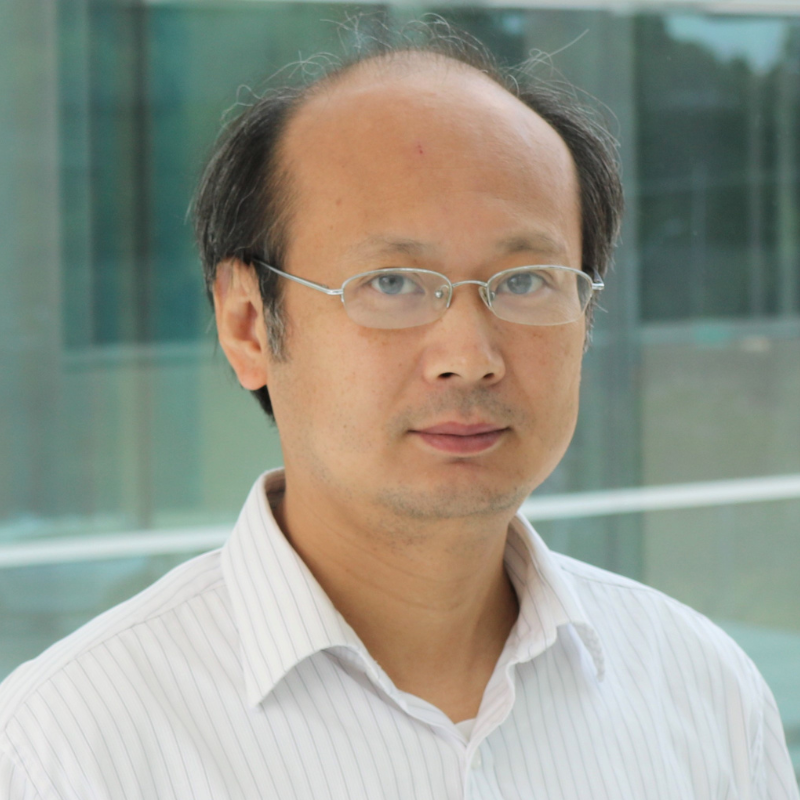
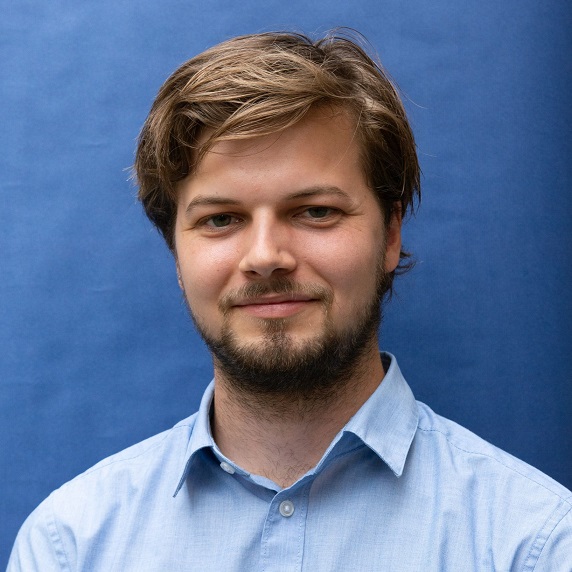
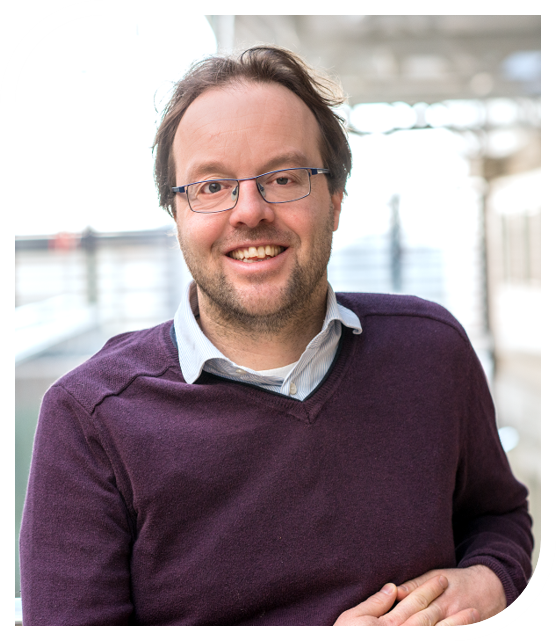
Dylan O'Connell, PhD, is an Assistant Professor in the Department of Radiation Oncology at the University of California, Los Angeles. He joined the faculty in 2020 after completing his medical physics residency at UCLA. Dr. O'Connell holds a Ph.D. in Biomedical Physics (UCLA, 2018) and a B.S. in Physics (Tufts University, 2013). His research focuses on advancing radiotherapy through innovations in medical physics: Respiratory motion modeling for 4D/5DCT reconstruction Motion-compensated cone-beam CT imaging Online adaptive therapy protocols Safety frameworks for clinical software development AI applications in treatment planning and workflow automation Dr. O'Connell's publications demonstrate extensive work in motion management technologies (5DCT), lung ventilation mapping, adaptive radiotherapy for prostate/head-neck cancers, and clinical software validation. His recent studies emphasize translating technical innovations into clinical practice, with 15+ first-author papers on 5DCT implementation, AI-driven workflow tools, and quantitative imaging biomarkers.
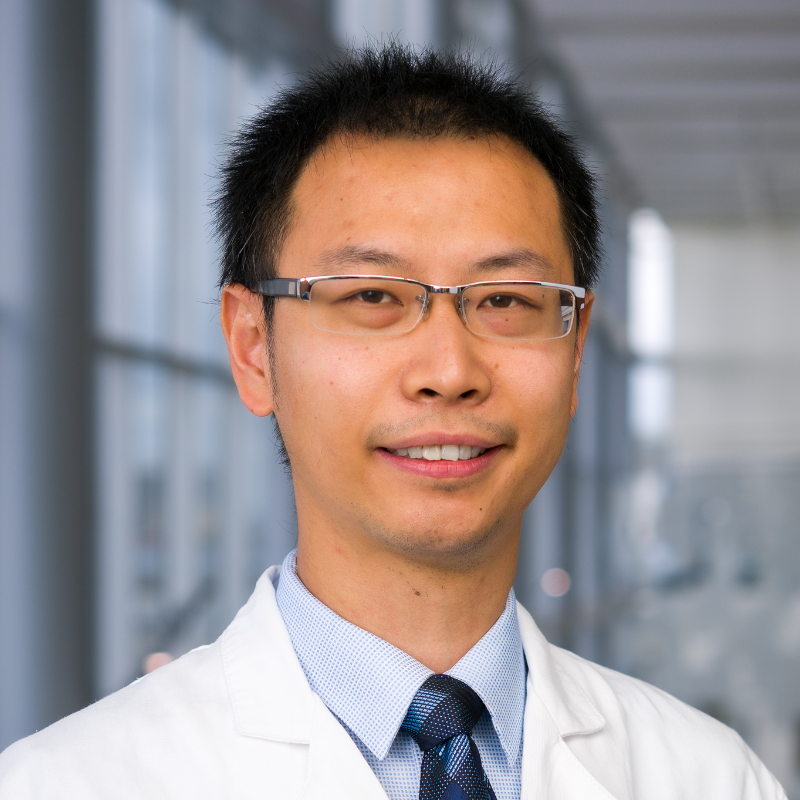
Bin Cai, Ph.D., is an Associate Professor and Director of Advanced Physics Service in the Department of Radiation Oncology’s Division of Medical Physics & Engineering at UT Southwestern Medical Center. He holds certification in therapeutic radiological physics from the American Board of Radiology. Previously, he served as an Assistant Professor of Radiation Oncology at Washington University. Education: Ph.D. from Ohio University Medical physics residency at Washington University School of Medicine Research Interests: Dr. Cai specializes in radiation therapeutic physics, imaging processing, and computational programming. His research focuses on advancing radiation therapy technologies including: MR/CT online adaptive radiotherapy systems Biology-guided treatment protocols AI-assisted treatment planning and automation Quality assurance methodologies Risk analysis for radiotherapy workflows Publication Trends: Dr. Cai has authored 80+ publications with recent focus on adaptive radiotherapy innovations, AI integration in treatment planning, quality assurance protocols, and clinical implementation of advanced radiation technologies. His work demonstrates consistent emphasis on improving precision, efficiency, and safety in cancer treatment.
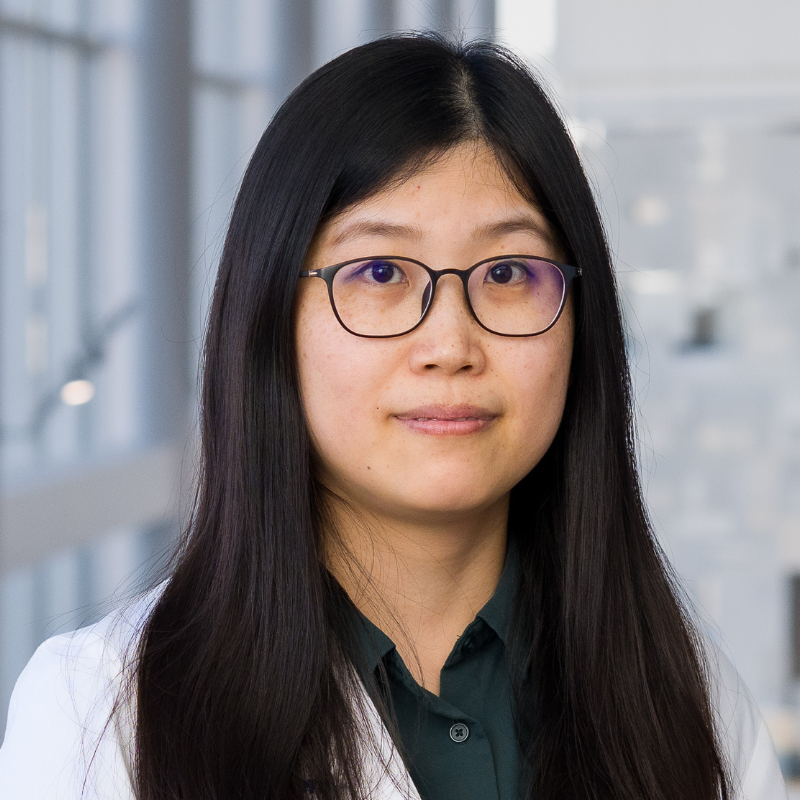
Liyuan Chen, Ph.D., is an Assistant Professor in the Department of Radiation Oncology at the University of Texas Southwestern Medical Center. She earned her doctorate from Hong Kong Baptist University and completed postdoctoral training followed by a clinical residency in UT Southwestern's Medical Physics Residency Program, where she served as chief resident during her second year. Her research focuses on computational approaches in radiation oncology, including: Advanced medical image reconstruction and processing techniques Inverse treatment planning optimization methods Machine learning models for treatment outcome prediction Deep learning applications in cancer imaging and radiotherapy Adaptive radiotherapy protocol development Dr. Chen's recent publications (2020-2025) demonstrate strong emphasis on artificial intelligence applications in oncology, particularly deep learning models for medical image analysis, treatment planning automation, and predictive oncology. Her work consistently addresses clinical challenges in head and neck cancer, lung malignancies, and prostate cancer radiotherapy through innovations in convolutional neural networks, reinforcement learning frameworks, and adaptive treatment protocols.
Chenyang Shen is an Assistant Professor in the Department of Radiation Oncology at the University of Texas Southwestern Medical Center. He earned his B.S. from Yangzhou University and his M.S. and Ph.D. from Hong Kong Baptist University, followed by a medical physics residency at UT Southwestern. His clinical focus includes RefleXion and EROC TPOD, while his research integrates machine learning and deep learning into medical imaging, image processing, and intelligent treatment planning for radiotherapy. Education: B.S. (Yangzhou University), M.S. and Ph.D. (Hong Kong Baptist University) Dr. Shen’s research spans medical physics , AI-driven treatment optimization , and image-guided radiation therapy . His work emphasizes deep learning for dose calculation, real-time adaptive planning, and synthetic CT generation from CBCT/MRI data. Key publications highlight innovations in PET-guided liver motion tracking and AI for brachytherapy applicator digitization . He has received the ASTRO Basic/Translational Science Award for junior investigators and AAPM Best in Physics (Therapy) . His grants and collaborations focus on improving radiation dose accuracy and enabling biology-guided therapy via PET-Linac systems. Labs and teams he works with include the Division of Medical Physics and Engineering at UT Southwestern.
Dr. Yulong Yan is a Professor in the Department of Radiation Oncology at UT Southwestern Medical Center, where he serves as Director of Computational Physics and faculty in the Division of Medical Physics & Engineering. His career spans academic, clinical, and technical domains in radiation oncology and biomedical engineering. Bachelor's & Master's: Nanjing University of Aeronautics and Astronautics Ph.D.: Biomedical Engineering, Southeast University, Nanjing Fellowship/Residency: Stanford University School of Medicine Dr. Yan's research focuses on Medical Physics , Adaptive Radiotherapy , and Deep Learning applications in clinical oncology. Key areas include: Functional lung avoidance techniques (FWAS, virtual bronchoscopy) Deep learning for synthetic CT generation and tumor segmentation Dose verification platforms (ART2Dose) Radiation toxicity modeling for brain and lung treatments Bluetooth-based localization systems for clinical applications MR-only radiotherapy workflows His publications demonstrate expertise in Image-Guided Radiotherapy , Treatment Planning Optimization , and Radiation Dose Modeling , with a 2013–2024 publication record showing sustained contributions to Medical Physics , Radiotherapy and Oncology , and PLOS One . Dr. Yan has served as Associate Editor for Medical Physics and Journal of Clinical Medical Physics , while chairing the Southwest Chapter AAPM Communications and IT Committee since 2014. As an educator since 2013, he mentors medical physics residents and postdoctoral fellows while delivering lectures in the Medical Physics Certificate Program.
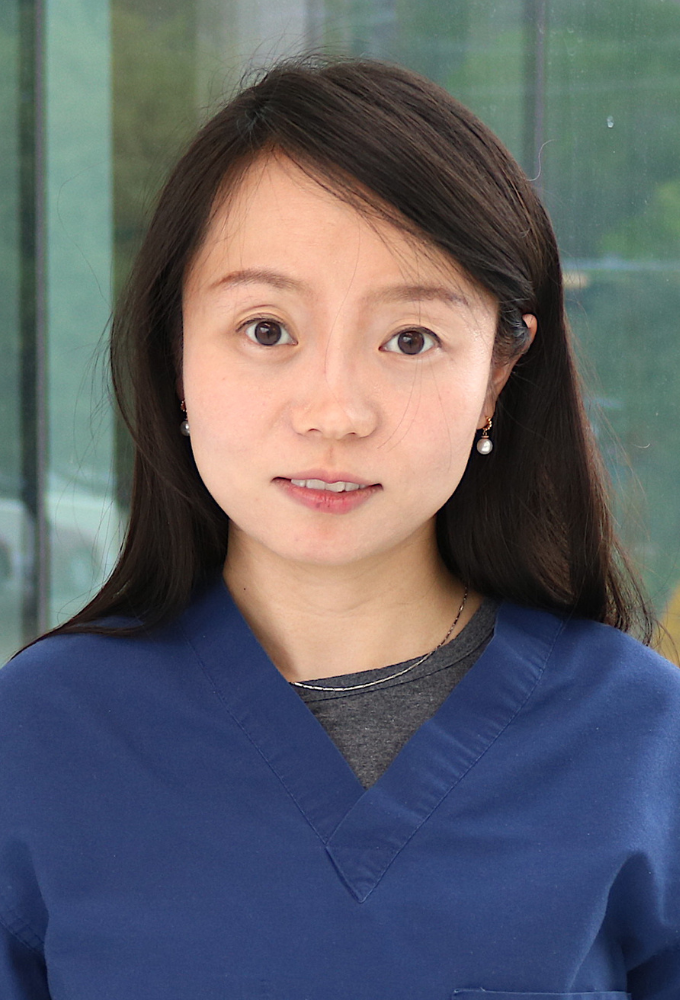
Xinran Zhong, Ph.D., is an Assistant Professor in the Department of Radiation Oncology at the University of Texas Southwestern Medical Center in Dallas, Texas. She joined the faculty in 2022 after completing the Medical Physics Residency program at UT Southwestern. Dr. Zhong earned her B.S. in biomedical engineering from Tsinghua University (Beijing, China) in 2014 and her Ph.D. in medical physics from the University of California, Los Angeles in 2019. Her graduate and residency training focused on advanced imaging and computational methods for radiation oncology. Her research program integrates artificial intelligence, deep learning, and imaging physics to advance adaptive radiation therapy. Core themes include: Online adaptive replanning using cone-beam CT. AI-driven automatic segmentation and deformable registration. Personalized treatment planning for head-and-neck, cervical, and prostate cancers. Quality assurance strategies for adaptive workflows. Across 27 peer-reviewed publications (2018-2025), her work demonstrates a consistent trajectory toward clinical translation of AI tools that reduce contouring uncertainty, shorten planning times, and improve dosimetric outcomes. Studies span in silico simulations, prospective clinical registries, and feasibility trials. Dr. Zhong is an active member of professional societies including the American Association of Physicists in Medicine (AAPM) and the American Society for Radiation Oncology (ASTRO). She currently mentors trainees within the Radiation Oncology and Medical Physics Residency programs at UT Southwestern and participates in multidisciplinary tumor boards for head-and-neck, gynecologic, and genitourinary malignancies.
Tingliang Zhuang, Ph.D. is an Associate Professor in the Department of Radiation Oncology at UT Southwestern Medical Center , where he contributes to both research and teaching. His academic journey began with a bachelor's degree in Electrical Engineering from Nanjing University , followed by a Ph.D. in Medical Physics at the University of Wisconsin-Madison . Education: B.S. in Electrical Engineering, Nanjing University Ph.D. in Medical Physics, University of Wisconsin-Madison Dr. Zhuang’s research interests span adaptive radiotherapy, cone-beam CT (CBCT) image reconstruction, image-guided radiation therapy (IGRT), treatment planning, and dosimetry. A significant focus of his work involves leveraging artificial intelligence to enhance therapeutic precision. His research has led to over 30 publications in journals like Medical Physics and International Journal of Radiation Oncology Biology Physics , addressing topics such as dose calculation algorithms, stereotactic body radiation therapy (SBRT), and adaptive treatment strategies for lung, spine, and prostate cancers. The 15 most recent articles in his publication record emphasize advancements in adaptive radiotherapy, CBCT-guided dose optimization, and AI-driven outcome prediction. These works often compare traditional methods (e.g., pencil beam vs. Monte Carlo simulations) and explore dosimetric impacts of tumor localization, organ motion, and delivery accuracy. In teaching , Dr. Zhuang has co-lectured medical physics residents at UT Southwestern, covering imaging in medicine and clinical rotation courses. His collaborations with institutions like Varian Medical Systems and UT Southwestern Medical Center highlight his translational approach to medical physics.
Dr. Stavros Nousias is a researcher at the Chair of Computing in Civil and Building Engineering at the Technical University of Munich , focusing on applications of Artificial Intelligence in the Built Environment . His work bridges Knowledge Representation and Reasoning , Geometry Processing , and Machine Learning to advance construction informatics and digital twinning. Research Interests: AI for building evacuation prediction, technical drawing segmentation, BIM optimization, and respiratory disease modeling. Publications: 15+ peer-reviewed articles on topics including graph neural networks for construction simulations, pulmonary airflow analysis, and heritage site monitoring. Supervised Theses: Guided projects on AI-based BIM command prediction and robotized construction simulation . Labs: Active in the BIM-Lab and Robotic Fabrication Lab . Teaching: Co-instructor for courses like Artificial Intelligence in Engineering and Computation in Engineering 1 .
Guus Grimbergen is a medical physics researcher at the University Medical Center Utrecht specializing in radiotherapy with a focus on MR-guided treatments for gastrointestinal cancers. His work bridges advanced imaging technologies and precision radiation oncology. PhD in MR-guided radiotherapy for pancreatic cancer Expert in tumor motion compensation and dose accumulation Active in clinical translation of MR-linac technologies His research explores high-precision radiotherapy for cancers like pancreatic and rectal tumors, leveraging Magnetic Resonance Imaging for real-time treatment guidance. Recent publications demonstrate expertise in: Diffusion coefficient measurements for tumor characterization Stereotactic body radiotherapy for metastases Deep learning approaches to medical image segmentation Contact: ggrimbe2@umcutrecht.nl
Professor Nico van den Berg is a Full Professor at the University Medical Center Utrecht, leading the Computational Imaging group within the Centre of Image Sciences. His research focuses on advancing MRI diagnostics and therapy through interdisciplinary expertise in MR physics, mathematics, computing, and artificial intelligence. Primary Affiliation: Centre of Image Sciences, University Medical Center Utrecht External Role: Scientific Advisor at PrecorDx His research initiatives target high-precision cancer and cardiovascular disease detection, prediction, and treatment. Key projects include: Development of MR-STAT for quantitative MRI in reduced scan times Integration of AI with MRI for personalized radiotherapy planning Hardware engineering for MRI-linac compatibility Respiratory motion compensation in cardiac MRI Publications highlight applications in prostate cancer (PET-MRI fusion), lung cancer (adaptive segmentation), and cardiovascular imaging. Collaborations span multiple strategic programs including Cancer, Brain Developmental disorders, and Image-Guided Therapies.
Dr. Derek F. Maher serves as Associate Professor and Chair of the Department of Philosophy and Religious Studies at East Carolina University within the Thomas Harriot College of Arts and Sciences. He joined ECU in 2003 and previously held the position of Associate Dean for Undergraduate Studies from 2013 to 2021, demonstrating sustained institutional leadership. His academic foundation includes a PhD and MA in History of Religions: Tibetan Studies from the University of Virginia, complemented by undergraduate degrees in Philosophy (BA) and Physics (BS) from Evergreen State College. This interdisciplinary background informs his unique scholarly perspective. Dr. Maher's research centers on Tibetan biography, history, philosophy, and politics, with particular focus on how religious narratives enact political agendas. His work spans Buddhism (especially Tibetan traditions), Hinduism, Islam, and critical studies of religion and violence, characterized by methodological rigor and cross-cultural analysis. Scholarly output from 2009-2017 reveals deep engagement with Tibetan Buddhist institutions, Dalai Lama biographies, and transnational themes like compassion studies and digital mapping of religious sites. His publications demonstrate consistent quality through prestigious venues including Brill, Palgrave MacMillan, and international journals. Dr. Maher's scholarly recognition includes: Fulbright Fellowship for international academic exchange $100,000 HEERF III grant for graduation/retention innovation (2021-2022) $200,000 UNC-SO grant for learning assistant effectiveness (2018-2021) As an educator, he has personally guided 180 students through twelve India study abroad programs (2006-2020) while teaching core courses in Buddhism, Hinduism, Islam, and religion-violence dynamics. His administrative leadership extends from departmental chairmanship to curriculum development and student success initiatives. Though not directing a named laboratory, Dr. Maher's research group operates within the Department of Philosophy and Religious Studies, fostering interdisciplinary collaboration on Asian religious traditions through publications, conferences, and international scholarly networks.
Professor Oliver Bruns is a W3 Professor and Head of the Department of Functional Imaging in Surgical Oncology at the National Center for Tumor Diseases Dresden (NCT/UCC Dresden) since February 2022. Previously, he was an Emmy Noether group leader at Helmholtz Pioneer Campus in Munich (2018-2023) and completed postdoctoral training at MIT's Department of Chemistry under Professor Moungi Bawendi (2011-2017). His academic foundation includes a PhD in Biochemistry/Molecular Biology from the University of Hamburg (2005-2009). Professor Bruns' research focuses on advancing short-wave infrared (SWIR) and near-infrared (NIR) imaging technologies for surgical oncology applications. His work centers on developing targeted contrast agents for fluorescence-guided surgery to identify residual cancer and critical structures like nerves, creating label-free imaging methods to visualize lymph nodes and tissue components, and improving SWIR microscopy techniques for enhanced sensitivity, speed, and depth of detection. This research leverages the unique advantages of SWIR imaging including reduced tissue autofluorescence, lower absorption by blood and tissue, and decreased light scattering, which collectively enable unprecedented capabilities in preclinical and clinical imaging. His publication record demonstrates significant impact in the field, with multiple high-impact papers in journals like Nature Biomedical Engineering, Nature Methods, and Nature Chemistry. These publications reveal a consistent research trajectory focused on advancing SWIR imaging from fundamental probe development to clinical applications, with increasing translational impact over time. Helmholtz High Impact Award (with Ellen Sletten) Emmy Noether group leader position (DFG) Chan Zuckerberg Initiative funding Professor Bruns supervises a diverse research team of approximately 10 scientists including PhD students, postdocs, and senior researchers working on interdisciplinary projects spanning chemistry, physics, engineering, and clinical applications. His lab maintains active collaborations with institutions including UCLA, NIH, Imperial College London, and Stanford University. The research has significant translational potential for improving cancer surgery outcomes through real-time visualization of tumor margins and critical anatomical structures. The Functional Imaging in Surgical Oncology department operates state-of-the-art equipment including specialized spectrophotometers and custom-built imaging systems, supporting both fundamental research and clinical translation efforts focused on bringing SWIR imaging technologies to the operating room.
Dr. Jonghyun Harry Lee is an Associate Professor at the University of Hawai'i at Manoa with joint appointments in the Water Resources Research Center and Department of Civil and Environmental Engineering. He holds a PhD in Civil and Environmental Engineering from Stanford University (2014), MS from Colorado State University (2009), and BS from Seoul National University (2007). His research integrates high-performance computing with environmental modeling, focusing on: Scalable inverse methods for subsurface systems Physics-informed neural operators for coastal dynamics Uncertainty quantification in hydrological systems Machine learning applications for satellite hydrology Generative models for geophysical characterization Recent publications (2021-2025) demonstrate strong emphasis on ML-enhanced environmental modeling, with 70% of articles combining deep learning with traditional physical models. Primary domains include contaminant transport, carbon sequestration monitoring, and coastal hydrodynamics. Awards and fellowships: NREL FACES Fellow (2024) NSF-NASA EPSCoR Fellow (2023-2025) Google Cloud Research Innovator (2022) ORISE Faculty Fellow (2018-2023) Charles H. Leavell Fellowship, Stanford Dr. Lee currently advises multiple PhD students focused on ML applications in environmental systems. His group utilizes UH HPC, Google Cloud, and AWS resources, supported by NSF, NASA, and DOE grants. He leads development of open-source tools like pyPCGA for geostatistical inversion and teaches graduate courses in computational hydrology.
Monika Gierszewska serves as an Assistant Lecturer at Gdańsk University of Technology, specializing in advanced remote sensing applications for environmental monitoring. Her research bridges physics-based modeling with machine learning approaches to solve critical challenges in flood detection and wetland classification using Synthetic Aperture Radar (SAR) technology. Her research portfolio demonstrates deep expertise in several interconnected domains: Physics-guided neural networks for environmental monitoring SAR imagery processing and analysis techniques Polarimetric decomposition methods for wetland classification Integration of satellite observations with ground-based measurements Flood mapping in vegetated environments Speckle filtering optimization for improved classification accuracy Dr. Gierszewska's publication timeline reveals an evolving research trajectory from fundamental SAR processing techniques toward more sophisticated AI-integrated environmental monitoring systems. Her most recent 2025 work advances physics-guided neural networks that combine satellite imagery with river gauge data, building upon her 2022 research on polarimetric decomposition parameters and her 2021 study of flood classification in natural wetlands during early spring conditions. This progression reflects broader trends in remote sensing toward hybrid approaches that maintain physical consistency while leveraging machine learning capabilities. Her scholarly contributions have been published in the IEEE Journal of Selected Topics in Applied Earth Observations and Remote Sensing, indicating recognition within the international remote sensing community. As an Assistant Lecturer, she contributes to academic instruction while maintaining an active research program focused on practical applications for environmental protection and flood management systems.
Ange Adrienne Nyamen Tato serves as an Assistant Professor in the Department of Teaching and Learning Studies at Laval University's Faculty of Education. Her academic journey spans multiple institutions across Canada and Morocco, with a strong interdisciplinary background combining computer science, artificial intelligence, and educational theory. PhD in Computer Science (Artificial Intelligence) from University of Quebec at Montreal (UQAM), 2020 Master's degree in Computer Science from University of Quebec at Montreal (UQAM), 2015 Engineering degree in Information Systems from Mohammedia School of Engineers in Morocco, 2014 DEUST in Mathematics, Computer Science and Physics from Hassan II University, Morocco, 2011 Professor Tato's research focuses on the intersection of artificial intelligence and education, with particular expertise in generative AI applications for educational contexts, machine learning algorithms, intelligent tutoring systems, educational data mining, and serious game design. Her work addresses critical challenges in educational technology including transparency, assessment practices, and engagement issues that have limited the adoption of AI-powered learning tools. She is particularly interested in the ethical implications, environmental impact, and potential biases of AI in educational settings. Her recent publications demonstrate a consistent focus on developing sophisticated models for user behavior prediction, adaptive learning systems, and integrating pedagogical knowledge into AI frameworks. The research spans multiple domains including logical reasoning development, socio-moral reasoning, piloting training, and general educational applications of deep learning and knowledge tracing techniques. Professor Tato has secured significant research funding, including a $192,500 NSERC Discovery Grant for her project 'Optimizing Generative Artificial Intelligence for Education: Towards a Holistic Approach Integrating Teachers and Learners.' This five-year project aims to develop pedagogically aware large language models (PA-LLMs) that better serve educational purposes by integrating educational theories, human learning factors, and bias correction mechanisms. Principal Investigator for NSERC Discovery Grant ($192,500 over 5 years) PC Member for ICCE 2023 and 2024 conferences PC Member for EDM 2024 conference PC Member for AIED 2024 conference Professor Tato teaches graduate courses including TEN-7028 Games and Learning and TEN-7030 Digital Intelligence in Education: Opportunities and Challenges. She is currently accepting Master's students interested in AI applied to education. Her previous professional experience includes work as an Artificial Intelligence Specialist at Beam Me Up Augmented Intelligence (2018-2022) and a postdoctoral fellowship in Deep Learning applied to aeronautics in partnership with Bombardier and CAE (2020-2022).