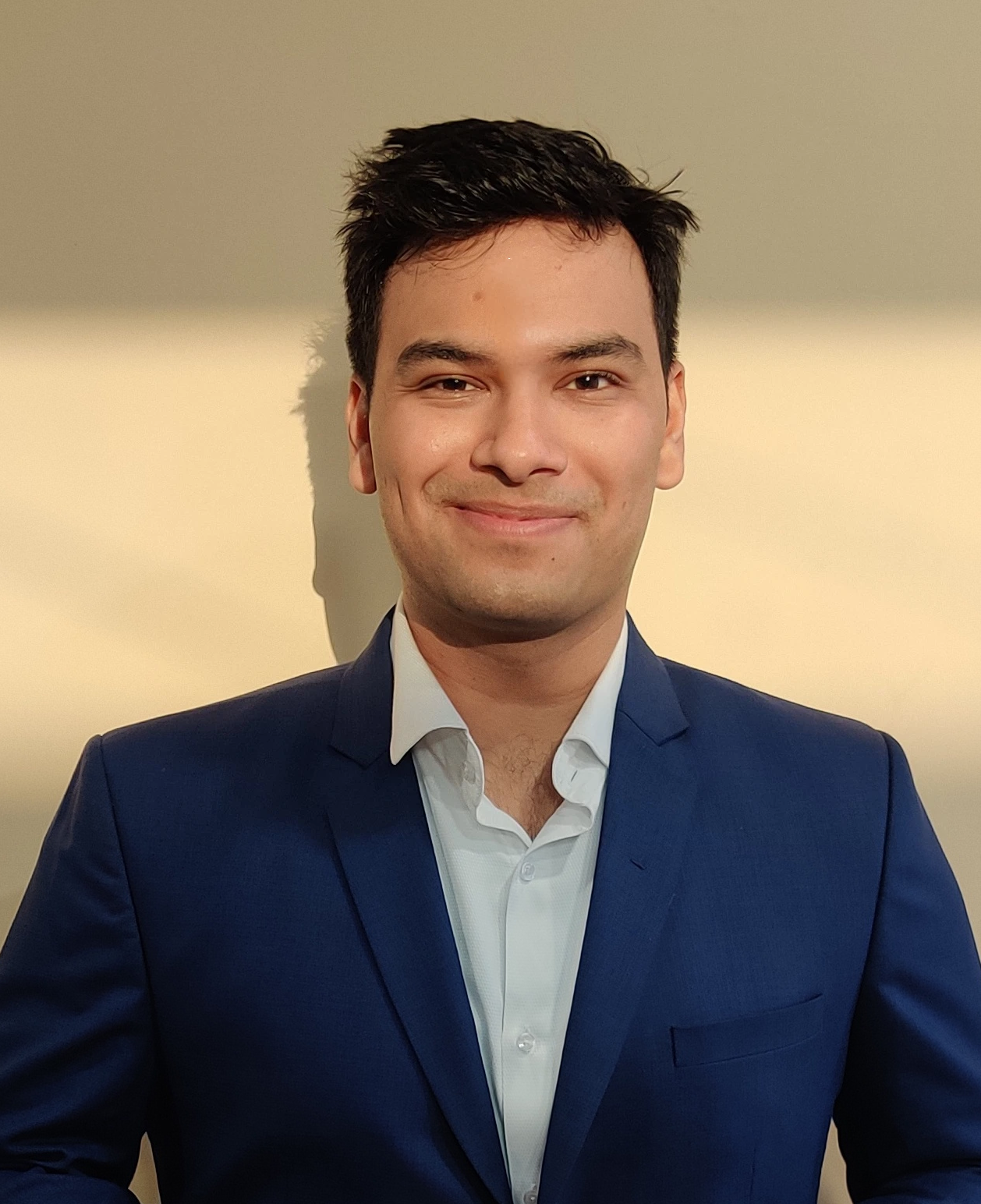
Raj Shekhar Bose is a postdoctoral researcher at the Leibniz Institute for Agricultural Engineering and Bioeconomy e.V. (ATB) in Potsdam, Germany, specializing in Mircobiome Biotechnology . With a Ph.D. in Environmental Biotechnology (IIT Kharagpur, 2023) M.Tech in Environmental Biotechnology (Jadavpur University, 2015) B.Tech in Biotechnology (West Bengal University of Technology, 2013) his research focuses on integrated waste valorization through anaerobic digestion and lactic acid fermentation . His work explores biorefinery processes for defatted rice bran , activated carbon applications in digestion systems, and biochar synthesis for wastewater treatment. Key projects include optimizing organic loading rates and mitigating ammonia inhibition in biogas production. Current efforts with BIOADVAN investigate advanced biomass treatment technologies. Publications demonstrate expertise in life cycle assessment , methane yield enhancement , and integrated process sustainability . Collaborations span institutions like Ionian University and Fraunhofer Institute, with emphasis on environmental impact reduction (67-71% improvement) and energy cost savings (80% reduction in biorefinery systems).
Iliyan Georgiev is a research scientist at Adobe, specializing in advanced computer graphics and physically based rendering. He holds a Bachelor's degree in Computer Science from Sofia University, Bulgaria, and a Master's degree from Saarland University, Germany, supported by a fellowship from the Max-Planck Institute. His work focuses on improving rendering efficiency through Monte Carlo methods, light transport simulation, and neural rendering techniques. Georgiev's research bridges the gap between theoretical and applied graphics, with contributions to bidirectional rendering algorithms, importance sampling, and 3D scene modeling. His publications highlight innovations in variance reduction, path sampling, and material-aware rendering. He has collaborated with leading institutions and companies, including Intel Visual Computing Institute, Disney Research Zürich, Weta Digital, Chaos Group, and Autodesk. Notable scientific awards include the Best Student Paper Award at ICPRAM 2025 and the Best Paper Award at EGSR 2024.
Yasutoshi Makino is a researcher specializing in ultrasound-based haptics, tactile feedback systems, and human-computer interaction. He has collaborated extensively with Hiroyuki Shinoda and other colleagues, focusing on mid-air haptic displays, noncontact object manipulation, and sensory reproduction. Research Interests Makino's work explores the intersection of acoustics, neuroscience, and engineering to create immersive tactile experiences without physical contact. His innovations include ultrasound-driven actuation mechanisms, thermal sensation rendering, and real-time human motion prediction for robotic systems. Recent Publications The 15 most recent articles highlight advancements in airborne ultrasound tactile displays, texture synthesis via GANs, and applications in guide dog training analysis, virtual reality, and interactive robotics. Key themes include dynamic pressure control , multi-stimulus integration , and low-latency systems . Collaborations Co-authored with Masahiro Fujiwara (43 papers) Collaborated with Hiroyuki Shinoda (145 papers) Worked with Shun Suzuki, Takaaki Kamigaki, and Ryoya Onishi on thermal and mechanical haptic feedback systems.
Rishabh Dabral is a Research Group Leader at the Max Planck Institute for Informatics since August 2024, leading the "3D Visual Intelligence" group. He is also affiliated with the Research Training Group on Neuro-Explicit Models of Language, Vision, and Action at Saarland University. Expertise: 3D computer vision, computer graphics, human-object interaction modeling, and motion synthesis. Leadership: Conducts cutting-edge research on 3D human performance capture and physical plausibility in motion. His research focuses on: 3D human pose estimation under gravity constraints Multi-modal gesture synthesis using neural architectures Quantum auto-encoding for 3D representations Wearable robotics informed by human behavior Temporal dynamics in human-object interaction Recent publications at top venues like SIGGRAPH , CVPR , and ICCV demonstrate his work on: Music-driven motion synthesis Egocentric motion capture systems Reactive two-person interaction models Diffusion-based gesture generation Object-aware motion prediction Wearable robotic limb design
Dr. Marc Habermann is a Tenured Senior Researcher and Scientific Manager of the Real Virtual Lab at the Max Planck Institute for Informatics (Department 6: Visual Computing and Artificial Intelligence). He leads the Graphics and Vision for Digital Humans research group, focusing on cutting-edge technologies in Computer Vision, Computer Graphics, and Machine Learning. His work emphasizes real-time human performance capture, photorealistic animation synthesis, and generative 3D human models derived from video data. Research Interests: Computer Vision, Computer Graphics, Machine Learning, Human Performance Capture, Non-Rigid Deformation Reconstruction, Neural Rendering, and Motion Capture. His contributions span topics like Gaussian splats optimization, sparse-view avatar synthesis, and physics-based cloth simulation. Awards: Saarland University Associate Fellow (2025) Key Publications (2025): Second-order Optimization of Gaussian Splats with Importance Sampling (arXiv) GIGA: Generalizable Sparse Image-driven Gaussian Avatars (arXiv) EVA: Expressive Virtual Avatars from Multi-view Videos (Siggraph 2025) Labs & Projects: Manages the Real Virtual Lab and heads the Graphics and Vision for Digital Humans group, advancing technologies for digital human avatars and immersive telepresence systems.
Dan Casas is a Senior Applied Scientist at Amazon in Seattle and an Associate Professor (Profesor Titular) on leave from King Juan Carlos University in Spain. His research spans the intersection of Computer Graphics, Computer Vision, and Machine Learning with a focus on 3D reconstruction, modeling, and animation of virtual humans and clothing. He has authored over 40 high-impact publications in top venues including SIGGRAPH, CVPR, and NeurIPS, and holds 3 international patents. Dr. Casas received his M.Sc. degree (2009) from Universitat Autònoma de Barcelona (Spain), including a research visit at Carnegie Mellon University. He earned his Ph.D. in Computer Graphics (2014) from the University of Surrey (UK), supervised by Prof. Adrian Hilton. He completed postdoctoral research at the University of Southern California's Institute for Creative Technology (2014-2015) and the Max Planck Institute in Saarbrücken (2015-2016). His research interests center on creating realistic virtual humans and digital clothing through advanced techniques in computer vision and machine learning. Casas has pioneered methods for 3D reconstruction of humans and garments from video input, physics-based simulation of soft-tissue deformations, and data-driven approaches to character animation. His work bridges the gap between theoretical computer graphics and practical applications in virtual reality, digital fashion, and immersive communication. Analysis of his recent publications reveals a consistent focus on human digitization, with increasing emphasis on machine learning approaches. His work has evolved from traditional computer graphics techniques toward neural representations and diffusion models, particularly in the areas of 3D garment simulation and human avatar creation. The trend shows growing integration of physics-based modeling with data-driven approaches to achieve both realism and computational efficiency. Marie Skłodowska-Curie Individual Fellowship (2015) FBBVA Leonardo Fellowship (2021) Medal from the Royal Academy of Engineering of Spain for Young Researcher Award (2023) i3 certification (outstanding researcher) from Spanish Ministry of Universities (2022) Winner of 2021 IEEE Retail Digital Transformation Grand Challenge Multiple Outstanding Reviewer Awards at top conferences (CVPR, BMVC, 3DV) Dan Casas has successfully advised multiple PhD students including Suzanne Sorli, Cristian Romero, Raquel Vidaurre, and Igor Santesteban (now at Meta Reality Labs), with several ongoing students including Melania Prieto-Martin, Gonzalo Gómez-Nogales, and Andrés Casado-Elvira. He has secured significant research funding as Principal Investigator, totaling over €1.2 million from Spanish Ministry of Science projects, EU H2020 programs, and industry fellowships including the FBBVA Leonardo Fellowship. His leadership extends to conference organization as Area Chair for ICCV 2023 and General Chair for ACM i3D 2020. Dr. Casas leads research in digital human modeling with applications in virtual reality, fashion technology, and immersive communication. His team develops advanced techniques for creating personalized 3D avatars from minimal input (like smartphone videos), addressing challenges in geometry, appearance, and physical simulation of virtual humans and their clothing.
Shrisha Bharadwaj is a Doctoral Researcher at the Max Planck Institute for Intelligent Systems working within the Perceiving Systems group under supervision of Prof. Dr. Michael Black and Dr. Victoria Fernandez-Abrevaya. She began her Ph.D. in September 2024 after completing an internship with the same group starting September 2022. Her research spans several key areas in visual computing: Modeling realistic textures from sparse inputs 3D reconstruction of static environments Generative approaches to relighting Neural rendering without explicit geometry modeling Video diffusion applications for physical property manipulation Shrisha completed her Master's in Machine Learning at the University of Tübingen, where she worked with Prof. Andreas Geiger at the Autonomous Vision Group on improving radiance field reconstruction using depth information. Her recent publications demonstrate significant contributions to SIGGRAPH Asia and ACM Transactions on Graphics, particularly in creating efficient, relightable 3D avatars and novel approaches to single-image relighting. Her work shows a consistent trajectory toward solving complex vision and graphics problems using minimal input data, with practical applications in digital content creation, virtual reality, and augmented reality systems.
Andreas Fender is a researcher at the Visualization Institute of the University of Stuttgart (VISUS), affiliated with the Schmalstieg Working Group. He has held postdoctoral positions at ETH Zurich (Switzerland) and the University of Sussex (England), following his PhD at Aarhus University (Denmark) with an internship at Microsoft Research (USA). His research focuses on Human-Computer Interaction, particularly in Augmented and Virtual Reality (AR/VR) and camera networks. He develops novel input methods for productivity and artistic expression in Mixed Reality environments, creating hybrid physical-digital systems like OptiBasePen, PressurePick, InfinitePaint, and DeltaPen. Recent work includes contributions to Mixed Reality input methods (UIST 2024, CHI 2022) and collaborative systems (Asynchronous Reality). Projects like GuitarPie (UIST 2025) and OptiBasePen (UIST 2024) demonstrate his focus on mobile interaction and ergonomic design. Scientific accolades include the Best paper award at CHI 2022 Best application paper award at ISS 2019 . At VISUS, he collaborates with Dieter Schmalstieg and leads hiring for PhD students and PostDocs exploring physical-digital workflows, artistic tools, and critical AI engagement. His work integrates machine learning, hardware prototyping, and spatial user interfaces to redefine future workplaces.
Bo Yang is an Assistant Professor in the Department of Computing at The Hong Kong Polytechnic University , leading the Visual Learning and Reasoning (vLAR) Group . His work focuses on machine learning, computer vision, and robotics for 3D scene understanding. D.Phil (University of Oxford, 2020) M.Phil (The University of Hong Kong, 2016) B.Eng (Beijing University of Posts and Telecommunications, 2014) Research spans: 3D Vision : Point cloud understanding, semantic segmentation, neural rendering Machine Learning : Unsupervised/disentangled representation learning Robotics : Scene interaction, autonomous navigation Recent publications analyze dynamic 3D scenes (NeurIPS 2023), infinite scene representations (ICML 2024), and unsupervised object segmentation (NeurIPS 2022). Key contributions include RandLA-Net (CVPR 2020), SpinNet (CVPR 2021), and GRF (ICCV 2021). Current teaching includes: AI and Big Data Computing (Spring 2024-2025) Machine Learning and Data Analytics (Fall 2023-2025) Creative Digital Media Design (Spring 2023-2025)
Jan Novák is a researcher in computer graphics with a focus on physically-based rendering and global illumination. He completed his PhD at Karlsruhe Institute of Technology (KIT) in 2014 under Carsten Dachsbacher, with prior degrees from Czech Technical University in Prague and academic experience at Union College (US) and Nanyang Technological University (Singapore). He has held research internships at Disney Research Zurich (2011) and Pixar Animation Studios (2012), before joining Walt Disney Animation Studios in 2013 and returning to Disney Research Zurich in 2014. Education : B.Sc. and M.Sc. from Czech Technical University in Prague (2007-2009) PhD in Computer Science at Karlsruhe Institute of Technology (2014) Research Interests include global illumination, participating media, ray tracing acceleration techniques, and GPU computing. His work addresses challenges in realistic light transport simulation for scenes with complex volumetric effects and glossy materials. Publication Trends reveal a consistent focus on light transport optimization through GPU-accelerated techniques. Key contributions span visibility caching, path-space manipulation, beam/light representations for volumetric effects, and bias compensation methods. His research bridges theoretical advancements with practical implementations for scalable rendering systems. Teaching Experience includes multiple practical courses on GPU computing and graphics programming at KIT between 2010-2013. He also served as a reviewer for prestigious venues including ACM Transactions on Graphics, Eurographics, and SIGGRAPH conferences. Student Supervision covers bachelor and diploma theses on advanced rendering topics, including visibility caching techniques, virtual spherical lights, subsurface scattering algorithms, and 2D path tracing implementations.
Arnulph Fuhrmann is a Professor in Computer Science at Technische Universität Darmstadt. His research focuses on Virtual Reality (VR), Augmented Reality (AR), and advanced rendering techniques. He holds a Ph.D. in Computer Science (2006) from TU Darmstadt, with his dissertation titled Interaktive Animation textiler Materialien (Interactive Animation of Textile Materials). His work spans topics such as real-time rendering optimization, collision detection for deformable objects, and immersive systems for sign language communication. Notable contributions include studies on diffraction phenomena simulation, impostor-based rendering acceleration, and hybrid rendering techniques combining rasterization and ray-tracing. His research often addresses challenges in visual quality, performance, and user interaction in VR/AR environments. Recent articles highlight advancements in diminished reality systems, facial feature enhancement for avatars, and collaborative mixed reality frameworks. Fuhrmann collaborates extensively with institutions like RWTH Aachen and researchers in fields like human-computer interaction and computer vision. His work emphasizes practical applications of theoretical advancements, such as tools for software visualization in VR and accessibility solutions for deaf/hard-of-hearing users.
Cheng Lin is an Assistant Professor at the Department of Computer Science and Engineering, Macau University of Science and Technology (MUST). He earned his Ph.D. in Computer Science from the University of Hong Kong (HKU) under Prof. Wenping Wang and completed a visiting research period at the Visual Computing Group, Technical University of Munich (TUM), advised by Prof. Matthias Nießner. His B.Eng. degree from Shandong University focused on geometry and graphics. His research focuses on geometric modeling , 3D vision , shape analysis , and computer graphics , with recent contributions in diffusion models for 3D reconstruction, neural surface modeling , and material-aware generation . He has published extensively in top venues like SIGGRAPH, CVPR, and ECCV. Key trends in his publications include advancing single-view 3D generation , multiview consistency , and neural diffusion techniques for geometric and material reconstruction. Notable works include PDT: Point Distribution Transformation with Diffusion Models (SIGGRAPH 2025) and Wonder3D (CVPR 2024). Scientific Awards : CVPR 2024 Most Influential Papers (Corresponding Author) ICLR 2024 Most Influential Papers (First Author) CGF Top Cited Article 2022-2023 Tencent Excellent Contributor [2022] National Scholarship of China [2013-2015] Cheng Lin co-founded the non-profit research group AnySyn3D and has served as a reviewer for journals like TPAMI, TOG, and TVCG, as well as conferences including SIGGRAPH and CVPR.
Professor Jörg Ott holds the Chair for Connected Mobility at Technische Universität München (TUM) in the Faculty of Informatics since August 2015. He is also an Adjunct Professor at Aalto University, where he previously served as Professor for Networking Technology from 2005 through 2015. His academic career includes positions as Assistant Professor at Universität Bremen (1997-2005) and research staff with teaching responsibilities at TU Berlin (1992-1997). His research spans network architectures, protocol design, and networked systems , with current focus areas including network and system architectures, robust networking, mobile networked systems, adaptive real-time communication, and network measurements. He has made significant contributions to delay-tolerant networking, edge computing, and internet protocols. Professor Ott has served the networking community extensively, including as co-chair of IETF working groups (MMUSIC, SIP), co-chair of IRTF DTNRG, Treasurer of ACM SIGCOMM, Vice-chair of IEEE Comsoc TCCC, and General Co-Chair of major conferences including ACM SIGCOMM 2012, ACM MobiSys 2018, and ACM CoNEXT 2021. He is currently chair of the Steering Committee of the ACM CoNEXT conference and member of TUM Ethics Board for non-medical sciences. Best Paper Award at ACM ICN conference (2015) Best Student Paper Award at Packet Video Workshop (2012) Professor Ott has supervised numerous students and researchers, with current members of his research group including Wolfgang Wörndl, Ljubica Kärkkäinen, and Leonardo Tonetto. He has co-founded multiple technology companies including Tellique Kommunikationstechnik GmbH, Lysatiq GmbH, Spacetime Networks Oy, and NeMu Dialogue Systems Oy (callstats.io). His teaching portfolio includes courses on Connected Mobility Basics, Edge Computing and the Internet of Things, and Wireless Internet Communication.
Prof. Dr. Thorsten Thormählen is a University Professor for Computer Graphics and Multimedia Programming in the Department of Mathematics and Computer Science at Philipps University Marburg, Germany, a position he has held since October 2012. Prior to this, he served as Substitute Professor for Interactive Graphics Systems at the University of Tübingen (2011-2012) and led the independent research group "Image-based 3D Scene Analysis" at the Max Planck Center for Visual Computing and Communication (2007-2012). His academic background includes a PhD (Dr.-Ing.) from the University of Hannover (2000-2005), where he also worked as a full-time scientific assistant, and a Diploma in Electrical Engineering from the University of Duisburg (1994-1999). Prof. Thormählen's research centers on Visual Computing , spanning Computer Graphics , Computer Vision , Video Processing , and Human-Computer Interaction . His work pioneers tools for 3D reconstruction (e.g., Multi-View Photometric Stereo), video manipulation (e.g., MovieReshape), and multimedia processing (e.g., GSN Composer), with groundbreaking contributions to accessibility through haptic and auditory interfaces for blind 3D modelers. His lab develops practical systems that bridge theoretical computer vision with real-world applications. Analysis of his 15 most recent publications reveals a consistent focus on photometric stereo techniques for 3D reconstruction, video processing innovations, and accessibility-driven interfaces. His work increasingly emphasizes inclusive design, particularly for visually impaired users, while maintaining technical rigor in camera calibration, surface modeling, and multi-sensor fusion. At the Max Planck Center, he established and led the "Image-based 3D Scene Analysis" research group, which advanced methods for reconstructing 3D environments from video sequences. His current work at Marburg continues this trajectory, integrating computer vision, graphics, and human-centered design to solve complex problems in digital content creation and accessibility.
Ugo Finnendahl is a Researcher in the Department of Computer Graphics at Technische Universität Berlin. He holds an M.Sc. in Computer Science and is affiliated with the Computer Graphics group led by Prof. Marc Alexa. His research focuses on advanced computer graphics topics including mesh parameterization, geometric acoustics, physically-based simulation, and exact arithmetic algorithms. Key contributions include methods for differentiable rendering, intrinsic triangulation optimization, and geometric stylization techniques. Recent work emphasizes integrating geometric modeling with machine learning frameworks (e.g., path tracing backpropagation), improving mesh deformation techniques (ARAP revisited), and developing efficient exact arithmetic systems for planar embeddings. No scientific awards are explicitly mentioned in the provided materials. His research spans collaboration with institutions like TU Berlin's Computer Engineering and Microelectronics Institute, contributing to both theoretical advancements and practical applications in computer graphics.