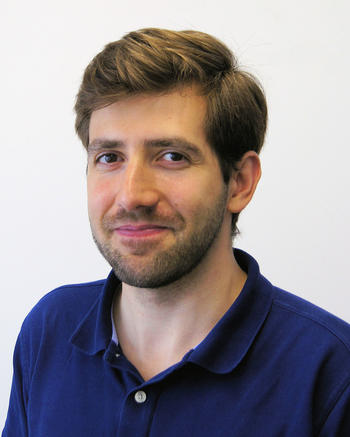
Günhan Dündar is a Professor in the Department of Electrical and Electronics Engineering at Bogazici University. His research specializes in analog/mixed-signal integrated circuit design and computer-aided tools for VLSI systems. Key contributions include aging-robust circuit design automation, low-power CMOS architectures, and security primitives like physically unclonable functions (PUFs). The Dündar Lab explores reconfigurable systems for reliability enhancement in nanoscale technologies. Collaborations address hardware vulnerabilities in IoT devices and optimization of ring oscillator networks for cryptographic applications. Teaching emphasizes design automation, semiconductor physics, and hardware implementation methodologies.
Dr. Olga Taran is a Lecturer at the Department of Health Sciences and Technology at ETH Zurich, specializing in machine learning and biomedical data science. She holds a PhD in Computer Science from the University of Geneva, with a focus on machine learning for complex problems. Her postdoctoral research at the Biomedical Data Science (BMDS) Lab involves developing data-driven metrics to improve outcomes in Spinal Cord Injury (SCI) clinical trials, addressing challenges in treatment evaluation. Her work aims to enhance clinical decision-making and accelerate therapy development. Olga's research also extends to anti-counterfeiting technologies using machine learning, focusing on copy detection patterns and authentication systems. Her research interests span machine learning applications in healthcare, deep learning methodologies, and the integration of digital twins for fraud detection. She has contributed to advancements in radio astronomical image reconstruction and self-supervised learning techniques. Olga's publications reflect a strong emphasis on interdisciplinary solutions, combining machine learning with fields like astronomy, cybersecurity, and biomedical science. Notable achievements include pioneering work on authentication systems using digital blueprints and physical fingerprints, as well as stochastic digital twin models for copy detection patterns. She actively collaborates on projects addressing the limitations of traditional clinical trial metrics and exploring machine learning's role in combating adversarial attacks on authentication systems.
Dr. Alexander Wild is a former researcher at Ruhr-University Bochum's Faculty of Computer Science, affiliated with the Horst Görtz Institute for IT-Security. He completed his Diploma in 'Security in Information Technology' (2006–2012) and held a PhD position (2012–2016) at the Chair for Embedded Security. His research focuses on FPGA security, side-channel analysis, and physical unclonable functions (PUFs). Education: PhD in Embedded Security, Ruhr-University Bochum (2012–2016) Diploma in Security in Information Technology, Ruhr-University Bochum (2006–2012) Research interests include securing FPGAs against side-channel attacks, designing PUF-based authentication mechanisms, and optimizing hardware security countermeasures. His work bridges hardware design with cryptographic applications, emphasizing practical implementations on reconfigurable systems. His publications (e.g., automated EM probe repositioning, GliFreD duplication schemes) highlight contributions to FPGA-based security primitives and PUF reliability. He has collaborated with institutions like the Horst Görtz Institute and co-authored works presented at conferences such as HOST, CHES, and FPL. Affiliated with the Emmy Noether Group and involved in projects like the CAVE research initiative, he emphasizes interdisciplinary approaches to hardware security challenges.
Adrian Virgil CRĂCIUN is an Associate Professor at the Department of Electronic and Computers, Faculty of Electrical Engineering and Computer Science, Technical University of Brașov. His research focuses on analog electronics, electronic circuit modeling, and data acquisition systems. He has published extensively on topics like VHDL-based filter design, low-power amplifiers, and FPGA security. His work includes both theoretical contributions and practical implementations in medical electronics and embedded security systems. Education Background: No explicit education details provided in text Research Interests: Dr. CRĂCIUN specializes in electronic circuit analysis and design, with emphasis on analog systems. His work integrates hardware security (PUF-based solutions), low-power medical electronics, and advanced simulation techniques using VHDL. Recent efforts focus on optimizing power consumption in complex integrated circuits and developing robust FPGA identification methods. Grants & Collaborations: No grant information explicitly stated Labs & Teams: Participates in university-based electronics research groups focused on analog circuit design and embedded systems security.
Jean-Michel Dricot is an Associate Professor at the Université libre de Bruxelles (ULB) , where he has been affiliated since 2010. He is a founding member of the Belgian Master of Sciences in Cybersecurity (2016) and the ULB Cybersecurity Research Center (2017) . Education: M.Sc. in Computer Engineering (2001), PhD in Engineering (2007) from ULB His research focuses on cybersecurity for mobile/wireless networks and IoT , with expertise in network security , PUFs , and adversarial machine learning . Recent publications highlight interdisciplinary work on smart grid security , blockchain-based systems , and IoT privacy . Key article trends include: PUFs for authentication , adversarial attack mitigation , smart grid cryptography , and blockchain privacy . He has supervised multiple theses on topics like CubeSat security , Modbus/TCP protection , and ICS protocol analysis .
Hans Vandierendonck is a Professor in High-Performance and Data-Intensive Computing at Queen’s University Belfast’s School of Electronics, Electrical Engineering and Computer Science. His research focuses on compilers, runtime systems, and architectures for parallel systems, with special attention to programmability, cache architecture, and performance evaluation. He has authored over 150 publications and supervised multiple PhD students, including Jiawen Sun, a finalist in the EPSRC Connected Nation Pioneers competition. His work spans compiler optimization, graph processing, transprecision computing, and blockchain technology. He is a Senior Member of IEEE and ACM, an IEEE Computer Society Distinguished Contributor (2023), and a Fellow of the Higher Education Academy. He has held visiting roles at FORTH, INRIA, and the Universitat Politècnica de Catalunya. His projects include the RELAX Doctoral Network and the Kelvin Living Lab for Net Zero HPC. He teaches courses on energy-efficient computing, concurrent programming, and research projects at both BSc and MSc levels. Key research interests include runtime systems, high-performance computing, energy efficiency, and scalable algorithms for data analytics. His awards include the IBM Belgium Prize (2000, 2004) and Jozef Plateau Prize (2000). He actively reviews for top journals and conferences, including ISCA, SC, and ICS. As part of the LINAS network, he explores interdisciplinary algorithmic solutions for societal impact. His current projects address challenges in graph processing, edge computing, and sustainable wearable systems. Collaborations span academia and industry, reflecting his commitment to bridging theoretical and applied computing.
Di Ma is Associate Professor and Associate Dean for Graduate Education and Research in the College of Engineering and Computer Science at the University of Michigan-Dearborn. She also serves as Director of the Cybersecurity Center for Education, Research, and Outreach (CCERO) and the Security and Forensics rEsearch (SAFE) Lab, actively leading institutional cybersecurity initiatives since CCERO's founding in 2016. Her educational background includes: Ph.D. in Computer Science, University of California-Irvine (2009) Master of Engineering, Nanyang Technological University Bachelor of Engineering, Xi-an Jiaotong University Dr. Ma's research centers on security, privacy, and applied cryptography with emphasis on connected/autonomous vehicle systems (ECUs, infotainment), smartphone security (malware prevention, acoustic channels), and RFID/sensor protection. She investigates demographic inference from Wi-Fi metadata and develops location-aware cryptographic protocols, focusing on real-world vulnerabilities in transportation and mobile ecosystems. Her work bridges theoretical cryptography with practical safety-critical systems. Analysis of her 15 most recent publications reveals sustained leadership in automotive cybersecurity since 2012, with increasing focus on vehicle privacy (2019-2020), secure firmware updates, and cross-domain cryptographic access control. Key trends include adapting smartphone security techniques to automotive use cases and pioneering ambient sensor-based defenses against relay attacks, consistently published in IEEE flagship journals. Her scientific recognition includes: Trevor O. Jones Outstanding Paper Award (SAE, 2019) CECS Faculty Excellence Award for Research (2017) Tan Kah Kee Young Inventor's Award (Silver Medal, 2004) NSF-TRUST Fellowship (2009) Graduate Dean’s Dissertation Fellowship (UC Irvine, 2009) Air Force Summer Faculty Fellowship (AFOSR, 2011) Dr. Ma has advised PhD students including Ahmad Nasser (2019) and Nevrus Kaja (2019). Her research is funded by major grants from NSF (DGE-1419280 as PI, 2014), NHTSA (2015, 2017), AFOSR (2011), Ford (2016), Intel, and Research in Motion. Notably, she co-led a $7M Department of Energy project (2020) protecting EV charging infrastructure. As SAFE Lab Director, she develops security frameworks for mobile/IoT systems while CCERO coordinates university-wide cybersecurity education and outreach. Her teams include Vertically Integrated Project (VIP) groups designing automotive intrusion detection systems, and she organized the inaugural Dearborn Cybersecurity Day (2019) with 130+ industry participants.
Tudor Soroceanu is a Researcher at the Fraunhofer AISEC Institute, affiliated with the Department of Mathematics and Computer Science under the Information Security group. His work focuses on Post-Quantum Cryptography , Physically Unclonable Functions (PUFs) , and Efficient Cryptographic Algorithms , with a particular emphasis on security analysis and hybrid encryption schemes. He earned both his Bachelor's and Master's degrees at the Free University of Berlin , where his theses addressed security analysis of PUFs and computational geometry algorithms. Since 2016, he has contributed to projects like SecureFog and the ID Management group , investigating vulnerabilities in cryptographic hardware and machine learning resistance. 2023: Published a comprehensive survey on public-key multiple encryption schemes, analyzing their security and efficiency in quantum computing contexts. 2019: Co-authored a study in CARDIS breaking Lightweight Secure PUFs through novel ML-based attacks. 2017: Analyzed XOR Arbiter PUF security in PROOFS , demonstrating exponential attacker effort increases through design principles. His teaching includes exercises in Cryptanalysis of Symmetric/Asymmetric Methods at the Free University of Berlin. Current research explores quantum-resistant cryptographic primitives and their integration into practical systems.
Sara Achour is an Assistant Professor jointly appointed to the Computer Science and Electrical Engineering departments at Stanford University. She earned her PhD in Computer Science from MIT in 2021. Her research develops programming languages, compilers, and runtime systems for emerging analog computing platforms. Dr. Achour leads research in hardware-aware optimization frameworks and novel analog compute paradigms, with applications spanning quantum computing, IoT devices, and neuromorphic systems. Her research focuses on: Bridging software abstractions with unconventional hardware capabilities Energy-efficient computing paradigms for edge devices Cross-layer optimization of analog and hybrid computing systems Publication analysis reveals consistent themes in analog computing architectures, hardware-aware optimizations, and emerging computing platforms. Recent work explores quantum compilation techniques, hyperdimensional computing optimizations, and hardware security metrics. Dr. Achour advises multiple graduate students including: 16 doctoral candidates across computer architecture and quantum computing 10 master's students in software-hardware co-design She maintains active research collaborations through the Stanford SystemX Alliance.
Elias Kougianos is a Professor in the Department of Electrical Engineering at the University of North Texas. His research focuses on the intersection of cybersecurity, quantum computing, blockchain technology, and edge computing, with applications in smart grids, healthcare systems, and agricultural technology. His work explores Security-by-Design principles using Quantum Physical Unclonable Functions (PUF) and Quantum Key Distribution for robust cybersecurity in energy systems. He develops blockchain-based frameworks for secure EHR management, crop insurance, and pharmaceutical supply chains, emphasizing scalability and privacy preservation . In edge computing, he investigates machine learning-driven authentication and lightweight models for IoT devices. The recent articles highlight his contributions to Cybersecurity (quantum PUF, deepfake detection) Healthcare (seizure detection, EHR management) Agriculture (plant disease classification, precision spraying) Blockchain (secure ledgers, consensus algorithms) His work integrates hardware security with distributed systems to address challenges in smart cities and CPS.
Prof. Dimitris Syvridis serves as a Full Professor at the Department of Informatics and Telecommunications, National and Kapodistrian University of Athens (NKUA), where he leads the Photonics Technology Laboratory. With over three decades of academic service at NKUA since 1993, he has participated in numerous European research projects focusing on photonic technologies and optical communications infrastructure. His educational foundation includes: BSc in Physics (1982) MSc in Telecommunications (1984) PhD in Physics (1988) Prof. Syvridis's research centers on optical communications , photonic integration , and quantum security systems . His work pioneers practical implementations of quantum key distribution (QKD) networks and optical physical unclonable functions (PUFs), addressing critical vulnerabilities in hardware security. Recent publications demonstrate expertise in machine learning-resistant security mechanisms and field-deployable quantum communication systems, with over 130 scientific contributions to the field. Analysis of his 2024-2025 publications reveals dominant themes in quantum-safe cryptography (75% of output), particularly QKD system optimization and optical PUFs. His research consistently bridges theoretical quantum concepts with real-world deployment challenges, including aerial fiber transmission, free-space optics, and hybrid network architectures. The interdisciplinary nature of his work spans photonics, cybersecurity, and machine learning countermeasures. Prof. Syvridis actively contributes to the scientific community as a reviewer for IEEE journals and leads the Photonics Technology Laboratory's research in secure optical networks. The laboratory maintains strong European collaborations and focuses on translating photonic innovations into field-deployable security solutions, particularly for next-generation communication infrastructures requiring quantum-resistant protection.
Professor Yingli Wang is a Professor in Logistics and Operations Management and serves as Pro-Dean for Research, Impact and Innovation at Cardiff Business School, Cardiff University. She is an active researcher and supervisor, with a strong focus on digital transformation in supply chains. Her work is supported by major funding bodies including EPSRC, ERDF, Welsh Government, Highways England, and the Department for Transport. Education: PhD in Logistics and Operations Management, Cardiff University (2008) MBA in IT with Distinction, Coventry University (2003) BSc in Food Manufacturing, China (1995) Professor Wang’s research centers on the integration of emerging digital technologies—particularly blockchain, AI, IoT, 5G, and cloud computing—into logistics and supply chain systems to enhance efficiency, sustainability, and resilience. She explores how these technologies can be applied in maritime logistics, construction supply chains, and smart ports. Her work extends beyond traditional business contexts to address societal challenges, especially food poverty and health inequality, through innovative supply chain models such as community food redistribution systems. She is a key member of the South Wales Food Poverty Alliance and led the launch of Wales’ first Your local Pantr y social enterprise. Her recent publications demonstrate a strong trend toward blockchain applications in supply chains, digital material passports, BIM integration, and the role of 5G in enabling smart logistics. She has co-edited two influential books: E-Logistics: Managing Your Digital Supply Chains for Competitive Advantage (2nd ed., 2021) and the open-access Digital Supply Chain Transformation: Emerging Technologies for Sustainable Growth (2022). Scientific Awards and Recognition: James Cooper Memorial Cup (2009, CILT) for inventing Electronic Logistics Marketplaces 2020 Innovation and Impact Awards for work on food poverty Chartered Member, Chartered Institute of Logistics and Transport (CILT) Professor Wang collaborates extensively with industry partners such as Tesco, ASDA, BT, Tata Steel, and CEVA Logistics. She advises the World Economic Forum’s Centre for the Fourth Industrial Revolution on blockchain deployment and is a founding member of the Blockchain Connected Council in Wales. She has delivered blockchain masterclasses and webinars for global audiences and contributed white papers to the World Economic Forum. Her research on digital supply chains has informed policy and practice, including a guide on accelerating BIM adoption for Highways England and a foresight report for the UK Government Office for Science. Labs and Research Initiatives: Principal Investigator, Blockchain-Powered Digital Material/Product Passport: Accelerating Supply Chain Net Zero Goals (UKRI Innovation Launchpad) Key contributor to the development of the world’s first comprehensive blockchain deployment toolkit for supply chains Active in the Cardiff Business School research ecosystem, leading on digital innovation and societal impact projects
Garrett S. Rose is a Professor and Department Head in the Department of Electrical Engineering and Computer Science at the University of Tennessee, Knoxville. His research focuses on nanoelectronic circuit design, neuromorphic computing, and hardware security. He holds a PhD in Electrical Engineering from the University of Virginia (2006) and has held roles at AFRL and NYU Polytechnic School of Engineering. His work explores emerging nanoscale devices like memristors for neuromorphic systems and security applications. Education: BS in Computer Engineering (Virginia Tech, 2001), MS and PhD in Electrical Engineering (University of Virginia, 2003/2006). His research areas include memristor-based neuromorphic architectures, hardware security primitives, and nanoelectronic device modeling. He leads the SENECA Research Group, which develops neuromorphic systems for applications like robotics and edge computing. Research highlights include memristive neural networks, PUF-based security systems, and cross-disciplinary projects funded by agencies like AFRL and DARPA. His recent work emphasizes co-design methodologies for neuromorphic hardware and applications such as spiking neural network implementations and sensor-integrated systems. He has advised multiple postdoctoral and graduate researchers and collaborates on grants related to neuromorphic computing and hardware security. His lab develops tools like the DANNA neuromorphic architecture and the RAVENS neuroprocessor, emphasizing real-world applications through hardware-software integration.
Tal Malkin is a Professor at Columbia University's Department of Computer Science, School of Engineering and Applied Science. Her work spans cryptography, secure computation, and data privacy, with a focus on non-malleable codes, topology-hiding communication, and privacy-preserving protocols. 2025: Peony Onion Encryption for asynchronous anonymity 2024: Structural lower bounds for pseudorandom functions 2022: XSPIR for Ring-LWE-based private retrieval Research themes include: Cryptographic Foundations: Non-malleability, garbling circuits, and zero-knowledge protocols Privacy-Preserving Systems: Differential privacy, secure multi-party computation, and database anonymity Applied Security: Biometric encryption, model watermarking, and polymer-based unclonable functions Her 15 most recent publications analyze anonymity in dynamic networks, robust watermarks for AI models, and tamper-resilient encryption. Keywords span computer science, cryptography, and machine learning. Sub-fields include secure computation, lattice-based cryptography, and function-private protocols.
Tim Music is a Researcher at the Chair of Security in Information Technology (Prof. Sigl) at the Technical University of Munich (TUM). He holds an M.Sc. degree and is based at Theresienstr. 90, 80333 Munich, Germany, with contact via tim.music@tum.de and office room 0101.Z1.010. His research spans embedded security systems, fault attack methodologies, countermeasures against physical attacks, physically unclonable functions (PUFs), authentication protocols, ASIC design, and cryptographic implementations. He actively develops security frameworks for hardware-software co-design with emphasis on practical attack resistance and side-channel analysis mitigation. Music leads the Smart Card Laboratory development, creating hands-on educational experiences where master students perform correlation power analysis and implement secure cryptographic systems. He supervises student research positions involving hardware assembly (smart cards, logic analyzers), PCB repair, firmware security enhancements, and automated evaluation tools using embedded C and Python.