Pete Willemsen is a Professor and Department Head in the Department of Computer Science at the University of Minnesota Duluth, Swenson College of Science and Engineering. His research focuses on urban microclimate simulation, virtual reality education, and human-computer interaction. Current research includes One Night in Tarrytown (interdisciplinary VR learning environments) Development of Quick Environmental Simulation (QES) for urban wind and pollution modeling Investigation of radiance field content generation for VR applications Prior projects have explored: Locomotion mechanics in VR training systems GPU-accelerated environmental simulations Human spatial perception in virtual environments Low-cost Kinect-based tracking systems Collaborations span multiple disciplines including Communications, Digital Arts, and Mechanical Engineering. Current students include Asif Sijan (VR content generation), Christianah Adigun (spatial cognition), and Noah Miller (VR controller ergonomics).
Hideyuki Sawada is a Professor at Waseda University's School of Advanced Science and Engineering, Faculty of Science and Engineering. He has been in this position since April 2017, following 7 years as a Professor at Kagawa University (2010-2017) and 11 years as an Associate Professor there (1999-2010). His academic career also includes visiting professorships at Universite de Savoie in France (2005, 2009) and previous research positions at Waseda University. His educational background is deeply rooted at Waseda University: Ph.D. in Pure and Applied Physics, Waseda University Graduate studies in Pure and Applied Physics, Waseda University (1995-1998) Graduate studies in Pure Physics and Applied Physics, Waseda University (1990-1992) Bachelor's degree in Applied Physics, Waseda University (1986-1990) Professor Sawada's research spans multiple interdisciplinary fields with a strong focus on robotics, human-computer interaction, and intelligent systems. His work bridges mechanical engineering, information science, and biomedical applications, with particular emphasis on tactile sensing, biomimetic robotics, and 4D space visualization. His laboratory actively explores shape memory alloy (SMA) applications in robotics, self-propelled droplet systems, and novel human interface technologies that enhance virtual reality experiences. His recent publication trends show a strong focus on tactile interfaces using shape memory alloys, self-propelled droplet systems leveraging Marangoni convection, continuum robotics for medical applications, and human-in-the-loop machine learning for robot control. These publications demonstrate his laboratory's interdisciplinary approach that combines fluid dynamics, robotics, and human perception studies. Professor Sawada has received numerous prestigious awards recognizing his research contributions: Best Paper Award Finalist at IEEE International Conference on Mechatronics and Automation (2025) Certificate of Editors' Choice from Biomimetic Intelligence and Robotics Journal (2025) Specially Selected Paper award from Information Processing Society of Japan (2024) Award for excellence in interdisciplinary research from The Japan Society of Mechanical Engineers (2024) Best paper award at the 7th International Conference on Sustainable Information Engineering and Technology (2022) Professor Sawada actively mentors students and researchers, as evidenced by numerous student awards where he appears as an advisor. His laboratory has secured funding for various research projects in robotics, human interface technology, and biomimetic systems. He serves on multiple editorial boards and program committees for international conferences, demonstrating his leadership in the academic community. His research group maintains strong international collaborations, particularly with institutions in France and Southeast Asia. His laboratory focuses on several key research directions: the development of SMA-based tactile interfaces and sensors, self-propelled droplet systems for micro-transport applications, continuum robotics for medical use, and 4D space visualization systems. The lab maintains strong industry connections, particularly in medical robotics and human interface technology development.
Felix Heide is a Professor of Computer Science at Princeton University , where he leads the Princeton Computational Imaging Lab . He also serves as Head of AI at Torc Robotics , focusing on full autonomy stacks for self-driving trucks. His research sits at the intersection of optics , machine learning , and computer vision , addressing imaging challenges in harsh environments like dense fog, ultra-low/high illumination, and scattering media. Ph.D. in Computer Science from the University of British Columbia Postdoctoral research at Stanford University His work on computational imaging spans physics-based vision, non-line-of-sight imaging , end-to-end camera design , and robust sensor fusion . He has pioneered techniques for inverse neural rendering , nanophotonic optics , and light-speed AI through optical computing. His recent papers in Nature Machine Intelligence , Science Advances , and top conferences ( SIGGRAPH , CVPR , ICCV ) focus on: Adverse weather imaging (fog, snow, rain) Multi-sensor fusion (LiDAR, radar, gated cameras) Light transport through scattering media Optical metasurfaces and diffractive optics End-to-end optimization of imaging pipelines Event-based vision and polarization cues He has received prestigious awards including the SIGGRAPH Significant New Researcher Award , Sloan Research Fellowship , and Packard Fellowship . His lab's open-source code and datasets enable real-world applications in autonomous driving, microscopy, and augmented reality.
Prof. Dr. André Hinkenjann is the Founding Director of the Institute for Visual Computing and holds a Research Professorship in Computer Graphics and Interactive Systems at Bonn-Rhein-Sieg University of Applied Sciences. His research spans computer graphics, interactive environments, and visualization, with applications in VR/AR, digital twins, and scientific data analysis. He leads multidisciplinary projects funded by institutions like BMBF and Zukunftsfonds NRW. His research integrates: Computer Graphics : Real-time global illumination, foveated rendering, and GPU optimization Interactive Systems : Haptic interfaces, large-display collaboration, and spatial interaction techniques Applied VR/AR : From trauma therapy to industrial training and cultural heritage preservation Recent publications emphasize mixed-reality interaction, neural rendering, and perceptual optimization, reflecting a consistent focus on bridging theoretical graphics with human-centered applications. His lab frequently contributes to high-impact venues like ACM SIGGRAPH, IEEE VR, and Eurographics. Notable projects under his direction include: PInBiM: Gamified citizen science for museum-based insect research DT4MP: Digital twins for urban/industrial multiphysics simulations GTN: State-wide network advancing game technology in NRW Witality: VR for sensory wine analysis
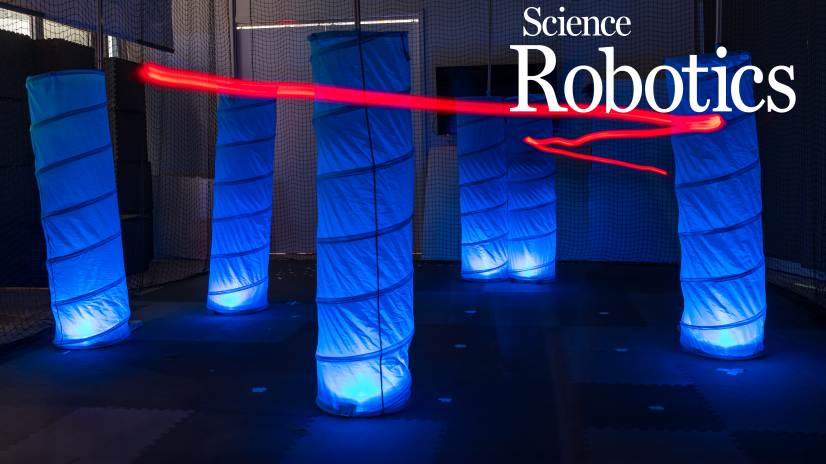
Nitin J Sanket is an Assistant Professor in the Robotics Engineering Department at Worcester Polytechnic Institute, where he leads the Perception and Autonomous Robotics Group (PeAR) founded in 2022. His research focuses on advancing autonomy for tiny mobile robots through bio-inspired approaches that enable on-board sensing and computation without external infrastructure. Ph.D. in Computer Science from University of Maryland, College Park (2021) M.S. in Robotics from University of Pennsylvania (2016) B.E. in Electronics and Communication from M. S. Ramaiah Institute of Technology, Bangalore, India (2013) Professor Sanket's research centers on four interconnected thrusts: Active perception (using movement to simplify perception problems), Interactive perception (selectively interacting with the environment), Novel perception (using data statistics like neural network uncertainty), and Novel sensing (employing sensors like event cameras). His work targets extreme resource-constrained robots, exemplified by the world's first RoboBeeHive prototype – hummingbird-sized nano-quadrotors capable of pollination with all sensing and computation performed on-board. His lab's 'Minimal-AI' philosophy emphasizes efficiency, using perception-action synergy to solve complex problems with minimal computational resources. His recent publications reveal a strong focus on efficient vision algorithms for tiny robots, with papers in Science Robotics (featured on the cover), IEEE ICRA, IROS, and CVPR. Key themes include uncertainty modeling for resource-constrained systems, event-based vision, and bio-inspired navigation. His work frequently bridges theoretical innovation with practical implementation on real hardware. Larry S. Davis Award for Best Computer Science PhD Thesis at University of Maryland (2021) MDPI Drones 2021 PhD Thesis Award Brin Family Prize (2018) Science Robotics cover feature (2023) Professor Sanket actively mentors 19 students (3 PhD, 6 Masters, 10 undergraduates) and recently secured a $705K NSF grant (September 2025) for bio-inspired sound navigation in tiny robots. His lab emphasizes hands-on experience with real hardware systems rather than pure simulation. His research on bat-inspired drones for search and rescue operations has received extensive media coverage from Associated Press, Washington Post, NPR, and other major outlets, demonstrating the real-world relevance of his work. The Perception and Autonomous Robotics Group (PeAR) provides students with opportunities to work on cutting-edge problems in nano-drone development, bio-inspired navigation, and minimal-AI approaches, preparing them for careers at the forefront of robotics innovation.
David Coeurjolly is a Research Director at the French National Center for Scientific Research (CNRS) affiliated with LIRIS laboratory at Claude Bernard University Lyon 1. He leads the Origami research team and holds several leadership positions including Director of GdR Informatique Géométrique et Graphique and Co-lead of PEPR ICCARE. As co-founder of the DGtal library and General Chair of the Graphics Replicability Stamp Initiative, he significantly influences computational geometry research. His research spans digital geometry, discrete algorithms, Monte Carlo rendering, and geometry processing. Core innovations include work on optimal transport, low-discrepancy sampling, digital surface regularization, and curvature estimation methods. His approaches combine theoretical mathematics with practical implementations for computer graphics and scientific computing applications. Recent publications demonstrate strong focus on: Efficient transport algorithms (BSP-OT, Rectified Flows) Sampling theory innovations (Sobol' sequences, Owen scrambling) Digital geometry foundations (Gauss digitization, Laplace-Beltrami operators) Geometric transformations (bijective rotations, plane probing) Awards include: 🎫 Best Paper Award, SIGGRAPH Asia 2024 🎫 SGP Software Award 2016 He leads multiple ANR grants including SSLAM (point cloud ML), StableProxies (geometry processing), and MoCaMed (medical physics). His lab develops open-source tools like DGtal and maintains active collaborations through international initiatives like the Graphics Replicability Stamp.
Desislava Georgieva is an Assistant Professor in the Department of Informatics at New Bulgarian University (NBU), where she has been a full-time faculty member since 2005. She holds a PhD from Technical University of Sofia (2014) and dual Master's degrees in Architecture and Computer Technologies. Her research spans image processing , computer graphics , and 3D animation , with applied work in medical imaging, telemedicine, and cybersecurity. Recent publications demonstrate collaborations on medical device software, adaptive imaging algorithms, and educational methodologies. She teaches courses including Game Design , Animation Techniques , and Computer Animation , and has supervised multiple diploma students. Administrative roles include serving as program director and consultant at NBU. Contact: Office hours Tuesdays/Wednesdays (18:00-20:00, Room 712A) or email dvelcheva@nbu.bg .
Jenny Faucheu is a Full Professor at Mines Saint-Étienne specializing in Materials for Design and the Creative Industries. With 53 publications and over 35,000 reads on ResearchGate, she has established herself as a leading researcher at the intersection of materials science, tactile perception, and design. Her work bridges engineering principles with human sensory experience to inform better product design. Professor Faucheu's research focuses on understanding how humans perceive and emotionally respond to textures through touch. Her expertise spans tactile aesthetics, smart materials, polymer nanocomposites, and graphene-based materials. She investigates the relationship between physical surface properties and subjective emotional responses, particularly examining how textures elicit 'liking' versus 'beauty' judgments. Her recent work explores multimodal perception, studying how visual information influences tactile experience and how cognitive factors like working memory affect texture evaluation. Analysis of her 15 most recent publications reveals a consistent focus on the psychophysical aspects of texture perception, with increasing attention to crossmodal interactions and individual differences in sensory processing. Her research has evolved from fundamental studies of friction-induced vibrations to more complex investigations of emotional responses and cognitive mechanisms underlying tactile aesthetics. The work demonstrates strong connections between materials engineering and human-centered design principles. Professor Faucheu's approach emphasizes the importance of interdisciplinary collaboration, combining expertise from mechanical engineering, psychology, and design to create a comprehensive understanding of material perception. Her educational work focuses on developing tools to teach design students about smart materials and their dynamic behaviors, reflecting her commitment to advancing design education through materials knowledge. Her research on VO2-polymer nanocomposites for thermochromic windows represents an important application area, with studies examining both technical performance and environmental impact through life cycle assessments. This work demonstrates her ability to connect fundamental materials research with practical, sustainable applications for energy-efficient building technologies.
Sung-Eui Yoon is a Professor at the Department of Computer Science, Korea Advanced Institute of Science and Technology (KAIST), where he leads the Scalable Graphics, Vision, & Robotics Lab (SGVR Lab). He also holds affiliations with KAIST AI, KAIST Robotics Program, and CS Robotics. His academic career spans over 15 years at KAIST, where he has established himself as a leading researcher in graphics, vision, and robotics. Dr. Yoon received his Ph.D. from the Department of Computer Science at the University of North Carolina at Chapel Hill under the advisory of Dr. Dinesh Manocha, completed a postdoc at Lawrence Livermore National Lab, and earned his B.S. and M.S. from the Department of Computer Science at Seoul National University. His academic lineage traces back to Carl Friedrich Gauss through a distinguished line of mathematicians and computer scientists. His research spans scalable graphics, vision, robotics, and AI problems, with a particular focus on real-time rendering, collision detection, motion planning, and image retrieval. Dr. Yoon's work bridges theoretical foundations with practical applications, resulting in numerous publications, tutorials, and workshops at major conferences including SIGGRAPH, ICRA, and CVPR. His publications demonstrate a consistent focus on scalability and efficiency in graphics and robotics systems, with recent work emphasizing deep learning applications in image search and advanced motion planning algorithms for robotics. His research has evolved from foundational work in massive model rendering to cutting-edge applications in robotics and AI. Among his notable recognitions are the Outstanding Paper Award at ICRA 2023, Outstanding Navigation Award Finalist at ICRA 2022, Next-Generation Scientist Award (IT category) in 2019, and Technical Innovation Award from KAIST in 2018. Dr. Yoon has advised 4 Ph.D. students at KAIST between 2007-2014 and has secured numerous research grants supporting his lab's work. He has also authored influential books including "Rendering" (2018) and "Real-Time Massive Model Rendering" (2008). His teaching portfolio includes graduate courses on Web-Scale Image Retrieval, Motion Planning, and Graduate-level Computer Graphics, as well as undergraduate courses in Computer Graphics and Data Structures.