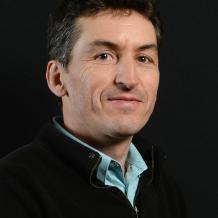
Michael A Osborne is Professor of Machine Learning at the University of Oxford and leads the Bayesian Exploration Lab . He serves as Director of the EPSRC Centre for Doctoral Training in Autonomous Intelligent Machines and Systems and co-directs the Oxford Martin AI Governance Initiative. His research focuses on Bayesian optimization, Gaussian processes, and probabilistic numerics with applications in quantum devices, battery modeling, and AI governance. Key Positions: Professor of Machine Learning, University of Oxford Official Fellow, Exeter College Co-founder of Mind Foundry Lead Researcher, Oxford Martin Programme on Technology and Employment Research Themes: Probabilistic modeling for quantum systems Uncertainty quantification in energy storage AI safety and societal impact analysis Automated experimental design Quantum device calibration Probabilistic numerical methods Technical Contributions: Bridging reality gap in quantum devices Efficient Bayesian quadrature techniques Personalized neurostimulation algorithms Automated measurement protocols Quantum-classical hybrid ML
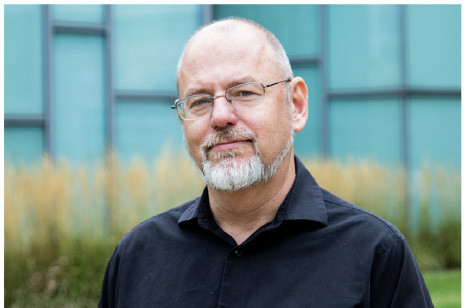
Tapio Schneider is the Theodore Y. Wu Professor of Environmental Science and Engineering at the California Institute of Technology. His research focuses on atmospheric dynamics across Earth and other planets, climate modeling innovations, and geophysical turbulence analysis. He contributes to the Climate Modeling Alliance (CliMA) and develops advanced computational tools for climate prediction. Albert-Ludwigs-Universität Freiburg (Vordiplom, 1993) Princeton University (M.Sc. 1997, Ph.D. 2001) University of Washington, Seattle (Visiting Graduate Student, 1994-1995) His research spans climate dynamics , atmospheric turbulence , and AI-enhanced climate modeling , addressing challenges in cloud dynamics, extreme weather patterns, and planetary climate systems. Current work emphasizes hybrid machine learning-physical models and computational acceleration for high-resolution simulations. Recent publications highlight trends in AI integration for climate science, with applications in hydrology , cloud microphysics , ocean circulation , snowpack modeling , and climate tipping points . His team develops open-source tools like ClimateMachine for GPU-accelerated simulations. Scientific Recognition: Fellow, American Geophysical Union (2022) Rosenstiel Award (2019) World Economic Forum Young Scientist (2012) David and Lucile Packard Fellow (2005-2010) Alfred P. Sloan Research Fellow (2004-2006) Tapio leads climate dynamics research at Caltech, directs the Linde Center for Global Environmental Science (2011-2012), and serves as Editor for the Journal of Advances in Modeling Earth Systems . His group collaborates with NASA Jet Propulsion Laboratory (2016-2024) and Google Research (2022-present).
Zahra Gharineiat is an Associate Professor at the University of Southern Queensland , affiliated with the School of Surveying and Built Environment . She has over 8 years of tertiary teaching experience and 11 years of administrative responsibilities. Bachelor of Surveying (BSurv), University of Tabriz Master of Engineering Management (MEngMgt), University of Melbourne PhD, University of Newcastle Research Interests : Zahra specializes in Geomatic Engineering and Machine Learning , with a focus on applications like Unmanned Aerial Vehicles (UAVs) , LiDAR , Digital Twins , and Remote Sensing . Her work spans Earth Science Observations , Satellite altimetry , and Geodetic data capturing , integrating Computational Modelling and Geoinformatics for innovative solutions. Professional Affiliations : She is a member of the Surveying and Spatial Sciences Institute (SSSI) and the International Union of Geodesy and Geophysics (IUGG) . Her research affiliations include the Centre for Future Materials (CFM) , Institute for Advanced Engineering and Space Sciences (IAESS) , and Centre for Astrophysics (CA) .
Dr Henry Moss is a Researcher at the Department of Applied Mathematics and Theoretical Physics within the School of Physical Sciences at the University of Cambridge. His work focuses on machine learning applications in climate modeling, Bayesian optimization, and Gaussian processes, bridging computational mathematics with environmental science and chemistry. His research interests include: Bayesian optimization for environmental and chemical systems Reinforcement learning in climate modeling Gaussian processes for molecular property prediction High-throughput machine learning in scientific domains Interpretable AI for coastal flooding prediction Hybrid ML-physics modeling Dr Moss's publications highlight his contributions to federated learning for climate models, sparse Gaussian process techniques, and multi-objective optimization frameworks. These works span applications in weather prediction, chemical engineering, and oceanography. Email: hwm26@cam.ac.uk
Dr. Tetsu Hara is a Professor at the University of Rhode Island's Graduate School of Oceanography (URI GSO), specializing in Physical Oceanography. With a lifelong fascination for ocean surface waves, his research bridges civil engineering principles with ocean dynamics to study air-sea interactions under extreme conditions like hurricanes. Ph.D., Civil Engineering, Massachusetts Institute of Technology, 1990 M.S., Civil Engineering, University of Tokyo, 1986 B.S., Civil Engineering, University of Tokyo, 1983 Dr. Hara's work focuses on ocean turbulence, wave dynamics, and their role in air-sea energy exchange. He investigates how surface waves influence hurricane intensity predictions, climate modeling, and coastal processes through numerical simulations and field observations. His research emphasizes the importance of sea state (wave height, wind-wave alignment) in determining heat fluxes, drag coefficients, and gas exchange rates critical for climate science. His publications reveal trends in tropical cyclone modeling, Langmuir turbulence, and wave-current interactions. By combining satellite data with computational models, he explores discrepancies between wind strength and wave behavior, advancing understanding of ocean mixing mechanisms that impact climate change predictions. Dr. Hara has received continuous National Science Foundation grants since 2003, including collaborative projects on hurricane modeling (2018-2020), wind-wave turbulence (2015-2020), and storm surge impacts (2016-present). He previously secured funding from the Office of Naval Research (2009-2012) and U.S. Department of Homeland Security (2016). Mentored 15+ graduate students in hurricane dynamics, wave modeling, and air-sea interaction Co-developed advanced courses on geophysical fluid dynamics and tropical cyclone modeling Collaborates closely with Dr. Isaac Ginis (URI GSO) and Dr. Tobias Kukulka (University of Delaware)
Britney Schmidt is Associate Professor in Earth and Atmospheric Sciences and Astronomy at Cornell University, where she leads the Planetary Habitability and Technology Lab. She develops robotic tools like the Icefin underwater vehicle to study Earth's ice shelves and glaciers, providing insights into climate change and analogs for ocean worlds like Europa. Her research bridges glaciology, planetary science, and astrobiology. Research focuses on ocean world habitability, ice-ocean interactions, and Antarctic climate systems. Fieldwork includes extensive campaigns in Antarctica and the Arctic using robotic explorers. Recent publications explore Europa's habitability, Thwaites Glacier dynamics, microbial communities in hypersaline environments, and planetary analog studies. Technical developments include novel instrumentation for under-ice exploration. Awarded the 2024 Blavatnik National Award for groundbreaking research. Leads multiple international collaborations including NASA's Europa Clipper mission and Thwaites Glacier projects.
Ann B. Lee is a Professor and Co-Director of the PhD Program in Statistics at Carnegie Mellon University , with a joint appointment in the Department of Statistics & Data Science and the Machine Learning Department. Prior to joining CMU, she held positions as a J.W. Gibbs Assistant Professor at Yale University and a visiting research associate at Brown University. PhD in Physics, Brown University MSc/BSc in Engineering Physics, Chalmers University of Technology, Sweden Her research focuses on statistical methodology for complex data in the physical sciences , emphasizing trustworthy inference, uncertainty quantification, and integration of classical statistics with machine learning. Recent work includes likelihood-free inference, calibrated forecasting, and diagnostics for generative models. The STAMPS research group , which she co-founded in 2018, hosts weekly meetings and public webinars. In Fall 2024, STAMPS will transition into a CMU Research Center. Recent publications span likelihood-free inference , climate modeling , and astronomy . Notable collaborations include applications to hurricane intensity guidance , galaxy redshift estimation , and cosmological parameter biases . She mentors PhD students and has advised multiple award-winning researchers, including ASA Best Student Paper Award winners. Her teaching includes advanced courses on probability, regression, and AI for climate sciences.
Leif Eriksson is a Professor at Chalmers University of Technology , specializing in Radar Remote Sensing within the Department of Space, Earth and Environment . His career at Chalmers began in 2004, and he was promoted to Professor in 2022 after serving as Group Leader (2012–2017) and Head of Faculty Assembly (2017–2020). His research focuses on developing advanced methods for environmental monitoring using radar data, particularly synthetic aperture radar (SAR) from satellites and aircraft. Leadership Roles: Group Leader (Radar Remote Sensing), Faculty Assembly Head Key Collaborations: Rymdstyrelsen, EU Horizon, VINNOVA, European Space Agency Research Interests : Dr. Eriksson’s work spans forest biomass estimation , sea ice dynamics , and ocean surface current/wind retrieval . He integrates SAR data with in situ observations and climate models to study: Forest degradation (clear cuts, storm damage) via multi-temporal SAR Sea ice concentration, drift patterns, and thickness in Arctic regions Wind vectors and surface currents using interferometric SAR techniques Applications for maritime navigation safety and polar shipping optimization Article Trends : His recent publications emphasize SAR’s role in transport infrastructure monitoring (e.g., Iron Ore Line degradation), pan-Arctic landfast ice stability , and multi-frequency SAR fusion for enhanced sea ice observations. Collaborative work with teams across Europe and the U.S. highlights interdisciplinary approaches to climate and marine research. Projects & Grants : Dr. Eriksson leads or contributes to projects such as: CAISA (2022–2024): Air-ice-sea data assimilation EONav (2016–2019): Copernicus data for maritime navigation SEDNA (2017–2020): Safe Arctic shipping Forest Biomass Monitoring (2017–2018): Spaceborne SAR applications His work is supported by Rymdstyrelsen, EU Horizon, and industry partners like Trafikverket. Labs & Teams : He is central to the Radar Remote Sensing Group at Chalmers, collaborating with institutions like Lund University and international bodies such as ESA. His research often involves satellite campaigns (e.g., TanDEM-X, Sentinel) and field studies in polar regions.
Tamara Broderick is an Associate Professor in the Department of Electrical Engineering and Computer Science at MIT, specializing in machine learning and statistics. Her research focuses on developing methods for uncertainty quantification in data analysis, Bayesian nonparametrics, and scalable inference algorithms. She leads a research group advising PhD students and postdocs in statistical machine learning. Her work spans Bayesian modeling, variational inference, spatial statistics, and applications in epidemiology and environmental science. Recent projects involve uncertainty-aware forecasting, robustness analysis of statistical methods, and efficient algorithms for high-dimensional inference. Broderick teaches Bayesian Modeling and Inference and contributes to MIT's statistics and data science initiatives.
Joanna Millstein is a Post-doctoral Fellow in Geophysics at the Colorado School of Mines. She earned her Ph.D. in Geophysics from the Massachusetts Institute of Technology in 2023 as part of the MIT-WHOI Joint Program in Oceanography and Engineering, where her dissertation focused on The Flow and Fracture of Antarctic Ice Shelves . She also holds an A.B. in Earth Sciences from Dartmouth College (2017). Her research centers on the deformation and fracture of glacier ice, working at the intersection of fracture mechanics, remote sensing (particularly SAR and InSAR processing), statistical mechanics, and stochastic models. Millstein uses observational data from satellites and field measurements to derive mechanical and statistical models for glacier ice processes, with particular focus on reconciling observations of ice fracture and iceberg calving with theoretical models. Her work aims to resolve the nonlinear physics of glacier ice to better understand future global climate change impacts. Millstein's publication record shows a strong focus on Antarctic ice dynamics, with recent work applying extreme value theory to analyze 47 years of iceberg calving events. Her research demonstrates consistent attention to both theoretical modeling and practical applications for understanding climate change impacts on polar regions. She has developed computational tools including CryoCloud, reflecting her commitment to open science and cloud-based infrastructure for cryosphere research. Her scientific contributions span ice shelf mechanics, fracture prediction, rheology, and statistical modeling of glacial processes. Millstein maintains an active research presence with publications extending to 2025, demonstrating ongoing contributions to the field of glaciology and climate science. She is affiliated with the glaciology research center at Colorado School of Mines and maintains an active GitHub presence with climate-related code repositories. Her work bridges theoretical geophysics with practical climate change impact assessment, particularly regarding ice sheet stability and sea level rise projections.
Daria Frank is a Senior Teaching Associate in Computational Mathematics at the Department of Applied Mathematics and Theoretical Physics (DAMTP), University of Cambridge, a position held since 2023. Previously, she served as Sultan Qaboos Early-Career Research Fellow and College Lecturer in Mathematics at Corpus Christi College (2020-2023), Director of Studies in Mathematics at Selwyn College (2019-2020), and Research Associate in Fluid Mechanics at DAMTP (2015-2019). Her academic foundation includes a PhD from DAMTP, University of Cambridge (2012-2015), Part III Mathematical Tripos at Cambridge (2009-2010), Diploma in Mathematics from Friedrich-Alexander-University of Erlangen-Nuremberg (2010-2011), and undergraduate studies in Mathematics and Physics at the same institution (2006-2009). Dr. Frank's research centers on complex fluid phenomena with emphasis on buoyancy-driven environmental flows , rotating plume dynamics , and practical engineering applications . Her work investigates pollution dispersal mechanisms, tornado formation processes, and energy-efficient building systems through rigorous theoretical and experimental frameworks. Key contributions address multiphase interactions in stratified environments and vortex behavior under rotational forces, bridging fundamental fluid dynamics with real-world environmental challenges. Publication trends reveal consistent focus on geophysical and environmental fluid mechanics, with recurring themes of density stratification effects, multiphase plume behavior, and rotational influences across atmospheric, oceanic, and built environments. Her work demonstrates strong interdisciplinary connections between theoretical modeling and practical engineering solutions. Dr. Frank held the prestigious Sultan Qaboos Early-Career Research Fellowship, supporting her investigations into fluid mechanics phenomena. Her academic service includes significant teaching responsibilities as Director of Studies in Mathematics at Corpus Christi College. As Director of Studies, she oversees undergraduate mathematics education while conducting research within DAMTP's fluid dynamics community. Her Sultan Qaboos Fellowship provided dedicated research time for fluid mechanics investigations, complementing her teaching role through integration of cutting-edge research into pedagogy. Current work continues to explore environmental fluid dynamics with potential applications in climate modeling and sustainable engineering.
Freddy Bouchet is a Directeur de Recherche at CNRS and a Professeur attaché at École Normale Supérieure de Paris (ENS-PSL). His work bridges mathematical physics, climate science, data science, and statistical mechanics , focusing on turbulent flows, climate extremes, and large deviation theory . He will lead the Laboratoire de Météorologie Dynamique (LMD) starting 2025. Research Themes : Statistical mechanics of geophysical flows (Jupiter's jets, ocean currents). Large deviation theory for rare events in turbulence and climate. Non-equilibrium phase transitions in atmospheric/oceanic systems. Ensemble inequivalence in systems with long-range interactions. Scientific Awards : Three Physicists Prize Collaborations : Tapio Schneider, Antoine Venaille, J. Laurie, O. Zaboronski, B. Dubrulle, A. Venaille. Labs & Teams : Climate and Statistical Mechanics group at ENS de Lyon Future director of Laboratoire de Météorologie Dynamique (LMD/IPSL) Publications span climate dynamics, turbulence, statistical mechanics, and large deviation theory , with applications to Jupiter's atmosphere, ocean vortices, and non-equilibrium systems . His work often challenges paradigms like Tsallis non-extensive statistics.
Stefan Helmreich is the Elting E. Morison Professor of Anthropology at MIT, where his research examines how scientists conceptualize fundamental phenomena—especially waves—across oceanography, biology, acoustics, and computing. His interdisciplinary work bridges anthropology, science studies, and media theory. Core research themes include: Cultural and scientific constructions of ocean waves Marine microbial ecologies and alien oceans Sound studies and transduction theories Multispecies ethnography Scientific visualization practices Helmreich's publications demonstrate consistent engagement with wave phenomena as both physical forces and cultural symbols, exploring how scientific representations of waves shape environmental understanding. His award-winning books trace connections between marine science, cosmology, and media technologies. He has received numerous prestigious awards including a Guggenheim Fellowship and multiple book prizes from anthropological associations. Helmreich maintains creative collaborations through projects like 'Wave Count'—a musical exploration of wave representations across genres.
Lorenzo M. Polvani is the Maurice Ewing and J. Lamar Worzel Professor of Geophysics at Columbia University, with dual appointments in the Department of Applied Physics and Applied Mathematics and the Department of Earth and Environmental Sciences. He has taught at Columbia for over 30 years and received multiple teaching awards. PhD in Physical Oceanography, MIT/Woods Hole Joint Program (1988) MSc and BSc in Physics, McGill University His research spans Atmospheric Science , Climate Modeling , and Arctic Studies , focusing on geophysical fluid dynamics, radiative forcing, and climate sensitivity. Recent work examines nonlinear climate responses to CO2 variations, Arctic amplification mechanisms, and volcanic aerosol impacts. Scientific publications reveal trends in radiative forcing , Arctic sea ice dynamics , stratospheric ozone effects , and climate feedback interactions . Key tools include the ClimKern Python package for radiative feedback analysis. Notable research includes: Nonlinear precipitation responses to volcanic eruptions High CO2 forcing effects on North Atlantic Oscillation Cloud feedbacks reducing hydrological sensitivity Arctic amplification through radiative-advective equilibrium Stratospheric ozone impacts on tropical climate patterns
Scientia Professor Gary Froyland is a Professor at the University of New South Wales (UNSW), affiliated with the School of Mathematics & Statistics. He leads the ARC Laureate Centre for Dynamical Systems and Data and holds an Einstein Visiting Fellowship from the Einstein Foundation Berlin. His academic credentials include a BSc (Hons 1, Medal) in Pure and Applied Mathematics from the University of Queensland and a PhD in Mathematics from the University of Western Australia. Professor Froyland's research spans two primary domains: dynamical systems and optimization. In dynamical systems, he investigates the interplay of probability and geometry in nonlinear and chaotic systems, employing tools from ergodic theory, functional analysis, and differential geometry. His work extends to applications in oceanography, atmospheric science, and granular flows. In optimization, he focuses on decision-making in complex systems with uncertain information, developing novel approaches in mathematical programming that have been applied to mining, logistics, and medical treatment planning. His recent publications demonstrate a strong focus on coherent structures in dynamical systems, linear response theory, and applications to geophysical phenomena. The research shows increasing interdisciplinary collaboration, particularly with climate scientists and data analysts, reflecting a trend toward applying advanced mathematical techniques to real-world problems in environmental science and engineering. J.D. Crawford Prize (2025) Elected Member of the Academy of Europe / Academia Europaea (2024) ARC Laureate Fellow (2024-2029) Fellow of the Society for Industrial and Applied Mathematics (SIAM) (2021) Fellow of the Australian Academy of Science (2020) Vice-Chancellor's Award for Teaching Excellence - Postgraduate Research Supervision (2015) Professor Froyland actively supervises PhD and honors students, with current advisees including Kevin Felipe Kühl Oliveira, Nicholas Peters, and Kathrin Völkner. His research is supported by multiple grants, including an ARC Laureate Fellowship (2024-2029) for "Breakthrough mathematics for dynamical systems and data," an Einstein Visiting Fellowship (2022-2026), and several ARC Discovery Projects. His work has practical applications in climate science, mining optimization, and medical treatment planning, particularly in radiotherapy. He leads the ARC Laureate Centre for Dynamical Systems and Data, which brings together researchers to develop new mathematical approaches for analyzing complex dynamical systems. The center focuses on creating methods to identify coherent structures in spatiotemporal data, with applications spanning environmental science, social science, health science, and engineering.