Dr. Jeff Lundeen is an Associate Professor in the Department of Physics at the University of Ottawa's Faculty of Science. His research focuses on experimental and theoretical quantum physics, particularly in photonics and quantum computing. He leads the Lundeen Lab, developing methods to manipulate single photons and entangled photon pairs for quantum logic, communication, and metrology applications. Research interests include experimental photonics, quantum-enhanced sensors, quantum metrology, and quantum optics. His work addresses challenges in quantum device development, such as ultra-thin imaging systems and quantum state tomography. Key contributions include direct measurements of quantum wave functions and density matrices, weak value amplification techniques, and space-compressing optics. His recent publications (2023–2025) explore neural adaptive quantum tomography, quantum metrology in noisy environments, and reconfigurable optical systems. Dr. Lundeen collaborates internationally on projects like quantum state estimation and photon pair generation in fibers. His lab emphasizes practical applications of quantum principles in sensors, communication, and imaging technologies.
Dr. Abeer Omar is an Assistant Professor at Trent University's Trent/Fleming School of Nursing. She holds a PhD from Case Western Reserve University (USA) and a post-doctoral fellowship from the University of Windsor (Canada). Her research focuses on women's health, activity restriction, and the integration of technology in nursing care. She has received multiple awards for teaching excellence, including the Dean’s Award (2022) and the Trent Excellence in Teaching Award (2019–2020). Dr. Omar's educational background includes a Bachelor of Science in Nursing and Master's degree from Alexandria University (Egypt), followed by doctoral studies in the United States. She is passionate about advancing nursing education and improving mental health support for students. Her current projects include evaluating academic advising tools and studying Lyme disease in pregnancy. Her research spans maternal health, rehabilitation outcomes for older adults, and healthcare utilization patterns. Notable work includes analyzing non-urgent emergency department visits and the impact of dementia on post-fracture care. Dr. Omar is actively involved in mentoring students and accepts graduate and honours thesis students.
Jennifer Jakobi is a Professor at the School of Health and Exercise Sciences , Faculty of Health and Social Development, UBC Okanagan. She serves as Director of the Institute for Healthy Living and Chronic Disease Prevention and holds the NSERC Chair for Women in Science and Engineering . Her work bridges neuromuscular physiology and STEM diversity initiatives . Research Themes : Frailty, aging in place, sex-differential muscle function, and motor unit modulation. Labs : Leads the Healthy Exercise and Aging Lab (HEAL) and coordinates the iSTAND diversity program. Publications focus on aging biomechanics, cannabis impacts in elderly populations, social VR interventions, and pandemic-era health behaviors. Her NSERC-funded basic research examines cortical-spinal pathways, while UBCO grants support applied studies on vibration therapy and assistive technologies. Scientific Contributions : Identified sex-specific force steadiness mechanisms Developed prehabilitation frameworks for functional independence Advocated for gender-inclusive STEM education Outreach includes youth STEM camps, equity workshops, and community partnerships on aging-in-place policies. Current research explores VR-based social engagement and cannabis safety protocols for seniors.
Jaynie Yang, PhD, is a full Professor in the Department of Physical Therapy, Faculty of Rehabilitation Medicine at the University of Alberta, where she has served since January 1990. She additionally holds adjunct appointments in the Department of Biomedical Engineering and is an active member of the Neuroscience & Mental Health Institute and the Women and Children’s Health Research Institute. She has previously acted as Graduate Coordinator for the thesis-based MSc and PhD programs and as Acting Chair of the Department of Physical Therapy. Education Post-doctoral Fellowship, Neuroscience, University of Alberta (1987–1989) PhD, Kinesiology, University of Waterloo (1987) BSc, Physical Therapy, Queen’s University (1978) Research Interests Dr. Yang’s research centres on how the nervous system controls human walking and how this control is altered following injury to the central nervous system. She investigates three inter-related themes: (1) neural mechanisms underlying gait control in healthy humans and how these are disrupted by spinal cord injury or perinatal brain injury; (2) optimization of task-specific training paradigms—such as intensive early therapy in infants with perinatal stroke or powered exoskeleton training in adults with spinal cord injury—to drive neuroplasticity and improve walking; and (3) developmental aspects of motor learning, comparing how children and adults acquire and retain novel walking patterns on split-belt treadmills. Recent Publication Trends Over the past decade her team has produced a high-impact portfolio that blends mechanistic studies of neural plasticity with pragmatic clinical trials. Common keywords across recent papers include “perinatal stroke,” “cerebral palsy,” “spinal cord injury,” “powered exoskeleton,” “functional electrical stimulation,” and “neuroplasticity.” The work spans bench-to-bedside translation, from rodent studies of critical periods through multi-centre randomized controlled trials evaluating early intensive rehabilitation protocols in infants and gait-retraining paradigms in adults. Current Studies & Funding Multi-centre RCT (Edmonton & Calgary) examining early, intensive leg training in children Cohort studies investigating cortical and spinal neuroplasticity induced by powered exoskeleton (ReWalk, Ekso) training in adults with chronic SCI. Split-belt treadmill studies comparing motor learning retention across children, young adults, and older adults. Laboratory & Team Dr. Yang leads an interdisciplinary group that integrates neurophysiology, biomechanics, and clinical rehabilitation. The lab is embedded within the University of Alberta’s Neuroscience & Mental Health Institute and has active collaborations with the Glenrose Hospital, Alberta Children’s Hospital, and Children’s Hospital of Eastern Ontario. At present she mentors one graduate student and is not accepting additional trainees for the upcoming cycle. Teaching She is the instructor for PTHER 500 – Movement Analysis, a core course in the MScPT curriculum covering mechanical and analytical concepts essential for physical therapy practice (scheduled for Fall Term 2025).
Arian Novruzi is a Full Professor in the Department of Mathematics and Statistics at the University of Ottawa, Faculty of Science. His expertise lies in partial differential equations (PDEs), shape optimization, numerical analysis, and mathematical modeling. He holds an MSc from the University of Tirana and a PhD from the University of Nancy. His research integrates theoretical and applied mathematics, with a focus on fluid dynamics, biomedical applications, and engineering challenges. Education: MSc in Mathematics, University of Tirana PhD in Mathematics, University of Nancy Dr. Novruzi’s research interests include the analysis and numerical solutions of PDEs, optimization of geometric shapes for engineering systems, and modeling of complex physical phenomena such as blood flow and tumor radiation therapy. His work bridges pure mathematics with practical applications, addressing problems in fluid mechanics, materials science, and biomedical engineering. His recent publications highlight advancements in non-diffusive neural network methods for hyperbolic conservation laws, blood flow modeling using Navier-Stokes equations, and the optimization of convex domains for energy maximization. These studies emphasize both theoretical rigor and computational innovation. Awards: No scientific awards explicitly mentioned in the provided texts. Dr. Novruzi has supervised students such as Terence C. Ngouoko. His grants and collaborations are not detailed here, but his research has implications for energy-efficient engineering designs and medical treatments. He has authored a Springer textbook on PDEs, reflecting his commitment to educational resources in mathematical sciences.
Benjamin Bloem-Reddy is an Assistant Professor of Statistics at the University of British Columbia (UBC), affiliated with the Department of Statistics within the Faculty of Science. His research focuses on probabilistic approaches in statistics and machine learning, emphasizing symmetry, causality, and model-driven scientific knowledge acquisition. Prior to UBC, he completed his PhD under Peter Orbanz at Columbia University and a postdoc with Yee Whye Teh at the University of Oxford. He holds a physics background from Stanford and Northwestern Universities. Education: PhD in Statistics, Columbia University Postdoctoral Research, CSML Group, University of Oxford Physics degrees from Stanford and Northwestern Universities Research Interests: Bloem-Reddy explores symmetry in modeling and inference, causal discovery, and integrating scientific models with statistical frameworks. His work includes developing hypothesis tests for symmetry, causal inference via cocycles, and leveraging invariance properties in neural networks. He collaborates with scientists to apply statistical methods to domain-specific problems. Awards: Best Student Poster Award at NeurIPS 2014 Workshop on Networks Teaching & Advising: He teaches courses like STAT 460/560 (Statistical Inference) and advises a vibrant research group. His students include Boyan Beronov, Kenny Chiu, and Johnny Xi. He emphasizes recruiting curious, mathematically skilled students aligned with his research themes. Grants & Funding: Supported by NSERC, CANSSI, and UBC, with computational resources from ARC at UBC.
Sunita Mathur is an Associate Professor in the School of Rehabilitation Therapy at Queen's University, affiliated with the Faculty of Health Sciences. She holds a cross-appointment as Associate Director of the School of Rehabilitation Therapy. Her research focuses on improving skeletal muscle function in chronic diseases, including COPD, cystic fibrosis, and critical illness, using non-invasive techniques like MRI, ultrasound, and dynamometry. She co-founded CAN-RESTORE to promote exercise in solid organ transplant recipients and leads the Canadian Donation and Transplantation Research Program (CDTRP) Theme 5. Education: BSc Physiotherapy (Dalhousie University), MSc Rehabilitation (Dalhousie), PhD Human Kinetics (University of British Columbia), and a postdoc at the University of Florida. She supervises students in AGHE PhD and RHBS MSc/PhD programs. Research interests span sarcopenia, muscle dysfunction in chronic illness, and rehabilitation strategies. Her work integrates clinical and translational approaches to enhance patient outcomes through tailored exercise programs and advanced imaging. Key contributions include studies on ICU-acquired weakness, lung transplant rehabilitation, and the role of exercise in improving post-transplant outcomes. She has collaborated on international initiatives like the RECOVER Program to address long-term outcomes of critical illness survivors.
Juewen Liu is a Professor and Canada Research Chair in Biosensors and Bionanotechnology in the Department of Chemistry at the University of Waterloo, affiliated with the Faculty of Science. His research program employs principles of chemistry, physics, and biology to develop innovative nanoscale materials and systems with applications in sensing, diagnostics, and therapeutics. Research encompasses: DNA aptamer development and applications Nanoparticle engineering for biomedical use Biointerface chemistry innovations Nanozyme design and catalytic applications Liu maintains an extensive publication record in high-impact journals, with recent work emphasizing advanced biosensing platforms, targeted drug delivery systems, and nanomaterial-based solutions for environmental and health challenges. His research integrates fundamental science with practical applications in diagnostics and therapy. Teaching responsibilities include courses on nano-biomaterials and nano-instrumentation. Professor Liu collaborates extensively through the Waterloo Institute for Nanotechnology, Water Institute, and Centre for Bioengineering and Biotechnology.
Anthony Quas is a Professor in the Department of Mathematics and Statistics at the University of Victoria, Canada. He holds a PhD from the University of Warwick and has held academic positions at institutions including the University of Memphis and King's College, Cambridge. His research focuses on ergodic theory and dynamical systems, with contributions to multiplicative ergodic theory, Lyapunov exponents, and symbolic dynamics. Education: B.A. in Mathematics (First Class), Cambridge University (1986–1989) Certificate of Advanced Study in Mathematics (Distinction), Cambridge University (1989–1990) PhD in Mathematics, University of Warwick (1990–1994) Research Interests: Ergodic theory and its connections to stochastic processes Lyapunov exponents and operator cocycles Symbolic dynamics and shift spaces Applications to percolation theory and information theory Publications and Grants: Over 70 peer-reviewed articles, including work on multiplicative ergodic theorems and metastable systems Recipient of NSERC and NSF grants, and former Canada Research Chair (2005–2014) Editor for Dynamical Systems: An International Journal Awards and Recognition: Tyson Medal (1990) Cambridge Smith Prize (1992) Organizer of international workshops and conferences (e.g., Banff International Research Station) Teaching and Service: Supervised multiple PhD and Master’s students Contributed to outreach initiatives like Pi in the Sky magazine Served on NSERC Grant Selection Committees and editorial boards
Linan Chen is an Associate Professor in the Department of Mathematics and Statistics at McGill University since 2014, following a postdoctoral position at the same institution (2011–2014). He holds a Ph.D. from MIT (2011, supervised by Daniel Stroock) and a B.Sc. from Tsinghua University (2006). His research focuses on probability theory and its intersections with analysis and geometry, including partial differential equations, functional analysis, Gaussian measures, and random geometry. He is affiliated with the Probability Lab of the Centre de Recherches Mathématiques (CRM) and the CNRS-Unite Mixte Internationale (CNRS-UMI) since 2014. Chen teaches advanced probability courses such as Honours Probability (Math 356) and Advanced Probability Theory I/II (Math 587/589), alongside special topics courses like Topics in Geometry and Topology (Math 599). He has advised students including Leila Sloman, Reinhold Willcox, Ulysse Blau, and Olivier Nadeau-Chamard through independent study programs. His research explores cutting-edge topics in probability, including Gaussian free fields, degenerate diffusion equations, and asymptotic properties of geometric stochastic structures. Recent work addresses high-dimensional phenomena, stochastic processes in geometry, and applications in mathematical physics. Chen’s contributions span theoretical advancements and methodological innovations, with publications in journals such as the Journal of Theoretical Probability, Annales Henri Poincaré, and SIAM Journal on Mathematical Analysis.
Ricardo Zednik is a Professor at the Department of Mechanical Engineering, École de Technologie Supérieure (ÉTS) in Montreal. Holding degrees from Rice University (BA, BS) and Stanford University (MS, PhD), he specializes in piezoelectric materials, fracture mechanics, and microelectronic systems. His research focuses on sensors, innovative materials, and health technologies. Fields of Interest: Piezoelectricity, Fracture Mechanics, MEMS, Smart Materials, Crystallography With over 36 peer-reviewed publications and extensive supervision of graduate research (including 15+ co-directed theses and projects since 2016), Zednik contributes to applied research in materials science and biomedical engineering. He collaborates with LaCIME and PULÉTS laboratories on cutting-edge projects involving ultrasonic transducers, flexible sensors, and high-temperature material characterization. Current courses include Materials Technology (MEC200) and advanced research topics in Functional and Smart Materials (SYS877). His students explore applications like terahertz quality control, piezoelectric earcanal sensors, and Kirigami techniques for wearable electronics.
Leijun Li, PhD, P.Eng., is a Professor in the Department of Chemical and Materials Engineering at the University of Alberta, where he also serves as Chair. With a career spanning institutions including Rensselaer Polytechnic Institute, University of Northern Iowa, and Utah State University, he specializes in physical metallurgy , welding metallurgy , and additive manufacturing . His research focuses on microstructure characterization, mechanical properties, and modeling of non-equilibrium phase transformations during welding and AM processes. Current affiliations: University of Alberta, American Welding Society, ASM International Research themes: Additive manufacturing of alloys, Corrosion science, Pipeline metallurgy, Phase transformations, Welding robotics He has received multiple AWS Hobart Awards (4 times) and Savage Awards (2 times) for his work on pipeline welding and metallurgy. His group has published extensively on topics including delta-ferrite retention in Grade 91 steel, inverse bainite transformations , and welding defect analysis . Recent projects include NSERC Alliance Missions Grant for rare earth mineral recovery and Alberta Innovates Ecosystem Program for advanced manufacturing. Key collaborators: Dr. Tom Lienert, Dr. Xiaoying Fang, Dr. P-Q Xu Labs: Rooms 2-158/3-133 (CME Building), Office 12th Floor DICE Building
Al-Amin Dhirani is an Associate Professor in the Department of Chemistry at the University of Toronto, located in the Lash Miller Chemical Laboratories. His research focuses on nanoengineered materials, particularly quantum nanoengineered materials (q-NEMS), which exhibit emergent quantum phenomena. Key themes include bottom-up synthesis of nanostructured materials, development of novel fabrication techniques for 2D materials like MoS₂, and applications in green technologies and electrochemical sensing. Research interests emphasize hybrid molecule-nanostructure states (HYMNS) that enhance optical/electrical properties, as well as advanced applications such as conductivity meters and water electrolysis materials. His lab has pioneered methods for defect healing in exfoliated MoS₂ and scalable assembly of nanostructured films. Recent achievements include student milestones like Steven Gravelsins’ PhD completion and Monique’s NSERC postdoc fellowship. Located at 80 St. George Street, the Dhirani Lab collaborates on projects ranging from fundamental quantum transport studies to applied sensor technologies. The group actively publishes in top journals like ACS Nano and Communications Chemistry , with a focus on interdisciplinary material science and physics.
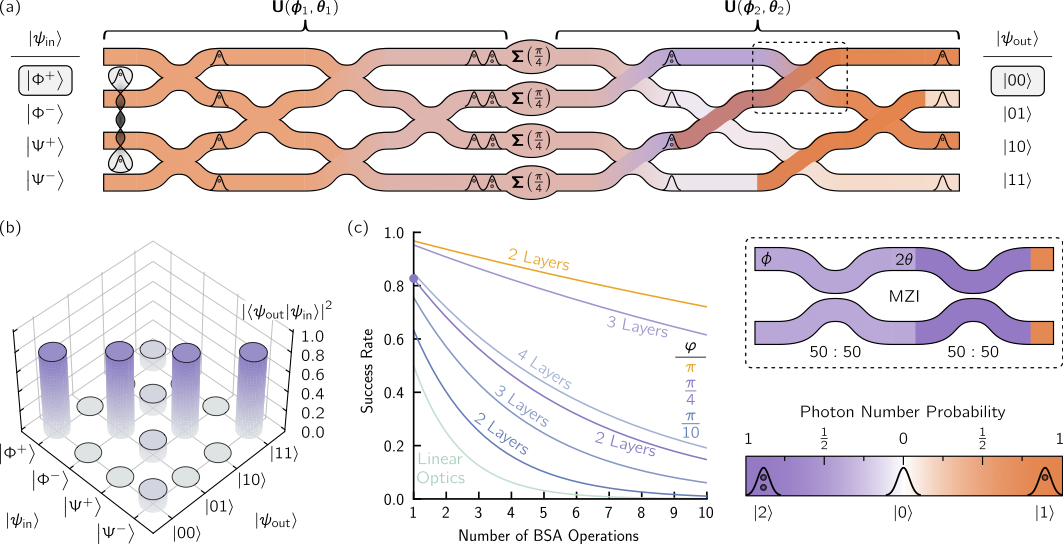
Bhavin J. Shastri is an Assistant Professor in the Department of Physics, Engineering Physics and Astronomy at Queen's University in Canada. His research explores the physics of light for computing , pushing frontiers in information and signal processing through photonic computing and quantum/neuromorphic photonics . He is affiliated with the Centre for Nanophotonics and NUCLEUS , a pan-Canadian photonic computing program funded by NSERC CREATE, bridging artificial intelligence and quantum information . Canada Research Chair & Principal Investigator Faculty Affiliate at Vector Institute (2020-) Editorial Board Member of JPhys Photonics (2019-) Member of IEEE Photonics Society Technical Affairs Council (2019-) Visiting Researcher Scholar at Princeton University (2018-) Shastri Lab members have access to world-class shared facilities, including the Centre for Nanophotonics (CFI-Innovation Fund), Nanofabrication Kingston , the Centre for Advanced Computing , and the Digital Research Alliance of Canada . The lab takes an interdisciplinary approach combining nanophotonics with complex systems on emerging substrates. His research focuses on silicon photonics , nanophonic processors , and photonic integrated circuits with applications to deep learning , nonlinear programming , and quantum information science . His articles show consistent exploration of quantum photonic neural networks , photonic memory systems , and optical signal processing for machine learning and quantum technologies . 2020 IUPAP Young Scientist Prize in Optics 2014 Banting Postdoctoral Fellowship 2012 D. W. Ambridge Prize 2011 IEEE Photonics Society Graduate Student Fellowship 2011 NSERC Postdoctoral Fellowship Multiple Best Student Paper Awards Shastri's lab supervises Ph.D. candidates and postdoctoral fellows working on quantum photonics , neuromorphic computing , and photonic AI systems . His recent work includes photonic tensor cores for scientific computing , quantum photonic neural networks , and all-optical memory systems. Shastri Lab designs programmable nanophotonic processors with potential to outperform microelectronic processors in energy efficiency and computational speeds by seven and four orders of magnitude respectively. Their work spans from device design to system-level implementations in optical computing for machine learning and quantum information processing .
Juan Felipe Carrasquilla Álvarez is an Assistant Professor in the Department of Physics at the University of Toronto. His research focuses on the intersection of condensed matter physics, quantum computing, and machine learning, emphasizing quantum many-body systems, quantum device validation, and phase identification. He holds affiliations with the Acceleration Consortium and the Centre for Quantum Information and Quantum Control at the University of Toronto, and is a Perimeter Institute Visiting Fellow. Education: PhD in Physics from SISSA (Italy), followed by postdoctoral fellowships at Georgetown University (2011-2013), the Perimeter Institute (2013-2016), and a stint as a Research Scientist at D-Wave Systems Inc. Earlier, he completed the Abdus Salam ICTP Diploma Programme (2005-2006). Research interests span quantum Monte Carlo simulations, machine learning-driven analysis of quantum systems, and applications to quantum computing validation. His work bridges theoretical physics with computational methods, addressing challenges in both classical and quantum computing paradigms. Notable contributions include developing neural network architectures for quantum state reconstruction, error mitigation in quantum simulations, and optimal control strategies for quantum thermal machines. His publications explore topics like topological order detection, shadow tomography, and hybrid quantum-classical algorithms. Awards/Fellowships: Perimeter Institute Postdoctoral Fellowship (2013-2016), Georgetown University Postdoctoral Fellowship (2011-2013), SISSA PhD Fellowship (2006-2010), and Abdus Salam ICTP Diploma Programme Fellowship (2005-2006). Advising/Grants: No formal advisee list provided. Active in interdisciplinary collaborations through affiliations with major quantum research consortia and institutions. Lab/Teams: Part of the Acceleration Consortium and the Centre for Quantum Information and Quantum Control, contributing to cutting-edge quantum computing and machine learning research.