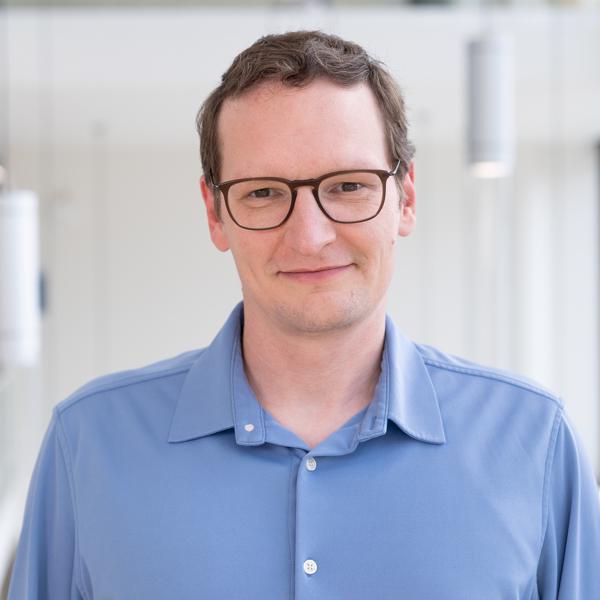
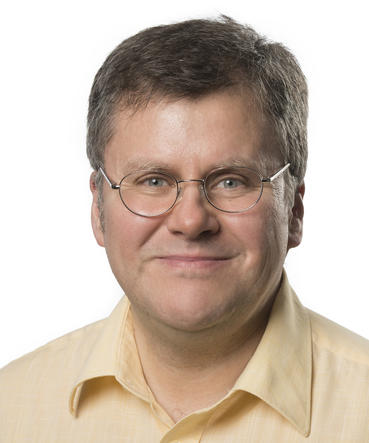
Prof. Dr. Steffen Marburg is a Full Professor at the Chair of Acoustics of Mobile Systems within the TUM School of Engineering and Design at the Technical University of Munich. His research focuses on numerical methods in vibroacoustics, structural optimization, and acoustic modeling for applications in automotive, maritime, and musical instrument domains. Education: PhD from Technical University of Dresden (1998). Academic Career: Junior Professor at TU Dresden (2004), Chair of Technical Dynamics at University of the Federal Armed Forces Munich (2010), Full Professor at TUM (2015–present). Editorial Roles: Co-Editor-in-Chief of Journal of Theoretical and Computational Acoustics, Associate Editor of Journal of the Acoustical Society of America, Editor of Acoustics Australia and Mechanical Systems and Signal Processing. His research integrates computational acoustics, boundary element methods, and machine learning to address noise control and structural optimization challenges. Recent work explores acoustic metamaterials, viscothermal losses, and data-driven modeling. He has co-authored over 150 publications and led advancements in multifrequency solution methods and noise-insulating structures. Scientific awards include the Innovation Award of the Industrieclub Sachsen e.V. (1999). His editorial contributions and leadership in journals highlight his influence in computational acoustics and structural dynamics.
Prof. Karen Alim is a Professor of Biological Physics and Morphogenesis at the Department of Physics, Technische Universität München (TUM), affiliated with the TUM School of Natural Sciences. She holds a PhD from the Ludwig-Maximilians-Universität München (2010) and conducted postdoctoral research at Harvard University (2010–2015) before leading a Max Planck Research Group in Göttingen. Her research focuses on non-neuronal information processing in living systems, particularly using Physarum polycephalum to study physical principles of network adaptation, fluid dynamics, and morphogenesis. Education: PhD in Physics, Ludwig-Maximilians-Universität München (2010) Studies at Universität Karlsruhe, LMU München, and University of Manchester Research Interests: Prof. Alim explores how biological systems process information without neurons, emphasizing adaptive flow networks, mechanical signaling in plants, and collective behavior in active matter. Her work combines theoretical modeling with experimental systems like slime molds and plant tissues. Awards: ERC Starting Grant (2020) Elisabeth-Schiemann-Kolleg Fellowship (2013–2018) DAAD Stipendium (2011–2014) John Birks Award (2004) Advising & Grants: While specific grant details beyond the ERC award are not listed, her research has been supported by major funding bodies. No student advisees are explicitly listed in the provided materials. Labs/Teams: Leads the Biological Physics and Morphogenesis group at TUM, focusing on interdisciplinary studies of living systems' physical principles.
Prof. Vasilis Ntziachristos is a Professor and Chair of Biological Imaging at the Technical University of Munich (TUM), leading the Institute of Biological and Medical Imaging at the Helmholtz Centre Munich. His research focuses on developing novel optical and optoacoustic imaging techniques for early disease detection, diagnostics, and theranostics. He holds a PhD in Bioengineering from the University of Pennsylvania and previously served as an Assistant Professor at Harvard University and Massachusetts General Hospital. Affiliations: TUM School of Medicine and Health, Helmholtz Munich, Institute of Biological and Medical Imaging. Key Research Themes: Non-invasive imaging methods, molecular imaging, optoacoustic technology, and clinical translation. His work bridges theoretical developments with clinical applications, including advancements in glucose monitoring, cancer imaging, and drug delivery systems. Notable awards include the Leibniz Prize (2013) and the World Molecular Imaging Society Gold Medal (2015). Labs/Teams: Imaging to Sensing I2S, Optoacoustic Mesoscopy, Fluorescence Imaging, and AI in Optoacoustics. Grants/Projects: Involvement in Horizon Europe initiatives and collaborations with TranslaTUM and Helmholtz Munich. Prof. Ntziachristos actively contributes to education via courses like 'Biological Imaging' and 'Introduction to Bioengineering', fostering the next generation of imaging scientists.
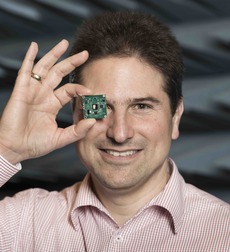
Christof Paar is a Professor of Embedded Security at Ruhr University Bochum's Faculty of Computer Science. His work focuses on hardware security, cryptography, and embedded systems security. He leads the Embedded Security Group within the CASE Cluster of Excellence (Cyber Security in the Age of Large-Scale Attacks), addressing cutting-edge challenges in hardware Trojans, side-channel attacks, and cryptographic engineering. His research spans FPGA and IoT security, with contributions to physical-layer security, wireless jamming defenses, and tamper-resistant systems. Research Interests: Paar's expertise lies in hardware-software co-design for security, with a focus on embedded systems. His work includes analyzing vulnerabilities in FPGAs, developing countermeasures against side-channel attacks, and exploring physical-layer security mechanisms. He also investigates the human factors in hardware reverse engineering and the implications of adversarial machine learning on security systems. Notable Work: Recent publications highlight breakthroughs in detecting hardware Trojans across CMOS generations, breaking industry-standard IP protection mechanisms (IEEE 1735), and proposing novel defenses like IRShield against adversarial wireless sensing. His group actively contributes to standards for secure embedded systems and IoT devices, emphasizing practical implementations.
Georg Martius is a Full Professor in the Department of Computer Science at the University of Tübingen's Faculty of Science and a Max Planck Research Group Leader at the MPI for Intelligent Systems. Since April 2023, he has been a core member of the DFG-funded Cluster of Excellence 'Machine Learning: New Perspectives for Science,' which received extended funding through 2032 for its mission to integrate machine learning into fundamental scientific discovery processes. His academic foundation includes a PhD from the University of Göttingen and Bernstein Center for Computational Neuroscience (2005), a Diploma in Computer Science from the University of Leipzig (2003), and a visiting research period at the University of Edinburgh's Division of Informatics. Postdoctoral positions followed at the Max Planck Institutes for Dynamics and Self-Organization (Göttingen, 2009), Mathematics in the Sciences (Leipzig, 2010), and IST Austria (2015). Professor Martius's research pioneers the intersection of reinforcement learning, robotics, and tactile sensing, with emphasis on developing autonomous systems capable of natural locomotion, dexterous manipulation, and physical-world understanding. His work bridges theoretical machine learning with practical hardware applications, particularly in creating differentiable simulators, superresolution tactile sensors, and biologically plausible learning frameworks for robotic control. Analysis of his 2024-2025 publications reveals dominant trends in offline reinforcement learning (especially goal-conditioned and diversity-maximization techniques), object-centric representation learning for video understanding, and tactile sensing innovations. A strong thread connects foundation models to world model construction, while his work on differentiable physics engines enables precise collision handling and contact dynamics for real-world robotic control. His leadership roles include directing the Distributed Intelligence research team at Tübingen and contributing to major collaborative initiatives like the Real Robot Challenge and Myochallenge 2022. The Cluster of Excellence appointment represents recognition of his contributions to transforming scientific methodology through machine learning, particularly in automating hypothesis generation and experimental design. Current projects focus on integrating large-scale machine learning with embodied intelligence, advancing tactile perception systems like the Minsight vision-based sensor, and developing neuroplasticity-inspired approaches for robust out-of-distribution detection. His work directly impacts fields requiring physical interaction intelligence, from autonomous navigation to medical robotics, with emphasis on sample-efficient learning from limited real-world data.
Prof. Dr. Amelie Hagelauer holds a professorship in Micro- and Nanosystem Technology at the TUM School of Computation, Information and Technology, Technical University of Munich. Her work focuses on advanced electronics and systems integration across quantum computing hardware, resistive memory technologies, and high-frequency RF systems. She has contributed to innovations in superconducting qubit readout architectures, multi-level RRAM designs, and 3D-integrated CMOS-compatible quantum devices. Research interests span quantum hardware design, nanoelectronic devices, RF front-end systems, and emerging memory technologies. Her work emphasizes practical implementation challenges such as low-power operation, high-voltage handling in RF switches, and wafer-scale fabrication processes. Recent projects include D-band radar systems, energy-efficient 60 GHz transceivers, and antenna tuning solutions for 5G applications. Publications from 2023-2025 showcase advancements in resistive switching device characterization, mitigation of TLS losses in superconducting qubits, and reconfigurable AI accelerators using RRAM-based digital twins. Her work bridges theoretical device physics with practical integrated circuit design, addressing scalability and reliability in next-gen electronics. Awards and grants: None explicitly listed in provided texts. Active collaborations include EU-funded projects on quantum computing platforms and TUM's Electronic Photonic Integration initiatives. Leads research teams in microsystem technology with emphasis on cross-disciplinary approaches combining CMOS processes, MEMS, and quantum engineering.
Moritz Wiese is a Researcher at the Chair of Theoretical Information Technology within the Department of Electrical and Computer Engineering at Technische Universität München (TUM) . His work focuses on information-theoretic security, quantum communication, and wireless networks, with significant contributions to interference modeling and secure coding schemes. Research Interests : Information-Theoretic Security, Quantum Wiretap Channels, MIMO Systems, 5G/6G Technologies, Physical Layer Security, and Network Coding. Key Grants : Involved in DFG-funded projects (Gottfried Wilhelm Leibniz Prize, UKoloS) and BMBF initiatives (6G-life, QuaDiQua). Collaborations : Worked with Prof. Holger Boche, Christian Deppe, and Rami Ezzine on secure communication and randomness generation. Labs : Active in the ACES Lab and 6G-life research hub, focusing on joint communication/sensing and neuromorphic computing. Publications : Over 20 papers on secure estimation, wiretap channels, and quantum secrecy, including top-tier journals like IEEE Transactions on Information Theory and Journal of Mathematical Physics .
Wolfgang Porod is a Professor of Electrical Engineering and holder of the Frank M. Freimann Chair at the University of Notre Dame. He is also a Hans Fischer Senior Fellow at the TUM Institute for Advanced Study (TUM-IAS) since 2009, affiliated with the Nanoimprint and Nanotransfer Focus Group led by Paolo Lugli. His research focuses on nanoelectronics and quantum devices, notably co-inventing the Quantum-Dot Cellular Automata (QCA) framework, a molecular-scale information processing paradigm. Porod earned his Diplom (M.S.) and Ph.D. from the University of Graz, Austria, and held postdoctoral roles at Colorado State and Arizona State Universities before joining Notre Dame in 1986. He directs Notre Dame’s Center for Nano Science and Technology, advancing interdisciplinary nanotechnology research. His academic accolades include Fellowships from the AAAS (2005) and IEEE (2001), and teaching awards such as the Kaneb Teaching Award (2005) and the Ruth and Joel Spira Award (2000). Porod’s work bridges quantum physics and engineering, with applications in low-power computing, spintronics, and nanoscale device fabrication. At TUM-IAS, he collaborates on nanoimprint lithography and nanotransfer technologies, advancing scalable nanomanufacturing methods.
Anna Levina is an Assistant Professor for Computational Neuroscience at the University of Tübingen , affiliated with the Department of Computer Science under the Faculty of Science. Her research focuses on the self-organization of neuronal activity, critical dynamics in neural networks, and the excitation/inhibition balance in cortical circuits. Current positions: Assistant Professor (since 2018), Group Leader (2017-2018), Equality Officer (Computer Science) Previous roles: IST Fellow (2015-2017), Associated Researcher (2011-2015), Postdoc/PI (2011-2015), Postdoc (2008-2011) Her research integrates mathematical modeling , statistical physics , and computational neuroscience to study criticality phenomena, neural avalanches, and adaptive network dynamics. Key interests include: Self-organized criticality in neural systems Excitation/Inhibition balance mechanisms Network topology and dynamics Timescale analysis in neural processing Stochastic modeling of neural activity Recent publications reveal trends in understanding critical dynamics across biological and artificial networks, with applications to memory systems, sensorimotor integration, and disease modeling. She has received recognition as an IST Fellow .
Prof. Dr.-Ing. Thomas Zwick is a full professor and director of the Institute of High Frequency Engineering and Electronics (IHE) at the Karlsruhe Institute of Technology (KIT). He holds a Dipl.-Ing. (M.S.E.E.) and Dr.-Ing. (Ph.D.E.E.) from the University of Karlsruhe. His career includes roles at IBM Research (2001–2004), Siemens AG (2004–2007 managing automotive radar teams), and KIT since 2007. He leads research in high-frequency technologies, antennas, radar systems, and wireless communications. Research interests include radio wave propagation, antenna design, automotive radar architectures, and millimeter-wave systems. He has authored/co-authored over 400 papers, 20 patents, and received IEEE Fellow status (2018), honorary doctorate from Budapest University (2022), and membership in the Heidelberg Academy and acatech. His work emphasizes integrating sensing and communication systems, 3D-printed RF components, and high-frequency measurement techniques. Teaching focuses on high-frequency engineering, electronic circuits, and radar systems. He oversees the IHE’s laboratories, including the Microwave Engineering Lab and Student Innovation Lab. Recent work explores sub-THz communication, RIS-aided ISAC systems, and beamforming for reduced EMF exposure in urban scenarios.
Prof. Dr. Stefan Luther is a Max Planck Research Group leader (W2, tenured since 2013) at the Max Planck Institute for Dynamics and Self-Organization, Göttingen, and an Honorarprofessor at the Faculty of Physics, University of Göttingen. He holds adjunct roles as Adjunct Associate Professor at Cornell University (2009–2012) and Northeastern University (2016–2018), and serves as DZHK-Professor at the Institute of Pharmacology and Toxicology, University Medical Center Göttingen. His research focuses on nonlinear spatiotemporal dynamics in excitable biological media, particularly cardiac arrhythmias. He pioneered 4D imaging of heart function and developed algorithms for optogenetic and electrical control of arrhythmias. Translational efforts span basic research to preclinical and clinical studies. Education includes a Diplom in Physics (1997) and PhD (2000) from Georg-August-University, Göttingen. Postdoctoral training followed at the University of Twente (2001–2004) and Cornell University’s LASSP (2004–2006). His lab, the Biomedical Physics group, explores electromechanical coupling in cardiac systems and develops novel therapeutic approaches. Collaborations include work on computational modeling, uncertainty quantification in dynamical systems, and fluid dynamics of multiphase flows.
Prof. Dr.-Ing. Ahmad Osman is a Professor at the Saarland University of Applied Sciences (htw saar), specializing in Test Technologies and Test Methods within the Faculty of Engineering. He also holds an Adjunct Professor position at Laval University in Quebec, Canada, in the Department of Electrical Engineering and Computer Science. His research focuses on Artificial Intelligence applications in Signal and Image Processing for Non-destructive Testing (NDT) , with extensive work on Deep Learning , 3D Ultrasound Tomography , and Sensor Data Fusion in industrial contexts. Engineering Artificial Intelligence Signal Processing Image Processing Non-destructive Testing Quality Control Augmented Reality Osman leads the AutomaTiQ research group and serves as Head of the Algorithms/Signal and Data Processing Department at Fraunhofer IZFP . His recent publications (2017–2022) emphasize Deep Learning for defect detection in CFRP , Terahertz Imaging for artwork diagnostics, and Acoustic Sensors for agricultural quality control. He has organized international conferences on Structural Health Monitoring and contributed to Springer books on NDT technologies. His projects include ComforTex-AI (2024) and development of 3D positioners for ultrasound measurements. Collaborations span institutions in Germany, Canada, Italy, and Brazil, with advisory roles in the German Society for NDT and technical committees for conferences in Montreal and Egypt.
Lukas Hiendlmeier is a Researcher at the Technical University of Munich, affiliated with the Munich Institute of Biomedical Engineering (MIBE) and the Associate Professorship of Neuroelectronics led by Prof. Bernhard Wolfrum. He holds a Master of Science in Mechanical Engineering from TUM. His research focuses on advanced fabrication technologies such as 3D printing, laser micromachining, and polymer material science, with applications in neuroelectronics and biomedical devices. Hiendlmeier’s work emphasizes developing self-folding bioelectronic interfaces, flexible electrodes, and implantable neural devices for peripheral nerve interfacing. His contributions include innovations in 4D printing techniques, thermoformed materials, and origami-inspired electrode designs. He collaborates on projects involving cell manipulation, microfluidic lab-on-a-chip systems, and closed-loop neural stimulation systems. Publications span topics like self-folding bioelectronics, flexible sensor arrays, and nanorobotics, showcasing expertise in materials science and biomedical engineering. His research bridges fundamental science and translational applications, addressing challenges in neural prosthetics, wearable diagnostics, and tissue engineering. Hiendlmeier is actively involved in the neuroTUM initiative and contributes to interdisciplinary teams at TUM, focusing on advancing neurotechnology through innovative fabrication methods and biomaterials.
Nils Ole Tippenhauer is a faculty member at the CISPA Helmholtz Center for Information Security , leading the SCy-Phy research group . His academic journey includes an Assistant Professorship at the Singapore University of Technology and Design (SUTD) (2014–2018), a PhD in Computer Science from ETH Zurich (2012), and a Diploma in Computer Engineering from Hamburg University of Technology (2007). He also holds an exchange study year at the University of Waterloo (2004–2005) supported by a DAAD scholarship. Research Interests focus on practical systems security , particularly Security of Cyber-Physical Systems Industrial Control Systems (ICS) and Industrial IoT (IIoT) Physical-Layer Security and Wireless Security Privacy-Preserving Technologies (e.g., DP3T project) Embedded Systems Security Threat Detection & Defenses His work integrates both theoretical and applied approaches, addressing vulnerabilities in critical infrastructures like water systems and power grids. Recent Publications highlight trends in Anomaly detection evasion in industrial networks Microarchitectural side-channel defenses Localization techniques in cellular networks Security analysis of ICS protocols Data-driven vulnerability assessments for robotics Cyber-physical simulation for infrastructure security Scientific Awards include Best paper at DIMVA'23 Distinguished Paper at ACSAC 2022 Best paper at CPSIOTSEC 2022 Best paper at CPSS 2017 K-H Ditze Award for diploma thesis (2007) SG Mark Institution award (2016) Runner-Up at smart energy hackathon (2013) Advising and Grants feature PhD defenses of Daniele Antonioli and Hamid Reza Ghaeini (2022), co-organizing conferences like WiSec and CPSS , and leading projects such as the National Science Experiment (NSE) with 50,000 mobile sensors in Singapore. He also contributed to the DP3T project for privacy-preserving contact tracing. Labs and Teams include the SCy-Phy research group at CISPA and the development of testbeds like SWaT (Secure Water Treatment), WADI (Water Distribution), and EPIC (Electric Power and Industrial Control) at SUTD. These platforms enable hands-on security research in realistic industrial environments.
Joachim Weickert is a Professor of Mathematics and Computer Science at Saarland University where he heads the Mathematical Image Analysis Group since 2001. He received his diploma and Ph.D. in mathematics from the University of Kaiserslautern (1991, 1996), and a habilitation degree in computer science from the University of Mannheim (2001). Prior to his current position, he worked as a research assistant at the University of Kaiserslautern, as a post-doctoral researcher at the universities of Utrecht and Copenhagen, and as an assistant professor at the University of Mannheim. His research focuses on image processing, computer vision, and scientific computing, with special emphasis on techniques based on partial differential equations, variational principles, wavelets, morphological and nonlocal methods, as well as neuroexplicit approaches. He has developed mathematical models and efficient numerical algorithms for image restoration, enhancement, segmentation, compression, optic flow computation, stereo reconstruction, shape from shading, and signal processing methods for tensor fields. These ideas have been successfully applied in industry, biomedical image analysis, and other fields. Analysis of his recent publications reveals a strong trend toward combining traditional PDE-based methods with modern deep learning approaches, particularly in the areas of image inpainting and compression. His work increasingly explores the connections between numerical algorithms for partial differential equations and neural network architectures, demonstrating how mathematical foundations can inform cutting-edge AI techniques while maintaining strong theoretical guarantees. Gottfried Wilhelm Leibniz Prize (2010), considered the most important research award in Germany ERC Advanced Grant (2017) for "Inpainting-based Compression of Visual Data" Elected member of Academia Europaea - The Academy of Europe Jan Koenderink Prize for Fundamental Contributions in Computer Vision (2014) Multiple DAGM Prizes and Best Paper Awards throughout his career AAIA Fellow (2021) and Highly Ranked Scholar (2024) distinctions Professor Weickert has supervised over 250 bachelor's and master's theses and initiated the Master Programme in Visual Computing at Saarland University, the first of its kind in Germany taught in English. He has established numerous interdisciplinary collaborations with colleagues from medicine, bioinformatics, pharmacy, physics, mechatronics, and mechanical engineering. As Principal Investigator for Visual Computing within the Multimodal Computing and Interaction Cluster of Excellence, and former dean of the Faculty of Mathematics and Computer Science (2008-2010), he has played a significant leadership role in advancing visual computing research and education. He heads the Mathematical Image Analysis Group, which has been at the forefront of developing mathematical methods for image analysis. The group maintains strong connections with both theoretical mathematics and practical applications, bridging the gap between fundamental research and real-world implementation across various domains including medical imaging, industrial inspection, and multimedia processing.