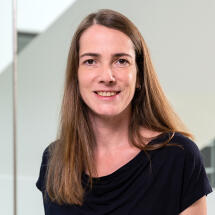
Samarjit Chakraborty is the William R. Kenan, Jr. Distinguished Professor in the Department of Computer Science at the University of North Carolina at Chapel Hill. He previously held the Chair of Real-Time Computer Systems at the Technical University of Munich (2008–2019) and was an assistant professor at the National University of Singapore (2003–2008). His research spans real-time embedded systems, cyber-physical systems (CPS), and automotive security. Research Interests include distributed embedded systems, hardware/software co-design, low-power systems, energy storage, electromobility, and sensor network-based information processing. His work addresses challenges in scheduling algorithms for autonomous vehicles, timing predictability in automotive networks, and safety-critical controller implementations. Recent Publications highlight advancements in Timing analysis for automotive networks Energy modeling of Bluetooth Low Energy Autonomous vehicle perception computing Security in automotive systems Flexible manufacturing with process dynamics Scientific Awards include the ETH Medal, European DAAD Outstanding Doctoral Dissertation Award, multiple best paper awards at conferences (ISLPED, ICCD, RTCSA, etc.), the 2023 Humboldt Professorship, and IEEE Fellowship. Advising active PhD students: Clara Hobbs, Shengjie Xu, Sharmin Aktar, and postdoc Enrico Fraccaroli. His research is supported by NSF grants and industry partnerships with General Motors, Intel, Google, BMW, Audi, Siemens, and Bosch.
Vahé Nerguizian is a full Professor in the Department of Electrical Engineering at École de technologie supérieure (ÉTS) in Montreal, Canada, where he has established himself as a leading researcher in microelectronics, MEMS, and biomedical applications. Affiliated with the LACIME (Communications and Microelectronic Integration Laboratory), his work bridges engineering disciplines with healthcare innovations, particularly in cancer research and point-of-care diagnostics. His educational background includes a B.Ing. from Polytechnique Montréal, an M.Eng. from McGill University, and a Ph.D. from Concordia University. This strong foundation in electrical engineering has enabled his interdisciplinary research across multiple domains. Nerguizian's research focuses on the intersection of microfluidics, MEMS, and biomedical applications, with particular emphasis on cancer cell detection, liposome production for drug delivery, and microelectronic integration for healthcare solutions. His laboratory develops microfluidic devices for synthesizing nanoparticles and liposomes, with applications in cancer therapeutics and diagnostics. The work combines microwave engineering, bio-MEMS, and microelectronics to create innovative diagnostic tools and therapeutic delivery systems. His recent publications (2021-2025) demonstrate a clear trajectory toward increasingly sophisticated biomedical applications of microfluidic and MEMS technologies, with growing emphasis on cancer research, extracellular vesicle analysis, and therapeutic delivery systems. The research has evolved from fundamental MEMS and microwave engineering toward highly translational biomedical applications. 2015: Excellence in Teaching Award from the Board of Directors Nerguizian has supervised over 25 graduate students across doctoral and master's programs, with current projects focusing on microfluidic systems for nanoparticle synthesis and sensor systems for biomolecule detection. His research has received significant funding through collaborations with medical researchers, particularly with Julia Burnier's team at McGill University. The LACIME laboratory, where he conducts his research, provides state-of-the-art facilities for micro- and nanofabrication, integrated circuit design, and photonic microsystems. As part of the LACIME research group, Nerguizian contributes to a dynamic environment focused on both fundamental and applied research with strong industry connections. The laboratory's work spans from materials science to communication protocols, with particular strength in developing innovative solutions for healthcare applications.
Claire F. Gmachl is the Eugene Higgins Professor of Electrical and Computer Engineering at Princeton University, where she also serves as Associate Chair of the Department of Electrical and Computer Engineering and Head of Whitman College. She is affiliated with the Princeton Materials Institute (PMI) and directs the education program of MIRTHE, an NSF-sponsored Engineering Research Center. Ph.D., Technical University of Vienna, Austria (1995) M.Sc., Physics, University of Innsbruck, Austria (1991) Her research focuses on quantum cascade lasers (QCLs), leveraging semiconductor heterostructures for environmental, health, and security applications. Projects include high-temperature QCLs, widely tunable systems, and collaborations with spectroscopists across academia, government, and industry. The group integrates device modeling, fabrication in PMI cleanrooms, and optical characterization. Recent publications emphasize QCLs' design flexibility through quantum wells and barriers, enabling innovations in gain bandwidth, power efficiency, and tunability. These align with applications in trace gas sensing, medical diagnostics, and security systems. Scientific Awards: MacArthur Fellow (2005) Popular Science Brilliant 10 (2004) Snell Premium award (2003) MIT Technology Review TR100 (2002) Claire has mentored numerous graduate students, including Radhika Bhuckory and Mingkun Zhao, and leads interdisciplinary collaborations through MIRTHE's network of 6 universities, 40 faculty, and 40 industry partners. Her lab utilizes advanced fabrication facilities and emphasizes a balanced work style integrating modeling, experimentation, and scientific communication.
Sangjin Kim is an Assistant Professor in the Department of Physics at the University of Illinois, focusing on biomedical and translational sciences. After earning a B.S. in chemistry from Seoul National University and a Ph.D. from Harvard University under Sunney Xie, Kim conducted postdoctoral research in microbiology at Yale University under Christine Jacobs-Wagner. Their work combines single-molecule biophysics, microbiology, and computational modeling to study cellular complexity at the single-molecule and single-cell levels. Education: B.S., Chemistry, Seoul National University Ph.D., Harvard University (2010), thesis on single-molecule biophysics Research Interests: Kim investigates physical principles governing molecular interactions in cells, particularly how gene expression machinery operates collectively. Key areas include DNA supercoiling, mRNA degradation, transcription-translation coordination, and bacterial cellular organization. Their lab develops interdisciplinary methodologies integrating molecular biology, optics, and computational analysis. Article Trends: Kim’s publications highlight single-molecule imaging, gene regulatory mechanisms, and bacterial systems biology, with a focus on Escherichia coli. Research spans DNA mechanics, RNA dynamics, and intracellular organization, often using hybrid experimental-computational approaches. Scientific Awards: NIH Maximizing Investigators' Research Award (2021) Searle Scholar, Kinship Foundation (2020) Kavli Fellow, National Academy of Sciences (2022) University of Illinois CAS Fellow (2022-2023) Teaching: Kim has taught courses in physics, including College Physics: Mechanics & Heat (PHYS 101), University Physics: Mechanics (PHYS 211), University Physics: Electricity & Magnetism (PHYS 212), Experimental Biophysics (PHYS 407), and Special Topics in Physics (PHYS 498 EBP). Labs & Teams: The Kim Lab at UIUC focuses on solving many-body problems in biology at the single-molecule level, seeking energetic and curious graduate students and postdocs with backgrounds in physics, chemistry, or biology.
Lihi Zelnik-Manor is a Professor at the Faculty of Electrical and Computer Engineering at the Technion - Israel Institute of Technology . Her research focuses on digitizing the sense of touch, integrating Haptics , Robotics , and Computer Vision to create digital representations of physical properties and develop haptic feedback devices for virtual interactions. Executive Vice President for Innovation and Industry Relations (2023-2026) Vice Dean for Graduate Studies (2022-2023) General Chair: CVPR’21, ECCV’22 Her work spans Neural Architecture Search (NAS) , 3D Reconstruction , and Image Processing , with recent publications on haptic devices (2025), diffusion models (2025), and soft-tissue simulation (2024). She actively contributes to academic leadership through roles in top conferences and community initiatives like the Schmidt Postdoctoral Award steering committee.
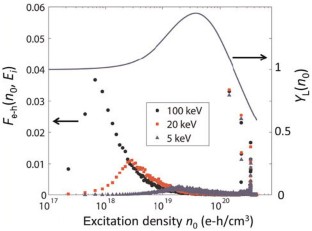
Dr. Gregory Bizarri is a Reader (equivalent to Associate Professor) in Material Science at Cranfield University, UK, where he serves as Head of the Surface Engineering and Precision Centre (SEPC), one of six centers within the Manufacturing theme of the School of Aerospace, Transport and Manufacturing and Materials (SATM). Prior to joining Cranfield in 2017, he was a Staff Scientist at the Lawrence Berkeley National Laboratory (USA) from 2009-2017, where he conducted research on scintillator materials and radiation detection technologies. Dr. Bizarri's research sits at the confluence of multiple disciplines: material science, detector physics, and instrumentation. His work promotes a multidisciplinary approach combining synthesis, characterization, instrumentation design, and modeling to investigate energy transport and conversion processes in materials for applications ranging from medical imaging to energy sectors. His expertise spans scintillator physics, radiation detection, optical materials, and sensor technology, with emphasis on developing novel detector materials through crystal growth and material engineering. His recent publications demonstrate a strong trajectory toward improving radiation detection systems, particularly for time-of-flight positron emission tomography (ToF-PET). His work on heterostructured scintillators, 3D-printed plastic scintillators, photonic crystal integration, and nanocomposite development represents cutting-edge approaches to enhance detection efficiency, resolution, and speed. This research bridges fundamental materials science with practical applications in medical imaging and radiation detection. As Head of the Surface Engineering and Precision Centre, Dr. Bizarri leads a research team dedicated to developing materials for sustainable and fair societal applications. His leadership involves managing large national and international collaborations focused on the design, development, and engineering of detector materials. The center's work integrates advanced materials development with precision engineering techniques to address challenges in aerospace, healthcare, and energy sectors.
Dr. Sarah Wolf serves as Head of the Junior Research Group 'Mathematics for Sustainability Transitions' at Free University of Berlin's Department of Mathematics and Computer Science and as a Senior Researcher and Board Member at the Global Climate Forum (GCF). Her dual affiliation bridges rigorous mathematical modeling with real-world sustainability policy, focusing on complex socio-ecological systems through an interdisciplinary lens since joining GCF's Green Growth initiative in 2012. Wolf earned her PhD in Mathematics from Freie Universität Berlin in 2010 with the thesis 'From Vulnerability Formalization to Finitely Additive Probability Monads,' developed during interdisciplinary work at the Potsdam Institute for Climate Impact Research. Her academic foundation combines pure mathematics with applied climate impact research, establishing her unique approach to formalizing sustainability concepts. Her research centers on agent-based modeling of socio-technical systems, with core expertise in sustainability transitions , green growth mechanics , and sustainable mobility . She develops mathematical frameworks to clarify vulnerability concepts while embedding simulations in stakeholder dialogues through innovations like the 'Decision Theatre Triangle.' This work uniquely positions mathematics as both analytical tool and communication medium for climate policy. Analysis of her 15 most recent publications reveals an evolutionary trajectory from foundational vulnerability formalization (2009-2012) toward applied stakeholder-integrated modeling (2021-2023). Her work consistently bridges mathematical rigor with policy relevance, showing increasing emphasis on participatory approaches while maintaining computational sophistication in agent-based systems. No scientific awards are documented in the source material, though her leadership in the MATH+ junior research group indicates competitive funding attainment. As group head, she directs research strategy and likely mentors junior researchers, though no formal student advisees are listed. Wolf leads the 'Mathematics for Sustainability Transitions' junior research group within FU Berlin's Biocomputing Group, collaborating with institutions like the Potsdam Institute. Her team develops computational frameworks for green growth transitions, emphasizing stakeholder co-creation through platforms like the Decision Theatre while maintaining strong ties to GCF's global policy networks.
Jie Deng, Ph.D., is a Professor in the Department of Radiation Oncology at UT Southwestern Medical Center, where she serves as faculty in the Division of Medical Physics & Engineering. She is a certified MRI and MRI for radiation therapy medical physicist by the American Board of Medical Physics and holds a leadership role as a magnetic resonance safety officer. Dr. Deng is actively involved in both clinical and research aspects of medical imaging and radiotherapy, with a strong emphasis on integrating advanced imaging technologies into therapeutic workflows. Dr. Deng earned her academic degrees from prestigious institutions: a Bachelor of Science in Biomedical Engineering from Southeast University in China, a Master’s in Bioengineering from the University of Illinois at Chicago, and a Ph.D. in Biomedical Engineering from Northwestern University. She further enhanced her expertise by obtaining a Master of Science in Law from the Northwestern Pritzker School of Law, reflecting a multidisciplinary approach to her scientific work. Her research interests center on MRI physics , quantitative imaging , oncological imaging , and the application of artificial intelligence in medical imaging. She has pioneered work in MRI-guided radiation therapy, imaging biomarkers for therapeutic response, and AI-driven image reconstruction and artifact reduction. Her recent publications demonstrate a consistent focus on improving imaging accuracy, speed, and clinical utility, particularly in liver, pediatric, and oncological applications. The analysis of her 15 most recent articles reveals a strong trend toward deep learning-based image reconstruction , quantitative MRI biomarkers , and synthetic image generation for radiotherapy planning. Topics such as 4D-MRI, synthetic CT, motion artifact reduction, and AI fusion models dominate her scholarly output, indicating a forward-looking research trajectory centered on intelligent, fast, and precise imaging for personalized cancer therapy. Dr. Deng actively contributes to the scientific community through presentations at major conferences including the International Society for Magnetic Resonance in Medicine (ISMRM) and the American Association of Physics in Medicine (AAPM), where she shares innovations in MRI, adaptive radiotherapy, and AI integration. As an educator, Dr. Deng mentors medical physics residents and graduate students, delivering lectures on MR-only simulation, MR-linear accelerator practices, and medical imaging fundamentals. While no specific grants are mentioned in the text, her extensive publication record in high-impact journals suggests active research funding and collaborative projects. She is affiliated with key professional organizations and serves on UT Southwestern’s MRI Safety Committee, ensuring safe and effective use of MRI in clinical and research settings. Her work bridges the gap between engineering innovation and clinical application, making significant contributions to the field of radiation oncology and medical physics.
Dr. Philippe Morel is an Associate Professor at the Bartlett School of Architecture , University College London, where he directs the MSc in Architectural Computation. He previously held academic positions at École nationale supérieure d'architecture Paris-Malaquais, The Berlage Institute, and Architectural Association School of Architecture, establishing himself as a leading figure in computational architecture. Doctor of Design, Florida International University (2024) Co-founder, EZCT Architecture & Design Research Founding CEO, XtreeE (2015-2017) His research focuses on computational architecture , artificial intelligence , and radical design theories , exploring intersections between digital technologies, architectural theory, and socio-economic models. Key contributions include Disruptive Technologies: The Convergence of New Paradigms in Architecture (2023) and Computational Politics and Architecture (2017). Recent publications analyze 3D printing economics , parametric design , and AI-driven architectural production . He has received the Pierre Cardin Prize (2007) and joined Phi Kappa Phi (2024). Supervised PhDs at ETH Zurich, EPFL, and Université Paris-Sud Developed curriculum on algorithmic urbanism and machine learning in architecture
Prof. Deniz ULUTAŞ is a Professor in the Department of Physics at the Faculty of Science, Istanbul University, where he has served since 2014. His academic career at Istanbul University spans over three decades, progressing from Research Assistant (1988-1999) to Assistant Professor (2000-2009), Associate Professor (2009-2014), and finally Professor (2014-present). He has held significant administrative positions including Head of Department (2014-2017, 2009-2013) and Vice Dean of the Faculty of Science (2009-2011). Dr. ULUTAŞ received his Doctorate from Istanbul University in 1999 with a dissertation on 'Electronic behavior of semiconductor and semi-insulator solid materials in thin film form,' following his Postgraduate studies (1987-1989) and Undergraduate education (1981-1987) at the same institution. His academic journey began with research on 'Optical Properties of Bismuth Thin Films' for his Master's degree. Prof. ULUTAŞ's research primarily focuses on dielectric properties, electronic structure, and electrical, magnetic, and optical characteristics of materials, particularly thin films and low-dimensional structures. His work spans condensed matter physics, materials science, and semiconductor physics, with significant contributions to understanding chalcogenide semiconductors, polymer composites, and nanostructured materials. His publication record includes 142 papers in Web of Science with an impressive h-index of 399, demonstrating substantial impact in his field. His recent work shows a strong trend toward interdisciplinary applications, including potential biomedical diagnostics using dielectric spectroscopy. His research demonstrates consistent focus on thickness-dependent properties, dielectric relaxation mechanisms, and the relationship between material structure and electrical behavior across various material systems including Tl-based chalcogenides, polymer electrolytes, and nanocomposites. The evolution of his work shows increasing sophistication in both experimental techniques and theoretical interpretations. 142 Publications in Web of Science 30 Publications in Scopus 399 h-index (Web of Science) 385 h-index (Scopus) Prof. ULUTAŞ has supervised numerous graduate students, with 8 doctoral and master's theses completed under his guidance and several more in progress. His laboratory appears focused on thin film deposition, dielectric characterization, and analysis of electronic properties across diverse materials systems. He has also contributed to educational materials with lecture notes on Thermodynamics, Statistical Physics, and Modern Research Topics in Physics.
Malgorzata Zboinska is an Associate Professor at Chalmers University of Technology within the Department of Architecture and Civil Engineering . She is a licensed architect and member of the Swedish Association of Architects and National Chamber of Architects of Poland . Hybrid architecture-technology-art research Focus on bio-based materials , digital fabrication , and creative robotics Development Leader of Chalmers' Robotic Fabrication Laboratory Editorial board member of TAD | Technology, Architecture + Design journal Research Themes bridge architecture , digital technology , and art , with expertise in: Sustainable and circular architectural practices 3D printing and robotic construction Material bioinnovation and upcycling Interactive and kinetic architectural solutions Her publications demonstrate strong output in digital fabrication , bio-material applications , and environmental architecture , with international exhibitions at Tempe Center for the Arts (USA) , Dutch Design Week (NL) , and Färgfabriken (Sweden) .
Fang Liu is an Assistant Professor at Chalmers University of Technology, Department of Materials and Manufacturing. Her research focuses on uncovering the physical and chemical mechanisms in material systems such as high-temperature alloys, polymer composites, and semiconductors, using advanced microscopy and spectroscopy techniques. Specializes in structural battery composites, creep behavior, and high-temperature corrosion Collaborates with industry partners and theoretical researchers Develops reliable prediction tools for material performance Research Trends (2023–2025): Structural battery composites with carbon fibers and hybrid electrolytes Microstructural analysis via atom probe tomography and focused ion beam High-temperature oxidation and corrosion resistance Mechanical-electrochemical coupling in multifunctional materials Key Collaborations : Leif Asp (Chalmers), Johanna Xu (Chalmers), Marcus Johansen (Chalmers) Industry partners: Office of Naval Research, VINNOVA, Wallenberg AI Program
Jeffrey Young is a Principal Research Scientist at Georgia Institute of Technology, working with the Partnership for Advanced Computing Environments (PACE) and leading Georgia Tech’s Open Source Program Office. His research focuses on high-performance computing (HPC), computer architecture, and novel accelerators including GPUs, FPGAs, and Arm/RISC-V processors. He leads next-generation computing strategy at PACE and directs the NSF-funded CRNCH Rogues Gallery testbed, which explores post-Moore accelerators like neuromorphic and near-memory systems. His work bridges hardware-software co-design and scientific software engineering. Recent research trends show expertise in quantum programming (Qwerty/ASDF), heterogeneous computing (Cupbop), and memory system optimization across GPUs, FPGAs, and CPUs. He has contributed to exascale workflows (HIPLZ), safe HPC libraries, and UAV co-simulation frameworks. Scientific Awards: NSF-funded CRNCH Rogues Gallery testbed (2020-2024) Education: Ph.D. in Computer Architecture (2013), advised by Dr. Sudhakar Yalamanchili Labs & Initiatives: Director, CRNCH Rogues Gallery testbed Co-Director, Georgia Tech Center for Scientific Software Engineering Director, Georgia Tech Open Source Program Office
Dr Smitha Gopinath is a Lecturer in the School of Chemical, Materials and Biological Engineering at the University of Sheffield , where she leads research in sustainable engineering systems within the Sustainable Design Laboratory (SDL) . Education & Career Path PhD in Chemical Engineering, Imperial College London Post-doctoral researcher, Applied Mathematics and Plasma Physics Group, Los Alamos National Laboratory Research Focus Dr Gopinath’s interdisciplinary work centres on the design, calibration and operation of sustainable engineering systems . She develops high-fidelity models and large-scale optimisation algorithms tailored to energy and materials challenges. Core interests include: Thermo-mechanical energy conversion devices (heat pumps, organic Rankine cycles) Carbon-capture utilisation and storage (CCUS) via novel solvents and separation systems Power-grid expansion and operation for renewable integration and decarbonisation Methodologically, she integrates Integrated Molecular and Process Synthesis (IMPS) with Optimisation Accelerated by domain Knowledge (OAK) to co-design molecules, materials and flowsheets that meet stringent energy and environmental targets. Publication Landscape Across 2015–2025 her publications reveal a clear trajectory from fundamental thermodynamic measurements and molecular design toward rigorous optimisation of large-scale energy systems. Early work concentrated on CO₂ solubility and carbonation kinetics of steel slag, providing essential data for carbon-sequestration schemes. Subsequent papers introduced advanced optimisation frameworks—outer-approximation algorithms, exact reformulations and feasibility-based methods—applied to solvent-based CO₂ capture, organic Rankine cycle working-fluid selection and AC optimal power flow (ACOPF). Recent contributions benchmark global optimality certificates for ACOPF problems, underscoring her drive to bridge chemical process systems engineering with electrical power systems optimisation. Teaching & Mentoring Dr Gopinath teaches undergraduate modules: CPE440 (Particle Technology) CPE170 (Particle Technology) She actively invites prospective PhD students to join the Sustainable Design Laboratory, offering supervision on projects spanning sustainable process design, renewable energy systems and algorithmic optimisation. Laboratory & Collaborative Networks She directs the Sustainable Design Laboratory (SDL), a multidisciplinary team leveraging systems engineering, multi-scale modelling, process simulation and optimisation to re-imagine a sustainable chemical and energy industry. The SDL collaborates with international partners, including Los Alamos National Laboratory and leading researchers in applied mathematics and power systems engineering.
Sonja Schelhaas is a researcher affiliated with the European Institute for Molecular Imaging (EIMI) at the University of Münster. Her work focuses on molecular imaging technologies, particularly in oncology and neurological contexts. PhD in Medical Biochemistry (2007-2010) Postdoc at EIMI since 2010 Research Fellow in Anaesthesiology (2005-2006) Her research spans: PET tracer development for ion channels Molecular imaging of tumor microenvironments Applications of small animal PET in disease models Bacterial and inflammatory imaging Radiochemistry and multimodal imaging techniques Epigenetic regulation in cancer Recent publications highlight her contributions to: P2X4 receptor antagonists for PET tracers KCa31 channel imaging in cancer Bacterial detection via radiolabeled compounds FLT PET for tumor proliferation analysis Neurogenesis and blood-brain barrier studies PEGylated nanoparticle characterization Schelhaas has collaborated extensively in preclinical imaging projects, contributing to cancer research, infection monitoring, and neurodegenerative disease modeling. Her work appears in journals like Journal of Medical Chemistry , Cancer Research , and Molecular Imaging and Biology .