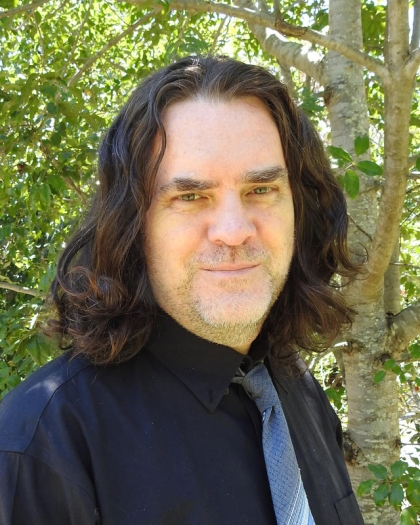
Pierluigi Salvo Rossi is a Professor at the Department of Electronic Systems , Norwegian University of Science and Technology ( NTNU ), with additional roles as Deputy Head of Department (since 2021) and Deputy Manager at the Center for Green Shift in the Built Environment (since 2022). He also serves as a part-time Research Scientist at SINTEF Energy's Gas Technology department. Education: Ph.D. in Computer Engineering, University of Naples “Federico II”, Italy (2005) Dr.Eng. (cum laude) in Telecommunications Engineering, University of Naples “Federico II”, Italy (2002) Research Interests span Wireless Communications , Digital Twins , Machine Learning , and Statistical Signal Processing , focusing on applications like Industrial IoT , Fault Detection , and Energy Systems . His recent Publications highlight trends in Federated Learning , Graph Signal Processing , and Multi-Sensor Anomaly Detection across domains from Natural Gas Pipelines to Subsea Leakages . Scientific Awards include: Exemplary Senior Editor, IEEE Communications Letters (2018) Department Ambassador, NTNU (2016) IEEE Senior Member (since 2011) Professional Roles encompass editorial leadership (e.g., IEEE Sensors Journal) and conference organization (e.g., General Chair for IEEE Sensor Array and Multichannel Signal Processing Workshop, 2022). He leads major funded research projects like PREFERENCE (RCN, 2023-2027) and AUTOSHIP (RCN, 2020-2028).
Jason Nelson is a Professor of Digital Culture in the Department of Linguistic, Literary and Aesthetic Studies at the University of Bergen, Norway. He is a creator of digital poems and fictions, builder of surrealist and politically focused art games and digital creatures. His work is exhibited widely in galleries and journals around the globe at FILE, ACM, LEA, ISEA, SIGGRAPH, ELO and numerous other venues. Nelson serves on organizational boards including the Australia Council Literature Board and the Electronic Literature Organization. Nelson's research focuses on the intersection of digital technology, creative writing, and artistic expression. He explores how AI and machine learning can be harnessed for creative purposes, developing new forms of digital literature and interactive art. His work often involves building expansive visual worlds through collaborative AI processes, creating interactive digital poetry, and developing novel approaches to digital narrative. Nelson's research spans digital humanities, electronic literature, AI-generated art, and interactive media, with particular emphasis on how these technologies transform creative processes and experiences. Over the past decade, Nelson's work has increasingly focused on the creative potential of AI technologies, especially in the areas of text-to-image generation and multimodal authorship. His projects often blend game engines with poetic expression, creating immersive experiences that challenge traditional boundaries between human and machine creativity. Recent works explore themes of multispecies futures, time perception, and the transformation of physical spaces through augmented reality. Nelson has received numerous scientific awards and fellowships including: Fulbright Fellowship at the University of Bergen Moore Fellowship at the National University of Ireland Winner of the Digital Writing Prize, Queensland Literary Awards (15,000 AUD) Winner of the Woollahra Library Digital Poetry Prize (5,000 AUD) Runner-Up Prize at the Videomedeja digital art exhibition Finalist for the Turn-on Literature Prize Finalist for the Queensland Literary Awards, Digital Writing Category Multiple finalist nominations for the New Media Writing Prize Nelson actively participates in academic advising and has secured significant research funding, including a 125,000 AUD grant from the Australia Council of the Arts, Literature Board for his project "Cube Cryptext and Nomencluster," which was recognized as the world's largest interactive art-game. His work "Nine Billion Branches" received multiple awards including the Digital Writing Prize from the Queensland Literary Awards. He has also received a 75,000 NOK grant for the "Flood Mosaic Artwork" project featured in the Floodlines Exhibition at the State Library of Queensland. Nelson is affiliated with the Center for Digital Narrative at the University of Bergen, where he collaborates with researchers like Scott Robert Rettberg and Alinta Krauth. Together they form EphemerLab, exploring new creative processes that move beyond simple "ask and generate" AI methods. Their work involves stitching together hundreds of individual image fragments and components into cohesive visual and narrative concepts, pushing the boundaries of what's possible with current AI technologies.
Sebastien Nicolas Gros is a Professor at the Department of Engineering Cybernetics, Norwegian University of Science and Technology (NTNU). His research focuses on safe reinforcement learning (RL) and data-driven model predictive control (MPC), with applications in energy systems, biomedical engineering, and autonomous vehicles. Institution: Norwegian University of Science and Technology Department: Engineering Cybernetics His work emphasizes AI-driven optimization for domestic energy storage, battery integration, and smart building management. Collaborations include Equinor, DNV, Kongsberg, Volvo, and CorPower Ocean. Key themes in his publications include: Control theory for renewable energy systems (wave energy converters, buildings) Biomedical applications (artificial pancreas, glucose monitoring) Transportation systems (electric vehicles, autonomous ships) Machine learning integration with physical models He supervises 6 PhD students and co-supervises projects on multi-rotor wind turbines and industrial PhD collaborations. The articles demonstrate a convergence of RL, MPC, and uncertainty quantification across energy, biomedical, and transportation domains.
Daniel Beat Müller serves as Professor at the Industrial Ecology Programme within the Department of Energy and Process Engineering at the Norwegian University of Science and Technology (NTNU), Trondheim. His office is located at Realfagbygget Gløshaugen (E4-120) with contact details daniel.mueller@ntnu.no and +4791897755. His research centers on analyzing human needs in relation to material/energy flows and environmental impacts, with two primary focus areas: (i) urban evolution and associated material flows for managing building/infrastructure stocks, and (ii) national/global metal cycles to identify supply constraint reduction strategies. His methodology integrates design, modeling, and decision-making through transdisciplinary stakeholder engagement. Müller teaches Material Flow Analysis and Systems Analysis of the Built Environment for Industrial Ecology and Civil Engineering Master's students. His research outputs demonstrate strong trends in circular cities, critical mineral management, and urban metabolism, with recent publications emphasizing building information modeling, electric vehicle battery systems, and phosphorus cycling. His work consistently addresses resource criticality within energy transition contexts. As (ad interim) chair of the International Society of Industrial Ecology’s MFA-ConAccount section, he contributes to methodological standardization. He previously served on the U.S. National Research Council’s Committee on Defense Stockpiles and remains active in Switzerland's National Research Programme 65 "New Urban Quality". Müller supervises numerous Master's and doctoral students, with thesis topics spanning lithium-ion battery recycling, building stock dynamics, and urban resource flows. His projects frequently involve industry collaboration for practical implementation of material stewardship strategies.
Alexander Refsum Jensenius is a Professor of Music Technology and Director of the RITMO Centre for Interdisciplinary Studies in Rhythm, Time and Motion at the University of Oslo. He also leads the fourMs Lab and co-founded the MishMash Centre for AI and Creativity. His work bridges musicology, psychology, and technology, focusing on embodied music cognition, human motion analysis, and creative applications of AI. Notably, he pioneered research on air guitar motion and human micromotion through projects like the Oslo Standstill Database . Educated at the University of Oslo (BA in Music and Mathematics, MA in Musicology) and Chalmers University of Technology (MSc in Applied IT), Jensenius holds a PhD in Music Technology from UiO. He has held visiting researcher roles at UC Berkeley, McGill University, and KTH. Leadership roles include Department of Musicology Head (2013–2016) and Steering Committee Chair for the International Conference on New Interfaces for Musical Expression (NIME, 2011–2022). Research interests span music-related body motion, AI in creative contexts, and open research practices. Key contributions include the Music Moves and Motion Capture MOOCs, the Musical Gestures Toolbox software, and monographs like Sound Actions and Sonic Design . His work emphasizes interdisciplinary collaboration, with projects addressing ventilation systems' acoustic properties and cell culture vibrational effects. Awards include the European Open Data Champion recognition. He advocates for open science and maintains extensive digital archives of research materials, emphasizing institutional web pages as critical research infrastructure.
Eirik Valseth is an Associate Professor of Scientific Computing at the Norwegian University of Life Sciences (NMBU), Department of Data Science. He holds concurrent roles as a research associate at the Oden Institute, University of Texas at Austin, and an affiliated researcher at Simula Research Laboratory (Department of Numerical Analysis and Scientific Computing). His expertise lies in advanced finite element methods for PDEs with applications in flood modeling and hydropower systems. Current Affiliation: NMBU (Norwegian University of Life Sciences) Secondary Affiliations: Oden Institute (UT Austin), Simula Research Laboratory Research interests span numerical methods for challenging PDE systems, including: Stabilized finite element formulations Hurricane storm surge and riverine flood modeling Hydropower infrastructure analysis Computational mechanics and applied mathematics His recent publications (2024–2025) emphasize flood risk assessment (compound flooding, dam breaks, dredging impacts), advanced numerical methods (isogeometric analysis, stochastic finite elements, graph-grammar algorithms), and environmental applications (pollution transport, pathogen distribution, mosquito population dynamics after hurricanes). Key trends include cross-disciplinary integration of physics-aware machine learning and robust hydrodynamic simulation tools. Valseth's work extends to software development (e.g., WAVEx for spectral wave models, SWEMniCS for coastal circulation) and large-scale modeling frameworks like the ADCIRC unstructured mesh model for US coasts. Collaborative projects involve institutions such as University of Texas at Austin, Simula, and NOAA.
Eva Langvik is a Professor in the Department of Psychology at the Norwegian University of Science and Technology (NTNU). Her work focuses on depression, health psychology, personality assessment, and occupational psychology. She has extensively published on topics such as moral stress in law enforcement, workplace well-being, and psychological factors in cardiovascular health. Her research interests include the intersection of personality traits and health outcomes, particularly in high-stress professions like policing. Studies often address stress management, organizational support systems, and the psychological impact of working with child abuse cases. Recent articles highlight her analysis of police employees’ experiences with workload and organizational resources, as well as investigations into public perception of offenders and patient experiences in clinical settings. She collaborates with institutions like the NTNU Department of Psychology and the Trøndelag Police District.
Runar Barstad Solberg is a full-time researcher at the Norwegian School of Sport Sciences (School of Sport Sciences). He actively contributes to public health research with a focus on adolescent health, physical activity interventions, and mental health. His work often involves cluster randomized trials and collaborations with institutions like Folkehelseinstituttet. His research interests include: Physical activity's impact on academic performance Environmental factors affecting adolescent mobility Physical fitness and mental health links Public health interventions during pandemics Notable publications analyze: 2025 decision tree models for school travel modes 2024 face mask efficacy in respiratory health School-based fitness interventions and their health outcomes
Elisabet Apelmo serves as Senior Lecturer in the Department of Social Work at Malmö University, Sweden. A visual artist with a PhD in Sociology, she bridges creative practice and academic inquiry to explore the complex intersections of bodily experience, sport, disability, and gender within contemporary society. Her research program centers on sociological analyses of bodily difference, particularly examining how physical education environments construct inclusion and exclusion through gendered and ableist frameworks. Apelmo employs phenomenological approaches and visual methodology to investigate how disabled bodies navigate sporting spaces, challenging normative assumptions about athletic participation and bodily capability. Her work consistently reveals how sporting cultures simultaneously enable and constrain identities, particularly for women and people with disabilities. Analysis of Apelmo's publication history shows sustained engagement with critical disability theory, gender studies, and sport sociology spanning nearly two decades. Her scholarship demonstrates methodological innovation through visual approaches and phenomenological frameworks, with recurring themes including the social construction of disability in sport contexts, gendered bodily experiences in physical education, and the material-semiotic relationships between bodies and technologies like wheelchairs. Among her current research initiatives are investigations into participation and exclusion dynamics in mainstream physical education from disability and gender perspectives, and ethnographic studies examining how dancers strategically use their bodies and gazes to disrupt stereotypical perceptions of physical impairment. These projects reflect her commitment to generating knowledge that directly challenges ableist assumptions within sporting cultures and educational settings.
Kristin Y. Pettersen is a Professor at the Department of Technical Cybernetics, Norwegian University of Science and Technology (NTNU), and a Professor II at the Norwegian Defence Research Institute (FFI). She is a co-founder of Eelume AS, a company specializing in underwater robotics solutions. Education: Civil Engineering and PhD in Technical Cybernetics from NTNU Her research focuses on advanced control systems for marine and underwater vehicles, particularly snake robots and autonomous underwater vehicles (AUVs). Key areas include formation control, path following, adaptive guidance algorithms, and safety-critical control in dynamic environments. Recent work explores machine learning integration and energy-shaping techniques for robust locomotion. Publications highlight trends in Model Predictive Control (MPC) , Collision Avoidance , and Task-Priority Operational Space Control for redundant and underactuated systems. Her work bridges theoretical control theory with practical applications in marine robotics, including autonomous inspections and cooperative transport. Labs/Teams: Collaborates with NTNU's Faculty of Information Technology and Electrical Engineering and co-founded Eelume AS, advancing subsea robotic manipulation technologies.
Martin Kjeøen Erikstad is an Associate Professor at the Department of Sports Science and Physical Education at the University of Agder. His work primarily focuses on sports psychology, coaching development, and talent development in football. University of Agder Department of Sports Science and Physical Education Research group: SPADE (Training processes and performance development in sports) Dr. Erikstad's research explores psychosocial factors affecting performance and participation in sport, particularly in youth football systems. He has conducted extensive studies on Bryne FK's youth development, including the 1999 intake that produced Erling Haaland and other professional players. His work emphasizes: Transformational leadership in sports Positive coach-athlete relationships Environment factors that promote both participation and elite talent development Psychological aspects of refereeing decisions Self-regulation in youth football
Amirhosein Taherkordi is a Professor in the Networks and Distributed Systems group at the Department of Informatics, University of Oslo, Norway. His research focuses on resource-efficiency, scalability, adaptability, dependability, mobility and data-intensiveness of distributed systems for emerging computing technologies including Internet of Things (IoT), Fog/Edge/Cloud Computing, and Cyber-Physical Systems (CPS). Dr. Taherkordi received his Ph.D. from the Informatics Department at the University of Oslo under the supervision of Prof. Frank Eliassen, with his thesis titled "Programming Wireless Sensor Networks: From Static to Adaptive Models." He holds an M.Sc. in Information Technology Engineering (Software Engineering) from University of Science and Technology and a B.Sc. in Computer Engineering from Sharif University of Technology. His research spans multiple domains of distributed systems with emphasis on practical applications. He investigates energy efficiency in wireless sensor networks, communication optimization in IoT systems, and adaptive resource allocation in edge computing environments. His work addresses critical challenges in network traffic classification, federated learning for vehicular networks, and data processing across heterogeneous platforms. Analysis of his recent publications reveals a strong trajectory toward communication-efficient federated learning techniques for vehicular networks, energy-aware protocols for IoT data collection, and advanced machine learning approaches for network traffic analysis. His research consistently focuses on optimizing resource usage while maintaining system performance and privacy in distributed architectures. Dr. Taherkordi actively contributes to several research initiatives including the CPS Lab at UiO for Cyber Physical Systems, DILUTE: Fluid Service Abstraction for Large-Scale Cloud IoT Systems, and the Gemini Centre on IoT at UiO. His work bridges theoretical advances with practical implementations in transportation systems, environmental monitoring, and industrial automation.
Nils Christian Tveiterås is an Assistant Professor in the Department of Education at UiT The Arctic University of Norway. He teaches pedagogy at bachelor's and master's levels, as well as in school leader education programs. His academic work centers on the integration of digital technologies in educational contexts with particular emphasis on early childhood teacher training. Dr. Tveiterås's research interests include: Technology and learning Digital competence development Teacher education Virtual Reality applications in education His scholarly work demonstrates a strong focus on how digital technologies can be effectively integrated into early childhood teacher education. Recent publications explore virtual reality applications, digital competence frameworks, and the translation of national digital competence requirements into local curricula. His research often examines how emerging technologies like VR can create engaging learning environments that foster authentic social interaction and collaboration among teacher education students, with particular attention to developing digital agency among preservice teachers. Dr. Tveiterås has received recognition for his work, including the Researcher Grand Prix award for his research on digitalization in kindergarten teacher education. His publication 'Digitalt samvær som føles ekte' (2024) addresses how virtual technologies can create authentic social interactions in educational settings. He is an active member of several research groups including: Engaging Conflicts in a Digital Era (ENCODE) Technology and Learning Barnehagefaglig forskningsnettverk BARNkunne UiT ILP Lærerutdanning 5.052
Ingrid Mann is a Professor in Space Physics at the UiT The Arctic University of Norway , Department of Physics and Technology. She leads and participates in multiple externally funded research initiatives including the Cosmic dust injection into the upper Earth atmosphere , MXD 2 rocket project to study the mesosphere , and EISCAT Research infrastructure project . ORCID: 0000-0002-2805-3265 Member of research group Space Physics Member of projects: Intermittent fluctuations in physical systems , Maxidusty-2 , CASCADE , Codia , Boosting Space Business , and Forskningsparken 1 A216 Her research spans space and atmospheric physics , focusing on dusty plasmas , cosmic dust dynamics , and polar atmosphere interactions . She employs spacecraft observations , EISCAT radar , rocket experiments , and machine learning for data analysis. Recent publications highlight cosmic dust detection with Parker Solar Probe and Solar Orbiter , PMSE multilayer properties , and dust impact signal modeling . Her work integrates radar , optical , and spacecraft data to understand polar atmospheric systems. She teaches FYS-2000 Kvantemekanikk , FYS-2019 Sun, Planets, and Space , and supervises G-Chaser student rocket projects . Her research group contributes to EISCAT_3D infrastructure and interplanetary dust modeling . Co-edited books: Nanodust in the Solar System (2012) Small Bodies in Planetary Systems (2008) Modern Meteor Science (2005)
Ellen Beate Hansen Sandseter is a Professor at the Physical Activity and Health Research Group within the Department of Science, Natural Sciences and Social Sciences at Queen Maud University College. She holds a master’s in sports science from the Norwegian School of Sports Science and a doctorate in psychology from NTNU. Sandseter’s research focuses on risky play in early childhood education, emphasizing how physical environments shape children’s exploration of limits and developmental opportunities. Education: Major in sports (Norwegian School of Sports Science), PhD in psychology (NTNU) Her work challenges Western societies’ overemphasis on safety in childhood environments, advocating for free outdoor play to build resilience and self-efficacy. Current projects like ViRMa (Virtual Risk Management) use VR and motion capture to study how risky play fosters risk assessment skills. Previously, she led the EnCompetence project, linking physical environments to play behavior and activity levels. Her academic output spans behavioral studies, psychometric assessments, and policy advocacy, with keywords including child development , virtual reality , and play-based learning . She actively disseminates findings through international lectures and collaborations, particularly on ethical challenges in risky play. No scientific awards or student advisement details are listed in the provided text.