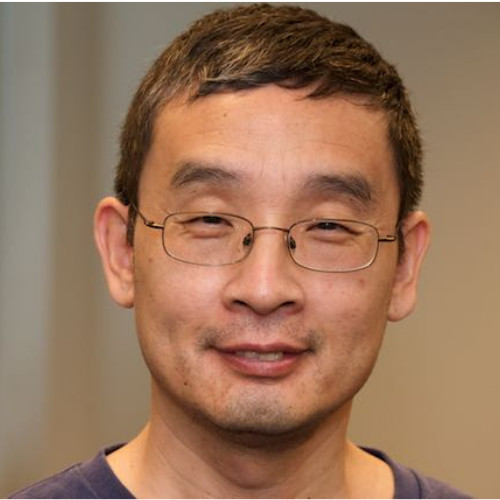
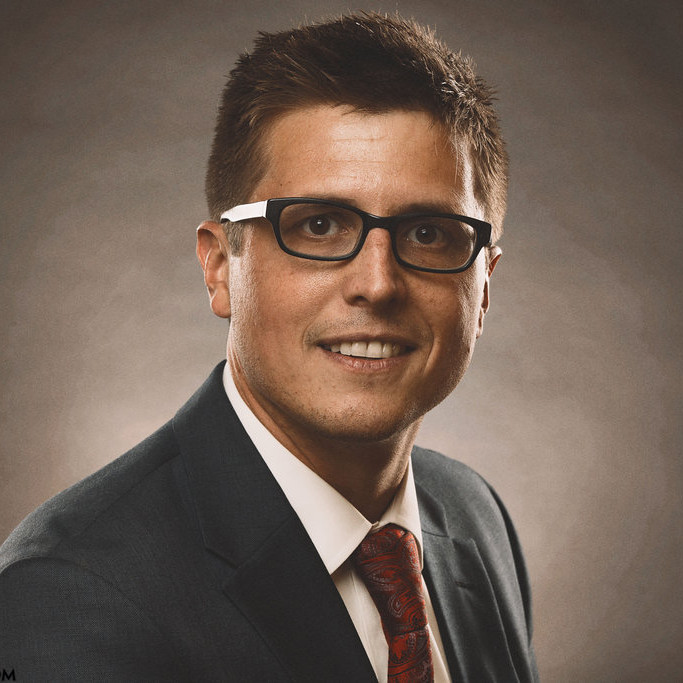
Ruixuan Gao is Assistant Professor in Biological Sciences and Chemistry at University of Illinois Chicago's College of Liberal Arts and Sciences. His research develops chemical/physical tools for nanoscale molecular mapping in biological systems, focusing on expansion microscopy techniques, neuronal ultrastructure, and molecular composition analysis in neuroscience and cancer models. Education includes postdoctoral training at MIT/HHMI Janelia Research Campus, Ph.D. from Harvard University, and B.S. from UC Berkeley. Research employs light/electron microscopy, chemical probes, and computational approaches to study synaptic architecture, nervous system organization, and clinical specimen profiling.
Wenchang Lu is a Research Professor in the Department of Physics at NC State University, affiliated with the College of Sciences. His research focuses on materials science, computational physics, and nanomaterials engineering. He specializes in ferroelectric polymers, electronic structure calculations, and advanced material design using methods like Density Functional Theory (DFT) and the Real-Space Multigrid (RMG) code. His work explores topics such as dielectric enhancement in polymer nanocomposites, strain-induced polar interfaces, and graphene nanoribbon synthesis. He has contributed to advancements in high-performance capacitor materials and nanoscale electronic devices, with a particular emphasis on energy storage and electromechanical systems. Recent publications highlight studies on ultrahigh electromechanical coupling in relaxor ferroelectrics and the development of scalable computational methods for exascale architectures. His research bridges theoretical modeling with experimental applications, aiming to engineer next-generation materials for energy, electronics, and sensor technologies.
Fabrice Labeau is a Professor in the Department of Electrical & Computer Engineering at McGill University. He holds additional administrative roles as Vice-President (Administration and Finance) and Director of Operations for the STARaCom Centre. His research focuses on telecommunications, signal processing, cybersecurity, and smart grids, with notable contributions to privacy-preserving techniques in machine learning and secure communication systems. He has received prestigious awards including the IEEE VTS Outstanding Service Award (2008, 2016), the IEEE Canada W.S. Read Outstanding Service Award Medal (2017), and recognition for leadership in organizing major IEEE conferences. His work spans theoretical advancements and practical applications, particularly in smart grid security and wireless communication systems. Prof. Labeau's professional activities include leadership roles in IEEE societies (e.g., President of the IEEE Consumer Technology Society 2025-2026) and extensive conference organization (e.g., General Chair of IEEE GlobalSIP 2017, VTC-Fall 2016). His research group collaborates on cutting-edge topics like adversarial robustness, privacy in smart meters, and UAV-assisted networks. Key technical contributions include algorithms for secure channel estimation, resource allocation in 5G networks, and frameworks for detecting cyberattacks in power systems. He maintains active engagement with industry standards through IEEE committees and has authored over 150 peer-reviewed publications and a Springer book on wireless communication for power substations.
Professor Kasper Rasmussen is a Professor of Information Security in the Department of Computer Science at the University of Oxford. He joined the university in 2013 and holds a PhD from ETH Zurich (2013), with a postdoctoral stint at the University of California, Irvine. His research focuses on analyzing and designing security protocols, particularly in embedded systems and applied domains like Bitcoin, Google's Nearby Connections, and Bluetooth. Key research areas include signal injection attacks, hardware security (e.g., FPGA vulnerabilities), privacy-preserving frameworks, and blockchain security. He has pioneered defenses against electromagnetic interference, laser-based hardware exploits, and cryptographic downgrade attacks. Education: PhD in Computer Science, ETH Zurich (2013) Postdoctoral Researcher, University of California, Irvine Awards: Royal Society University Research Fellowship (2015) Key Contributions: Developed frameworks like Iris for secure P2P networks and Themis for serverless computing Explored vulnerabilities in Bluetooth (e.g., KNOB attack) and sensor systems Advanced biometric authentication (e.g., eye movement, body impedance) Grants/Support: Royal Society Fellowship-funded research on embedded systems security His work bridges theoretical cryptography with practical implementations, addressing challenges in IoT, automotive systems, and critical infrastructure. Current projects include mitigating covert channels in cloud FPGAs and enhancing machine-to-machine communication security.
Pan Cao is a Senior Lecturer in Electronics and Communications at the University of Hertfordshire's School of Physics, Engineering & Computer Science, Department of Engineering and Technology. He holds a Dr.-Ing (Ph.D.) from TU Dresden (2015) and postdoctoral experience at the University of Edinburgh and Princeton University. His research focuses on 5G/6G communications, millimeter-wave systems, radar-communication integration, and optimization algorithms. Education includes: BEng (First Class) in Mechanical Design from Xidian University (2004–2008) MEng in Information and Signal Processing from Xidian University (2008–2011) PhD in Electrical Engineering from TU Dresden (2010–2015) Research interests span: 6G networked imaging and cell-free massive MIMO Integration of sensing and communication Millimeter-wave and energy-efficient communication systems Current projects include EPSRC-funded 6G-DISCO (£388K) and 6G-NetMAGIC (£225K), EU's TERRAMATE (€6M), and Innovate UK's advanced mmWave radar design (£275K). Awards include Qualcomm Innovation Fellowship (2013) and two Best Student Paper Awards (2012, 2018). He serves as a Vice-Chair in IEEE ComSoc's Radio Communications Committee and an Associate Editor for EURASIP Journal on Wireless Communications and Networking.
Dr. Oluyomi Simpson is a Principal Lecturer and academic lead of the Communications Lab at the University of Hertfordshire's School of Physics, Engineering & Computer Science. He specializes in wireless communication systems, with a focus on 5G/6G, physical layer security, and machine learning integration. His research also encompasses cognitive radio networks, RFID technologies, and RF energy harvesting. Simpson has over 50 publications and serves as an Associate Editor for IEEE Communications Letters. Education: PhD in Communications and Electronics Engineering from the University of Hertfordshire (2011). Research Interests: His work spans interdisciplinary applications in wireless communication systems, including next-generation multiple access, near-field sensing, and STARS (Simultaneously Transmitting and Reflecting Surfaces). He emphasizes practical industry applications in telecommunications, manufacturing, and healthcare. Projects: Advanced Telematics and RFID Systems for Asset Monitoring in Emergency Medical Services (2025–2027) RFID System for Sample Management (2021–Present) Asset Monitoring via Coaxial Cable Strain Sensing (2025) Grants & Funding: Supported by ERDF, Innovate UK, and the Niger Delta Development Commission (NDDC). Labs & Teams: Leads the Wireless and Mobile Communication Lab, focusing on 6G research and collaborative projects with industry partners.
Raymond Knopp is a Professor and Head of the Communication Systems Department at EURECOM, a renowned research and higher education institution in Sophia Antipolis, France. He is a leading figure in wireless communication systems, with a focus on 5G/6G, OpenAirInterface (OAI), software-defined radio, and physical layer innovations. His work bridges theoretical foundations with practical implementations through open-source platforms and real-world testbeds. His research interests span a wide spectrum, including wireless communications, 5G and 6G networks, software-defined radio, MIMO systems, channel coding, signal processing, and ultra-reliable low-latency communications (uRLLC). He is particularly known for his contributions to OpenAirInterface, a pivotal open-source platform for wireless research and development. His recent work explores UAV-aided localization, time synchronization, reproducible experimentation, and the evolution of 6G technologies. Knopp's publication record is extensive and recent, with research trends showing a strong focus on open-source wireless innovation, testbed development, and performance evaluation in real-world scenarios. His work emphasizes reproducibility, open science, and the transition from theoretical concepts to deployable systems, particularly in the context of 5G NR and future 6G networks. Themes include positioning, uRLLC, hardware calibration, and CI/CD for wireless platforms. His scientific recognition includes a Best Student Paper Award at the European Wireless Conference 2011 for his work on interference-aware receivers in mixed CSIT channels, highlighting his contributions to interference management in wireless networks. Raymond Knopp advises students and leads a research team at EURECOM, contributing to both academic and industry-oriented projects. He teaches graduate courses in 'Digital Communication' and 'Signal Processing Theory and Technologies' and participates in continuing education for industry professionals. His work is supported by numerous grants and collaborations, particularly around the OpenAirInterface ecosystem and European research initiatives. His research is conducted within the Communication Systems Department at EURECOM, where he leads a team focused on next-generation wireless technologies. The lab is deeply involved in the OpenAirInterface community and contributes to major testbeds like SLICES-RI, enabling cutting-edge experimentation in beyond-5G networks.
ZHAO Hui serves as a post-doctoral Research Fellow at EURECOM's Communication Systems Department, actively contributing to cutting-edge research in wireless communications. With recent publications extending through June 2025, Dr. Zhao maintains an active research profile focusing on theoretical and practical aspects of next-generation wireless systems. Dr. Zhao's research spans several interconnected domains within wireless communications, with particular emphasis on coded caching techniques , satellite communication systems , and MIMO technologies . The work demonstrates sophisticated mathematical analysis of wireless channel characteristics, with specific attention to stochastic modeling of satellite networks , physical layer security mechanisms , and resource allocation optimization . Recent publications show increasing focus on near-field communications and semantic communications , reflecting the evolution of 6G research directions. The research methodology combines theoretical analysis with practical implementation considerations, often addressing real-world constraints in wireless network design. Among notable recognitions, Dr. Zhao was selected as a Best Student Paper Finalist at the ACSSC 2021 conference, one of only eight papers chosen from the total submissions. This recognition highlights the quality and innovation of the research contributions in the field of wireless communications. Dr. Zhao actively collaborates with researchers including Dirk Slock, Petros Elia, and Antonio Bazco-Nogueras, suggesting participation in a well-established research group focusing on information theory and wireless communications. The consistent publication record across top-tier IEEE journals and conferences indicates successful grant funding and institutional support for this research line.
Sergey Loyka is a full Professor in the School of Electrical Engineering and Computer Science at the University of Ottawa, Canada. He has been a faculty member since 2001, progressing from Assistant to Associate and then to full Professor in 2009. His research lies at the intersection of information theory, wireless communications, and signal processing, with a strong emphasis on MIMO systems, physical-layer security, cognitive radio, and convex optimization. He has made significant contributions to the theoretical understanding of capacity limits, robustness, and optimal signaling in modern wireless systems. Education: Ph.D. in Radio Engineering, Belorussian State University of Informatics and Radioelectronics (BSUIR), Minsk, Belarus (1992–1995) M.Sc. in Radio Engineering (with honors), Minsk Radioengineering Institute, Belarus (1986–1992) His research interests include wireless and mobile communications (physical layer), multi-antenna (MIMO) systems, intelligent reflective surfaces (IRS), physical-layer security, wireless networks, cognitive radio, and smart antennas. He also has a strong background in RF/microwave circuits, electromagnetic compatibility, and CAD/CAE tools from earlier in his career. The recent publications reflect a consistent focus on fundamental capacity limits in MIMO and wiretap channels, robustness in massive MIMO systems, optimal signaling under various constraints (interference, power), and applications of information theory to secure and efficient communication. His work combines deep mathematical analysis with practical relevance to 5G/6G technologies. Scientific Awards and Honors: Multiple URSI Young Scientist Awards (1996–2002) Swiss Government Postdoctoral Scholarship (1998–1999) IEEE Grant for Young Scientists (1998) Soros Foundation Ph.D. Student Grant (1995) Belarus National Research Fund Grants Mathematical and Engineering Competition Awards (1987–1988) Grants and Funding: He has secured competitive research funding from NSERC (Discovery, Strategic), CFI, OIT, Mitacs, and industry partners including CMC Electronics. His research has been supported continuously since 2000. He actively mentors graduate students and welcomes applications from CSC-funded PhD candidates in wireless communications and information theory. He has held leadership roles in major IEEE conferences as TPC chair and member.
Georgios Ellinas is a Professor at the University of Cyprus, specializing in optical networking, machine learning for network management, and UAV swarm coordination. His research spans critical areas such as Elastic Optical Networks (EONs) , Physical Layer Security , and Multi-Agent Reinforcement Learning for autonomous systems. Recent work includes quantile regression models for handling uncertainty in network traffic, edge-assisted collision warning systems for urban mobility, and multi-task learning architectures for drone state identification. He applies distributed estimation techniques to jamming aerial targets and explores probabilistically robust trajectory planning for autonomous vehicles. His contributions extend to fair resource allocation in optical networks, UAV swarm coordination using ROS-LoRa integration, and quantum key distribution optimization. Collaborations with researchers like Tania Panayiotou and Panayiotis Kolios highlight his interdisciplinary approach.
Dr. Lu Gan is a Senior Lecturer in the Department of Electronic and Computer Engineering at Brunel University London, within the College of Engineering, Design, and Physical Sciences. She earned her B.Eng and M.Eng in Electronic and Information Engineering from Southeast University, China, in 1998 and 2000, followed by a Ph.D. in Information Engineering from Nanyang Technological University, Singapore, in 2004. Before joining Brunel in 2008, she held faculty positions at the University of Newcastle, Australia (2004-2006) and the University of Liverpool, UK (2006-2007). Her research spans fundamental signal processing theories, machine learning, and applications in image/video coding, non-destructive terahertz/ultrasound imaging, wireless communications, and sparse antenna arrays. Education: B.Eng (Electronic and Information Engineering), Southeast University, China (1998) M.Eng (Electronic and Information Engineering), Southeast University, China (2000) Ph.D (Information Engineering), Nanyang Technological University, Singapore (2004) Her research focuses on structured sparse signal processing for infrared/terahertz systems, super-resolution in non-destructive imaging, deep learning for terahertz data, non-orthogonal pilot design for 5G systems, and separation of singing voice from music. She has secured funding from EPSRC, Innovate UK, BBSRC, UK Atomic Energy Authority, and TWI. She actively contributes to academic service as an Associate Editor for IEEE Signal Processing Letters, IEEE Transactions on Circuits and Systems-I, and as a Meta Reviewer for ICASSP 2025. Her work has been recognized with a Best Paper Award from the Journal of The British Blockchain Association in 2022 and a Gold Medal at the IEEE Audio and Acoustic Signal Processing Challenge (DCASE) in 2022. Dr. Gan also serves as a reviewer for top journals like IEEE Transactions on Information Theory and IEEE Transactions on Signal Processing, and participates in grant panels for the Royal Society and EPSRC. Recent publications emphasize cross-domain speech enhancement architectures, terahertz data reconstruction via spatio-temporal dictionary learning, and coprime array designs using Chinese remaindering over quadratic fields. Her work bridges compressive sensing, lattice structures, and practical applications in healthcare and communication systems. She is a Senior Member of IEEE, Fellow of the Higher Education Academy (UK), and actively contributes to departmental leadership as Course Director for MSc Wireless Communication Systems, Level 3 Coordinator, and Social Media Administrator.
Dr. Richard Courtemanche is a Professor at Concordia University's Department of Health, Kinesiology & Applied Physiology. He is affiliated with the Center for Studies in Behavioral Neurobiology and studies neuronal oscillations in the cerebellum and basal ganglia, focusing on synchronization, motor control, and network coherence. Education: PhD in Neurological Sciences from Université de Montréal (2000) MSc in Physical Activity Sciences from Université Laval (1994) Postdoctoral training at MIT's Department of Brain and Cognitive Sciences His research employs multi-electrode recordings in awake and anesthetized animals to explore how neuronal networks coordinate activity, particularly in the cerebellar granule cell layer and striatum. Key areas include oscillatory mechanisms, population coding, and the role of gap junctions. Scientific awards: Supervised multiple W.R. Sellers Award winners Students and grants: He has mentored numerous PhD and MSc students (e.g., Jennifer C. Robinson, Daniel I. Aponte) and received funding from NSERC and FAS AD Research stipends.
Hirokazu Takahashi is a Professor and Principal Investigator at the Department of Mechano-Informatics, Graduate School of Information Science and Technology, University of Tokyo. He leads the Bio-Intelligence Systems Lab, where his team approaches neuroscience from a mechanical engineering perspective. His research spans multiple scales of neural networks, from dissociated neuronal cultures to rodent and human brains. Born in Sendai, Japan (1975) B.S., M.S., Ph.D. in Mechanical Engineering from University of Tokyo (1998, 2000, 2003) Assistant Professor at Department of Mechano-Informatics (2004) Associate Professor (2019) Professor (2023) His research focuses on reverse engineering the brain to understand neural computation in the cerebral cortex. His lab develops novel experimental methods including high-density microelectrode arrays to obtain large-scale neural data, which is then analyzed using machine learning and AI techniques. Key research areas include emergent computing with dissociated neuronal cultures, auditory system processing in rodents, and epilepsy research in both animal models and humans. The lab investigates how intelligence, consciousness, and fine arts emerge from neural networks at various scales. His recent publications demonstrate significant advancements in understanding spontaneous beat synchronization in rats, physical reservoir computing with living neuronal cultures, and vagus nerve stimulation effects on cortical responses. His work bridges engineering, neuroscience, and informatics to extract design principles of brain function. Engineering Department Head Award (Research) for student Kiki Mamiya Professor Takahashi has supervised numerous students through graduation theses, master's theses, and doctoral research. His lab maintains extensive collaborations with institutions including ETH Zurich, Maxwell Biosystems, Monash University, and NTT. His research is funded through various grants supporting interdisciplinary work at the intersection of mechanical engineering and neuroscience. The Bio-Intelligence Systems Lab operates at the cutting edge of neural engineering, developing technologies such as high-density CMOS arrays with 10,000 recording sites and creating bio-silicon hybrid sensors. The team investigates neural representation with functional maps, learning-induced plasticity, auditory streaming, and mismatch negativity. Current projects include studying the effects of music on brain activity, developing seizure detection algorithms, and exploring the mechanisms of vagus nerve stimulation.
Neil Klingensmith is an Assistant Professor of Computer Science at Loyola University Chicago, specializing in hardware-software co-design for cyber-physical systems. His research focuses on making IoT systems more efficient, reliable, and secure while maintaining strong educational leadership in operating systems and embedded systems courses. PhD in Computer Engineering from University of Wisconsin (2019) MS in Computer Engineering from University of Wisconsin (2016) BS in Electrical Engineering from University of Wisconsin (2010) Klingensmith's research spans three major areas: IoT Security : Innovating secure device authentication through environmental signals (power line noise, electromagnetic radiation) and analyzing vulnerabilities in automotive and conferencing systems Low-power Embedded Systems : Developing energy-efficient sampling techniques and hypervisor-based privacy agents for mobile/IoT devices Operating System Design : Exploring userland containers, real-time hypervisors, and memory management frameworks His recent publications demonstrate focus areas in authentication mechanisms , secure device pairing , and mobile virtualization . With 15+ years of academic and industry experience, he has secured significant funding including: $500k NSA NCAE grant (2023-2024) $250k NSF OAC grant for low-power computer vision (2021-2024) $110k US Department of Energy Fellowship (2013-2015) His students have successfully placed at major companies including Amazon, Google, and Boeing while advancing research in: Secure firmware development Real-time OS implementation Hardware authentication techniques Memory management optimization Embedded system design As co-founder of Emonix, he bridges academic research with commercial applications in HVAC automation. His patents in context-based device pairing demonstrate practical impact of his theoretical work.
Henri Hentilä serves as a Postdoctoral Researcher (Tutkijatohtori) within the Department of Information and Communications Engineering at Aalto University, actively contributing to the Visa Koivunen Research Group. His work bridges theoretical information theory with practical wireless security applications. His research expertise spans Information Theory , Cryptography , and Wireless Communications , with concentrated efforts on secret key generation for resource-constrained environments. Key methodologies include polar coding and finite blocklength analysis applied to physical layer security, particularly for Internet of Things (IoT) networks where computational limitations demand innovative cryptographic solutions. Publication analysis (2016-2024) reveals a consistent trajectory toward optimizing secure communication in wireless channels, evolving from cognitive radio scheduling to cutting-edge second-order bounds for key generation. His work demonstrates increasing specialization in information-theoretic security protocols for IoT, with polar coding emerging as a unifying technical thread across eight recent publications. Scientific awards: No awards were documented in the source material. Regarding academic mentorship and funding, the provided text contains no references to student supervision, research grants, or collaborative projects beyond his core affiliation with the Visa Koivunen Group. He operates within the Visa Koivunen Research Group, which maintains a strong focus on signal processing innovations for next-generation wireless communication systems, particularly emphasizing information-theoretic approaches to security and network optimization.