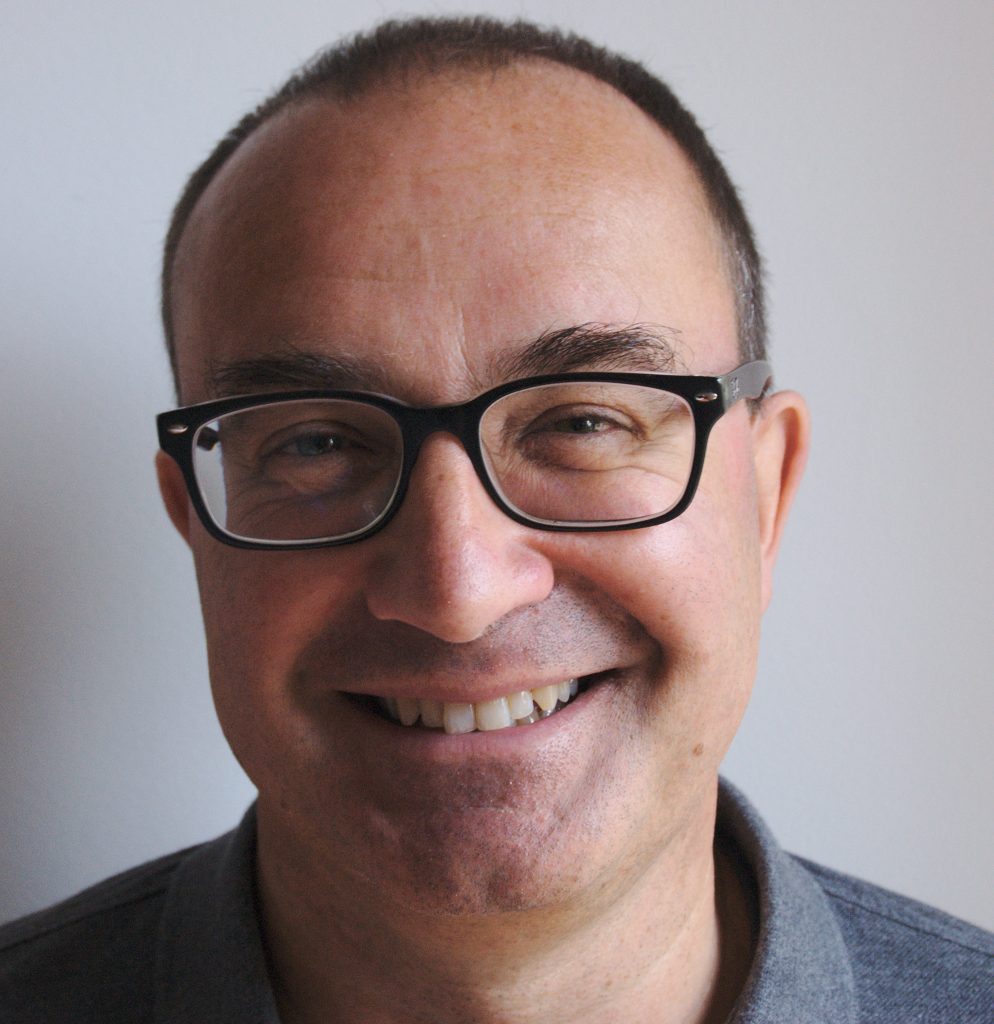
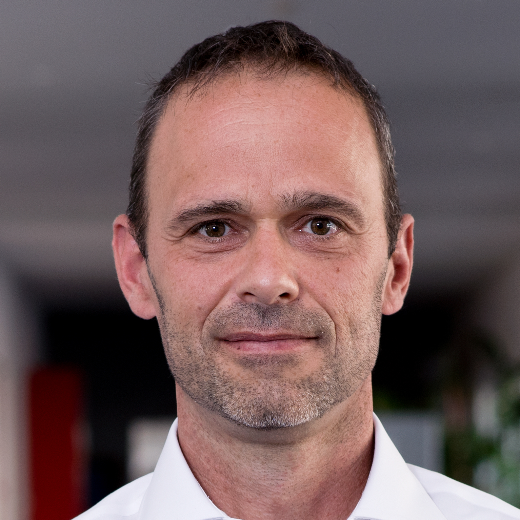
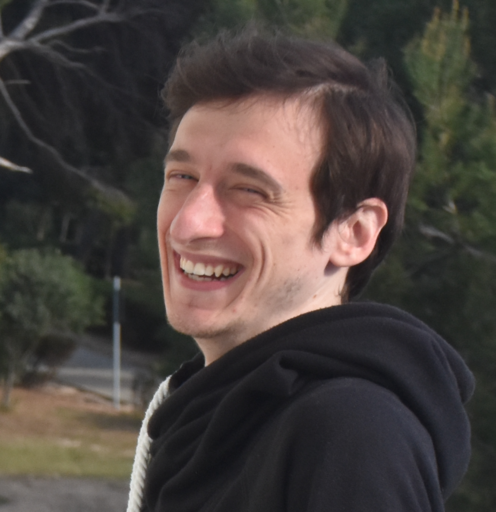
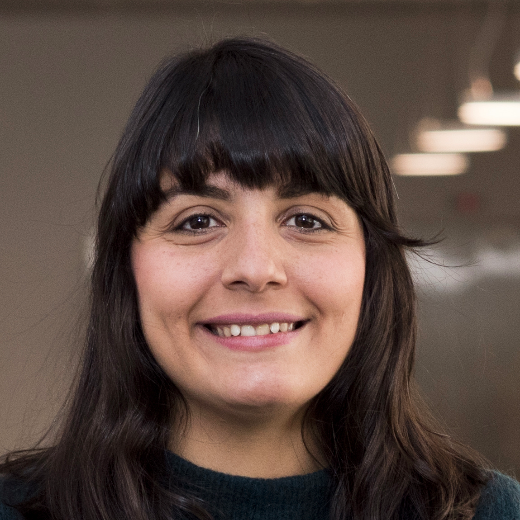
Matteo Cagnoni is a Researcher at the Department of Electronics and Telecommunications (DET) of Politecnico di Torino . His research focuses on Density Functional Theory , Quantum Chemistry , and Thermoelectric Materials for Solar Cells . He is actively involved in the European Union’s MIRACLE project , developing photonic meta-concrete for radiative cooling solutions. Research Interests: Development of cement-based radiative coolers for solar cell thermal management Computational discovery of intermediate-band solar cell materials Electronic properties of semiconductors and insulators Teaching: Electronic transport in crystalline and organic semiconductors Advanced experimental physics Scientific Contributions: Matteo has published extensively on radiative cooling, perovskite/silicon tandem solar cells, and thermoelectric materials. His work spans journals like Nature Communications , Advanced Functional Materials , and Progress in Photovoltaics , with a focus on simulation engineering , photonic devices , and energy-efficient materials . Labs & Collaborations: He works within the Microwave and Optoelectronics Group (MOG) at DET, collaborating with international institutions on EU-funded projects.
Michele Zorzi is a Professor of Telecommunications at the School of Engineering, University of Padova, Italy, where he has held a faculty position since 2003. He leads the SIGNET (Signal processing and Networking) Research Group, focusing on cutting-edge wireless networking challenges including mmWave communications and underwater networks. His extensive publication record exceeds 600 papers in top-tier journals and conferences, reflecting significant contributions to the field through both theoretical and experimental work. He received his Laurea Degree (1990) and Ph.D. (1994) in Electrical Engineering from the University of Padova. Prior academic appointments include Politecnico di Milano (1993-1996), University of California San Diego (1995-1998), and University of Ferrara (1998-2003), where he progressed from Associate Professor to full Professor. His educational trajectory demonstrates deep roots in Italian academia with international exposure. Professor Zorzi's research spans wireless communications and networking, with current emphases on mmWave networking for vehicular systems, underwater acoustic/optical communications, non-terrestrial networks, and AI-driven networking solutions. His group conducts experimental validations including at-sea trials for underwater systems and testbeds for vehicular networks. Key projects include PRATA for predictive QoS in autonomous driving and IoT-based environmental monitoring of the Venice Lagoon, demonstrating practical applications of theoretical work. Analysis of his 2022-2025 publications reveals strong trends in applying artificial intelligence to networking challenges across diverse environments. There is significant emphasis on vehicular networks (predictive QoS, teleoperated driving), underwater systems (acoustic/optical communications, AUV swarms), and satellite networks (Starlink integration, NTN security). Experimental validation in real-world scenarios like the Venice Lagoon monitoring project and underwater sea trials characterizes his applied research approach. His scientific accolades include: IEEE Fellow (2007) IEEE Communications Society Best Tutorial Paper Award (2008, 2019) Stephen O. Rice Best Paper Award (2018) Multiple best paper awards at IEEE conferences (2005-2020) As principal investigator for numerous European and US research projects plus 20+ industry-funded initiatives, Professor Zorzi has mentored over 35 PhD students and post-docs. Graduates now hold prominent positions at institutions including Stanford, UCSD, CTTC, and Huawei. His SIGNET group maintains active international collaborations and contributes to open-source networking tools via GitHub, demonstrating commitment to community engagement. The SIGNET Research Group, housed within the Department of Information Engineering, operates specialized experimental facilities for mmWave and underwater communications. Current initiatives include AI-based predictive QoS frameworks for vehicular networks, underwater optical communication systems using ultraviolet light, and large-scale IoT deployments for environmental monitoring. The group's GitHub presence indicates strong open-science practices, while recent sea trials confirm hands-on experimental capabilities beyond theoretical work.
Oswald Lanz is a tenured full professor at the Faculty of Engineering of the Free University of Bozen-Bolzano , leading the Visual Computing Lab . He holds a Ph.D. in Computer Science and a Mathematics degree from the University of Trento. Prior to his current role, he was a researcher and head of research at FBK Trento. He is an endowed professor collaborating with Covision Lab , an AI hub in Bressanone, and coordinates the board of professors for the PhD in Computer Science program since 2025. His research focuses on Computer Vision, Deep Learning, and Video Analytics , with applications in sports technology, medical imaging, and industrial automation. Key achievements include the Amazon AWS Machine Learning Research Award (2020) , ACM Multimedia Best Paper (2015) , and Best Student Paper at ICIAP (2007) . He co-organized the ELLIS-VISMAC Winter School (2025) and chaired ICIAP 2019 . His work spans novel view synthesis, action recognition, and anomaly detection, supported by patents in video tracking and detection. He teaches courses like Deep Learning and Artificial Intelligence in undergraduate and graduate programs. Recent projects such as 5VREAL integrate 5G, edge computing, and AI for sports analysis. His collaborations bridge academia and industry, exemplified by his role in Covision Lab and multidisciplinary initiatives like DSS4LCO for food supply chains. Lanz’s publications emphasize spatiotemporal modeling, neural architecture search, and hybrid machine vision systems.
Maria Rita Casali is a Full Professor at the Department of Physical, Computer and Mathematical Sciences, University of Modena and Reggio Emilia. Her research focuses on geometry, topology, and mathematical structures, particularly in relation to PL-manifolds and colored tensor models. Teaching: Courses in Geometry, Discrete Mathematics, and Linear Algebra for Engineering and Strategic Sciences degrees. Research: Investigates combinatorial invariants (regular genus, G-degree, gem-complexity) for compact 4-manifolds, linking them to quantum gravity and tensor models. Publications: Recent works include studies on trisections of 4-manifolds, classifications via colored graphs, and combinatorial properties of the G-degree. Her contributions to crystallization theory and PL-manifold representation have advanced the understanding of geometric topology and its applications in theoretical physics.
Mauro Conti is a Full Professor at the University of Padua, Italy, where he serves as Editor-in-chief of IEEE TIFS, UniPD Academic Advisor for Entrepreneurship Development, Study Program Coordinator of the MSc degree in Cybersecurity, Head of the SPRITZ Security and Privacy Research Group, and Director of the UniPD node of CINI Cybersecurity National Lab. He also maintains affiliations with TU Delft (NL) and the University of Washington (USA). Additionally, he is the CEO and co-founder of CHISITO and co-founder of DYALOGHI. His research focuses on security and privacy for wireless resource-constrained mobile devices (WSNs, RFIDs, and smartphones), computer system security, computer forensics, access control, and distributed and networked systems. Professor Conti has published extensively in top security venues including ACM CCS, IEEE S&P, NDSS, and USENIX Security, with recent work covering topics such as battery authentication, federated learning privacy, private set intersections, USB peripheral fingerprinting, and ATM PIN inference. He has received numerous prestigious awards including IEEE Fellow, Young Academy of Europe Fellow, EU Marie Curie Fellow, and DAAD Fellow. Professor Conti has advised over 100 students at various levels including PhD, MSc, and BSc, many of whom have gone on to successful careers in academia and industry. His research has been supported by multiple European Commission projects, university grants, and industry collaborations with companies like Cisco and Intel.
Daniele Ielmini is a Professor at the Department of Electronics, Information and Bioengineering at Politecnico di Milano, Italy, where he leads research in non-volatile memory technologies and neuromorphic computing. He received his Laurea (with merit) and Ph.D. in Nuclear Engineering from Politecnico di Milano in 1995 and 2000, respectively, and has held visiting positions at Intel Corporation (2006), Stanford University (2006), and the University of Illinois at Urbana-Champaign (2010). His research focuses on the modeling and characterization of non-volatile memories, including nanocrystal memory, charge trap memory, phase change memory (PCM), resistive switching memory (RRAM), and spin-transfer torque magnetic memory (STT-MRAM). He has co-edited the book 'Resistive switching – from fundamental redox-processes to device applications' and published over 300 papers with more than 10,000 citations and an H-index of 69 (Scopus, September 2023). Prof. Ielmini's recent publications demonstrate a strong trend toward in-memory computing and neuromorphic applications, with particular emphasis on closed-loop analog computing architectures, reservoir computing with 2D materials, and hardware security implementations using emerging memory technologies. His work bridges fundamental device physics with practical computing applications, especially for energy-efficient AI acceleration. Intel Outstanding Researcher Award (2013) ERC Consolidator Grant (2014) IEEE-EDS Paul Rappaport Award (2015) Fellow of the IEEE Prof. Ielmini leads multiple ERC-funded projects including SHANNON (Secure Hardware with Advanced Nonvolatile memories), NEURO2D (neuromorphic systems based on reservoir computing in MoS2), and ANIMATE (closed-loop in-memory computing). His research group includes post-doctoral researchers, PhD students, and M.Sc. students working on various aspects of emerging memory technologies and their applications. He serves as Associate Editor for IEEE Trans. Nanotechnology and Semiconductor Science and Technology (IOP), and has served in several Technical Subcommittees of international conferences including IEEE-IEDM, IEEE-IRPS, and IEEE-ISCAS. His laboratory at Politecnico di Milano is equipped with advanced semiconductor device testing equipment including probe-stations, semiconductor parameter analyzers, high-speed waveform generators, and other specialized instruments for nano-electronic research. The lab collaborates with major semiconductor companies including Micron Technology Inc. and STMicroelectronics, as well as participating in national and international research projects.
Cristina Dondi serves as a Full Professor in the Department of Modern Literature and Culture at Sapienza University of Rome's Faculty of Arts and Philosophy. Her academic work centers on the history of the book with specialized expertise in incunabula (15th-century printed books), early book trade networks, and digital humanities methodologies. She teaches the "History of the Book" course for Global Humanities students, delivering lectures in person at Rome's Faculty of Arts and Philosophy during the 2024-2025 academic year. Her research spans material evidence of early printed books, Venetian printing practices, Dante's textual circulation, and library transformations during religious secularization. She pioneers digital approaches through projects like 15cBOOKTRADE and CERL, developing visualization tools for historical book movement data and collaborative digital infrastructures. Her work bridges traditional book history with computational analysis, emphasizing how physical artifacts reveal cultural and commercial networks. Analysis of her 2021-2023 publications shows consistent integration of digital tools with historical scholarship, particularly regarding Italian incunabula circulation and MEI database applications. She frequently examines Venetian commercial practices, Dante's reception, and collaborative digital resource creation, demonstrating how visual analytics transforms understanding of pre-modern book economies. Scientific Awards: No specific awards were documented in the provided sources. Professor Dondi leads significant research initiatives including the 15cBOOKTRADE project and Consortium of European Research Libraries (CERL) collaborations, which involve multi-institutional teams developing digital ecosystems for book historical research. These projects generate scholarly publications, digital tools, and educational resources while securing substantial research funding for infrastructure development and international conferences. She actively shapes the CERL digital ecosystem and 15cBOOKTRADE project framework, fostering interdisciplinary collaboration between historians, librarians, and computer scientists. Her current work focuses on expanding Material Evidence in Incunabula (MEI) applications and creating open-access platforms for analyzing early print culture across European collections.
Luca Demetrio is an Assistant Professor at the University of Genoa, Italy, specializing in adversarial machine learning and cybersecurity. Previously, he was a Post-doctoral Researcher at the PRA Lab within the Department of Electrical and Electronic Engineering at the University of Cagliari. He holds bachelor's (2015), master's (2017), and Ph.D. (2021) degrees from the University of Genova, with his doctoral thesis focusing on formalizing evasion attacks against security detectors. His research emphasizes enhancing the robustness of machine learning models against adversarial attacks, particularly targeting malware detectors, SQL injection defenses, and Windows security systems. He leads the development of SecML Malware, a Python library for generating adversarial Windows malware, and contributes to the SecML framework. His work has been published in top-tier journals like ACM TOPS and IEEE TIFS. Key research interests include adversarial example generation, malware analysis, and cybersecurity defense mechanisms. He has explored query-efficient attacks on phishing detectors, certified adversarial robustness via randomized smoothing, and robust synthetic data-driven threat detection. His recent studies (2023–2025) address challenges in hardening machine learning models against evasion attacks, adversarial SQL injection countermeasures, and securing autonomous driving systems from adversarial reinforcement learning attacks.
Michele Ciavarella is a Full Professor at the Polytechnic University of Bari (Politecnico di Bari) in the Department of Mechanics, Mathematics & Management (DMMM). His research focuses on contact mechanics, adhesion, friction, and viscoelastic materials, with applications in mechanical design, wear analysis, and surface topography. His work includes theoretical modeling, experimental testing, and computational approaches to understanding interactions between materials under mechanical stress. He can be contacted at michele.ciavarella@poliba.it.
Paola Cristofori is an Associate Professor in the Department of Physical, Computer and Mathematical Sciences at the University of Modena and Reggio Emilia. Her research focuses on Algebraic Topology, Differential Geometry, and Manifold Theory, with contributions to PL topology, 4-manifolds, and combinatorial structures like crystallization theory. She teaches courses in Geometry, Linear Algebra, and Algebraic Topology for undergraduate and graduate programs in Mathematics, Civil Engineering, and Strategic Sciences. Her work emphasizes topological invariants, combinatorial methods in manifold classification, and applications of colored graphs. Key areas include trisections of 4-manifolds, Kirby diagrams, and G-degree theory. She collaborates extensively on projects involving geometric topology and computational topology tools. Dr. Cristofori’s teaching spans foundational topics in linear algebra, Euclidean geometry, and advanced algebraic topology, emphasizing rigorous proofs and practical applications. Her research is published in top journals and includes over 40 articles, reflecting her deep engagement with low-dimensional topology and geometric structures.
Sara Vinco is an Associate Professor at the Department of Control and Computer Engineering (DAUIN), Politecnico di Torino, Italy. She specializes in battery simulation, digital twins, and energy-efficient design automation for heterogeneous embedded systems, aligning with Industrial and Information Engineering (Area 0009) and ERC sectors including Computer Architecture and Machine Learning . Her research focuses on advancing cyber-physical systems through simulation frameworks like SystemC-AMS, enabling holistic modeling of analog, digital, and thermal domains. Key projects include data-driven digital twins for EV batteries and low-area digital circuits in industrial/medical applications, supported by commercial contracts such as C-based virtual prototyping. Her recent publications (2022-2023) emphasize machine learning for battery SOH/SOC estimation , energy monitoring in production lines , and multi-domain fault modeling . These works span journals like IEEE Transactions and conferences including DATE and ISLPED. Awarded the FFABR 2017 grant and IEEE FDL Best Paper Award 2011 , she also chairs editorial boards for IEEE Transactions on CAD and DATE Conference. She supervises PhD students Giovanni Pollo (Digital Circuits) and Khaled Alamin (EV Battery Twins), reflecting her leadership in smart systems design.
Alessia Ferrari is a fixed-term researcher in the Department of Engineering and Architecture at the University of Parma, Italy. She lectures on Hydrology within the Bachelor’s degree programme in Civil and Environmental Engineering and serves as the reference teacher for the same programme across multiple academic years (2020/2021 – 2025/2026). Research Focus Ferrari’s research integrates advanced numerical modelling with real-world flood-risk management. Key themes include: High-resolution 2-D shallow-water simulations using GPU-parallel codes. Porosity-based approaches for large-scale urban flood modelling. Levee-breach hydraulics and emergency-action planning. Calibration of hydraulic models using tools such as PEST. Integration of machine-learning techniques with physics-based flood forecasting. Publication Trends Across more than 25 peer-reviewed works (2015-2025), Ferrari has concentrated on computational hydraulics applied to extreme flood events in Northern Italy (e.g., Parma 2014, Lamone 2024). Her papers consistently advance numerical schemes (ADER, HLLEM Riemann solvers) and GPU acceleration while validating models against field data, thereby bridging theoretical development and practical flood-mitigation strategies. Contact & Office E-mail: alessia.ferrari@unipr.it Office: Science and Technology Campus – Pavilion 10, Engineering Scientific Headquarters, Parco Area delle Scienze 181/A, 43124 Parma, Italy.
Matteo Nardello is a researcher affiliated with the Department of Industrial Engineering at the University of Trento. His work focuses on embedded systems, IoT, and energy harvesting technologies for sustainable applications. Current academic affiliation: Department of Industrial Engineering, University of Trento Research interests: IoT, embedded systems, energy harvesting, machine learning, cyber-physical systems Contact: matteo.nardello@unitn.it His research integrates hardware-software co-design for batteryless IoT systems, with applications in smart agriculture, industrial monitoring, and autonomous vehicles. Recent work explores deep learning at the edge, energy-efficient sensor networks, and microbial fuel cells for self-powered devices. Key article trends highlight a focus on sustainable power solutions, wireless sensor networks, and machine learning optimization for constrained environments. He contributes to courses on embedded systems, IoT, and AI-powered industrial applications at the University of Trento.
Daniele Loiacono is an Associate Professor at Politecnico di Milano's Department of Electronics, Information, and Bioengineering (DEIB), affiliated with the Artificial Intelligence and Robotics Lab (AIRLab). His research focuses on interdisciplinary applications of Artificial Intelligence, Machine Learning, and Deep Learning in medical imaging, radiation therapy, and procedural content generation for games. He leads projects in synthetic image generation for radiotherapy quality assurance, automated treatment planning, and bias analysis in medical AI systems. Key research areas include medical image synthesis using GANs, radiation therapy optimization, and algorithmic game design. His contributions span clinical applications such as total marrow irradiation (TMI) planning and lymph-node segmentation, alongside innovations in shader generation and interactive evolutionary tools for game development. Loiacono collaborates on multi-center studies to validate AI-driven workflows in healthcare and has pioneered methods combining lean Six Sigma with machine learning for treatment process improvement. His work bridges clinical medicine and computer science, addressing challenges in radiation oncology, anatomical imaging, and procedural content automation. The AIRLab serves as a hub for his research, integrating AI advancements into real-world medical and engineering solutions.
Secil Ugur Yavuz is a Professor at the Faculty of Design and Arts, Department of Design, at Free University of Bozen-Bolzano. Her academic work spans eco-social design, research through design, and tangible human-technology interactions, with a particular focus on sustainable materials and collective making practices. She teaches courses including Design 3 for the Master in Eco-social Design and doctoral programs in Experimental Research through Design, Art and Technologies. Professor Yavuz's research explores the intersection of analog and digital through tangible human-technology interactions, with significant contributions to sustainable material systems. Her FERAL WOOL project investigates ecological and cultural dimensions of wool, while her work with biomaterials like microbial cellulose and open-source bioreactors addresses circular production systems. She employs embodied and speculative approaches to examine microplastic emissions, children's nature engagement through tools like TREESENSE, and social play with interactive toys. Her recent publications reveal a strong thematic focus on material culture, sustainability, and human-centered design across multiple scales. The research demonstrates consistent exploration of how digital and physical realms interact to create meaningful user experiences while addressing ecological challenges. Key trends include the use of embodied interaction methods, speculative design for cultural critique, and co-creative processes that bridge technological innovation with social and environmental responsibility. Yavuz leads the Design Friction Lab, which investigates the philosophical foundations of design through customizable interfaces and DIY approaches. Her work with doctoral students in Experimental Research through Design emphasizes reshaping technologies through collective making processes. The FERAL WOOL research project represents a significant current initiative exploring sustainable textile futures through both ecological and cultural lenses.