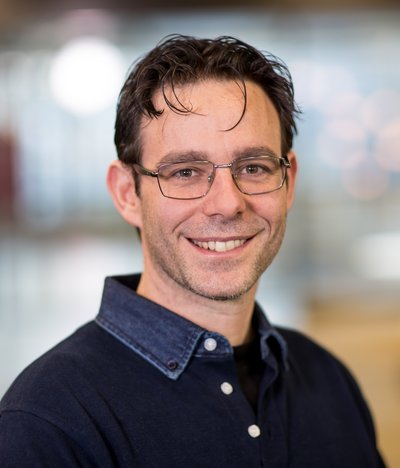
Prof. dr. ir. C.H. (Caspar) van der Wal is a Full Professor in Physics of Quantum Devices at the Faculty of Science and Engineering , University of Groningen. His research focuses on spintronic and quantum information functionalities using electron/nuclear spins in semiconductor devices, combining quantum optical and electron transport methods. PhD in Quantum Transport (Delft University of Technology, 2001) Postdoc in Quantum Optics at Harvard University (2001-2003) Scientific Director of Zernike Institute for Advanced Materials (2016-2022) Research keywords include Quantum Optics , Spintronics , Quantum Information , and Semiconductor Physics . Recent work explores 2D/3D semiconductor heterostructures , spin defects in SiC , and transition metal dichalcogenides . His scientific contributions have earned him the NWO-Vidi Grant (2005) , ERC Starting Grant (2011) , and multiple teaching awards. Publications since 2001 span topics like quantum superpositions in superconducting circuits, spin relaxation in quantum dots, and telecom-ready spin centers in silicon carbide. Grants : NWO-Vidi (2005), ERC Starting Grant (2011) Leadership : Scientific Director, Zernike Institute (2016-2022) Teaching : Teacher of the Year (2015), Education Prize (2012) Current affiliations include the Physics of Nanodevices group at the Zernike Institute for Advanced Materials. Collaborations span institutions like MIT, Harvard, and AMOLF.
Professor Jasper van Wezel is a distinguished academic in the field of Condensed Matter Theory at the University of Amsterdam's Faculty of Science, where he serves as Professor in the Institute for Theoretical Physics (ITFA) within the Institute of Physics. With a career spanning over two decades, he has progressed from Assistant Professor (2014-2016) to Associate Professor (2016-2024) and currently holds the position of Professor since 2024. His academic journey began with a PhD in theoretical condensed matter physics from Leiden University in 2007, followed by prestigious fellowships at Argonne National Laboratory and Homerton College, Cambridge. PhD in theoretical condensed matter physics (cum laude), Leiden University, 2007 Master's diploma in theoretical condensed matter physics (cum laude), Leiden University, 2003 Dutch VWO Diploma (cum laude), Dalton Scholengemeenschap, Den Haag, 1997 US High School Diploma (cum laude), Sanford High School, Maine, USA, 1998 Professor van Wezel's research focuses on several interconnected areas within Condensed Matter Theory. His work explores competing instabilities in Charge Density Wave materials, including Superconductivity and Charge Order, Combined Charge and Orbital Order, and Transition-metal dichalcogenides. He has made significant contributions to Topology in Condensed Matter, particularly examining the Role of crystal symmetries and Topology in non-Hermitian systems. A major theme in his research involves investigating the Connections between Quantum and Classical behaviour, with special emphasis on Spontaneous Symmetry Breaking both in equilibrium (The role of the Thin Spectrum) and dynamically (Spontaneous loss of Unitarity). Analysis of Professor van Wezel's recent publications reveals a strong focus on quantum phenomena in condensed matter systems, with particular attention to topological aspects, symmetry breaking, and connections to fundamental physics concepts like black hole thermodynamics. His work often bridges theoretical concepts with potential experimental realizations, as evidenced by studies on electron patterns in materials like TaS2 and theoretical frameworks for understanding quantum phase transitions. Bristol Physics Teaching Award (2014) Students' Award for Outstanding Teaching (2014) Fellow of the Higher Education Academy (2014) Aneesur Rahman Fellowship at Argonne National Laboratory (2010-2012) Junior Research Fellowship at Homerton College, Cambridge (2007-2010) Physics 'Discovery of the year' by Leiden University Physics department (2005) 'Onderwijsprijs Natuurkunde' teaching award (2004/2005) Professor van Wezel has secured numerous research grants including an ENW-M grant (2023), an ENW-Groot project with Leiden University (2021), and a prestigious VIDI personal grant from NWO (2014). He has supervised over 50 students at various levels, including PhD candidates, MSc students, and BSc students, fostering the next generation of physicists. His leadership extends to organizing conferences, serving on PhD committees, and holding administrative roles such as chair of the educational committee for the Dutch Research School in Theoretical Physics. His research group at the University of Amsterdam's Institute for Theoretical Physics maintains active collaborations with institutions worldwide, including Leiden University, University of Cambridge, University of Bristol, and research centers in France, Germany, and Poland. The group's work combines analytical theoretical approaches with computational methods to tackle fundamental questions in quantum condensed matter physics.
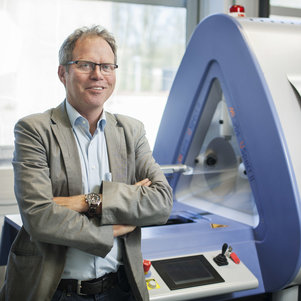
Massimo Mischi is a Full Professor at the Faculty of Electrical Engineering of the Eindhoven University of Technology (TU/e) and chairs the Signal Processing Systems (SPS) Division , the largest division at TU/e with over 250 researchers. He founded the Biomedical Diagnostics (BM/d) Lab in 2012, which now includes 180 researchers and clinical/industrial advisors, focusing on biomedical signal processing for diagnostics and monitoring.
Alberto G. Curto is an Assistant Professor at Eindhoven University of Technology, specializing in nanophotonics and semiconductor optoelectronics. He leads research on light-matter interactions at the nanoscale, focusing on atomically thin semiconductors and chiral nanophotonics applications. His work spans sensing, imaging, and spectroscopy, with contributions to directional light emission and chiral detection technologies. Education BSc in Physics, Universidad de Salamanca (2002–2007) MSc and PhD in Photonics, ICFO – The Institute of Photonic Sciences (2008–2013) Postdoctoral Fellow at Stanford University (2013–2016) Research Interests Curto’s research explores semiconductor nanophotonics for sensing and imaging, leveraging atomically thin materials and chiral optics. Key areas include: Enhanced light-matter interactions using nano-optical structures Chiral detection via dielectric resonators and metasurfaces Exciton dynamics in 2D semiconductors Publications His work emphasizes practical applications of nanophotonics, with recent studies on chiral sensing enhancement, silicon metasurfaces, and exciton manipulation. Over 47 peer-reviewed articles highlight his contributions to light confinement and directional emission. Awards ERC Starting Grant (2020) NWO START-UP Grant (2018) OSA Senior Member (2021) ICFO PhD Thesis Award (2014) Grants & Projects He leads the Zwaartekracht PSN Research Centre for Integrated Nanophotonics (2014–2025), focusing on nanowires, photonic crystals, and photonics applications. Labs & Teams His research group at TU Eindhoven develops novel nanophotonic devices and chiral sensing platforms, collaborating on projects like the ERC CHANSON grant.
Daniel Vanmaekelbergh is a Professor in the Department of Chemistry at Utrecht University, where he leads research in the Condensed Matter and Interfaces group within the Debye Institute for Nanomaterials Science. His academic career spans over two decades with continuous contributions to nanomaterials science and semiconductor physics. Professor Vanmaekelbergh's research focuses on the fundamental properties of semiconductor nanocrystals, quantum dots, and artificial electronic lattices. His work bridges theoretical and experimental approaches to investigate electron transport, quantum confinement effects, and the optical properties of nanoscale materials. He has made significant contributions to understanding the formation mechanisms of nanocrystal superlattices, the electronic structure of artificial honeycomb lattices, and the dynamics of excitons in confined systems. His research group, known as the Vanmaekelbergh Lab, employs advanced techniques including scanning tunneling spectroscopy, electron microscopy, and optical spectroscopy to probe nanoscale phenomena. Analysis of his recent publications reveals a strong emphasis on the physics of quantum-confined systems, particularly in lead chalcogenide and cadmium selenide nanocrystals. His work explores the relationship between nanocrystal structure and electronic properties, with applications in optoelectronics and quantum technologies. Recent research has focused on oriented attachment processes, artificial quantum systems with fractal geometries, and the fundamental limits of light-matter interactions in nanoscale materials. Professor Vanmaekelbergh has established a productive research program with numerous collaborations across the Netherlands and internationally. His work has been published consistently in high-impact journals including Nature Physics, Nano Letters, and ACS Nano, demonstrating the significance of his contributions to the field of nanomaterials science.
Professor Vedran Dunjko is a faculty member at the Leiden Institute of Advanced Computer Science (LIACS), Leiden University, with affiliations to the Leiden Institute of Physics (LION). He leads the Applied Quantum Algorithms group and co-founded the Quantum@LIACS initiative, focusing on the intersection of quantum computing, machine learning, and artificial intelligence. His research interests include quantum machine learning, quantum-enhanced reinforcement learning, quantum heuristics, and the application of AI to quantum computing challenges. Dunjko's work bridges theoretical foundations with experimental implementations on near-term quantum devices, exploring both quantum advantages in learning and the use of classical AI for quantum system design. The recent publications show a strong trend toward proving quantum advantages in learning tasks, optimization, and topological data analysis, with publications in Nature , Nature Communications , and NeurIPS . Key themes include quantum policy gradients, quantum TDA, and reinforcement learning for quantum circuit optimization. ERC Consolidator Grant (2024) PNAS Cozzarelli Prize (2018) Editor’s Suggestion in Physical Review Letters (2014, 2018) Featured in Physics (American Physical Society) (2014, 2018) Dunjko advises several PhD candidates and postdocs, including Rahul Bandyopadhyay, Sofiene Jerbi, and Lea Trenkwalder. He has received competitive grants, most notably the ERC Consolidator Grant in 2024. His group fosters international collaborations with institutions across Europe and industry partners. The Applied Quantum Algorithms group and the Quantum@LIACS team combine theoretical investigations with practical implementations on quantum hardware, focusing on scalable quantum algorithms and AI-driven quantum discovery.
Chigo M. Okonkwo is a Full Professor and Chair of Secured Ultra High Capacity Transmission at the Department of Electrical Engineering, Eindhoven University of Technology (TU/e). He leads the high-capacity optical transmission laboratory within the Electro-Optical Communications Group at the Institute for Photonics Integration, focusing on next-generation photonic networks. Education: PhD in Optical Signal Processing, University of Essex (2009) Appointments: Since 2014 (tenured), 2010 as Post-Doctoral Researcher Key Research Areas: Space Division Multiplexing, Quantum Secure Communications, Advanced Modulation Formats His work spans optical transmission systems, including probabilistic signal shaping , low-complexity digital signal processing , and multi-mode/multi-core fiber components . Recent publications highlight breakthroughs in Petabit/s transmission and quantum cryptography use cases . Scientific recognition includes: ACP 2018 Best Paper Award ECOC 2018 Student Paper Award Optica 2022 Student Paper Awards Corning Outstanding Student Paper Competition Finalist 2025 He actively contributes to standardization efforts as a Technical Program Committee member for ECOC and serves as Senior Member of IEEE. Current projects include FIQCS (Fieldlab Quantum Cryptography Solutions) and NGF-ECO1 (Netherlands Quantum Flagship), advancing quantum-secure protocols and petabit/s capacity scaling.
Matthias Schlottbom is an Associate Professor specializing in Mathematics of Computational Science, with a focus on numerical methods and their applications in physics, biology, and engineering. His research integrates advanced computational techniques with interdisciplinary problems, including radiative transfer, photonic crystals, and chemotaxis modeling. Research Interests: Schlottbom’s work spans numerical analysis, finite element methods, and machine learning. He develops high-order discretization schemes, iterative solvers for anisotropic transport, and mathematical frameworks for biological network formation. Publications: Recent articles highlight his contributions to accelerating radiative transfer simulations, extending component mode synthesis for Helmholtz equations, and analyzing diffusion limits in kinetic models. His work often bridges computational mathematics with practical applications in photonics and multiscale systems. Collaborations: He actively collaborates on datasets for optical simulations, radiative transfer algorithms, and photonic crystal modeling, contributing to open-access repositories like 4TU.Centre and Zenodo. Activities: Schlottbom has organized workshops such as the Kinetic Theory Workshop in the Netherlands and delivered keynotes on residual minimization and data-driven methods for transport equations. Scientific Awards: No specific awards or fellowships are mentioned in the provided materials. Advising & Grants: Details about students, advising roles, or grant funding are not included in the available data.
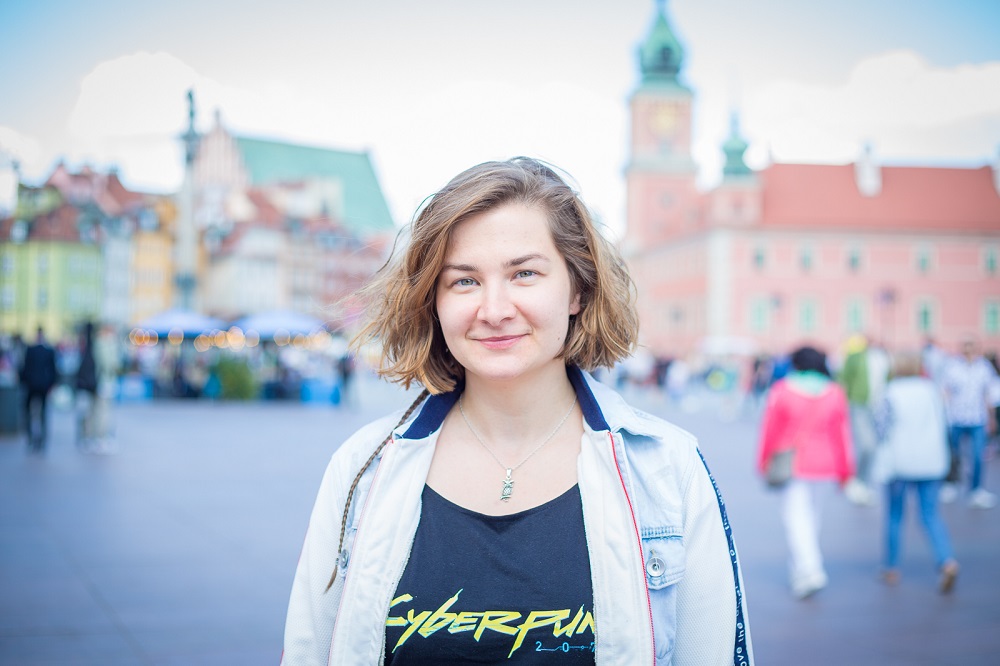
Anna Dawid-Lekowska is an Assistant Professor at the Leiden Institute of Advanced Computer Science (LIACS) and affiliated with the Leiden Institute of Physics (LION) at Leiden University, Netherlands. She leads a research group within the aQa group, focusing on the intersection of machine learning and quantum physics. Previously, she was a Research Fellow at the Center for Computational Quantum Physics, Flatiron Institute, New York. PhD in Physics and Photonics (joint, cotutelle), University of Warsaw & ICFO, Spain MSc in Quantum Chemistry, University of Warsaw BSc in Biotechnology, University of Warsaw Anna's research centers on interpretable machine learning for scientific discovery, particularly in quantum systems. She investigates how overparametrized models generalize, the role of loss landscape flatness, and double descent phenomena. Her work bridges deep learning with quantum simulations, aiming to detect quantum phase transitions and extract physical insights from trained models. She also explores ultracold molecules and novel quantum phases using simulation platforms. Her recent publications demonstrate a strong trend in applying machine learning to automate and interpret quantum experiments, such as detecting laser cooling schemes and understanding neural network initialization. The work emphasizes interpretability, aiming to make AI a transparent scientific tool rather than a black box. Anna has received significant recognition, including: 2022 FNP START laureate Participant in the 2024 Lindau Nobel Laureate Meeting She is actively mentoring and expanding her group, currently recruiting PhD students and postdoctoral researchers. Her work is supported by institutional affiliations with leading research centers and collaborations across Europe and the US. Anna also engages in science communication and education, having lectured at the Nordita Winter School on Machine Learning and Physics. She is involved in the aQa research group, which focuses on quantum algorithms and AI, fostering interdisciplinary collaboration between computer science and physics. Her lab integrates theoretical modeling, algorithm development, and applications to quantum experiments.
Jan C.M. van Hest is a Full Professor at Eindhoven University of Technology (TU/e), holding positions in the Department of Chemical Engineering and Chemistry and the Institute for Complex Molecular Systems (ICMS) . He leads research at the intersection of polymer chemistry and biomedicine, focusing on bio-inspired materials, nanomedicine, and artificial cells. His work includes developing synthetic vaccines, drug delivery systems, and adaptive nano/microcompartments mimicking cellular functions. Academic Background : Ph.D. in macro-organic chemistry from TU/e (1996), postdoc at the University of Massachusetts (protein engineering), and industry roles at DSM (1997–2000). Since 2016, he has held the Bio-organic Chemistry chair at TU/e, supervising over 30 PhD students and co-founding startups like Encapson and Noviosense. Research Highlights : His research spans nanomedicine (e.g., polymersomes for cancer treatment) and artificial cells (e.g., synthetic organelles). Recent work includes therapeutic nanovaccines and self-propelled platinum-loaded stomatocytes. His publications span Nature Nanotechnology , Nature Chemistry , and Angewandte Chemie . Awards & Collaborations : Recipient of the ERC Advanced Grant (2015) and NWO Gravitation Grant (2013). Partnerships with GSK, Zoetis, and industry initiatives like the TKI-LSH EUREKA project. Engages in education through courses like Biochemistry and Introduction to Chemistry & Chemical Technology. Labs & Teams : Core member of ICMS, leading interdisciplinary projects in functional molecular systems. Active in training the next generation of researchers through postgraduate programs like ICMS PTN.
Florian Bociort is an Assistant Professor at the Optics Research Group , Delft University of Technology (Faculty of Applied Sciences). He holds a PhD in Physics from TU Berlin (1994) and has dedicated his career to optical system design, gradient-index optics, and computational methods in lens design. Research Interests Bociort’s research focuses on design landscapes of optical systems , where he pioneered the use of saddle points to escape local minima in optimization. His work spans Gradient-index optics (conversion of homogeneous lenses to GRIN media) Artificial intelligence in lens design Optics education (simulation-driven learning) Academic Contributions He has supervised multiple PhD theses on topics like: A. M. Boyd (2025): Generalized gradient-index lens optimization Z. Hou (2023): Systematic lens design searches Y. Shao (2021): Imaging coherence and optimization M. Strauch (2020): Tunable optics M. Mout (2019): Ray-based diffraction simulation Recent Publications His 2025-2018 publications show a trajectory from classical optical design to modern computational approaches, including simulation-driven education, gradient-index conversions, and high-NA diffraction modeling. The 2024 paraxial reconstruction and 2025 simulation-education articles exemplify this evolution. Patents & Expertise He co-invented two ASML-related patents in lithographic design and served as expert witness in the 2018 ASML-Nikon patent lawsuit. His personal webpage details his networks of local minima and fractal basins in optimization.
Kevin Williams is Full Professor and Chair of Photonic Integration at Eindhoven University of Technology. His research focuses on scaling photonic circuits for energy-efficient optical components in communications and sensing. Key research themes include: 1) Generic integration methodologies, 2) Heterogeneous integration of photonic components with silicon electronics, and 3) Integrated nano-photonics using InP membranes. His work enables high-speed optical transceivers and novel computing paradigms. Honors include the 2010 NWO Vici Award for ultrafast optical processor chip research and the Royal Society University Fellowship. Current projects focus on InP-based photonic integration platforms for applications in AI acceleration and optical communications.
Prof. Freek J. Beekman is a Full Professor and head of the Biomedical Imaging section within the Department of Radiation Science & Technology at Delft University of Technology (TU Delft), Faculty of Applied Sciences. He is a leading figure in biomedical imaging, with extensive contributions to nuclear imaging technologies, including SPECT, PET, and CT. His research spans detector development, image reconstruction algorithms, hybrid photonic imaging, and the application of artificial intelligence in medical imaging. Research Interests: His work focuses on advancing imaging modalities through innovations in hardware (e.g., multi-pinhole collimators) and software (e.g., deep learning for attenuation correction). He has pioneered ultra-high-resolution imaging systems, particularly for preclinical and clinical SPECT, and has developed integrated platforms like U-SPECT-BioFluo. His recent research explores glymphatic delivery of nanoparticles, infection imaging, and AI-driven reconstruction techniques, reflecting a strong translational focus. Publication Trends: His most recent publications (2021–2023) emphasize deep learning in SPECT, multi-isotope imaging, high-resolution ex vivo systems, and applications in neuroimaging and oncology. The articles demonstrate a consistent focus on improving image quality, resolution, and clinical utility through physics-informed and AI-enhanced methods. Scientific Awards: NWO Physics Valorization Prize Innovation of the Year Award by the World Molecular Imaging Society (2015, 2018) Edward Hoffman Memorial Award (2017) Bruce Hasegawa Memorial Award (2021) FOM Valorization Award (2013) TU Delft Entrepreneurial Award (2010) Advising and Grants: While specific student names are not listed, his leadership in large collaborative projects and supervision of numerous publications suggests active mentoring. He has secured significant funding through national and international grants, evidenced by his invention of over 20 patent families and successful technology transfer. His founding and leadership of MILabs BV (sold to Rigaku) highlights his impact on commercialization and industry-academia collaboration. Labs and Teams: He leads the Biomedical Imaging research group at TU Delft, which develops cutting-edge imaging systems such as VECTor (SPECT-PET) and EXIRAD-HE. His teams have produced technologies used globally in academic and pharmaceutical research, contributing to tracer development and therapeutic innovation.
Nicola Calabretta is a Full Professor in Electro-Optical Communication Systems and Senior Research Fellow at Eindhoven University of Technology (TU/e). His work focuses on smart optical networks, high-speed electronics, FPGA implementations for scheduling algorithms, and photonic integrated circuits. He holds a PhD from TU/e (2004) and previously conducted research at DTU Fotonik and the Sant'Anna School of Advanced Studies. His expertise spans optical signal processing, multi-level modulation formats, and applications in data center and metro networks. Key research areas include optical switching architectures (e.g., SOA-based switches), WDM systems, and low-latency interconnect networks. He has led projects like ADAPTOR (resource optimization), SmartTWO (future telecom technologies), and 5G-MOBIX (cross-border mobility). His courses include 'Optical Fibre Communication Technology' and 'Optical Interconnection Networks.' Collaborations involve institutions globally, with recent work emphasizing photonic integration for neural networks, ultra-fast switching, and edge computing. His contributions align with UN SDGs through sustainable telecom infrastructure advancements.
Oluwafemi Stephen Ojambati serves as Assistant Professor at the MESA+ Institute for Nanotechnology, University of Twente. His research bridges quantum optics and nanophotonics with strong emphasis on light-matter interactions in complex nanoscale systems. His research focuses on nanophotonic systems where light interacts with matter at sub-wavelength scales. Key interests include plasmonic nanocavities, quantum emitter control, and energy transport in disordered media. The fingerprint analysis reveals primary expertise in Media Physics (100%), Flux Density Physics (78%), and Light Physics (68%), with significant contributions to nanophotonics, diffusivity physics, and electromagnetic absorption phenomena. Recent publications demonstrate leadership in manipulating light at nanoscale dimensions, particularly through plasmonic structures and quantum emitters. His work shows consistent focus on Quantum optical effects in nanocavities Nanoscale energy conversion mechanisms Single-object detection below 15 nm Molecular transitions in confined electromagnetic fields Scientific Awards: 3rd Poster Prize at Complex Nanophotonic Science Camp (2015) Ojambati maintains active research collaborations across international borders as evidenced by the network visualization. His speaking engagements demonstrate thought leadership in controlling light in complex nanophotonic systems and efficient energy conversion . The MESA+ Institute provides the infrastructure for his experimental work in nanofabrication and optical characterization. His laboratory work centers on adaptive quantum optics within the MESA+ ecosystem, utilizing advanced nanofabrication techniques to create plasmonic nanocavities and photonic band gap crystals for probing fundamental light-matter interactions.