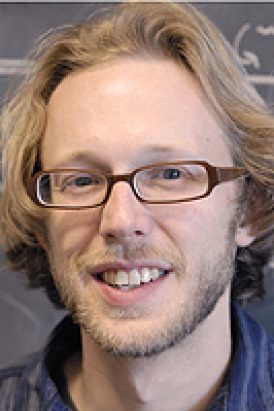
Aaron Pierce is a Professor in the Department of Physics at the University of Michigan . He specializes in theoretical extensions of the Standard Model of particle physics, with a focus on dark matter composition, gravity's weakness relative to other forces, and matter-antimatter asymmetry in the universe. Ph.D., University of California-Berkeley (2002) M.S., University of California-Berkeley (2000) Part III, Trinity College, Cambridge (1998) B.A., Rice University (1998) His research explores models involving new forces, extra dimensions, and supersymmetry to connect theoretical physics with experimental signatures at colliders. He served as director of the Leinweber Center for Theoretical Physics from 2013-2020 and investigates gravitational wave implications of axion rotations. Henry Russel Award Simons Foundation Fellowship Fellow of the American Physical Society His recent publications focus on dark photon detection, split supersymmetry, and lepto-axiogenesis. He has contributed to experimental frameworks for dark matter detection and collider phenomenology of vectorlike leptons.
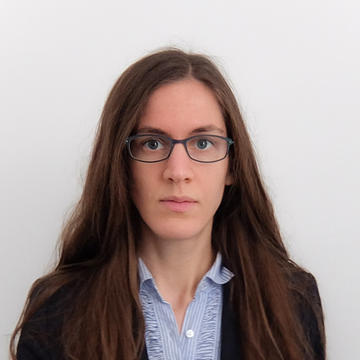
Dr. Claudia Tait is a Royal Society University Research Fellow at the Chemistry Department of the University of Oxford . Her research focuses on advancing Electron Spin Resonance (ESR) spectroscopy to investigate fundamental photophysical processes in photovoltaic devices, particularly spin-dependent phenomena in organic solar cells and emerging solar technologies. Education: Summa cum laude graduate from the University of Padova; DPhil from the University of Oxford under Prof. Christiane R. Timmel. Prior affiliations: Postdoctoral researcher at the University of Washington (2015-2017) and Freie Universität Berlin (2017-2020) with a Marie Curie Fellowship. Her work leverages pulse ESR and pEDMR to study charge-transfer states, triplet states, and spin interactions in photovoltaic materials. She has pioneered shaped microwave pulse techniques to enhance resolution and selectivity in ESR measurements. Current research includes CO2 photoreduction catalysts, organic semiconductor doping, and energy transfer mechanisms in bio-inspired systems. Recent publications highlight her expertise in spin dynamics , charge transport , and supramolecular systems . Notable themes include photovoltaic efficiency optimization , quantum coherence in spin systems , and innovative measurement methodologies . Scientific Awards: Bruker Thesis Prize (Royal Society of Chemistry), John Weil Young Investigator Award (International ESR Society), Marie Curie Individual Fellowship. Dr. Tait leads the Tait Group at Oxford, focusing on interdisciplinary research bridging chemistry , physics , and materials science to address challenges in sustainable energy conversion.
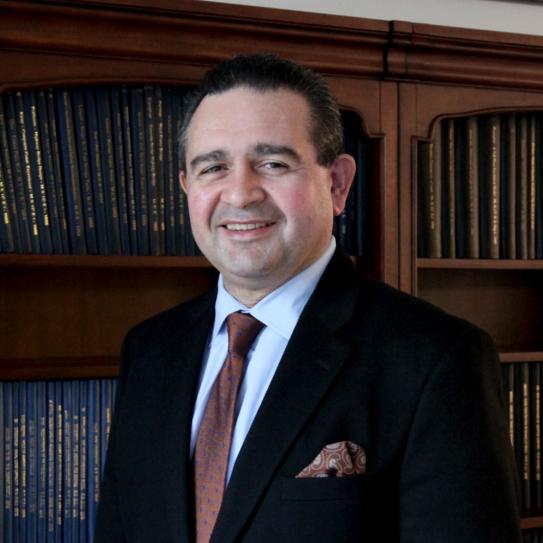
Professor David Lidzey is a faculty member at the University of Sheffield's School of Mathematical and Physical Sciences, where he holds the position of Professor of Physics. His research focuses on the development and characterization of advanced photovoltaic materials and optoelectronic devices, including organic and hybrid photovoltaics, semiconductor materials, and exciton-polariton systems. His work spans from fundamental material science to applied device engineering, with a strong emphasis on solution-processed technologies and scalable manufacturing methods. Research interests include: development of high-efficiency organic and perovskite solar cells, investigation of light-matter interactions in microcavities, and structural analysis of thin-film semiconductor materials. He has contributed to advancements in spray-coating techniques, material stability, and device architecture optimization. His studies often integrate experimental and theoretical approaches to understand charge transport, exciton dynamics, and interface engineering. Notable contributions include the exploration of DIO-driven vertical segregation in organic photovoltaics, the design of flexible and scalable perovskite solar modules, and the study of ultrafast energy transfer mechanisms in strongly coupled organic microcavities. His research has implications for sustainable energy technologies and next-generation optoelectronic devices.
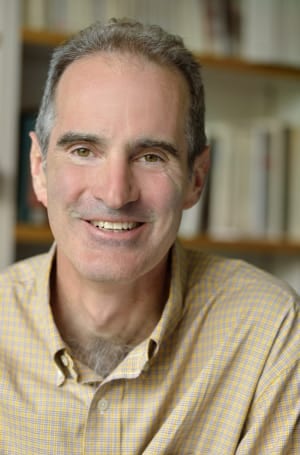
Prof. Dante Kennes is a University Professor at RWTH Aachen University, leading the Chair of Theoretical Physics of Condensed Matter. His research focuses on quantum materials, strongly correlated systems, and cavity quantum electrodynamics. Key areas include superconductivity in twisted bilayer systems, moiré heterostructures, and non-equilibrium phenomena in low-dimensional materials. He explores theoretical frameworks such as functional renormalization group methods and topological phase transitions. Recent work emphasizes cavity-coupled systems, light-induced superconductivity, and the interplay between electronic correlations and topological properties. His publications address topics like van Hove singularity heterogeneity in graphene, nematicity in kagome metals, and experimental signatures of moiré-engineered phases. Kennes' research bridges theoretical predictions with experimental observability through advanced modeling techniques. His contributions span advanced computational methods for many-body systems and proposals for novel quantum materials characterization. Despite his prolific output, no formal student advisees or awards are explicitly listed in the provided materials.
Magued Iskander is the Department Chair and Professor in the Civil and Urban Engineering Department at the NYU Tandon School of Engineering. With over 25 years of expertise, he focuses on geotechnical engineering, including foundation design, soil-structure interaction, and sustainable materials. His research emphasizes transparent soil modeling, high-strain rate soil behavior, and offshore geotechnology. He leads projects on machine learning applications for geotechnical analysis, pile capacity prediction, and UXO (unexploded ordnance) penetration studies. Research Interests: Transparent soil modeling for soil-structure interaction Sustainable piling using recycled polymers Geotechnical instrumentation and monitoring Offshore/marine foundation design High-strain rate soil mechanics Penetrating dynamics in granular media Publications highlight advancements in machine learning for geotechnical data analysis, projectile penetration mechanics, and tunneling-induced ground settlements. His work bridges experimental, computational, and AI-driven approaches to solve complex geotechnical challenges. He advises NYU Tandon’s Concrete Canoe and Steel Bridge teams, fostering student engagement in competitive engineering projects.
Bhupesh Kumar is a Research Fellow at the School of Physics and Astronomy, University of St Andrews. His work focuses on advancing optical and photonic technologies through disorder engineering, particularly in random lasers and spectrometers. He has contributed to studies on solid-state polymer lasers, temperature-controlled spectral tuning, and multifractal scattering media applications. His research bridges fundamental physics with practical engineering solutions. His research interests include developing high-throughput optical devices, exploring localized modes in disordered systems, and applying light-based techniques to biomaterials like silk. These interests span Optics, Photonics, Lasers, and Materials Science, with a strong emphasis on interdisciplinary applications. Recent articles highlight advancements in tunable lasers, disorder-enhanced spectrometers, and the mechanics of silk. Collaborations with international researchers have been active in the last five years, though specific details are not provided here. No scientific awards are mentioned in the provided texts. His advising and grant activities are not detailed, but his research outputs include datasets related to speckle spectrometers. He is affiliated with the University of St Andrews’ School of Physics and Astronomy, contributing to both experimental and theoretical research.
Robert Leheny is a **Professor and Henry A. Rowland Chair of Physics and Astronomy** at Johns Hopkins University, affiliated with the Krieger School of Arts & Sciences. He earned his PhD from the University of Chicago and focuses on experimental condensed matter physics, with emphasis on disordered and soft materials. His research explores how disorder and non-equilibrium conditions influence material properties, particularly in colloidal gels, liquid crystals, and glass-forming systems. His work integrates advanced techniques like X-ray photon correlation spectroscopy (XPCS) and rheology to study microscopic dynamics and macroscopic behavior. Key themes include structural memory in soft glasses, yielding transitions in amorphous materials, and topological defects in liquid crystals. Recent studies investigate interfacial remodeling by bacteria and nanostructure dynamics in responsive materials. Leheny has published extensively on rheological memory effects, colloidal gelation, and active nematic systems. His research bridges fundamental physics with engineering applications, such as designing tunable liquid crystal architectures. Despite no explicitly listed awards, his contributions are reflected in high-impact publications and leadership in experimental condensed matter physics.
David A. Neufeld is a Professor in the William H. Miller III Department of Physics & Astronomy at Johns Hopkins University (JHU), part of the Krieger School of Arts & Sciences. He holds a PhD from Harvard University and specializes in theoretical astrophysics, molecular astrophysics, and interstellar medium (ISM) studies. His research utilizes advanced observatories like the Herschel Space Observatory and SOFIA (Stratospheric Observatory for Infrared Astronomy), focusing on molecular line emission, cosmic ray ionization rates, and hydride molecules in diffuse clouds. Key projects include leading the HyGAL SOFIA Legacy Program to study hydrides in the Galactic ISM and participating in Herschel’s HEXOS, PRISMAS, and WISH Guaranteed Time programs. Neufeld has developed experimental methods to constrain sexaquark dark matter and contributed to the discovery of the helium hydride ion (HeH+) in planetary nebulae. He is also involved in GUSTO, a terahertz spectroscopic mission mapping [CII] and [NII] emissions. His research integrates observational astronomy with theoretical models, exploring topics like protostellar outflows, water ice chemistry, and shock dynamics. He has published extensively on infrared/submillimeter spectroscopy, molecular ion abundances, and the role of cosmic rays in interstellar chemistry. Neufeld’s work bridges laboratory experiments (e.g., dissociative recombination studies) with astrophysical observations, advancing understanding of the ISM and star formation processes.
Professor Jianzhen Ou is a faculty member at the School of Engineering, RMIT University, Australia. His research focuses on advanced materials, nanotechnology, and their applications in electronics, environmental monitoring, and biomedical engineering. Key areas include 2D materials for gas sensors, optoelectronic devices, and sustainable waste-to-materials conversion. Research interests encompass materials engineering, nanotechnology, and interdisciplinary fields like condensed matter physics. His work bridges fundamental material science with practical applications in sensors, energy systems, and environmental solutions. Recent studies highlight innovations in gas sensor arrays, neuromorphic devices, and sustainable nanomaterial synthesis. He actively supervises research projects on topics like upcycling waste into high-value materials and optoelectronic sensor development. Collaborations involve cross-disciplinary teams and industry partnerships to advance technological solutions.
Yinming Shao is an Assistant Professor of Physics at the Department of Physics, Pennsylvania State University, within the Eberly College of Science. His research focuses on experimental condensed matter physics, particularly studying topological and correlated materials, quasiparticle dynamics in layered quantum materials, and advanced optical techniques like nano-imaging and spectroscopy. He holds a Ph.D. from Columbia University (2020) and prior studies at UC San Diego and Zhejiang University. Research interests include understanding magnetically confined excitons in antiferromagnets, hyperbolic polaritons in van der Waals magnets, and plasmon behavior in nodal metals. His work bridges quantum materials with cutting-edge optical and nanoscale probing methods. Recent publications highlight discoveries in semi-Dirac fermions, nonlinear electrodynamics in Weyl metals, and hyperbolic anisotropy effects. Key contributions include studies on infrared plasmon propagation in bad metals and the interplay between electronic correlations and topological phases. His experimental techniques emphasize nano-optical imaging and ultrafast spectroscopy to uncover novel quantum phenomena in 2D and layered systems.
Fadil Santosa is a Professor and the Yu Wu and Chaomei Chen Department Head of Applied Mathematics and Statistics at Johns Hopkins University (JHU). He is also affiliated with the Ralph S. O’Conner Sustainable Energy Institute, SNF Agora Institute, and the Data Science and AI Institute. His research focuses on inverse problems, wave phenomena, photonics, optimal design, and mathematical modeling. He holds a BS in Mechanical Engineering from the University of New Mexico (1976) and MS/PhD in Theoretical and Applied Mechanics from the University of Illinois at Urbana (1977/1980). Recent research projects include optimizing experiment design for inverse problems, developing models for direct air capture of CO 2 , and studying plasmons in graphene. He has pioneered work on bar code decoding algorithms and multifocal optical device design, with two patented innovations. Santosa has been honored with the 2023 SIAM Distinguished Service Award and the 2023 JHU Diversity Award. His work bridges academia and industry through initiatives like the Math-to-Industry Boot Camp. He actively mentors students via community-based projects, such as applying applied math to optimize Baltimore’s food distribution systems. Current technical interests span photonic band gaps, EIT imaging, and machine learning applications in biological systems. Key Affiliations: Applied Mathematics & Statistics Department Head, Sustainable Energy Institute Researcher Patents: Multifocal optical device design, Symbol-based bar code decoding Labs/Teams: Leads multidisciplinary teams in inverse problem research and sustainability modeling
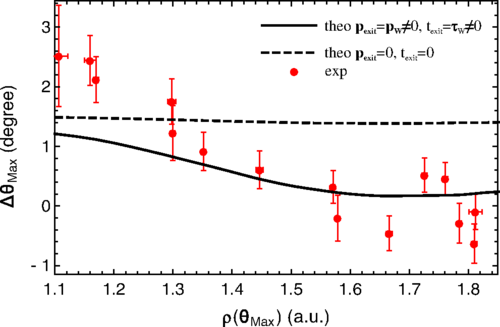
Karen Z. Hatsagortsyan is a Group Leader at the Max Planck Institute for Nuclear Physics in Heidelberg, Germany. Her research focuses on the interaction of ultrastrong laser fields with matter, spanning relativistic and nonperturbative quantum electrodynamics (QED), strong-field ionization dynamics, and plasma diagnostics using polarization properties of ejected particles. She collaborates with experimental facilities like DESY , SLAC , and the European Extreme-light-infrastructure (ELI) , and has contributed to proposals such as the LUXE experiment and FACET-II for testing nonlinear QED effects. Research Interests : Relativistic ionization and sub-barrier electron dynamics Spin polarization effects in high-energy laser interactions Gamma-ray and x-ray source development via nonlinear QED Plasma diagnostics through polarization measurements Recent Publications demonstrate advancements in ultrashort time delay measurements ( Phys. Rev. Lett. 2022 ), polarization transfer in positron beam generation ( Phys. Rev. Lett. 2019 ), and attosecond-resolved plasma field analysis ( Phys. Rev. Res. 2022 ). Her work bridges theoretical predictions with experimental validation, particularly in attoclock protocols, Coulomb focusing, and laser-based collider concepts.
Dr. Changxu Liu is a Lecturer in the Department of Electronic Engineering at the University of Exeter, United Kingdom. He is affiliated with the Nano Engineering Science and Technology (NEST) group and the Centre for Metamaterial Research and Innovation (CMRI). Prior to joining Exeter, he served as an Assistant Professor at Northumbria University, UK, and held prestigious research fellowships at Ludwig Maximilian University of Munich (Humboldt and LMU Incoming Fellow) and the University of Birmingham. Education: BSc in Electrical Engineering, Tongji University, China MSc in Electrical Engineering, University of Rochester, USA PhD in Electrical Engineering, King Abdullah University of Science and Technology, Saudi Arabia Changxu Liu's research is centered on nanophotonics, plasmonics, metamaterials, and nanotechnology , with a particular focus on light-matter interactions in disordered and hybrid systems. His work explores topological transitions, hot electron engineering, and energy applications in photocatalysis and electrocatalysis. He employs both theoretical and experimental approaches to design novel nanostructures with unique optical responses. His recent publications reveal a strong trend in leveraging disorder for functional optical materials, enabling applications in structural color, light extraction, and energy conversion. He frequently publishes in high-impact journals such as Nature Nanotechnology , Nature Photonics , and Physical Review Letters , often as corresponding author. His research has attracted international media attention and recognition, including a mention in the Guinness World Record. Scientific Awards and Recognition: Humboldt Research Fellow LMU Incoming Research Fellow Research featured in Guinness World Record Media coverage in The Wall Street Journal, Independent, Daily Mail, and Yahoo Dr. Liu has been actively involved in numerous high-impact collaborative research projects, frequently co-authoring with leading scientists such as Stefan A. Maier, S. Zhang, and Min Liu. While no formal grants are listed, his publication record in premier journals suggests sustained funding and research support. He is likely supervising PhD and postdoctoral researchers, given his role as a corresponding author on multiple studies. He is a key member of the NEST and CMRI research groups at Exeter, which focus on cutting-edge nanoscale engineering and metamaterial innovation. These teams work on both fundamental and applied aspects of light manipulation at the nanoscale, positioning Dr. Liu at the forefront of next-generation photonic technologies.
Martin Presselt is a researcher at the Leibniz Institute of Photonic Technology (IPHT) , focusing on Photonics and Quantum Detection . He leads the working group on Organic Thin Films and Interfaces, exploring applications in energy transfer, sensing, and material stability. Research Themes : Interfacial engineering, electrochemical sensors, solar cell longevity, and supramolecular design. Notable Collaborations : Sarah Jasmin Finkelmeyer, Benjamin Dietzek-Ivanšić, Ksenija Glusac, Sylvestre Bonnet. His recent work includes defect-free anisotropic membranes via plasticizers (Journal of Colloid and Interface Science, 2025), optical property tuning through intermolecular interactions (Chemistry-A European Journal, 2025), and calcium-sensitive TTA upconversion systems (Journal of Physical Chemistry Letters, 2024). He investigates graphene nanoribbon electrochemistry (JACS, 2024) and amphiphilic additives for solar cells (ACS Applied Electronic Materials, 2024). He contributes to cross-disciplinary perspectives on weak interactions (PCCP, 2023) and develops bifacial dye membranes for photocatalysis (Advanced Materials, 2023). His studies combine experimental and computational approaches, addressing challenges in material longevity and functional design. Contact : martin.presselt@leibniz-ipht.de
Bertrand Donnio serves as a Senior Researcher in the Department of Organic Materials (DMO) at IPCMS (Institut de Physique et Chimie des Matériaux de Strasbourg), affiliated with the University of Strasbourg. His research career spans over three decades, beginning with doctoral studies at the University of Sheffield and establishing his expertise through a habilitation at the University of Strasbourg in 2009. His research focuses on the molecular design, synthesis, and characterization of advanced organic materials, particularly discotic liquid crystals and self-assembling molecular architectures. Key areas include liquid crystalline metallomesogens, dendrimers, hybrid organic-inorganic systems, and functional nanomaterials for optoelectronic applications. His work bridges fundamental molecular chemistry with practical applications in organic electronics, photonics, and nanotechnology. Analysis of his 15 most recent publications (2023-2025) reveals a consistent emphasis on triphenylene-based discotic mesogens, fluorinated liquid crystals, and star-shaped architectures. These studies demonstrate sophisticated molecular engineering to control self-assembly behavior, optical properties, and charge transport characteristics. Current research trends highlight innovations in stimuli-responsive materials, dual-state emitters, and metal-organic complexes with enhanced electronic properties. Dr. Donnio actively collaborates with international research groups across Europe, evidenced by co-authorship with scientists from France, Germany, UK, Switzerland, Romania, China, and other countries. His work frequently appears in high-impact journals including Journal of Materials Chemistry C, Chemistry of Materials, and ACS Applied Materials & Interfaces. His laboratory at IPCMS focuses on synthesizing novel organic materials with tailored mesomorphic behavior and optoelectronic properties. Current projects involve developing advanced discotic liquid crystals for applications in organic photovoltaics, light-emitting devices, and molecular electronics, with particular attention to structure-property relationships in columnar mesophases.