Dr. Ruzan Sokhoyan is a Nanophotonics Research Scientist specializing in plasmonics and active metasurfaces. Her work focuses on advancing optical imaging, communication, and computation through tunable photonic structures. Core research in metasurface design for beam steering and polarization control Collaborative contributions with Harry A. Atwater and other leading researchers Publications in high-impact journals like ACS Nano and Advanced Optical Materials Her research explores electro-optic modulation , high-power laser beam manipulation , and dynamic photonic devices , with applications in optical communication and imaging. Recent work emphasizes inverse design approaches and liquid crystal-based tunable metasurfaces , reflecting trends toward reconfigurable and multifunctional photonic systems.
Gunnar Kusch is a Senior Research Associate at the Department of Materials Science & Metallurgy, University of Cambridge. His research focuses on defects in semiconductors, porous AlGaN materials, and advanced characterization techniques like cathodoluminescence (CL) and atom probe tomography (APT). He holds a PhD from the University of Strathclyde and leads projects on UV-B LED optimization, nanoscale defect behavior analysis, and semiconductor device design. His work bridges materials synthesis, characterization, and device performance, with applications in energy-efficient lighting and solar cell technology. Key research areas include: Defect engineering in III-nitride semiconductors Porous AlGaN templates for high-efficiency UV emitters Correlative microscopy techniques (CL, EBSD, APT) Composition-structure-property relationships in photovoltaic materials Notable contributions include developing CL-based methods for nanoscale defect analysis and demonstrating improved Cu(In,Ga)S₂ solar cell efficiencies through compositional engineering. His laboratory focuses on translating microscopic insights into macroscopic device improvements.
Charles A. Bouman is the Showalter Professor of Electrical and Computer Engineering and Biomedical Engineering at Purdue University, with a courtesy appointment in Mathematics. He is a leading researcher in computational imaging, integrating statistical signal processing, physics, and computation for applications in healthcare, scientific, and industrial imaging. Education: B.S.E.E., University of Pennsylvania, 1981 M.S., University of California at Berkeley, 1982 Ph.D. in Electrical Engineering, Princeton University, 1989 His research focuses on computational imaging , including statistical image models, multiscale techniques, tomographic reconstruction, and fast algorithms. Key areas include Model-Based Iterative Reconstruction (MBIR), Plug-and-Play priors, document processing, and multiscale segmentation. His work has led to foundational contributions in total variation regularization and sparse-view reconstruction. The recent publications highlight a strong trend in integrating machine learning with physical models for image reconstruction, particularly through Plug-and-Play methods. His work spans optical tomography, halftoning, image scaling, and document compression, demonstrating consistent innovation in both theory and practical software implementation. Scientific Awards and Honors: Member, National Academy of Inventors Life Fellow, IEEE Fellow, IS&T; Honorary Member (2022); Service Award (2023) Fellow, SPIE and AIMBE IEEE Signal Processing Society Claude Shannon-Harry Nyquist Award (2021) Electronic Imaging Scientist of the Year (2014) SIAM Imaging Science Best Paper Prize (2020) Founder, IS&T Computational Imaging Conference (2003) Co-Founder, IEEE Transactions on Computational Imaging Vice President, IS&T; Former VP of Publications (2000–2004) Bouman has advised numerous graduate students and leads a vibrant research group developing open-source tools like MBIRJAX , SVMBIR , and OpenMBIR . His research has been supported by the National Science Foundation, General Electric, Intel, Xerox, Hewlett-Packard, and the State of Indiana 21st Century Fund. He maintains an active presence through tutorials, conference leadership, and educational resources including video lectures and a textbook on Foundations of Computational Imaging. Labs and Research Teams: His group develops cutting-edge software for tomographic reconstruction, clustering, segmentation, and dynamic sampling. Projects include Gaussian Mixture modeling (GMCluster), Plug-and-Play implementations, Sparse Matrix Transforms, and UAV sensing datasets. The research is highly interdisciplinary, bridging engineering, mathematics, and biomedical applications.
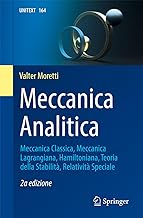
Valter Moretti is a Full Professor in the Department of Mathematics at the University of Trento. His academic career spans roles from Research Fellow to Full Professor, focusing on Mathematical Physics and Quantum Field Theory (QFT) in curved spacetime. He earned an MSc in Physics from Genova University and a PhD in Theoretical Physics from Trento University. Research Interests : Algebraic QFT, General Relativity, Quantum Mechanics, Operator Algebras, and Spectral Theory. His work bridges mathematical rigor with physical applications, particularly in quantum localization, entanglement, and curved spacetime phenomena. Publications : Authored 15+ recent papers on topics like quantum particle localization, entanglement certification, and QFT on curved backgrounds. Collaborated on a 2022 patent for generating entangled photon states. Awards : Holds a patent for a quantum-certified random number generator (2022). Supervision : Advised 8 PhD students, including N. Pinamonti, L. Franceschini, and C. van de Ven. Coordinated national and international research projects (e.g., H2020-MSCA-COFUND-2015). Labs & Collaborations : Affiliated with INFN, TIFPA-INFN, and Q@TN (Quantum@Trento). Organized conferences like Quantum Physics and Geometry (2014) and Quantum Machine Learning (2023). Teaching : Lectures on Analytical Mechanics, Quantum Relativistic Theories, and Special Relativity. Authored textbooks on Spectral Theory and Quantum Mechanics.
Kumar Varoon Agrawal is an Associate Professor at École Polytechnique Fédérale de Lausanne (EPFL), holding the Gaznat Chair for Advanced Separations. He is affiliated with the School of Basic Sciences (SB), the Institute of Chemical Sciences and Engineering (ISIC), and the Laboratory of Advanced Separations (LAS) in Sion, Switzerland. Additionally, he contributes to the Swiss Doctoral School in Chemical and Bioengineering (SCGC) and serves as Vice President of the Confédération des Chimistes et des Génie Chimique (CCE). Research Focus: Material Chemistry & Engineering at the Ångström scale for high-performance inorganic and hybrid membranes, emphasizing energy-efficient molecular separations. Teaching: Courses include Fundamentals of separation processes , Diffusion and mass transfer , and Chemical engineering product design . Scientific Contributions: His 15 most recent publications (2025-2020) span topics like graphene pore engineering , 2D material synthesis , carbon capture , and gas separation membranes , with keywords such as Nanotechnology , Materials Science , and Molecular Transport . Subfields include Atomic-Scale Pores , Membrane Stability , and Industrial Scalability . Students and Collaborations: He advises 10 current PhD students and has mentored 9 past PhD candidates in areas like graphene membranes , ion separation , and MOF films . He is an Academic Referent for the EPFL Carbon Team and a committee member for the EDCH Doctoral Program in Chemistry and Chemical Engineering.
Peter Doerschuk is a Professor in the Department of Electrical and Computer Engineering at Cornell University's College of Engineering. He joined Cornell in July 2006 after serving on the faculty at Purdue University in both Electrical and Computer Engineering and Biomedical Engineering. His educational background includes: B.S. in Electrical Engineering, MIT (1977) M.S. in Electrical Engineering, MIT (1979) Ph.D. in Electrical Engineering, MIT (1985) M.D., Harvard Medical School (1987) Peter Doerschuk's research focuses on biological and medical systems through the lens of computational nonlinear stochastic systems. His work spans biomedical imaging , signal and image processing , statistical modeling , and computational inverse problems in biophysics . He develops high-performance algorithms and software systems that integrate accurate physical models with computational efficiency. His research addresses problems across multiple spatial scales—from 3D virus reconstruction using electron microscopy to modeling whole-body ethanol pharmacokinetics. The recent publications highlight a strong trend in computational biomedical imaging and physiological modeling . Key areas include 3D reconstruction of heterogeneous biological structures, cryo-EM dynamics analysis, and physiologically based pharmacokinetic modeling. The work consistently combines advanced statistical and machine learning methods with domain-specific physical models, particularly in virology and neurovascular physiology. His scientific awards and honors include: Fellow, American Institute for Medical and Biological Engineering (AIMBE) University Faculty Scholar, Purdue University Motorola Excellence in Teaching Award Ernst A. Guillemin Thesis Prize (MIT) Department of Biomedical Engineering Faculty Service Award (Purdue) Dr. Doerschuk has advised graduate students, including Keyuan Xu, whose M.Eng. thesis at MIT received the prestigious Ernst A. Guillemin Thesis Prize. His research has been supported through academic grants and collaborations with institutions such as The Scripps Research Institute and Indiana University School of Medicine. He has developed parallel software systems for high-performance computing applications in biophysics and biomedical signal processing. His research has involved collaboration with multiple labs and teams, including work with Professor J. E. Johnson at The Scripps Research Institute on virus structure determination and with Professor S. J. O’Connor at Indiana University on ethanol pharmacokinetics modeling. These interdisciplinary teams integrate expertise in engineering, medicine, and computational science to solve complex biomedical problems.
Humberto Terrones Maldonado holds the Rayleigh Endowed Chair Professor position in the Department of Physics, Applied Physics and Astronomy at Rensselaer Polytechnic Institute (RPI). An internationally recognized scholar, he has served as an invited professor at numerous institutions including the University of Louvain (UCL, Belgium), Federal University of Ceará (UFC, Brazil), Shinshu University (Japan), Oak Ridge National Laboratory (ORNL, USA), Penn State University (USA), and the University of Sussex (UK). He is a member of the World Academy of Sciences (TWAS) and the Mexican Academy of Sciences. His educational background includes: PhD, University of London (Birkbeck), UK BSc, Iberoamericana University, Mexico Professor Terrones pioneered the concept of curvature in graphite and graphene in 1991, introducing Schwarzites—graphitic structures with negative Gaussian curvature. His research focuses on electronic, optical, mechanical, and chemical properties of few-layered 2D materials and their application in novel 3D nanostructures. Key areas include: 2-Dimensional Materials Complex 3-D Atomic Structures Solid State and Condensed Matter Physics Nanoscience and Nanotechnology Nonlinear Optics His recent publications (2022-2025) reveal a strong emphasis on transition metal dichalcogenides, defect engineering, machine learning for materials design, and energy applications. Work spans experimental characterization of heterostructures, computational simulations of lattice mechanics, and innovative synthesis techniques like liquid metal exfoliation. His notable scientific awards and honors include: Rayleigh Endowed Chair Member of the World Academy of Sciences (TWAS) Member of the Mexican Academy of Sciences
Susanna Thon is an Associate Professor in the Department of Electrical and Computer Engineering at Johns Hopkins University (JHU), affiliated with the Whiting School of Engineering. She serves as Associate Director of the Ralph O’Connor Sustainable Energy Institute (ROSEI) and a member of the Data Science and AI Institute. Her research focuses on nanomaterials engineering for optoelectronic devices, emphasizing solar energy conversion and sensing. Notable areas include plasmonic-photocatalytic systems using aluminum nanoparticles and nanostructured materials like colloidal quantum dots for next-generation devices. Thon holds a BSc from MIT (2005) and MSc/PhD in Physics from UC Santa Barbara (2008/2010). She joined JHU in 2013 after postdoctoral work at the University of Toronto. Her work is funded by agencies such as the NSF, U.S. Army, and Maryland Energy Innovation Institute. She has published over 50 peer-reviewed papers and received JHU’s Catalyst and Discovery awards. Key research projects include developing plasmonic systems to enhance light absorption in titanium dioxide and creating scalable fabrication techniques for optoelectronic materials. Thon’s team also advances quantum dot solar cells and novel characterization methods for energy materials. She actively participates in professional societies, including the Optical Society of America and IEEE. Her grants and collaborations aim to train the next generation in sustainable energy research, with recent initiatives funded through NSF and Space@Hopkins seed grants. Thon’s lab integrates nanophotonics, materials science, and machine learning to address global energy challenges.
Simo Hostikka is a Professor in the Department of Civil Engineering at Aalto University's School of Engineering. His research focuses on fire safety engineering , utilizing numerical fire simulations to address critical challenges in building and infrastructure safety. Key Expertise: Fire Dynamics Simulator (FDS) development, thermal radiation heat transfer, pyrolysis modeling, fire toxicity calculations, and probabilistic risk analysis. Leadership: Supervises advanced fire safety research and contributes to international fire safety standards. Research Trends: Recent publications emphasize fire toxicity modeling , hydrogen fire safety , radiation heat transfer , and fire retardancy of polymeric materials . His work bridges computational methods with real-world fire safety applications. Scientific Awards: Philip Thomas Medal of Excellence (2008, 2005) Sjölin Award (2012) Interflam Trophy (2007) Harmathy Award (2020, 2019) Dean’s Award for Best MSc Thesis (2020) Best Paper in Rakenteiden Mekaniikka (2009) Advising: Supervised Topi Sikanen, who received the Young Talent Award from the International Water Mist Association.
Raphael Franzini serves as Associate Professor of Medicinal Chemistry at the University of Utah, actively contributing to the Biological Chemistry PhD Program. His research pioneers innovative chemical approaches for therapeutic development, with dual focus on DNA-encoded library technologies and bioorthogonal drug delivery systems. His educational foundation includes an M.S. from the Swiss Federal Institute of Technology (Lausanne) and a Ph.D. from Stanford University. This training underpins his group's multidisciplinary methodology combining organic synthesis, bioconjugation, computational modeling, and advanced imaging techniques. Dr. Franzini's research program centers on two transformative areas: First, advancing DNA-encoded library screening through computational integration to identify leads for challenging targets like Tankyrase and Sirtuin 6, with recent work addressing false negatives in machine learning prediction. Second, developing novel bioorthogonal release chemistry using isonitrile-tetrazine reactions for spatiotemporally controlled drug activation, validated in zebrafish models. His group emphasizes both technological innovation and therapeutic translation, with chemistry designed to minimize off-target effects in solid tumors. Analysis of his 15 most recent publications reveals escalating integration of computational methods with experimental library screening, alongside refinement of bioorthogonal release kinetics. The work spans chemical biology, medicinal chemistry, and pharmaceutical sciences, with growing emphasis on machine learning for library data interpretation and in vivo validation of drug-release systems. Dr. Franzini maintains an active research laboratory that provides comprehensive training in cutting-edge drug discovery methodologies. His group culture prioritizes both scientific innovation and researcher development, with projects spanning from fundamental reaction kinetics to therapeutic applications. The lab's infrastructure supports organic synthesis, molecular imaging, and computational analysis for advancing precision therapeutics.
CHONG Yidong is a Professor in the Division of Physics and Applied Physics at Nanyang Technological University (NTU), Singapore. He leads the Centre for Disruptive Photonic Technologies and holds positions in the School of Physical and Mathematical Sciences. His research focuses on theoretical photonics, topological systems, and non-Hermitian physics, with contributions to photonic crystals, topological insulators, and coherent perfect absorbers. He has been recognized with awards including the President's Science Award (2020) and the National Research Foundation Fellowship (2012). Education: Ph.D. (Physics), Massachusetts Institute of Technology (2005–2008) B.Sc. (Physics) and B.Sc. (Mathematical & Computational Sciences), Stanford University (1999–2003) Research Interests: Topological photonics, non-Hermitian systems, photonic topological insulators, PT-symmetric structures, and applications in quantum optics and acoustics. Recent Articles: Focus on experimental realizations of topological lasers, exceptional points in non-Hermitian systems, and higher-order topological phenomena in acoustic and photonic platforms. His work bridges theory and experiment, with collaborations in materials science and electrical engineering. Awards: Extensive recognition for both research and education, including Nanyang Research and Education Awards. Teaching: Courses in mathematical methods for scientists, quantum mechanics, and computational physics, emphasizing numerical techniques and wave phenomena.
Nuri Yazdani is a Lecturer at the Department of Information Technology and Electrical Engineering at ETH Zürich, Switzerland. Based at the Institute for Electronics (Institut für Elektronik) in Zurich, Dr. Yazdani contributes to both teaching and research in advanced materials and nanotechnology. His work spans multiple interdisciplinary areas connecting physics, chemistry, and electrical engineering, with particular emphasis on nanocrystal-based materials and their applications in electronics and optoelectronics. Dr. Yazdani's research focuses on the synthesis, characterization, and application of nanomaterials, particularly semiconductor nanocrystals and quantum dots. His work explores the fundamental physical properties of these materials, including exciton-phonon interactions, structural ordering in multicomponent systems, and charge transport mechanisms in nanocrystal assemblies. He investigates how nanoscale phenomena affect macroscopic material properties, with applications ranging from catalysis to optoelectronic devices. His approach combines experimental techniques like small-angle X-ray scattering with theoretical modeling to understand structure-property relationships in nanomaterials. Analysis of Dr. Yazdani's recent publications reveals a strong emphasis on perovskite and chalcogenide nanocrystals, with particular interest in how structural features like cation distribution, octahedral tilting, and surface chemistry affect optical and electronic properties. His work bridges fundamental physics with practical applications, spanning from quantum optics to energy conversion technologies. A recurring theme is the investigation of size-dependent phenomena and the role of phonons in determining material behavior at the nanoscale. Dr. Yazdani collaborates extensively with researchers across multiple institutions and disciplines, as evidenced by his authorship on numerous multi-investigator publications. His work appears in high-impact journals including Nature Communications, Journal of the American Chemical Society, and Nature Physics, reflecting the significance and interdisciplinary nature of his contributions to nanoscience and nanotechnology.
Katrina Morgan-Innes is a Lecturer (Assistant Professor) at the School of Electronics and Computer Science, University of Southampton. Her research focuses on advanced flexible materials for energy harvesting and storage, leveraging semiconductor industry fabrication techniques to develop wearable thermoelectric devices and next-generation batteries. She leads the Morgan Materials and Devices for Energy (MADE) research group and a £220k EPSRC New Horizons grant (Smart Cloth). Her work emphasizes commercial scalability and integration of 2D materials with flexible substrates. Education: MPhys in Physics (University of Sussex, 2011), CASE Award PhD in Electronics and Computer Science (University of Southampton, 2016–2022). Previous roles include Photonics Development Engineer at the AIM Photonics Programme (SUNY) and Visiting Fellow at the Optoelectronics Research Centre. Research interests include energy harvesters, flexible wearables, 2D materials, and nanofabrication. She has pioneered scalable manufacturing methods for photonic and energy devices and contributed to chalcogenide material applications. Her research group aims to create fully flexible systems enabling integrated sensing, power, and communication on lightweight platforms. Key grants include EPSRC funding for wearable thermoelectric generators and collaborations like the ChAMP/WAFT-funded projects on flexible ion sensors and 3D nanophotonics. She has published in high-impact journals (e.g., ACS Applied Materials and Interfaces , npj 2D Materials and Applications ) and conferences, focusing on thermoelectric materials, photonic heterostructures, and scalable manufacturing. Awards: UNSW Women in Engineering Visiting Fund (2019), Top 100 Physics Paper (2020), Outreach Engagement Award (2016) Labs/Teams: Morgan MADE Group, Collaboration with Optoelectronics Research Centre and Zepler Institute Advocacy: Chair of WiSET+ (University-wide STEM+ Equality Committee), founder of Early Career Researcher Forum
Christoph Bostedt holds dual appointments as a Professor of Physical Chemistry at the Ecole Polytechnique Fédérale de Lausanne (EPFL) and as Head of the Laboratory for Synchrotron Radiation and Femtochemistry (LSF) at the Paul Scherrer Institut (PSI). He leads strategic operations for the LSF, managing five research groups and overseeing four beamlines at the Swiss Light Source and the Alvra Endstation at SwissFEL. His research focuses on ultrafast x-ray science, including single-shot imaging, non-linear x-ray spectroscopy, and femtosecond pump-probe techniques. He collaborates globally on initiatives like the Athos project, aiming to advance ultrafast x-ray technologies. Bostedt has over 150 publications and is a Fellow of the American Physical Society, recipient of the Röntgen Prize. Education: Ph.D. from the University of Hamburg with research at Lawrence Livermore and Berkeley National Laboratories. Prior roles include leadership at Argonne National Laboratory and SLAC National Accelerator Laboratory. Research Interests: Single-particle imaging and coherent diffraction X-ray free-electron laser applications Ultrafast dynamics in nanoparticles and molecular systems Non-linear x-ray spectroscopy Time-resolved x-ray pump-probe methods Awards: Fellow of the American Physical Society Röntgen Prize (University of Giessen) Labs & Projects: Spearheads the Athos beamline project at SwissFEL, developing the Maloja endstation for ultrafast x-ray studies. Oversees the Laboratory for Femtochemistry and collaborates on advanced imaging techniques for nanoscale science.
Eric Collet is a University Professor and Head of Department at the Institute of Physics of Rennes (IPR), a joint research unit of CNRS and Université de Rennes. His work centers on ultrafast photoinduced phase transitions, spin-crossover materials, and the control of functional materials using light and THz excitation. He leads a dynamic research team and is deeply involved in international collaborations, particularly through the IM-LED International Laboratory with Japan. University: University of Rennes School: Institute of Physics of Rennes Department: Department of Materials and Light Academic Rank: Professor Email: eric.collet@univ-rennes.fr Professor Collet's research explores the ultrafast dynamics of molecular and condensed matter systems, especially those exhibiting multistability and photoresponsiveness. His work combines femtosecond optical and X-ray techniques to probe structural and electronic changes at atomic scales. Key areas include spin-crossover phenomena, photomagnetism, ferroelasticity, and nonlinear phononics. He investigates how light can trigger cooperative responses in materials, leading to persistent phase transitions with applications in photonics and memory devices. The recent publications of Eric Collet reveal a strong focus on ultrafast structural dynamics, photoinduced charge and spin transitions, and the coupling of electronic states with lattice distortions. His team frequently employs advanced X-ray methods at large-scale facilities like ESRF and LCLS. The research spans from fundamental quantum dynamics to applied materials science, with recurring themes in symmetry breaking, cooperative switching, and room-temperature photoresponse in molecular systems. Scientific awards and recognitions include: CNRS Silver Medal (2020) Louis Ancel Prize, French Physical Society Hot Paper selection in PCCP (2019) Very Important Paper recognition in Eur. J. Inorg. Chem. (2019) News & Views feature in Nature Chemistry (2020) Eric Collet actively mentors PhD students and postdoctoral researchers, and has supervised numerous publications in top journals. He has led major scientific initiatives such as the UCM2018 symposium and JMC2021 conference. His research is supported by grants from ANR, CNRS, and the Institut Universitaire de France. He collaborates extensively with institutions in France, Japan, and beyond. His research is conducted primarily within the Department of Materials and Light at the Institute of Physics of Rennes. He co-directs the IM-LED International Laboratory with Prof. Shin-ichi Ohkoshi (University of Tokyo) and collaborates with groups in Bordeaux, Lebanon, and Japan. His lab specializes in time-resolved X-ray diffraction, ultrafast spectroscopy, and nonlinear optical control of materials.