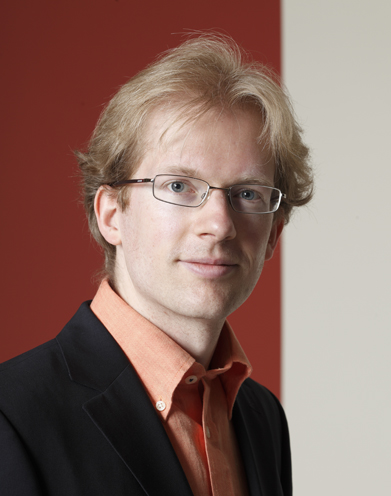
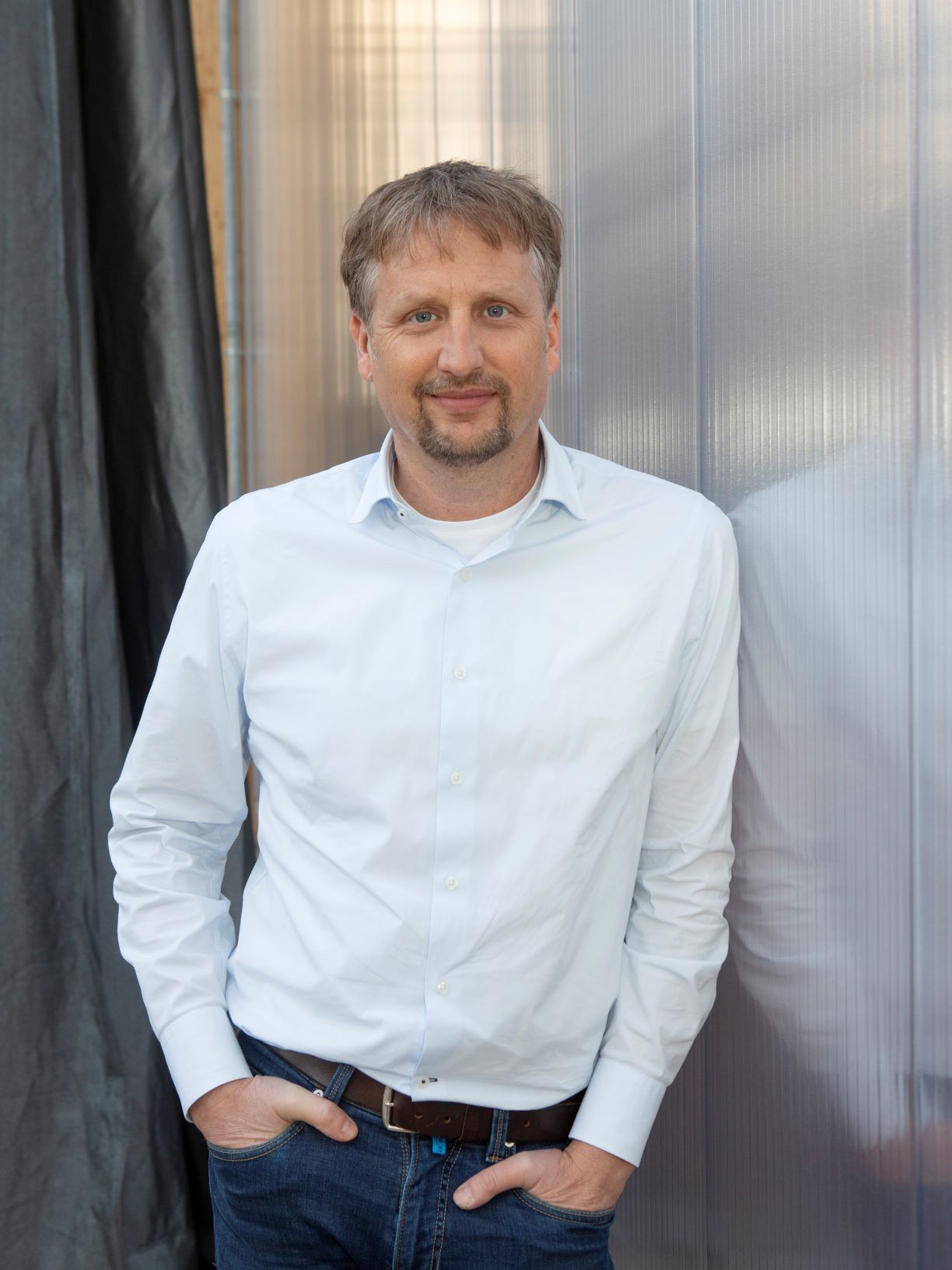
Harvey B. Meyer is a Professor of Theoretical Physics at Johannes Gutenberg University Mainz since 2014. Previously, he held positions including Junior Professor at Mainz (2010), Fellow at CERN's Theoretical Physics Division (2009), Research Scientist at MIT (2008), and postdoctoral roles at MIT (2006-2008) and DESY (2004-2006). He earned his D.Phil. in Theoretical Physics from the University of Oxford (2001-2004) and a Diplome de Physique from the University of Lausanne (1996-2001). His research focuses on lattice field theory, QCD phase diagrams, thermal field theory, and hadron structure. He leads the NEPhEuQCD collaboration and has received the ERC Consolidator Grant (2018) for the SIMDAMA project. Meyer teaches courses in theoretical physics and mathematical methods at Mainz, including 'Theoretische Physik 4' and 'Mathematische Rechenmethoden'. His work integrates advanced computational techniques to address fundamental questions in particle and nuclear physics. Key achievements include pioneering studies on the muon's anomalous magnetic moment, hadronic light-by-light scattering, and quark-gluon plasma dynamics. Collaborations include MIT, CERN, and institutions globally through lattice QCD projects. His lab and team contributions are central to the PRISMA+ Cluster of Excellence at Mainz.
Prof. Alexander Holleitner leads the Chair of Nanotechnology and Nanomaterials at the Department of Physics, Technical University of Munich , under the Walter Schottky Institute. His research focuses on ultrafast optoelectronics, quantum optoelectronics, and excitonic systems in nanoscale circuits. Research Directions : Ultrafast optoelectronics, quantum optoelectronics, excitonic systems, THz time-domain spectroscopy, and nanofabrication of mixed organic/inorganic systems. Publications : Recent work spans hyperbolic polaritons, interlayer excitons, graphene nano-gap dynamics, and defect engineering in 2D materials. Collaborations include interdisciplinary projects with groups studying semiconductor heterostructures and quantum technologies. His lab welcomes students and researchers interested in experimental physics, quantum electronics, and nanofabrication.
Holger Fröning is a full professor at Heidelberg University’s Institute of Computer Engineering (ZITI), where he leads the Hardware and Artificial Intelligence (HAWAII) Lab. His research focuses on embedded machine learning , high-performance computing , and hardware-software co-design , with emphasis on resource efficiency, power optimization, and emerging architectures like analog , photonic , and resistive memory systems. He has held leadership roles including Managing Director of ZITI (2023–present) and Dean of Studies for Computer Science (2019–2022) , and has collaborated with institutions such as NVIDIA Research, Chinese Academy of Sciences, and Graz University of Technology. Research Trends : His recent publications explore Bayesian neural networks , green machine learning , analog computing noise mitigation , and GPU/FPGA optimization . Articles highlight photonic computing for AI , memory-efficient training , and hardware-aware DNN compression . Scientific Awards : 2025 HiPEAC Paper Award (Nature Computational Science) 2014 Google Faculty Research Award Multiple Best Paper Awards (IPDPS, ICPP, ECML-PKDD workshops) Leadership & Service : Organized workshops (WEML, ITEM, F4HD), chaired tracks at EuroPar and ISC, and served on program committees for ICPR, ECAI, and FPL. Education & Affiliations : PhD and MSc from University of Mannheim (2007/2001). Sponsors include DFG, FWF, FFG, NVIDIA, SAP, and XILINX.
Markus Schmidt is a Professor of Fiber Optics at Friedrich Schiller University Jena and serves as Head of the Research Department of Fiber Photonics at the Leibniz Institute for Photonic Technologies (IPHT), where he leads the Hybrid Fibers work group. He previously held a team leadership position at the Max Planck Institute for the Science of Light (2006–2012) and conducted research at Imperial College London (2011). His research integrates fiber optics and photonics for applications in biophotonics, optofluidics, plasmonics, and nonlinear optics. Key innovations include 3D nanoprinted holograms for remote focus control, liquid-core fibers for stable supercontinuum generation, and fiber-integrated platforms for nanorheology and quantum spectroscopy. His work bridges materials science and applied photonics , enabling advancements in telecommunications, environmental monitoring, and bioanalytics. Scientific awards and student mentorship details are not explicitly mentioned in the provided texts. His email is markus.schmidt@leibniz-ipht.de .
Özüm Asirim is a Researcher at the Technical University of Munich (TUM) under the Associate Professorship of Computational Photonics led by Prof. Christian Jirauschek. Her work focuses on computational photonics , quantum optics , and nonlinear optical phenomena , particularly in micro-resonators and semiconductor devices. Education: Ph.D. in Electrical Engineering from Middle East Technical University (Ankara, Turkey). Research spans optical parametric amplification , Fourier domain mode-locked lasers , self-phase modulation , and machine learning applications in photonics . Her studies include optimizing gain factors, enhancing harmonic generation, and modeling supercontinuum sources via carrier injection. Recent publications (2019–2023) highlight interdisciplinary approaches, merging photonics with computational finance and nonlinear dynamics . She contributes to EU Project QOMBS and teaches courses like Python for Engineering Data Analysis and Quantum Engineering and Machine Learning seminars. Collaborations include Prof. Christian Jirauschek (TUM), Prof. Mustafa Kuzuoğlu (Middle East Technical University), and teams in computational photonics and quantum optics. Her work impacts semiconductor physics , laser technology , and adaptive optical systems .
Prof. Dr.-Ing. Andreas Thiede is a faculty member at the University of Paderborn , affiliated with the Faculty of Electrical Engineering, Computer Science and Mathematics and the Institute of Electrical Engineering and Information Technology . He serves as director of the High-frequency electronics (HFE) research group. Research Interests: High-frequency electronics and optoelectronics Quantum dots and exciton qubits Nonlinear photonics and ultrafast control Semiconductor device engineering Key Projects: Participates in TRR 142: Tailor-Made Nonlinear Photonics , focusing on functional structures for quantum and ultrafast systems. Teaching Roles: Analog CMOS circuits (does not apply) Analog CMOS ICs (cancelled) Contact Details: Email: andreas.thiede@uni-paderborn.de Phone: +49 5251 60-3040 Office: Pohlweg 47-49, 33098 Paderborn Space: P1.402.1
Max Born Institute for Nonlinear Optics and Short Pulse SpectroscopyGermany
Prof. Stefan Eisebitt is a Director at the Max-Born-Institut für Nichtlineare Optik und Kurzzeitspektroskopie and holds a Professorship in Experimental Physics at the Technische Universität Berlin. His research focuses on ultrafast magnetization dynamics, nanoscale structure analysis, and novel imaging techniques using coherent XUV/X-ray spectroscopy. He leads the Transient Electronic Structure and Nanoscience group and is involved in cutting-edge projects involving femtosecond laser-driven X-ray sources and spintronic materials. Education and Career: He obtained his Diplom (1992) and Ph.D. (1996) from Cologne University, followed by postdoctoral research at the University of British Columbia and Forschungszentrum Jülich. He became a Privatdozent at Humboldt-Universität Berlin (2005) and held professorships at TU Berlin (2008–2015) and Lund University (2012–2015) before his current role since 2015. He leads the Functional Nanomaterials joint research group between Helmholtz-Zentrum Berlin and TU Berlin. Research Interests: His work spans transient electronic structure, ultrafast optical manipulation of magnetization, nanoscale material characterization, and advanced coherent imaging methods. Key techniques include XUV/X-ray spectroscopy, laser-driven plasma sources, and femtosecond time-resolved studies. Professional Roles: He chairs the Physikalische Gesellschaft zu Berlin and the Elettra Scientific Advisory Council. He has held leadership roles in the European XFEL Scientific Advisory Committee and the Komitee für Forschung mit Synchrotronstrahlung (KFS). His lab develops state-of-the-art setups for ultrafast X-ray scattering and holography.
F. Ömer Ilday is a distinguished physicist and Alexander von Humboldt Professor at Ruhr University Bochum since July 2023, holding a joint appointment in the Faculty of Electrical Engineering and Information Technology and Faculty of Physics and Astronomy. His pioneering work in ultrafast laser technology has transformed non-linear laser-matter interactions, with applications spanning precision manufacturing, medical surgery, and nanofabrication. Education: PhD in Physics, Cornell University (2003) Postdoctoral Research Scientist, Massachusetts Institute of Technology (2003-2005) Ilday's research centers on ultrafast laser development and materials science, focusing on GHz-repetition-rate burst-mode systems, nonlinear laser lithography, and self-organization phenomena. His interdisciplinary approach bridges photonics, plasma physics, and materials engineering to enable breakthroughs in nanostructuring, silicon processing, and laser-based manufacturing. Current work emphasizes developing high-power laser sources and exploring fundamental laser-matter interaction mechanisms for next-generation applications. His recent publications (2023-2025) reveal dominant trends in high-repetition-rate burst-mode lasers (up to 50 GHz), ablation efficiency optimization, and nonlinear laser lithography for 3D silicon structuring. These works demonstrate strong convergence between fundamental physics and industrial applications, particularly in medical surgery, nanofabrication, and materials synthesis, with increasing emphasis on self-organization principles in laser systems. Scientific awards: Turkish Academy of Sciences Outstanding Young Scientist Award (2006) Marie Curie International Reintegration Grant (2006) ERC Consolidator Grant (2014) - Turkey's first ERC Advanced Grant (2022) Election to Academia Europaea Election to Turkish Academy of Sciences Membership in Turkish and American Physical Societies Ilday has secured major competitive grants including two ERC awards and a Marie Curie fellowship, directing research teams at Bilkent University's Ultrafast Optics & Lasers Laboratory (UFOLAB) which developed technologies adopted globally. At RUB, he is establishing the Center for Complex Laser-Matter Interactions as an interdisciplinary hub fostering collaborations between photonics, plasma research, and materials science, with explicit goals for spin-off company formation and transdisciplinary innovation in manufacturing technologies. As founding director of UFOLAB at Bilkent University, Ilday developed laser systems deployed by research institutions worldwide and established Turkey's first laser company. His RUB center integrates electrical engineering and physics expertise to advance complex laser-matter interaction research, focusing on self-organizing laser systems, nanostructuring techniques, and applications in semiconductor manufacturing and medical technology through close industry partnerships.
Prof. Dr. Sven Höfling is the Head of Chair and leader of the '2D Materials' Group at the Department of Technical Physics, University of Würzburg. His research focuses on semiconductor nanostructures, photonic systems, and quantum materials, with expertise in low-dimensional systems and light-matter interactions. He leads projects in the Cluster of Excellence ct.qmat and collaborates on EU, DFG, and industry-funded initiatives in quantum technology and nanophotonics. Affiliations: Chair of Technical Physics, University of Würzburg Address: Am Hubland, P1 Building (Room AU26), 97074 Würzburg, Germany Research highlights include topological polariton lasers, quantum dot photonics, and mid-infrared optoelectronics. His work spans experimental physics with strong ties to theoretical models, emphasizing applications in quantum computing and optoelectronic devices. Recent advances include room-temperature polariton lasers and strain-tunable single-photon sources. Key projects include the Würzburg-Wroclaw Nanophotonics Center and collaborations with KAIST-JMU on quantum technology. His lab employs advanced fabrication techniques like circular Bragg gratings and resonant tunneling diodes.
Max Planck Institute for the History of ScienceGermany
Prof. Dr. Petra Schwille is a Director at the Max Planck Institute of Biochemistry and former C4 Professor of Biophysics at Dresden University of Technology . Her work spans molecular and cellular biophysics, synthetic biology, and single-molecule techniques. Academic disciplines: Natural sciences, biological sciences, physical sciences Key roles: Editorial Board member (Nature Methods, Biophysical Journal), Governing Council of Biophysical Society Research Focus includes membrane biophysics, protein interactions, and microfluidic systems. Her publications emphasize Fluorescence Correlation Spectroscopy (FCS) , receptor-ligand dynamics, and self-organization in bacterial cell division. Developed in vitro models for spatial regulation in cells Explored calmodulin availability and morphogen gradient formation Scientific Recognition includes prestigious awards like the Gottfried Wilhelm Leibniz Prize (2010) and the Biofuture grant (1998) . Max Planck Fellow (2005) Young Investigator Award (2003) Leadership & Service involves roles such as Dean of Studies for Nanobiophysics at TU Dresden and Vice Dean of the Dresden International Graduate School for Biomedicine and Bioengineering (DIGS-BB) . She also contributes to editorial and advisory boards in biophysics and science policy.
Max Born Institute for Nonlinear Optics and Short Pulse SpectroscopyGermany
Dr. Alexandre Mermillod-Blondin is a Principal Investigator heading a DFG-funded project on 'Micromachining with few-cycle pulses' at the Max Born Institute. His research focuses on fundamental laser-matter interactions and direct laser writing of 3D micro-optical systems in transparent materials. Key investigations include plasma formation mechanisms in dielectrics, relaxation dynamics, and applications in photonic device fabrication. His group utilizes phase-contrast microscopy and time-resolved techniques to characterize ultrafast processes.
Lukas Seitner is a researcher at the Technical University of Munich (TUM), affiliated with the School of Computation, Information and Technology and the Department of Electrical Engineering. He operates within the Associate Professorship of Computational Photonics led by Prof. Christian Jirauschek, focusing on advanced modeling of quantum cascade devices and terahertz photonics systems. His research spans quantum cascade lasers (QCLs), terahertz frequency combs, optical solitons, and computational photonics. Seitner has developed sophisticated simulation frameworks including Maxwell-Bloch and density matrix approaches to study nonlinear dynamics in optoelectronic devices. Key contributions involve passive mode-locking mechanisms in THz QCLs, graphene-integrated saturable absorbers for pulse generation, and backscattering effects in ring-cavity soliton formation. His work bridges theoretical modeling with practical device engineering for next-generation terahertz sources. As an educator, Seitner serves as assistant lecturer for multiple courses including Computational Photonics Laboratory (5 PR), Partial Differential Equations for Electrical Engineering (4 VI), and Simulation of Quantum Devices (4 VI). He actively participates in doctoral candidate seminars and specialized courses on quantum engineering, demonstrating strong commitment to academic training in photonics and quantum device physics. His teaching integrates cutting-edge research concepts into practical computational exercises. Seitner maintains active collaboration within the EU Project QOMBS and contributes to TUM's Computational Photonics group research infrastructure. His technical expertise encompasses numerical methods for partial differential equations, semiconductor device simulation, and nonlinear optical modeling. Current projects focus on optimizing THz comb sources for spectroscopic applications and extending quantum walk models for novel frequency comb generation mechanisms.
Prof. Dr. Michael Horn-von Hoegen is a full professor in the Faculty of Physics at the University of Duisburg-Essen , Germany. His research focuses on ultrafast structural dynamics , surface physics , and 2D materials , particularly using electron diffraction and plasmonic imaging techniques. He leads the Horn-von Hoegen Group , which plays a central role in the Collaborative Research Center CRC 1242 Non-Equilibrium Dynamics of Condensed Matter in the Time Domain , where his team investigates driven phase transitions and phonon systems with sub-femtosecond temporal resolution. Location: Office Window MF260, Faculty of Physics, Lotharstr. 1-21, 47057 Duisburg Contact: Tel. +49 (203) 379 1439 | Fax +49 (203) 379 1555 His research spans ultrafast electron diffraction of photo-induced phase transitions in atomic wires and topological materials , with recent breakthroughs on Kibble-Zurek dynamics in the Si(001) surface and chiral plasmon polaritons . The group’s 15 most recent publications (2025-2022) address phenomena such as negative thermal expansion in 2D materials , electron-phonon coupling in Pb/Si heterostructures , and quantum pathway analysis in Bismuth films . These works are categorized under disciplines like Condensed Matter Physics , Nanooptics , and Ultrafast Dynamics , with subfields including Ising Model Transitions , Plasmon Focusing , and Time-Resolved Diffraction . Prof. Horn-von Hoegen serves as DFG Liaison Officer for the University of Duisburg-Essen, providing guidance on Deutsche Forschungsgemeinschaft (DFG) proposals . His group has mentored notable researchers including Dr. Simon Sindermann (postdoc at IBM), Dr. Anja Hanisch-Blicharski (Leopoldina Fellow), Dr. Hichem Hattab (Leopoldina Fellowship), and Dr. Marin Petrovic (Humboldt Fellow). The group’s laboratory facilities include advanced ultrafast electron diffraction and photoemission microscopy systems, enabling studies of atomic-scale processes such as molecular dynamics simulations of laser-excited surfaces and domain wall motion in Si(553)-Au systems .
Prof. Dr. Uli Lemmer is a Professor at the Department of Electrical Engineering and Information Technology (ETIT) at the Karlsruhe Institute of Technology (KIT). His research focuses on optoelectronics, thermoelectric materials, and printed electronics, with a strong emphasis on energy harvesting, nanotechnology, and photonics. He leads the Lichttechnisches Institut (LTI) and is affiliated with the Institute of Applied Physics. His work spans innovations in laser systems, flexible electronics, and bio-inspired materials. Office: Building 30.34, Room 223; Phone: +49 721 608-42530; Email: uli.lemmer@kit.edu. Research interests include the development of advanced materials for solar cells, thermoelectric generators, and sensor technologies. He pioneers methods like aerosol-jet printing and inkjet printing for scalable production of electronic devices. His group explores biomimetic structures (e.g., snake scale nanopores) and terahertz systems, pushing boundaries in both fundamental science and applied engineering. Recent publications highlight breakthroughs in printed thermoelectric modules, perovskite-based photovoltaics, and high-frequency antennas. His work integrates cutting-edge fabrication techniques with material science to address challenges in renewable energy, sensor networks, and flexible electronics. Prof. Lemmer collaborates internationally on projects like EU-funded energy initiatives and partners with industry for technology transfer. His lab specializes in additive manufacturing, optical systems, and nanoscale device engineering, aiming to bridge the gap between academic research and industrial applications.
Dr. Frank Hennrich is a Project Leader at the Institute of Nanotechnology (INT), Karlsruhe Institute of Technology (KIT), Germany, within the Research Unit for Physical Chemistry of Nanoscale Systems. His research focuses on the synthesis, separation, and functionalization of carbon nanotubes and related nanomaterials. His primary research interests include nanomaterials, particularly carbon nanotubes and fullerenes, with an emphasis on their physical chemistry, spectroscopic characterization, and optoelectronic properties. His work spans synthesis, separation techniques, defect engineering, and applications in photonics and electronics. Recent publications highlight investigations into electroluminescence from quantum-defect-engineered nanotubes, ion mobility of metalated complexes and superatoms, and advanced separation methods for nanotubes. The trend in his recent publications shows a strong focus on the fundamental physical and chemical properties of low-dimensional carbon materials. His work integrates advanced spectroscopic and separation techniques such as trapped ion mobility spectrometry, Raman spectroscopy, and dielectrophoresis to understand and manipulate nanotube chirality, electronic type, and defect states. There is a clear trajectory toward optoelectronic applications, particularly in quantum light sources and integrated photonic devices operating in the telecom band. Dr. Hennrich has not been mentioned to have received any specific scientific awards in the provided text. He has collaborated extensively with leading researchers such as R. Krupke, M. M. Kappes, P. Weis, and others across numerous publications, indicating a strong network in the nanomaterials research community. While no specific grants are listed, his sustained publication record in high-impact journals suggests ongoing research funding. He has contributed significantly to the development of methods for sorting and functionalizing carbon nanotubes, which are foundational for their technological applications. His research is conducted within the Institute of Nanotechnology at KIT, a prominent institution for nanomaterials research, where he leads a group focused on the physical chemistry of nanoscale systems, particularly carbon-based nanostructures.