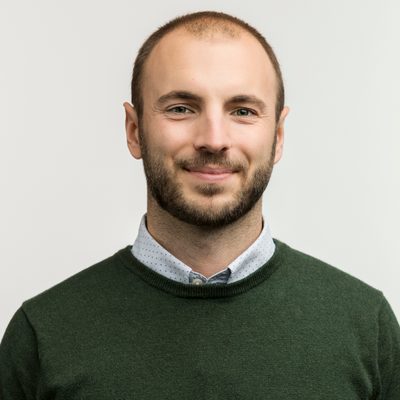
Jeffrey D. Cawlfield is a Professor of Geological Engineering and Interim Department Chair of the Geosciences and Geological and Petroleum Engineering (GGPE) department at Missouri University of Science and Technology. With over 25 years of experience in academic leadership and engineering education, he has served in multiple roles including Director of the Freshman Engineering Program and Vice Provost for Academic Support (2013-2020). Ph.D. and M.S. in Civil Engineering from University of California, Berkeley B.S. in Civil Engineering from Washington State University His research focuses on academic excellence , student success , and experiential learning in engineering education. He has pioneered collaborative and technology-enhanced learning frameworks at Missouri S&T. Recent technical research involves geotechnical methods for strain localization and volume measurement in soil specimens. Key publication trends include geotechnical engineering applications of photogrammetry , image-based analysis , and soil deformation modeling , spanning topics like shear band characterization and contaminant transport. Outstanding Teaching Award (7x) Dow Outstanding Young Educator Award (ASEE Midwest Region) Leadership roles in NCAA academic compliance and Missouri S&T diversity initiatives Cawlfield collaborates across disciplines in the School of Mines and Metallurgy and has contributed to engineering education reform through roles in assessment committees and leadership programs.
Prof. Luc Van Gool is a leading academic in computer vision and machine learning, holding dual positions at ETH Zurich and KU Leuven. He heads the Computer Vision Laboratory at ETH Zurich while leading the Computer Vision Research Group at KU Leuven. With over 160,000 citations, he ranks among the world's most cited computer scientists and has co-founded 12 startups that attracted tech giants like Nvidia, Apple, and Facebook to Zurich. His research spans 2D/3D object recognition , texture analysis , range acquisition , stereo vision , robot vision , and optical flow . Recent work demonstrates exceptional breadth across fundamental algorithms and real-world applications, with particular emphasis on robustness in dynamic environments and cross-domain adaptation. His teams consistently bridge theoretical innovation with industrial implementation through EU-funded projects like Vanguard, Improofs, and Impact. 2025 publications reveal dominant trends in multimodal learning , 3D scene representation via Gaussian splatting , and incremental object detection . Key advancements include vision-language model integration, embodied reasoning frameworks, and robustness benchmarks for human-object interaction. The research demonstrates a strategic shift toward compositional learning and cross-domain generalization while maintaining core strength in classical vision tasks. His accolades include: David Marr Prize (highest honor in computer vision) Koenderink Prize for fundamental contributions Helava Prize for photogrammetry Tsuji Award for pattern recognition ERC Advanced Grant for groundbreaking research Professor Van Gool drives technology transfer through 12 startups (assaia, Eyetronics, segments.ai, etc.) and major EU projects including ACTS Vanguard and Brite-Euram Soquetec. His labs maintain deep industry partnerships with automotive, medical imaging, and consumer electronics sectors, securing continuous funding for high-risk/high-reward research. Current grants emphasize embodied AI and real-world deployment challenges. The Computer Vision Laboratory at ETH Zurich and KU Leuven group operate as interconnected hubs with over 50 researchers. They maintain specialized facilities for 3D reconstruction, robotic vision, and multimodal sensing, recently expanded through industry partnerships. Current initiatives focus on embodied scene understanding for autonomous systems and vision-language models for industrial inspection.
Carla Klehm is an Assistant Professor of Archaeology at the University of Arkansas, serving as Assistant Director of the Center for Advanced Spatial Technologies (CAST) and faculty in the Department of Anthropology within the College of Arts & Sciences. She directs international, multidisciplinary projects funded by NSF, NEH, NGS, and Wenner-Gren, focusing on archaeological applications of remote sensing and spatial technologies. Her position at CAST involves project design and management of geomatics applications for archaeology and digital humanities, including directing the NSF-funded Spatial Archaeometry Research Collaborations program and the NEH-funded Spatial Archaeology Residential and Online Institute. Dr. Klehm earned her PhD in Anthropology (Archaeology) from the University of Texas at Austin in 2013, following an MA from the same institution in 2009 and dual BA degrees in Anthropology (Honors) and History from Northwestern University in 2006. Her educational background provided the foundation for her interdisciplinary approach to archaeological research. Her research interests center on how remote sensing and scientific methods can address questions about human societies, particularly regarding inequality, long-distance trade, and human-environmental relationships. She directs projects spanning from southern Africa's early polities and Bronze Age European fortress networks to East Africa's megalithic monuments. Her work incorporates geospatial applications including geophysics, UAV-based sensors, satellite remote sensing, and digital storytelling. She also co-leads an ethics initiative to improve health, safety, and wellness in field research, collaborating with local museums and communities while incorporating indigenous perspectives. Analysis of Dr. Klehm's publication record reveals a consistent focus on spatial archaeometry, African archaeology (particularly Botswana and East Africa), bead analysis, and field safety protocols. Her work demonstrates increasing integration of advanced technologies with traditional archaeological methods, showing particular innovation in adapting methodologies during pandemic constraints. The publications span prestigious journals including Nature, Proceedings of the National Academy of Sciences, and Current Anthropology, reflecting both disciplinary depth and interdisciplinary reach. 2022-Present: Academic Board Member, Institute for Field Research 2020-2021: AIA National Lecturer, Archaeological Institute of America 2010: Peyton Wright Memorial Award, Department of Anthropology, University of Texas at Austin Dr. Klehm has secured over $1.3 million in external funding as PI or co-PI from major organizations including NSF, NEH, NGS, and Wenner-Gren. She currently supervises two postdocs and has served on multiple graduate committees for emerging African scholars. Her teaching includes undergraduate and graduate courses at four different universities, with upcoming courses including ANTH 1033: Introduction to Archaeology and ANTH 3903: Special Topics, African Archaeology. Through the Center for Advanced Spatial Technologies, Dr. Klehm maintains an active research portfolio in spatial archaeometry and bead analysis involving coordination of dozens of students, professionals, and community members from multiple countries. Her SPARC program provides critical infrastructure for spatial archaeometry research, while her Digital Storytelling on African Urbanisms project creates innovative approaches to presenting archaeological narratives.
Michael Welch is a Senior Researcher at the Danish Offshore Technology Centre (Technical University of Denmark) specializing in Geology and Geophysics. His research focuses on fracture mechanics, fluid flow dynamics, and geomechanical modeling in subsurface environments. Research Interests: Welch investigates fracture propagation across material interfaces, subcritical crack growth, and fluid flow variations in fractured reservoirs. His work integrates seismic data analysis, discrete fracture networks (DFN), and phase-field modeling techniques. Key areas: Fracture network validation, geomechanical controls on chalk/marl reservoirs, mechanical failure risk assessment for CCS operations Methodologies: Linear Elastic Fracture Mechanics (LEFM), poroelastic modeling, photogrammetry hardware development Collaborations: Active in international projects related to North Sea geology, Netherlands diapir structures, and Danish Central Graben analysis.
Nicolas Alonso Amestica Fuenzalida serves as an Assistant Professor in the Department of Oral Rehabilitation at the Faculty of Dentistry, University of Chile. His appointments include dual roles across Oral Rehabilitation and Restorative Dentistry departments with cumulative working hours of 27 hours weekly. He coordinates and collaborates on 31 undergraduate and postgraduate courses spanning 2013-2025, specializing in geriatric dentistry, professional skills development, and research methodology. His educational background includes a Dental Surgeon degree (2012) and Medical/Dental Specialty (2018), both from the University of Chile. Research interests focus on dental biomaterials innovation , particularly 3D printable resins for prosthetics, occlusal rehabilitation biomechanics, and orthodontic complication management. Current work examines material density/hardness properties against ISO standards and white spot lesion epidemiology in orthodontic patients. Publication analysis reveals strong specialization in digital dentistry workflows (62.5% of works) and prosthetic material science (100% involve material testing). Recent outputs (2020-2023) emphasize ISO-standardized mechanical testing of biocompatible resins, while earlier works (2015-2020) address occlusal rehabilitation and orthodontic complications. All publications originate from University of Chile institutional collaborations. As primary advisor for 7 theses, he mentors students in 3D printing applications, material testing, and clinical complications. His teaching portfolio includes course coordination for Dental Clinic for the Elderly (2018-2025) and Development of Professional Skills (2022-2025), demonstrating sustained focus on clinical geriatric dentistry and professional development.
Piotr Kociuba , M.A., is an Assistant Professor at the Department of Environmental Protection and Landscape within the Faculty of Natural and Technical Sciences at the John Paul II Catholic University of Lublin , Poland. His work integrates geospatial technologies with ecological and landscape studies. Specializes in GIS applications for urban and rural landscape analysis Focuses on wildlife habitat dynamics and sustainable development Active in 3D modeling of natural features and cultural landscapes Research Interests : Piotr investigates how environmental changes impact wildlife behavior (e.g., wild boar dispersion patterns) and landscape evolution. His work bridges computational methods (remote sensing, deep learning) with traditional ecological field studies. Scientific Contributions : Recent publications examine climate-driven animal migrations, agricultural-wildlife interactions, and GIS-based urban transformation analysis. His 2024 study on wild boar dispersion across 300+ km highlights cross-border ecological connectivity. Awards : Rector's Award of the Catholic University of Lublin (2015)
Tjark Schütte is a Researcher in the Department of Agromechatronics at the Leibniz Institute for Agricultural Engineering and Bioeconomy (ATB) in Potsdam, Germany. His work focuses on integrating robotics, sensor technology, and data science into agricultural systems. Schütte contributes to projects like SMART4ALL, which develops self-sustained cyberphysical systems for European stakeholders. His research spans precision agriculture, autonomous mobile robots, and IoT applications. Recent publications highlight his expertise in robotic teleoperation and aerial photogrammetry for horticultural automation. Schütte collaborates with international teams on topics such as digital shadows and LoRa-based communication systems. Contact: TSchuette@atb-potsdam.de | Phone: +49 331 5699-433
Dr. Klaus Werner is an academic researcher specializing in cultural heritage digitization, archival studies, and historical documentation. He is currently employed as an Information Manager for Inventory and Digitization at the Capitoline Museums and affiliated units in Rome since 2003. His work bridges interdisciplinary fields, including cultural heritage conservation, photogrammetry, and georeferencing, with a focus on the transfer of antiquities from private to public collections and historical protection systems. His research interests span the digitization of archaeological archives interoperability of museum records via technologies like Wikidata and OpenStreetMap development of NFC-based information systems analysis of Antikenschutz (antiquities protection) policies in Rome (16th–20th centuries) collaborative digital platforms for comparative art history Key scientific awards include the Henkel Scholarship (Vatican Museums, 1994–1996) DFG Scholarship (1997–1999) for archival research on Palatine excavations
Peter Surový is an Associate Professor at the Czech University of Life Sciences Prague (CZU), where he serves in the Department of Forest Management and Forest Conservation within the Faculty of Forestry and Wood Technology. He also holds the position of Vice-Chairman of the Academic Senate Dean's Board of the Faculty of Law at CZU, demonstrating his cross-disciplinary engagement within the university. Dr. Surový's research focuses on the application of advanced remote sensing technologies in forest management and conservation. His work spans multiple areas including: Utilization of satellite imagery and UAV/drone technology for forest health monitoring Bark beetle detection and forest disturbance assessment Forest fire risk modeling and assessment Drought impact analysis on forest ecosystems Development of innovative methods for forest inventory and mensuration His recent publications highlight a strong emphasis on integrating artificial intelligence with remote sensing data to address pressing forest management challenges. Dr. Surový has been particularly active in developing early warning systems for forest disturbances and creating practical tools that can be implemented by forest managers. His research often involves international collaborations, with projects extending to tropical forests in Ghana and Angola, demonstrating the global relevance of his work. Dr. Surový has been involved in several significant research projects including: "Mapping of forest health status, tree species, and forest risks using innovative ICT data and approaches" (TA0 2021-2024) "Monitoring the status and development of bark beetle-damaged stands after the bark beetle calamity" (MZE 2021-2023) "Frameworks and possibilities of forestry adaptation measures and strategies related to climate change" (EHP 2015-2016) His methodological contributions include certified methodologies for UAV-based forest monitoring and damage assessment, which have been adopted by forest enterprises in the Czech Republic. Dr. Surový's work bridges the gap between cutting-edge technology and practical forest management applications, making significant contributions to sustainable forestry practices.
Dr. Joanna Mencel is a Lecturer at Wroclaw University of Health and Sport Sciences, affiliated with the Department of Kinesiology. Her research focuses on neuromuscular physiology, posture analysis, and motor imagery applications in rehabilitation. ResearchGate profile: https://www.researchgate.net/profile/Joanna-Mencel ORCID: 0000-0001-8762-3160 Research Interests: Muscle mechanical properties assessment using MyotonPRO Motor imagery training for movement rehabilitation Parkinson's disease physiotherapy Postural ergonomics in young populations Surface electromyography mapping Neurophysiological responses to training Publications Trends: Joanna's work spans from fundamental muscle physiology studies (2014-2021) to advanced applications of virtual environments in prosthetic rehabilitation (2021). She has extensively explored myometric measurement methodologies (2021-2024) and maintains a strong focus on Parkinson's disease interventions through exercise physiology.
Leif Anderson is a Research Assistant Professor in the Department of Geology & Geophysics at the University of Utah. His work focuses on glaciology, sediment transport dynamics, and climate-glacier interactions, with fieldwork conducted across alpine environments including Alaska, Iceland, Switzerland, and Canada. Key Research Themes: Sediment transport in debris-covered glaciers, thermochronometry of bedrock exhumation, numerical modeling of subglacial processes, and climate change impacts on cryospheric systems Methodologies: Luminescence dating, UAV thermal imaging, cosmogenic nuclide analysis, structure-from-motion photogrammetry, and 2D/3D glacier modeling Recent publications highlight his innovative Lagrangian ice-flow modeling of sediment transport (2025), quantification of non-conductive heat flux in supraglacial debris (2023), and historical glacier reconstructions using archival aerial photography (2021). Teaching activities include graduate thesis supervision and undergraduate courses in Earth surface processes. Current grants involve collaborative studies on glacial meltwater dynamics and sediment transport modeling with institutions like the Canyonlands Natural History Association and US Geological Survey.
Nicholas Charles Coops is a Professor and Department Head of Forest Resources Management at the University of British Columbia's Faculty of Forestry. He holds the UBC Chair in Forest Management and serves as Director of the Masters for Geomatics for Environmental Management program, while co-directing the Master of Sustainable Forest Management. Integrated Remote Sensing Studio (IRSS) Founder Canadian Forest Service Collaborator Developer of 3PGS and CAN-TG forest growth models Research Interests focus on: Linking vegetation pigments/structure to remote sensing data LiDAR applications for forest height and DEM modeling Dynamic Habitat Index (DHI) for biomass distribution analysis Machine learning for forest inventory and biodiversity monitoring Climate change impacts on boreal and temperate forests UAV-based phenotyping for forest management Recent Publications demonstrate expertise in LiDAR integration, satellite-based forest monitoring, and ecological modeling across diverse scales from individual trees to national datasets. Scientific Awards include: Seven consecutive Highly Cited Researcher designations (2019-2024) Canada Research Chair in Remote Sensing Royal Society of Canada Fellowship (2022) Marcus Wallenberg Prize (2020) UBC Killam Research Prize (2020) Canadian Remote Sensing Society Gold Medal (2020) Integrated Remote Sensing Studio leads collaborative projects with government agencies, industry partners, and international institutions to advance remote sensing applications in forestry, biodiversity conservation, and climate change mitigation.
Sabrina Brigadoi is an Assistant Professor at the University of Padua, Italy, specializing in cognitive neuroscience and neuroimaging methodologies. Her research centers on functional near-infrared spectroscopy (fNIRS) and visual short-term memory , investigating neural mechanisms of attention, working memory, and visual search. She pioneers methodological advancements including motion correction algorithms, optimal source-detector configurations, and neonatal cap design for fNIRS applications. Her work bridges technical innovation with cognitive theory to enhance non-invasive brain imaging capabilities. Recent publications (2021-2025) reveal expanding applications in smartphone-based sensor registration , PTSD biomarker discovery , and infant neurodevelopment . Her research trajectory demonstrates progression from foundational fNIRS methodology to translational studies in clinical and developmental contexts, maintaining strong emphasis on visual cognition while diversifying into psychiatric and pediatric neuroscience.
Dr. Alex Knodell is an Associate Professor of Classics and Director of the Archaeology Program at Carleton College since 2014. He specializes in Mediterranean and Middle Eastern archaeology, focusing on landscape dynamics, interaction networks, and long-term social change between 1400–700 BCE, particularly in Greece. His book Societies in Transition in Early Greece (2021) synthesizes late Mycenaean to Archaic period transitions through network and spatial analyses. Education: PhD in Archaeology from Brown University. Research spans intensive fieldwork in Greece (Mazi Plain, Small Cycladic Islands Project), Jordan (Brown Petra Project), and Guatemala. He employs GIS and network theory to study regional diversity, connectivity, and polity formation. Teaching includes courses on Mediterranean archaeology, ancient languages, and archaeological methods. Key projects include: Mazi Archaeological Project – Exploring Attica-Boeotia border dynamics. Small Cycladic Islands Project – Diachronic analysis of uninhabited landscapes. Archaeology of College Hill – Brown University's campus-based fieldwork pedagogy.
Maarten Vergauwen is a Professor at KU Leuven's Faculty of Engineering Technology, where he serves as head of Geomatics and campus chair for Science, Engineering and Technology Group across Ghent and Aalst Campuses. His institutional roles include head of the Division Digital and Sustainable Civil Engineering, Subdivision Geomatics Ghent, and contact person for Geomatics. His research focuses on the intersection of geomatics, computer vision, and artificial intelligence with applications in heritage documentation, 3D modeling, and infrastructure analysis. Key research thrusts include BIM automation, digital twin development for sewer systems, UAV-assisted bridge inspections, and AI-driven cultural heritage preservation. His work leverages advanced techniques in point cloud processing, transformer networks, and semantic segmentation to solve complex spatial problems. Vergauwen actively supervises graduate students on topics ranging from SCAN-to-BIM automation to digital epigraphic documentation of archaeological sites. His research is supported by numerous grants including CHAI: Cracking built Heritage with AI, Deep Sewer, Foundation Models for EO Big Data, and UAV-assisted bridge inspections projects. Member of East and West Flanders Workplace Safety Committee Member of Bureau ADS and Board of Faculty of Engineering Technology Observer of KU Leuven Student Services Council, Brugge He teaches courses including Geomatics 1 & 2, Fotogrammetrie, GIS, Topografie, and 3D-modelleren across KU Leuven's engineering programs.