Dieu Tien Bui is a Full Professor in the Department of Business and IT at the University of South-Eastern Norway (USN) School of Business. His research focuses on Geospatial Artificial Intelligence Machine Learning GIS and Remote Sensing Natural Hazard Modeling Environmental Problems (landslides, floods, soil salinity, biomass) . He has contributed to over 15 recent publications in journals like Science of the Total Environment , Remote Sensing , and Geomorphology , emphasizing hybrid AI models for landslide and flood susceptibility. His work spans Vietnam, India, China, and Iran with applications in climate change adaptation and disaster management. Scientific Awards: Global Highly Cited Researcher PhD Supervision: He has supervised 8 PhD students at institutions including USN, NTNU, and Vietnamese universities.
John Faulkner Burkhart is a Professor II (20% position) in the Section of Physical Geography and Hydrology at the Department of Geosciences, University of Oslo. His primary professional appointment is at Statkraft, Norway's largest renewable energy company, indicating a significant industry-academia connection. Based at the Geology Building on Sem Sælandsvei 1 in Oslo, he maintains dual institutional affiliations that bridge theoretical research with practical applications in water resources and energy. Dr. Burkhart's research expertise spans multiple interconnected environmental domains. His primary focus areas include Hydrology, Cryosphere dynamics, and Water resources management, with particular emphasis on mountainous and polar regions. His work investigates the complex interactions between atmospheric processes, snow and ice dynamics, and hydrological systems, especially in the context of climate change. Geographic regions of particular focus include the Himalayas, European mountain systems, and polar environments. Analysis of Dr. Burkhart's recent publication record reveals a clear trajectory toward integrating advanced computational methods with environmental observations. His research increasingly incorporates machine learning techniques for hydrological modeling and parameter identification, while maintaining strong foundations in traditional physical modeling approaches. A significant portion of his work focuses on improving hydrological predictions through innovative data assimilation techniques, particularly using remote sensing data for snow cover monitoring. This research has direct applications for water resource management, especially in the context of hydropower operations in mountainous regions. Dr. Burkhart maintains extensive international collaborations, as evidenced by his numerous multi-author publications involving researchers from institutions across Europe, Asia, and North America. His work consistently appears in high-impact journals across multiple environmental disciplines, reflecting the interdisciplinary nature of his research. Current research directions appear to focus on enhancing the predictive capabilities of hydrological models through the integration of diverse data sources and advanced computational methods, with particular relevance for climate change adaptation in water-stressed regions.
Fjola Gudrun Sigtryggsdottir is a Professor at the Department of Civil and Environmental Engineering, Norwegian University of Science and Technology (NTNU). She is affiliated with the Faculty of Engineering Science, focusing on geotechnical and hydraulic engineering challenges. Her work emphasizes dam safety, geohazard mitigation, and infrastructure resilience. Her research interests include embankment dams , overtopping phenomena , breach modeling , structural health monitoring , and volcanic hazard response . She has contributed significantly to understanding rockfill dam stability, riprap protection systems, and parametric breach models. Her studies often integrate advanced technologies like structure from motion (SfM) and particle image velocimetry (PIV) for dynamic analysis. Notable projects include investigations into lava flow diversion using in situ materials (e.g., 2021 Geldingardalir eruption) and systematic methodologies for multi-source geohazard monitoring in hydropower projects. She has collaborated with institutions like the Norwegian Water Resources and Energy Directorate (NVE) and HydroCen. Key contributions include: Development of statistical models for dam settlement prediction. Experimental studies on rockfill dam throughflow and toe support conditions. Review and analysis of breach progression mechanisms under overtopping. Her work bridges theoretical modeling and practical application, addressing global challenges in dam safety and environmental hazard management.
Øyvind Wiig Petersen is an Associate Professor at the Department of Structural Engineering, Norwegian University of Science and Technology (NTNU). His research focuses on bridge dynamics, wind and wave loading, inverse force identification, structural monitoring, and machine learning applications in structural mechanics. He works extensively with long-span suspension bridges and floating bridge systems. Current research areas include vortex-induced vibrations, Kalman filter applications, wind tunnel testing, and finite element model updating. He has published in leading journals like Journal of Wind Engineering, Mechanical Systems and Signal Processing, and Engineering Structures. His work integrates experimental data with computational models for structural condition assessment and load estimation.
Chloe Game is a Postdoctoral Fellow and MSCA SEAS Fellow at the Department of Informatics, University of Bergen, Norway. Her work bridges marine science and computer science, focusing on the application of machine learning and computer vision to benthic ecology and underwater imaging. Her research interests lie at the intersection of marine ecology , image processing , machine learning , and computer vision . She develops accessible and standardized tools to enable ecologists without technical expertise to analyze deep-sea benthic habitats using underwater imagery. Her work emphasizes real-world impact, particularly in monitoring vulnerable marine ecosystems under threat from activities like seabed mining. Her recent publications reveal a strong focus on underwater image enhancement (e.g., Weibull Tone Mapping), automated habitat classification , and the development of standardized marine imaging frameworks . These works demonstrate a consistent effort to improve data quality, accessibility, and analytical rigor in marine ecological studies using AI-driven methods. Marie Skłodowska-Curie Actions (MSCA) SEAS Fellow Chloe Game leads a research project (2024–2027) funded by the Marie Skłodowska-Curie grant, aimed at developing automated multi-modal monitoring of vulnerable marine ecosystems by integrating image data with environmental variables. She collaborates with the Mareano Project (Institute of Marine Research) and the Centre for Deep Sea Research at the University of Bergen, working on the Norwegian Continental Shelf and the Arctic Mid-Ocean Ridge. While no formal students are listed, her role involves mentoring and collaborative research in a high-impact interdisciplinary setting. She is actively involved in initiatives to standardize marine imaging and taxon identification, contributing to global efforts in marine biodiversity monitoring. Her work supports the creation of baseline maps for environmental impact assessments, particularly in anticipation of seabed mining activities in Norway.
Oliver Kevin Hasler is a Research Fellow at the Department of Engineering Cybernetics, Norwegian University of Science and Technology (NTNU). His research focuses on developing advanced remote sensing systems with particular emphasis on hyperspectral imaging and unmanned aerial vehicle (UAV) navigation technologies. He designs lightweight sensor payloads and novel georeferencing methods for environmental monitoring applications. Hasler's research spans remote sensing, signal processing, and UAV navigation systems. His interests include hyperspectral data acquisition, robust positioning in challenging environments, coastal ocean mapping, and algal bloom detection using multi-sensor approaches. His work often involves developing cost-effective solutions for environmental monitoring applications. His publications demonstrate a consistent focus on UAV-based remote sensing innovations. Recent work shows strong trends in: hyperspectral imaging system development, signal processing for navigation resilience, coastal/ocean monitoring applications, and multi-sensor data integration. The research consistently addresses practical implementation challenges in field deployments.
Thomas Fredrik Hansen is a Professor at the Department of Biosciences, Faculty of Mathematics and Natural Sciences, University of Oslo, where he is affiliated with the Centre for Ecological and Evolutionary Synthesis (CEES). His research primarily focuses on evolutionary biology, theoretical biology, and quantitative genetics, with particular emphasis on evolvability, macroevolution, and phylogenetic comparative methods. Hansen's research interests span evolutionary quantitative genetics, morphological evolution, evolvability, and macroevolutionary dynamics. His work integrates theoretical frameworks with empirical data to understand how genetic architecture influences evolutionary potential and constraints. He has made significant contributions to understanding how evolvability shapes macroevolutionary patterns, the role of epistasis in morphological divergence, and the application of phylogenetic comparative methods to study evolutionary processes across diverse taxa. His theoretical work on evolutionary constraints and adaptive landscapes has provided new insights into the mechanisms that govern long-term evolutionary change. Analysis of Hansen's recent publications reveals a consistent focus on the intersection of quantitative genetics and macroevolution. His work demonstrates how microevolutionary processes scale up to macroevolutionary patterns, with particular attention to evolvability as a key determinant of evolutionary trajectories. He has pioneered approaches to measuring and modeling the relationship between genetic architecture and evolutionary potential across different time scales. His research often involves collaborations with empirical evolutionary biologists to test theoretical predictions using data from diverse organisms including plants, insects, fish, and mammals. Hansen has been actively involved in mentoring students and collaborating with researchers across various institutions. His work has contributed significantly to methodological advances in evolutionary biology, particularly in the areas of phylogenetic comparative methods and quantitative genetics. He has also contributed to important theoretical debates regarding evolutionary constraints, the measurement of selection, and the interpretation of evolutionary patterns in the fossil record. Hansen maintains an active research program through the Centre for Ecological and Evolutionary Synthesis (CEES), where he collaborates with researchers studying diverse aspects of evolutionary biology, ecology, and biodiversity. His work bridges theoretical and empirical approaches to evolutionary biology, making substantial contributions to our understanding of how genetic architecture shapes evolutionary potential across different biological scales.
Anders Rønnquist is a Professor and Head of the Department of Structural Engineering at NTNU’s Faculty of Engineering Science. His research focuses on structural dynamics, railway systems, and bridge engineering. He leads projects on structural health monitoring, wind engineering, and architectural collaboration in structural design. Key collaborations include work with KTH Stockholm, Vilnius University, and the University of Porto. He teaches courses such as Structural Dynamics, Steel Structures II, and Railway Catenary Systems. His work integrates advanced sensor technologies, machine learning, and probabilistic methods to address challenges in infrastructure longevity and safety. Research interests span structural monitoring, overhead contact line dynamics, and reliability assessments. Notable contributions include the development of Kalman filter-based systems for crosswind load identification and shape grammar approaches for architectural-structural design integration. His team has pioneered non-contact measurement techniques using digital image correlation and advanced neural networks for bridge rivet inspection. Publications highlight innovations in railway catenary optimization, timber structure dynamics, and probabilistic fatigue analysis. His work emphasizes interdisciplinary approaches, bridging engineering and architectural disciplines to enhance sustainable infrastructure solutions.
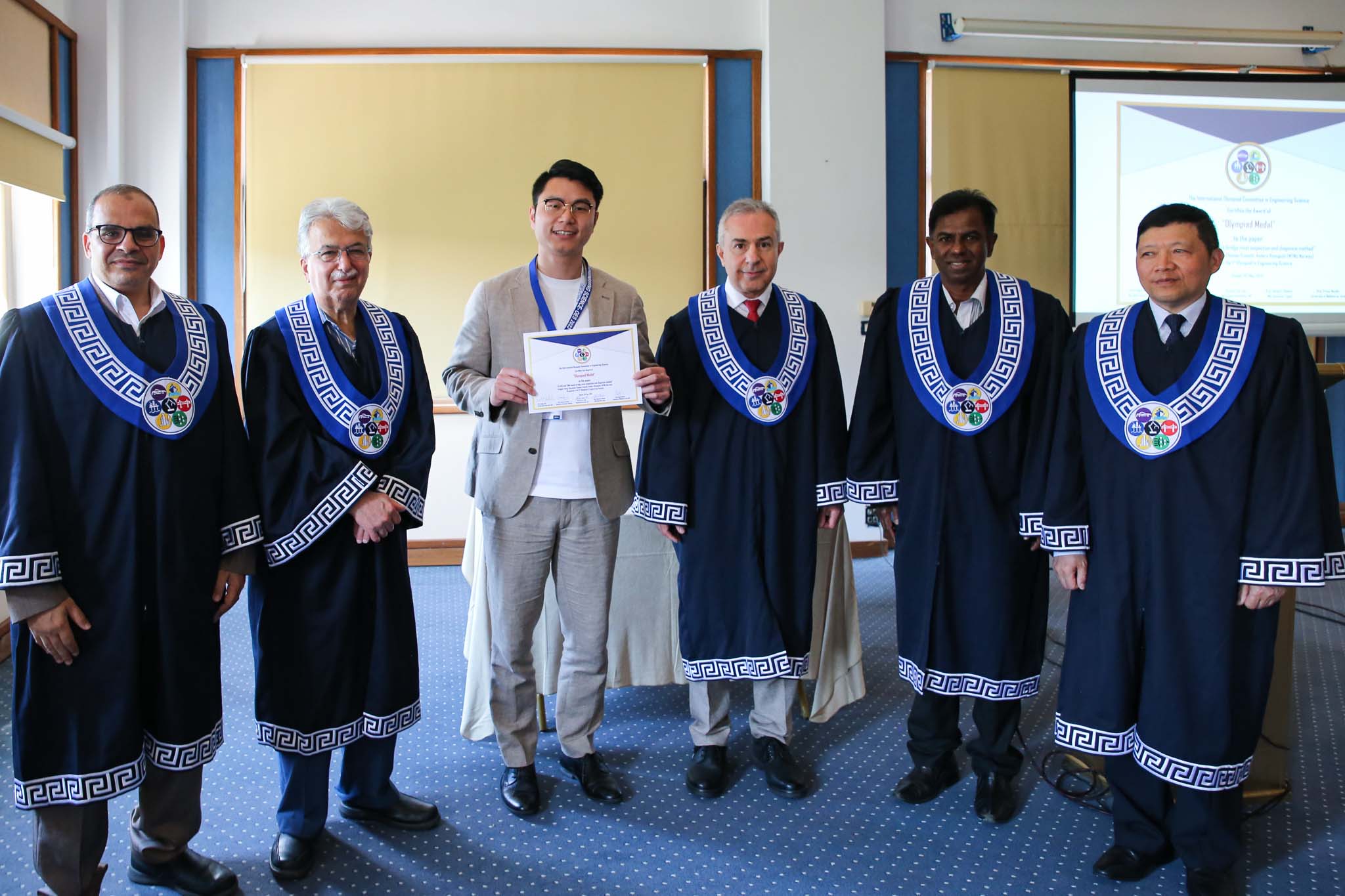
Tengjiao Jiang is a Researcher at the Department of Structural Engineering , Faculty of Engineering , Norwegian University of Science and Technology (NTNU) . Their work focuses on computer vision and deep learning applications for structural monitoring of transportation infrastructure. Research Interests : Computer Vision (CV) Machine Learning (ML) Optical Measurement Structural Health Monitoring (SHM) Condition Assessment of Transportation Infrastructures Recent Research Trends : Their publications (2020–2025) emphasize computer vision systems for railway and bridge monitoring, including uplift measurement, corrosion detection, displacement analysis, and damage assessment using CNNs and transformers. Key methods involve IMU sensors, line tracking, photogrammetry, and 3D reconstruction. Scientific Awards : Best Paper Award at IMAC-XLII conference (Jan 2024) Olympiad Medal in Olympiad in Engineering Science (May 2023) Supervision : Co-supervises PhD student Ziyue Lu (2022–present) and has co-supervised multiple Master’s students on topics like vision-based bridge inspection, modal identification, and vibration response analysis. Labs & Outreach : Conducts field tests on the Oslo Airport Line with vision-based monitoring systems.
Torleiv Håland Bryne is an Associate Professor at the Department of Technical Cybernetics, Faculty of Information Technology and Electrical Engineering, Norwegian University of Science and Technology (NTNU). He is affiliated with the Center for Autonomous Marine Operations and Systems and the Department of Engineering Cybernetics. Faculty: Information Technology and Electrical Engineering Departments: Technical Cybernetics, Engineering Cybernetics Center: Autonomous Marine Operations and Systems His research focuses on estimation and navigation systems for marine and aerial vehicles. Key areas include GNSS/INS integration , nonlinear observers , UAV navigation , inertial navigation , dynamic positioning , and sensor fusion . His work emphasizes robustness in GNSS-denied environments and risk-based sensor redundancy. Recent publications highlight advancements in UAV SLAM algorithms , phased-array radio calibration , MEMS sensor applications , and underwater positioning systems . These studies demonstrate cross-disciplinary applications in aerospace, maritime, and robotics domains. Labs/Teams: Center for Autonomous Marine Operations and Systems, NTNU Key Collaborators: Tor Arne Johansen, Thor I. Fossen, Sigurd Mørkved Albrektsen
Dr. Richard Hann is a Senior Researcher and Director of the UAV Icing Lab at NTNU. His work focuses on in-flight icing of UAVs, UAS, and eVTOL aircraft, with over 30 publications in this field. He leads the UAV Icing Lab, supervising five PhD students and several master's students. He also serves as a lead aerodynamics engineer and shareholder at UBIQ Aerospace, a spin-off commercializing ice protection systems. His research emphasizes UAV applications in cold climates, particularly in Svalbard, including meteorology, glaciology, and atmospheric pollution studies. Education: Bachelor/Master in Aerospace Engineering from the University of Stuttgart (2013) PhD in UAV Icing from NTNU (2020) Research Interests: Atmospheric icing mechanisms, UAV cold-climate operations, Arctic drone applications, and ice protection technologies. He collaborates on projects like glacier mapping in Svalbard and environmental forensics. Articles Trends: Recent work emphasizes experimental validation of ice protection systems, CFD modeling of icing effects, and UAV performance under icing conditions. Arctic-focused studies dominate, with contributions to glaciology and environmental monitoring via drone technology. Advising & Grants: Supervises five PhD students and master's researchers. His lab develops ice protection systems and collaborates with UBIQ Aerospace for commercialization. Active in international conferences and NATO STO reports on icing challenges. Labs/Teams: Leads the UAV Icing Lab at NTNU and collaborates with UBIQ Aerospace. Engages Arctic researchers in Svalbard for drone-based field campaigns.
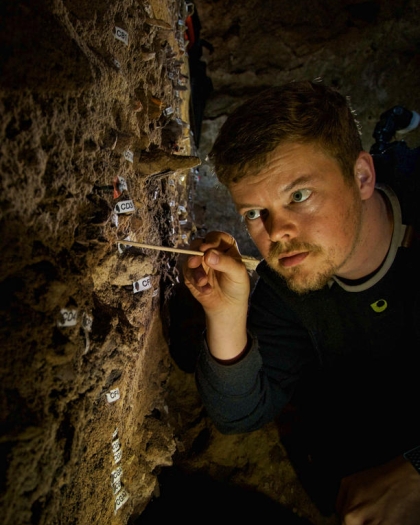
Magnus Mathisen Haaland is a Postdoctoral Research Fellow in Archaeology at the University of Bergen's Department of Archaeology, History, Cultural and Religious Studies. He is affiliated with the Centre for Early Sapiens Behaviour (SapienCE), funded by the Research Council of Norway (Project 262618). His research focuses on geoarchaeological methods, micromorphology, and Middle Stone Age technologies, particularly ochre use and site formation processes in Southern Africa. His work integrates fieldwork in South Africa and Zimbabwe with laboratory analyses, including micro-FTIR, XRF, and photogrammetry. Haaland has contributed to excavations at Blombos Cave, Klipdrift Shelter, and Pomongwe Cave, exploring topics like ochre powder deposition, hearth maintenance, and digital site reconstruction. He also collaborates on experimental archaeology, documenting fire behaviors and material use. Haaland's publications emphasize methodological innovation, bridging traditional and digital archaeological approaches. His research highlights human-environment interactions during key phases of prehistoric development. He actively engages with both academic and public audiences through lectures and media interviews.
Oliver Kevin Hasler is a Research Fellow at the Department of Technical Cybernetics , Norwegian University of Science and Technology (NTNU). His work focuses on advanced sensing technologies, including hyperspectral imaging from drones, UAV navigation systems, and environmental monitoring applications. He has collaborated extensively with researchers in electrical engineering, geoscience, and marine biology to develop innovative solutions for georeferencing, signal processing, and autonomous navigation. Key research areas include: Robust navigation systems using signals of opportunity (e.g., 5G, LTE) Integration of hyperspectral imagery with photogrammetry for shallow-water mapping Lightweight UAV payloads for atmospheric and oceanographic measurements His recent work emphasizes low-cost sensor designs and validation campaigns in coastal regions. Hasler has contributed to multiple international conferences and journals, with a focus on IEEE platforms and remote sensing publications. Collaborations include projects on algal bloom monitoring, reflective environment navigation, and drone-based hyperspectral systems.
Raul Primicerio is a Professor in the Department of Arctic and Marine Biology at UiT The Arctic University of Norway, Tromsø. His research focuses on climate change impacts on Arctic marine ecosystems, particularly examining borealization processes, food web dynamics, and functional diversity shifts in the Barents Sea region. He maintains an active research profile with numerous high-impact publications spanning marine ecology, climate adaptation, and ecosystem management. His research interests center on climate-driven ecosystem transformations in high-latitude environments. Primicerio investigates how warming temperatures alter marine community composition, with particular emphasis on fish communities, zooplankton dynamics, and trophic interactions. His work integrates field observations with network analysis to understand borealization - the northward shift of temperate species into Arctic habitats. Current projects examine functional diversity metrics as early warning signals for ecosystem regime shifts, spatial food web reorganization due to atlantification, and blue carbon storage in Arctic benthic systems. His research group employs both traditional ecological methods and innovative approaches like noninvasive image-based body size measurements. Analysis of Primicerio's recent publications reveals strong thematic focus on climate change impacts across multiple ecosystem components. His work demonstrates consistent examination of borealization processes in the Barents Sea, with particular attention to how warming affects functional diversity, community composition, and trophic structure. The publications show increasing emphasis on dynamic management approaches that respond to rapid ecosystem changes rather than static conservation frameworks. His research bridges fundamental ecological questions with practical conservation applications, particularly regarding marine protected areas in changing environments. Primicerio actively participates in major research initiatives including the CLEAN project (Cumulative impact of multiple stressors in High North ecosystems), IMPACT (Integrated Monitoring of Parasites in Changing Environments), and ClimeFish. His work frequently involves international collaborations across Arctic research institutions, contributing to comprehensive assessments of ecosystem condition in Norwegian Barents Sea shelf ecosystems. He is a member of the Freshwater Ecology Group at UiT and contributes to working groups on integrated assessments of the Barents Sea.
Fjola Gudrun Sigtryggsdottir is a Professor in the Department of Civil and Environmental Engineering at NTNU’s Faculty of Engineering. Her research focuses on dam safety engineering, geotechnical systems, and infrastructure resilience. Notable contributions include studies on embankment dam failure mechanisms, volcanic lava flow management, and rockfill dam stability under extreme conditions. Affiliations: NTNU, Norwegian Water Resources and Energy Directorate (NVE) Education: PhD in Engineering Sciences (2015) Research interests emphasize: Hydraulic and geotechnical performance of dams Failure analysis and breach modeling Geohazard monitoring for hydropower infrastructure Experimental methods using photogrammetry and smart sensors Recent work includes: 2025: Lava flow barrier design during Iceland’s Geldingardalir eruption 2024: Parametric breach model validation for embankment dams 2023: Photogrammetric analysis of rockfill dam failure Publications span journals like Frontiers in Built Environment , Water , and Journal of Hydraulic Engineering . Active in international collaborations through HydroCen and IAHR.