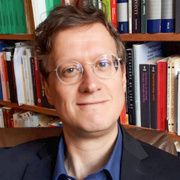
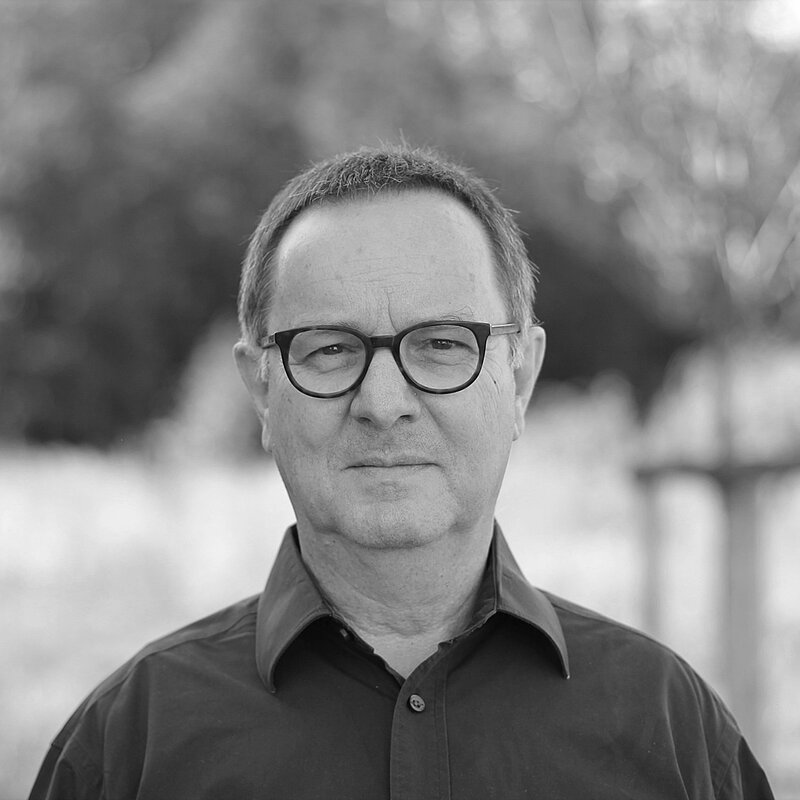
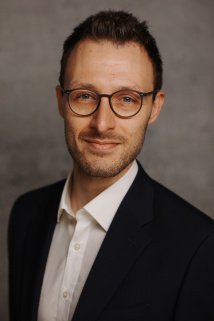
Prof. Dr. Oliver Müller is a Professor at the Department of Philosophy, University of Freiburg, and serves as Vice Dean of the Faculty of Philosophy. His academic journey includes a doctorate from Humboldt University Berlin (2005) and a habilitation in Philosophy (2012). Müller leads research on Philosophical Anthropology, Philosophy of Technology, and Ethics, with a focus on human-machine interactions and Anthropocene ethics. He supervises doctoral and postdoctoral researchers across projects like livMatS and BrainLinks-BrainTools. Research interests span neuroethics, transhumanism, and socio-technological systems, emphasizing ethical frameworks for emerging technologies. Publications explore AI ethics, drone warfare, and phenomenological embodiment, reflecting interdisciplinary engagement with neuroscience and environmental philosophy. Honors include the MTZ Bioethics Award and Heisenberg Fellowship. Müller directs participatory discourse initiatives bridging art and science, fostering public engagement with technological ethics. His work advances critical dialogues on human enhancement and ecological responsibility in the digital age.
Rhenish Friedrich Wilhelm University of BonnGermany
Prof. Cornelia Richter is a Professor of Systematic Theology and Hermeneutics at the Protestant Theological Faculty of the University of Bonn since 2012. She serves as Chair of the Senate of the University of Bonn since 2024 and has held leadership roles such as Dean of the Faculty of Protestant Theology (2020–2024). Born in 1970, she earned her doctorate (summa cum laude) from the University of Marburg in 2002 and habilitation in 2010. Her research focuses on Philosophy of Religion, Hermeneutics, and Resilience in Religion and Spirituality, notably leading the DFG-funded project FOR 2686. She has held visiting professorships in Zurich and Giessen and contributed to theology through editorial roles in journals like International Journal of Philosophy and Theology . Her work bridges theology with interdisciplinary studies, addressing modern challenges like pandemic resilience and interfaith dialogue. Education: PhD (2002), Habilitation (2010) – University of Marburg Studies in Protestant Theology and Philosophy – Universities of Vienna and Munich Research Fellowship – Center for Subjectivity Research, Copenhagen (2003–2005) Research Interests: Her work explores hermeneutical approaches to religious meaning, resilience in crises, and the interplay between theology and modern challenges. Key areas include: - Critical analysis of resilience frameworks in theology and philosophy - Theological engagement with modern existential issues (e.g., hope, fear, powerlessness) - Interdisciplinary dialogue on religion’s role in human sciences. - Resilience studies in healthcare and pandemic contexts. Grants & Projects: DFG-FOR 2686 “Resilience in Religion and Spirituality” (2019–2022) Editorial leadership in multiple theological journals and book series Co-director of the Bonn Institute of Hermeneutics Labs/Teams: Department of Systematic Theology, University of Bonn; interdisciplinary research groups on resilience and theology.
Prof. Julia Peters is a Professor at the Philosophical Seminar of the University of Heidelberg. Her research focuses on systematic questions in Kantian philosophy, post-Kantian German idealism, moral philosophy, philosophical anthropology, and aesthetics. She is currently completing a book project analyzing Kant's account of moral character and advancing a comprehensive interpretation of Hegel's philosophy of mind, incorporating Freudian psychoanalytic insights. Additionally, she explores Fichte's moral philosophy in comparison with Kant's framework. Her academic contributions bridge historical philosophy with contemporary debates, particularly in ethics and the philosophy of mind. Current projects emphasize interdisciplinary dialogue between German idealism and psychoanalytic theory. No awards or grants are explicitly mentioned in the text. No formal advisees or laboratory affiliations are listed, though her work suggests involvement in graduate supervision related to German philosophy.
Christian Martin is a Professor of Philosophy including the History of Philosophy and Managing Director of the Institute of Philosophy at the University of Stuttgart. He holds a PhD (2010) and habilitation (2019) from LMU Munich. His research spans systematic philosophy (metaphysics, philosophy of language, philosophy of nature, ecological foundations, aesthetics) and historical philosophy (classical German, early analytic, and 20th-century continental traditions). Key focuses include Hegel's philosophy of nature, Kantian transcendental aesthetics, and Wittgenstein's language-games. He leads the 'Nature and Mind' research area addressing ecological crisis through philosophical frameworks. Recent roles include visiting professorships at the University of Chicago, Paris 1 Panthéon-Sorbonne, and Leipzig. He has organized conferences on classical German philosophy and ecological philosophy. His work bridges analytical and continental traditions, emphasizing systematic integration of philosophical problems. Education: PhD in Philosophy (2010), LMU Munich Habilitation (2019), LMU Munich M.A. in Philosophy (2006), LMU Munich Research Interests: Systematic work emphasizes metaphysical foundations of ecology, logic-nature relationships, and forms of knowledge (e.g., art, religion). Historical studies focus on Kant, Hegel, Schelling, Frege, Wittgenstein, and 20th-century continental thinkers. Current projects explore nature's philosophical conceptualization in the ecological crisis context. Professional Activities: Organized conferences like 'Conceptions of Nature in Classical German Philosophy' (2023) and 'Epistemology and Philosophy of Mind after Kant and Hegel' (2023) Editorial roles for journals and series such as Cambridge Elements: The Philosophy of Hegel Visiting fellowships at institutions including the University of Chicago and the FAGI Leipzig Research Area 'Nature and Mind': Develops critical frameworks for human-nature relationships in ecological crises, integrating philosophical analysis with contemporary environmental challenges.
Prof. Dr. Johanna Rahner serves as Professor of Dogmatics, History of Dogma and Ecumenical Theology at the Catholic Theological Faculty of the Eberhard Karls University of Tübingen since 2014. She also holds the position of Director of the Institute for Ecumenical and Interreligious Research at the same institution. Her research interests span a wide range of theological topics including: Biblical Hermeneutics for Systematic Theology (especially Christology), Ecumenical theology and its ecclesiological problem areas, the relationship between religion, culture, educational processes, politics and society, interaction of contemporary culture with worship and theology of the sacraments, theoretical foundations of dialogue between world religions in a globalized world, relationship between reason and faith, theology and philosophy, theology and natural sciences, patchwork religiosity and subjective religious pluralism, and religiosity of children and adolescents with special consideration of youth and cult literature and pop music. Prof. Rahner's publications demonstrate a consistent focus on contemporary challenges facing the Catholic Church, ecumenical dialogue, and the intersection of theology with modern culture. Her work frequently addresses the Second Vatican Council's implications for contemporary theology, the relationship between science and faith, and the practical application of theological concepts in interreligious contexts. She has made significant contributions to understanding eschatology, ecclesiology, and the practical application of theological concepts in interreligious contexts. Wissenschaftlicher Beirat des Kuratoriums zur Vorbereitung des Reformationsjubiläums 2017 Ökumenischer Arbeitskreis evangelischer und katholischer Theologen Editorial-Board der Ökumenischen Rundschau Wissenschaftlicher Beirat der Europäischen Melanchthonakademie, Bretten Societas oecumenica AG der deutschsprachigen katholischen Dogmatiker und Fundamentaltheologen Europäische Gesellschaft für Katholische Theologie. Deutsche Sektion e.V. AGENDA – Forum katholischer Theologinnen e.V. Prof. Rahner has been involved in several significant research projects including Moralische Urteilsfindung im säkularen Diskurs als Herausforderung für die christlichen Konfessionen, Intergenerationelle LehrerInnen-Ausbildung, Theorie und Praxis des interreligiösen Lernens, Kirche und Bildungsregime in Lateinamerika, Reformationsgedenken und Ökumene, and Grundfragen theologischer Anthropologie in Auseinandersetzung mit aktuellen naturwissenschaftlichen Modellen. She leads the Institute for Ecumenical and Interreligious Research, which serves as a hub for scholarly research on contemporary challenges in interfaith relations and ecumenical theology.
Dr. Benjamin Baumann is an Assistant Professor at Heidelberg University's Institute of Anthropology since April 2020, where he coordinates the MA program in Sociocultural Anthropology. Previously, he served as lecturer and research associate at Humboldt-Universität zu Berlin's Department of Southeast Asian Studies for a decade. His research integrates Anthropology Religious Studies Cultural Studies Media Studies with focus on Rural Thailand-Cambodia border regions Human-Nonhuman relationships Termite mound cults Queer ritual specialists Social ontology in the Global South . Recent publications analyze Chthonic coexistence in Thailand Decolonial translation practices Development narratives in Southeast Asia Spirit possession professionalization Gender and enchantment in religious contexts . His work appears in Thailand Review , South East Asia Research , and edited volumes like Stone Masters and Monsters: A Companion . Scientific recognition includes 2018 Humboldt-Prize for Excellence in Teaching 2017 Harvard Society of Fellows nomination 2010 Rudolf Virchow Prize nomination
Stefan Gosepath is a Professor of Practical Philosophy at the Institute of Philosophy, Faculty of Humanities, Free University of Berlin. He serves as Principal Investigator for multiple major research projects including the Volkswagen Foundation's 'The Deserving Rich' and the Excellence Cluster 'Contestations of the Liberal Script' (SCRIPTS), where he coordinates the Research Unit 'Order'. His academic affiliations include membership in the Academy of Sciences and Literature Mainz and participation in the Berlin-Potsdam Research Group on International Rule of Law. His research spans political philosophy with particular focus on theories of justice (global and intergenerational), equality, democracy, human rights, and responsibility. Key areas include social and legal philosophy, action theory, meta-ethics (particularly rationality and normativity), and theories of the good life. His work critically examines meritocracy, inheritance systems, and wealth distribution within liberal democracies. Notable publications demonstrate evolving focus from foundational theories of egalitarian justice to contemporary challenges including pandemic ethics, digital governance, and contestations of liberal democracy. His recent work analyzes merit systems, inheritance justice, and global philosophical frameworks through interdisciplinary lenses combining philosophy, sociology, and political science. Opus Magnum Stipendium der VW Stiftung (2021/22) Ordinary Member, Academy of Sciences and Literature Mainz (since 2020) Principal Investigator, Excellence Cluster SCRIPTS (since 2019) Gosepath leads multiple collaborative research initiatives including 'Transforming Solidarities' (Berlin University Alliance) and 'Liberal Order, Legitimate Authority and Disagreement' (with Mattias Kumm). His work connects theoretical frameworks with practical policy challenges, particularly regarding social cohesion in migration societies and democratic resilience. He maintains active engagement with public discourse through media appearances and policy-relevant interventions on issues of justice and democratic governance.
PD Dr. Jens Wolff is a German theologian and researcher at the Faculty of Theology, University of Rostock . His work bridges image theory , cultural hermeneutics , and negative theology , with a focus on Lutheran theology and its intersections with literature and art . Education : Studied at Eberhard-Karls-Universität Tübingen, Martin-Luther-Universität Halle/Wittenberg, Ludwig-Maximilians-Universität München. Academic Timeline : 1995–1998 Heidelberg Academy researcher, 1998–2002 assistant at Münster's Faculty, 2003 PhD, 2005 ordained pastor, 2009–2012 DFG project on Sigmund von Birken, 2012–2015 DFG project on Image Theory, 2015 habilitation. Wolff's research explores image and media theory through theological lenses, interrogating figurative knowledge , religious rhetoric , and intercultural hermeneutics . His work connects Baroque literature (e.g., Klopstock, Hamann) with contemporary philological and deconstructive methods , examining tensions between sacralization and secularization . His recent publications analyze the word of God as performative polysemy in Lutheran thought, death and utopia in Stefan Andres' work, and iconic anthropology in Reformation contexts. He co-edited the two-volume Bild und Tod (2016), a foundational text on image-death relations. Awards: Martin-Luther-Preis für den akademischen Nachwuchs (2005) for his dissertation on Metapher und Kreuz . Wolff's advising and collaborative work focus on interdisciplinary image studies , including DFG-funded projects and symposia like the Image and Sound conference (2014). He maintains links to institutions in Bratislava , Frankfurt , and Brazil .
Prof. Dr. Rahel Jaeggi is a Professor of Practical Philosophy, Legal Philosophy, and Social Philosophy at Humboldt University of Berlin and director of the Center for Social Critique since 2018. She has held visiting professorships at Yale University, Fudan University (Shanghai), and the New School for Social Research (New York), and was a fellow at Princeton University's Institute for Advanced Study. Her research centers on critical theory and includes concepts such as Alienation , Commodification/Reification , Life Forms , and Solidarity . Her publications, including collaborations with Nancy Fraser and R. Celikates, critically examine capitalism, social institutions, and modern political-philosophical debates. Recent works like Progress and Regression (2023) and Capitalism - A Conversation in Critical Theory (2018) analyze systemic social structures and their impact on human agency. Earlier monographs, such as Critique of Forms of Life (2014) and Alienation (2016), establish her as a leading voice in contemporary Marxist and Frankfurt School traditions. Scientific Awards Fellow of the British Academy (FBA) Fellow at Princeton University's Institute for Advanced Study Jaeggi supervises doctoral students, including Philipp Jabold , whose dissertation on the world market under globalization is supported by the DFG-funded Research Training Group. Thesis supervision requires prior course engagement with her work, and she mandates participation in colloquia for master's candidates.
Hermanni Friedrich is a Professor of Systematic Theology at the Eberhard Karls University of Tübingen , affiliated with the Evangelical Theological Faculty . He co-opts with the Faculty of Philosophy and History since 2007 and works on German Idealism, particularly Schelling and Hegel, blending theology and philosophy. Education : Double degree in Protestant theology and philosophy (Wuppertal, Tübingen, Munich, Bochum); Doctorate (1993, summa cum laude); Habilitation in Systematic Theology (2001). Research Interests include theodicy, the nature of evil, metaphysics, mind-body dualism, and religious pluralism. He explores intersections between theological doctrines and philosophical frameworks, especially in German Idealism. Publication Trends : His works focus on Schelling's philosophy, theodicy, and interdisciplinary dialogues between theology, ethics, and metaphysics. Topics range from divine attributes and freedom to the philosophical implications of religious truth claims. Projects & Collaborations : Leads the Interuniversity Research Association for Metaphysics and Philosophy of Religion , investigating Schelling's late philosophy and truth claims of world religions with colleagues like Friedrike Schick and Christian Steiner.
Prof. Dr. Rüdiger Grimm is a Professor of Theories and Methods of Special Education at Alanus University of Arts and Society since 2009. His academic background includes a PhD from Martin Luther University Halle-Wittenberg (1994) and postgraduate studies in education at Pädagogische Hochschule Reutlingen and University of Tübingen. He has extensive professional experience as a teacher, home director, and musician in curative education institutions. His research focuses on anthroposophical curative education, special education theory, and educator self-development. Key areas include historical studies of Rudolf Steiner's educational concepts, therapeutic community dynamics, and pedagogical inclusion strategies. He has authored monographs on curative education history and edited major works like the Compendium of Anthroposophical Curative Education . Prof. Grimm held leadership roles including Secretary of the International Conference for Curative Education and Social Therapy (1995-2017) and Director of Camphill Schulgemeinschaft Brachenreuthe (1988-1995). His teaching includes courses on the history of special education, curative methods, and hermeneutical understanding in pedagogy. His recent publications (2011-2016) explore meditative elements in curative education, historical analysis of epilepsy treatment, and the philosophical foundations of inclusive pedagogy. These works demonstrate a strong focus on integrating anthroposophical principles into modern educational practice.
Dr. Alexandra Schotte is a Lecturer in Pedagogy at the Faculty of Humanities and Social Sciences , University of Augsburg . Her research focuses on inclusive education , historical educational research , and Herbartian pedagogy , with a particular emphasis on disability education, educational media, and the Jewish Enlightenment (Haskala). She has held temporary professorial roles at the University of Duisburg-Essen and Friedrich Schiller University Jena. B.A. and M.A. in Educational Science and Sociology (1994–2000), Friedrich Schiller University Jena Ph.D. (Dr. phil.) in Educational Science (2008), Friedrich Schiller University Jena Her scholarly work explores intersections of educational theory , social pedagogy , and curriculum development , often contextualized through historical case studies and Herbartian philosophy. She co-edits academic series like Herbartstudien and contributes to international dialogues on postcolonial educational approaches. Scientific awards include: 2010 Award for 'Basic Pedagogical Research' (Friedrich Schiller University Jena) 2016 Habilitation Scholarship from the University of Augsburg's 'Equal Opportunities for Women in Research and Teaching' program She actively participates in academic societies, including the International Herbart Society and the German Society for Educational Science (DGfE), and contributes to educational media research through editorial and conference roles.
Christoph Hammann is a researcher at the Department of New Testament Studies within the Faculty of Protestant Theology at the University of Münster, working under Professor Eve-Marie Becker's chair since August 2022. He is currently completing his habilitation on "Authority, Power, and Rule in the Lukan Double Work: Exegetical Investigations of Luke's Ascending Christology Against the Background of Greek-Roman Biography, Historiography, and Epic" (2022-present). His research spans multiple interdisciplinary areas at the intersection of biblical studies, ancient philosophy, and cultural history. Hammann's primary interests include Pauline theology and epistolography, the Lukan works in Greco-Roman cultural context, the relationship between natural science and theology in early Christianity, philosophy of the Imperial Period and Late Antiquity, conceptions of history in the New Testament, and the beginnings of Christianity in Rome. His academic background combines classical philology (specializing in Greek studies) with Protestant theology, enabling unique cross-disciplinary approaches to biblical texts. Hammann's publication record reveals a consistent engagement with how early Christian texts interacted with and transformed contemporary Greco-Roman discourses on topics like purity, authority, and cosmology. His work often examines the philosophical and medical contexts of biblical concepts, particularly in relation to heart metaphors, sacrificial practices, and Christological development. DAAD Congress Travel Grant (2023) Publication subsidy for dissertation (2019) PhD Prize from Philipps-Universität Marburg (2019) Multiple international research grants from Evangelisches Studienwerk Villigst (2015-2018) Fondation Hardt research grant (2017) Hammann actively contributes to academic life through teaching undergraduate and graduate courses in New Testament exegesis (including Greek language instruction), organizing conferences such as the upcoming Colloquium Biblicum Lovaniense LXXIV on The Corinthian Letters (2025), and co-editing scholarly volumes like "Opfer in Antiochien" (2023). He serves on multiple academic committees and is a member of several scholarly societies including the Society of Biblical Literature (since 2025) and the Münster School of Ancient Cultures (since 2023). His research group within the Excellence Cluster "Religion and Politics" focuses on ancient cultural contexts of early Christianity, with particular attention to the intersections between biblical texts and Greco-Roman philosophical, medical, and political discourses. Hammann also leads student excursions to Rome to study early Christian sites and Pauline contexts.
Bernd Ladwig is a University Professor of Political Theory and Philosophy at the Free University of Berlin's Otto Suhr Institute for Political Science. He has held this position since February 2011, following a Junior Professorship at the same institution from 2004-2010. His academic career includes previous positions as a Scientific Assistant at Otto-von-Guericke University Magdeburg (2000-2004) and at Humboldt University Berlin (1998-2000). Ladwig received his doctorate in philosophy from Humboldt University of Berlin in 1999 (summa cum laude) with a thesis on "Justice and Responsibility: A Study of the Concept of Equality in Ethical Liberalism," supervised by Prof. Dr. Herfried Münkler and Prof. Dr. Axel Honneth. He completed his Diplom in Political Science at Freie Universität Berlin in 1994 with highest distinction. His research focuses on human rights, animal rights, justice theory, political philosophy, and applied ethics. He has developed significant expertise in normative theories of global relations, multiculturalism, democracy theories, and the intersection of political theory with animal ethics. His work often explores the anthropological foundations of ethics and the relationship between theoretical frameworks and practical political issues. Ladwig has published extensively on topics ranging from the philosophical foundations of human rights to the political theory of human-animal relationships. Ladwig's recent publications demonstrate a clear trajectory toward integrating animal ethics into mainstream political theory. His work challenges traditional boundaries between human and non-human rights while maintaining rigorous philosophical standards. He has developed a distinctive position that advocates for political justice for animals without necessarily granting them citizenship status in human political communities. Principal Investigator of the Interdisciplinary Graduate College "Human Rights under Pressure - Ethics, Law, and Politics" (2014-2017) Director of the annual course "The Diversity of Human Rights" at the Inter-University Center Dubrovnik Member of the Green Academy Co-editor of the journal Leviathan - Berlin Journal for Social Science Member of the Political Theory and Intellectual History section of the German Political Science Association (DVPW) Ladwig has supervised numerous doctoral students and has been actively involved in academic service as a reviewer for major journals and research foundations. His teaching covers a wide range of topics including political theory, philosophy of human rights, animal ethics, and classical political philosophy from Rousseau to Kant.
Michael Quante is a Professor of Philosophy with a focus on Practical Philosophy at the University of Münster. His affiliations include leadership roles in the Cluster of Excellence 'Religion and Politics', the Graduate School, and the Center for Science Communication. He holds dual roles as Prorector for International Affairs and Sustainability at the University of Münster. His academic career includes habilitation (2001) and a PhD (1992) from the University of Münster, with earlier studies in Philosophy and German at the Universities of Münster and Berlin. Quante’s research focuses on Philosophy of German Idealism, especially Hegel and Marx, Philosophy of the Person, Action Theory, and Biomedical Ethics. Notable projects include leading the 'Religious-Philosophical Noncognitivism' project and co-editing the 'Hegel Studien' series. His work bridges philosophical theory with contemporary societal issues, such as ethics in science, inclusive education, and the critique of religion. His recent publications emphasize Marx’s philosophy, Hegelian recognition theory, and ethical aspects of biomedical technologies. He has received prestigious awards, including the German Prize for Philosophy and Sozialethik (2013) and honorary doctorates from institutions like the Ilia State University (2023). He actively contributes to academic governance, including roles in the Berlin-Brandenburg Academy of Sciences and the Academia Europaea. Quante’s advising and grants include leading interdisciplinary projects on individualization and evolutionary processes. His involvement in labs and teams includes the Center for Bioethics and the Graduate School 'Evolutionary Processes of Adaptation and Disease'.