Fabrice LEMOULT is an Associate Professor at Institut Langevin , ESPCI Paris - PSL University. His research focuses on experimental wave physics in complex media, particularly metamaterials, acoustics, and soft matter mechanics. Research Highlights : Wavefront shaping, Dirac cone manipulation, time-reversal applications, and subwavelength acoustic/elastic wave control. Key Collaborations : Mathias Fink, Geoffroy Lerosey, Sébastien Popoff, Claire Prada. Recent Work Trends : Studies on elastic wave dynamics in soft materials (2024), acoustic metasurfaces for noise isolation (2024), and microwave metamaterials for topological effects (2024). Earlier works explore superlensing (2015), phononic crystals (2016), and nonreciprocal wave propagation (2017). Advising & Outreach : Mentored 11 doctoral/postdoctoral researchers, including Samuel Croquette and Simon Yves. Advocates for frugal science and public engagement via platforms like @FabLemoult on scicomm.xyz .
Alexandre Aubry is a Research Director at CNRS affiliated with the Institut Langevin in Paris. His work focuses on imaging through complex media using wave physics principles, with applications in ultrasonic imaging, optical microscopy, seismic imaging, and radar technology . He leads projects supported by the ERC Consolidator Grant REMINISCENCE and ANR COPPOLA , and has co-founded the biomedical imaging company OWLO . Education: Habilitation à Diriger des Recherches, Université Paris Sciences & Lettres (2022) Post-Doc under John Pendry, Imperial College London (2008-2010) PhD under Arnaud Derode, Université Pierre et Marie Curie (2008) Engineer's Degree, ESPCI ParisTech (2005) Research Highlights: He developed 3D ultrasound matrix imaging to overcome wavefront distortions in biomedical applications, and pioneered passive seismic matrix imaging for volcanic structure mapping. His theoretical contributions include distortion matrix formalism for aberration correction and multiple scattering analysis in heterogeneous media. Scientific Awards: ERC Consolidator Grant REMINISCENCE ANR COPPOLA grant Research Team: Currently supervising 9 active PhD students and 5 postdoctoral researchers , with a track record of mentoring 12 former team members including prominent researchers like François Legrand and Laura Cobus.
Torsten Hopp is a Research Associate at the Institute for Data Processing and Electronics (IPE) at Karlsruhe Institute of Technology (KIT). His work focuses on advanced medical imaging technologies, particularly 3D ultrasound computer tomography (USCT) and its integration with MRI and X-ray modalities for breast cancer diagnosis. Research Interests: Ultrasound tomography system development Image registration algorithms Machine learning applications in medical imaging Biomechanical and computational modeling GPU-accelerated image reconstruction Multimodal imaging for clinical workflows Publication Trends: Torsten Hopp has contributed extensively to the evolution of 3D USCT, with recent work emphasizing deep learning integration , refraction correction , and patient-specific modeling . His research bridges hardware innovation (e.g., PtQube device) with computational methods for clinical translation. Labs & Teams: Affiliated with KIT's Institute for Data Processing and Electronics , he collaborates on projects like the High Data Rate Processing and Analysis Initiative , advancing ultrasound tomography for breast cancer screening.
Dr. Aoife Morrin is an Associate Professor at the School of Chemical Sciences, Dublin City University (DCU), and Director of the National Centre for Sensor Research (NCSR) at DCU. She leads the 'Sample & Sense' research strand within the Insight Centre for Data Analytics, focusing on biochemical sensor platform development. Her work integrates electrochemical and optical transduction mechanisms with soft responsive materials to create wearable sensors for skin surface applications. She has published over 60 peer-reviewed papers (H-index 29, 4000+ citations), edited a book, and contributed to three book chapters. Dr. Morrin’s research spans wearable sensor formats, skin volatile emission profiling for disease biomarker discovery, and educational technology innovations in chemical education. Her recent publications highlight advancements in mobile phone-based sensors, volatilomic analysis of infections, and green chemistry approaches to sensor fabrication. She actively explores the intersection of analytical chemistry, biomedical diagnostics, and environmental monitoring through printed electronics and flexible sensor platforms. Her work also addresses the integration of digital tools like virtual laboratories and micro-skill badging for chemical sciences education. Dr. Morrin collaborates across disciplines to develop non-invasive diagnostic technologies, including for diabetic foot ulcer infections and skin pH monitoring. She contributes to environmental sensor development for pollutants like PFAS and cooking oil VOCs, as well as emerging applications in honey characterization and aging research via skin volatiles.
J. Rock Hadley is a researcher in the Department of Radiology and Imaging Sciences at the University of Utah , specializing in Advanced MRI Imaging and Custom RF Coil Design . His work focuses on Image-Guided High-Intensity Focused Ultrasound Therapy , Neurovascular Imaging , and Breast-Specific MRI Devices . Education: PhD, University of Utah ME, University of Utah BS, University of Utah Hadley's research spans MRI Technology Development , including RF Coil Design , Gradient Coil Systems , and Image-Guided Robotic Procedures . His recent work emphasizes Transcranial MRgHIFU , Carotid Artery Imaging , and High-SNR MRI Coils for organs like the Pituitary Gland and Optic Nerve . The 15 most recent publications highlight his contributions to 3T MRI Systems , MR Thermometry , and Phased Array Coil Decoupling . Articles from 2025–2020 demonstrate sustained innovation in Medical Robotics , Breast Imaging , and Neurovascular MRI . Hadley holds a patent for an Anatomical Positioning System (2009) and has collaborated extensively in Carotid Bifurcation Studies and Optic Nerve Imaging . His work is supported by grants and partnerships with institutions like the Coil Lab at the University of Utah.
Professor Joon-Ho Lee is a distinguished faculty member in the Department of Information and Communication Engineering at Sejong University, where he has served since 2004. His academic journey began at POSTECH, where he earned his B.S. (1994), M.S. (1996), and Ph.D. (1999) degrees. Prior to joining Sejong University, he worked as a Senior Researcher at the Electronics and Telecommunications Research Institute (ETRI) from 1999 to 2004 and held a Visiting Scholar position at UC Berkeley in 2010. Ph.D., POSTECH (1999) M.S., POSTECH (1996) B.S., POSTECH (1994) Professor Lee's research focuses on radar signal processing, array signal processing, and electronic warfare systems. His work encompasses analytical performance analysis of radar and array signal processing algorithms, modeling and simulation of radar systems and electronic warfare, and machine-learning based radar signal processing. He specializes in direction-of-arrival estimation, angle-of-arrival estimation, radar natural frequency estimation, and radar target detection and recognition algorithms. His research bridges theoretical analysis with practical radar system implementation. His recent publications (2020-2025) demonstrate a consistent focus on performance analysis of direction-finding algorithms, particularly in challenging environments with correlated noise and jamming scenarios. His work spans both theoretical derivations of mean square error for various algorithms and practical implementations using compressive sensing and machine learning techniques. The research shows a progression from classical methods like MUSIC and monopulse algorithms toward more advanced sparse recovery and optimization-based approaches. Professor Lee teaches undergraduate and graduate courses including Numerical Analysis, Linear Algebra, and Array Signal Processing. He advises graduate students through Master's thesis research and maintains an active laboratory (Chung918) where students can schedule interviews on Mondays and Wednesdays from 13:00-16:00. His teaching and research are closely integrated, with students gaining hands-on experience in radar signal processing and electronic warfare simulation.
Marika Kieferova is a Senior Lecturer at the School of Computer Science, University of Technology Sydney (UTS), and a researcher at the UTS Centre for Quantum Software and Information (QSI). She previously held a postdoctoral position at UTS and earned her PhD in Physics and Astronomy from the University of Waterloo (2019) with a cotutelle from Macquarie University. Research Interests Her work spans quantum computing, quantum simulation, and quantum information theory. Key areas include developing quantum algorithms for Hamiltonian simulation, error mitigation strategies, and entanglement-induced optimization challenges in quantum neural networks. She explores non-Abelian anyon braiding, engineered dissipation for correlated states, and bound states of interacting photons in superconducting qubit arrays. Article Trends Her recent publications focus on quantum dynamics in many-body systems, error suppression techniques, and algorithmic advancements. Topics include phase transitions in random circuits, superdiffusive quantum transport, and randomized multi-product formulas for efficient simulation. These works highlight her contributions to quantum chemistry, topological quantum computing, and NISQ-era applications. Scientific Awards QIP Best Poster Award (2020) IQC Achievement Award (2019) Grants and Leadership She leads the QB-suite grant for quantum algorithm design (2024-2027) and contributes to defense quantum optimization projects (2021-2024). She serves as an associate editor for Quantum Science and Technology and participates in peer review for Physical Review A.
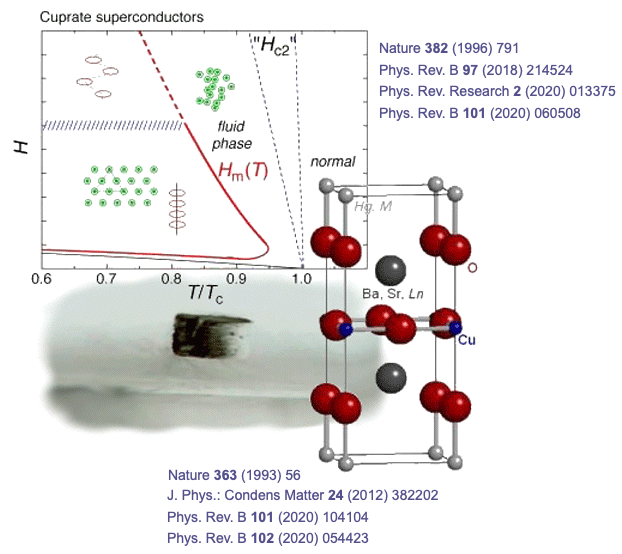
Prof. Dr. Andreas Schilling leads the Phase Transitions, Materials and Applications Research Group at the Physik-Institut of the University of Zurich (Switzerland). His work focuses on high-temperature superconductivity , quantum criticality , and multiferroic materials , with groundbreaking contributions such as the discovery of superconductivity above 130 K in HgBa₂Ca₂Cu₃O₁₊ₓ (1993). Research : Explores superconductivity mechanisms, vortex dynamics, and magnetoelectric coupling in quantum materials. Students : Mentors Ph.D. researchers and postdocs (e.g., Dr. Huanlong Liu, Dong Zhu) and has supervised numerous former advisees. Key Awards : Discovery of superconductivity above 130 K (1993), Development of multiferroic materials with room-temperature magnetoelectric coupling (2013).
Yasuhiro Oikawa is a Professor at the School of Fundamental Science and Engineering, Faculty of Science and Engineering, Waseda University. He holds a Doctor of Engineering degree from Waseda University and has been actively contributing to acoustics, signal processing, and optical measurement techniques. His research spans Sound field visualization using parallel phase-shifting interferometry Phase-aware audio signal processing algorithms Acoustic calibration and microphone sensitivity analysis Real-time sound event localization systems His recent publications focus on advanced time-frequency analysis, optical methods for sound measurement, and deep learning applications in acoustics. Key trends include Improving resolution in spectrogram-based signal processing Integration of physical models with neural networks Development of wearable acoustic sensor arrays Scientific awards recognizing his work include The Fumio Okano Best 3D Paper Awards CSS2018 Best Paper Award Acoustical Society of Japan Contribution Award Institute of Electronics, Information and Communication Engineers Human Communication Award He has served as a committee member for the Acoustical Society of Japan and is affiliated with organizations such as ACM, IEEE, and Acoustical Society of America. His research has been supported by collaborations with institutions like Technical University of Denmark and applications in robotics, museum exhibits, and consumer electronics.
Prof. Dr. Badri Krishnan is a long-term visitor at the Max Planck Institute for Gravitational Physics (Albert Einstein Institute) in Hannover, Germany, affiliated with the Observational Relativity and Cosmology department. His research centers on gravitational wave astronomy and theoretical general relativity, with a focus on compact binary systems and black hole dynamics. His primary research interests include black hole spectroscopy, ringdown physics, quasi-local horizon dynamics, and gravitational wave data analysis. He has pioneered work in black hole tomography and the detection of sub-dominant quasi-normal modes, contributing significantly to LIGO/Virgo data interpretation and tests of general relativity through gravitational wave observations. Analysis of his 2023-2025 publications reveals intense focus on binary black hole merger ringdown phases, with recurring themes of horizon dynamics, tidal effects in neutron star systems, and mathematical frameworks for gravitational waveforms. His work bridges numerical relativity, observational data, and theoretical predictions to probe black hole properties. Scientific Awards: No specific awards or fellowships were documented in the provided materials. Advising and Grants: The source text contains no information regarding student supervision, doctoral advisees, or research funding sources. Labs and Teams: Krishnan actively participates in Einstein@Home (distributed computing for gravitational wave/pulsar searches), Pulsar Timing Arrays, and the Atlas computing cluster at AEI, leveraging these infrastructures for large-scale gravitational wave data analysis.
A. Brinkman is a Full Professor in the Interfaces and Correlated Electron Systems group at the University of Twente , affiliated with the MESA+ Institute . Their research focuses on advanced quantum materials, particularly topological insulators , superconductivity , and spintronics , with a strong emphasis on quantum transport and nanowire devices . Research interests include probing topological fractional charge via Josephson junction arrays, current-induced spin polarization in topological systems, and phase-coherent transport in GeSn and SnTe alloys. Collaborative work spans high magnetic field applications and gate-tunable superconductivity . Recent publications highlight trends in topological materials , quantum interference , and nonreciprocal transport . Key sub-fields include Majorana bound states , Dirac semimetals , and surface state manipulation . Articles appear in journals like Physical Review B and Advanced Electronic Materials .
Gautam Vemuri serves as Professor in the Department of Physics at Indiana University, where his research focuses on laser physics and nonlinear optics with emphasis on semiconductor laser dynamics and quantum optical phenomena in waveguide arrays. His academic credentials include: Ph.D. in Physics from Georgia Institute of Technology (1990) M.S. in Physics from Brown University (1986) B.Sc. (Honors) in Physics from Delhi University, India (1984) Dr. Vemuri's research spans Atomic, Molecular and Optical Physics, investigating statistical properties of lasers and quantum effects in evanescently coupled systems. His work addresses semiconductor laser instability from optical feedback and explores phenomena including Anderson localization, Bloch oscillations, and PT-symmetry in finite lattices, with applications in optical communications and quantum physics testing. Analysis of his 2004-2013 publications reveals consistent focus on semiconductor laser dynamics under filtered optical feedback and quantum effects in waveguide arrays, with recurring themes of nonlinear dynamics, disorder effects, and symmetry properties across optical physics and condensed matter disciplines. He directs the Optical Physics Lab equipped with state-of-the-art instrumentation including argon-pumped Ti:Sapphire lasers, ultra-stable diode lasers, Erbium-doped fiber lasers, high-finesse optical cavities, and advanced data acquisition systems for experimental research. No public information is available regarding Dr. Vemuri's student advising activities or research grant funding.
Lucas J. Koerner is an Associate Professor in the Department of Electrical & Computer Engineering at the University of St. Thomas School of Engineering. He holds a PhD and MS in Physics from Cornell University and a BA in Physics and Mathematics from Northwestern University. Education: PhD in Physics, Cornell University MS in Physics, Cornell University BA in Physics and Mathematics (Integrated Science Program), Northwestern University Research Interests: Dr. Koerner specializes in electronics instrumentation for novel detection applications. His expertise spans image sensors , camera systems , optical time-of-flight , sensors , CMOS x-ray detectors , electrical instrumentation and data acquisition , and open source hardware . His work enables breakthroughs in medical diagnostics, scientific instrumentation, and industrial sensing through custom hardware solutions. Publication Trends: Recent publications (2018-2020) focus on embedded sensor networks, 3D-printed EMI shielding, and photodiode readout techniques. Earlier work (2006-2012) pioneered X-ray pixel array detectors for synchrotron and free-electron laser applications, enabling high-resolution protein crystallography and materials science breakthroughs through time-resolved measurements. Professional Experience: Prior to academia, Dr. Koerner developed radiation-hardened electronics for space missions at Johns Hopkins Applied Physics Lab and led camera electrical testing for mobile devices at a Fortune 500 company. His Cornell research created CMOS readout circuits for X-ray detectors used in single-particle diffraction studies. Teaching: He teaches Digital Design, Electricity & Magnetism, and Senior Design Clinic, emphasizing hands-on instrumentation development and open-source hardware principles.
Alkim Akyurtlu is a Professor and Associate Chair for Graduate Studies in the Department of Electrical and Computer Engineering at the University of Massachusetts Lowell's Francis College of Engineering. She directs the Printed Electronics Research Collaborative (PERC) and the Raytheon–UMass Lowell Research Institute (RURI). Education: Ph.D. in Electrical Engineering, Pennsylvania State University (2001) M.S. in Electrical Engineering, Pennsylvania State University (1996) B.S. in Electrical Engineering, Virginia Tech (1994) Her research focuses on Additive Manufacturing and Printed Electronics for RF/Microwave applications , including antennas, electromagnetic filters, wearable devices, functional printable inks, and metamaterials. She pioneers the development of barium strontium titanate (BST) composites for tunable RF components and flexible electronics. Her work bridges computational electromagnetics with advanced manufacturing techniques to create novel electromagnetic solutions. Recent publications (2023-2016) reveal strong trends in printed dielectric inks for RF devices , laser-sintered conductive composites , and flexible metamaterial-based antennas . Key subfields include BST-polymer varactors, photonic curing of conductive films, and 3D-printed microwave characterization systems, demonstrating consistent innovation in printed electronics for defense and communications applications. Scientific Awards: Three-time UML Outstanding Teaching Award recipient (2023, 2011, 2003) FLEXI R&D Award (2016) and IDTECHX R&D Award (2015) NASA Best Faculty Fellow Paper Award (2003) Senior Member of IEEE (2007) Student awards: IPC Education Foundation (2024), IEEE AP-S Student Paper Finalist (2023) Her research is funded by Air Force, NSF, DARPA, ONR, Raytheon, and NASA, supporting cutting-edge work in printed electronics and metamaterials. As director of PERC and RURI, she leads industry-academic collaborations advancing additive manufacturing capabilities. Her lab specializes in developing printable functional materials and characterizing electromagnetic properties of novel composites.
Dr. Ahmet Tekin is an Assistant Professor at the Department of Electrical and Electronics Engineering, Boğaziçi University. His research focuses on analog/mixed-signal/RF/microwave VLSI design, with emphasis on biomedical electronics, wireless communication systems, and integrated circuit innovation. He specializes in developing advanced sensor technologies, antenna arrays, and energy-efficient RF systems for healthcare, IoT, and aerospace applications. Key research areas include continuous glucose monitoring devices, optoelectronic blood pressure sensors, phased array transmitters for satellite communication, and resonance-based wireless charging systems. His work integrates cutting-edge semiconductor technologies like 22nm FDSOI and SOI CMOS with innovative circuit architectures. Dr. Tekin's recent publications highlight advancements in ultra-wideband antennas, adaptive sampling techniques, and biomedical IoT communication protocols. His research bridges electronics engineering with practical applications in healthcare, robotics, and renewable energy systems. Though no awards are explicitly mentioned, his prolific output in high-impact journals underscores his contributions to the field. He advises on interdisciplinary projects at the intersection of electronics and biomedical engineering, with a focus on wearable technologies and smart medical devices. His lab collaborates on energy harvesting systems and low-power biomedical sensors, reflecting a commitment to both foundational research and real-world solutions.