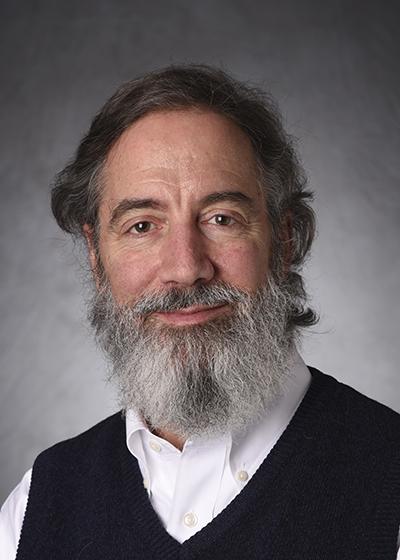
Miloje Despic is an Associate Professor in the Department of Linguistics at Cornell University , affiliated with the College of Arts and Sciences . His research spans theoretical syntax , morphology , and semantics , focusing on cross-linguistic variation and the syntax-morphology interface. Research Focus : Cross-linguistic variation in functional elements (e.g., articles), syntax-morphology interactions (e.g., hybrid agreement, clitic-affix distinction). Languages Studied : Slavic (Serbian, BCMS), Turkic, Algonquian (Cheyenne). Publication Trends : Recent work addresses reflexive possessive agreement in Mongolian, nominal ellipsis in Serbian, cyclic and multiple agreement in Cheyenne, markedness in Algonquian theme signs, and non-intersective adjectives. His research intersects syntactic theory , morphological anomalies , and semantic interpretation .
Howard A. Stone is the Donald R. Dixon '69 and Elizabeth W. Dixon Professor and Neil A. Omenn '68 University Professor in the Department of Mechanical and Aerospace Engineering at Princeton University's School of Engineering and Applied Science. He leads the Complex Fluids Group, conducting interdisciplinary research at the intersection of engineering, physics, chemistry, and biology. Dr. Stone received his B.S. in Chemical Engineering from UC Davis (1982) and Ph.D. from Caltech (1988). After a postdoctoral year at Cambridge University, he joined Harvard University's faculty in 1989, where he became the Vicky Joseph Professor of Engineering and Applied Mathematics before moving to Princeton in 2009. His research focuses on fluid dynamics phenomena across multiple scales, with particular emphasis on microfluidics, complex fluids, and biomechanics . His group investigates multiphase flows, colloidal systems, bio-inspired fluid phenomena, and physicochemical hydrodynamics. Recent work spans from fundamental studies of thin film drainage and droplet dynamics to applications in biological systems including blood flow, bacterial transport, and biomolecular condensates. The Complex Fluids Group employs experimental, theoretical, and computational approaches, often collaborating with industry partners on applications from medical devices to industrial processes. Analysis of his recent publications reveals a continued expansion into biological applications of fluid dynamics, with increasing focus on cellular mechanics, biomolecular condensates, and pathological hemodynamics, while maintaining strong contributions to fundamental fluid mechanics in complex systems. His work consistently bridges theoretical insights with practical applications across multiple disciplines. Major honors include: Election to the National Academy of Engineering (2009) Election to the National Academy of Sciences (2014) APS Fluid Dynamics Prize (2016) G.K. Batchelor Prize in Fluid Dynamics (2008) NSF Presidential Young Investigator Award Professor Stone has advised numerous PhD students through their Final Public Oral examinations, with recent graduates working on topics spanning microfluidics, bacterial transport, and complex fluid phenomena. His research has been supported by diverse funding sources including NSF, NIH, and industry partnerships. The Complex Fluids Group maintains state-of-the-art experimental facilities in the Engineering Quadrangle, featuring specialized equipment for microfluidics, rheology, and interfacial phenomena investigations. The group actively collaborates with researchers across Princeton and globally, maintaining strong connections to both academic and industrial partners working on fluid-related challenges.
Jiatao Gu is an Assistant Professor in the Department of Computer and Information Science (CIS) at the University of Pennsylvania, with a part-time role as Staff Research Scientist at Apple (MLR). He holds a Ph.D. in Electrical and Electronic Engineering from the University of Hong Kong (2018) and a B.Eng. in Electronic Engineering from Tsinghua University (2014). His research focuses on generative machine learning and AI agent interaction with the physical world, emphasizing multi-modal systems spanning language, images, videos, and 3D. Key themes include efficient modeling , flexible architecture design , and scalable decision-making frameworks . 2025: ICLR paper on DART framework 2024: TMLR work on GFlowNet alignment 2023: NeurIPS research on diffusion stability 2022: ACL papers on speech translation Recent publications explore diffusion models for text-to-image synthesis, 3D reconstruction, and efficient sampling techniques. His work addresses fundamental challenges in attention mechanisms, entropy collapse, and multi-stage distillation while advancing non-autoregressive translation and vision-language reasoning . Prospective students can apply through his recruitment process at UPenn. Prior affiliations include Meta AI (FAIR Labs) and academic collaborations with institutions like New York University's CILVR Lab.
Professor Mark King is a leading academic in Sports Biomechanics at Loughborough University, affiliated with the School of Sport, Exercise and Health Sciences, where he serves as Lead for the Sport Performance Research Theme. He holds a BSc (1993) and PhD (1998) in Mathematics and Sports Science from Loughborough, with career progression from Lecturer (1999) to Senior Lecturer (2006), Reader (2012), and Professor (2019). He is also Warden of Royce Hall since 1999, overseeing 375 students' welfare. Education: BSc in Mathematics and Sports Science (1993), PhD in subject-specific computer simulation of dynamic jumping (1998). Affiliations: England and Wales Cricket Board (ECB), International Cricket Council (ICC), Badminton World Federation, Lawn Tennis Association. His research focuses on optimizing elite sport performance through biomechanical analysis, particularly in cricket and badminton. Key areas include injury prevention (e.g., ACL risks in badminton, lumbar stress injuries in cricket bowlers) and technique optimization. He has pioneered ICC-accredited testing for illegal bowling actions and explored machine learning applications in data collection. His work highlights trends in cricket fast bowling kinematics, racket sports smash mechanics, and gender-specific performance metrics. He actively collaborates with national and international sports organizations to translate research into practical guidelines for athletes and coaches. Awards: None explicitly mentioned in the text. Grants/Advising: No listed advisees, but extensive industry partnerships support his research. Labs/Teams: National Centre for Sport and Exercise Medicine (NCSEM), part of his research infrastructure.
Sumeet Kumar Gupta is an Associate Professor in the Department of Electrical and Computer Engineering at Purdue University. His academic career spans from his current role to a prior Assistant Professorship at Pennsylvania State University (2014-2017) and an engineering position at Qualcomm Inc. (2012-2014). He holds a PhD in Electrical and Computer Engineering from Purdue University (2012), an M.S. from the same institution (2008), and a B.Tech in Electrical Engineering from IIT Delhi (2006). B.Tech, Electrical Engineering, IIT Delhi (2006) M.S., Electrical and Computer Engineering, Purdue University (2008) PhD, Electrical and Computer Engineering, Purdue University (2012) Dr. Gupta's research focuses on neuromorphic computing, low power variation-aware VLSI design in emerging nanotechnologies, device-circuit co-design, and nano-scale device modeling/simulations. His work addresses challenges in ferroelectric materials, crossbar arrays for deep neural networks, and energy-efficient AI hardware. Recent publications (2025-2024) highlight trends in: Ferroelectric HfO2/HZO thin films Compute-in-memory architectures Variability/stochasticity analysis Machine learning for device optimization Interconnect resistance/temperature effects AI hardware fault tolerance Scientific Awards & Recognitions: DARPA Young Faculty Award (2016) Early Career Professorship, Penn State (2014) 6th TSMC Outstanding Student Research Bronze Award (2012) Magoon Award (Purdue) Outstanding Teaching Assistant Award (Purdue, 2007) Intel PhD Fellowship (2009) His professional journey includes academic appointments at Purdue University (2020-present, Associate Professor) and Pennsylvania State University (2014-2017, Assistant Professor) after industry experience at Qualcomm Inc. (2012-2014). He maintains IEEE and EDS membership while publishing over 100 refereed works.
Anthony Rollett is a Professor in the Department of Materials Science and Engineering at Carnegie Mellon University , where he has been a faculty member since 1995. He serves as the Principal Investigator and Co-Director of the NASA-supported Institute for Model-Based Qualification & Certification of Additive Manufacturing (IMQCAM) and co-director of the Next Manufacturing Center . Prior to CMU, he held leadership roles at Los Alamos National Laboratory (1991-1995). Education: Ph.D., Materials Engineering, Drexel University (1987) MA, Metallurgy and Materials Science, Cambridge University (1977) Research Interests: Rollett’s work focuses on microstructural evolution and microstructure-property relationships in 3D using experiments and simulations. His expertise spans additive manufacturing , metal 3D printing , materials for energy systems , grain growth , recrystallization , and stereology , with techniques like high-energy diffraction microscopy (HEDM) and dynamic x-ray radiography (DXR) . Scientific Contributions: He has over 320 peer-reviewed publications and an h-index >80 . His recent articles highlight machine learning for laser processing , fatigue analysis of additively manufactured alloys, and design optimization for heat exchangers in supercritical CO2 and solar thermal applications . Scientific Awards: Fellow of ASM International (1996) Fellow of the Institute of Physics (UK) (2004) Fellow of The Minerals, Metals & Materials Society (TMS) (2011) Cyril Stanley Smith Award (TMS, 2014) Member of Honor, French Metallurgical Society (2015) US Steel Professor (2017) Francqui International Professor (2020-2021) International FAME Award (2023) Leadership & Impact: Rollett co-led the development of a NASA Space Technology Research Institute for additive manufacturing and established a new master’s program in additive manufacturing (2018). His research group is funded by industry , federal agencies , and Pennsylvania state grants . He also serves on the Basic Energy Science Advisory Committee and Defense Programs Advisory Committee for the Department of Energy.
Marie Violay is an Associate Professor at the Laboratory of Experimental Rock Mechanics (LEMR) within the School of Architecture, Civil and Environmental Engineering (ENAC) at École Polytechnique Fédérale de Lausanne (EPFL). She also contributes to teaching and PhD program committees across multiple EPFL divisions. Specializes in rock mechanics, earthquake dynamics, and hydro-mechanical couplings Leads experimental studies on fluid-induced seismicity and reservoir deformation Research Focus : Investigates how pore fluid pressure variations affect rock strength, fault behavior, and permeability evolution. Her work spans from brittle fracture mechanics to ductile deformation processes under geothermal conditions, with applications to carbon storage, earthquake mitigation, and volcanic hazard assessment. Article Trends : Her recent publications examine stress biaxiality effects on fracture energy (2025), alteration impacts on geothermal reservoirs (2025), permeability changes in volcanic rocks (2024), and fundamental studies of water weakening mechanisms in sedimentary rocks (2024-2021). The work combines laboratory experiments, microstructural analysis, and numerical modeling. Labs & Collaborations : Coordinates the LEMR laboratory at EPFL. Collaborates with European Synchrotron Radiation Facility, Freie Universität Berlin, and industry partners like Emch&Berger AG. Leads PhD committee work in the EDME Doctoral School .
David Bindel is an Associate Professor in the Department of Mathematics at Cornell University, affiliated with the College of Arts and Sciences, College of Engineering, and Cornell Ann S. Bowers College of Computing and Information Science. He earned his Ph.D. in Mathematics from the University of California, Berkeley in 2006. His research focuses on applied numerical linear algebra, eigenvalue problems, and their applications in plasma physics, network analysis, and nonlinear systems. He develops methods for analyzing complex systems, including magnetic confinement in stellarators, stability of MHD systems, and community detection in networks. His work bridges theoretical foundations with practical computational tools, such as formal verification of linear algebra algorithms and scalable Gaussian process models. Bindel’s research explores the interplay between structure and computation, leveraging eigenvalue analysis to address challenges in computer vision, opinion dynamics, and engineering design. He has contributed to advancements in numerical methods for large-scale systems, including iterative solvers, spectral approximation techniques, and stochastic optimization. His interdisciplinary approach spans applied mathematics, computer science, and physics, with applications in fusion energy, machine learning, and network science. Recent work highlights include high-order expansions for magnetic confinement, adaptive filtering for dynamical systems, and Bayesian optimization strategies. His publications emphasize rigorous analysis alongside computational scalability, addressing both theoretical and practical aspects of modern scientific computing. Despite no explicitly listed awards, his contributions reflect significant impact in his fields.
John Evans is an Associate Professor and Jack Rominger Faculty Fellow in the Department of Aerospace Engineering Sciences at the University of Colorado Boulder, affiliated with the Applied Mathematics program. He serves as Associate Chair for Undergraduate Curriculum and is part of the Aerospace Mechanics Research Center (AMREC). His research focuses on computational mechanics, particularly fluid dynamics, fluid-structure interaction, and turbulence modeling using high-order and structure-preserving methods. Evans holds a PhD (2011) and MS (2008) in Computational and Applied Mathematics from the University of Texas at Austin, and dual BS/MS degrees in Mathematics and Applied Mathematics from Rensselaer Polytechnic Institute (2006). Before joining CU Boulder, he was a postdoctoral fellow at the Institute for Computational Engineering and Sciences (ICES). His research interests include isogeometric analysis, immersed methods, and data-driven turbulence modeling. Notable contributions include development of divergence-conforming discretizations for incompressible flows, stabilized collocation methods, and invariant subgrid stress models. He leads the AMREC lab and collaborates on plasma-fueled propulsion systems and geometrically sensitive simulations. Key Awards: 2021: Rocky Mountain AIAA Educator of the Year 2021: Gallagher Young Investigator Medal 2019-2021: Clarivate Highly Cited Researcher Professional Activities: Editor of Engineering Computations, Senior AIAA Member, Simons Visiting Professor (2019) Evans' work bridges advanced numerical methods with real-world engineering challenges. His lab develops open-source tools like XIGA for multi-material problems and focuses on immersive simulation environments. Current projects explore turbulence closure models, plasma propulsion, and topology optimization with B-spline-based approaches.
Kelly Arnold is an Associate Professor in the Department of Biomedical Engineering at the University of Michigan. Her research integrates systems engineering principles with immunology to investigate variability in immune responses across infection, vaccination, and injury, with a focus on computational modeling and clinical translation. Research Focus Systems-level immune response modeling Vaccination and antibody functionality Vaginal microbiome-host interactions Chronic lung disease progression Computational serology and proteomics Recent Work Her 2025 studies examine SARS-CoV-2 vaccination responses in cancer patients and computational frameworks for vaginal probiotics. Earlier works (2024-2007) span COPD progression, lupus fibrosis, HIV susceptibility, and tissue engineering for fertility preservation. Methodologies include proteomic profiling, network modeling, and microfluidic systems.
Manuel Del Pino is Professor at the University of Bath's Department of Mathematical Sciences and Royal Society Professor specializing in nonlinear partial differential equations. His research focuses on singularity formation, geometric evolution equations, and asymptotic analysis in fluid dynamics and mathematical physics. His investigations encompass blow-up phenomena in heat equations, vortex dynamics in Euler flows, and minimal surface theory. Current projects examine infinite-time singularity formation in parabolic equations and asymptotic properties of vortex configurations. Del Pino has received the Royal Society Professorship and leads multiple grants including 'Asymptotic patterns in nonlinear evolution problems' (EPSRC). He maintains collaborations with researchers globally through projects on singularity formation in PDEs.
Ralph H. Colby serves as Professor of Materials Science and Engineering and Chemical Engineering at Pennsylvania State University's College of Earth and Mineral Sciences, holding the Corning Faculty Fellowship. His research focuses on molecular-level dynamics in complex fluids, particularly polymers, ionomers, and liquid crystalline systems. With over 130 publications and authorship of the textbook Polymer Physics (2003), he directs an active research program examining structure-property relationships in soft matter. B.S. in Materials Science and Engineering, Cornell University (1979) M.S. in Chemical Engineering, Northwestern University (1983) Ph.D. in Chemical Engineering, Northwestern University (1985) Professor Colby's research spans polymer physics, rheology, and materials for energy applications. His group employs mechanical rheology, dielectric spectroscopy, and scattering techniques to investigate ion transport in single-ion conductors for batteries, dynamics of glass-forming liquids, and self-assembly in polyelectrolyte systems. Current work emphasizes structure-property relationships in ionomers, liquid crystalline polymers, and branched architectures. Analysis of recent publications reveals consistent focus on ionomer membranes for energy applications, processing-structure relationships in advanced polymers, and fundamental dynamics of complex fluids. Key trends include increasing integration of computational modeling with experimental characterization, expansion into sustainable materials processing, and growing emphasis on applications in battery technology and biomedical materials. Penn State Faculty Scholar Medal for Outstanding Achievement (2022) Bingham Medal, Society of Rheology (2012) American Chemical Society Fellowship Corning Faculty Fellowship in Materials Science and Engineering Professor Colby leads multiple federally funded projects including NSF's 'Fundamental Studies of Flow-Induced Polymer Crystallization' and DOE's 'Conduction mechanisms and structure of ionomeric single-ion conductors'. His group maintains strong industry partnerships with Corning Incorporated and participates in interdisciplinary initiatives like the Penn State Intercollege Graduate Degree Program in Materials Science and Engineering. Current research includes collaborations on breast cancer adherence interventions in Rwanda and conjugated polymer development for flexible electronics. The Colby Research Group operates specialized facilities for rheological characterization, dielectric spectroscopy, and X-ray scattering at Penn State's Materials Research Institute. The team maintains active collaborations with national laboratories and international research groups, focusing on translating fundamental polymer physics discoveries into practical applications for energy storage and advanced manufacturing.
Changhuei Yang is the Thomas G. Myers Professor of Electrical Engineering, Bioengineering, and Medical Engineering at California Institute of Technology, serving as Executive Officer for Electrical Engineering and Investigator at Heritage Medical Research Institute. He holds a Ph.D. and three master's degrees from MIT, with appointments at Caltech since 2003. Research focuses on: Advanced microscopy techniques including Fourier Ptychography Wavefront shaping for biological tissue imaging Optical phase conjugation for deep-tissue applications Compact medical devices for cerebral monitoring Publications demonstrate leadership in computational imaging, with recent advances in stain-free embryo analysis, portable cerebral blood flow monitors, and high-resolution volumetric imaging techniques using neural representations. Honored as National Academy of Inventors member. Research applications span deep-tissue biochemical imaging, incisionless surgery, and optogenetic activation systems.
Dr. Matthias Winter is a Senior Lecturer in the Department of Mathematics at Brunel University's College of Engineering, Design and Physical Sciences. He has been affiliated with Brunel since 2005, following academic positions at the University of Stuttgart (1996-2005) and postdoctoral fellowships at the Institute for Advanced Study in Princeton (1993-94) and Heriot-Watt University in Edinburgh (1994-96). His educational background includes a PhD from Stuttgart University in 1993 and a Habilitation from the same institution in 2003. Dr. Winter's research focuses on mathematical biology, particularly pattern formation in biological systems through reaction-diffusion equations. His work examines spike solutions, pattern formation mechanisms, and the mathematical analysis of biological phenomena. He has made significant contributions to understanding stable spike clusters in various contexts including the Gierer-Meinhardt system. His research spans Mathematical Biology, Pattern Formation, Reaction-Diffusion Systems, Nonlinear Partial Differential Equations, and several related mathematical disciplines. His recent publications (2023-2025) demonstrate continued activity across diverse applications including cancer modeling, ecological systems, climate modeling, and fundamental mathematical analysis of reaction-diffusion phenomena, showing his ability to apply sophisticated mathematical techniques to real-world biological problems. Editorial Board, ISRN Mathematical Analysis, since 2010 Academic Appeals Committee, since 2013 Level One Coordinator for Mathematics, since 2013 Course Director MSc Programme Computational Mathematics with Modelling Mathematics, 2008-2010 Dr. Winter teaches various mathematics courses including Mathematics and Statistics for Economists, Vector Calculus, and Group Projects in Mathematics, with a teaching portfolio spanning from foundational courses to specialized topics related to his research interests.
Arash Arami is an Associate Professor in the Department of Mechanical and Mechatronics Engineering at the University of Waterloo, cross-appointed in Systems Design Engineering. He directs the Neuromechanics and Assistive Robotics Laboratory and maintains affiliations with Waterloo Robohub, the Centre for Bioengineering and Biotechnology, Waterloo AI institute, and KITE institute at Toronto Rehab Institute. He earned his Doctorate in Electrical Engineering from EPFL (2014), Master of Science from University of Tehran (2009), and Bachelor of Science from University of Tabriz (2006), all in Control Engineering. His research in Assistive Robotics and Rehabilitation Engineering integrates Machine Learning with Neuromechanics to develop intelligent systems for human movement analysis. Key focus areas include exoskeleton control algorithms, wearable sensor systems, and neural control modeling for rehabilitation applications. Recent publications demonstrate interdisciplinary work spanning robotics, biomedical engineering, and materials science, with emphasis on real-time human locomotion prediction, exoskeleton-human interaction, and data-driven health monitoring solutions. Dr. Arami serves as Chair of the NSERC Scholarship Committee (2021-2023) and mentors graduate students through the Mechatronics Exchange Study program. His teaching includes core courses in control systems, robot manipulators, and biomechanical engineering. The Neuromechanics and Assistive Robotics Laboratory fosters collaborations with clinical partners at Toronto Rehab Institute, focusing on translating robotic innovations into practical rehabilitation tools through interdisciplinary teamwork.