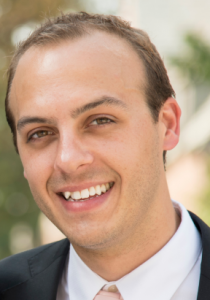
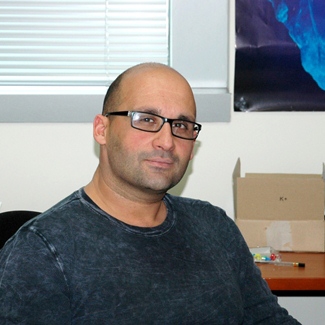
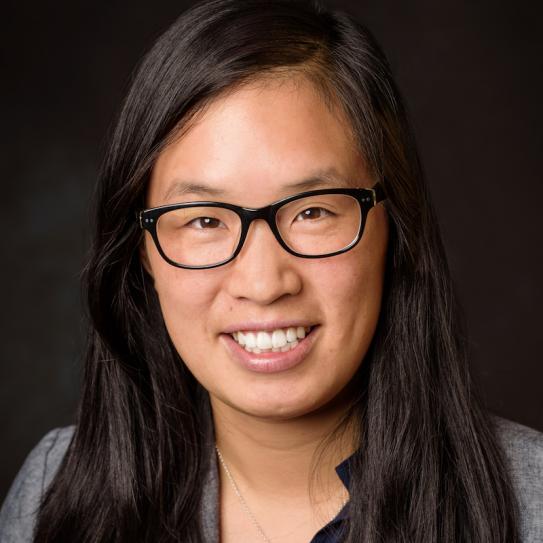
Dr. Stefon van Noordt is an Assistant Professor in the Department of Psychology at Mount Saint Vincent University. His research focuses on understanding brain-based markers of attention control and performance monitoring, particularly in developmental and individual differences contexts. He integrates behavioral, imaging, and computational tools to study neural dynamics in normative and pathological states like anxiety. His work is supported by NSERC, CIHR, and other institutions. He holds postdoctoral training from McGill University and Yale University. Education includes a Ph.D. in Psychology (2016) from Brock University, with postdoctoral fellowships at the Montreal Neurological Institute and Yale Child Study Centre. His research emphasizes EEG analysis, autism risk prediction, and medial frontal theta oscillations. Research interests span cognitive neuroscience, developmental psychology, and neuroimaging, with a focus on EEG methodologies and their application to autism spectrum disorder. Recent work includes studies on infant EEG connectivity, social exclusion effects, and neural responses to peer feedback. Dr. van Noordt collaborates on projects like the EEG-IP platform for international infant data integration and has published extensively on EEG biomarkers and neurodevelopmental trajectories. He mentors students in Honours thesis projects and postdoctoral training.
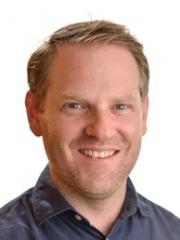
Gillian Ruth Goward is a Professor and Chair of the Department of Chemistry and Chemical Biology at McMaster University, where she also serves as Associate Dean of the Faculty of Science. She holds a prestigious McMaster Faculty of Science Research Chair in Magnetic Resonance of Materials for Energy Storage. Her research focuses on advanced energy materials, particularly lithium-ion batteries, fuel cells, and alternative energy systems, utilizing magnetic resonance spectroscopy and imaging. She is a Senior Editor for the Journal of Physical Chemistry and contributes to the Canadian and international Magnetic Resonance and Materials Chemistry communities. Her team employs state-of-the-art magnetic resonance tools to study electrolyte-electrode interfaces and ion dynamics in solid/solution phases. Education: Ph.D. in Chemistry, University of Waterloo (1995-1999) Certificate in University Teaching, University of Waterloo (1997-1998) Honours Bachelor of Science in Chemistry, McMaster University (1991-1995) Her research interests span atomic/molecular spectroscopy, electrochemistry, and chemical characterization of materials, with a focus on improving energy storage technologies. Recent work emphasizes sodium-ion batteries, solid-state electrolytes, and operando NMR techniques to track ion dynamics during battery operation. Her studies often integrate experimental methods like solid-state NMR with computational approaches (e.g., DFT) and advanced imaging (MRI). She has secured significant grants, including a $4.2M award to advance critical minerals research in collaboration with industry leaders. Her contributions include developing polymer-rich composite solid-state electrolytes and plastic inorganic electrolytes for safer batteries. Scientific Awards: McMaster Faculty of Science Research Chair in Magnetic Resonance of Materials for Energy Storage Her teaching activities include Spectroscopy (CHEM 776) and Sustainable Chemistry: Natural Resources and Energy (CHEM 3SC3) . She leads a research group engaged in collaborative projects, as evidenced by her 111 scholarly activities in the last decade. Her lab specializes in air-sensitive studies and has developed innovative RF probes for battery analysis.
Mike Barnes is Professor in the Power Conversion group at the University of Manchester's School of Electrical and Electronic Engineering. He holds a BEng and PhD from the University of Warwick and is a Fellow of IET, IEEE, and HEA. His research focuses on power electronics applications in HVDC transmission, offshore wind energy integration, smart grids, and energy storage optimization. He has supervised over 24 doctoral students and serves as Associate Editor for IEEE Transactions on Energy Conversion. Barnes investigates high-voltage power conversion technologies to enhance renewable energy utilization and grid stability. His work spans semiconductor-based systems, advanced control strategies, and multi-scale modeling to reduce costs and improve efficiency in energy infrastructure. Current projects include grid-scale storage interfacing and power electronic transformers. Recent publications demonstrate his focus on real-time simulation of energy storage, stability analysis of HVDC systems, and thermal management of power modules. This research addresses critical challenges in renewable integration and grid resilience. IEEE Transactions Prize Paper (2012-13) IEEE Transactions Energy Conversion Best Paper (2018-19)
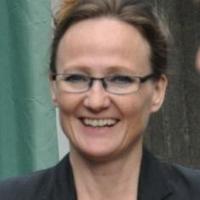
Associate Professor Archie Chapman is an Associate Professor in Computer Science and Deputy Director (Teaching and Learning) at the School of Electrical Engineering and Computer Science, The University of Queensland. His research focuses on applying artificial intelligence, game theory, optimization, and machine learning to address challenges in future power systems, including renewable energy integration and battery storage optimization. Prior to UQ, he held roles as a Research Fellow in Smart Grids at the University of Sydney (2011-2019) and a postdoc at the University of Southampton (2009-2010), where he completed his PhD in 2004. Research interests include: - Large-scale optimization for energy systems - Demand response and peer-to-peer energy trading - Renewable energy integration and grid stability - Battery storage strategies for smart grids - Algorithmic game theory for energy market design Notable projects: - Bruny Island battery trial for network congestion management - Analysis of tariff impacts on solar households - Development of decentralized energy management frameworks Publications span over 100 articles, with recent work focusing on: - Prosumer battery systems and capacity firming (2025) - Unbalanced optimal power flow benchmarks (2024) - P2P energy trading mechanisms (2021-2023) Expertise includes: - Techno-economic analysis of energy systems - Distributed optimization algorithms - Policy and market design for renewable integration
Dr. Dominic Williamson is a theoretical quantum physicist and DECRA Research Fellow at the School of Physics, University of Sydney. He specializes in quantum phases of matter and their applications to quantum error correction and computing. His work bridges condensed matter theory and quantum information science, focusing on fracton topological phases and fault-tolerant quantum architectures. Education: PhD in Physics from the University of Vienna (2017); Postdoctoral research at Yale University, Stanford University, and IBM Quantum. Current roles include faculty membership at the University of Sydney’s Quantum Science Group and prior industry experience at IBM and PsiQuantum. Research interests: Topological phases of matter, quantum error correction codes (e.g., fracton codes, QLDPC systems), fault-tolerant quantum computing architectures, and non-Abelian anyon systems. Recent breakthroughs include low-overhead quantum architectures and novel approaches to parallelized logical measurements. Grants: 2022 ARC Discovery Early Career Researcher Award for topological phases in quantum computation. Collaborations include projects on gauging logical operators and quantum code surgery. Professional activities: Editor for Quantum , frequent speaker at international conferences, and mentor for students at all levels (undergraduate to postdoctoral). Active in open-source research and public engagement through platforms like arXiv and Google Scholar.
Dr. Dimitrios Anagnostou is an Associate Professor at Heriot Watt University's School of Engineering & Physical Sciences, affiliated with the Institute of Sensors, Signals & Systems (ISSS). He holds a Marie Skłodowska-Curie Fellowship and leads research in reconfigurable antennas, metamaterials, and biomedical sensing. He earned his PhD from the University of New Mexico (2005), followed by postdoctoral work at Georgia Tech and faculty roles at SDSMT before joining Heriot Watt in 2016. His research focuses on electromagnetic devices for aerospace, defense, and healthcare applications, including reconfigurable antennas, metamaterials, and AI-driven radar systems. He has published 169 papers and received 15+ awards, including the IEEE John D. Kraus Antenna Award and DARPA Young Faculty Award. Dr. Anagnostou serves as an Associate Editor for IEEE Transactions on Antennas and Propagation and actively contributes to conference committees. His lab specializes in antenna arrays, radar sensing, and functional materials like vanadium dioxide (VO₂). He supervises PhD students and supports interdisciplinary projects in sustainable RF electronics and medical imaging.
Christoph T. Koch is a Professor of Physics at Humboldt-Universität zu Berlin, where he has held the W3 Chair since 2015. Previously, he held a similar position at Ulm University (2011–2015), supported by the Carl Zeiss Foundation. His research focuses on advanced electron microscopy techniques, including quantitative transmission electron microscopy (TEM), electron holography, and strain mapping. He leads the AG Strukturforschung/Elektronenmikroskopie group, advancing materials science through innovations in imaging and spectroscopy. Education: B.Sc./M.Sc. in Physics at Heidelberg University (1996–1998), followed by an exchange at Arizona State University (1997–1998). PhD in Physics from Arizona State University (2002, advisor: Prof. John C.H. Spence). Postdoctoral research at the Max Planck Institute for Metals Research, Stuttgart (2002–2011). Research interests include: Electron diffraction and phase retrieval Nanometer-scale strain and defect analysis Electron energy-loss spectroscopy (EELS) for plasmonics and bandgap mapping Development of FAIR data infrastructure for materials science Leadership: Managed the Department of Physics at Humboldt University (2020–2024). Collaborates widely, with key co-authors including P.A. van Aken, W. Sigle, and C. Felser. His work bridges experimental microscopy and computational modeling, addressing challenges in semiconductors, ceramics, and 2D materials. Notable contributions include pioneering methods for 3D reconstruction via electron ptychography, dynamic electron diffraction analysis, and strain mapping in advanced CMOS technologies. Current efforts emphasize real-time imaging and AI-driven data analysis in materials research.
Prof. Mahiar Max Hamedi is a Professor at KTH Royal Institute of Technology, affiliated with the CBH School and Digital Futures Faculty. His research focuses on developing sustainable functional materials for energy storage, advanced biosensors, and nanoelectronics. He leads the research project 'Democratizing Digital DNA Diagnostics' and is PI for innovations in portable diagnostics and next-gen batteries. His work integrates biomaterials like cellulose nanomaterials with synthetic nanomaterials (e.g., MXenes, CNTs) to address global challenges in energy and healthcare. Entrepreneurial ventures include co-founding Simplygon (acquired by Microsoft) and /SALT for tech upskilling. Active in Digital Futures, a cross-disciplinary center addressing societal challenges via digital tech. Research interests emphasize biohybrid systems, wearable devices, and sustainable energy solutions. His lab’s innovations include paper-based biosensors, compressible supercapacitors, and MXene-based materials. Over 50 peer-reviewed articles showcase advancements in material science and nanotechnology.
Malin Selleby is a Professor at KTH Royal Institute of Technology, affiliated with the Digital Futures research center and the UNIT STRUCTURES unit. She holds the role of Head of Unit within her department. Her research focuses on computational materials science, thermodynamics, and alloy design, with a particular emphasis on phase equilibria, Calphad modeling, and high-entropy alloys. She teaches courses such as Thermodynamic Modeling and supervises degree projects in materials and process design. Research Interests: Materials Science, Thermodynamics, Metallurgy, Computational Modeling. Key Projects: Third-generation Calphad databases, phase stability analysis, machine learning applications in materials research. Her work bridges fundamental material science with industrial applications, addressing challenges in sustainable materials and alloy development. Over 100 peer-reviewed publications highlight her contributions to thermodynamic modeling, phase equilibria studies, and material characterization. Collaborations span academia and industry, including RISE Research Institutes of Sweden and Stockholm University through Digital Futures. Labs/Teams: Active in the Digital Futures interdisciplinary center and leads research groups focused on computational thermodynamics and advanced materials innovation.
Francesco Fedele is an Associate Professor at Georgia Tech, concurrently affiliated with the School of Civil and Environmental Engineering and the School of Electrical and Computer Engineering. He holds a Ph.D. in Civil Engineering from the University of Vermont (2004) and a Laurea (magna cum laude) from the University Mediterranea, Italy (1998). His research spans nonlinear wave phenomena, coastal engineering, fluid mechanics, and sustainable ocean energy, with a focus on rogue waves, stereo imaging, and computational methods. His work has been published in high-impact journals like Physical Review Letters and IEEE Transactions series. Research Interests include wave turbulence, signal processing for biomedical and radar applications, and mathematical modeling of tidal energy systems. Notable contributions involve analyzing extreme waves in the Mediterranean and North Sea, contributing to maritime safety and hurricane impact studies. Publications reflect expertise in fluid dynamics, oceanography, and computational methods. Recent work addresses the geometrical phases of nonlinear systems and interval-based finite element analysis under uncertainty. His research has been featured in Georgia Tech news for applications in rogue wave prediction and structural engineering. Dr. Fedele’s academic positions and collaborations include postdoctoral research at NASA Goddard Space Flight Center (pre-Georgia Tech tenure). No specific awards are explicitly listed in the provided text, though his work has garnered media attention for its societal impact.
Stephanie Lee is an Associate Professor of Chemistry at New York University, affiliated with the College of Arts & Science. Her research focuses on materials and solid-state chemistry, with emphasis on organic and hybrid semiconductors for optoelectronics and solar energy applications. She leads the Lee Research Lab, which engineers crystals to address climate change and energy sustainability. Education: B.S. in Chemical Engineering (MIT), Ph.D. in Chemical Engineering and Materials Science (Princeton University), followed by a Provost Postdoctoral Fellowship at NYU. Research interests include crystal engineering, semiconductor materials, x-ray diffraction, and nanoconfined systems. Her lab explores twisted crystals, perovskite nanowires, and scaffold-directed crystallization to enhance optoelectronic device performance. Key Awards: NSF CAREER Award (2019), Stevens Early Career Award (2019) Publications emphasize crystal growth mechanisms and material stability, with recent work on chiral perovskites and self-patterning crystalline films. She advises multiple graduate students and collaborates on projects funded through interdisciplinary grants. Labs/Teams: Director of the Lee Research Lab within NYU’s Department of Chemistry, contributing to the Molecular Design Institute.
Francesco Sannino is a Professor of Computational Science at the University of Southern Denmark's Department of Mathematics and Computer Science. He is affiliated with the Danish Institute for Advanced Study (DIAS) and holds a Ph.D. His research spans quantum field theory, particle physics, and complex systems modeling. Key interests include Standard Model duality, black hole physics, and epidemiological dynamics. Education: Ph.D. in Physics (not explicitly stated in provided text, inferred from title). Research focuses on theoretical physics, including conformal field theories, gauge dynamics, and applications of quantum chromodynamics (QCD). Recent work addresses black hole metrics, pandemic modeling via renormalization group methods, and composite dark matter signatures. His studies often bridge high-energy physics and complex systems. Main Research Trends: Over 15 years, Sannino has produced 333+ publications, emphasizing: Black hole physics and effective metrics Standard Model extensions and dualities Quantum field theory at conformal windows Epidemiological modeling of pandemics Awards: Elected Member of the Finnish Academy of Science and Letters (2015) EU Excellence Grant in Theoretical Physics (2005) International Referee for Austrian Science Fund Grants & Projects: Leader of the DG Center for Particle Physics Phenomenology (2014–2019) Carlsberg Foundation Semper Ardens grant (2023–2029) Coordinator for Danish CERN Instrument Center (2017–2019) Labs/Teams: Active in CP³ - Center for Particle Physics Phenomenology and DIAS, collaborating globally on projects like gravitational wave detection and pandemic modeling.
Dr. Yonatan Hutabarat is a Professor at Universität Bonn, holding the Hertz-Chair for Artificial Intelligence and Neuroscience. He is affiliated with the Center for Artificial Intelligence and Neuroscience (CAIAN) and focuses on interdisciplinary research at the intersection of AI, neuroscience, and biomechanics. His work emphasizes wearable sensor technology and machine learning applications in gait analysis, posture coordination, and human movement modeling. Research interests include neural network-based gait phase estimation, biomechanical modeling under cognitive loads, and sensor integration for healthcare applications. His research has explored temporal convolutional networks, LSTM architectures, and reinforcement learning for prosthetic control. He has published extensively on quantitative gait assessment using minimal IMU sensors, virtual reality experiments, and multimodal data fusion techniques. Affiliations include CAIAN's interdisciplinary team and active participation in collaborative projects involving neuroscience and clinical applications. His laboratory work involves developing AI-driven solutions for movement disorders and wearable sensor systems. No formal awards or grants are explicitly listed, though his research indicates substantial collaborative activity. Current address: Raum 4.06, Am Propsthof 49, 53121 Bonn. Contact: y.hutabarat@uni-bonn.de
Jose Miguel Espi Huerta is an Associate Professor in the Department of Electronic Engineering at the School of Engineering, University of Valencia. He is an active researcher in power electronics and control systems, contributing significantly to grid-connected converters, renewable energy integration, and digital control techniques. His research interests include: Power Electronics and Inverter Control Predictive and Robust Control Strategies Renewable Energy Systems (Photovoltaic and Wind) Induction Heating Technologies Remote and Web-Based Educational Labs The analysis of his recent publications reveals a strong focus on improving the efficiency and reliability of grid-connected power converters using advanced control methods such as predictive current control and MPPT strategies. His work spans both industrial applications and academic education, particularly in developing remote laboratory platforms for control systems. Scientific awards and honors: No awards listed in the provided text. He has supervised academic theses and is affiliated with the LEII (Laboratory of Industrial Electronics and Instrumentation) research group. While no formal grants are listed, his extensive publication record indicates sustained research activity. He has contributed to the development of educational tools such as air levitation systems accessible via PLC and web interfaces, promoting innovative teaching methods in engineering education. The LEII research group focuses on industrial electronics, instrumentation, and power systems, providing a collaborative environment for applied research in energy conversion and control technologies.
Dr. Qiteng Hong is a Reader in the Department of Electronic and Electrical Engineering at the University of Strathclyde, Faculty of Engineering. He holds a BEng (Hons) and PhD from the same institution and is a leading researcher in power system protection and control for renewable-dominated grids. He is Deputy Director of the MSc in Electrical Power and Energy Systems and a member of the Steering Committee for the Joint MSc with Hong Kong University of Science and Technology (HKUST). BEng (Hons), Electronic and Electrical Engineering, University of Strathclyde, 2011 (Top Graduate of the Year) PhD, Electrical Engineering, University of Strathclyde, 2015 (fully funded by National Grid) His research focuses on novel solutions for monitoring, protection, and control of future power systems, particularly those with high renewable penetration. Key areas include wide-area monitoring using synchronized measurements, protection of converter-dominated systems, fast frequency response in low-inertia networks, and digital twin-based real-time control. His work contributes to UN Sustainable Development Goals in clean energy and climate action. Dr. Hong has published over 110 research outputs, including 59 journal articles. His recent publications (2025) emphasize fault detection and arc suppression in active distribution networks using advanced converter topologies and signal processing techniques. Themes include traveling wave analysis, Hough transform, synthetic zero-sequence signals, and machine learning for frequency prediction, reflecting a strong trend toward intelligent, data-driven power system protection. Gold Medal, 49th International Exhibition of Inventions Geneva (2024) IET Best Paper Award (DPSP APAC 2025) Best Paper Award, IEEE APAP (2019) Principal’s Award Runner Up, University of Strathclyde (2024) Students' Choice Award (2021) British Renewable Energy Awards – 'Highly commended' (2018) IET Prize for Academic Excellence (2011) John Moyes Lessells Scholarship (2013) Shortlisted for Best Innovation Award, Scottish Renewables (2018) Dr. Hong has led or participated in over 50 research and KE projects, securing £11M in funding (PI on £2.26M). He leads a team of 10 researchers, including 5 PhD students, and has developed the LGMVP platform—the UK’s first online tool of its kind. He serves on the University Senate, is a guest editor for 5 journal special issues (Co-Guest Editor-in-Chief for a special issue on zero-carbon power systems), and has delivered teaching across 9 modules. He has been PI or Co-I on major projects such as SETTLE-INSIGHT (NIA), Shell-iCase, and NGET SIF ALPHA. He leads an active research group focused on smart grid protection and digital twin technologies. He is the main developer of four prototype software tools and mentors a team of PhD students and research associates. His lab collaborates with industry partners like SSE, National Grid, and Shell, and he is a key figure in international initiatives through IEEE and CIGRE.