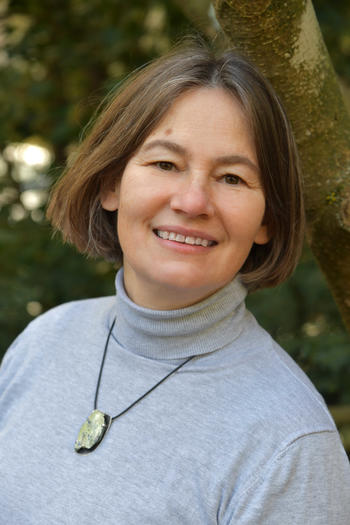
Beate Paulus is a Professor for Theoretical Chemistry at the Freie Universität Berlin , affiliated with the Chemistry and Biochemistry college and the Chemistry department. Her research focuses on advanced quantum chemical methodologies and applications to 2D materials, spintronics, and catalysis. Current affiliation: Freie Universität Berlin Key research areas: Quantum Chemistry, Density Functional Theory, 2D Materials, Spintronics, Electrocatalysis Her work spans computational modeling of electronic structures, magnetic properties, and chemical reactions using Density Functional Theory (DFT) with specialized corrections. She investigates systems like MoS2 , graphene heterostructures , and transition metal complexes , aiming to understand and optimize properties for energy applications, biosensors, and nanoelectronics. Recent publications highlight her contributions to quantum mechanical fluorine tunnelling , spin-selective transport in doped nanoribbons , and surface functionalization strategies for 2D materials. Her group also explores mechanically interlocked molecules and redox-responsive polymers with potential biomedical applications. Beate Paulus leads the Paulus Group , which actively publishes in high-impact journals and collaborates on interdisciplinary projects involving experimental and theoretical approaches.
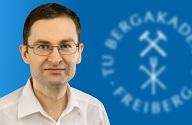
Dr. rer. nat. Gunter Semmler is a researcher at the Institute of Applied Analysis within the Faculty of Mathematics and Computer Science at Technische Universität Bergakademie Freiberg. He has been serving as a research assistant at the university since 1999, with an interlude at TU Munich from 2005 to 2008, and has continued his academic work at TU Bergakademie Freiberg since 2008. His role involves teaching courses such as Analysis 1, Analysis 3, Function Theory, and Ordinary Differential Equations, as listed in the OPAL course system. His research interests lie primarily in complex analysis, with a focus on nonlinear Riemann-Hilbert problems, interpolation theory, Blaschke products, conformal mapping, and phase visualization of complex functions. His work bridges theoretical mathematics with visual and educational applications, particularly evident in his widely recognized article on phase plots. He frequently collaborates with Prof. Elias Wegert, under whom he completed his PhD in 2001. The analysis of his publications reveals a consistent focus on the structure and behavior of complex functions, especially in boundary value problems and interpolation. His contributions span from foundational work on sine-type functions and complete interpolating sequences to innovative visual representations of meromorphic and entire functions. The keywords across his articles reflect deep engagement with Hardy spaces, Paley-Wiener theory, and the discrete Muckenhoupt condition, indicating advanced harmonic and complex analysis expertise. He has no listed scientific awards in the provided texts. However, his sustained publication record in reputable journals such as Computational Methods and Function Theory , Mathematische Nachrichten , and Notices of the American Mathematical Society underscores his scholarly impact. He is also a co-editor of the mathematical calendar Complex Beauties , highlighting his interest in mathematical aesthetics and outreach. There is no mention of students, grants, or labs in the provided information. His academic trajectory shows a dedicated research career with strong institutional affiliation and consistent contributions to complex function theory. He remains an active academic with no indication of part-time status, retirement, or emeritus position.
Dr Jonathan Deane is a Senior Lecturer in the School of Mathematics and Physics at the University of Surrey, affiliated with the Department of Mathematics and Statistics. His research lies at the intersection of applied mathematics, nonlinear dynamics, and mathematical physics, with strong applications in engineering and planetary science. Undergraduate Degree: Physics, Merton College, Oxford (1979–1982) PhD and Postdoctoral Research: Department of Electrical and Electronic Engineering, University of Surrey (1986–1994) Lecturer, University of Surrey (1994–2000) Senior Lecturer, Department of Mathematics and Statistics, University of Surrey (2000–present) Jonathan Deane's research interests span a wide range of applied mathematical topics, including Poincaré inequalities , nonlinear elasticity , chaos in power electronics , triboelectric energy harvesting , and celestial mechanics . His work often combines rigorous analytical methods with numerical simulations to model complex physical phenomena. He has made significant contributions to the understanding of energy minimization in geometric mappings, cavity formation in elastic materials, and the long-term behavior of dissipative dynamical systems. The 15 most recent publications demonstrate a consistent focus on mathematical analysis of physical systems , particularly in the areas of inequalities , variational problems , dynamical systems , and energy conversion devices . The keywords across these works reflect deep engagement with functional analysis, geometric modeling, and nonlinear dynamics. Subfields such as spin-orbit resonance, triboelectric nanogenerators, and hydrostatic pumps indicate a strong interdisciplinary orientation linking mathematics with physics and engineering. His scientific contributions have been published in high-impact journals including: Proceedings of the Royal Society A SIAM Journal on Mathematical Analysis Nonlinear Differential Equations and Applications (NoDEA) Journal of Dynamics and Differential Equations IEEE Transactions on Circuits and Systems Dr Deane has supervised and collaborated extensively, particularly with researchers such as Jonathan Bevan, Michele Bartuccelli, and Guido Gentile. His work on chaotic DC-DC converters, sigma-delta modulators, and parametric amplifiers highlights applications in power electronics and signal processing. He has also contributed to fundamental modeling in energy harvesting, providing a comprehensive framework for triboelectric nanogenerators beyond simple geometries. He is actively involved in research groups focusing on: Nonlinear dynamics and chaos Mathematical modeling of physical systems Energy harvesting technologies Planetary spin-orbit dynamics
Anela Ivanova is a Professor at the Department of Physical Chemistry, Faculty of Chemistry and Pharmacy, Sofia University 'St. Kl. Ohridski'. She has served as Dean of the Faculty since 2023 and leads the Laboratory of Quantum and Computational Chemistry. Her academic career spans over two decades, with roles from Senior Assistant Professor to her current Professorship. Her research focuses on Molecular mechanisms of drug delivery systems Optical properties of organic light emitters Interfacial physicochemical systems Spin-hybrid complexes Computational protocol development Recent publications highlight her expertise in molecular dynamics simulations, quantum chemistry, and computational drug design. She has received international recognition through fellowships including Marie-Curie, Humboldt, and COST STSM programs. Scientific awards include BioExcel Goodwill Ambassador Marie-Curie Fellowship Humboldt Research Fellowship Short-Term Scientific Missions (STSM) within COST P12 She supervises computational projects on drug vectors, organic emitters, and membrane transport. Her lab collaborates with European institutions including Max Planck Institute and CNRS.
Professor Marco Thiel is a Personal Chair in the Department of Physics at the University of Aberdeen, within the School of Natural and Computing Sciences. He is Deputy Director of the Institute for Complex Systems and Mathematical Biology and affiliated with the Institute of Pure and Applied Mathematics. His research focuses on applied mathematics, nonlinear dynamics, and data-based modeling. Research Interests: Applied Mathematics and Mathematical Modelling Dynamical Systems Theory and Recurrence Analysis Network Theory and Complex Systems Systems Biology and Cellular Modeling Data Analysis and Nonlinear Time Series Mathematics of Distance Inequalities His recent publications span topics such as network inference, oscillatory systems, cellular protein production, and recurrence-based methods for dynamical systems. These works reflect a strong interdisciplinary focus, combining mathematical rigor with applications in biology and neuroscience. The research often involves collaborations with groups in systems biology and medical physics, emphasizing integrative modeling approaches. Scientific Contributions: Co-investigator on major BBSRC-funded projects on fungal pathogens and ribosomal traffic Editor of Nonlinear Dynamics and Chaos: Advances and Perspectives (Springer, 2010) Contributor to key reference works in computational neuroscience and brain connectivity He has advised on and contributed to research in systems biology, particularly in modeling Candida albicans stress responses and cellular dynamics. He leads in the development of recurrence-based methods for analyzing complex systems. His teaching includes courses in nonlinear dynamics, modeling complex systems, and data science. He is actively involved in interdisciplinary research groups focusing on mathematical biology and data science.
Dr. Madhumita Mukhopadhyay is a Research Fellow at the School of Chemistry, University of St Andrews, UK, specializing in sustainable energy materials and electrochemical systems. She actively contributes to the JTSI research group, focusing on reversible fuel cells and functional electrode materials development. Education: PhD in Development of Planar Solid Oxide Fuel Cell using Cermet Anode, Jadavpur University MSc in Chemistry (Inorganic Specialization), University of Calcutta BSc in Chemistry, University of Calcutta Her research spans hydrogen energy systems , fuel/electrolyser cell technology , and functional materials synthesis . Key areas include development of anode materials for high-temperature fuel cells, polymer electrolyte membranes, plasmonic nanomaterials for environmental applications, and supramolecular hydrogels with antibacterial properties. Her work directly addresses UN Sustainable Development Goals through clean energy innovation. Recent publications demonstrate strong focus on reversible solid oxide cells and sustainable material design , with interdisciplinary work bridging energy storage, environmental engineering, and biomedical applications. Her team develops novel electrocatalysts and polymer composites that optimize performance through microstructural engineering and non-stoichiometry control. Scientific Awards: CSIR Fellowship-National Eligibility test (2007) CSIR Fellowship-Research Associateship (2013) DST-SERB-International Research Experience (SIRE) fellowship (2023) Dr. Mukhopadhyay serves as Editorial Board Member for Scientific Reports (Nature Portfolio) and Guest Associate Editor for Inorganic Chemistry Frontiers . She has conducted 43 peer reviews for journals including Journal of Materials Science and RSC Advances , and is affiliated with the Royal Society of Chemistry, American Chemical Society, Material Research Society of India, and Asian Polymer Association. Her current research develops advanced reversible fuel cell systems and electrode materials through international collaborations.
Dr. Palade Petru is a Scientific Researcher II at the National Institute of Materials Physics in Romania, specializing in hydrogen storage materials, magnetic nanomaterials, and advanced characterization techniques. His work bridges fundamental physics with practical energy applications through extensive collaboration with European research networks. Education: PhD in Physics (Condensed Matter Physics), 2002 Master Degree in Physics (Physics of Semiconductors), 1995 Bachelor Degree in Physics (Technological Physics), 1994 Postdoc at University of Padova, Italy (2003-2006) His research focuses on developing hydrogen storage solutions using mechanochemical methods and wet chemistry synthesis of magnetic nanoparticles. He pioneers the application of Mössbauer spectroscopy for local electronic structure analysis, particularly through conversion electron techniques. His computational work employs WIEN2k for band structure calculations of solids and molecules. Current projects target rare-earth-free permanent magnets and nanoconfined complex hydrides for vehicular hydrogen storage. Analysis of his publication trends reveals consistent leadership in magnetic nanomaterial characterization, with recent emphasis on biomedical applications (hyperthermia, drug delivery) and sustainable energy solutions. His work shows strong interdisciplinary integration of materials synthesis, advanced characterization, and computational modeling. Awards: Dragomir Hurmuzescu Prize from the Romanian Academy (2008) for hydrogen storage research He has secured significant research funding through national projects including PCCA PNCDI-2 (rare-earth-free magnets), PARTNERSHIP PNCDI-2 (STOHICO hydrogen storage project), and IDEAS PNCDI-2 (electronic mechanisms in intermetallics). His laboratory develops patented technologies for hydrogen-storing materials and iron nitride magnetic composites. The Laboratory of Magnetism and Superconductivity maintains specialized capabilities in Mössbauer spectroscopy across multiple isotopes, Sievert method hydrogen storage measurements, and Rietveld refinement of XRD data using Maud software.