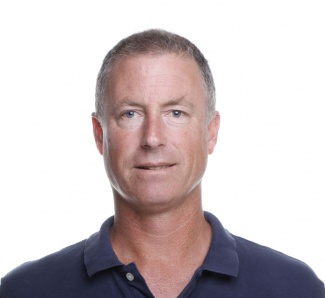
James Michael Lampinen is a Distinguished Professor and Chair in the Department of Psychology at the University of Arkansas, within the College of Arts and Sciences. He is a leading researcher in memory and face perception, with a strong focus on forensic applications of cognitive psychology. Education: Postdoctoral Fellow, Binghamton University, 1996–1998 Ph.D., Northwestern University, 1996 B.S., Elmhurst College, 1991 His research spans both basic and applied aspects of human memory. He investigates the subjective experience of true and false memories—particularly 'phantom recollections'—and memory editing strategies used to avoid false memories, especially in children. His applied work centers on eyewitness identification, forensic facial recognition, and prospective person memory, including the ability to spot individuals one is on the lookout for, such as missing persons or fugitives. He has also contributed to research on forensic age progression. His recent publications show a consistent focus on eyewitness accuracy under various conditions (lighting, distance, expectations), lineup procedures, ROC analysis, and developmental aspects of memory monitoring. His work bridges cognitive theory with real-world legal and law enforcement applications. Scientific Awards and Honors: Distinguished Professor of Psychological Science, University of Arkansas Master Researcher, Fulbright College of Arts and Sciences Certified Law Enforcement Instructor - State of Arkansas TEDx Talk – Hendrix College Best of CLE, Eyewitness Identification, Arkansas Bar Association Visiting Scholar, University of Chicago Featured Speaker, Memory Development Pre-Conference, Society for Research in Child Development Sixth Annual Goldsmith Speaker in Psychology, Elmhurst College Keynote Speaker, Multi-disciplinary Conference on Human Memory, University of Arkansas at Little Rock Outstanding Mentor, University of Arkansas Lampinen serves as Managing Editor of Psychology, Crime and Law and is a member of the editorial board of Memory Research Activity . He mentors graduate students and teaches courses such as Statistics, Cognitive Psychology, Perception, and Advanced Research. His lab is actively engaged in improving eyewitness procedures and understanding the cognitive limits of human memory in legal contexts. He is affiliated with a research lab focused on experimental psychology and forensic applications, contributing to both theoretical advances and practical reforms in eyewitness science. His ongoing work includes refining lineup procedures, understanding memory development, and enhancing forensic identification accuracy.